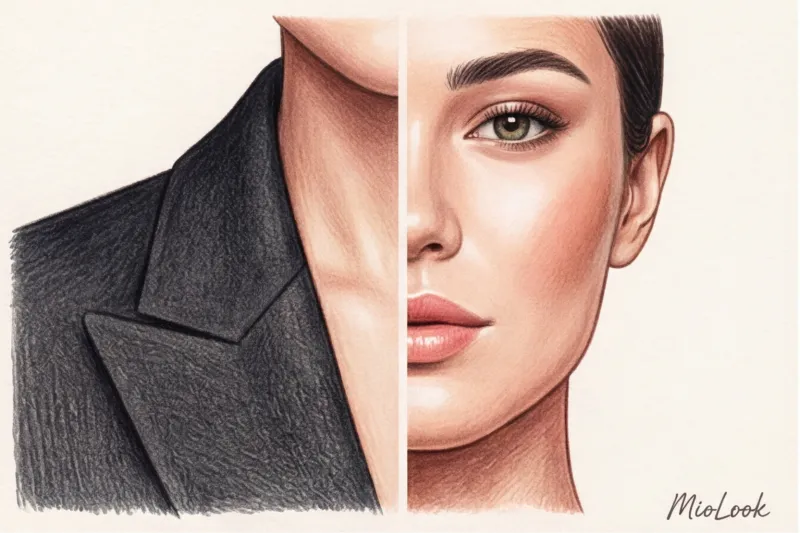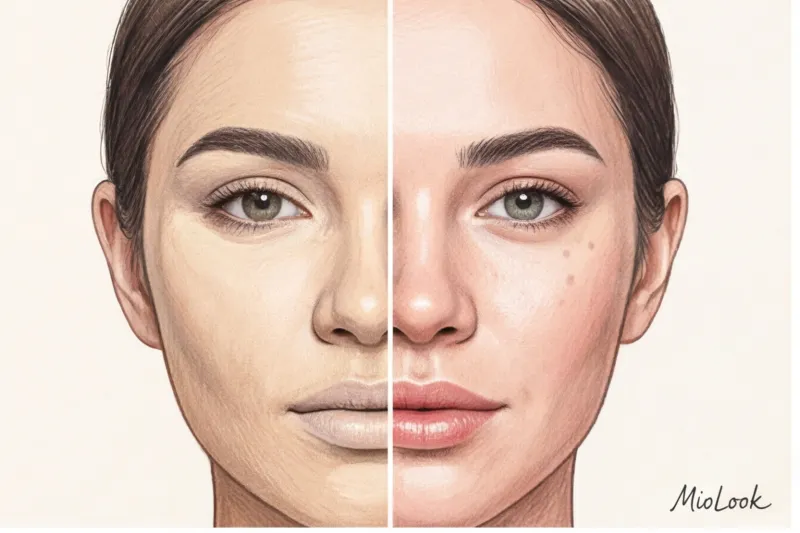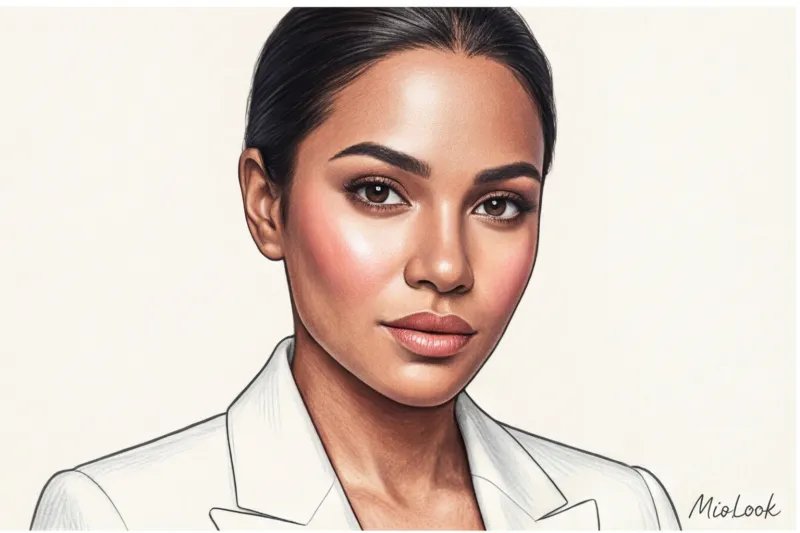
Six months ago, the CEO of a promising fintech startup approached me. We put together the perfect capsule wardrobe for her investment pitch: a tailored yet relaxed €2,500 The Row suit, perfect loafers, and a silk blouse. But when I saw the photos from the presentation, I wanted to cry. The thick, matte foundation had literally cracked on her cheeks, and her nose glistened in the spotlight as if it had been oiled. The entire effect of her prestigious wardrobe was ruined.
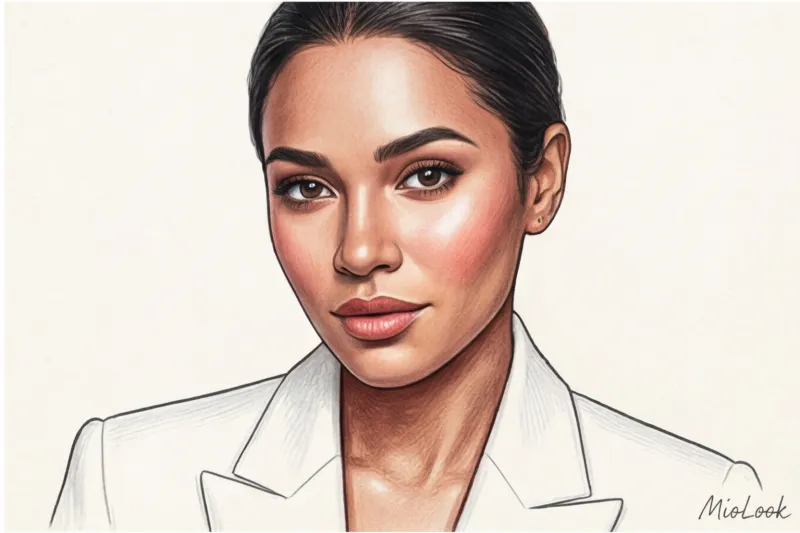
Over 12 years of working as a stylist at business photo shoots and conferences, I've developed an ironclad rule: your face is your main accessory You can wear the best cashmere in the world, but if the texture of your foundation looks cheap, your look is ruined. Properly preparing combination skin for makeup is more than just a beauty routine. It's about creating the right "fabric texture" for the perfect pigment adhesion.
We discussed the fundamental rules of working with the face in more detail in our complete guide. Basic Facial Skin Care: The Secret to Long-Lasting Makeup , but today we will talk about the most difficult “material” - combination leather.
The Anatomy of Combination Skin: Why Standard Skincare Cheapens Your Look
Imagine you were making a dress made half of the finest silk and half of thick wool. You wouldn't wash them both with the same harsh detergent, would you? Combination skin works the same way. The T-zone (forehead, nose, chin) and the U-zone (cheeks, cheekbones) require radically different approaches.
This is where the most dangerous and common misconception lies: most women believe that they need to ruthlessly mattify their face before applying makeup. In fact, aggressive mattification is your worst enemy. According to research in the Journal of Clinical Dermatology (2023), the T-zone contains up to three times more sebaceous glands than the cheeks. When you wipe your face with an alcohol-based lotion to remove shine, you're setting yourself up for disaster.
Dehydrated cheeks instantly suck moisture out of foundation, turning it into a flaky mask. And the T-zone triggers a compensatory response. Dermatologists confirm that alcohol-based toners increase sebum production by 30% within an hour of application. The skin thinks, "We're drying out, we need more sebum for protection!" The key to true shine control is, paradoxically, deep hydration.
Preparing Combination Skin for Makeup: A Step-by-Step Strategy for "Face Wardrobe"
My approach to my face is identical to my approach to my wardrobe: a quality base is everything. If the canvas is prepared correctly, even a €15 mass-market fluid foundation will look luxurious. Conversely, Armani foundation won't save dehydrated, tight skin.
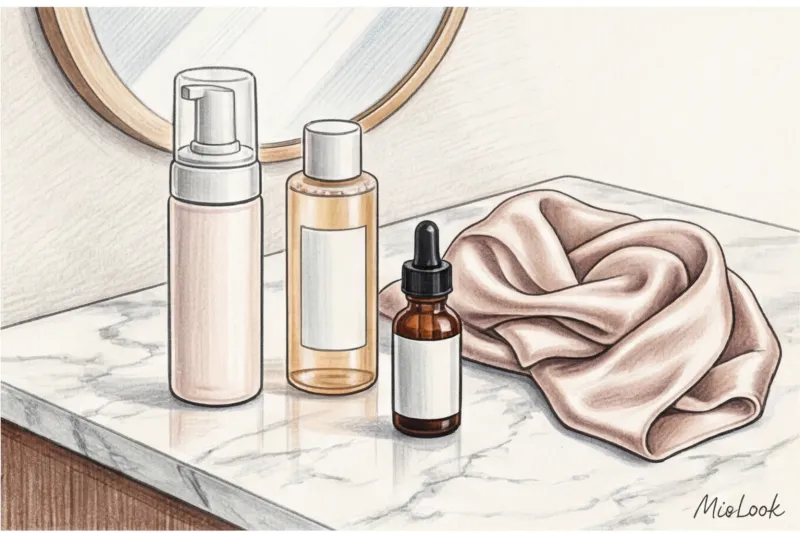
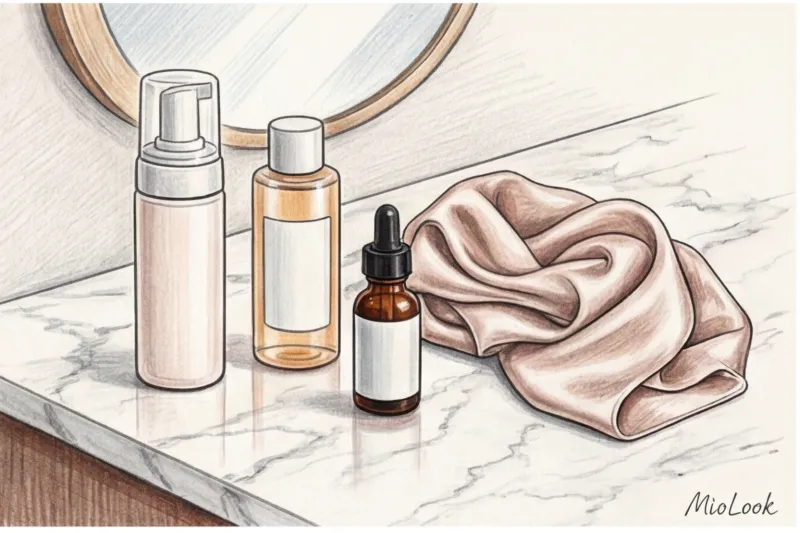
Stage 1: Intellectual cleansing. Forget about squeaky-cleaning cleansers. Squeaking is the sound of a dying lipid barrier. Use a gentle, SLS-free (sodium lauryl sulfate) gel or a hydrophilic oil followed by a gentle foam. This will remove any residue from your overnight skincare routine without leaving your skin defenseless.
Step 2: pH Restoration. After washing, your skin needs to be soothed. Instead of harsh, astringent lotions, apply a balancing toner without alcohol. I recommend applying it with gentle patting motions—this stimulates microcirculation and creates a subtle, natural glow.
Your perfect look starts here
Join thousands of users who look flawless every day with MioLook. A smart AI stylist will help you choose makeup and clothing to suit your individual features.
Get access — €0.99 onceSerums: The invisible corset of your makeup
The serum acts as invisible shapewear, evening out skin texture before applying color. A basic serum with hyaluronic acid is ideal for the U-zone (cheeks)—it will hydrate the skin, smoothing out fine lines and wrinkles.
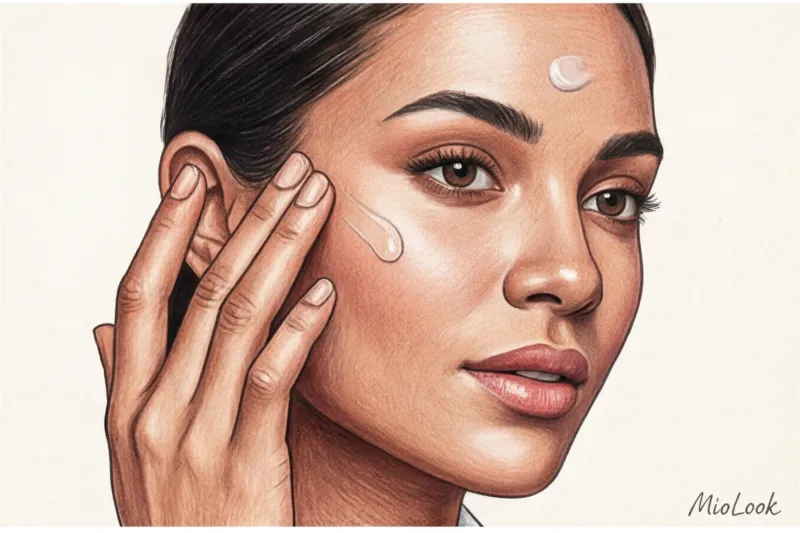
For the T-zone, your best friend is niacinamide (vitamin B3). It's an absolutely brilliant sebum regulator. Unlike salicylic acid, it doesn't dry out the skin, but rather keeps pores functioning normally, gradually reducing sebum production throughout the day.
Mattifying vs. Hydrating: The Primer Mapping Technique
On the red carpet and during important meetings, makeup lasts for hours not because of a thick layer of powder, but thanks to a technique taught in professional makeup academies. It's called primer mapping or multi-priming.
Just like you put together a clothing capsule in the app MioLook When combining different elements, you need to combine different textures of bases on your face:
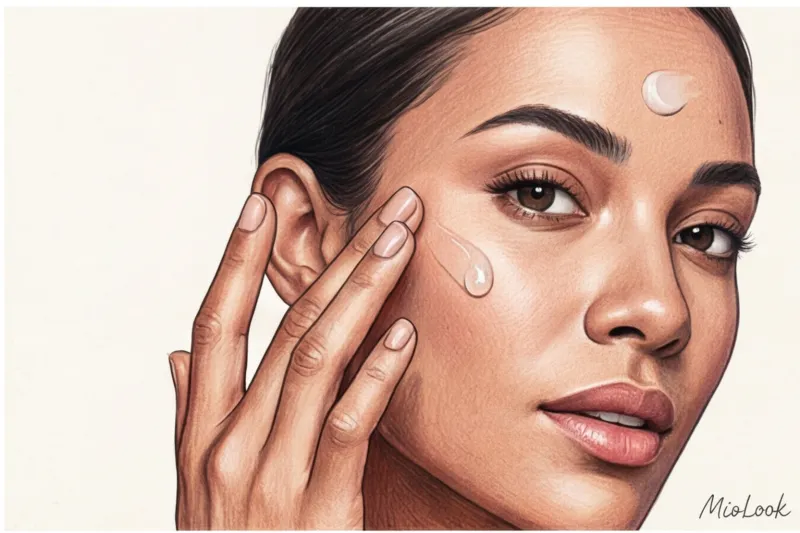
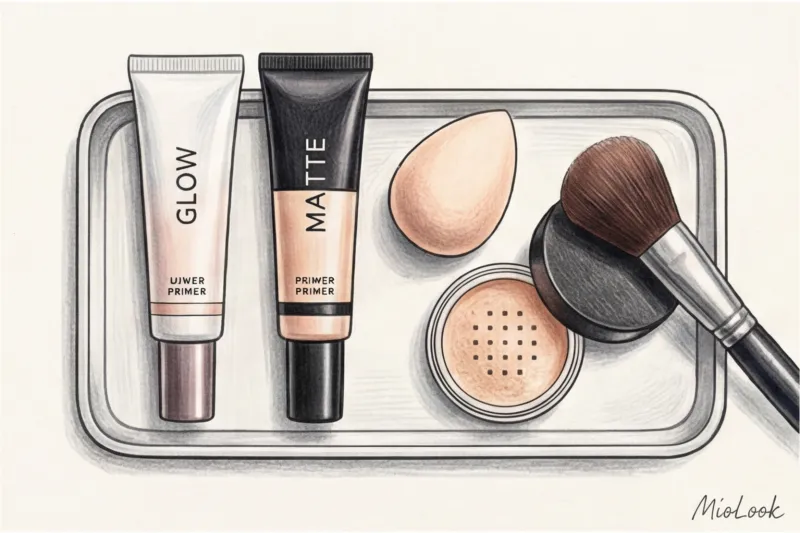
- On the U-zone (cheeks, cheekbones, forehead periphery) We apply a moisturizing cream-gel or primer with a subtle radiance effect. This creates that "dear, rested skin" effect.
- On the T-zone (bridge of the nose, center of the forehead, chin) Apply a mattifying or pore-blurring primer locally, specifically to areas where pores are enlarged and oily shine appears.
Fair Limit: This technique does NOT work if you mix conflicting formulas. If your mattifying primer is made with thick silicones (dimethicone) and your foundation is water-based, the foundation will inevitably form dirty pellets at the border. Always check the formulas: water works best with water, and silicone works best with silicone.
It's best to apply primers with your fingertips. The warmth of your hands melts the product's texture, helping it literally blend into your skin. Gently blend the products into each other at the borders to avoid a sharp transition line.
Top 3 mistakes that ruin your lunchtime look
Even with perfect makeup, you can ruin everything with the wrong technique. Here are three things I regularly see in clients complaining about uneven foundation.
Mistake 1: "Layer Cake" You applied toner, then serum, then cream, primer, and foundation. The result? All that mass hasn't been absorbed and will simply "flow" off your face within an hour. The secret to 5-7 hour long-lasting results is to let each liquid layer absorb for 1-2 minutes. Brush your teeth, then apply toner. Drink coffee, then apply serum.
Mistake 2: Baking with powder. One of my executive clients tried setting her makeup with a thick layer of loose powder using the baking technique popular on social media. While it works on camera with studio lighting, in real life, the thick, dry powder instantly clogged her fine lines and wrinkles on her combination skin, making her look 10 years older. We discussed this issue in detail in this article. Business Makeup: Rules, Instructions, and Common Mistakes Reserve powder for the T-zone only and apply it with a light, fluffy brush, not a sponge.
Mistake 3: Neglecting a moisturizing spray. Many people carry thermal water in their purse and splash it on their faces at the office. This is a fatal mistake for combination skin. As pure water evaporates from the skin's surface, it draws moisture from the skin cells. Use only special setting sprays with glycerin or polymers—they seal in makeup and hydrate.
Ready to get started?
Try the MioLook plan for free—no commitments required. Build your smart wardrobe and get everyday style recommendations.
Get access — €0.99 onceSOS solutions for important meetings: if the shine appears at the wrong time
An immutable rule of style states: only ear jewelry and eyes should sparkle in a woman's appearance, but never her nose in the glare of a conference room. I often prepare speakers for stage appearances and know how mercilessly the T-zone near a lavalier microphone glares (if you have a public speaking engagement coming up, be sure to check out our guide). Stage Makeup: How to Keep Your Face ).
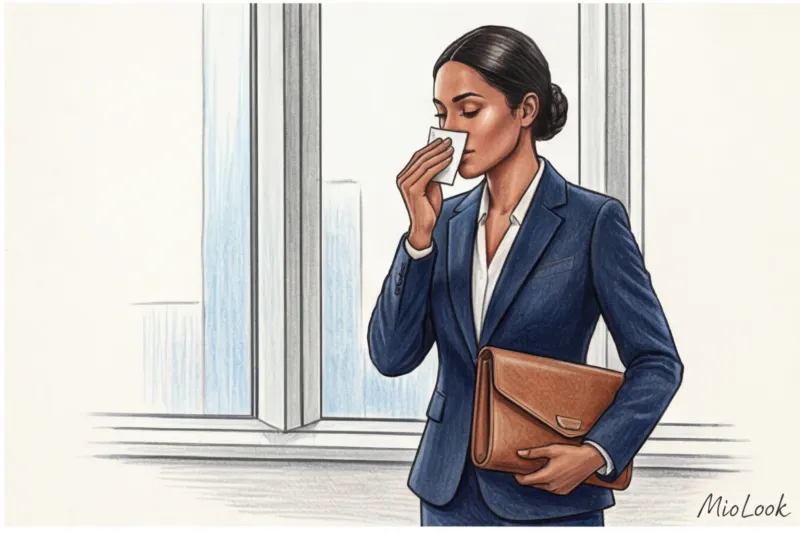
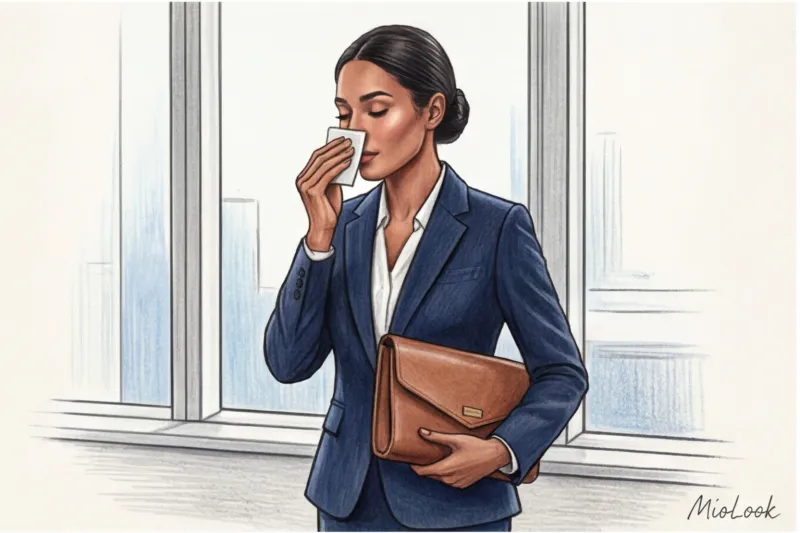
If shine does break through, don't reach for your powder compact under any circumstances. Powdering a shiny, oil-filled nose creates a dirty, heavy stain (the powder mixes with the oil and oxidizes, darkening it by half a shade). Your only savior is blotting papers. Simply blot the area (don't rub, just press it in); they'll absorb only the excess lipids without damaging the pigment of your foundation.
Isabella's Checklist: A Basic Wardrobe for Combination Skin
To make it easier for you to navigate, I've put together a minimal capsule of products that should be on your shelf. In the European market, a quality set will cost approximately €80–€120.
- Soft foam or enzyme powder - for washing without damaging the barrier.
- Moisturizing base toner (look for centella or green tea extract, but 0% Alcohol Denat).
- Niacinamide Serum (concentration 5-10%, no more to avoid irritation).
- Two primers: A miniature silicone blur-primer for the nose and a full-size moisturizing cream-primer for the cheeks.
- Packaging of matting wipes (Always keep in your business bag).
"Makeup isn't a mask we put on to hide. It's a light we direct to our best features."
Don't try to dry out your skin in pursuit of a matte finish. Give it targeted care and proper hydration, and it will reward you with a flawless complexion that will withstand a 12-hour workday and an evening cocktail with flying colors.