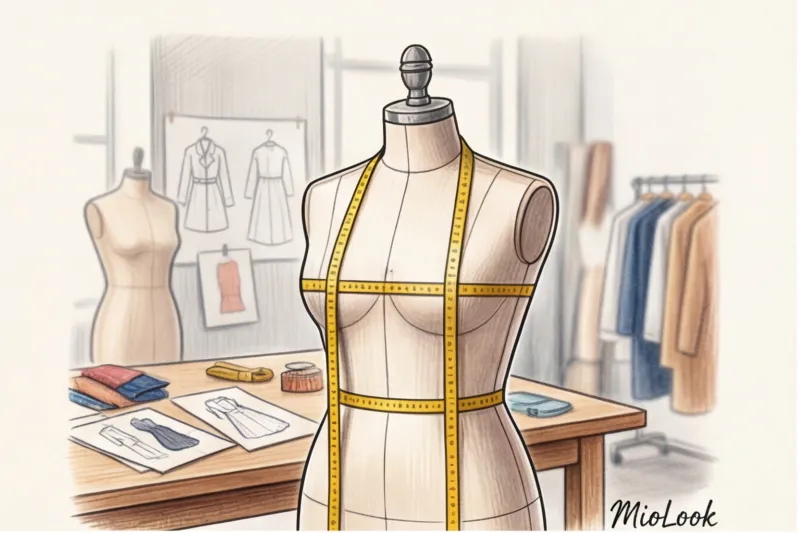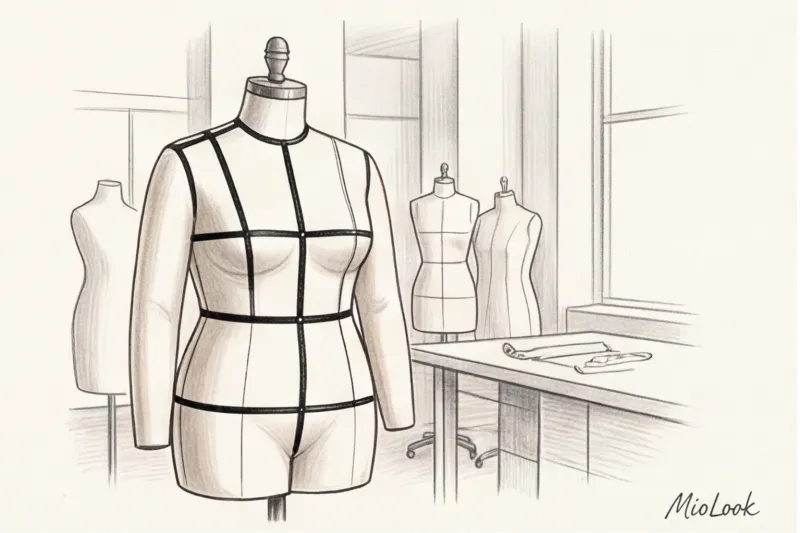
In my 14 years as a personal stylist, I've heard this phrase hundreds of times: "Nothing fits me." Curvy women walk into a shopping mall, buy their usual knitwear two sizes too big to "avoid any tightness," and walk out with yet another shapeless cardigan. The problem isn't your body type. The problem is that most manufacturers still don't know how to design clothes. Finding the right ones clothing brands for plus-size women — It's not just shopping. It's finding a good engineering firm.
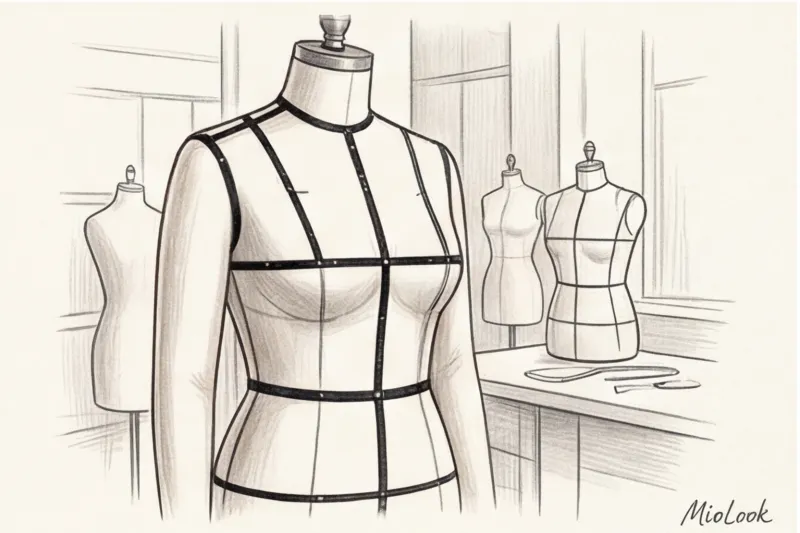
In this article, we'll forget about shapeless robes. I'll show you how to choose pieces that act as an architectural framework for your figure. We've covered more about how this foundation is built and what elements it includes in our the complete guide to creating a capsule Now let's figure out who you can trust to sew your base.
Why 90% of Mass-Market Clothes Don't Suit You: The Bitter Truth About Patterns
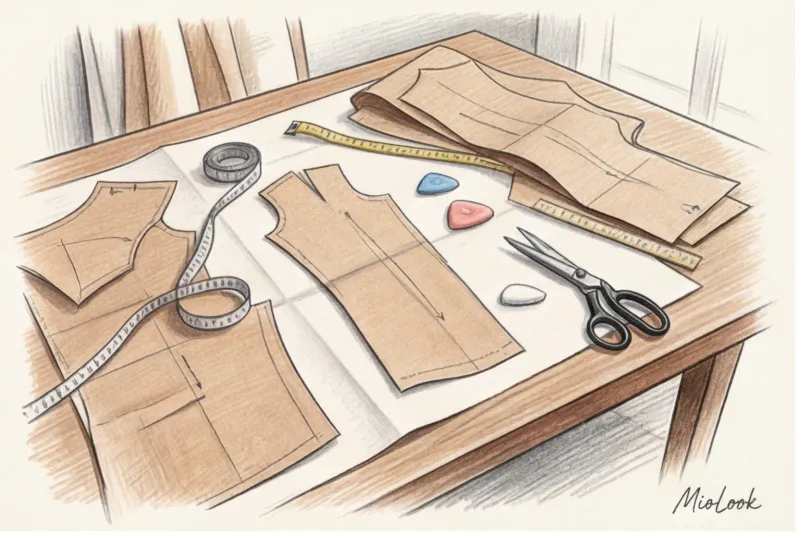
Do you know how cheap plus-size clothing is made? The brand takes a size 44 pattern and simply stretches it in a graphic editor to a size 54. In dressmaking terms, this is called scaling. But the human body doesn't expand proportionally in all directions as it gains weight, like a balloon.
According to the Fashion Institute of Technology (FIT) design principles, creating a plus-size line requires separate basic constructions (blocks). Simply increasing the size S results in a disaster: the neckline slips off the shoulders, the sleeves become comically long, and the armhole (the opening for the sleeve) disappears somewhere toward the waist.
"In my experience, 80% of unsuccessful plus-size fits are due to poor armholes. An overly wide armhole pulls the entire side seam with it when you lift your arm even slightly, visually widening the chest by at least one size."
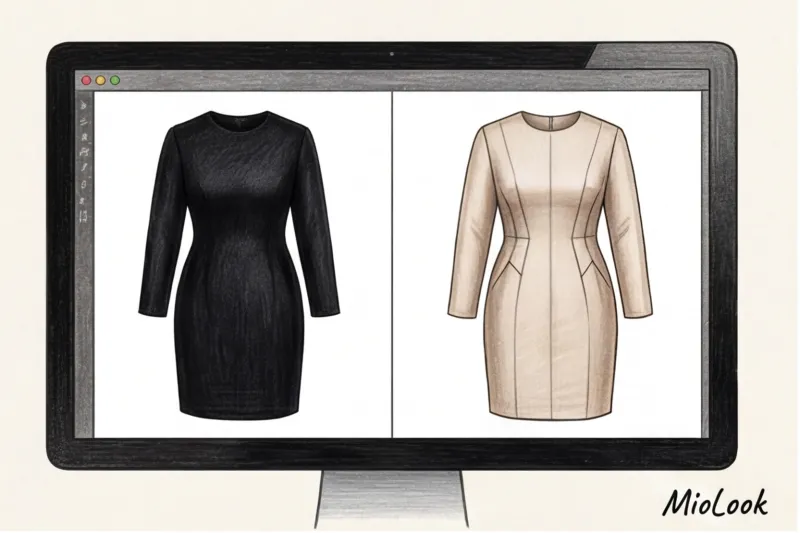
One incorrect or missing dart at the chest turns a shirt into a tent. Properly constructed plus-size garments use up to 15 additional darts and relief seams compared to a standard size. They create balance in the garment and guide the fabric so it hugs the curves rather than hangs on them.
Access to MioLook for €0.99 — one-time payment
A smart AI stylist will select the perfect look based on your proportions.
Get access — €0.99 onceFabric architecture: what the best plus-size clothing brands are made of
And now I will say something that many people initially argue with: stretch is your enemy, not your friend Most plus-size women intuitively seek fabrics with a high elastane content. We believe that if the fabric stretches, it will conform to the figure and not feel constricting.
But physics works differently. Excess elastane (more than 3-5%) causes the fabric to cling to every fold. By midday, such pants stretch at the knees, lose their fit at the waist, and sag. A true base layer should maintain its own architectural structure. It should sculpt the silhouette, not simply cling to it.
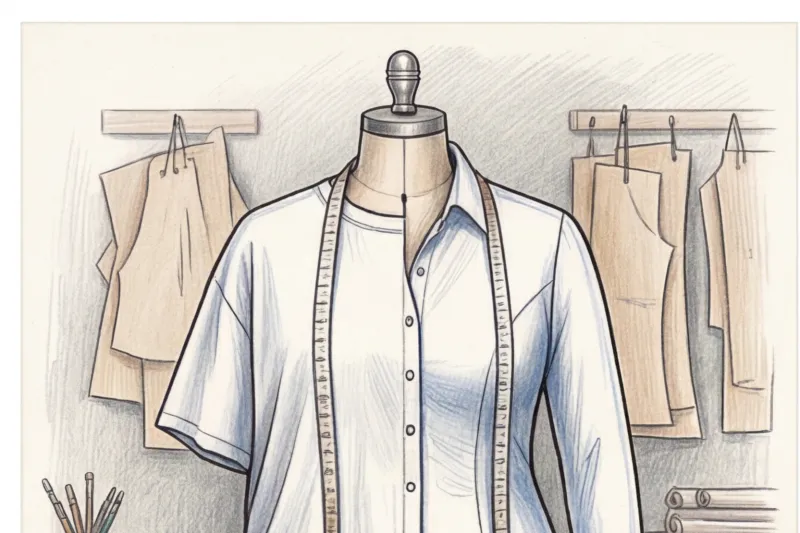
When I was searching for the perfect white shirt for a client, I personally tested 15 different plus-size styles from different brands. The conclusion was clear: fit is everything.
- T-shirts: Only cotton with a density of at least 200–250 gsm. It doesn't sag or make underwear see-through.
- Jeans: Heavyweight denim, 12 oz or more. Yes, they're harder to get into, but they create the perfect vertical line and tighten the stomach better than any shapewear.
- Jackets and trousers: Suit wool or thick gabardine.
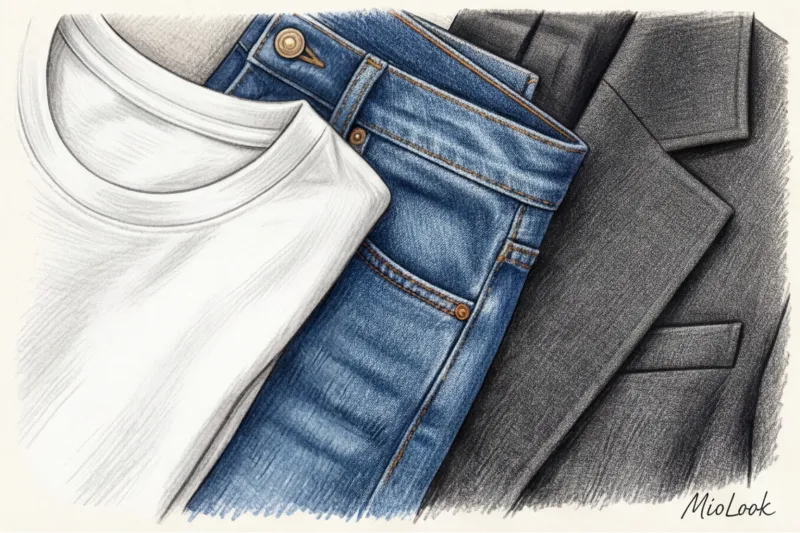
How do you test fabric in a store? Squeeze the edge of the item in your fist for 5 seconds. If the fabric is still crumpled, leave it on a hanger. Then hold it up to a lamp. The ideal base fabric should be opaque.
Review of trusted plus-size clothing brands: where to buy essentials
According to the McKinsey State of Fashion (2024) report, despite the rise in inclusivity, the market remains acutely short of quality basic clothing in the plus-size segment. Brands are eager to make oversized hoodies, but finding the perfect straight-leg trousers is a real challenge.
I selected the brands for this list based on three strict criteria: sizing consistency, seam quality, and durability. This isn't a promotional selection, but a list gleaned from real-life shopping experiences.
Premium segment: investing in a durable frame
If you have a wardrobe investment budget, invest it in structured pieces. Marina Rinaldi remains the gold standard for fit. Their patterns for jackets and coats are designed to visually flatter the figure, lifting the shoulders and defining the waist without constricting.
For the perfect trousers, I always take my clients to Elena Miro They know how to balance the inseam, so their trousers don't bunch up in the crotch—a common problem with mass-market trousers.
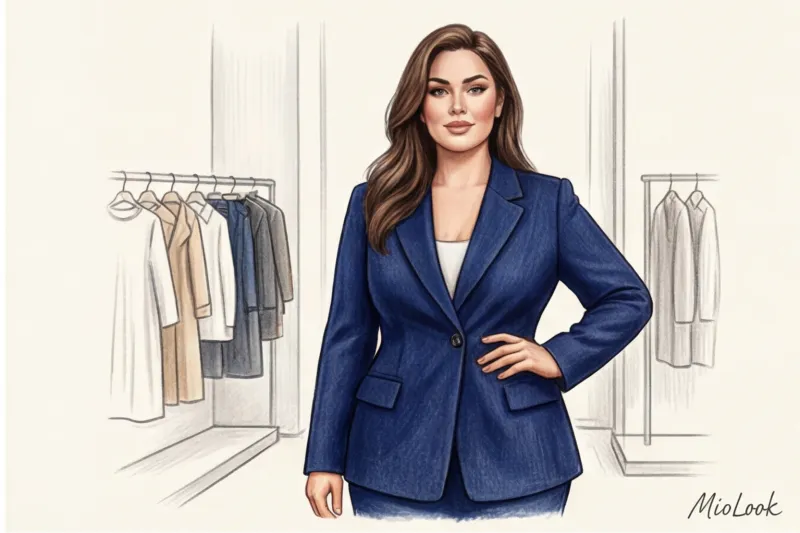
But does it make sense to buy a basic $150 T-shirt at a premium store? No. This is a case where the "investment" advice doesn't work. Expensive cotton wears out from washing almost as quickly as high-quality mid-market cotton. Save your budget for a jacket.
Your perfect look starts here
Join thousands of users who look flawless every day with MioLook, mixing premium and mass-market products.
Get access — €0.99 onceLocal brands and the middle market: the perfect balance
The real revolution is now happening in the middle segment, where brands specialize exclusively in clothing brands for plus size women , rather than making them an appendage to the main collection.
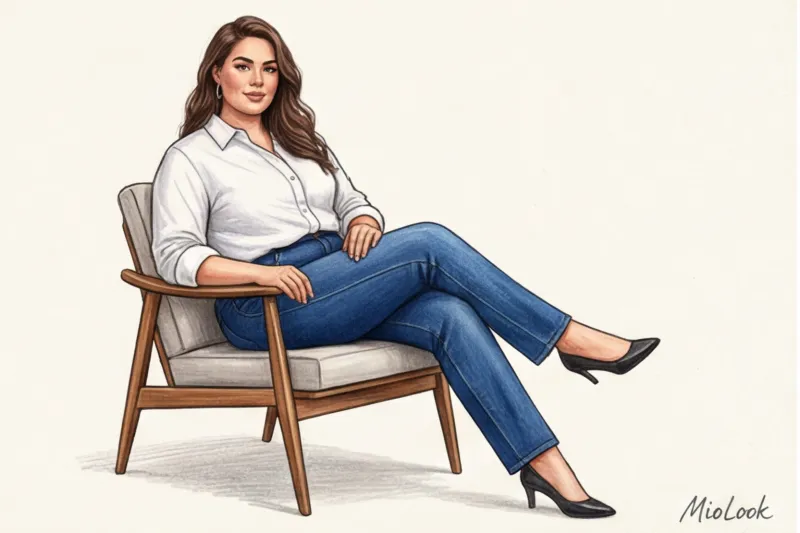
For example, 4Forms — They work like a true engineering bureau. Their suit base for sizes 44-64 has the exact right stiffness I mentioned above. Brand Amazing does a great job of achieving proper minimalism. They've removed all the outdated embellishments (rhinestones, lace shoulders, asymmetrical hems) that for some reason have been considered a plus-size must-have for decades. And for thick jeans without too much elastane, it's worth checking out niche brands like Latric.
Global mass market: who makes honest plus size?
The mass market is a minefield. You can find diamonds here if you know where to look and avoid disposable items.
My absolute favorite for buying basic shirts and structured knits is Marks & Spencer They have phenomenally consistent sizing and excellent fits for full-busted women. If the tag says non-iron, the collar will indeed stay stiff all night.
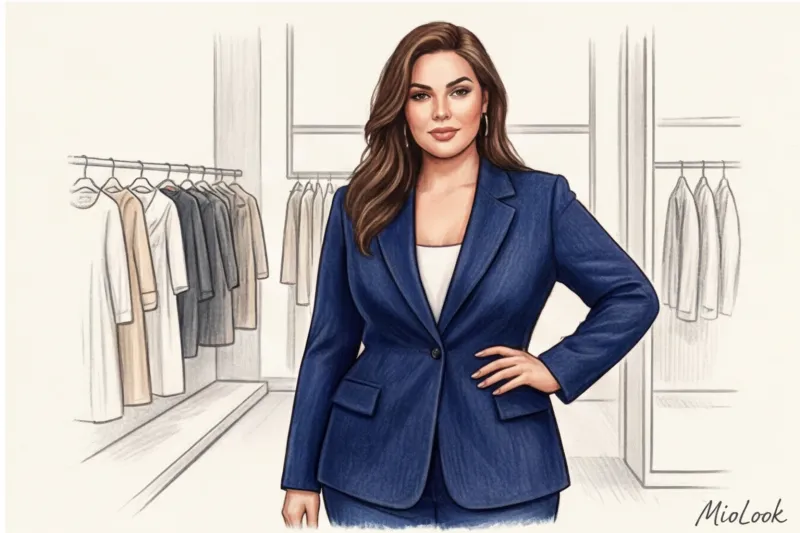
Ruler Mango Curve (formerly Violeta) is a great place to buy outerwear, straight-cut coats, and shirt dresses. However, I recommend avoiding their thin viscose knitwear—it loses its shape after the third wash.
As for ASOS Curve , this is a great platform, but it requires a strict filter. Ignore the trendy polyester tops for one occasion. Look for 100% cotton items and thick, straight-leg jeans in their basic line. Be sure to check the composition in the description.
Stylist Checklist: 5 Rules for Trying on Basic Clothes
I have a client, a financial analyst. For years, she'd been buying soft knit cardigans in a size 56 for work (she's a size 52), trying to "hide" her belly. When we first put her in a structured double-breasted jacket in the right size, she cried in the fitting room. The stiff fabric framed her, and she saw a statuesque, confident woman, not a "person in a cocoon." To replicate this effect, use my fitting room checklist:
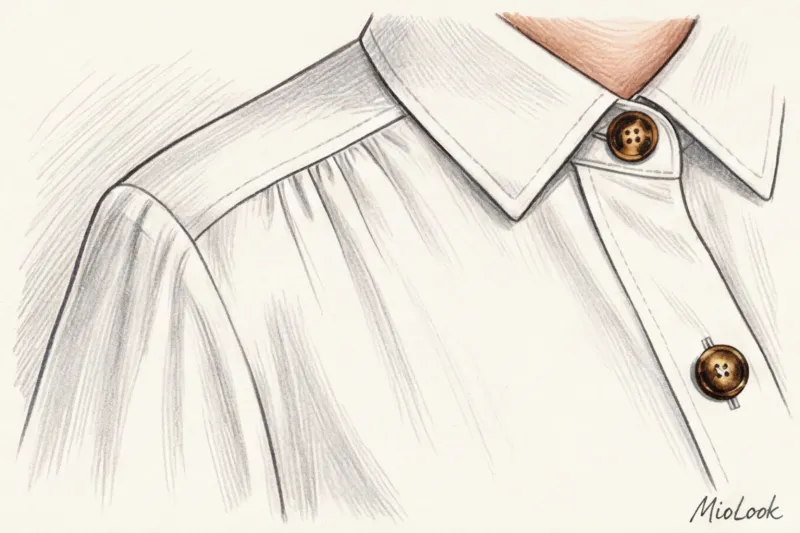
- Shoulder seam rule. It should sit exactly at the anatomical point of the shoulder (unless it's a deliberately oversized garment with a dropped shoulder). If the seam has slipped 2 cm down, the garment looks sloppy.
- Sit and Stand Test. Never buy pants or a skirt just by standing in front of a mirror. Be sure to sit on a ottoman in the fitting room. If there's a gaping hole in the back of the waist (waistband gap) and the fabric is digging into your stomach, the pattern isn't right.
- Air in silhouette. There should be 1.5–2 cm of space between your body and the fabric of your base layer (easy fit). It's this "airiness" that makes you look slimmer, not tightness.
- Audit of fittings. Cheap plastic buttons painted to look like metal are often a telltale sign of excellent fabric. If the item fits perfectly, buy it, but on the way home, stop at a hardware store and replace the buttons with horn or high-quality metal ones. This will increase the product's appearance tenfold.
- Visual horizontal. A basic jacket, top, or jumper should never end at the widest point of your hips. It should be either shorter (to the hipbone) or longer (to cover your buttocks).
Ready to get started?
Digitize your best finds and create new sets. Try the free plan—no commitments.
Get access — €0.99 onceSmart Database Management: How MioLook Helps Avoid Mistakes
When you finally find the perfect brands with the right fit, the other extreme occurs. In our joy, we start buying a fifth pair of identical black trousers simply because they "fit well." The result is a full closet with nothing left to wear.
Basic plus-size clothing requires strict accounting. Once you've found your perfect fit, it needs to be digitized. I recommend my clients use smart wardrobe feature in MioLook Take photos of your successful purchases. The app will help you track which brands and styles work best for you.
But most importantly, the app's AI stylist will show you how to mix and match this new, structured base. Instead of the usual "black pants and a loose button-down shirt" pattern, you'll see dozens of new combinations of the same items: tucked-in, belted, or layered.
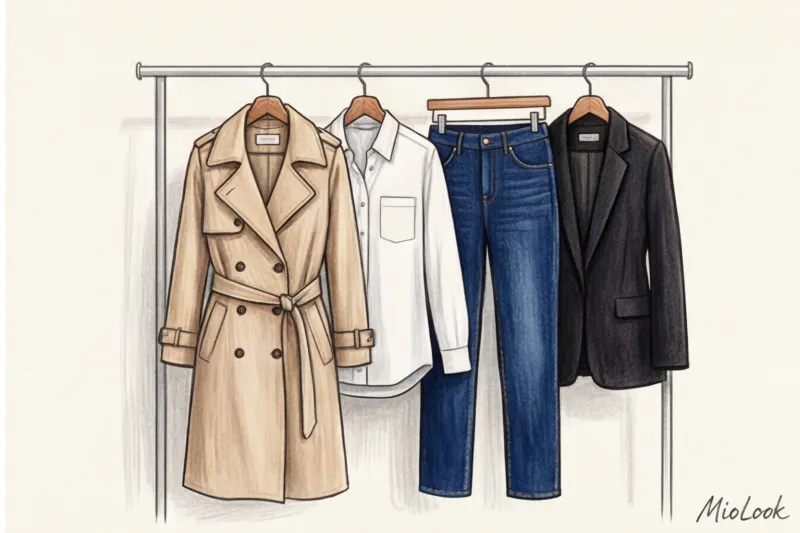
Shifting to a conscious choice of plus-size clothing brands is a transformation in mindset. It's abandoning the idea of "clothes to hide and get through the day" in favor of "clothes that express my value right now." Stop settling for things that don't flatter you. Demand high-quality cuts, sturdy fabrics, and respect for your figure from brands. You deserve it.