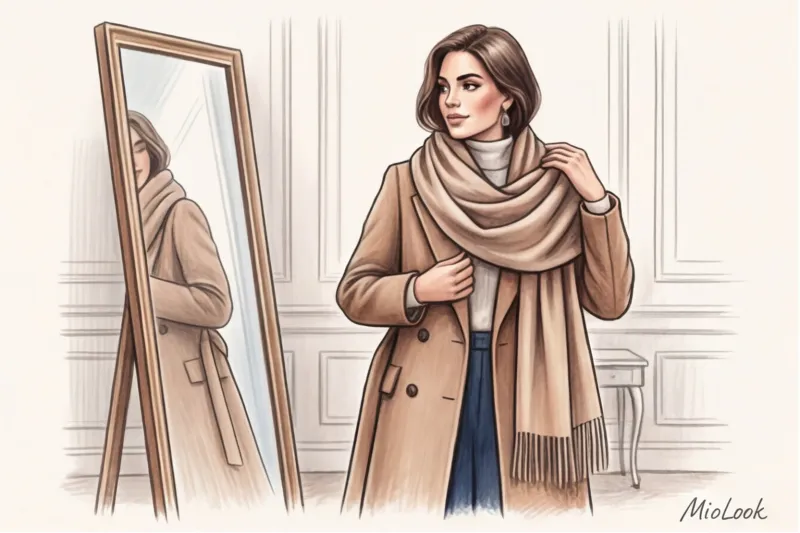

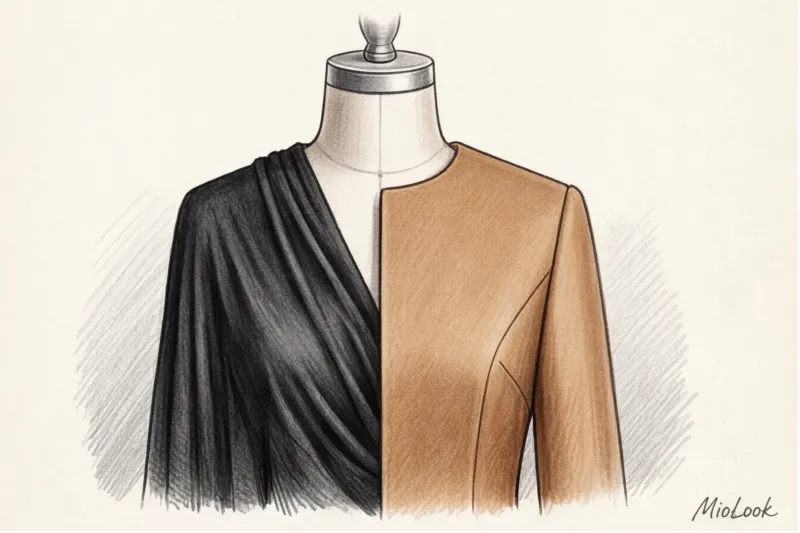
How many shapeless black tunics and "comfortable" loose cardigans are hanging in your closet right now? I'm willing to bet at least three. For decades, we've been taught that excess volume should be draped, hidden in the shadows of dark fabrics, and never clingy. As a practicing stylist and colorist, I can officially declare: this strategy has exactly the opposite effect.
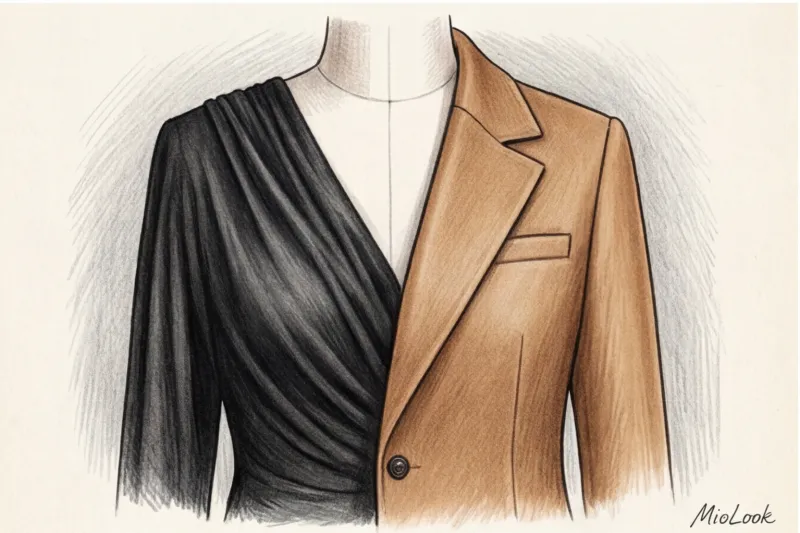
Properly assembled basic wardrobe for plus size women girls' makeup is based not on the principles of camouflage, but on the laws of architecture. We've already discussed the basics of visual correction in more detail in our the complete plus-size style guide , and today we'll get down to some tough practice: throwing out what's ruining you and building an ideal foundation that works like a framework.
A basic wardrobe for plus-size women isn't about color, it's about an architectural framework.
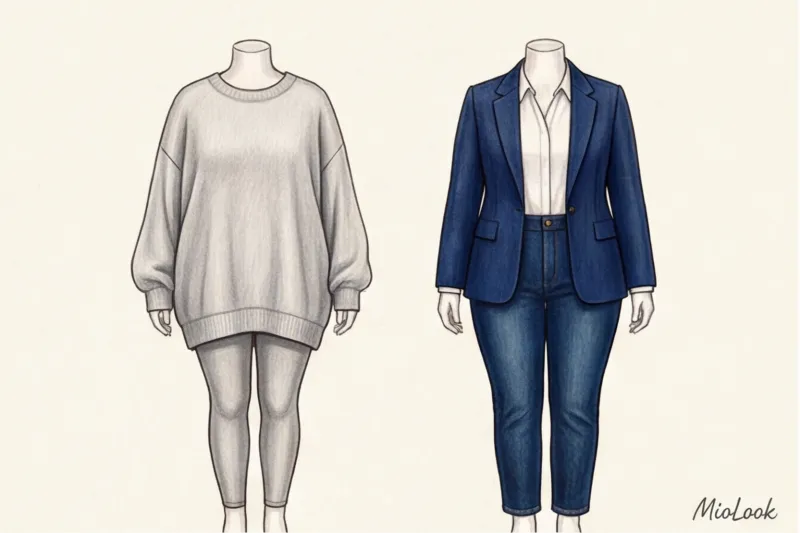
The main paradox I encounter when reviewing wardrobes: women try to appear slimmer by wearing black, while buying items made of the thinnest viscose or flimsy single-piece cotton. Remember this counterintuitive but ironclad rule: Black color doesn't make you look slimmer if the item is made of thin material that doesn't hold its shape. A white, structured jacket made of thick cotton will visually reduce your size much more effectively than a shapeless black tunic.
In plus-size styling, there's a "200-gram rule." The ideal fabric for a fuller figure should have a density of at least 200–250 grams per square meter. The fabric should be heavy enough to fall under its own weight, rather than cling to every fold of the body.
"The architectural design of clothing proves that the visual weight of a figure is determined not by color, but by the armhole line and the presence of shaping seams (darts). Clothing without structure turns the body into a monolith."
Let me give you a practical example. During a wardrobe review for a size 54 client, we ruthlessly removed 15 thin dolman tops and replaced them with just three heavy, straight-cut jackets. After putting one of them on over a simple, basic T-shirt, she looked in the mirror and said, "It feels like I dropped two sizes in five minutes." It's not magic; it's geometry.
Three main enemies in the closet: what you need to get rid of before creating a base
You can't build a new house on a rotten foundation. Before we move on to shopping, you'll need to do an audit. Here are three categories of items I throw in the trash bag in 90% of my consultations.
Shapeless tunics and hoodie dresses
For some reason, it's believed that an oversized, square-cut garment conceals the stomach and hips. In reality, the fabric, without darts, falls downwards from the widest point of your figure (usually your chest or stomach). The human visual system is designed to mentally construct the volume of your body under the fabric along this widest point. As a result, the robe turns you into a monumental rectangle.
Thin, flimsy knitwear
Clothes that "stretch perfectly and don't pinch anywhere" are an illusion of comfort, but you pay for it with your silhouette. Thin viscose, cheap acrylic, and translucent cotton cling treacherously to the contours of your underwear, highlighting even the slightest imperfections in your skin and creating shadows where they shouldn't be. If you can crumple a T-shirt in one fist and it takes up minimal space, it has no place in a plus-size wardrobe.
Clothes without a clear shoulder line
Dropped sleeves and raglan fits on soft fabrics are a surefire way to create sloping shoulders and a bulky, heavy top. A missing shoulder seam in the right place throws off proportions. Your superpower is a set-in sleeve, which creates a clean, straight line from neck to shoulder, bringing the entire silhouette together.
Your perfect look starts here
Tired of wondering what clothes really suit you? Join thousands of users who look flawless every day with the help of artificial intelligence.
Get access — €0.99 onceChecklist: 8 Essentials for a Smart Basic Wardrobe
The ideal basic capsule is a set of functional elements that fit together seamlessly. You can read more about the principles of compatibility in the guide. Capsule Wardrobe: A Complete Guide to Creating One , but I adapted this list for girls with curves.
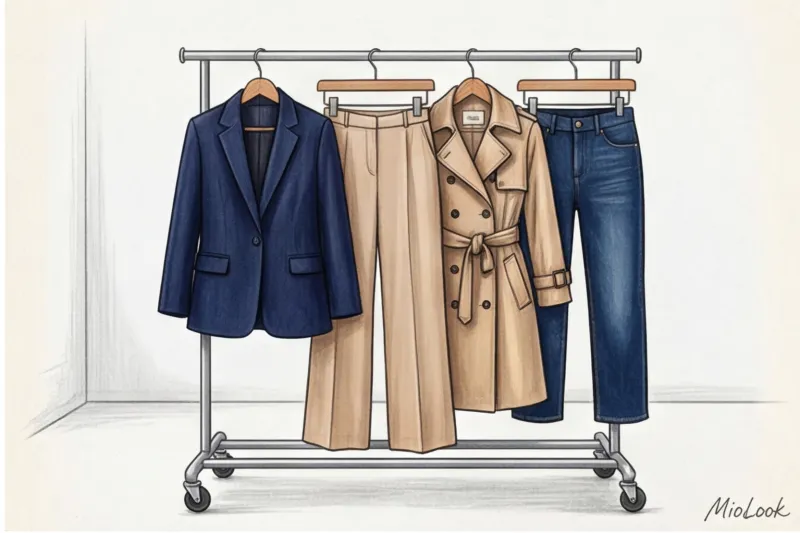
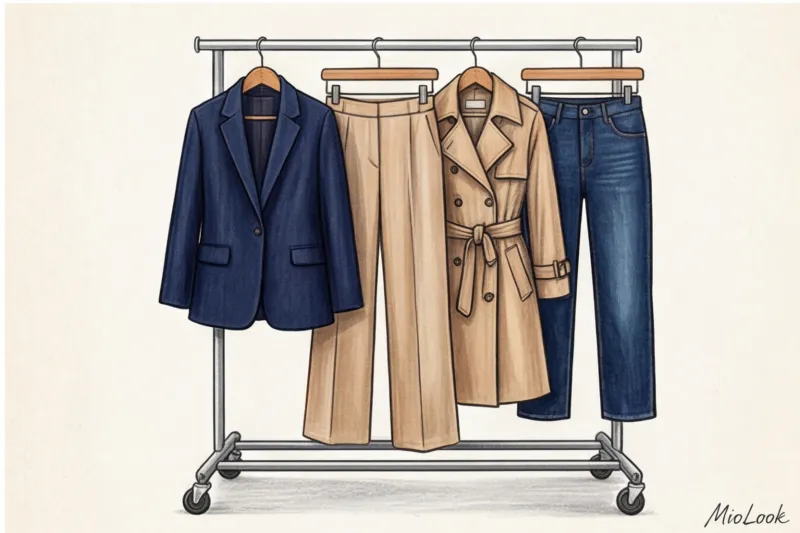
1. Structured Jacket (Supporting Element)
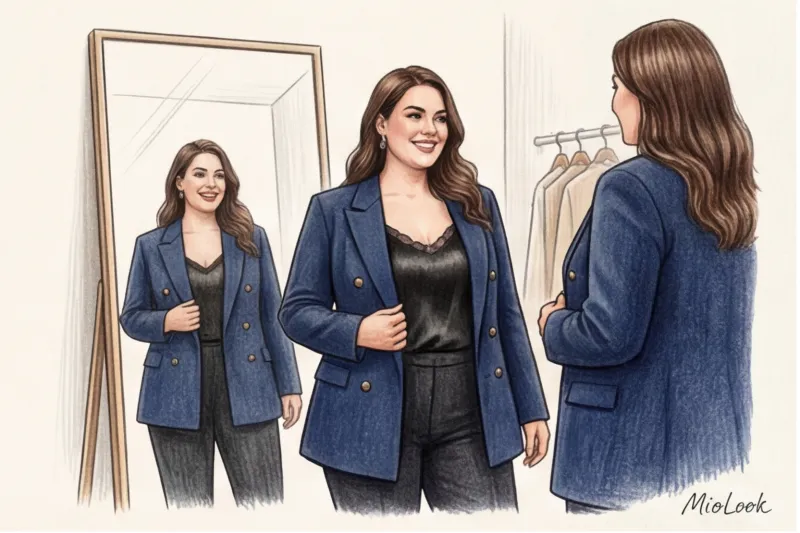
You need a straight or semi-fitted jacket that's cut just below the widest point of your hips. Shoulder pads (even minimal ones) are a must. They broaden the shoulders, balancing out the fullness of your hips and stomach. Look for styles made of dense wool blends or heavy crepe in collections from brands like Massimo Dutti or H&M Premium.
2-3. Ideal straight trousers and jeans (Vertical)
Forget skinnies and shapeless joggers. The goal is to create a long vertical line.
- Trousers: Palazzo or straight models with creases (a crease is a powerful vertical line!) made of suiting fabric with a density of at least 300 g/m².
- Jeans: Only heavy denim. The composition should be 98-100% cotton and a maximum of 2% elastane. They should be easy to put on—then they'll act as a lightweight corset, cinching your hips, rather than stretching out after an hour of wear.
4-5. Tops and shirts of the right density
A classic white or light blue loose-fitting shirt made of heavy cotton (poplin or oxford weave). It should be tight across the chest. Choose basic T-shirts made of smooth cotton with a weight of at least 180 g/m²—they're not see-through and sit comfortably on your body without clinging.
6. A dress of the right cut
My favorite choice for plus-size clients is a wrap dress or shirt dress made of heavy linen with added viscose (to reduce wrinkling). The wrap creates a diagonal line that visually breaks up the body's curves and defines the waist even in areas where it's not anatomically defined.
Access to MioLook for €0.99 — one-time payment
Our smart AI stylist will analyze your appearance and put together the perfect capsule wardrobe of items that will truly highlight your best features.
Create an AI capsuleThe Role of Color in the Basic Capsule: Tips from a Colorist
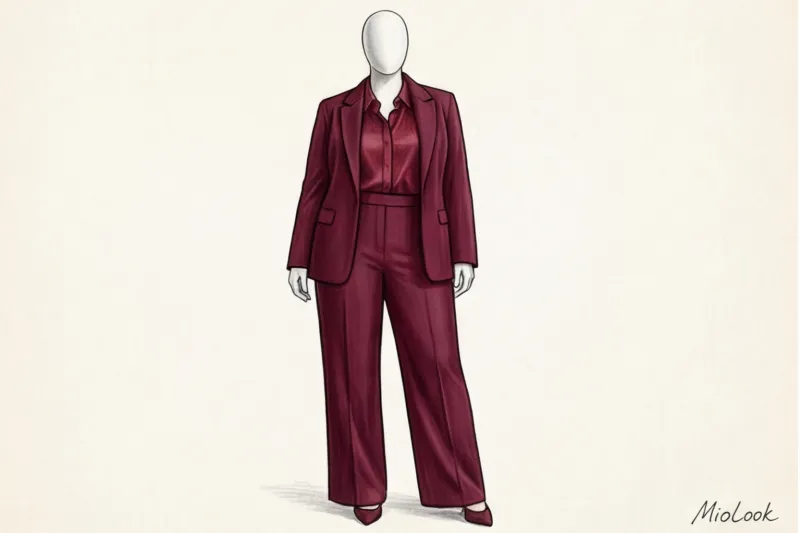
Johannes Itten's color theory works great not only on canvas but also in styling. The most powerful tool for elongating and slimming is technique. "color column" When you wear a top and pants in the same shade (even a light one!), you create a continuous vertical line. The eye moves from top to bottom without stopping to see color blocks, making you appear taller and slimmer.
According to the PANTONE Color Institute's 2024 Color Report, complex, deep shades are regaining their status as the "new base." Stop hiding in black and gray. Incorporate the following colors into your wardrobe:
- Deep emerald (bottle green)
- Rich burgundy or wine
- Classic navy blue
- Dark chocolate
One time, a client and I swapped out her usual black-and-white office attire (white top, black bottoms—which mercilessly cut her figure in half) for a monochrome pantsuit in a deep wine shade. The effect was stunning: the column of color worked like an optical illusion, shaving off extra inches on the sides.
Scale in Accessories: How Bags and Shoes Affect Your Silhouette
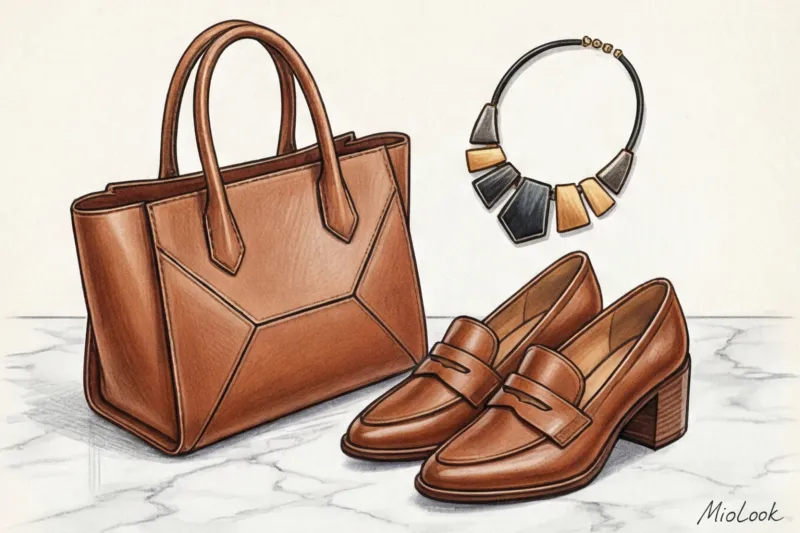
The law of proportionality is another rule of body architecture. If you place a large object next to a tiny one, the large one will appear even larger due to the contrast in scale. This is why micro crossbody bags are the worst choice for women over a size 50.
The minimum bag width for a statuesque figure is 25-30 centimeters. Choose models with a rigid shape (totes, satchels). Soft bucket bags and shapeless shoppers echo the soft curves of the body, while the rigid geometry of accessories adds the necessary poise.
The same goes for shoes. A thin stiletto heel under a full figure looks precarious and comical (the "hut on chicken legs" effect), while completely flat ballet flats with a round toe make your stride heavier. Your choice should be shoes with a stable block heel (3-5 cm) or stylish loafers with a chunky sole.
How to Build a Basic Wardrobe for Plus-Size Women: A Step-by-Step Plan
Theory without practice is dead. Here's your specific plan for the weekend:
- Step 1: Ruthless audit. Take everything out. Remove anything thin, flimsy, wrinkled, or shapeless. Keep only those items that make you feel confident.
- Step 2: Constructing verticals. Invest in one pair of perfect trousers and one pair of jeans made from sturdy materials. If necessary, have the length adjusted at a tailor's.
- Step 3: Erecting the frame. Buy a structured jacket and shirt. Check the fit at the shoulders—the seam should be right on the bone.
- Step 4: Color Sync. Make sure that the new tops and bottoms can be combined into monochromatic or similarly toned "columns."
The Golden Rule of Trying On (and Fair Warning)
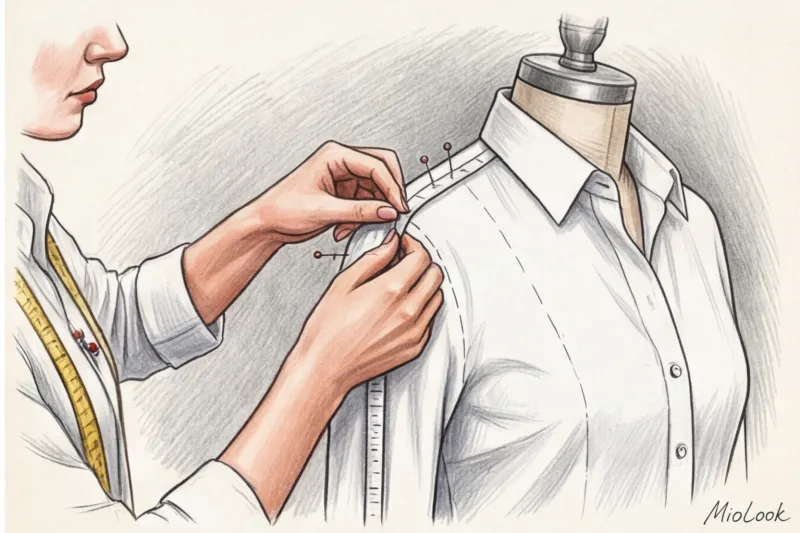
My main advice: It's always better to buy a size larger and have it adjusted at a tailor's than to squeeze into a size that's too tight Buy jackets and dresses that fit the widest part of your body. If a garment is tight at the hips but too big at the waist, having it tailored is inexpensive, but it will still fit like a couture gown.
Fair warning: This atelier tip works great for suiting fabrics, cotton, and denim, but completely unsuitable for complex textured knitwear It's almost impossible to tailor a sweater without losing its shape, so knitted items should be selected precisely to fit.
Ready to start your transformation?
Upload photos of your items to MioLook, and the algorithm will help you create the perfect capsule wardrobe based on your body type. No commitment or stress.
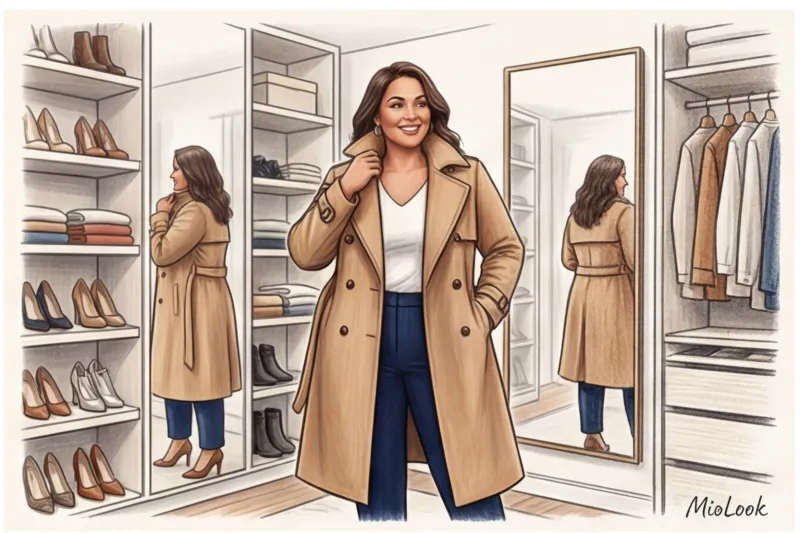
Try MioLookBuilding a wardrobe is a process that takes time and self-honesty. Stop hiding your body in dark bags. Give it a beautiful, high-quality architectural finish, and you'll see how not only your reflection in the mirror changes, but also your posture, gait, and self-image.