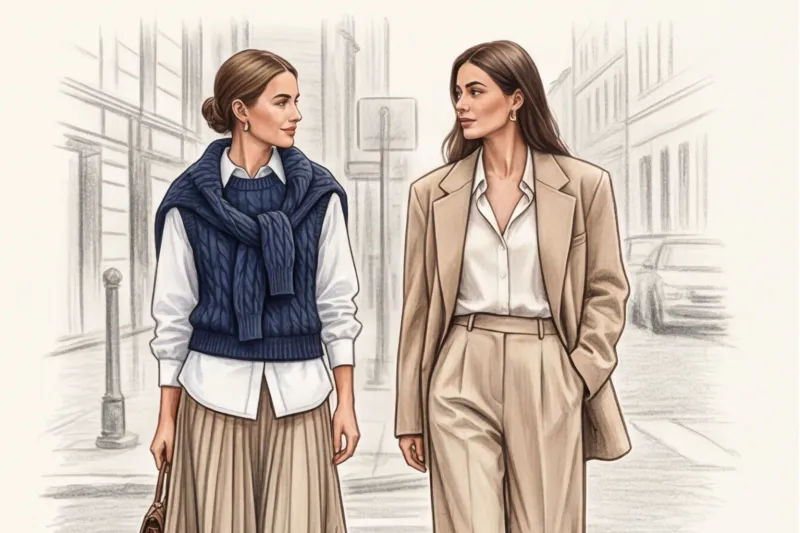
I remember that warm September evening in Portofino. The promenade was bustling with tourists: neon bags, loud logos on belts, gold hardware dazzling in the rays of the setting sun. And then, through this visual chaos, a couple walked by, impossible to tear your eyes away. She wore a slightly wrinkled ecru linen dress and suede loafers. He wore an impeccably tailored polo shirt and lightweight chinos. Not a single logo. Not a single recognizable monogram. Just an overwhelming sense of confidence and status. It's moments like these that truly understand how aesthetics work.
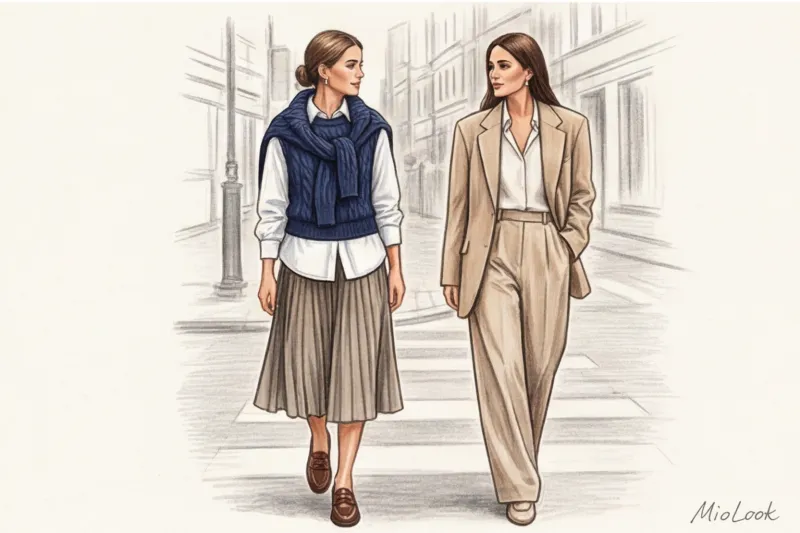
Today, social media has turned the terms "Old Money" and "Quiet Luxury" into synonyms, lumping together cashmere sweaters, tennis skirts, and minimalist coats. But as a stylist with 12 years of experience, I insist: The difference between Old Money and Quiet Luxury fundamentally. They convey completely different messages to the world. We've already discussed the origins of this phenomenon in more detail in our The Complete Guide to Old Man Style , and today we'll look at how these two directions work in practice and why you don't have to choose one over the other.
The difference between old money and quiet luxury: where is the invisible line drawn?
The main confusion arises from the fact that both styles reject logomania. But their philosophies point in different directions.
Old Money Looks back. It's a story about origins, exclusive country clubs, the Ivy League, and family heritage. The aesthetics of Ralph Lauren, Princess Diana, and the Ivy League. Metaphorically, it's an old stone estate in the Hamptons, where the furniture is a little worn, but worth a fortune.
Quiet Luxury looks to the future and the present. It's modern minimalism, hidden opulence, a focus on innovative fabrics and architectural cuts. Brands like The Row, Loro Piana, and Jil Sander. It's a New York penthouse with panoramic windows: plenty of air, straight lines, and not a single superfluous detail.
According to The Lyst Index 2023–2024 report, demand for stealth wealth aesthetics has increased by 173%. Analysts attribute this to a reaction to economic instability: today, displaying wealth through logos is considered bad form.
Color Palette and Textures: How to Read Codes
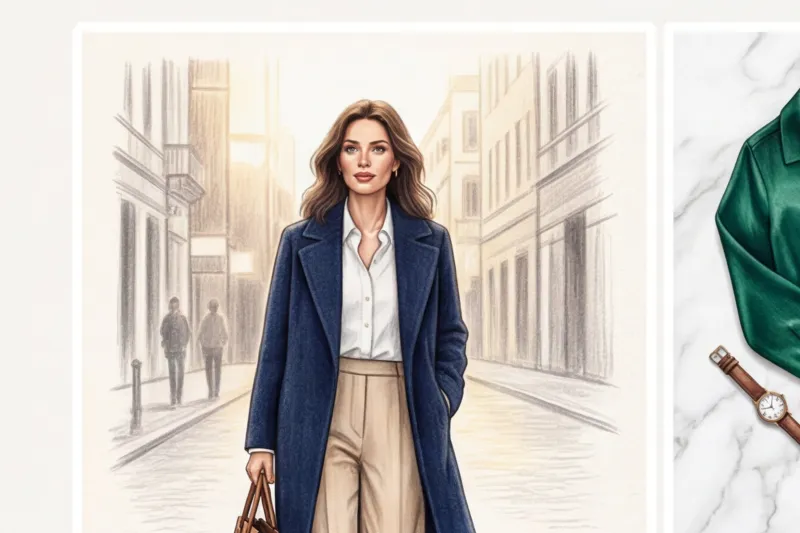
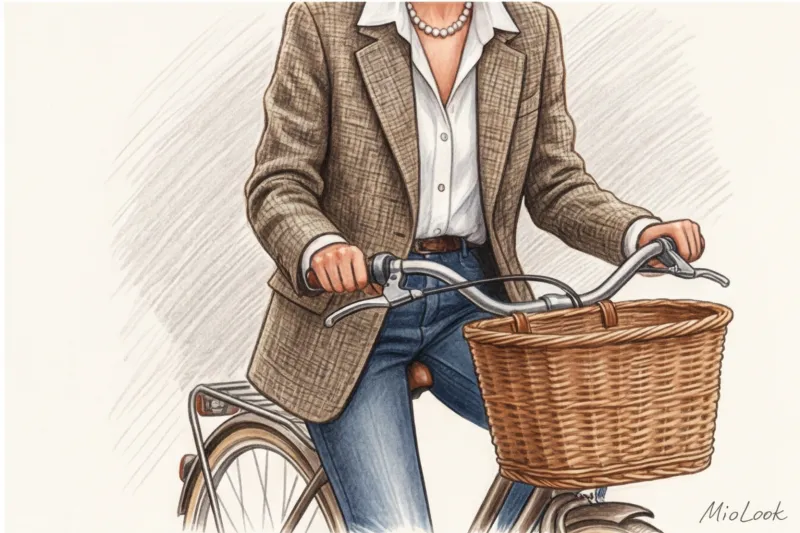
Have you ever noticed how color reveals a particular era? At Old Money, classics reign supreme: deep navy, burgundy, rich emerald, and off-white. Traditional prints are perfectly acceptable here: tartan, argyle on sweaters, and subtle nautical stripes. Textures also have a history—rough tweed, thick corduroy, and textured cable knit.
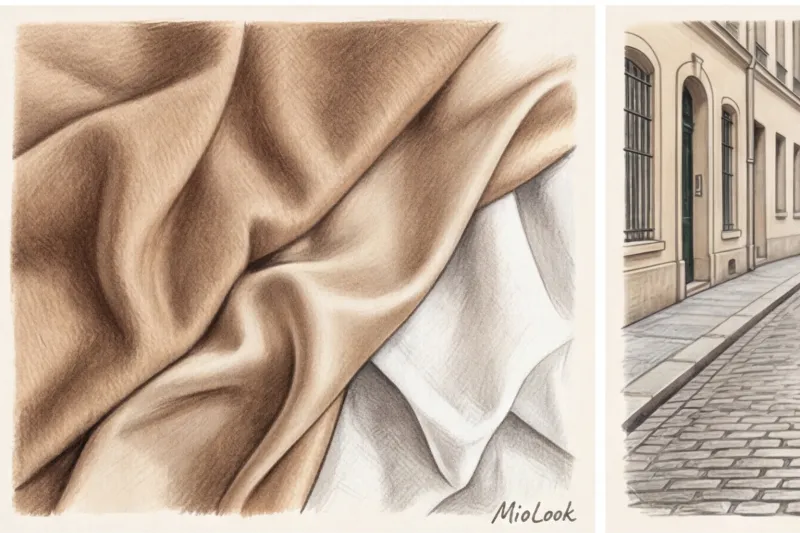
Quiet luxury, on the contrary, demands sterility. This is the realm of monochrome, complex shades of gray, taupe, beige, and uncompromising black. A complete absence of prints. Only smooth, flowing textures: silk, the finest cashmere, viscose.
Your perfect look starts here
Join thousands of users who look flawless every day with MioLook.
Get access — €0.99 onceOld Money Style DNA: Aristocracy with History
The foundation of this style is pieces that look like they were inherited from your aristocratic grandfather. They shouldn't scream newness.
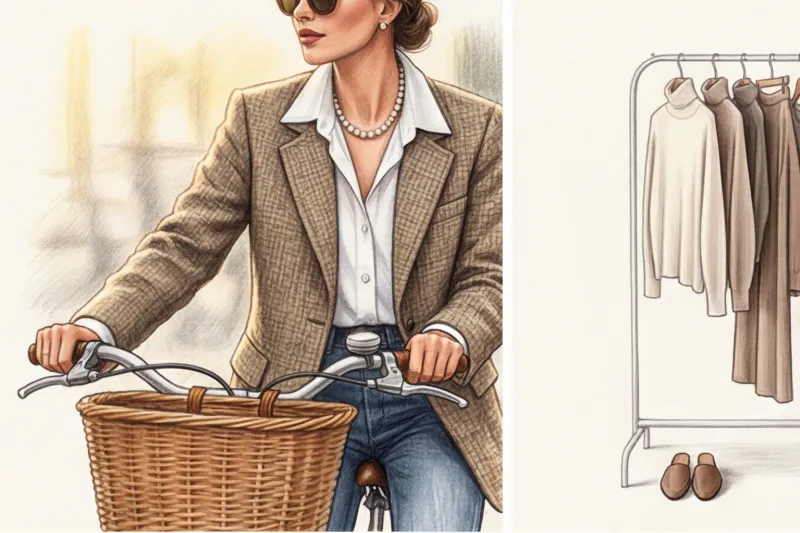
- Key elements: Oxford shirts, pleated skirts, tassel loafers, a string of pearls, classic trench coats.
- Sports aesthetics: elements of equestrianism (riding boots, jockey caps), tennis (white pleated minis) and yachting (Topsiders).
In my practice, clients often make the same mistake: trying to iron Old Money-style clothes until they're crisp. This kills the charm! True Old Money is always a little sloppy. A perfectly ironed, starched shirt is a clerk's uniform. But a slightly wrinkled, expensive linen with rolled-up sleeves is the freedom of a person who doesn't need to prove anything to anyone. If you wear all the attributes at once (tweed, pearls, a headband), you risk creating a "Halloween costume" effect. Stick to the classics in moderation.
The Anatomy of "Quiet Luxury": The Architecture of Cut and Nothing Superfluous
While Old Money boasts charisma and history, Quiet Luxury works like a Swiss watch, thanks to its impeccable mechanism. The piece speaks for itself through its fit and the quality of the fabric.
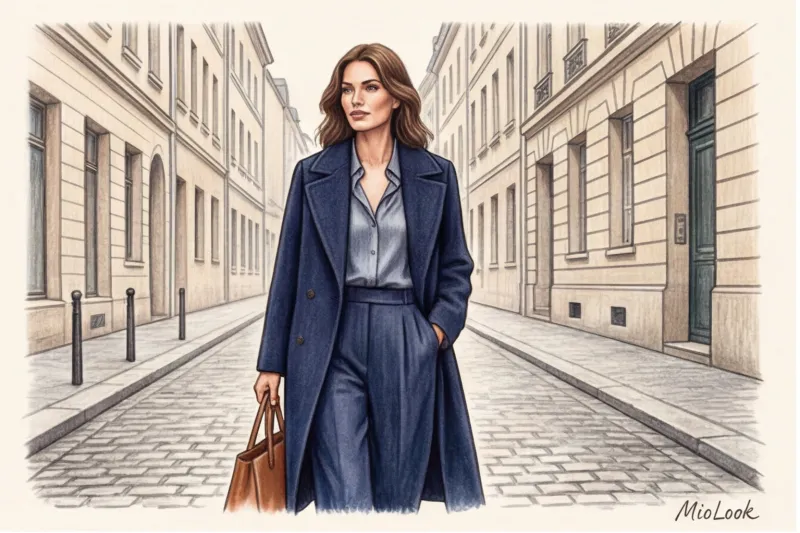
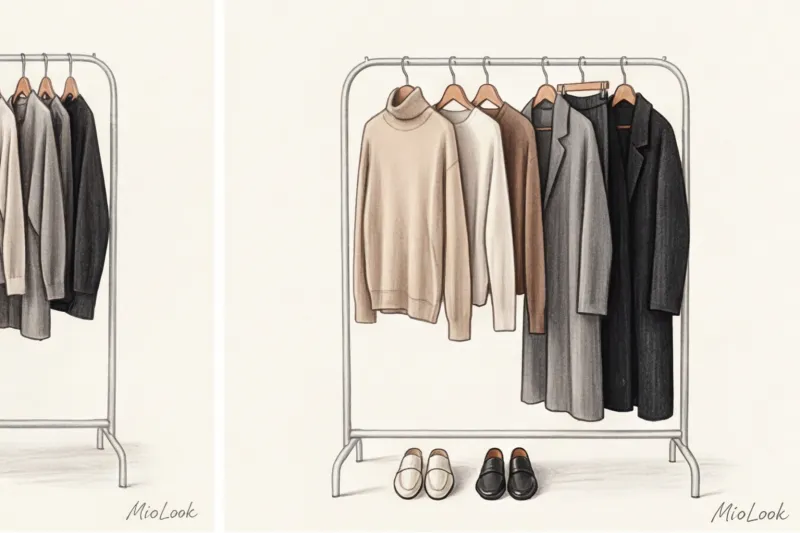
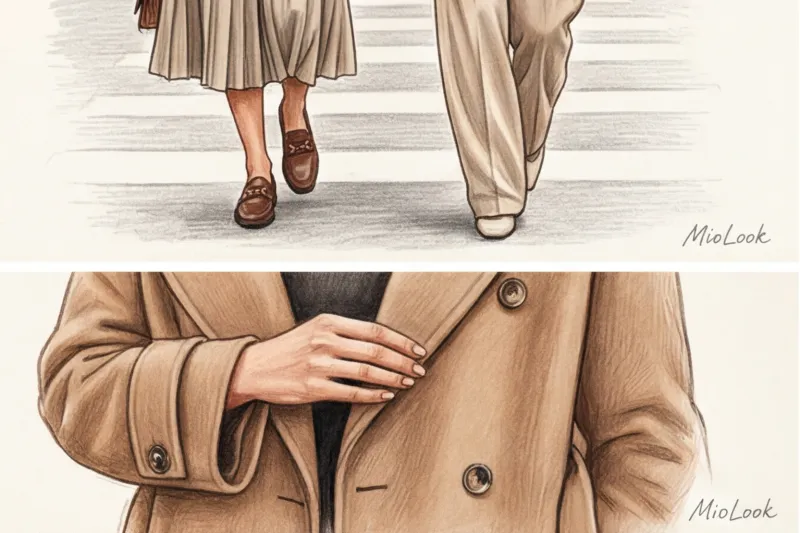
Here, voluminous menswear-inspired jackets, silk slip dresses, wide, flowing palazzo pants, and sheer cashmere turtlenecks take center stage. No visual noise.
I always teach my clients the main rule of a stylist: the back of a thing should be as beautiful as its front Turn the jacket inside out before buying. How are the seams finished? What is the lining made of? (Spoiler: if it's 100% polyester in a €300 jacket, return it to the hanger.) True luxury is in the details: smooth piping, buttons made of natural horn or mother-of-pearl instead of cheap, shiny plastic.
Access to MioLook for €0.99 — one-time payment
A smart AI stylist will select the perfect look based on your preferences.
Get access — €0.99 onceDebunking the myths: the difference between old money and quiet luxury on a budget
The main myth I fight every day is "you need millions to dress like this." It's not true. Paradoxically, the aesthetic of "quiet luxury" is cheaper in the long run than regularly buying up mass-market trends.
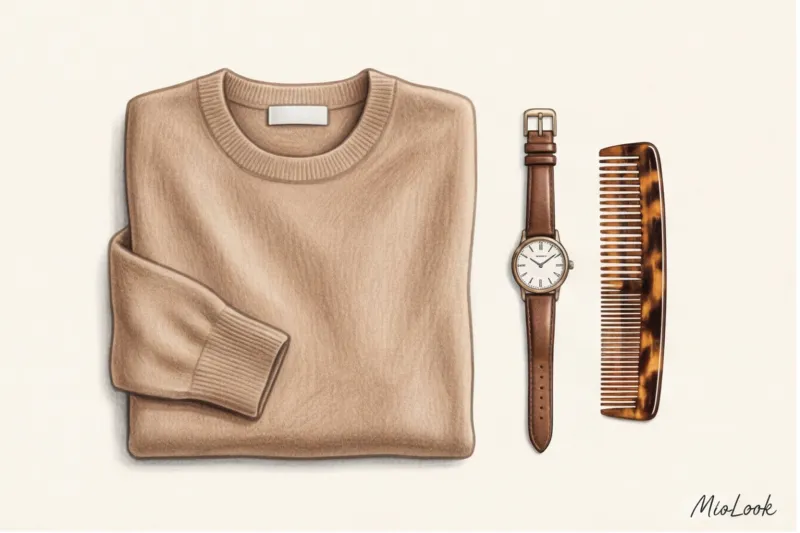
Let's turn on the math of conscious wardrobe and do the math. Cost Per Wear (CPW) A basic cashmere sweater will cost you around €250–€300. You'll wear it 60 times a year for 5 years (300 total wears). The price per wear is €1. A trendy acrylic sweater costs €30. It will pill and lose its shape after three washes. You'll wear it 5 times. The price per wear is €6. Which is really more expensive?
To make things last a long time, remember 70% rule From textile experts. For a fabric to provide that "expensive" heavy drape and hold its shape, it must contain at least 70% natural fibers. A blend of 70% wool and 30% polyester will wear beautifully. But 100% acrylic will ruin even the most ingenious design.
The same goes for accessories. If you're on a budget, it's better to buy a single, logo-free, thick leather bag from a local artisan (like that amazing €250 Italian shopper I found in Florence) than a fake or an easily recognizable mid-range bag that will go out of style in a year. We wrote more about choosing a basic bag in our article about Basic bags for summer and beyond.
What to Choose: A Stylistic Checklist
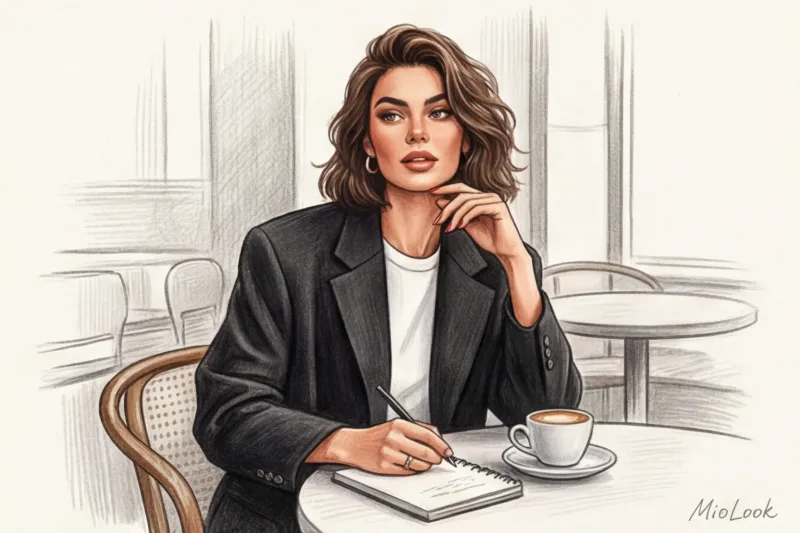
Clothes are your silent avatar. How do you reconcile these styles with your lifestyle?
- Old Money is right for you if: You have a strict classic dress code and work in law, education, or finance. You love vintage, value tradition, and want to project reliability and conservatism.
- Quiet Luxury is right for you if: You work in the creative industry, IT, psychology, or consulting. You value minimalism and comfort and are tired of visual noise. You want to project innovation and inner freedom.
Can they be mixed? Absolutely. Moreover, it is at the intersection of these aesthetics that the most profound images are born, reflecting complex archetypes in style.
Stylist's image formulas: take and apply
Theory is dead without practice. Here are three of my favorite formulas that work without fail. My signature approach: thing + thing + detail = instant chic.
- Formula 1 (Mix): An architectural men's jacket (Quiet Luxury) + a cotton Breton top and straight-leg blue jeans (Old Money) + leather loafers. Perfect for a hoodie-wearing office Friday, but you still want to look put-together.
- Formula 2 (Pure Old Money): A fine-knit merino polo shirt + an A-line midi skirt + a thin leather belt + ballet flats. Add a leather watch and you're ready for brunch.
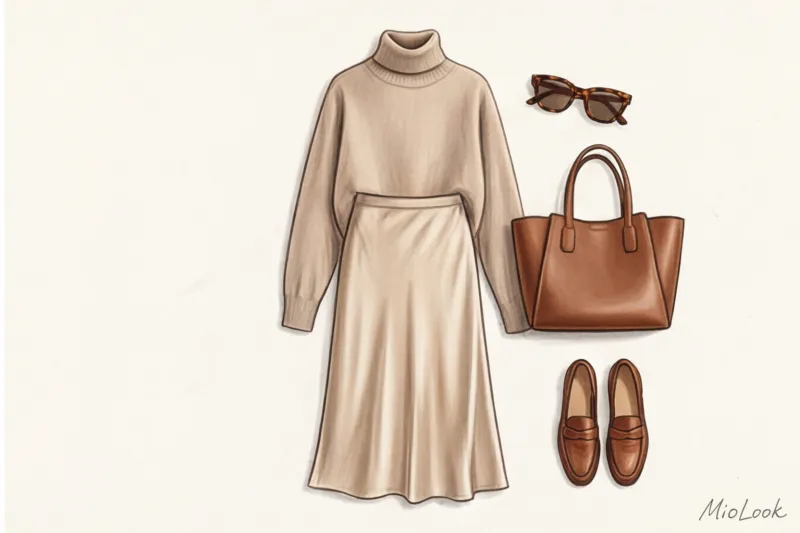
- Formula 3 (Pure Quiet Luxury): A silk midi skirt (look for at least 19 momme count, otherwise the fabric will highlight even the slightest imperfections on your body) + an oversized tone-on-tone cashmere sweater + suede mules.
Don't forget the "rule of thirds." Jeans and a T-shirt are the basics. Jeans, a T-shirt, and a textured knit sweater draped over your shoulders are a style statement in themselves. If you're unsure how to combine items in your closet, try MioLook smart wardrobe — the app will help you digitize your things and create formulas for you.
Ready to get started?
Try the free plan—no strings attached, no hidden terms.
Get access — €0.99 onceWhere to start transforming your wardrobe: a step-by-step plan
Over 12 years of practice, I've discovered a clear pattern: when a client and I remove 50 trendy, one-time-only items from her closet and keep 15 with impeccable cuts, her inner sense of style changes so much that she easily increases the price of her professional services. Clothes change your posture, and your posture changes your mindset.
Step 1: Detox. Put away (or recycle) items with large logos, rhinestones, and cheap, shiny hardware. Cut the plastic buttons off your basic jackets and sew on horn ones—the item will instantly look €100 more expensive.
Step 2: Neutral base. Create a capsule wardrobe of 5-7 items in shades of gray, beige, navy, and off-white. Make sure the fabrics are sturdy (cotton at least 180 g/m²).
Step 3: Find your tailor. This is the main secret of luxury looks. A mass-market jacket for €80, tailored to your figure by a skilled tailor for €30, will look much more prestigious than a designer jacket for €1,500 that hangs loosely on you.
Ultimately, true luxury isn't a price tag on your collar. It's respect for yourself, your comfort, and your time. Treat your wardrobe like an investment portfolio, not a fast food joint, and you'll forget the "closet full, nothing to wear" problem.