The Anatomy of Quiet Luxury: How Old Man Shoes Differ from Simple Classics
Did you know that 78% of people subconsciously judge your social and professional status by the toe and heel of your shoes? You can wear an impeccably tailored cashmere suit, but if it ends with shoes with a recognizable red sole or a garish gold logo, the magic vanishes. As a colorist and image stylist, I shift the focus from the banal list of "beige loafers" to the anatomy of the last, the psychology of the lack of hardware, and the precise selection of complex shades.
I talked in more detail about the origins of this aesthetic and the basic rules for forming a capsule in our The complete guide to old money style and quiet luxury Today we'll delve into the foundation of any look: old-fashioned footwear.
According to a joint study by McKinsey and The Business of Fashion (2023), premium consumers have finally shifted their focus from visual noise to invisible quality. This trend is called stealth wealth (hidden wealth). In footwear, it manifests itself through three strict rules:
- Refusal of logomania: No buckles with the brand's initials. The status should be conveyed through the texture of the leather and the quality of the stitching.
- Vamp architecture: The line where a shoe reveals the foot is crucial. A deep, round neckline that exposes the space between the toes (toe cleavage) is considered unflattering in conservative circles. Aristocratic shoes conceal this area with a slightly higher, V-shaped, or straight neckline.
- Matte fittings: An abundance of glossy, samovar-like gold instantly cheapens the look. Only thin metal elements with a patinated, aged, or matte finish are acceptable.
"In 12 years of working as a stylist, I've developed an ironclad rule: if the hardware on your shoes is visible from ten meters away, it's a bad investment. Luxury speaks in a whisper."
Loafers: The Absolute Foundation of the Old Money Aesthetic
Penny loafers began their career as the uniform of Ivy League students in the 1930s, and today they're the absolute epitome of casual footwear. But not every laceless pair deserves the title of status symbol.
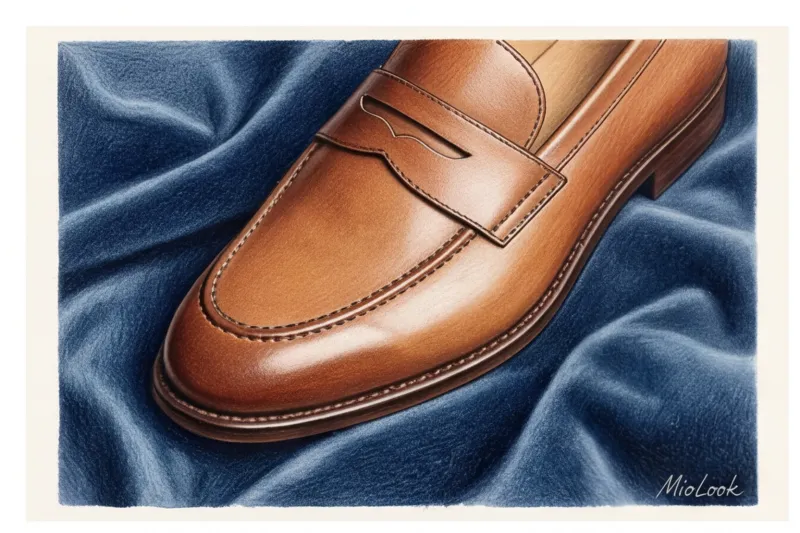
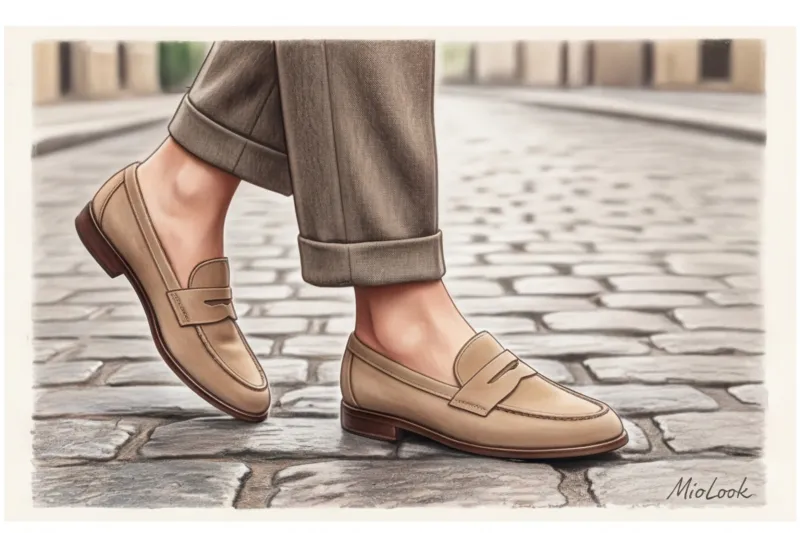
One of my clients, a top bank manager, once invested a substantial sum in loafers from an Italian brand with a chunky buckle. We both noticed that her look began to feel heavy and overloaded, especially when paired with summer suits. The situation changed dramatically when we put them away in the closet and picked out minimalist suede penny loafers from Loro Piana (similar styles can also be found in the mid-range segment at Massimo Dutti or COS).
Why suede? In style terms, smooth leather is utilitarian (it's easy to wipe clean). But light-colored suede is a powerful status symbol. It suggests you drive a car and walk on clean carpets, not trudge through the slush at the subway. It's a subtle psychological game that works reliably to shape your image. smart casual looks for women.
Your perfect look starts here
Join thousands of users who look flawless every day with the help of artificial intelligence.
Get access — €0.99 onceBallet Flats: Parisian Chic Without the Childish Effect
Every week during consultations, I hear the same fear: "Ballet flats will make me look like a schoolgirl." And this fear is justified if you choose styles with a perfectly round toe and elasticated bows. The geometry of shoes directly influences perceptions of age and status.
To avoid the "baby slipper" look, choose a soft square or elongated almond toe shape. They visually lengthen the leg and add a more elegant gait. Two-tone ballet flats, popularized by Coco Chanel, deserve special attention. The beige base blends with the skin tone, elongating the leg, while the contrasting black toe creates an optical illusion, visually shortening the foot.
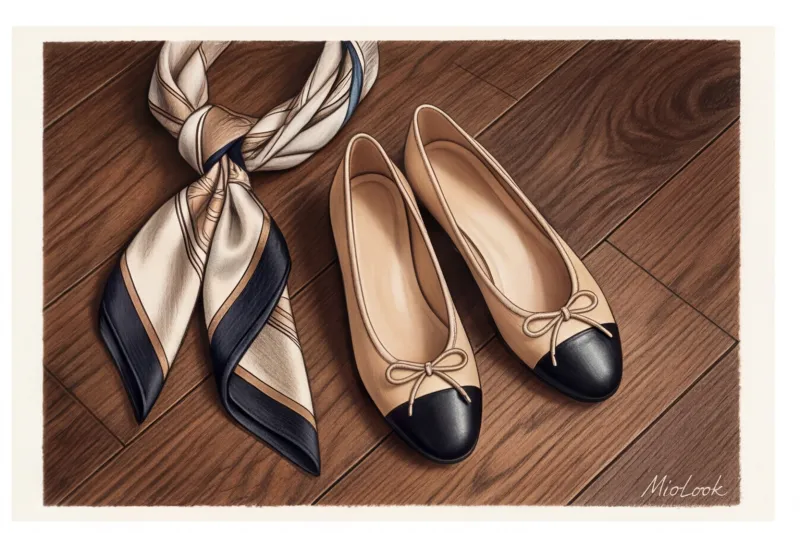
Another critical mistake is choosing completely flat soles. Ballet flats not only ruin your posture but also make your gait heavy and shuffling. The right high-status shoes always have a hidden micro-heel of 1-1.5 cm. This ensures a proper foot roll, which is especially important if you're choosing business casual for women , where you have to spend a lot of time on your feet.
Classic pumps: the perfect height for a classy look
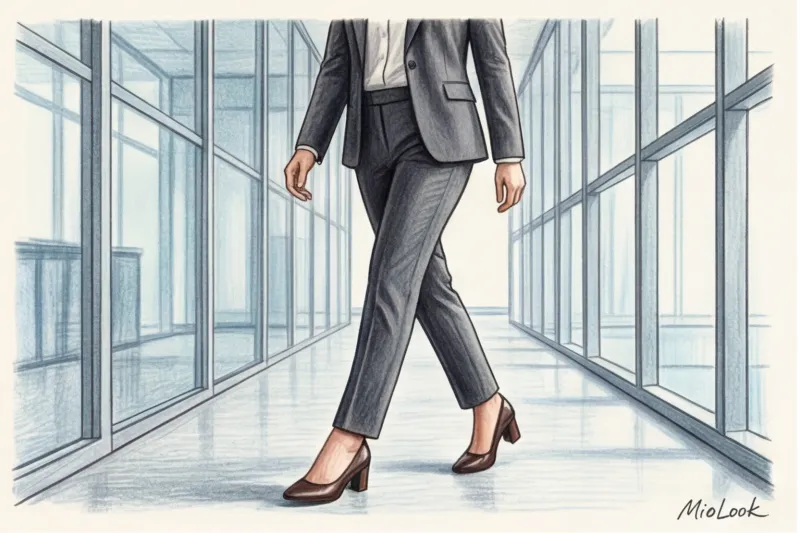
The era of 12-centimeter stilettos in everyday business attire is officially over. Shoes that make standing painful and walking impossible no longer convey status—they convey vulnerability. The modern, powerful woman values comfort.
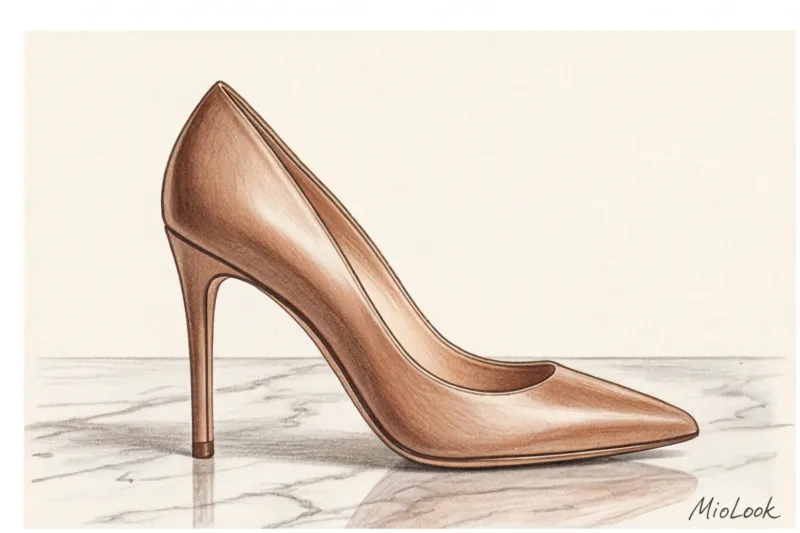
Kitten heels (3-5 cm) have replaced stilettos. From a body language perspective, standing firmly on your feet during important negotiations makes your voice sound more confident and your gestures smoother. A 4-cm heel provides just the right amount of lift for a beautiful calf stretch without forcing you to balance.
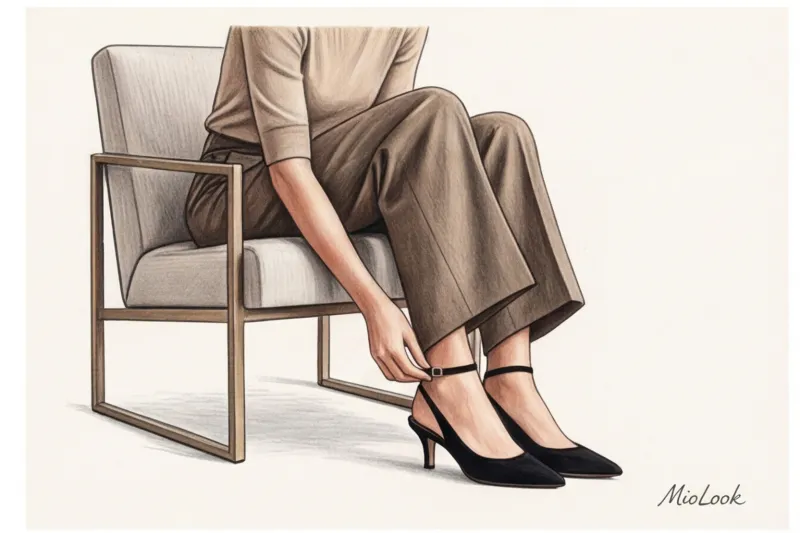
Materials play a crucial role here. Soft nappa (smooth matte leather) or chevrolet (kid's skin) are ideal for Old Mane pumps. Patent leather is acceptable in this style only in microdoses (for example, just on the toe of ballet flats) or for evening wear.
Access to MioLook for €0.99 — one-time payment
A smart AI stylist will analyze your shoes and select the perfect combinations from your closet in just a few seconds.
Get access — €0.99 onceColor Palette: Why Black Shoes Don't Always Look Expensive
It's time to debunk the biggest myth I fight every day. Many people believe, "Black shoes go with everything and look super formal." As a certified colorist, I can confidently say that's not true.
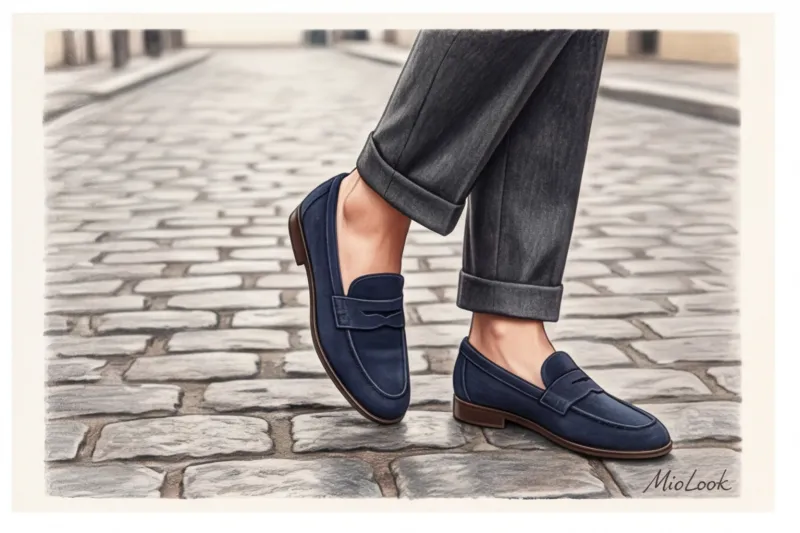
Solid black has a high contrast. If you wear beige trousers or light-colored jeans, black shoes will cut off your leg and make the bottom of your silhouette heavier. In 70% of everyday looks, black will visually simplify and cheapen the outfit. Of course, this rule doesn't always work: if your entire outfit office wardrobe Whether you're going to a monochrome graphic aesthetic or a black-tie event, black pumps are essential. But for a quietly chic look, other tones are essential.
The human eye subconsciously perceives complex, deep shades as more expensive because they were historically more difficult to produce. Consider the following colors:
- Oxblood (Burgundy / Bull's Blood): The perfect alternative to black. Pairs beautifully with gray, navy, and beige.
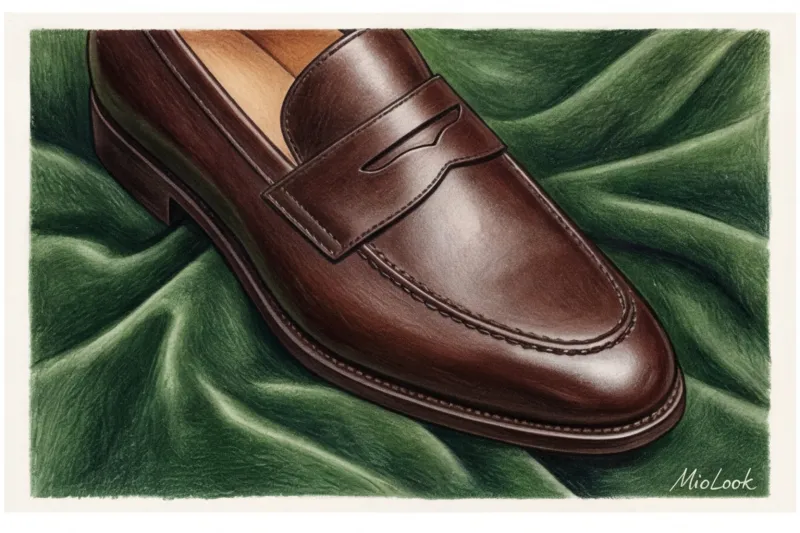
- Dark Chocolate (Bitter Chocolate): Softer than black, it makes any look warmer and more noble.
- Emerald or bottle green: Looks luxurious in suede.
- Dark taupe (grey-brown): An absolute chameleon that visually blends with your skin if you wear skirts.
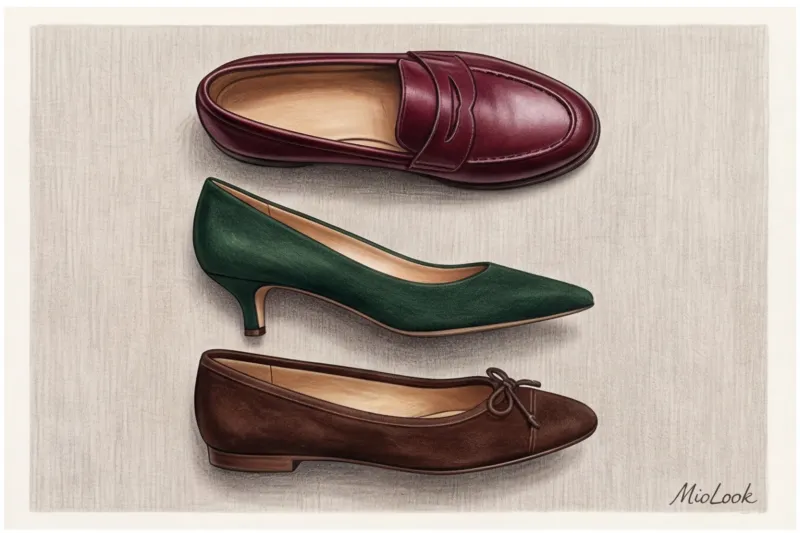
If you're unsure whether a pair of complex wine-colored shoes will fit into your looks, simply take a photo of them in the store and upload them to MioLook app Artificial intelligence will instantly assemble a capsule of items from your virtual closet, and you'll understand whether the purchase is worth it.
Investment Checklist: 5 Steps to Buying Statement Shoes
In the old-money philosophy, we don't buy shoes for just one season. We invest in them. To do this, I use the Cost Per Wear formula. A $600 pair of high-end shoes that you'll wear for five years (say, 300 times) will cost you $2 per wear. Meanwhile, ultra-fashionable $150 mass-market shoes that will fall apart or go out of style after 20 wears cost $7.50 per wear. Expensive shoes save you money in the long run.
Before you take your box to the checkout, do this audit:
- Full leather lining: The insole and lining should be made of natural, light-colored leather. Faux leather on the inside will create a greenhouse effect, causing the shoes to quickly lose their shape.
- Blind test method: Close your eyes and run your hand along the inner seams. If you feel any rough seams, glue drips, or rough threads, this pair will rub your feet raw.
- Checking the instep: Place the shoe on a level table and press lightly on the heel. If the toe rises and the shoe wobbles, the shoe is unbalanced. You'll get tired after an hour.
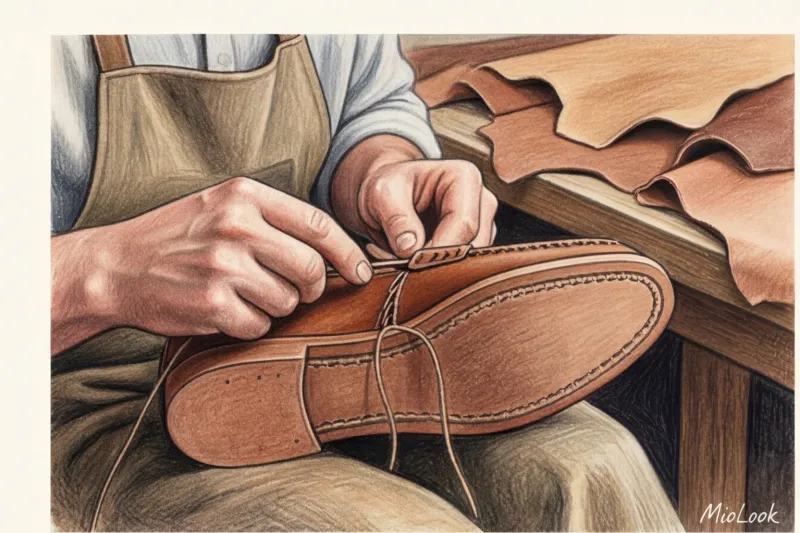
- Stacked heel: Good loafers have heels made from layers of pressed leather (you'll see horizontal stripes) rather than cast from a single piece of plastic.
Ready to get started?
Try the MioLook free plan and start managing your wardrobe smart and without commitment.
Get access — €0.99 onceOld Money's Secret Ingredient: Flawless Care
True luxury is respect for yourself and the things that serve you. You can buy the most expensive handcrafted Oxfords, but if their toes are worn down and the creases are deeply creased, the magic of their status is instantly shattered. In the aesthetics of quiet luxury, a worn-out item is unacceptable.
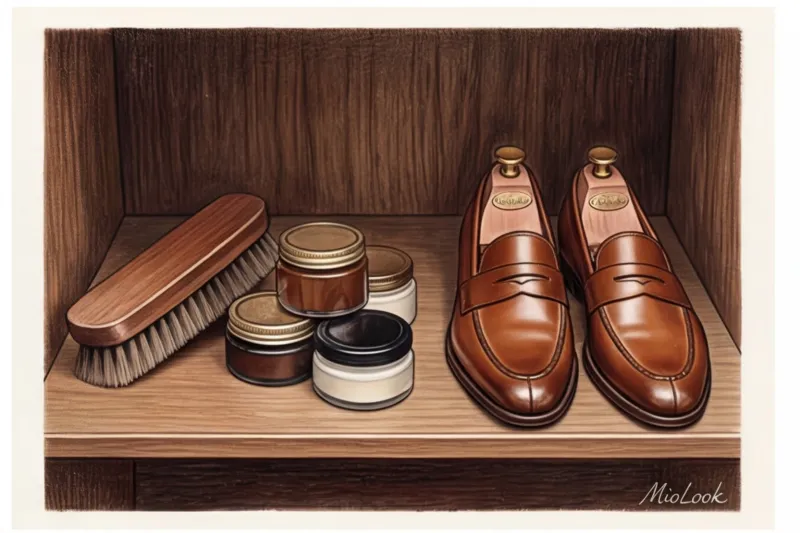
When I first bought high-quality leather loafers, I neglected to use shoe trees. After six months, they had lost their shape and began to resemble slippers. Since then, I've been teaching my clients that wooden shoe trees (preferably unvarnished Canadian cedar) are a must-have. The wood absorbs moisture accumulated during the day, smooths out micro-creases in the leather, and deodorizes the shoes.
Regular maintenance, high-quality shoe polish, a tone-on-tone nourishing cream (Saphir or similar), and a horsehair brush will extend the life of your shoes by 5-10 years. This is the true meaning of the old-money style: status isn't about buying new things every season, but about being able to masterfully and gracefully wear what you already own.
Remember: your look is always built from the bottom up. Invest in a flawless pair of dark chocolate loafers or elegant two-tone ballet flats, and take proper care of them—and even basic jeans and a white shirt will sound like a millionaire's weekend outfit.