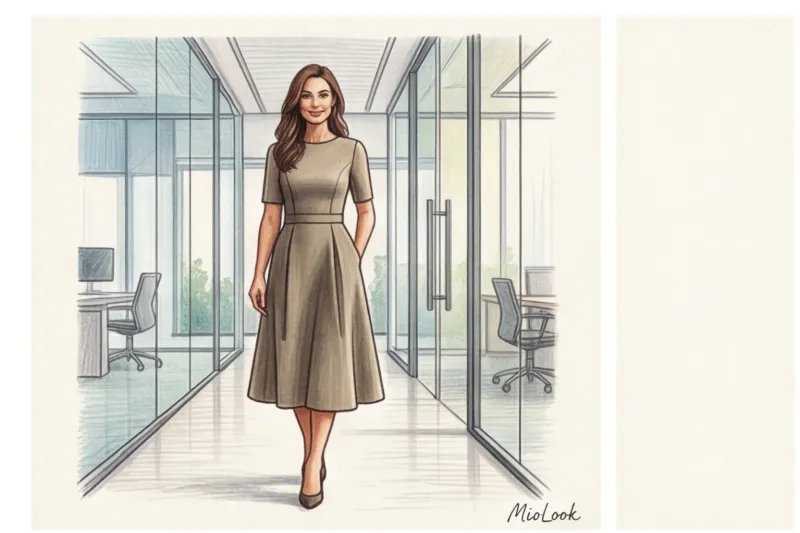
I still remember the sigh of relief from my client Anna, a senior partner at a law firm. We stood in front of the mirror, and for the first time in a long time, she didn't bother tugging at her skirt or adjusting her neckline. Before our meeting, Anna spent an extra 20 minutes every morning trying to get her five classic, form-fitting sheath dresses to fit. They restricted her movement, rode up as she walked, and looked downright out of place against the more relaxed backdrop of her colleagues on Zoom. We replaced them with just three architectural midi dresses. The result? 20 minutes less morning stress and a whole new level of confidence.
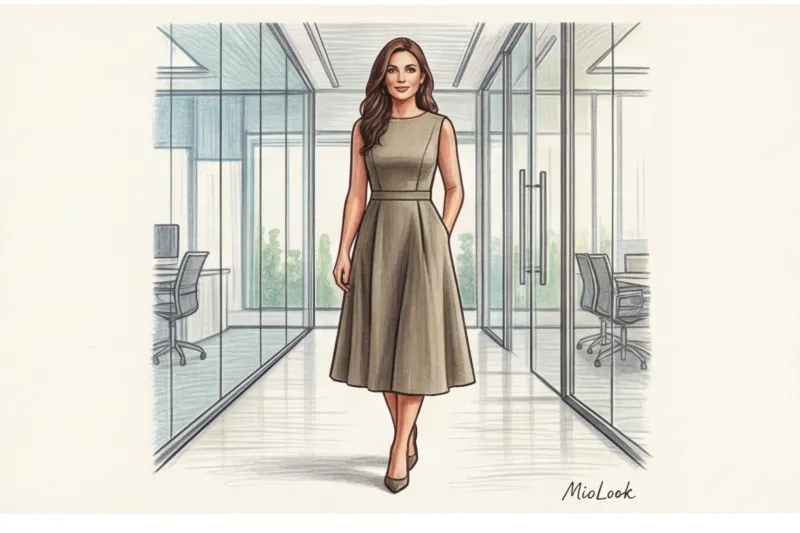
Let's face it: a classic black sheath dress is the worst investment for the modern hybrid office. dresses for the office Women, by inertia, buy things associated with the strictness of the 2000s. But the rules of the game have changed. We've already covered the evolution of corporate standards in more detail in our guide. Business Dress Code for Women: From Formal to Casual And if you're currently searching for your unique fashion DNA, I recommend checking out this material. How to Find Your Clothing Style: A Guide for Women.
The End of the Sheath Dress: Why the Old Rules of Choosing a Dress for the Office No Longer Work
The hybrid work format has forever changed our dress standards. We're no longer willing to tolerate discomfort for the sake of status. But does that mean we can show up to a board meeting in shapeless knitwear? Absolutely not.
In 2012, researchers H. Adam and A. Galinsky from Northwestern University (USA) introduced the term Enclothed Cognition (embodied cognition). Their experiments proved that what we wear physically alters our cognitive abilities. Clothing associated with professionalism literally makes our brains work more clearly and quickly. The problem is that the discomfort from the digging seams completely negates this effect.
Instead of the outdated division into “strict” and “non-strict” styles, in my stylistic practice I use the concept "formality coefficient" It's a flexible system that allows you to look authoritative without sacrificing comfort. Architectural tailoring has replaced the form-fitting style: there should be air between your body and the dress. It's not only more comfortable, but it also looks much more expensive.
Access to MioLook for €0.99 — one-time payment
A smart AI stylist will select the perfect look for the office, taking into account your dress code.
Get access — €0.99 onceStatus Formula: What Calculates the "Formality Coefficient"
Over 12 years of wardrobe analysis, I have come up with an ironclad “80/20” rule. 80% of the impression of a dress’s formality comes from the density of the fabric, and only 20% from its style. You can buy a high-necked dress with all the protocol, but if it's made of thin, flimsy viscose that's see-through and bunches up, you'll look sloppy.
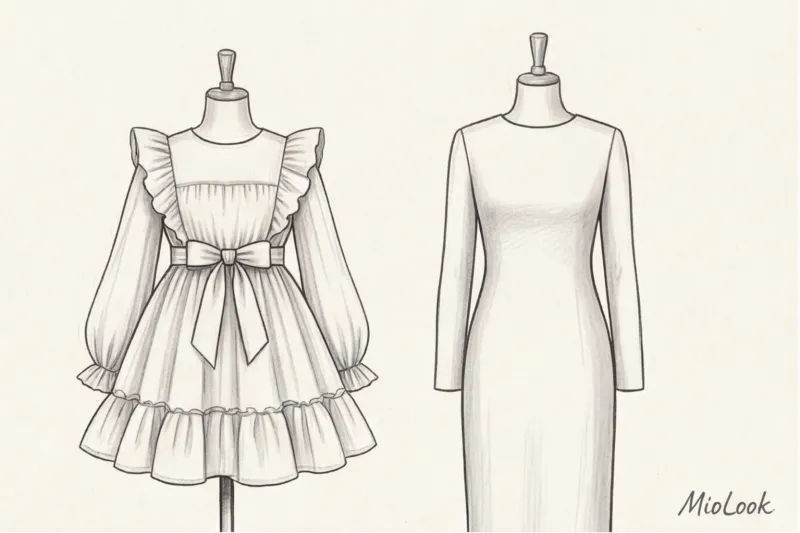
- Silhouette geometry: Clean, straight lines up the formality factor. Soft drapes, ruffles, and flounces downplay it.
- Fabric density: The material should hold its shape on its own, and not just hug the contours of the body.
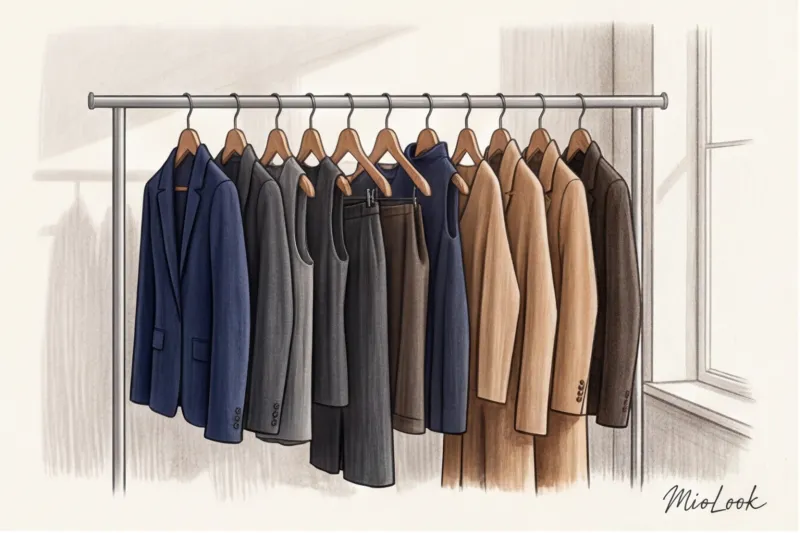
- Color depth: Basic black often looks flat and cheap in budget versions. Complex shades (dark emerald, deep sapphire, bitter chocolate, graphite) add a touch of class.
- Minimalism of details: The absence of unnecessary fittings, fake patch pockets, and contrasting stitching is the main marker of an expensive business wardrobe.
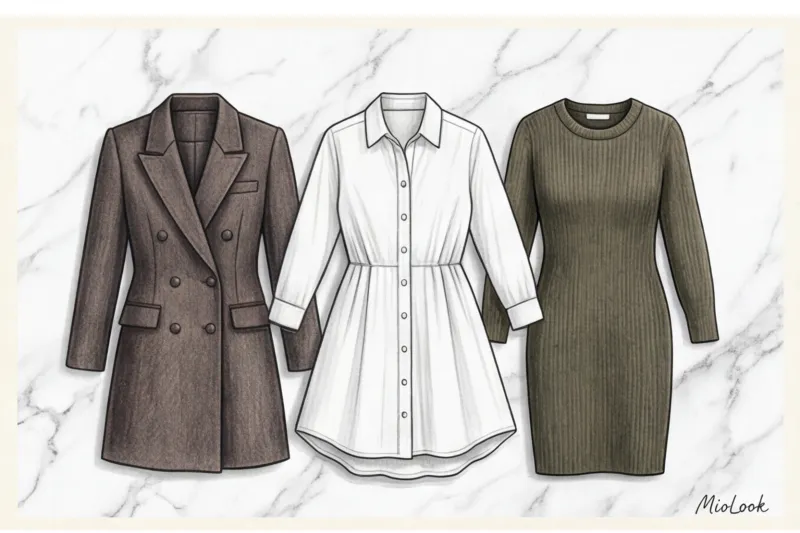
Business Formal: Dresses for Offices with Strict Dress Codes
Even in conservative industries (banking, law, public sector) there's room for maneuver. A senior manager from the banking sector once approached me with a request: "Create a capsule collection for me without a single black color, but one that won't be flagged by compliance." And we accomplished just that, focusing on the right cuts.
Architectural midi and A-line silhouette
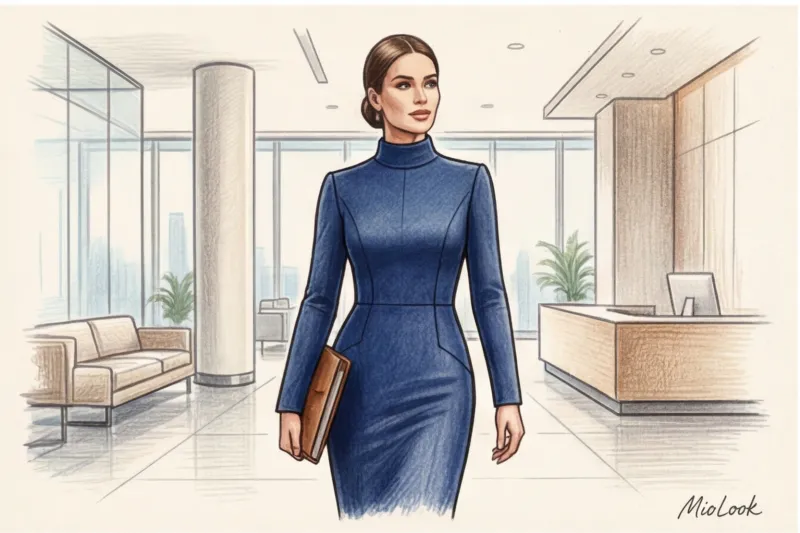
The secret to the perfect business formal dress lies in the darts. A well-designed dress creates a feminine silhouette through the cut, not by stretching the fabric across the hips. A midi length (just below the knee or mid-calf) accomplishes two things: it perfectly elongates your proportions and allows you to sit comfortably in a chair without worrying about the hem slipping down to mid-thigh.
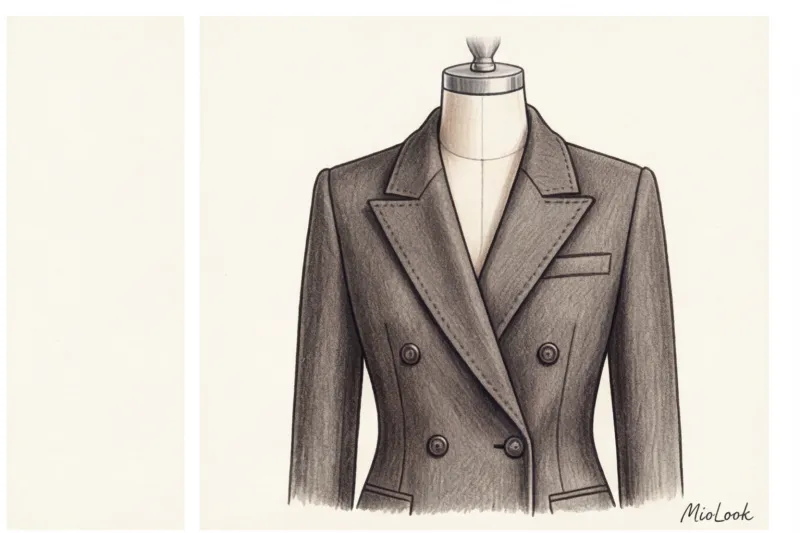
Tuxedo Dress
A brilliant alternative to the classic two-piece suit, the jacket dress exudes maximum poise thanks to its English collar and structured shoulders.
"An important caveat: a double-breasted jacket dress is NOT suitable for figures with a pronounced midriff. Layering thick fabric in two layers will visually add extra size. In this case, look for single-breasted styles or wrap dresses in a thick suiting fabric."
Smart Casual: Perfect Dresses for the Modern Hybrid Office
According to HR agency statistics for 2024, smart casual is the official standard for 70% of modern companies. Boundaries are blurring: what you wear for a morning meeting should be appropriate for an evening dinner with friends.
Shirt dress: an absolute must-have for any business capsule wardrobe
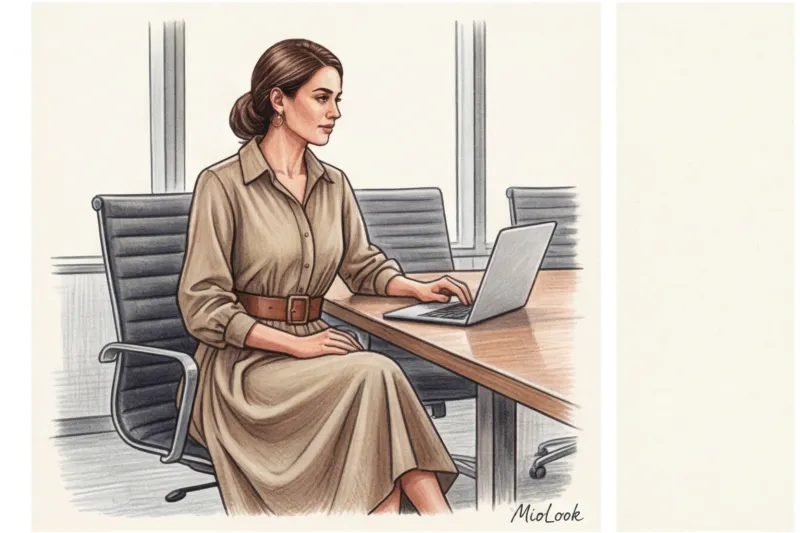
If I were asked to keep only one dress in a business woman's wardrobe, it would be a structured shirtdress. From a wardrobe math perspective, a well-chosen basic shirtdress pays for itself (cost per wear) three times faster than a classic suit.
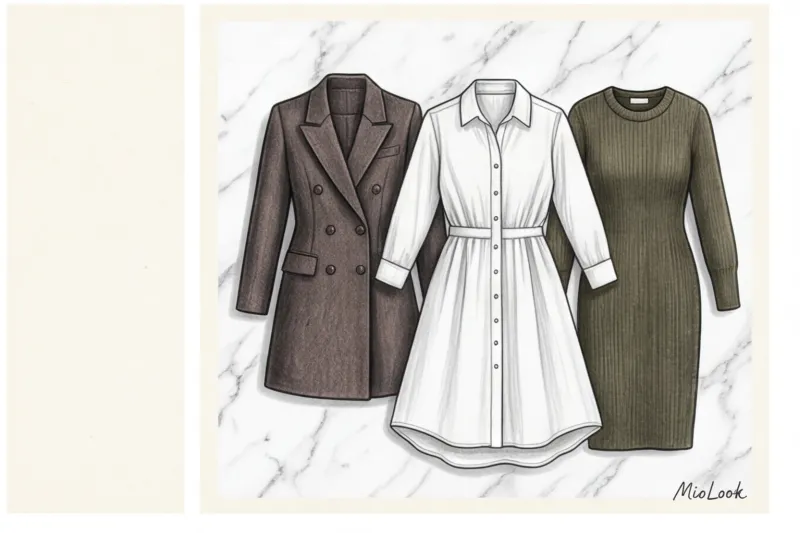
It can be worn on its own, cinched with a wide leather belt, layered under a voluminous blazer, or even used as a lightweight duster over a top and trousers on a Friday.
Knitted Dresses: How to Avoid the "Loungewear" Effect
I've personally tested numerous knit dresses for wrinkles after eight hours of sitting at work. The verdict is harsh: thin ribbed knits are the enemy of business attire. They stretch out at the elbows and buttocks by lunchtime. If you're choosing a knit dress for the office, look for a smooth, dense knit. The ideal composition is viscose with added nylon (which reinforces the thread and prevents it from deforming) or dense merino wool.
Your perfect look starts here
Join thousands of users who look flawless every day with MioLook. Digitize your wardrobe in just a few clicks.
Get access — €0.99 onceComfort Technologies: Which Fabrics Can Withstand 8 Hours at Your Desk?
There's a popular myth that you should only choose 100% natural fabrics for the office. As a stylist, I can officially say that's a bad idea. 100% cotton or linen have no "shape memory." Once you get in the car on the way to work, the creases will be there for the rest of the day.
Modern textile technologies confirm that the ideal office fabric is a blended fiber. The presence of 2-5% elastane in cotton or wool is critical. This gives the fabric elasticity, allowing it to stretch with movement and return to its original shape.
Breathable materials for the office:
- Cupra and Tencel — technologically advanced silk analogues that breathe but wrinkle less.
- Thick viscose (from 200 g/m²) - drapes perfectly and cools the skin in a heated office.
- Wool blend - with the addition of a small percentage of high-quality polyester for wear resistance.
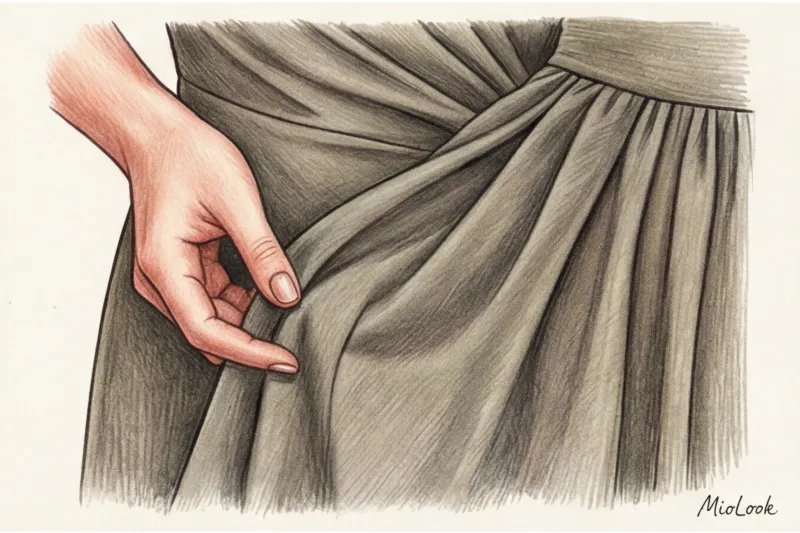
How to check fabric right in the store? Squeeze the hem of your dress in your fist for 10 seconds, then release. If the fabric remains wrinkled, feel free to return it to the hanger. If the wrinkles smooth out on their own within a few seconds, it's a great investment.
The One-Minute Rule: How to Adapt One Dress to Different Purposes
Many girls complain that dresses are not versatile. "You just put it on and go, you can't change anything." In fact, a simple dress is a blank canvas. Incidentally, it's precisely to clearly demonstrate this versatility that I often use MioLook In the app, you can assemble a virtual capsule and see how one thing works in completely different contexts.
Layering works wonders. Layer a chunky, structured, menswear-inspired jacket over a heavy silk slip dress for a polished, business-ready look. Swap the jacket for a cozy chunky knit cardigan, and you're ready for casual Friday.
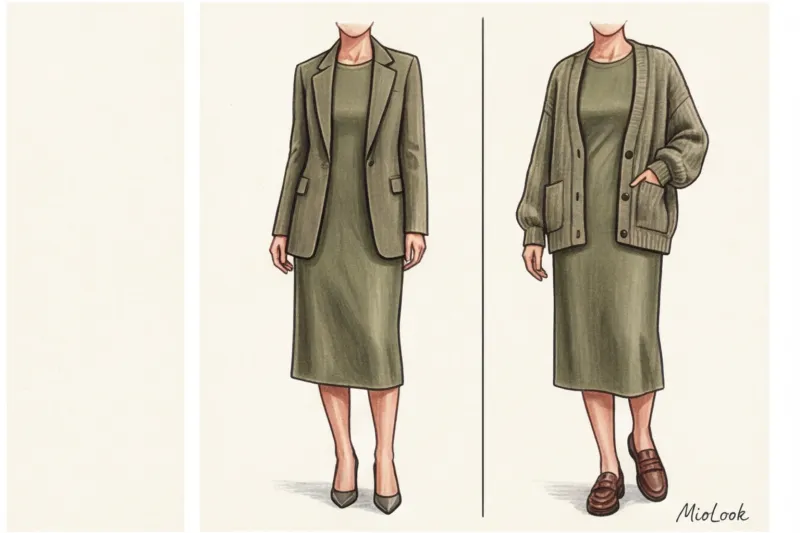
Shoes act as the ultimate context switch. Classic pumps or tailored loafers instantly elevate the formality factor. And minimalist white sneakers made of smooth leather (without logos or colorful accents) create a dynamic and modern look.
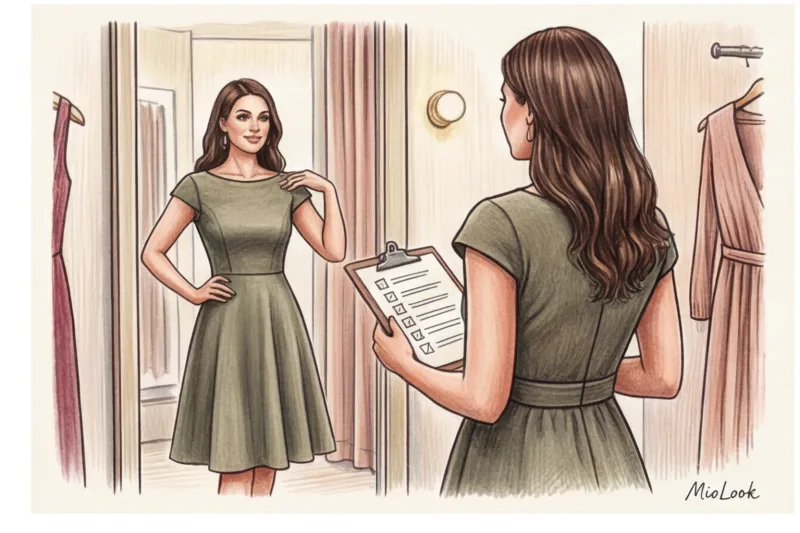
Stylist's Checklist: Dress Audit Before Buying
Before you take your dress to the checkout, run it through this short process. I give this checklist to all my clients during shopping sessions:
- Shoulder fit test: The shoulder seam should be exactly where your shoulder ends. If it hangs down (and the dress isn't advertised as oversized), you'll look slouched.
- Transparency test: Go to the fitting room window or turn on the flashlight on your phone. Office lighting is very bright, and you need to be sure the contours of your underwear remain hidden.
- Test in motion: Be sure to sit on a ottoman in the fitting room. Check that the hem isn't riding up too much, that the waistband isn't cutting into your stomach, and that the back vent isn't coming apart.
- The rule of three combinations: Ask yourself: "Can I wear this dress with three different pairs of shoes and two different top layers I ALREADY have in my closet?" If the answer is no, it's time to postpone the purchase.
Choosing a dress for the office should no longer be a compromise between looking professional and feeling comfortable. Technological fabrics, architectural cuts, and an understanding of the formality factor allow you to transform your business wardrobe into a productivity tool. Remember the key rule: the perfect office dress is one you forget you're wearing the moment you step out of the house.