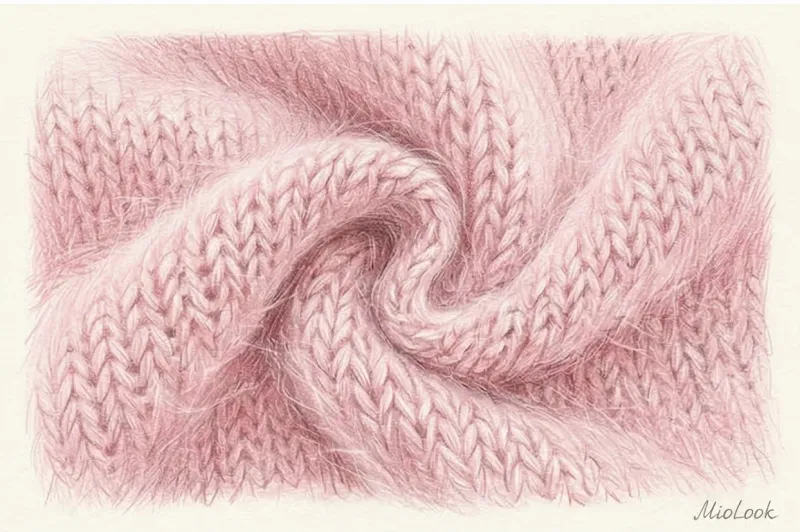
What is mohair?
Mohair — is a yarn or fabric made from the wool of the Angora goat. This material should not be confused with angora, which is obtained from the down of the Angora rabbit.
The material's name comes from the Arabic word "mukhayyar," which translates as "goat's wool fabric." In its pure form, 100% mohair easily disintegrates into individual, slippery fibers and does not hold its shape. Because of this production characteristic, it is always blended with acrylic, sheep's wool, or silk. The maximum possible goat's wool content in such a yarn is approximately 83%.
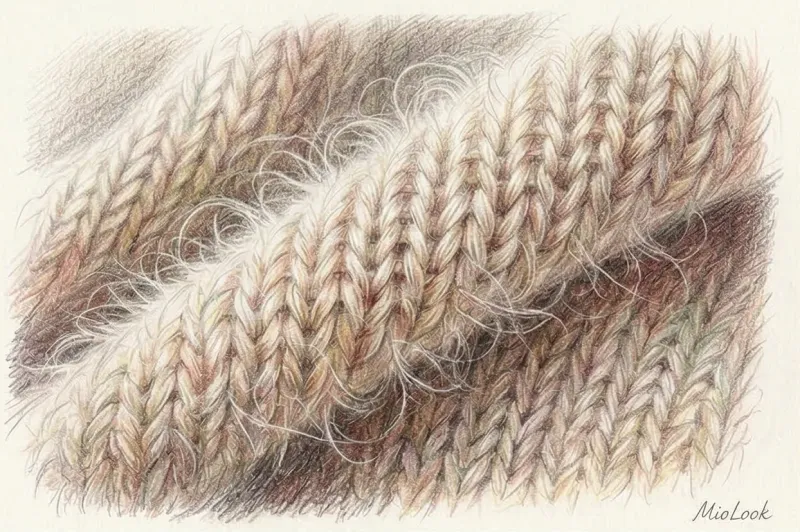
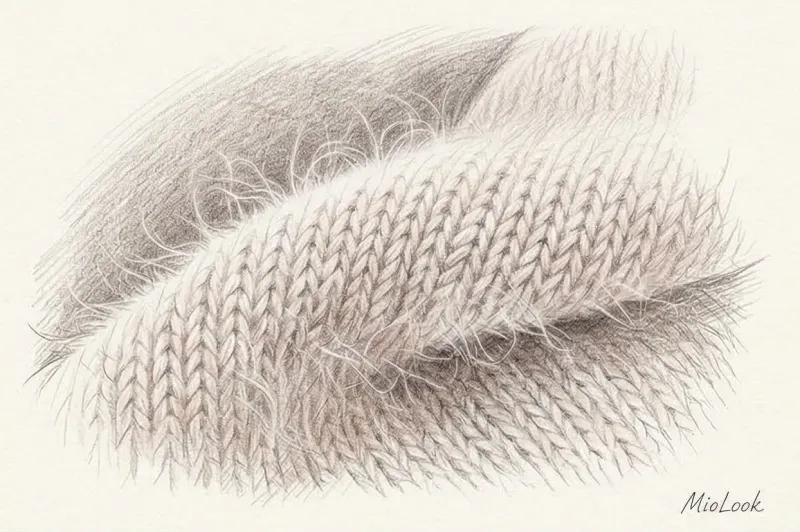
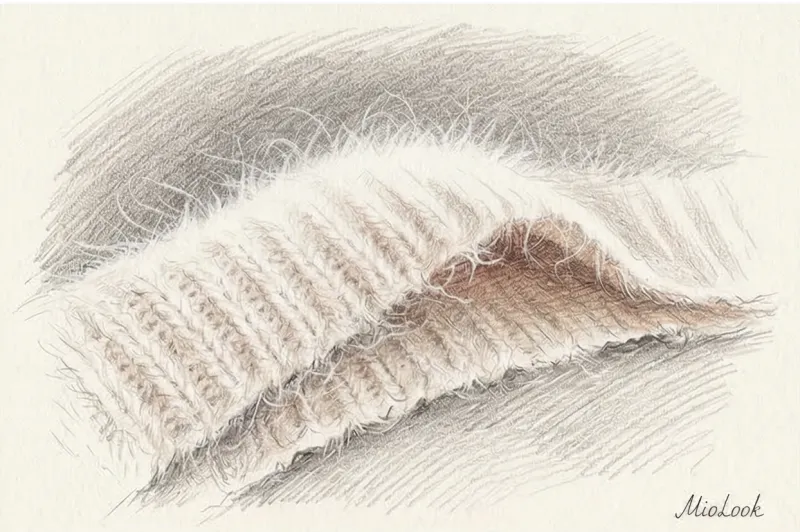
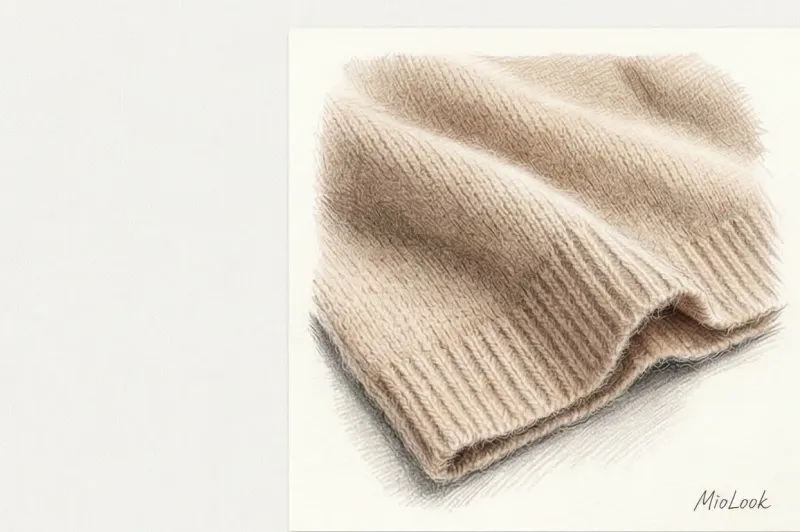
The finished material is distinguished by its characteristic long, fluffy pile and silky sheen. The fabric offers high thermal insulation while remaining very lightweight. Due to the fiber's natural properties, mohair lends itself well to dyeing, so garments made from it are often available in rich, pure shades.
Main types of mohair
Yarn characteristics depend on the age of the animal from which the wool was obtained. The textile industry distinguishes three main categories:
- Kid Mohair (kid mohair) — wool from kids up to six months old. This is the finest, softest, and most delicate fiber, completely non-prickly. It is used to knit weightless, translucent jumpers, shawls, and stoles.
- Goating Mohair — wool from goats aged six months to two years. This medium-thick yarn has high elasticity and is used for knitting classic sweaters, cardigans, and voluminous hats.
- Adult Mohair — the wool of adult animals. The fiber is characterized by high strength, density, and stiffness. This type is used primarily for outerwear (such as coats), heavy suiting fabrics, and blankets.
What to combine with
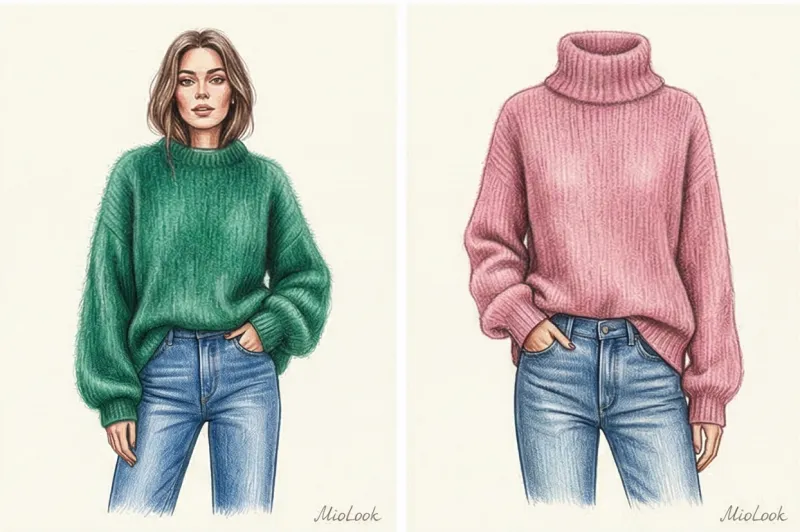
Fluffy and voluminous mohair looks most striking when contrasting textures are used. Smooth materials highlight the pile and add a more expressive touch. Goat wool sweaters and cardigans are paired with matte or patent leather, flowing silk, and thick, smooth denim.
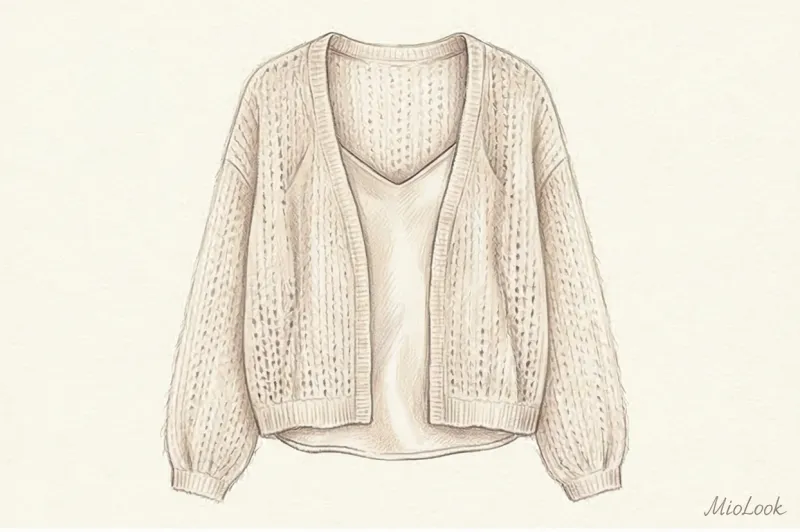
Thin kid mohair jumpers are often used in layered outfits, layered over tailored cotton shirts or slip dresses, creating a balance between relaxed coziness and structured tailoring.
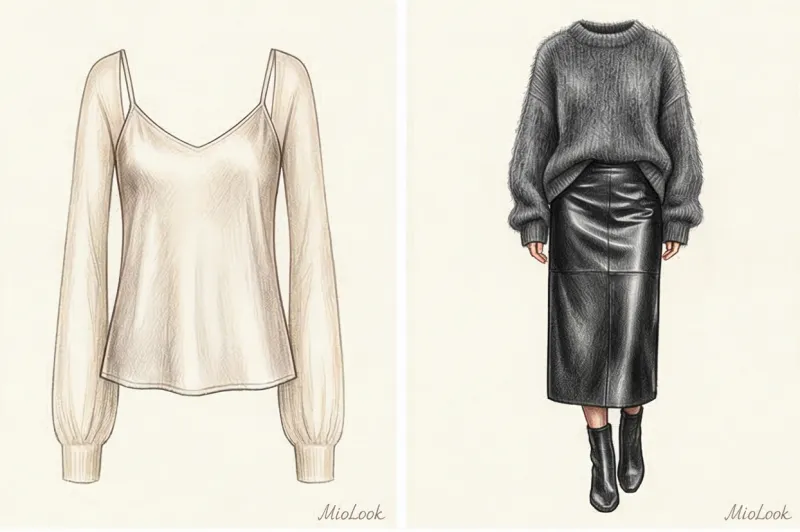
When styling, it's important to consider the fibers' natural tendency to shed (pilling). Light-colored mohair is not recommended for pairing with dark fabrics that attract lint, such as velvet, corduroy, or thick black wool.