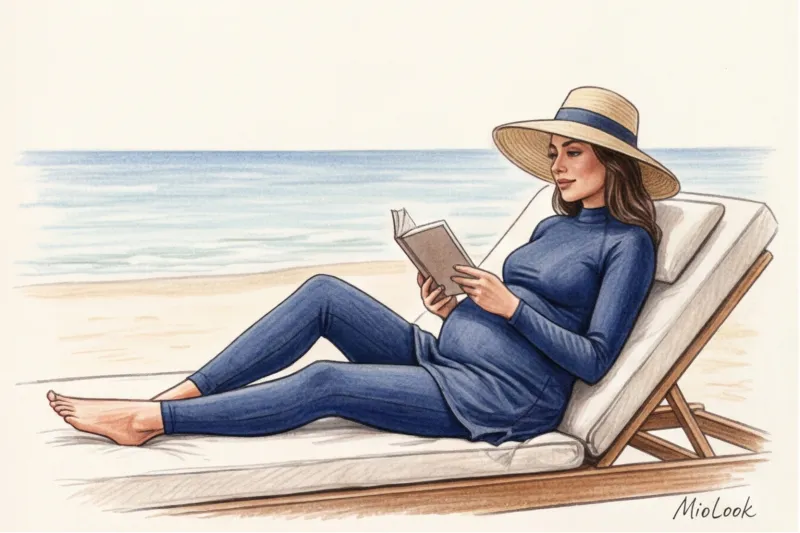
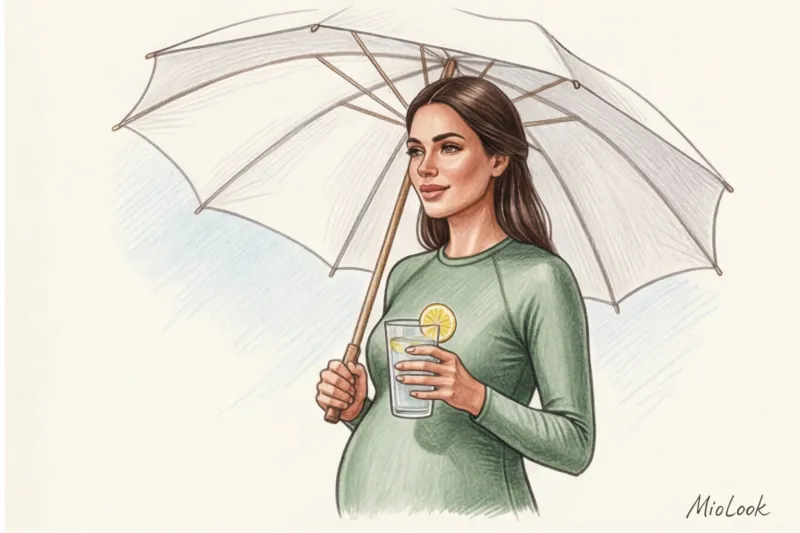
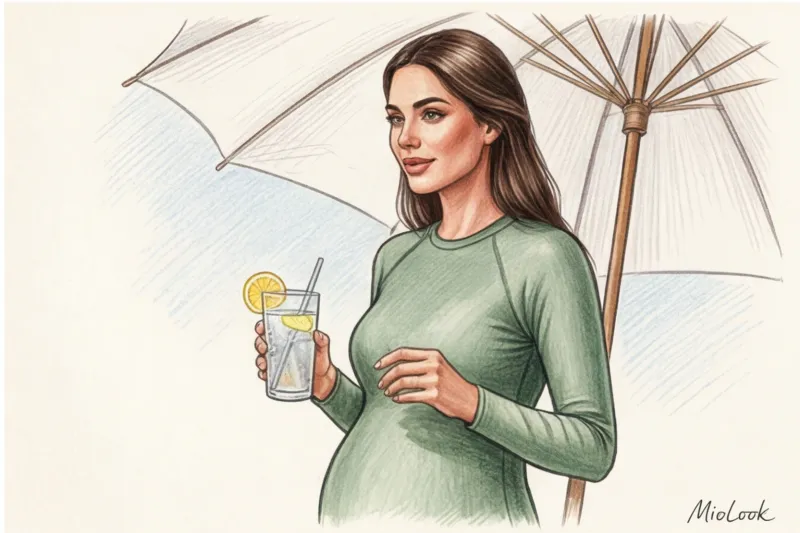
Anna cried in my studio. Luxurious trips to the Maldives—that long-awaited babymoon before the birth of her first child—had been purchased back in the winter. But in her sixth month of pregnancy, she developed terrible photodermatitis and hyperpigmentation. The doctor categorically forbade direct sun exposure. "What's the point of flying to the ocean if I have to sit in my room or under a blind umbrella in my husband's T-shirt?" she lamented. The solution I proposed initially caused confusion, but then saved the entire vacation. We chose high-tech burkini for pregnant women.
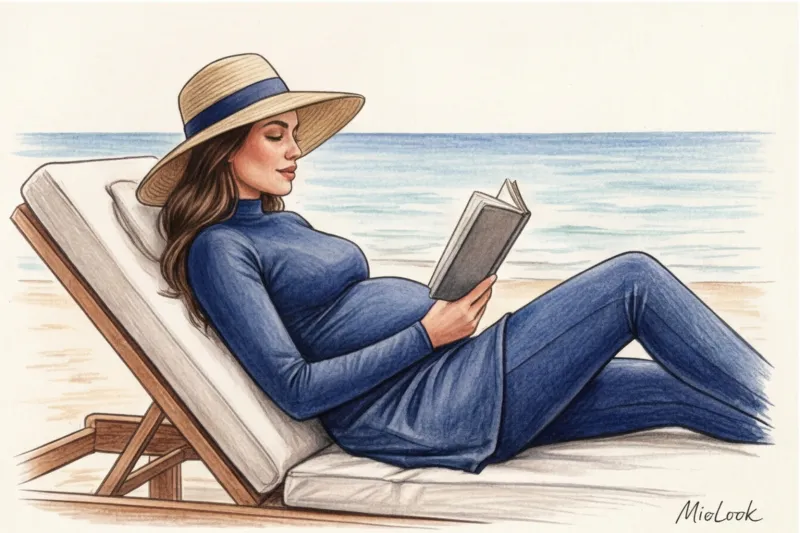
If you still think a full-body swimsuit is purely a religious attribute, it's time to take a different look at modern beachwear. Today, it's the most stylish, safe, and functional element of a vacation wardrobe. We discussed this cultural shift in more detail in our The complete guide to burkinis , but now I want to focus on how this thing solves the main problems of women expecting a baby.
The New Babymoon Standard: Why Socialites Are Choosing Maternity Burkinis
Over the past five years, the modest fashion market has changed dramatically. According to the DinarStandard report (2024), socialite shoppers are driving the huge sales growth in this segment. And pregnant women are at the forefront of this trend.
The reason isn't shyness, but rather simple physiology. According to statistics from the American Academy of Dermatology (AAD), up to 70% of women experience chloasma—the so-called "mask of pregnancy"—during pregnancy. Hormonal imbalances make the skin extremely sensitive to ultraviolet radiation. Even 15 minutes of sun exposure in a regular bikini can trigger the appearance of persistent pigment spots on the face, stomach, and shoulders, which can cost thousands of euros to remove at a cosmetologist after childbirth.
But there's also a psychological aspect. In my practice, every third pregnant woman admits to feeling vulnerable on the beach. Your body is rapidly changing, with stretch marks, swelling, and excess weight appearing. You have every right not to want to show off these transformations to others. A premium one-piece swimsuit gives you back control: you look elegant, feel protected, and can simply enjoy the water.
Your perfect look starts here
Join thousands of users who look flawless every day with MioLook. Our intelligent AI stylist will help you choose the perfect capsule wardrobe for any occasion.
Get access — €0.99 onceThe Anatomy of Comfort: How to Choose the Perfect Maternity Burkini
In my 12 years as a stylist, I've seen dozens of vacations ruined by poorly chosen clothing. A regular swimsuit bought "a couple of sizes too big" won't do. Specialized maternity burkinis are designed according to the laws of biomechanics.
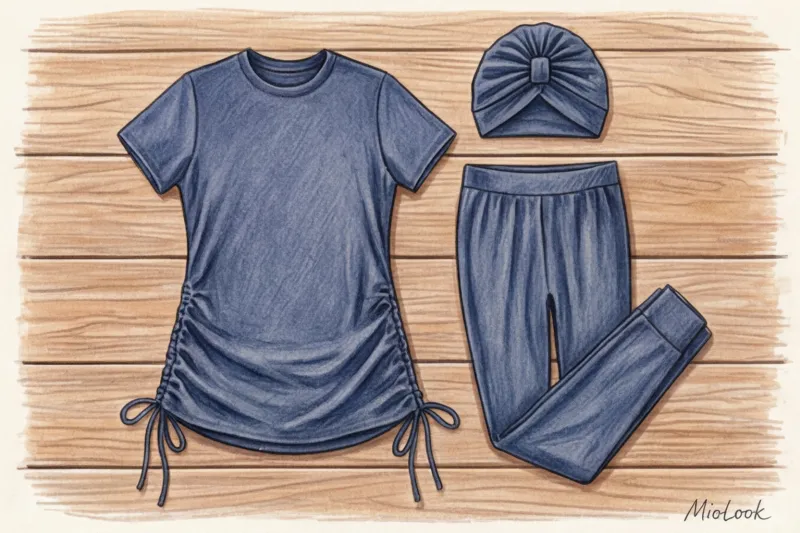
The right outfit is always a trio: a tunic that reaches mid-thigh (or longer), swim trunks, and a hat. I strongly recommend looking for styles with flatlock seams. A mother-to-be's skin is prone to irritation, and raised internal seams will cause your armpits and inner thighs to bleed after an hour-long walk on the beach.
Fabrics and technologies: protection from overheating and UV rays
If your swimsuit doesn't have UPF 50+ on the tag, just return it to the hanger. It's an absolute must-have. UPF 50+ blocks 98% of harmful rays.
As for composition, avoid pure polyester (it creates a greenhouse effect). Look for nylon with 18-22% spandex—ideally, Xtra Life Lycra. This material is resistant to pool chlorine and sea salt, and most importantly, it's quick-dry. Quick-drying fabric is critical for pregnant women: stepping out of warm water into a light breeze in a wet, heavy tunic can lead to lower back hypothermia in minutes.
Fit and support: first to third trimester
A good garment should "grow" with you. High-quality models (usually in the €100–€350 price range) have special drawstrings sewn into the sides of the tunic. In the first trimester, you tighten them, creating elegant drapes, and by the ninth month, you can unravel them to their full length.
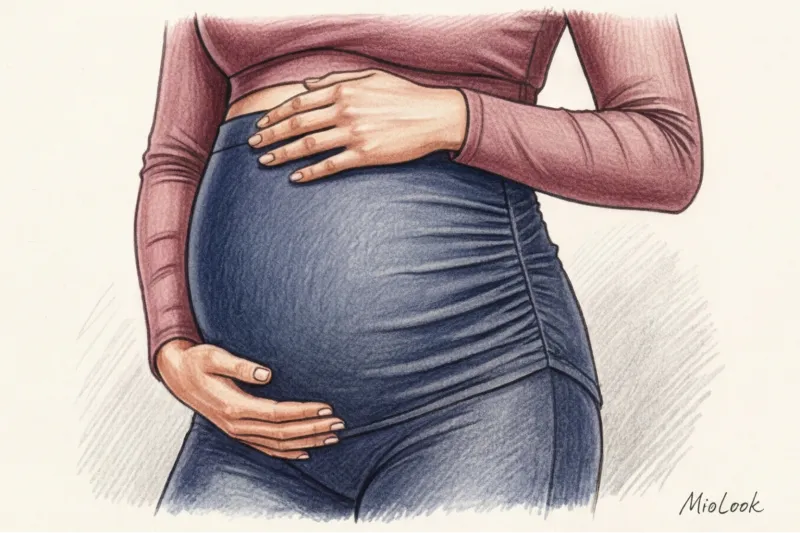
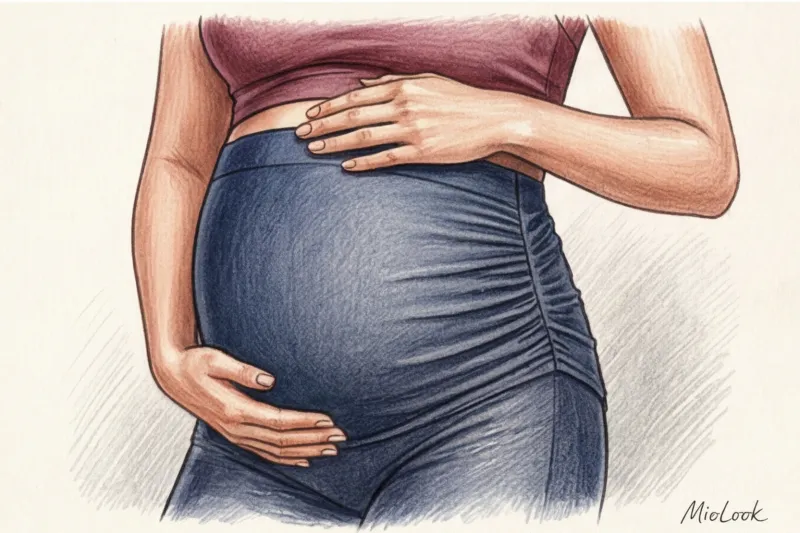
Pay attention to the waistband of your swimsuit bottoms. It should be designed like a maternity support belt: a wide, elastic panel that supports your lower back in the back but gently rests under your belly (or covers it without putting pressure) in the front. A built-in bra with soft, molded cups is another must-have, considering your breasts may increase by 1-2 cup sizes.
Ready to get started?
Try the MioLook plan for free—no commitments required. Organize your wardrobe and plan your vacation looks in one click.
Get access — €0.99 onceDebunking the myth: "One-piece swimsuits are too hot for pregnant women"
"I'll get fried in this suit!" is the first reaction of 90% of women when I suggest trying on a maternity burkini. This is the biggest misconception, based on the common wisdom that the less you wear, the cooler you'll be. Physics works differently.
High-tech sports fabrics work like Bedouin desert clothing. They draw moisture from the skin's surface and instantly evaporate it on the outer layer. This evaporation process absorbs heat energy, creating a cooling microclimate between the loose tunic and your body.
Moreover, exposed skin exposed to direct sunlight inevitably suffers microburns. The body reacts to the burn with localized inflammation and an increase in body temperature. A high-quality one-piece swimsuit protects you from burns, meaning your core body temperature remains stable. You'll be much less tired in the heat than your lounge chair neighbor in a micro-bikini.
Vacation styling: integrating the burkini into your cruise wardrobe
Burkinis have long since ceased to be simply "swimwear." Today, they're a fully-fledged element of cruise casual. The key rule: use a swimsuit as a technical base layer for layering.
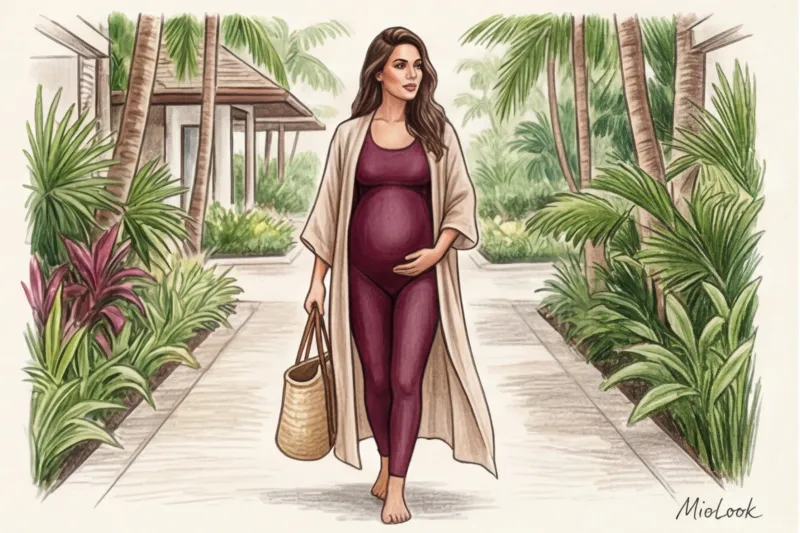
Here's how we styled Anna's capsule collection in the Maldives: swim pants and a sage-colored burkini top served as the base. She layered an open 150g/m² linen maxi shirt over it (so the fabric would flow beautifully in the breeze). Add a Loewe straw tote bag, leather sliders, and chunky sunglasses, and the look was ready for a quick trip from the pool to lunch.
If you have trouble imagining how things will go together, I highly recommend using smart wardrobe feature in MioLook Simply take a photo of your swimsuit, upload it to the app, and the AI stylist instantly generates dozens of combinations with your summer shirts, kimonos, and accessories. This eliminates the need to carry extra items (and we know how hard it is to lug around huge suitcases while pregnant).
Stylist's Checklist: 5 Fatal Mistakes When Buying a One-Piece Swimsuit
Before you go shopping, save this list. These are the same pitfalls many expectant mothers make when trying to save time or money.
- Mistake 1: Buying a regular burkini that is 2 sizes too big. This doesn't work. The shoulder line will drop, the sleeves will hang down, and the stomach will still lack proper anatomical support. Look strictly for maternity patterns.
- Mistake 2: Choosing black or dull dark colors. Even with thermoregulation, black attracts sunlight. Opt for refined shades: terracotta, muted sage, dusty rose, and sand.
- Mistake 3: Swim leggings that are too tight. During the second and third trimesters, the risk of ankle swelling increases significantly. Tight elastic at the bottom of the pant leg will restrict circulation. Choose pants with a straight, slightly loose fit.
- Mistake 4: A tight turban or hat. Blood pressure fluctuates frequently during pregnancy. A hat that's too tight can trigger a migraine after just 20 minutes of wearing it. A hat should have soft, adjustable ties.
- Mistake 5: Cheap metal fittings. Fasteners, zippers, or trim made of cheap metal can become as hot as an iron in the sun and can cause serious burns on sensitive skin. All hardware should be plastic (YKK) or hidden under a fabric placket.
Studying rules for wearing leggings In everyday life, we often talk about volume balance. The same applies to beachwear—a balance of fit and looseness is crucial for comfort.
Access to MioLook for €0.99 — one-time payment
Creating the perfect capsule wardrobe for your vacation has never been easier. A smart AI stylist will select combinations tailored to your individual needs.
Get access — €0.99 onceA Smart Investment: How to Wear a Maternity Burkini After Childbirth
One of the common arguments against purchasing a burkini is, "Why would I want a €200 item for just a couple of months?" But the beauty of quality, specialized burkinis is that their lifespan doesn't end there. Then comes the "fourth trimester"—the postpartum recovery period.
In the first months after giving birth, your body is still changing. Your belly won't disappear instantly. If you had a cesarean section, direct sun exposure around the incision area is strictly prohibited (otherwise, the scar will darken and become rough). A one-piece swimsuit is your safest option during this period.
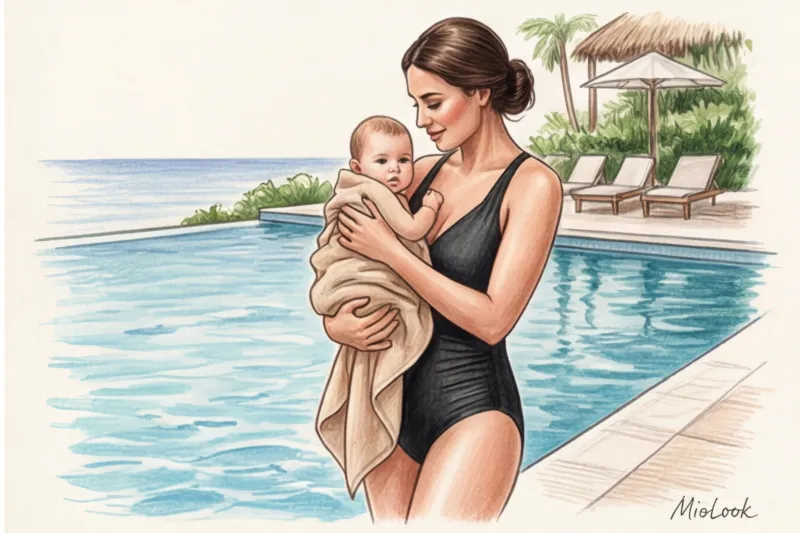
Thanks to the drawstring and buckle system we mentioned above, the tunic easily returns to its original pre-pregnancy size. Now imagine a typical vacation with a toddler: you'll be endlessly bending over at the water's edge, building sandcastles, and carrying your baby in a baby carrier. In a regular bikini, your shoulders would burn off within an hour. In a burkini, you can calmly enjoy active motherhood without worrying about reapplying SPF every 30 minutes.
Pregnancy and motherhood are no excuse to forgo style in favor of shapeless robes or, conversely, endure discomfort to satisfy stereotypes. Smart clothing is designed to serve you, protect your health, and give you freedom of movement during this most wonderful, yet vulnerable time of life.