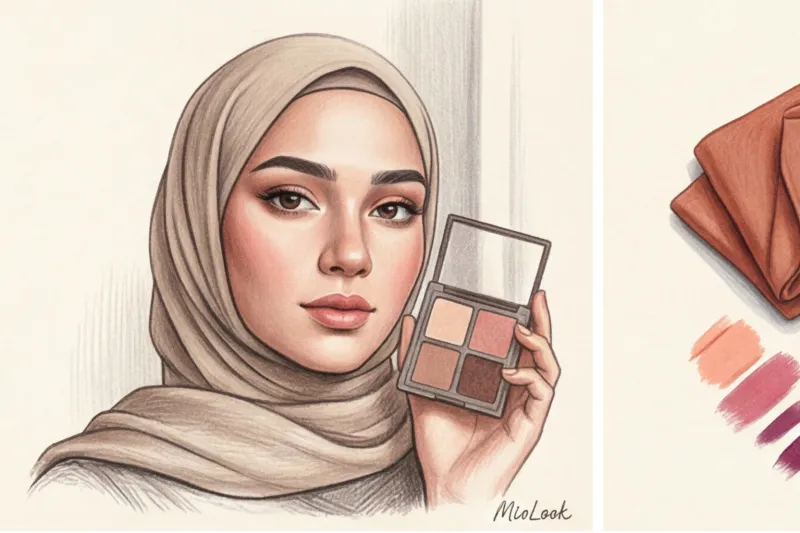
Imagine this: you're buying a luxurious beige stole made of thick viscose, anticipating a flawless nude look. You carefully arrange the folds, apply your favorite peach lipstick, look in the mirror... and see a tired, pale woman with a sallow complexion. Your trusted makeup has suddenly stopped working. Sound familiar?
In my 12 years as a stylist and shopper, I've heard this story hundreds of times. When women switch to modest fashion or simply start wearing turbans, they try to revert to their old makeup routines. But the rules of the game change when fabric tightly frames your face. According to eye-tracking research from the Nielsen Norman Group (2023), when the body is hidden by clothing, the face takes 100% of the visual focus. We discussed this phenomenon and its underlying architecture in more detail in our A complete guide to hijab makeup: how to accentuate your face.
Today we'll explore the optical physics of the portrait zone. I'll explain why matching your makeup to your scarf is a fatal mistake, and I'll give you specific instructions on how to coordinate the contents of your makeup bag with your wardrobe.
The Physics of Color: How Wearing a Scarf Changes Your Appearance
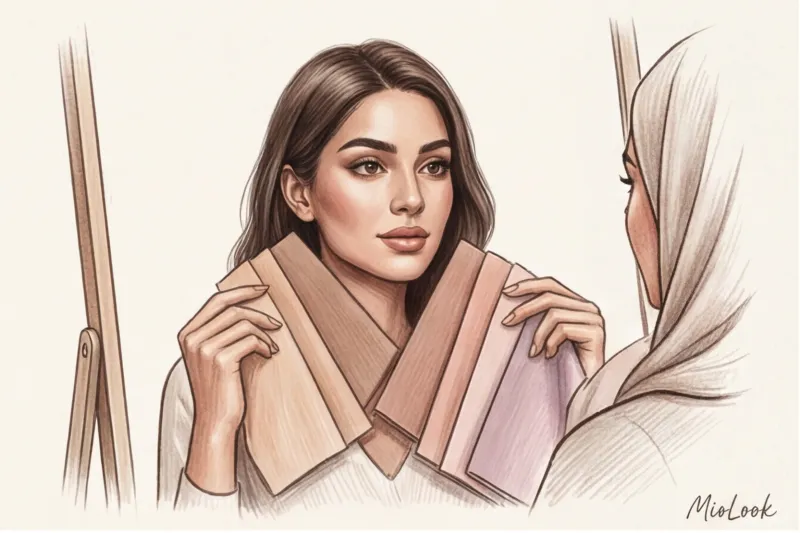
The fabric, placed close to the chin and neck, acts as a permanent photographic reflector. It doesn't just frame the face; it literally casts a colored shadow (reflex) onto the skin.
One of my regular clients adored emerald and olive stoles. But in daylight, the green fabric cast a yellowish-gray cast on the lower third of her face. Even with perfect foundation, she looked like she hadn't slept in a week. It's pure physics: the sun's rays hit the fabric's pigment and reflect onto your skin.
This is why your tried-and-true makeup routine is failing. When you wore bare necklines and V-necks, your skin could breathe and the light was diffused. A hijab, however, creates a harsh frame. A red scarf without a strong concealer will highlight even the slightest rosacea and blemishes, while a blue one will accentuate dark circles under your eyes.
The main rule of a stylist: temperature contrast instead of a chameleon effect
The most harmful advice from women's magazines of the 2000s was to match your eyes and lips to your clothes. When women come to me for consultations with pink eyeshadow to match their pink hijabs, I call it the "Matryoshka doll effect." The face becomes a flat blob of color, losing volume and definition.
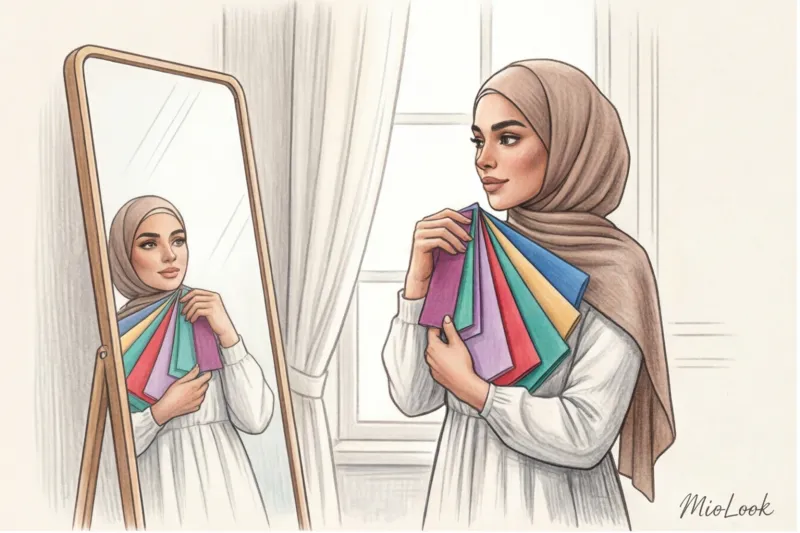
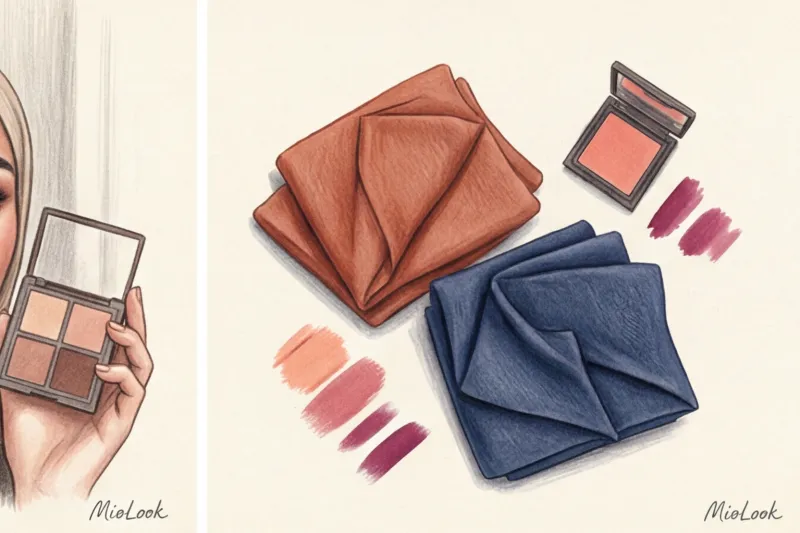
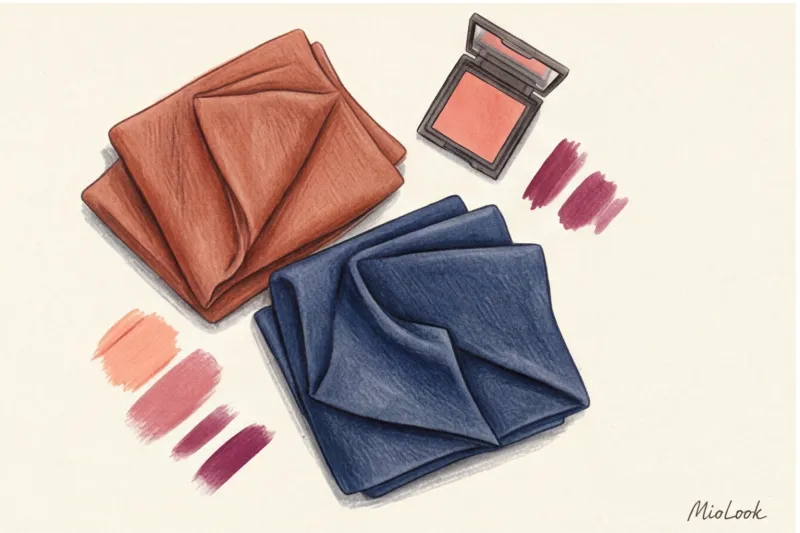
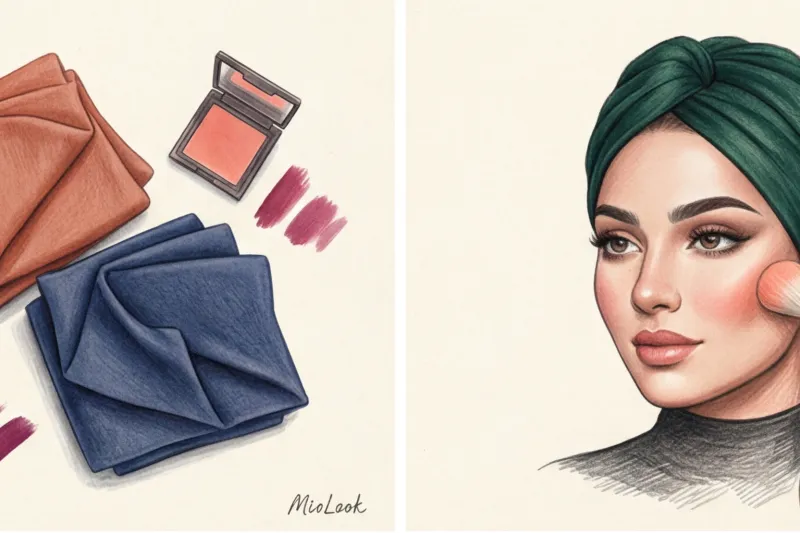
Instead of matching the same shade, use temperature contrast. Based on Johannes Itten's color wheel, I always teach my clients the rule of complementarity. If you're wearing a cool, navy blue turban, you'll need a warm, peach, or coral blush to brighten your skin. Conversely, a warm, terracotta scarf pairs perfectly with a lipstick with a cool, plum or berry undertone.
"Makeup shouldn't blend with your wardrobe, but rather clash with it. It's this subtle temperature clash that makes a look sophisticated and thoughtful."
Your perfect look starts here
Join thousands of users who look flawless every day with the help of MioLook artificial intelligence.
Get access — €0.99 onceColorist's Guide: How to Match Makeup to Basic Scarf Shades
For these tips to work in practice, it's not enough to simply know color theory. It's important to consider your base coloring. Read our article on how to determine it. basic cosmetics according to color type Below, I've compiled specific makeup routines for the most popular shade groups in my wardrobe.
Nude and beige shades of hijab
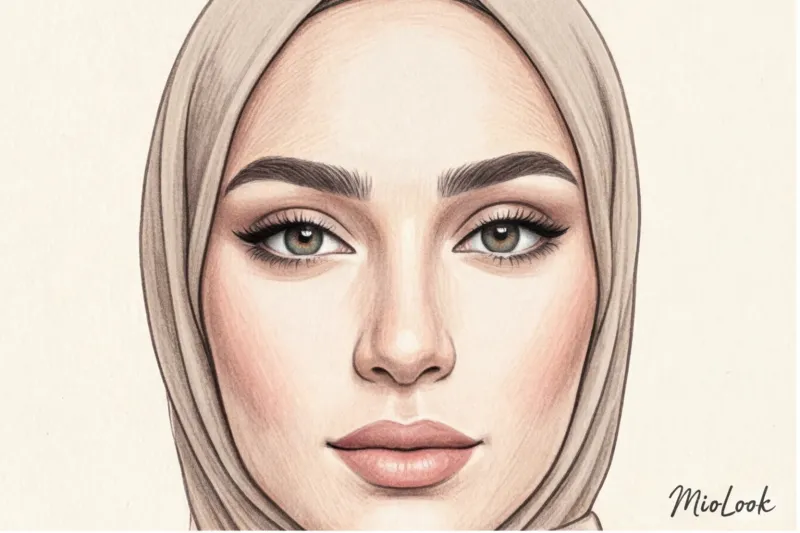
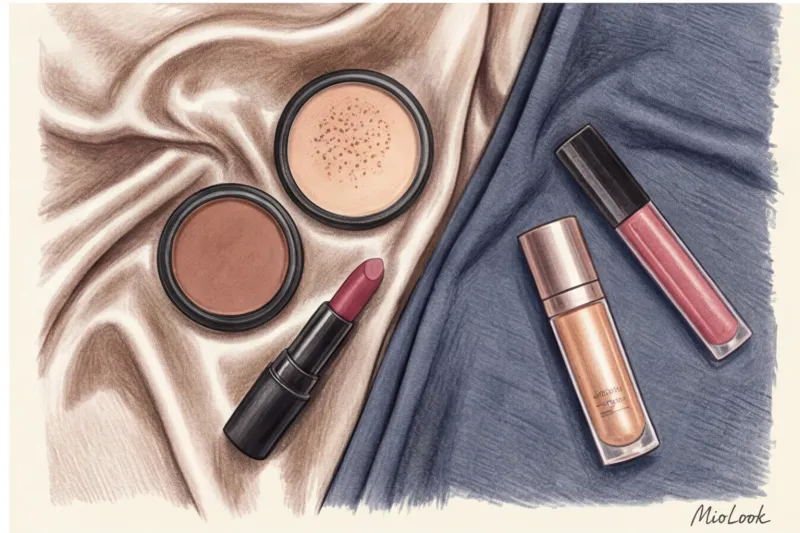
Nude is the most insidious color. When you wear beige, sand, or camel (like classic viscose styles from H&M or Zara), you risk completely blending your face into the fabric.
- What is the risk: The lack of contrast makes the face appear "floating" and shapeless. The eyes appear smaller, and the lips disappear.
- Stylist's decision: Here, enhanced sculpting is essential. Strongly define your brows (they'll anchor your face) and choose a lipstick 1-2 shades darker than your natural lip color. Swap light gloss for a rich caramel or dusty brown matte tint.
Deep dark tones (black, emerald, burgundy)
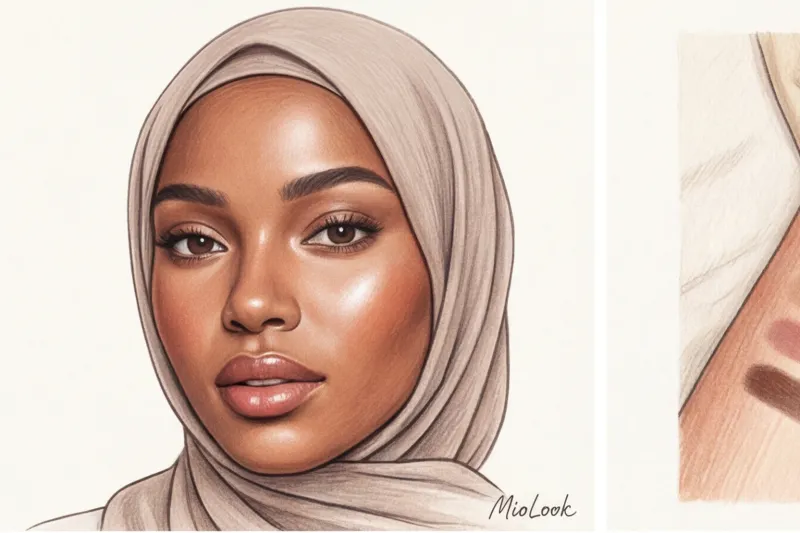
Dark colors act like a black hole—they visually suck the contrast out of your face (up to 30% in daylight). Simply applying a light BB cream under a black hijab will make you look sickly pale.
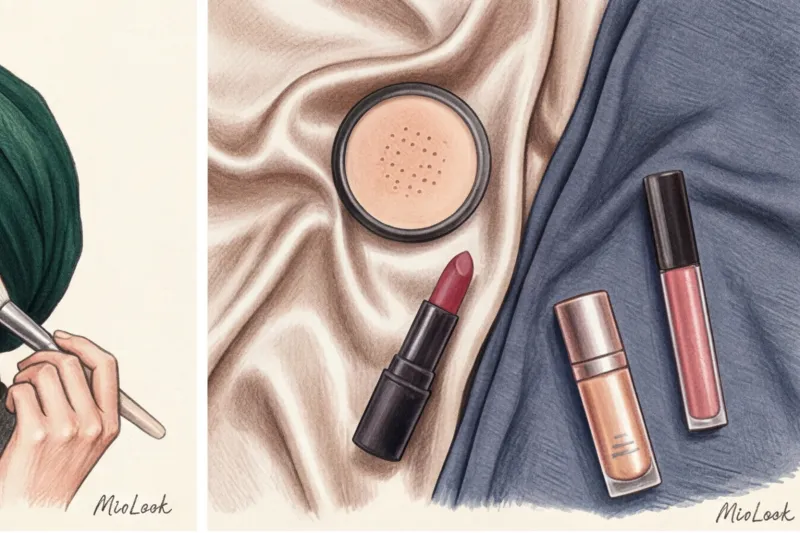
- What is the risk: A dark frame requires bright content, otherwise the face will “fall” into the darkness of the fabric.
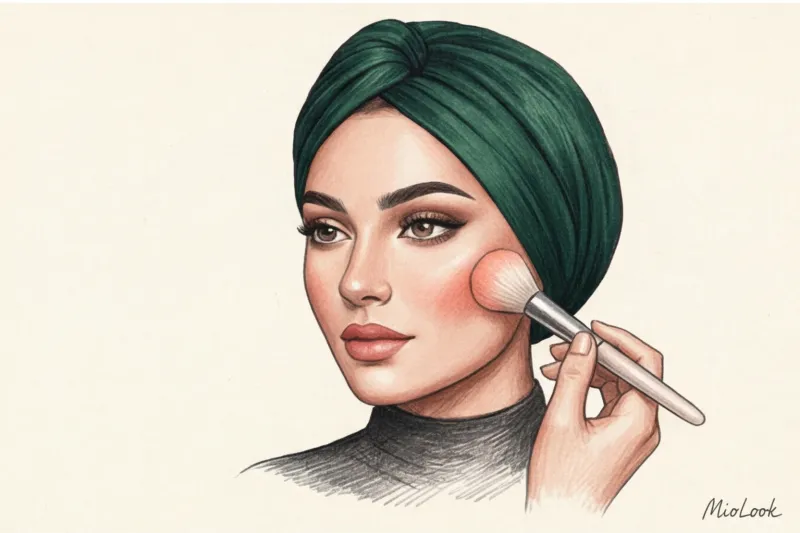
- Stylist's decision: Active highlighting. Apply concealer to the center of your forehead, bridge of your nose, and chin (baking works great here). Be sure to add a bright, refreshing blush to the apples of your cheeks and a touch of liquid highlighter to your cheekbones.
Snow-white and pastel scarves
White works like a merciless ring light. It reflects maximum light directly onto your face, highlighting every uneven surface.
- What is the risk: Against a sterile white background, the slightest redness, post-acne marks, or spider veins become three times more noticeable. A blush that's too cool will make you look like a porcelain doll.
- Stylist's decision: Your most important investment is a perfect, saturated foundation. Forget about focusing on your eyes; instead, focus on your skin's texture. Choose a peach or warm beige blush to offset the sterility of white fabric.
A Forgotten Secret: Why Fabric Texture Dictates Your Makeup Finish
This is the very insider knowledge my clients pay for during consultations. Most women choose makeup only to match the color, completely ignoring the texture of the material. But a basic cotton hijab from a mass-market store for €15 and a premium silk hijab from Massimo Dutti for €70 require completely different approaches to skin.
Glossy fabrics (silk, satin, satin) reflect up to 40% more light than matte ones. If you wear a shiny silk turban and the trendy glass-skin makeup technique (glowing, dewy skin), you'll look sweaty rather than fresh. A face with highlighter appears oily against a glossy fabric. Your choice here is a completely matte finish: velvety foundation, powder, and matte lipsticks.
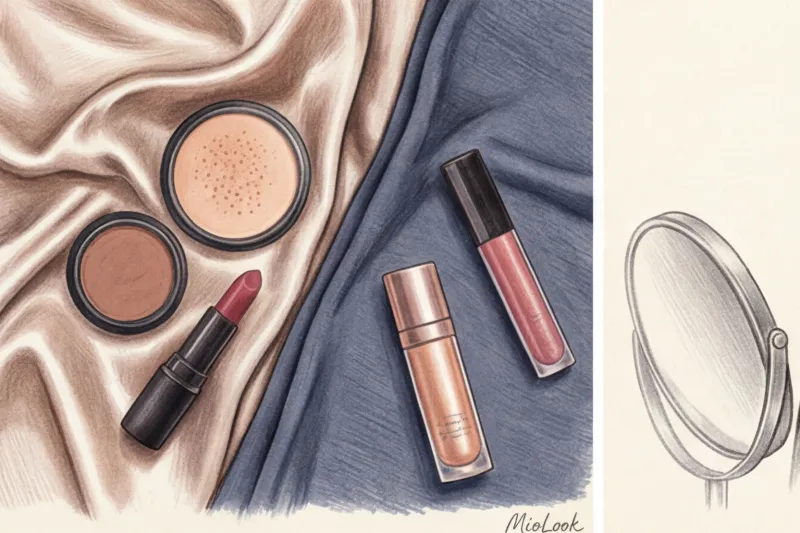
Matte fabrics (cotton, linen, heavy jersey), on the other hand, actively absorb light. Adding a dense matte powder to a cotton stole will create the effect of a theatrical mask or dried parchment. This is where satin foundations, dewy blushes, and lip glosses come in handy. The fabric will absorb excess light, leaving your skin looking vibrant and hydrated.
Fair Limit: Of course, this trick with a dewy finish on matte fabrics doesn't work for those with problematic skin during acne flare-ups. In this case, shimmery textures will only highlight the blemishes—it's best to stick to a matte finish, regardless of the fabric.
Ready to get started?
Try the MioLook free plan—no commitments required. Create your virtual makeup look and choose your makeup using smart algorithms.
Get access — €0.99 onceKatarzyna Nowak's Checklist: 5 Steps to Check Your Look Before Going Out
I love practicality. No abstract talk about "inner radiance"—just a clear algorithm. Before leaving the house, stand by a window (with daylight!) and go through these five steps.
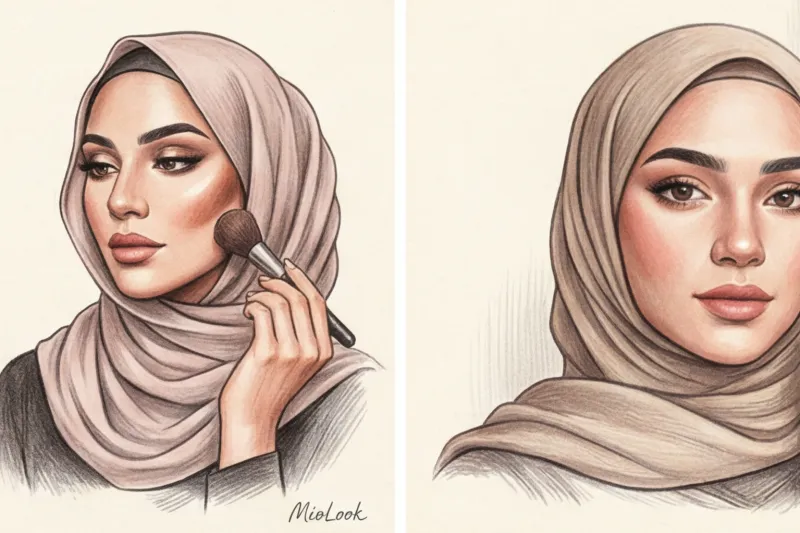
- Reflex test. Take a close look at your jawline and chin. Does the scarf cast a green or gray shadow? If so, immediately apply a warm bronzer along the contours of your face.
- Contrast test. Take a selfie and convert it to a black and white filter. Do your lips blend in with the color of your scarf? If they're the same shade of gray in the photo, you need a darker or brighter lipstick.
- Architecture verification. By hiding your hair, you've deprived your face of natural volume. Are your cheekbones visible? Are your eyebrows defined? Without them, your face will look like a pancake.
- Texture balance. Remember the rule: shiny fabric (silk) = matte skin. Dull fabric (cotton) = glowing skin.
- Focus on grooming. When your skin is covered, any makeup flaws (crumbling mascara, uneven lip contour) become much more noticeable. A perfectly even complexion is always more important than complex eyeshadow blending.
Modest fashion doesn't mean sacrificing style or beauty. On the contrary, a hijab or turban is a luxurious accessory that frames your face. Stop buying eyeshadow to match every new scarf. Invest in proper skincare, high-quality contouring, and mastering color temperature. Leave the chameleon effect behind—your face deserves to be a focal point, not an extension of your fabric.