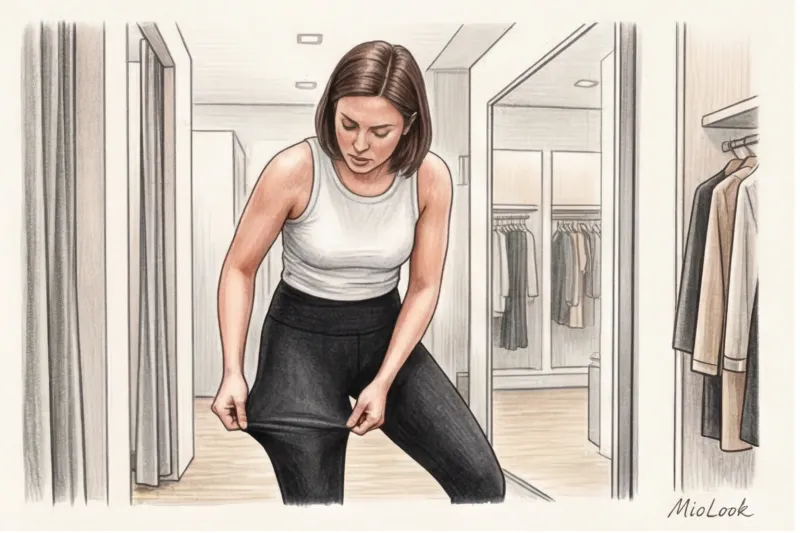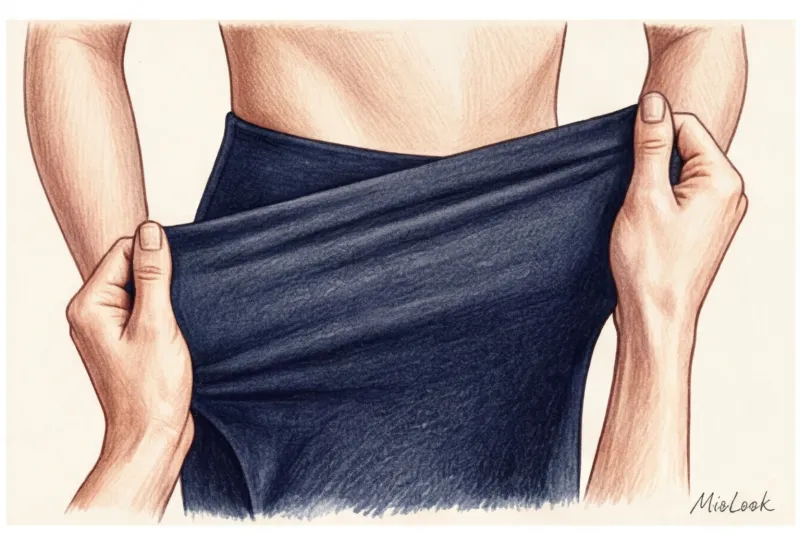
One day, a client came to me for a wardrobe review wearing thick black 100-denier tights and a cropped sweater. When I asked her delicately about her bottoms, she was genuinely surprised: "Darina, they're leggings; they're completely see-through!" Spoiler alert: in daylight and at the slightest tilt, they were just enough to jeopardize her business reputation.
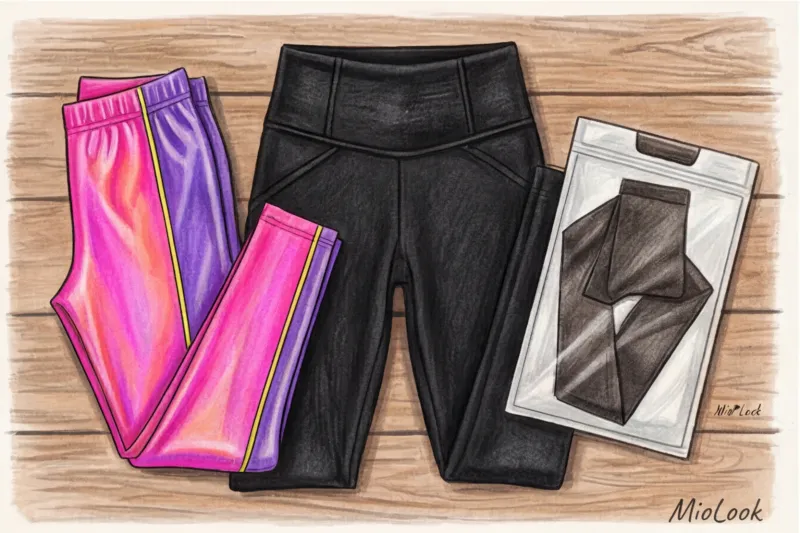
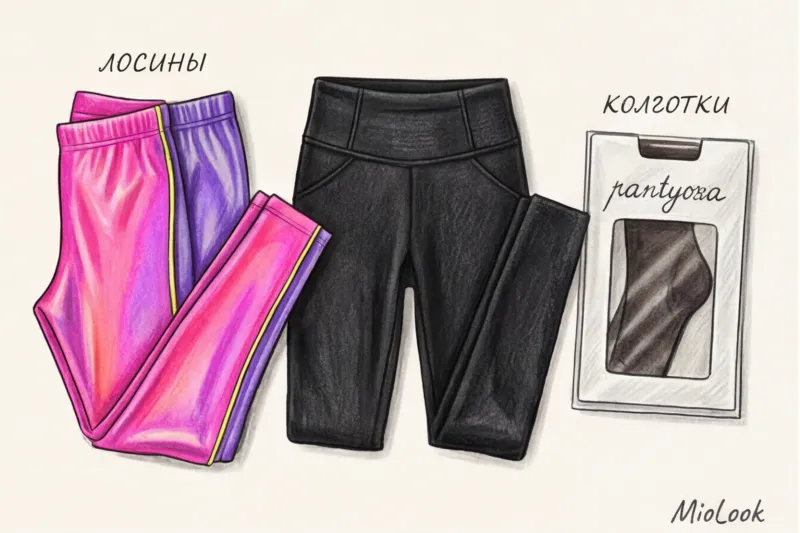
This situation is not uncommon. Terminological confusion in stores has led to women making annoying style mistakes en masse. If you're also confused, What's the difference between leggings and tights? , tights, and skinny pants, this material will put everything in its place. We've already discussed styling rules in more detail in our The complete guide: what to wear with leggings in the city , and today we'll examine the bare physics of fabrics, silhouette construction, and the boundaries of appropriateness.
What's the biggest confusion: why do we call leggings tights?
The historical paradox is that leggings were originally a strictly male military uniform. In the 18th century, they were made from elk (hence the name) or deer skin. To pull these tight pants on without a single wrinkle, soldiers had to put them on wet. Drying directly on the skin, the leather created extreme compression.
The term burst into women's wardrobes during the aerobics era of the 1980s, along with Jane Fonda's videotapes. Bright, neon Lycra became a symbol of fitness, and in the post-Soviet space, the word "leggings" firmly entrenched itself for any tight-fitting sweatpants.
Today, marketplaces are the main culprits of confusion. SEO algorithms force sellers to use meaningless phrases like "women's leggings, tights, and sports pants" in product card titles. A customer might be looking for a thick, office-appropriate item, but instead receives a thin, athletic knit. According to retail analytics for 2023, over 40% of returns in the "pants" category are due to the fact that the thickness of the item received does not meet the customer's expectations.
Your perfect look starts here
Join thousands of users who look flawless every day with MioLook. A smart AI stylist will help you sort through your wardrobe and create outfits without mistakes.
Get access — €0.99 onceThe difference between leggings and tights: a battle of terms and textures
The common belief that "leggings and tights are the same thing, just different words" is a complete myth. The difference lies in the intended use, the fabric weight, and the percentage of elastane.
Leggings — This is an element of sportswear or loungewear. They do not have complex darts, structural seams, or pockets. Their main purpose is to stretch in all directions (so-called 4-way stretch), wick away moisture, and not restrict movement. They can contain up to 20-30% spandex or elastane, which often gives them a characteristic synthetic sheen.
Leggings — This is an urban hybrid garment, a step closer to trousers. They are made from dense, matte fabrics. The standard material for urban leggings is Ponte di Roma, a dense double knit that holds its shape perfectly. The percentage of elastane here is significantly lower—usually 5-10%—the rest is viscose, heavy cotton, or nylon.
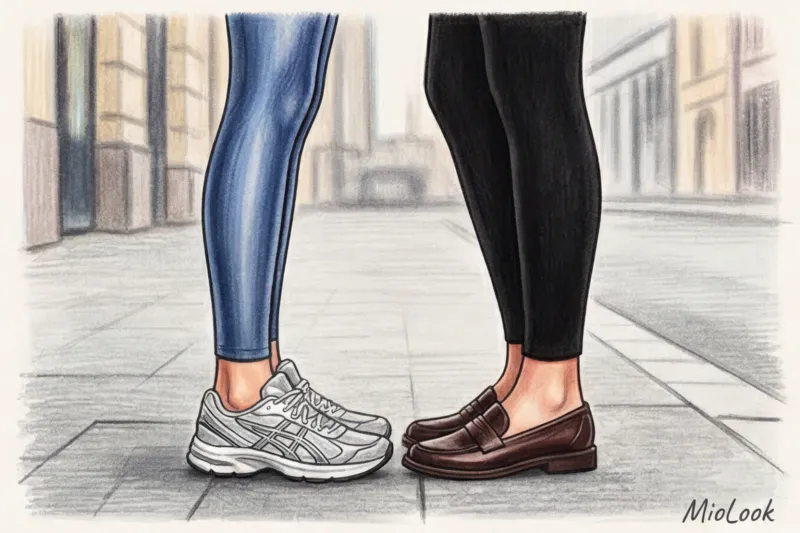
Over 12 years of working as a stylist, I've developed a simple rule for my clients: the "pinch test." If you can crumple the item in one fist and it turns into a tiny ball, it's leggings. If the fabric is dense, springy, and holds its shape on a hanger, it's leggings.
Leggings: The Anatomy of a Sportswear Piece
Sportswear models have a thin elastic band at the waist or are even made using seamless technology. Their place is strictly in the gym, on a run, or on the couch at home. Why? Because of the peculiarities of fabric tension. In the fitness world, there's a concept called squat test (Squat test). If you squat in thin leggings in bright light, the fabric on your buttocks will stretch so much that the color of your underwear will show through. In a city where you're constantly sitting, bending, and climbing stairs, this effect is unacceptable.
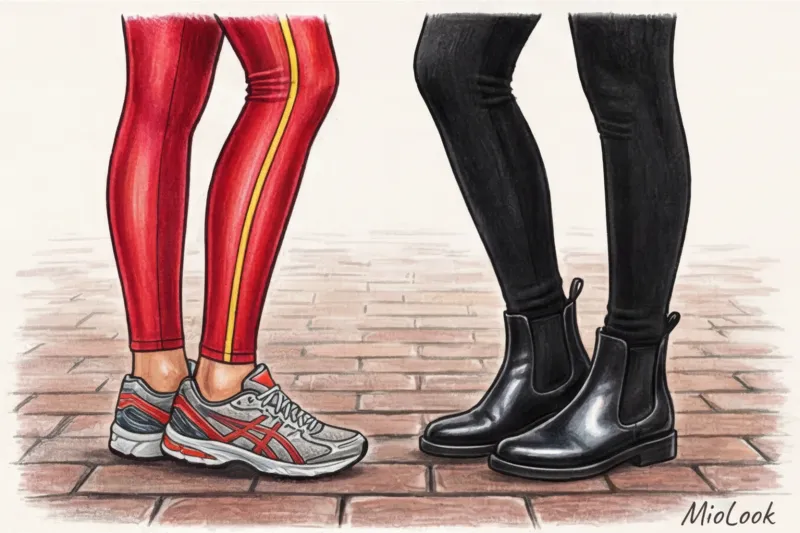
Leggings: An Urban Alternative
Proper urban leggings have a wide, thick, often double-layered waistband (5 to 10 cm) that doesn't bunch at the waist and acts as a lightweight corset. The fabric density (GSM) for urban leggings should be 280-350 g/m². Furthermore, manufacturers often add decorative elements that mimic trousers: stitched creases down the front, false pockets, side stripes made of a different fabric, or stirrups at the bottom of the legs.
Access to MioLook for €0.99 — one-time payment
Not sure what to wear with your new leggings? Our smart AI stylist will find the perfect everyday look tailored to your body type.
Get access — €0.99 onceLeggings vs. Tights: Where is the Line of Decency?
Here we return to the story from the beginning of the article. The main mistake is confusing weave density with fabric density. These are two fundamentally different technological processes.
Tights are knitted on circular knitting machines and are classified as hosiery. Their density is measured in denier (DEN), which is the weight of 9 kilometers of yarn in grams. Even if you buy thermal tights with a density of 250 DEN or those made of dense microfiber, they are still structurally underwear.
Leggings are made from cut-to-fit knit fabric. They have side seams, crotch seams, and sometimes a gusset. Tights also cover the foot (or have a foot loop if they're toeless), while leggings always end at the ankle.
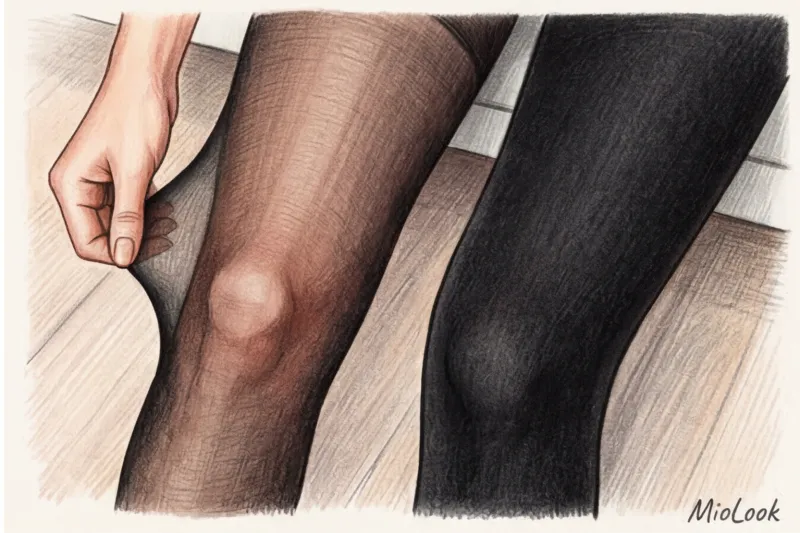
The biggest fashion mistake: when tights pretend to be pants
What gives away the lingerie origins of thick tights if you wear them instead of pants? The center seam. In tights, this usually has one thin seam in the front and two seams in the back (or vice versa, depending on the size). When this seam stretches across the buttocks without any coverage on top, it looks not only unsightly but also vulgar.
A golden rule: if you're wearing tights, your groin and buttocks should be completely covered with a longer top—a dress, skirt, shorts, or a very long tunic sweater. Leggings made of thick Ponte di Roma fabric allow for a slightly shorter top (for example, a longer jacket that covers two-thirds of your buttocks), although I still recommend covering your groin for an elegant silhouette.
Leggings or skinny pants: how to make the right choice
The WGSN trend report for 2024 notes that the hybrid athleisure trend has peaked, but dress codes are making a comeback. How can you tell the difference between skinny pants and leggings?
The design elements of classic trousers include a rigid, non-elastic waistband, belt loops, a full fly with a zipper and closure, and functional pockets. The trousers are made of twill, gabardine, denim, or suiting wool. They contain a minimum amount of elastane (usually 2-3%, just for comfort).
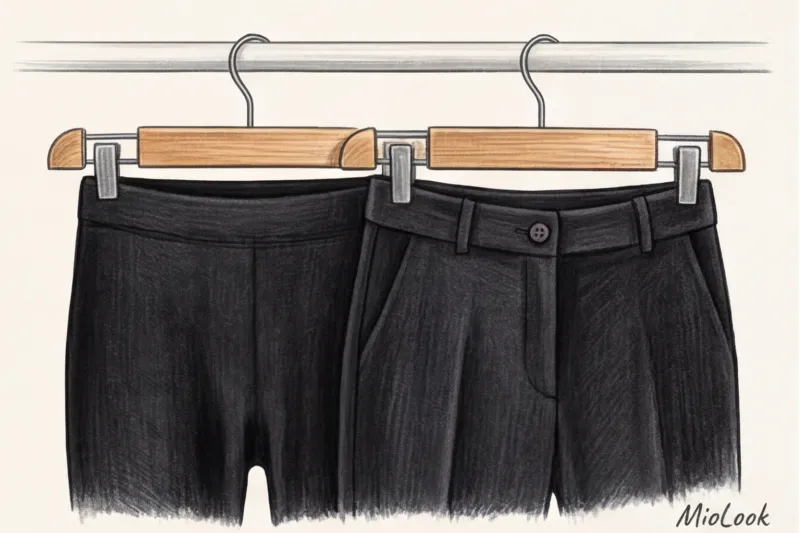
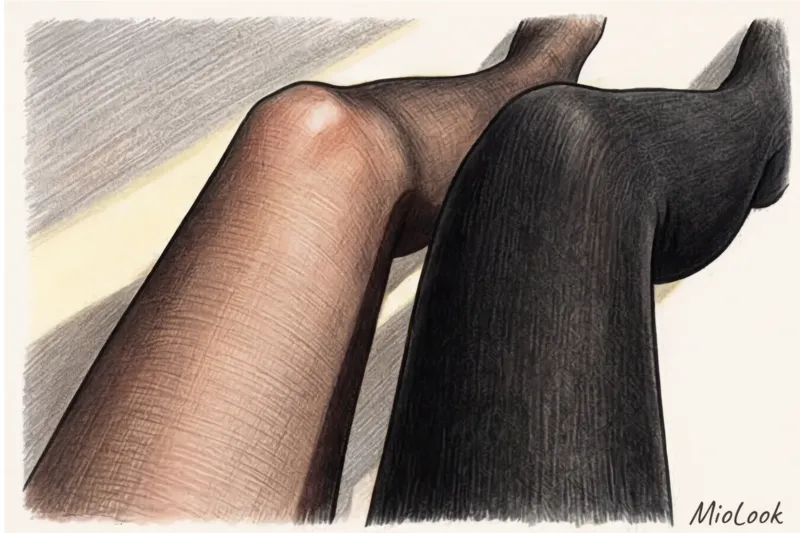
The main visual indicator is the fit around the calves and ankles. Skinny pants (even the tightest skinny ones) don't hug the calves like a second skin. There's always at least a few millimeters of air between the fabric and the leg. Leggings, on the other hand, follow the anatomy of the leg perfectly.
When to wear what: Skinny pants are acceptable in a business casual dress code. You can wear them to a meeting with a silk blouse. Leggings (even the thickest and most expensive ones) are smart casual. They shouldn't be worn to a formal office. They require styling with voluminous, structured pieces: oversized jackets, chunky sweaters, or long white shirts.
Hybrid Formats: What Are Treggings and Jeggings?
The fashion industry loves to cross-pollinate formats. That's how leggings and jeggings came about.
Treggings (trousers + leggings) These are leggings made of thick trouser fabric. They feature a faux fly, false pockets, and are often creased. They're the perfect compromise for the Friday dress code at the office, where everyone wears jeans, but you want to look a little more put-together while still maintaining comfort.
Jeggings (jeans + leggings) — is a thick knit fabric dyed to resemble denim (sometimes with a print of distressed seams). This trend from the 2010s requires extreme caution today.
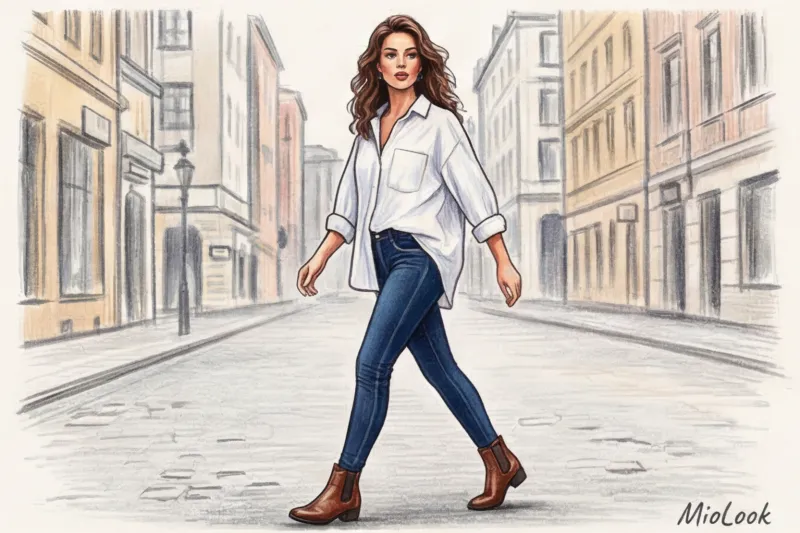
Let's be honest: jeggings are a seriously limited item. They're absolutely no substitute for a good pair of skinny jeans, especially for plus-size figures. Real denim (twill weave) has a sculpting effect: it lifts the hips and sculpts the silhouette. Jeggings, with their abundance of elastane, simply hug all imperfections without providing any form-fitting. If you do choose jeggings, wear them exclusively with long, oversized shirts that cover the hips.
Ready to get started?
Try the MioLook free plan—no commitments required. Upload photos of your items, and the AI will create dozens of new stylish combinations.
Get access — €0.99 onceStylist checklist: how to accurately identify a piece
To avoid falling victim to marketplace terminology and showing up to work in your underwear again, save this cheat sheet for your next shopping trip.
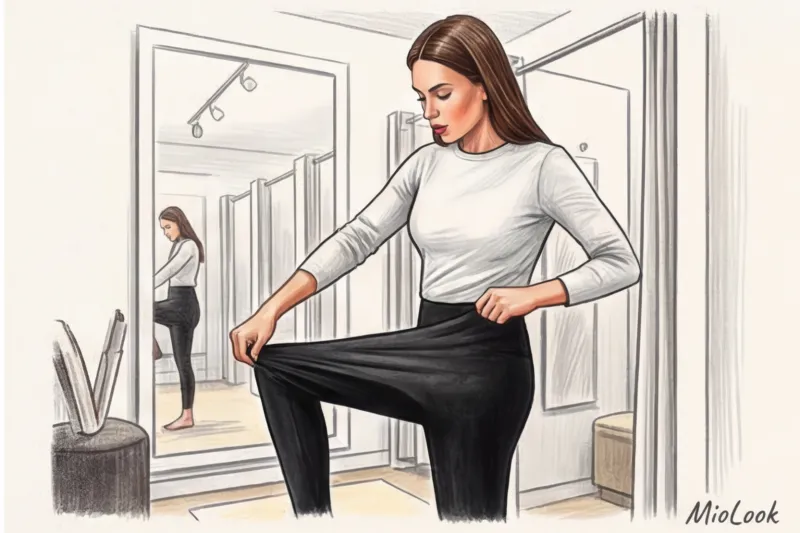
- Light test: Stretch the fabric over your knee or thigh under a bright fitting room lamp. Can you see skin or the outline of your fingers on the back? These are tights or thin athletic leggings. They're not suitable for the city.
- Hardware test: Is there a zipper, buttons, or a stiff, non-stretchy waistband? If so, these are skinny pants. If the waistband is completely elastic, these are leggings or tights.
- Seam test: Look at the inseam and buttock area. Two thin seams at the back and a gusset? Those are tights. Flatlock seams? Those are gym leggings.
- Exploring the shortcut: Look for dense viscose (at least 60%), nylon, and cotton with no more than 5-10% elastane. If you see 80% polyester and 20% spandex, toss it in the workout bin.
Clothes aren't just fabric; they're a language we speak to others before we even utter a word. Knowing the difference between underwear, sportswear, and streetwear is your personal tool for impression management. Choose the right weight, pay attention to the proportions of your top, and your look will always convey confidence and impeccable taste.