Macrotrends: Where the Beauty Industry is Heading and Why 'Fast Beauty' is Dying
Have you ever noticed how the contents of your makeup bag change after a deep closet cleanout? In my experience, when clients begin building a conscious wardrobe, their perspective on cosmetics transforms in just a couple of weeks. Today's top makeup trends are no longer about stenciling a new "perfect" face. We're witnessing a global tectonic shift: the era of 'Fast Beauty', with its endless one-day palettes and aggressive contouring, is dying before our eyes.
According to the WGSN Beauty analytical report (2024), 73% of global consumers now demand ingredient transparency, proven effectiveness, and eco-friendly packaging from beauty brands. As a practicing stylist, I constantly see this parallel: mindfulness in clothing inevitably leads to mindfulness in beauty routines. We are going through the same the path to minimalism Hundreds of cheap plastic tubes are being replaced by sustainable development The industry is actively introducing refills—refillable units that save up to 70% of plastic per package. Brands are completely eliminating microplastics (especially in glitters, replacing them with safe synthetic mica) and animal testing, and vegan formulas are becoming a strict baseline. True luxury today is a heavy metal or bamboo case for €60–€80, which you can refill for years to come, not just another hyped-up compact for one season.
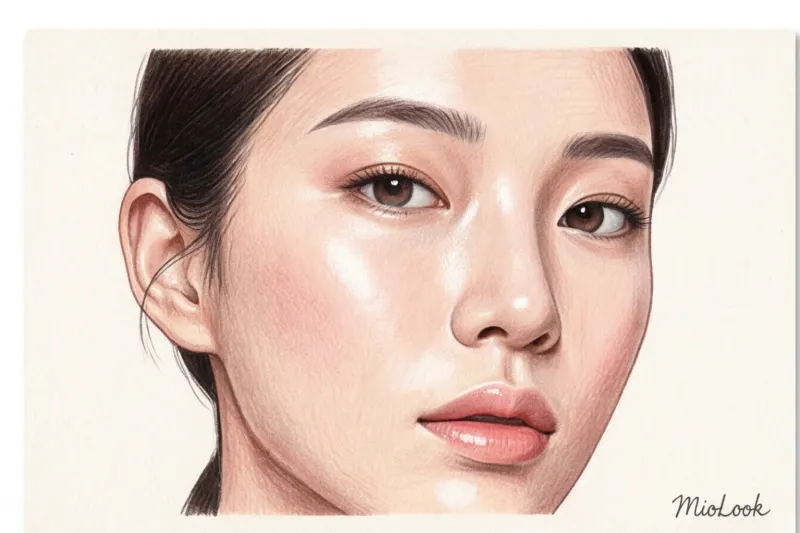
The second macro trend, which can safely be called a true beauty revolution, is the shift from total concealment of imperfections to emphasizing individuality. Remember the days when we covered every freckle and tiny vein with a thick layer of matte foundation? Consumer research from Mintel shows that modern women are completely tired of the concept of "erasing their face." Today, the texture of vibrant skin, with its pores, subtle pigmentation, and even minor imperfections, is a marker of self-confidence. We no longer hide behind layers of makeup; we apply it locally, like a delicate accessory.
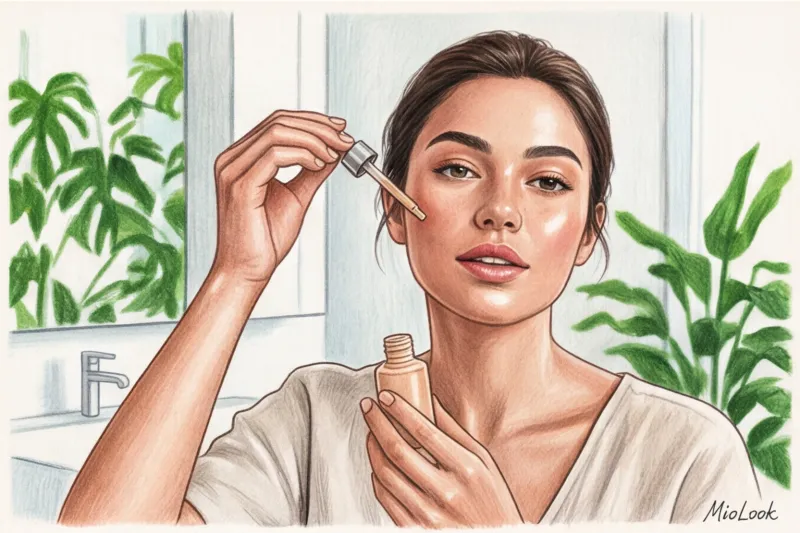
The logical technical continuation of this approach was skinification — the complete fusion of decorative cosmetics and skincare. Why apply heavy foundation when you can use a product that heals your skin while you wear it? Traditional dense pigments are giving way to serum foundations, now formulated with hyaluronic acid, niacinamide, peptides, and plant-based squalane. You're not just applying color; you're restoring your lipid barrier all day long.
One of my clients recently confessed, "I threw out all my heavy foundations after switching to skin-care tints with SPF. My face finally started to breathe." And it really does work. Hybrid products (usually in the €30-€60 price range) allow you to create that "expensive, well-groomed face" effect in five minutes. And to understand how your new, lightweight makeup will visually match the texture of your clothes, I recommend using a smart app. MioLook — it helps to create a holistic image, where makeup and clothing work as a single stylistic whole.
Facial Architecture: Makeup Trends for the Perfect Tone
You know what often makes a look hopelessly cheap, even if you're wearing a perfectly tailored merino wool jacket for €300? It's the flat, dull "helmet" of foundation on your face. In my styling practice, I constantly encounter this paradox: women invest huge sums in premium fabrics, but ruin the entire aesthetic with heavy, overdone makeup.
It's time to finally debunk the myth of the necessity of harsh, graphic contouring. Kim Kardashian-style contouring, with its aggressive brown stripes under the cheekbones and highlighted triangles, worked perfectly under studio lights or Instagram filters. But let's be honest: in real life, under natural daylight, heavy contouring looks like dirty smudges. Modern makeup trends dictate a completely different approach to facial contouring, where the illusion of a completely effortless look is the key.
"Good makeup today doesn't redefine facial features. It works like a fine silk lining on an expensive coat—hidden from view, yet defining the correct shape and fit."
Ditch the heavy textures: pigmented serums instead of foundation
The biggest technological breakthrough of recent years is the fusion of skincare and color. Thick foundations that create a mask-like effect on the face are giving way to pigmented serums (skin tints). Formulas based on squalane, niacinamide, and hyaluronic acid, with the addition of lightweight color spheres, don't completely cover the skin, but rather even out its overall tone. A good pigmented serum will cost you between €40 and €70, but it replaces three products: moisturizer, primer, and a light foundation. This texture allows skin to breathe, looking hydrated and vibrant.
Draping instead of hard contouring
If we're abandoning taupe-colored contours, how can we restore definition to our faces? The answer lies in the technique of draping—sculpting volume with blush. This technique, which originated in the 1970s, is currently experiencing a major renaissance.
Instead of applying shadow under the cheekbone, we apply cream or liquid blush to the prominent part of the cheekbone and gently blend it toward the temples. This creates a lifting effect, visually lifting the face upward. The blush mimics a natural flush of blood, making the face look fresh and rested, rather than haggard and sunken.
Soft-matte vs. Dewy-skin: How to Choose a Finish Based on Your Skin Condition
According to a 2024 analytical report by WGSN, the extreme trend toward "glassy," dewy skin is gradually transforming. A dewy finish is incredibly beautiful, but it's harsh on any texture: it visually enlarges pores, highlights blackheads, and accentuates uneven skin texture. If your skin is prone to breakouts or has a pronounced texture, the dewy effect only accentuates it.
That's why the finish comes first. soft-matte (Soft matte). This isn't the dry, tight matte effect of the 2010s. Soft matte resembles the surface of expensive velour or velvet: the skin doesn't shine, but retains an inner, muted glow. This finish is achieved through the use of ultra-finely milled loose powders, applied locally with a fluffy brush only to the T-zone (forehead, nose, chin), leaving the cheeks and cheekbones naturally hydrated.
To match the texture of your clothes with the right finish of your makeup, I recommend using MioLook The app's smart algorithm helps analyze your wardrobe and advises whether your current look calls for a stark matte finish or a delicate, dewy glow.
Access to MioLook for €0.99 — one-time payment
A smart AI stylist will select the perfect look.
Get access — €0.99 onceFake Freckles and Transparency: The Trend for "Real" Skin
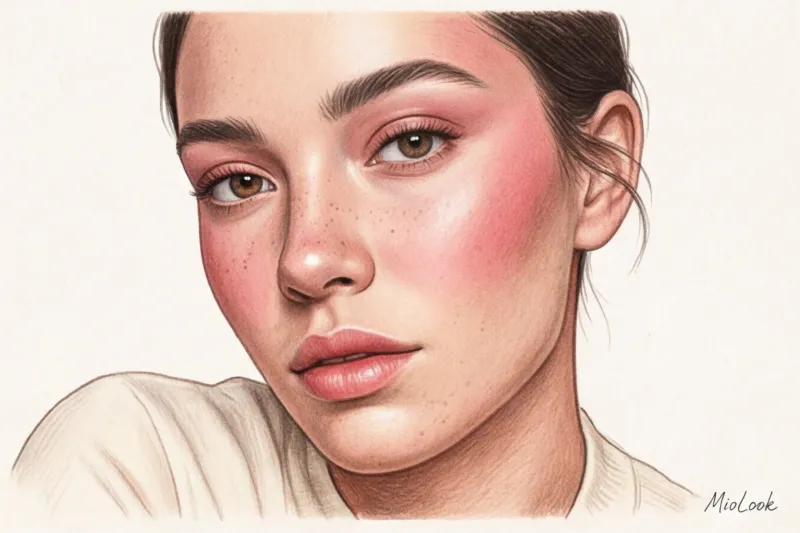
One of my clients, a top executive at a large corporation, once completely replaced her opaque matte foundation with a light fluid foundation, which revealed a couple of pigment spots on her nose. The result? Her colleagues assumed she'd returned from an expensive retreat because her face no longer looked like armor. Skin texture—visible pores, slightly uneven skin tone, freckles—suddenly became a key status symbol.
Perfectly smooth, "plastered" skin is now associated with insecurity and a desire to hide. On the contrary, showing off your natural texture sends a powerful social message: "I take care of myself, I'm healthy, and I have nothing to hide." The trend has gone so far that girls who don't naturally have freckles are deliberately painting them on with translucent markers or henna (fake freckles) to add a youthful carefree touch and slightly break up the otherwise perfect canvas.
But what about breakouts or dark circles if we're forgoing a full foundation? This is where technique comes into play. spot application of concealer (micro-concealing). We no longer draw giant, light triangles under the eyes. Concealer is applied in microscopic doses exclusively to strategic areas:
- In the inner corner of the eye (where the deepest blue shadow is);
- At the wings of the nose (to hide redness);
- Apply pointwise, with a thin brush, strictly on the inflammation, without affecting the healthy skin around it.
The result is a face that looks like it's wearing no makeup at all—just amazing genetics and a full eight hours of sleep.
Color Accents: What's Hot for Eyes and Lips
According to a Mintel analysis report for last year, sales of multifunctional beauty products in Europe grew by 42%. This isn't just another marketing hype, but a logical continuation of the global trend toward minimalism. When I help clients assemble a capsule wardrobe, we always build a unified color palette. The same principle applies reliably to modern makeup: visual noise gives way to clean, deliberate choices.
The absolute favorite of the season is monochrome makeup Its essence is extremely practical: you use one creamy product (usually a tint or stick) for your lips, the apples of your cheeks, and your eyelids. From a sustainability standpoint, this is a brilliant solution. Instead of three separate plastic containers, you buy one, and your morning routine is reduced to two or three minutes. High-quality multi-products are typically in the €25–€45 price range, but their versatility makes them worth every penny.
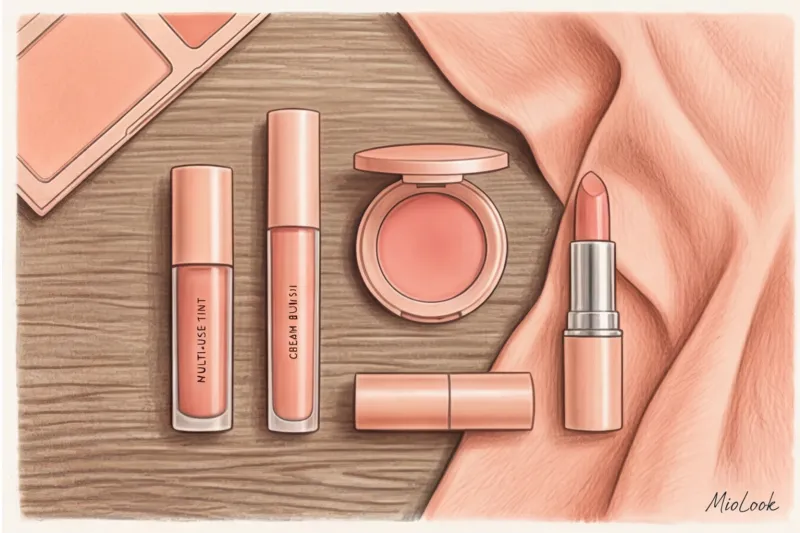
But how do you choose that one shade that won't make your face look tired? This is where theory of 12 color types The secret to the perfect monochrome is that the pigment should blend with your natural coloring without clashing with your skin's undertone:
- For cool and muted skin tones (Summer palette): Look for shades of dusty rose, cool berry puree, or soft fuchsia. They'll refresh your complexion without creating harsh contrasts.
- For warm and rich (Autumn palette): Your best friends are terracotta, burnt caramel and warm peach.
- For contrasting and clean (Winter palette): You can safely take deep wine, ruby or cool red tints, applying them in a translucent layer.
- For light and warm (Spring palette): Sheer coral, salmon and soft pink tones with a subtle warm glow.
If you are not completely sure about the temperature of your appearance, upload a photo in daylight in MioLook — the app's algorithms will analyze your contrast and suggest a complementary palette for both your basic wardrobe and your portrait area.
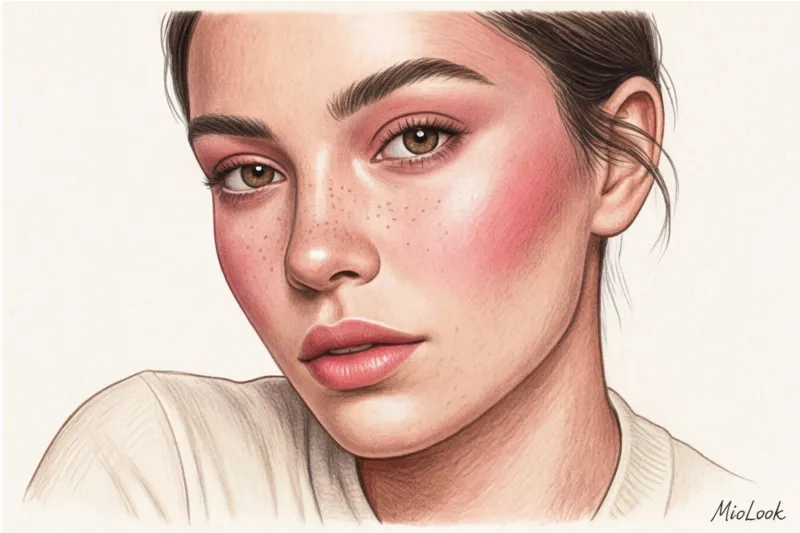
For those who find the calm monochrome too “safe,” the industry has prepared a return to aesthetics Soft Grunge But forget the heavy, graphic black smoky eyes of the 2000s. The current grunge look is all about a slightly sloppy, "yesterday" shading. We take a soft gel kohl (preferably a complex shade like dark chocolate, plum, or graphite), work the space between the lashes, and gently pull the color with our finger or a barrel.
"Soft grunge works with contrasting textures. A lightly smudged eyeliner looks incredibly stylish and expensive when paired with glowing skin and crisp fabrics—like a crisp cotton shirt or a smooth cashmere sweater. But be careful: if you have deep-set eyes, this technique can visually weigh down your eyes."
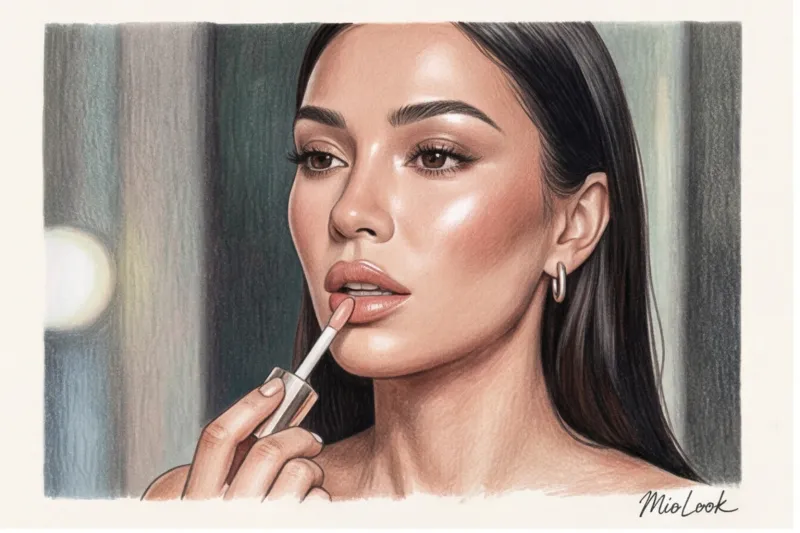
When it comes to lip makeup, the era of thick, matte lipsticks that mercilessly tighten the skin is officially over. Effect is taking center stage. "kissed lips" The application technique has changed: now the pigment is applied with fingertips only to the center of the lips, creating a soft gradient without a graphic outline.
Glossy top coats are applied over such a gradient (or as a standalone product) lip oils Modern oil formulas are a triumph of skinification. Squalane, peptides, and hyaluronic acid are key ingredients. They create that coveted dewy, glassy glow, visually enhancing volume, while providing deep nourishment. This luscious finish on the lips is the perfect complement to slightly sloppy, grunge-inspired eyes, bringing the look together.
How to Integrate Makeup Trends into a Formal Business Look
A 2023 LinkedIn study revealed a curious detail: candidates and senior executives whose image is "modern yet understated" receive 34% more positive feedback from their peers than those who strictly adhere to an outdated, conservative style (a muted matte foundation and brown lipstick from the 2000s). This raises the obvious question: where is the fine line between "fashionable" and "professional" drawn within the strict confines of an office dress code?
The key here is predictability of textures. Professional makeup shouldn't require touch-ups every two hours or distract your conversation partner with glitter while discussing the quarterly report.
When I prepare expert clients for large-scale conferences and pitches, we always work through this balance in detail. Just last month, I was preparing a speaker for an international fintech forum. Too bright, catwalk-like makeup trends would steal attention from her brilliant presentation, and the complete lack of accents would make her face look dull in the spotlight. As I discussed in detail in my article on business makeup and attire for public speaking, a speaker's face is a semantic anchor. Your goal is to show that you're modern, energetic, and up-to-date, without turning into a beauty influencer.
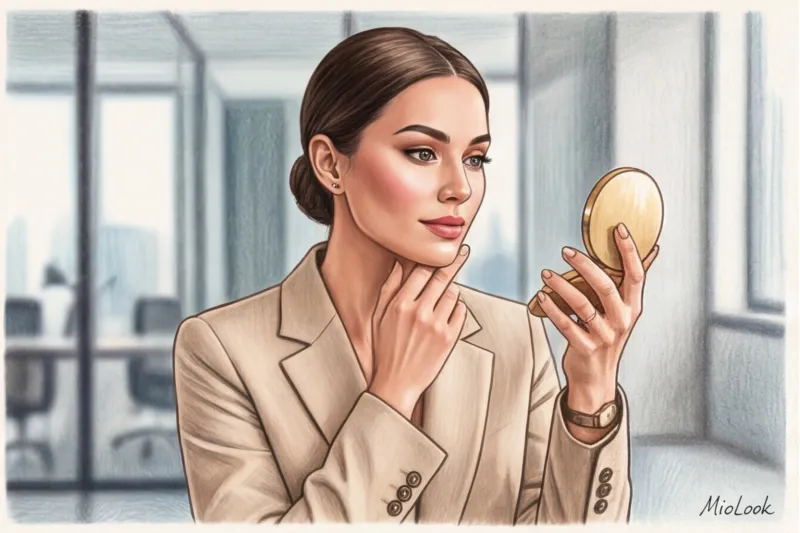
Let's take a look at a specific example of adapting the current blush trend for a corporate environment. In everyday life, we might indulge in a generous drapery down to the temples or a dewy finish, but in the office, this looks out of place. To integrate this trend into a business style, replace glossy creamy textures with baked satin ones—they won't create a greasy shine under the cold fluorescent lighting of conference rooms.
Apply the product very locally: just above the apples of your cheeks, gently sweeping the brush toward your temples for a natural lifting effect. The color palette should also "mature": choose sophisticated, muted shades. Dusty rose, caramel, or warm peach look far more classy than a flashy neon fuchsia. This technique instantly refreshes the face, erasing signs of fatigue after hours of Zoom calls, while still strictly adhering to business protocol.
Access to MioLook for €0.99 — one-time payment
Start creating perfect images with the help of artificial intelligence
Get access — €0.99 onceAnother incredibly stylish and effective tool for confident speakers is graphic, minimalist eyeliner. Forget heavy, sweeping smoky eyes. Firstly, by the middle of a busy workday, they'll inevitably fall under your eyes, creating the illusion of dark circles. Secondly, heavy shadows visually weigh down your eyes.
Instead, opt for a thin, geometrically precise line. Choose long-lasting matte markers or felt-tip eyeliners in deep shades: graphite, dark chocolate, inky blue, or rich burgundy (if the dress code allows a little flamboyance). A sleek, perfectly even wing with a slightly elongated, straight tip acts as an architectural framework for the eyes.
"Minimalist graphics on eyelids are a visual synonym for punctuality. The line should be as clear as your business reputation."
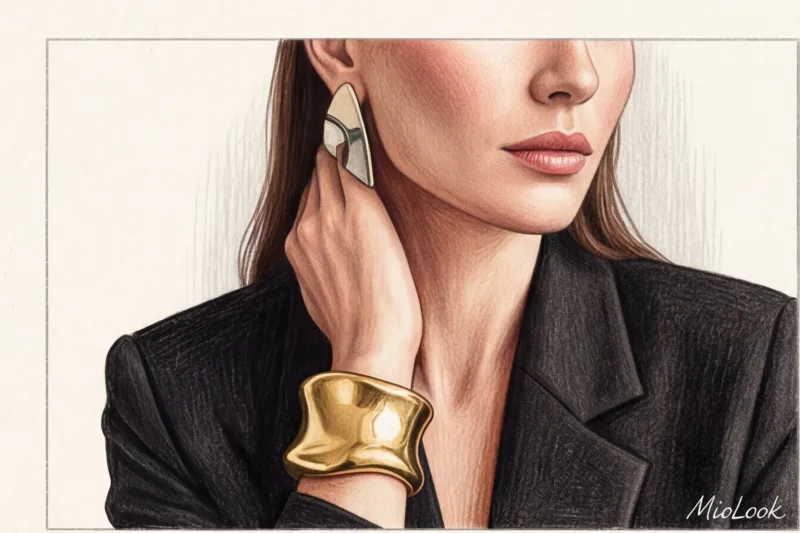
This micro-accent looks especially striking when paired with a tailored, structured jacket (for example, a basic model in a dense wool blend in the €150–€250 range). This winged edge focuses attention on your gaze, conveying absolute composure, determination, and meticulous attention to detail—the very qualities that are unconditionally valued in the business world.
Stylist's Secret: The "Unified Texture" Rule for Wardrobe and Makeup
Most style guides teach us to meticulously match lipstick shades to the color of our blouses, but they completely ignore the physics of light. Remember the basic theory of materials science: how a surface reflects or absorbs light determines how a thing is perceived in space. That's why I often repeat: texture is no less important than color.
How your makeup finish should complement the fabric of your clothes is my favorite professional method for creating a total look. Beauty copywriters usually don't write about this, focusing solely on face shapes. The essence of this approach is "light resonance": your skin and fabric should communicate, not clash. If you've ever worn a luxurious garment, but your face in the mirror seemed "cut off" from your body, there's a 90% chance the problem was a texture discord.
Let's look at smooth and shiny fabrics: natural silk, satin, and viscose with a satin weave. These materials have a high reflectivity. If you wear heavy, matte makeup with a flowing slip dress, your face will instantly look flat, dry, and tired. The fabric will shine, but your skin won't. A dewy finish is vital here. Your skin should look as if it's delicately illuminated from within. Use hydrating serum-primers, creamy pigments, and transparent highlighter-balms without large glitter particles.
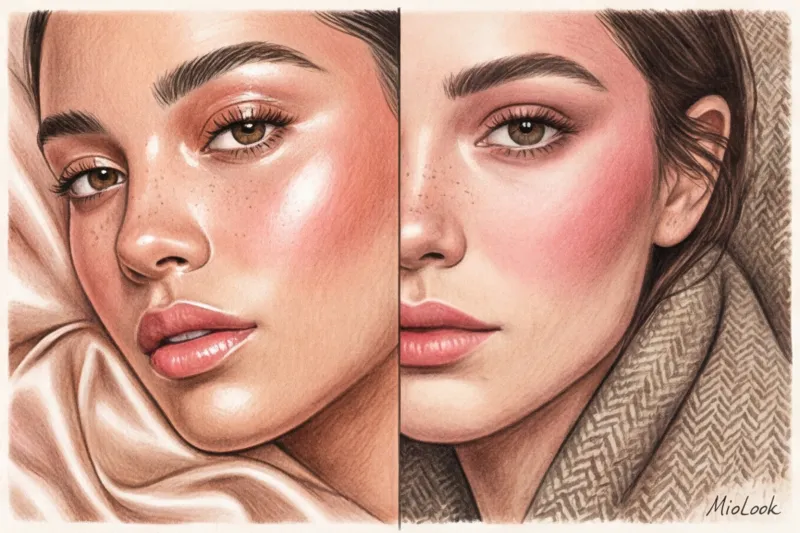
Now let's look at the opposite extreme of the wardrobe—textured fabrics like tweed, dense merino wool, bouclé, or natural linen. These materials absorb light, creating deep, cozy shadows in the folds. Imagine a classic wool jacket (even a basic one in the €150–€200 range) paired with an overly glossy, dewy complexion. In contrast to the dry, refined wool, your skin's radiance will be perceived by others not as "freshness," but as a banal, oily sheen. This instantly ruins the aesthetic of the look.
Velvety, soft-matte makeup works perfectly with these materials. Important: we don't "bake" the face with powder to a mask-like consistency, as was done several years ago. We simply remove excess shine from the T-zone with a finely milled translucent powder, leaving a micro-highlight only on the protruding parts of the cheekbones. For lips, in this scenario, it's best to choose velvety tints or lipsticks with a powdery finish.
"The texture of the fabric dictates the density of the pigment. You can't wear heavy velvet with a transparent, watery lip gloss—it violates the law of visual balance," Christian Dior noted in his early style notes. Today, this principle has been elegantly adapted to suit leather finish trends.
To avoid getting confused with these combinations, I recommend visualizing your looks in advance. By uploading your textured sweaters and smooth silk blouses to the "smart wardrobe" feature in MioLook , you'll immediately visually assess the balance of matte and glossy surfaces in your capsule wardrobe. This helps you understand in advance which cosmetics (mattifying or illuminating) you'll really need for a specific outfit, and saves a ton of time on your morning routine.
TikTok Microtrends: What to Invest in and What to Skip
According to marketing agency Sprout Social (2023), the average lifespan of an aesthetic beauty trend on social media has shrunk to a paltry three months. The feed is literally exploding with "delicious" titles: Strawberry Girl , Latte Makeup , Cold Girl But let's look at this critically, through the prism of a professional approach. Are these truly innovative techniques?
In fact, behind the catchy hashtags lies ingenious marketing, repackaging old basic techniques in a new package. Take "Latte Makeup," for example, which is a classic warm bronze monochrome that makeup artists actively used back in the late '90s. And the "strawberry girl" aesthetic boils down to a generous application of creamy pink blush to the apples of the cheeks and the bridge of the nose. The goal of this naming is obvious—to get you to buy another €35 terracotta bronzer or berry tint. My advice: before adding a viral product to your cart, take stock of your makeup bag. In 90% of cases, the right shade is already in your eyeshadow or base lipstick palette.
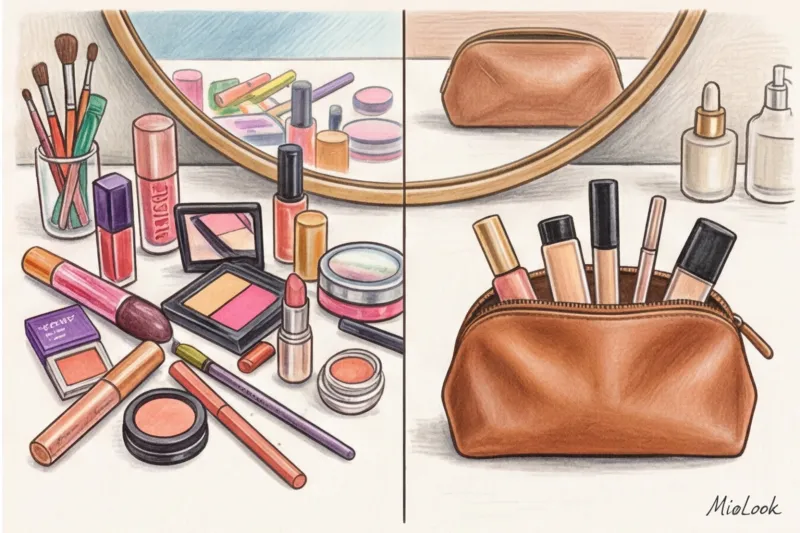
Rhinestones and vibrant color graphics deserve special attention—a powerful visual legacy of the series "Euphoria." Is this appropriate outside of nightclubs and theme parties? Absolutely, if you apply the rule of contrasting volumes. Instead of sprinkling crystals on your eyelids, try gluing a single micro-rhinestone (size SS3 or SS4) to the inner corners of your eyes, leaving the rest of your face as bare as possible, with just a light layer of nourishing lip balm. This micro-accent pairs beautifully with textured fabrics—for example, a tailored jacket or a fine-knit cashmere sweater. And if you're going for a graphic look, don't rush to buy neon eyeliners: a damp, angled brush and bright eyeshadow from an old palette will achieve the same effect without breaking the bank.
This brings us to the main problem with TikTok trends, which lies in the environmental realm. The mindless buying of every viral product is a classic example. fast beauty , a direct analog of fast fashion. When a trendy lip oil costs €20–25, the purchase seems harmless. But the beauty industry already produces over 120 billion pieces of plastic packaging annually (according to a Zero Waste Week report). Most of these shiny jars have a shelf life of only 6–12 months after opening. Before you've used even half of them, you're sending complex, non-recyclable microplastics to landfill. Invest in versatility: one luxury, ethically produced pigment in an eco-friendly refill will do you much more good than a dozen plastic duds bought for a single video.
Your ideal image begins Here
Join thousands of users who look flawless every day with MioLook. The smart AI stylist will find harmonious clothing and makeup combinations to suit any mood.
Get access — €0.99 onceChecklist: Creating a "capsule cosmetic bag" for this season
According to the 2022 Zero Waste Week global campaign report, the global beauty industry generates over 120 billion pieces of plastic packaging annually. A huge portion of this volume comes from impulse purchases driven by fleeting trends. Building a modern, high-status look begins with eliminating excess. Let's apply the principles of building a basic wardrobe to your bathroom shelf and create a functional makeup capsule.
Audit of current cosmetics: expiration dates and duplicates
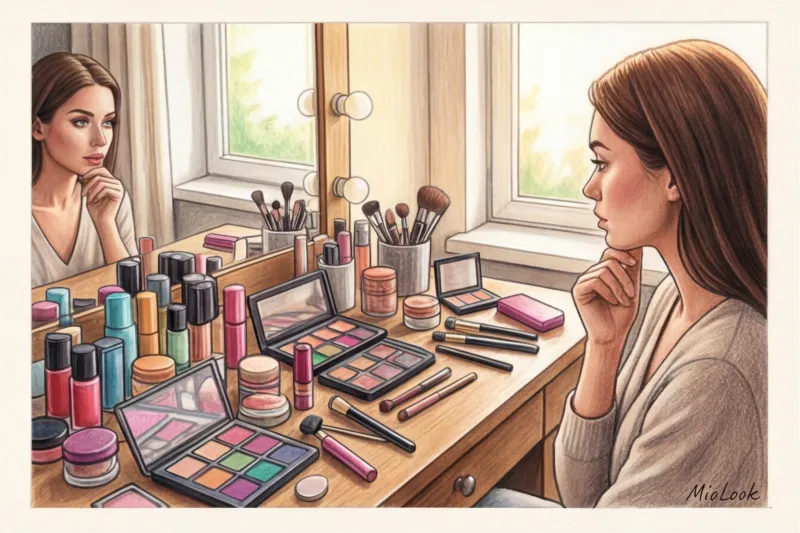
Any proper decluttering begins with taking inventory. Lay out all your makeup on a table in good daylight. The first thing we look for is the PAO (Period After Opening) symbol—that open jar with a number on the packaging (e.g., 6M or 12M). If your favorite mascara was opened eight months ago, it goes straight into the trash—this poses a direct threat to your eye health, as the moist environment is ideal for bacteria to thrive.
The next step is identifying duplicates. During my styling workshops, I often ask students to gather all their nude lipsticks or palettes in beige and brown tones. Typically, we find five to ten virtually identical shades. Keep two or three products with radically different textures (deep matte, light satin, glossy), and get rid of duplicate shades that you haven't used for more than six months. This will free up not only space but also precious minutes for your morning routine.
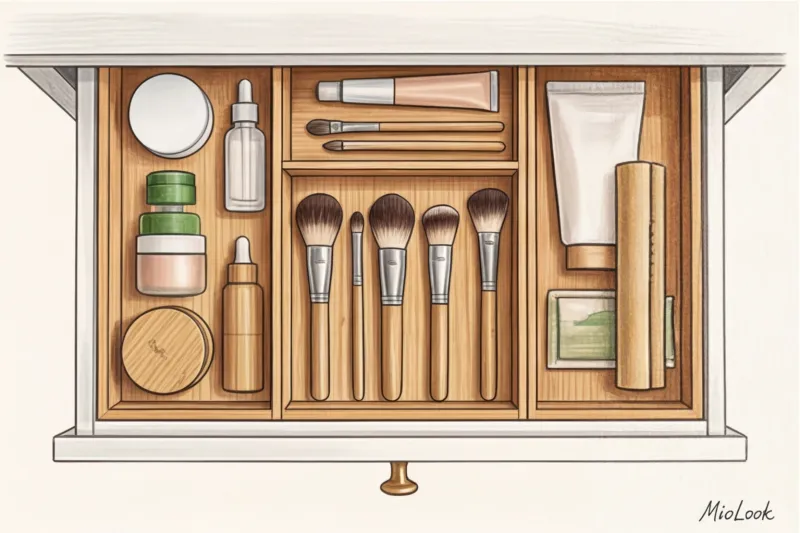
Basic Products: 5 Products That Will Replace 15
The essence of a modern beauty capsule is multifunctionality. Innovative formulas blur the boundaries between product categories. Here's my ideal five, which will cover the vast majority of everyday and business scenarios:
- Serum-tint (Skin tint): A hybrid of skincare and light foundation. It successfully replaces heavy foundation, silicone primer, and light moisturizer.
- Creamy Multi-Stick (Berry or Peach): It works as a blush, a tinted lip balm, and even a lightweight, dewy eyeshadow. By applying it to different areas of the face, you automatically create a harmonious, monochromatic makeup look without the "painted" effect.
- Concealer with light-reflecting particles: It is used only for spot concealment of nuances (dark circles, local inflammations) instead of layering a dense tone on the entire face.
- Tinted eyebrow gel: Adds volume, securely holds brow hairs in place, and adds color, eliminating the need to purchase a pencil, brow powder, and clear wax separately.
- Soft gel kajal in a complex shade: A dark brown, olive, or graphite pencil can be used to create a thin line between lashes, blended into a light daytime smoky eye, or applied to the mucous membrane to add depth to the look.
Conscious Choice: Ethics and Eco-Brands
Once you've finished decluttering and realized what you're really missing, don't rush to buy the first product you see. The sustainability trend isn't a marketing ploy, but a new hygiene standard for the beauty industry. Look for Leaping Bunny or PETA certifications on packaging, guaranteeing cruelty-free (no animal testing).
"Transitioning to a sustainable makeup bag doesn't mean throwing out all your old plastic palettes right now. Sustainability is all about using up what you have and then making more conscious choices when you shop again," say experts at the Institute for Sustainable Fashion and Beauty.
Pay attention to brands that implement refill systems. Brands like Kjaer Weis, RMS Beauty, and Fenty Beauty produce heavy, aesthetically pleasing metal cases that last for years. You only need to refill the pigment itself. Financially, this is also a worthwhile investment: for example, a refill of a high-quality cream bronzer can cost between €20–€25 instead of €45 for the product in new primary packaging.
The perfect style is when makeup, hair, and clothing work together seamlessly. To easily integrate new beauty trends into your look, I recommend digitizing your wardrobe. MioLook , you'll be able to visually assess which makeup shades and textures will be the best finishing touch to your outfit for the coming week.
Your most important task today: choose your largest cosmetic bag and conduct a rigorous inventory of expiration dates and duplicates. Keep only those products that are easy to apply, highlight your individuality, and are environmentally friendly. After all, the most enduring trend that will never go out of style is well-cared for skin and a mindful approach to self-care.
Guide Chapters
Monochrome Makeup: A Stylish Look in One Shade
Tired of an overflowing makeup bag? Discover how monochrome makeup can help you get ready in 7 minutes and always look your best.
2000s Makeup: How to Wear Retro Trends Today
The Y2K aesthetic has made a triumphant return, but it requires a new approach. We'll show you how to adapt 2000s makeup for an elegant and modern look.
Korean Makeup: Trends, Secrets of K-beauty, and Douyin
Blindly copying Asian beauty trends often leads to disappointment. We'll explore how to adapt Douyin and K-beauty styles to suit European facial anatomy.
Wedding Makeup Trends: Ideas for Modern Brides
The days of heavy contouring and mask-like faces are long gone. Learn how to create a trendy wedding look that highlights your natural beauty.
Latte Makeup: A TikTok Trend That's Easy to Recreate
TikTok's delicious microtrends, like latte and espresso, are well-forgotten techniques from the '90s. We'll show you how to recreate these popular makeup looks without breaking the bank.
Evening makeup trends: glitter, rhinestones, and grunge
Heavy contouring is a thing of the past. Learn how to use glitter, rhinestones, and grunge elements to create an elegant evening look.
Lip Makeup Trends: How to Create a Statement Look
A matte lipstick can make even the most expensive outfit look less expensive. Find out how modern beauty trends help you look classy and well-groomed.
Eyebrow trends: current shapes and fashionable styling
Facial architecture begins with the correct eyebrow shape. Learn which shaping and styling techniques are currently in fashion to create a harmonious and sophisticated look.
Fall/Winter Makeup Trends: Key Rules for the Season
The traditional approach to seasonal makeup bag changes is hopelessly outdated. We're exploring fall/winter makeup through the lens of a smart wardrobe and lightweight textures.