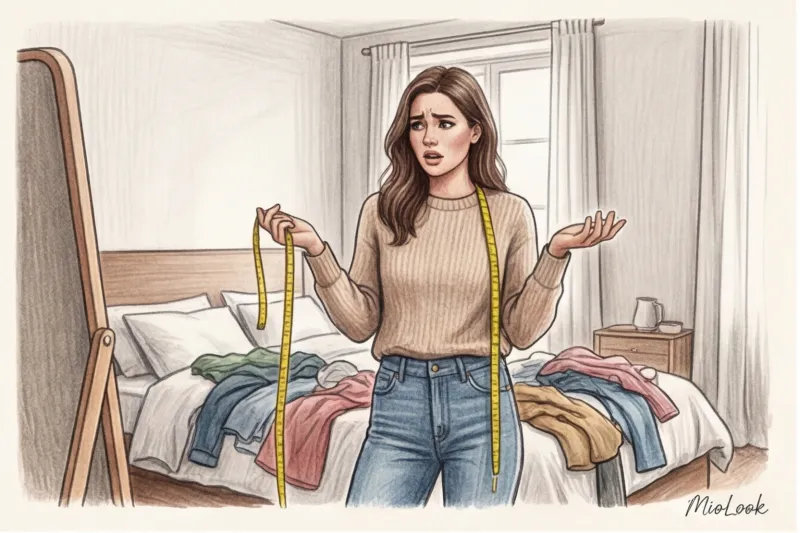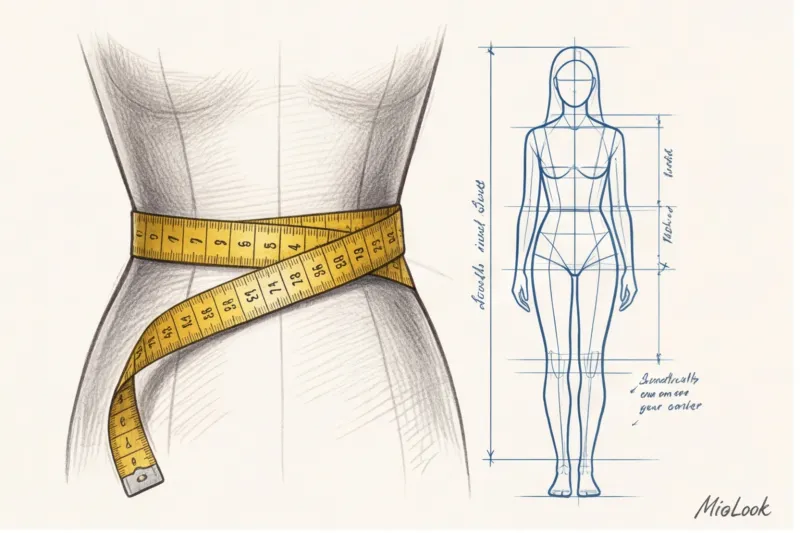
Over 12 years of working in the fashion and styling industry, I think I've thrown away hundreds of my clients' measuring tapes. Most women still try to understand their bodies through the mathematics of measurements: they measure their waists, hips, and busts to fit outdated standards of an "hourglass" or "pear" shape. But let's be honest: measuring tapes doesn't mean anything when it comes to how clothes fit. Real style isn't math. It's physics and geometry.
That's why Kibbe's personality types are experiencing a huge renaissance today. This system analyzes not your soft tissues, which can change due to diet, stress, or hormones, but your constant—your bone structure. We've covered how physical parameters intertwine with psychology in more detail in our comprehensive guide: Style types of appearance and clothing archetypes But today we'll be focusing exclusively on the architecture of your body.
I'll translate David Kibbee's theory from the dusty '80s into the language of modern fashion. We won't discuss who should wear outdated ruffles or who should wear Dynasty-style shoulder pads. We'll talk about the strength of materials, the density of fabrics, and how to stop buying things that make you look unattractive.
Forget about "pears" and "apples": why Kibbe's appearance types are the only working tool
The classic "fruit" body typology is hopelessly blind. It evaluates only the two-dimensional contours of the body. Imagine two women with absolutely identical measurements: 90-60-90. According to "fruit" logic, the same clothes should suit them. But in practice, this is a disaster.
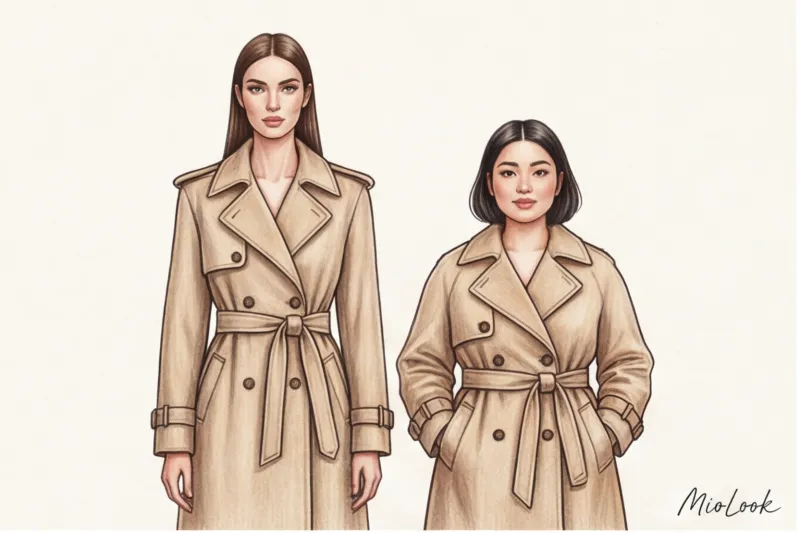
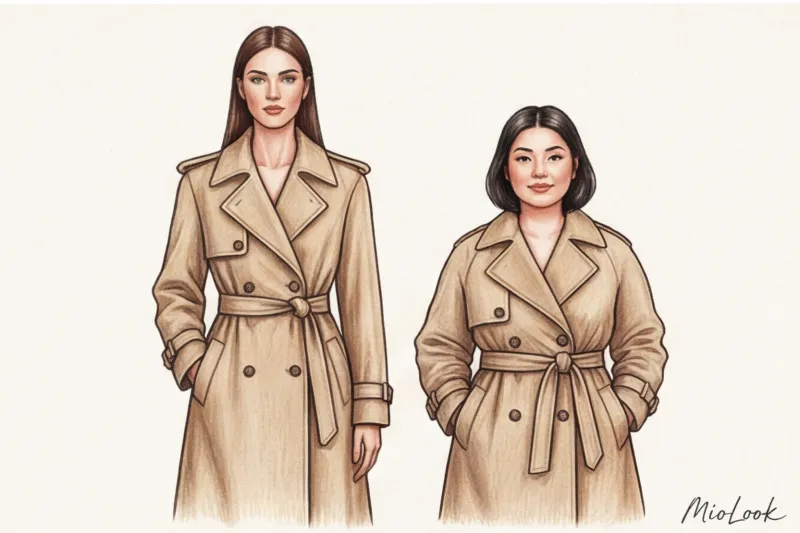
I remember a story from my own practice. I had a client who bought a classic Burberry gabardine trench coat for €2,200. It was a flawless piece, size M. But when she put it on, the thick, shapely cotton literally "devoured" her. She looked like she was wearing a cardboard box. The reason? Her body type is Soft Romantic (delicate, rounded bone structure). I put the same trench coat on another client (Bright Natural, wide bone structure, blunt shoulder angles) in the same size M—and she instantly transformed into a top model off the runway. The fabric found its perfect frame.
The Kibbe System explains exactly this: how cutting guidelines interact with your skeleton. Up to 60% of the clothes with tags in my clients' closets were bought simply because they "looked good on the hanger," but completely disregarded the owner's natural skeletal structure.
Access to MioLook for €0.99 — one-time payment
A smart AI stylist will create the perfect look based on your unique body structure.
Get access — €0.99 onceBody Architecture: How the Balance of Yin and Yang Shapes Your Type
In his original book Metamorphosis (1987) David Kibbie introduced the concepts of Yin and Yang to describe the physics of the body. Forget esotericism; pure laws of design are at work here.
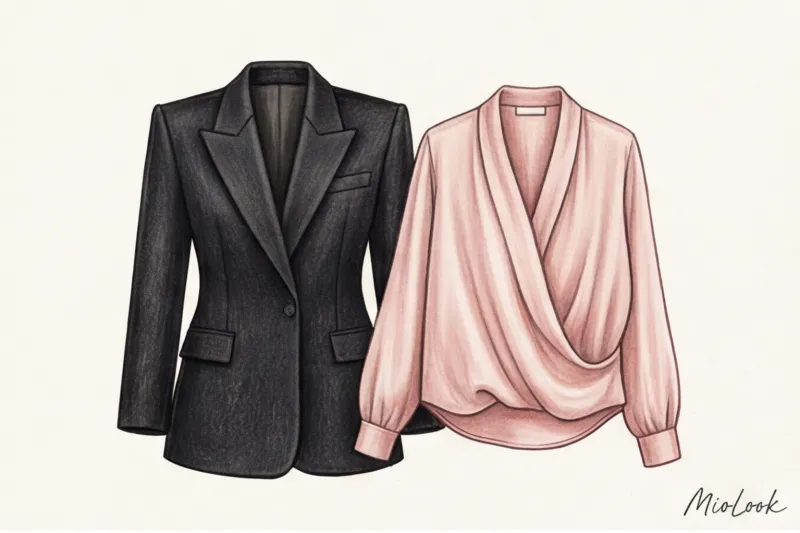
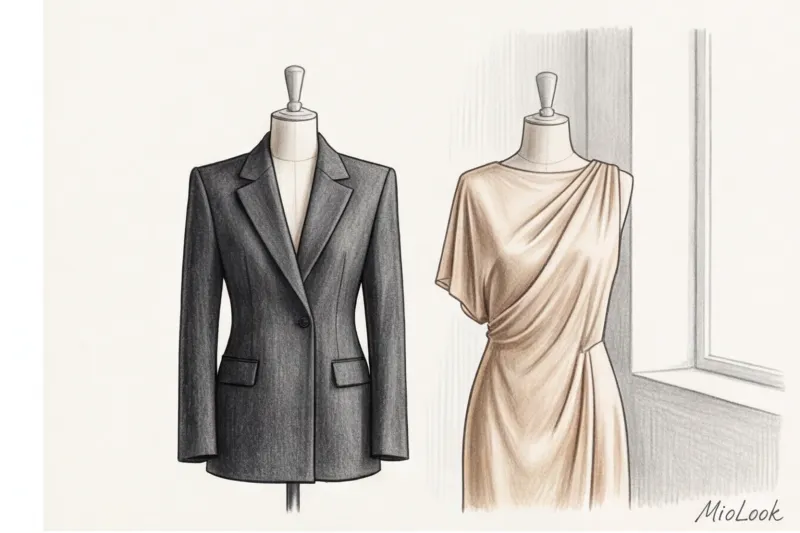
Jan in clothes and body — sharpness, angles, elongated verticals, and a rigid structure. In fabrics, this includes suiting wool, heavy denim over 13 ounces, linen that "stands up straight," and stiff poplin-weave cotton. The more Yang you have (tall, sharp shoulders, long limbs), the better you can pull off rigid, architectural pieces.
Yin in clothing and body — compactness, rounded lines, and delicacy. In fabrics, these include mulberry silk, chiffon, soft viscose, and fine cashmere. The more Yin you are (short stature, sloping shoulders, rounded hips), the more you need drapes and fabrics that flow over the body rather than create a separate structure around it.
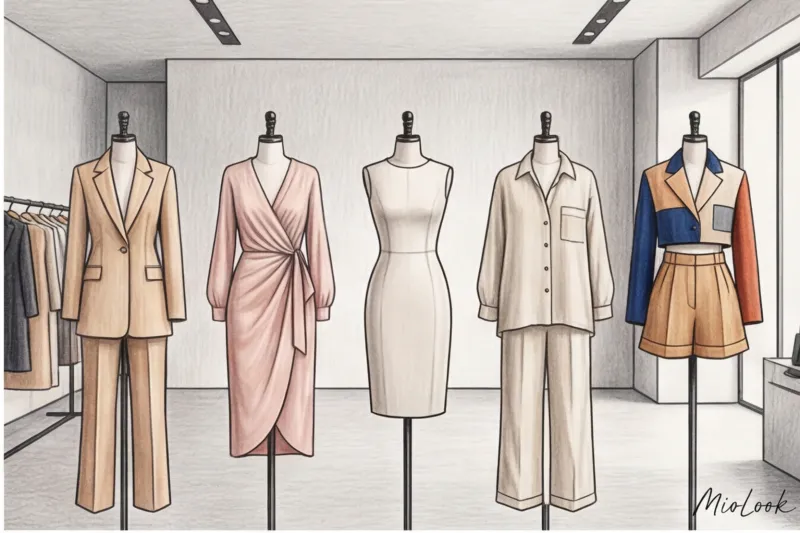
Mixed in different proportions, these energies create 5 main families.
The Complete Guide to Kibbe's 13 Face Types: From Dramatic to Romantic
To navigate the system, you need to understand your dominant style. Once you determine your family, the choice of brands and silhouettes in stores will be reduced by a third, saving you a ton of time and money.
Dramatic Family (Pure and Soft Dramatic)
The basis of this type is extreme Yang. This type is characterized by a narrow bone structure, tall stature (usually 170 cm and above), and sharp angles. The face often has prominent cheekbones and straight lines.
- Textures and lines: Dense fabrics that hold their shape. Monochromatic looks, strict geometric patterns, elongated silhouettes (for example, a straight-cut maxi coat).
- The main mistake: Attempts to "soften" the look with small floral prints, round collars, or thin, flimsy fabrics. A dramatic figure in a daisy-print cotton dress looks not cute, but bulky and awkward.
Romantic Family (Pure and Theatrical Romantic)
Extreme Yin reigns supreme here. Delicate bone structure, curves everywhere possible, a well-proportioned chest and hips with a defined waist.
- Textures and lines: Drapery, emphasis on the waist, soft flowing fabrics that follow the contours of the body.
- The main mistake: Wear tight oversized jackets or men's jackets with wide, square shoulders. These make the Romantic look like he's wearing someone else's clothes, losing all his natural grace.
Classic Family (Clean, Soft, Dramatic Classic)
A unique family where Yin and Yang are perfectly balanced. No facial or bodily feature stands out. Everything is perfectly proportioned.
- Textures and lines: High-quality, medium-weight fabrics (e.g., silk crepe de Chine, fine suiting wool). Clean cuts, perfect symmetry.
- The main mistake: Any extreme. Excessive oversize, excessive detailing, ripped edges, or overly heavy embellishments will instantly dull and cheapen a classic, refined look.
Natural Family (Clean, Soft, Bright Natural)
Softened Yang. Wide bones, blunt angles, natural athleticism. This is the type that's reigning supreme on the catwalks and in mass-market fashion today (most of Zara's pieces are tailored specifically for the Bright Naturals).
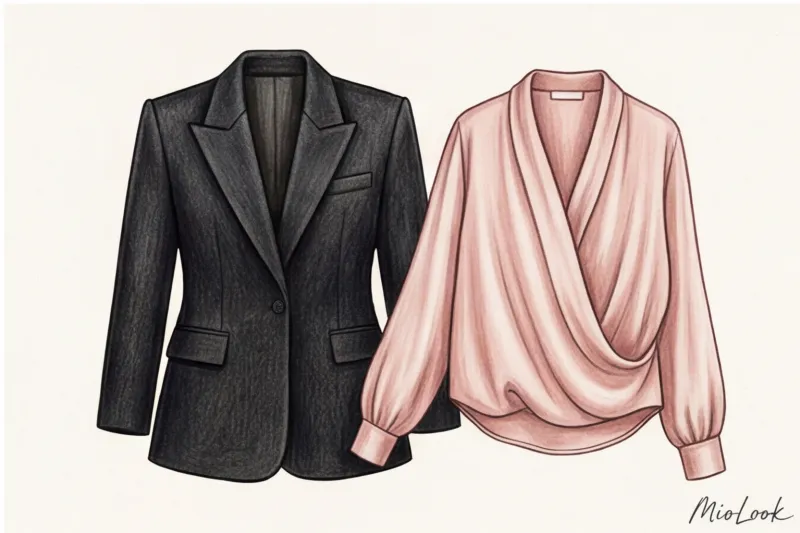
- Textures and lines: Relaxed cuts, textured fabrics (raw linen, suede, chunky knit, bouclé), layering, asymmetry.
- The main mistake: Confined to stiff, skin-tight office suits or tightly tailored dresses, a straight man in a formal office suit looks as if he's in physical pain.
Gamin family (Clean, Soft, Bright Gamin)
A clash of Yin and Yang without blending them. Compactness (Yin) is combined with angularity (Yang). Gamines are eternal teenagers who are incredibly at ease with details.
- Textures and lines: A broken silhouette (a separate colored top, a separate contrasting bottom), fine detailing, dense fabrics, shortened lines (crop tops, waist-length jackets, 7/8 trousers).
- The main mistake: Long, monolithic silhouettes (for example, floor-length maxi dresses in a single color) - in them, the petite Gamin simply disappears.
Your perfect look starts here
Join thousands of users who look flawless every day with the MioLook app.
Get access — €0.99 onceWhy online tests lie: the main mistake in determining Kibbe personality type
According to statistics I collect in my workshops, over 80% of women incorrectly identify their body type when taking the test themselves. Why? The answer lies in technique and psychology.
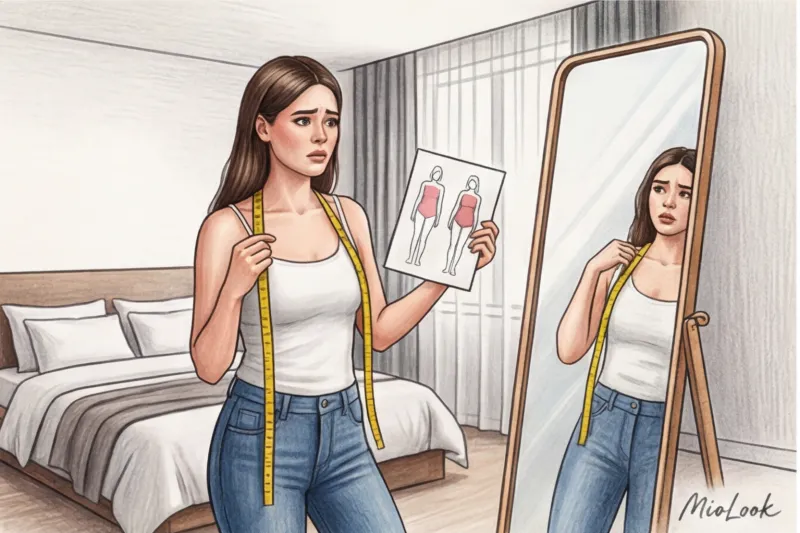
Firstly, smartphone lens distortion Wide-angle cameras on modern phones distort body proportions by 20-30%. If you take a mirror selfie from the waist up, the lens artificially elongates your legs and narrows your head—congratulations, you're a typical Dramatic! But if the photo is taken from slightly above, your shoulders appear massive—and you're already labeled a Natural.
Secondly, the influence of excess weight. A layer of fat masterfully disguises bone structure, especially in Classic and Natural types. And finally, our subjective perception: we tend to exaggerate our flaws, seeing "broad shoulders" where they objectively don't exist.
My professional opinion: The Kibbe test can't be done with a selfie or a measuring tape. The only reliable method is to test with fabric and cutting guides in the fitting room.
How to adapt Kibbe's theory to a modern wardrobe
One of the reasons many stylists dislike the Kibbe system is its visual presentation from 1987. When modern women read the recommendation for a Romantic to "wear floral prints, ruffles, and peplums," they close the article in horror. And rightly so. In 2024, it looks childish and outdated.
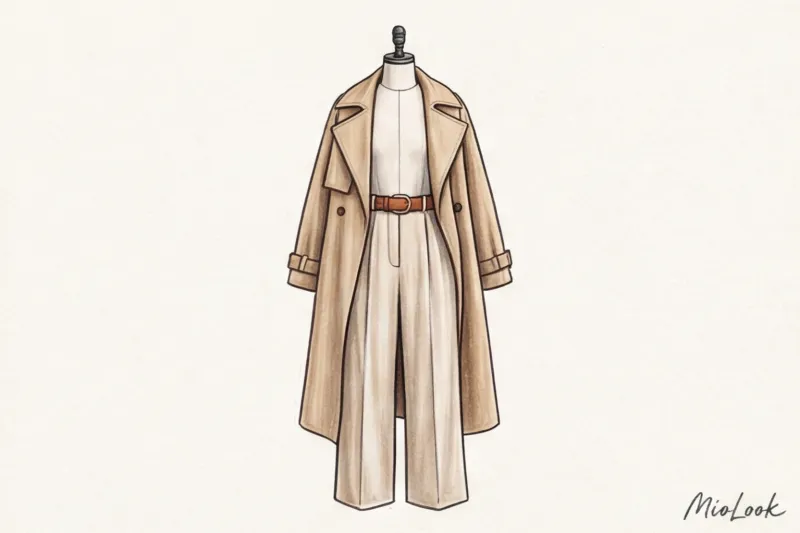
The theory evolved. Expert Dvina Larson significantly expanded the typology, adding scale. Today, we understand that lines (Yin/Yang) are simply physics. How, then, to dress, for example, a Theatrical Romantic in the current Old Money style?
You don't need ruffles. Choose a blouse in dense yet fluid silk (from 19 momme) with a slight gather at the neck and soft viscose palazzo pants. The Physics Romantica theme is perfectly executed: the fabrics are soft, the lines are smooth, but the aesthetic is thoroughly modern, in the spirit of The Row or COS collections.
What to do with the oversized trend? If your body type (for example, Classic or Gamine) doesn't allow for baggy items, but you want to wear a trendy oversized jacket, use styling tricks. Roll up the sleeves to reveal slender wrists; leave the jacket unbuttoned to show off a fitted layer underneath; add a belt. You'll maintain the trend, but you'll artificially create "assemblage points" for your bone structure. To make it easier to put together such complex combinations, I often recommend clients to write down their looks in MioLook virtual wardrobe - this allows you to see the proportions from the side.
Checklist: 5 steps to understanding your appearance type
Don't try to measure yourself. Take this practice test:
- Growth and vertical analysis: Take a photo of yourself at chest level from a distance of 3-4 meters using a 50mm lens (standard mode, not wide-angle). Do you appear taller in the photo than you actually are? If so, you're a strong Yang.
- Fabric test: Place a stiff cardboard cotton (or heavy denim) and a soft, flowing silk fabric against your face. Which fabric highlights your face, and which exists separately from you?
- Shoulder girdle analysis: When you wear a tailored jacket with shoulder pads, do you look like a boss (Dramatic), like you're wearing someone else's clothes (Romantic), or like a tight-fitting athlete (Natural)?
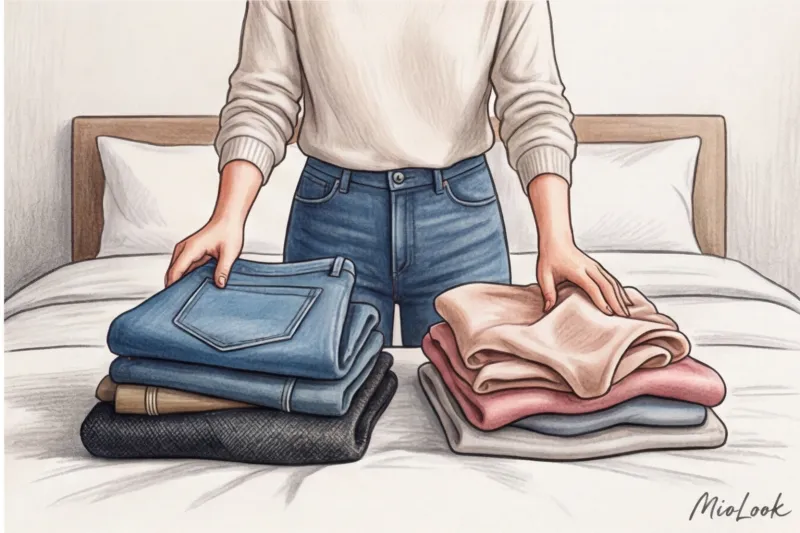
- Search for "foreign" things: Open your closet. Find three items you bought but never wear. Why? Most often, they clash with your body shape.
- Focus on facial geometry: What catches your eye first? Sharp cheekbones? Large, round eyes? Or total symmetry, where not a single feature stands out?
How Kibbe's personality types work with archetypes and color type
Kibbe's personality types are a powerful styling tool, but they're not the only one. Over the years, I've developed a clear formula for my ideal style.
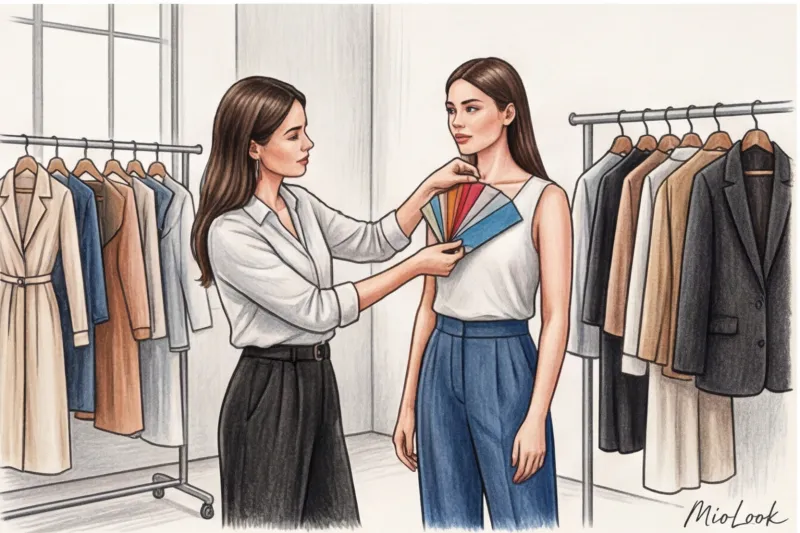
Imagine that you are creating a painting. Kibbee is your canvas and brushes. It creates a shape, silhouette and texture that physically complements your body. A color type is a palette. It controls how light reflects on your face. A An archetype is a message, a plot of a painting. It communicates to the world who you are inside: a Rebel, a Ruler, or an Aesthete.
Knowing your body type isn't a prison where you're only allowed to wear three skirt styles. It's an instruction manual for your unique beauty. By understanding the laws of your body's physics, you can consciously break them. After all, the most impressive style is born where impeccable knowledge of the rules meets the courage to be yourself.