
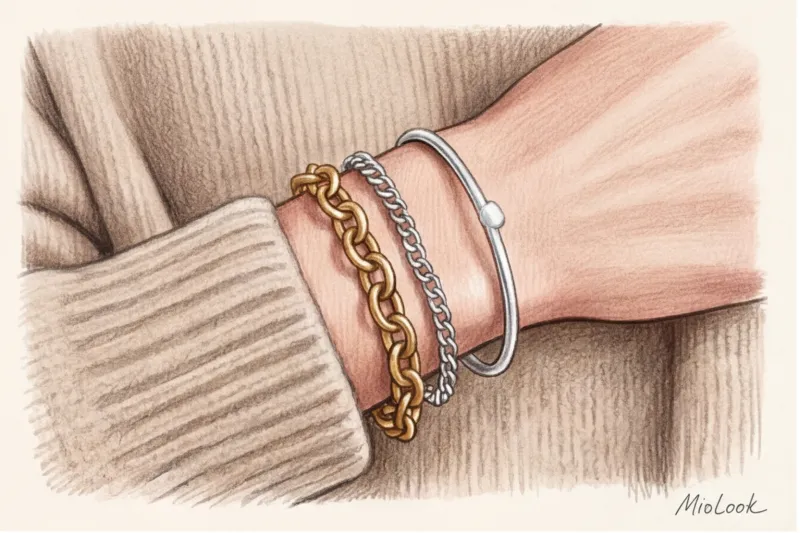
How many times have you peered at your wrists in daylight, trying to figure out whether your veins are blue or greenish? The famous gloss test promised to decide your jewelry destiny once and for all. Blue means cool undertones, wear only silver. Green means warm, wear only gold.
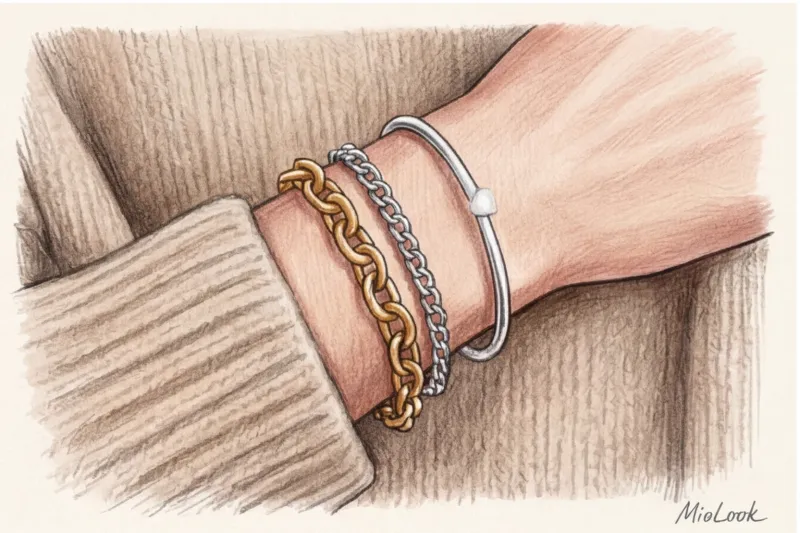
Over 14 years of working as a personal stylist, I've thrown hundreds of "cheat sheets" with rules like these into the trash. You know why? Because they're hopelessly outdated. If you're still Googling them, What jewelry suits your color type? If you're trying to apply foil to your face, you're missing the point. The texture of the metal (its matte or shiny finish) and the alloy grade influence the appearance of your face ten times more than simply choosing between "yellow" and "white."
Contemporary style has moved away from rigid boundaries. We discussed the evolution of this approach in more detail in our A guide to the 12 color types of appearance Today we'll explore how jewelry alloys actually work and why you might want to take that "unsuitable" ring out of your jewelry box right now.
Forget the Vein Test: Why Old Methods Don't Work
According to WGSN Beauty's 2024 report on skin tone inclusivity, approximately 40% of Caucasian women have neutral or olive undertones. This means their veins can appear blue-green at the same time, and their skin isn't overtly warm or cool.
In my experience, the classic vein test misleads four out of ten clients. One of my clients, a woman with classic olive skin, avoided jewelry for years. In pure 999 yellow gold, she looked like she hadn't slept in a week, and bright, glossy silver made her face appear sallow. The four-season theory simply broke down with her appearance.
What did we do? We replaced pure colors with complex undertones: rose gold and aged bronze. And the face instantly came alive. Old methods don't work because they don't take into account the depth and richness of your appearance.
Your perfect look starts here
Join thousands of users who look flawless every day with MioLook. The smart algorithm will help you create a capsule look tailored to your contrast levels.
Get access — €0.99 onceWhat jewelry suits your color type: the directional method
Instead of seasonal theory, professional stylists use a directional method based on Albert Munsell's color system (developed in 1905 but which has become the gold standard of coloristics). This system evaluates color based on three parameters: temperature (Hue), depth (Value), and saturation (Chroma).
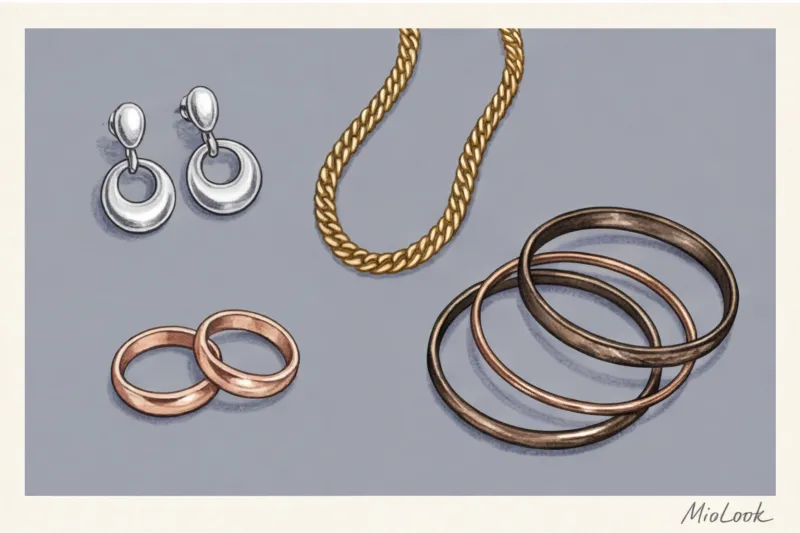
When applied to jewelry, this means we don't simply categorize metals as warm or cool. We evaluate their lightness (platinum versus blackened silver) and brightness (glossy versus dull).
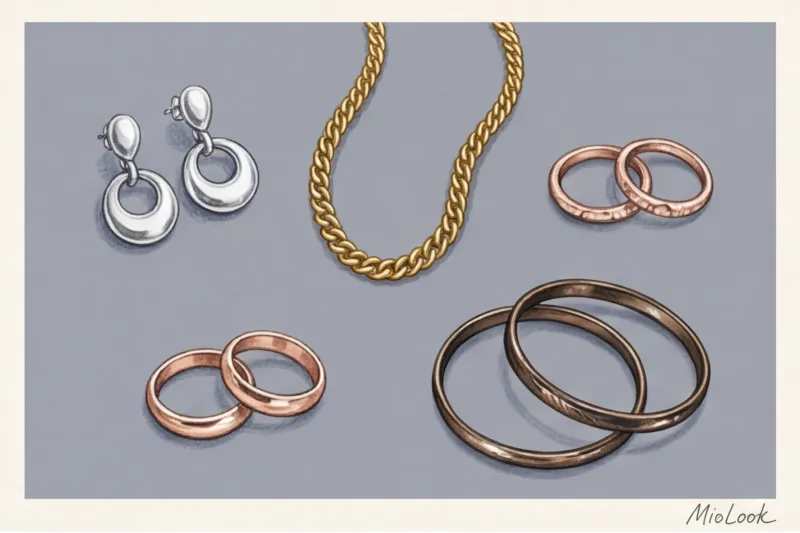
Metals for cool colors (Winter, Summer)
Cool colorings have a blue or pinkish undertone at the base of their pigmentation. But there's a huge difference in contrast between Winter and Summer.
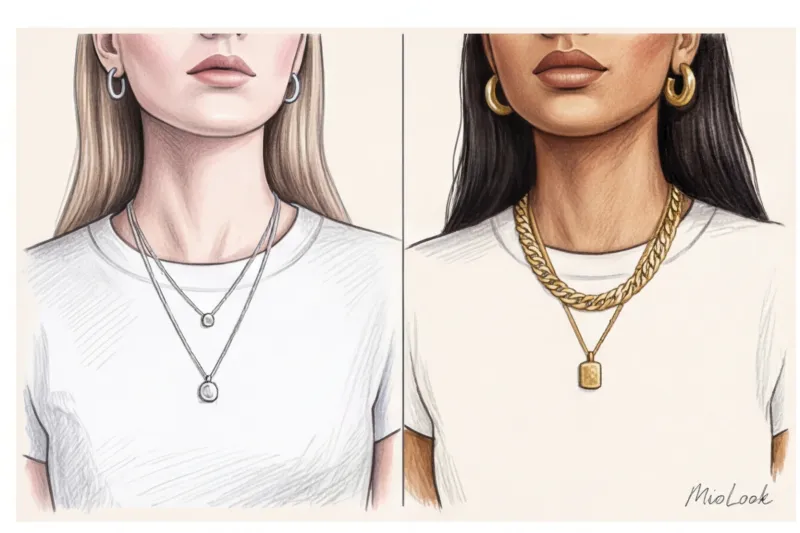
- Winter: A high-contrast look calls for a pure, icy, and radiant white metal. Your ideal companions are platinum, rhodium-plated silver (which creates that mirror-like shine), and 18-karat white gold.
- Summer: A subdued, delicate look. Shiny silver often looks like cheap costume jewelry on the Summer. You're looking for something softer: matte 925 sterling silver, non-rhodium-plated white gold (it has a slight, warm grayish undertone), or satin-finish platinum.
Metals for warm colors (Spring, Autumn)
Warm colorings have golden, peachy or caramel undertones to the skin.
- Spring: A bright and clear appearance. Heavy gypsy gold will overwhelm you. Choose a light, sparkling lemon gold (usually 14 karat or 585), which won't overpower delicate features.
- Autumn: A deep, rich, and often textured appearance. This is the only color that can luxuriously withstand the most complex and heavy metals. Rich yellow gold (18K-24K), copper, brass, and bronze with a greenish patina—all of this makes "Autumn" incredibly expensive and prestigious.
Texture is more important than color: shine, matte, and embossed
So we come to the main secret of stylists, which is rarely written about in glossy magazines. Texture can “correct” an unsuitable metal color.
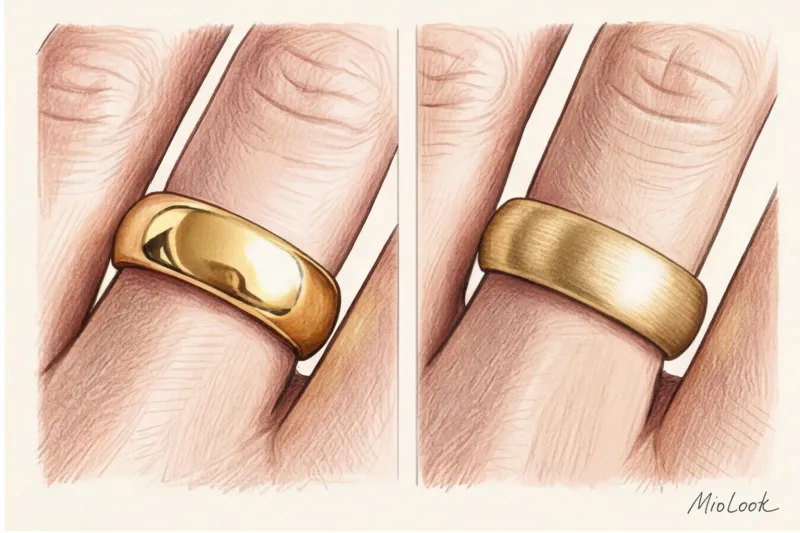
Glossy, mirror-polished metals reflect light with crisp, clear highlights. They're ideal only for Clear color types—Winter and Spring. If you have a more subdued complexion (Summer or Fall), a glossy sheen will highlight even the slightest skin imperfections, wrinkles, and dark circles under the eyes.
Recently, we were sorting through a client's wardrobe, a representative of the Soft Summer movement. Her husband had given her a stunning, expensive ring made of bright yellow glossy gold. She was upset because the ring looked out of place on her hand, as if it were borrowed. I suggested a bold move: we took the ring to a jewelry workshop and asked them to give it a brushed finish—a process that involves micro-scratches to create a matte effect. Once the ring lost its harsh shine and became velvety, it fit perfectly with her look.
Matte textures, embossed finishes, and "crumpled" or "liquid" metal effects are a true salvation for muted color palettes. They absorb light, creating a soft, enveloping glow that complements the skin.
Tidy up your jewelry box
Digitize your jewelry capsule collection with the MioLook app. Create jewelry sets right on your phone, saving you time choosing in the morning.
Try the featureSecrets of Alloys: How Gold Purity Changes Your Look
All gold is different. When we say "gold doesn't suit me," we're usually referring to a specific alloy. In its pure form (999 fineness or 24 karat), gold is too soft for jewelry and has a very rich, almost orange-yellow color. It looks stunning on women with African, Indian, or deep Middle Eastern complexions, but it often makes Slavic people look unhealthy.
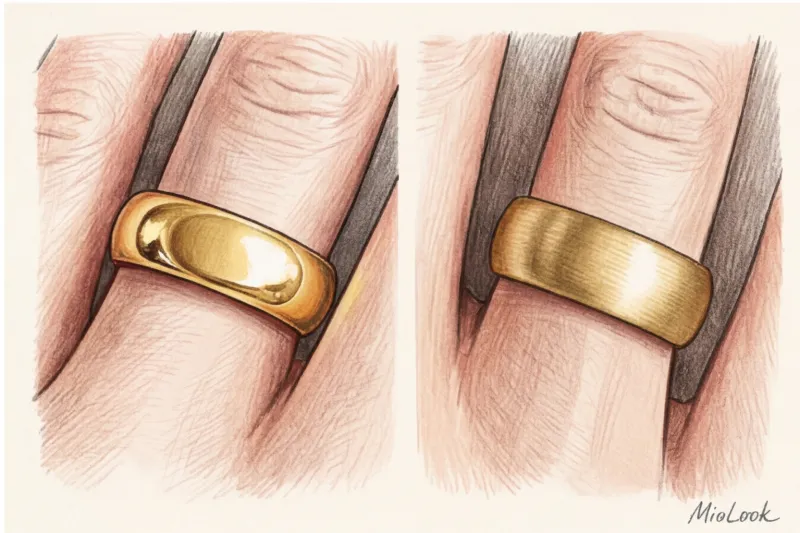
Everything is decided by the ligature—the metals added to the alloy for strength:
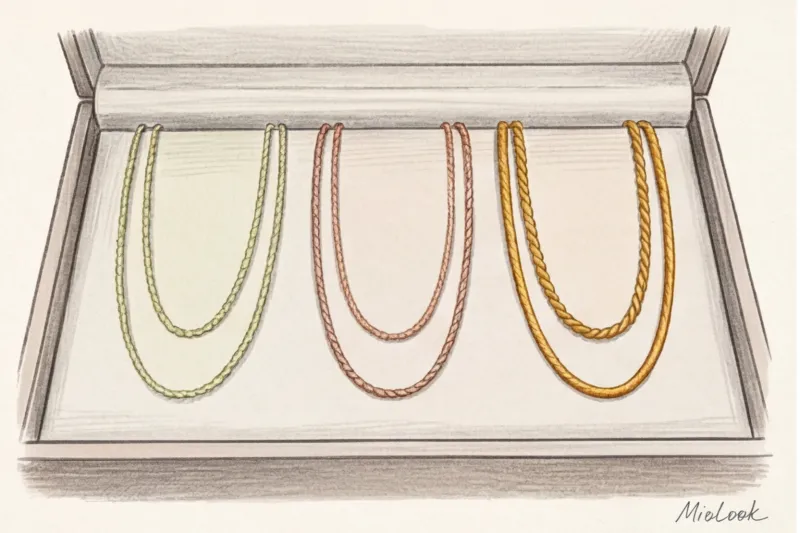
- 585 standard (14 carats): It contains 58.5% gold, with the remainder being silver, copper, or zinc. Due to the high percentage of silver, this gold often has a light yellow, slightly cool lemon hue. Paradoxically, it suits many women with cool undertones who want to wear yellow metal.
- 750 standard (18 carats): European standard. More yellow, warmer, and more refined. Ideal for autumn and spring.
- Rose gold: The alloy contains more copper. It's an absolute all-rounder in any jewelry wardrobe. Its balance of warm yellow and cool pink tones makes this metal flattering for 80% of women, regardless of skin tone. It literally blends with the undertone of your skin.
Mixed Metals: Can You Wear Gold and Silver Together?
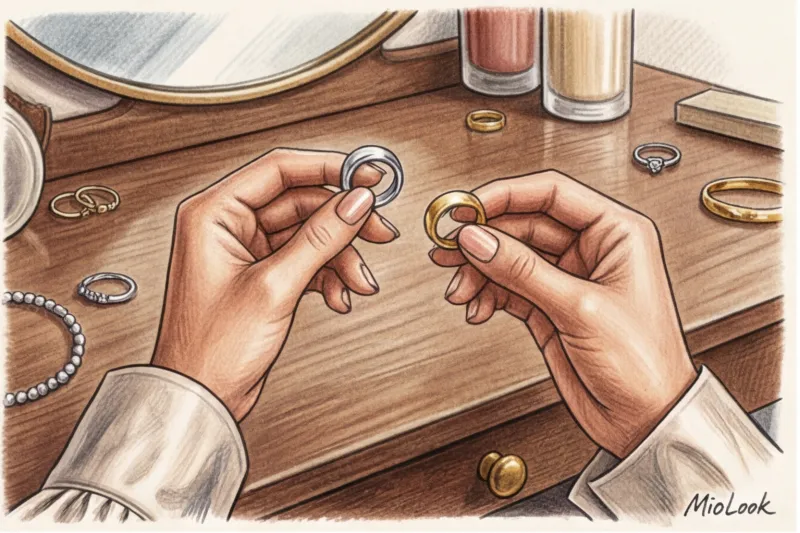
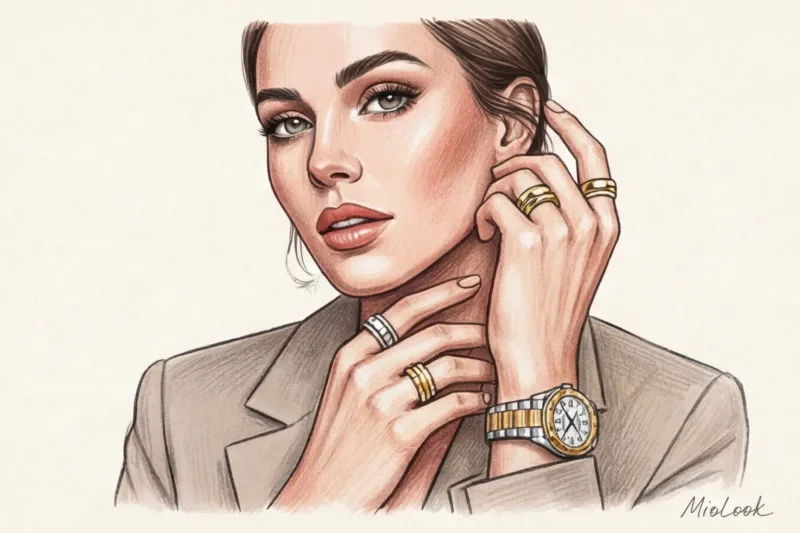
"Don't wear silver earrings if you have a gold wedding ring!"—that old adage is long overdue. The Lyst Consumer Demand Index (2024) shows that searches for mixed-metal jewelry have grown by 47% year-on-year. Wearing gold and silver is not only possible, but also essential if you want to look trendy.
However, there are some rules here. Mixing metals should be done consciously, not just by throwing on whatever I had. Here's how I do it and advise my clients:
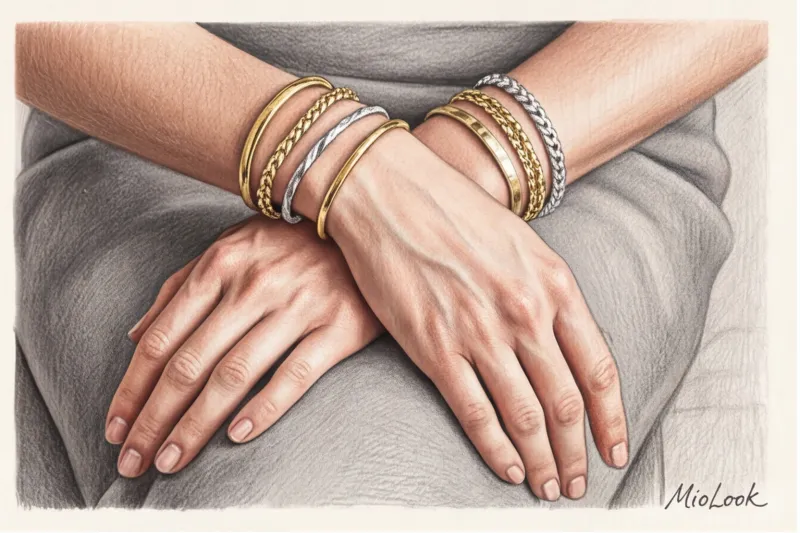
- Bridge piece rule: For two different metals to blend, a designer needs a design that combines them. A perfect example is a bicolor watch (steel and yellow gold) or a Cartier Trinity ring (three colors of gold). By wearing such a watch, you'll instantly legitimize any silver and gold bracelets.
- Rule of proportions: Never split your metals 50/50. It looks like you simply forgot to change your clothes. Choose a 70/30 or 80/20 ratio. For example, 80% of your jewelry should be white (the base) and 20% yellow (the accent).
- Fair Limit (When It DOESN'T Work): You can't mix metals if the jewelry clashes dramatically in style. A vintage silver ring with niello and Slavic patterns won't go well with a minimalist gold cuff bracelet, even if you maintain all the color proportions. The metals can be different, but the style (geometric, boho, minimalist) should match.
Checklist: Choosing a Base for Your Jewelry Capsule
To avoid standing in front of a display window and feeling overwhelmed, use this step-by-step guide to creating your own basic jewelry capsule collection. A capsule collection consists of 5-7 pieces of jewelry for every day that perfectly coordinate with each other and complement your look.
Step 1: Determine your contrast (Bright or Soft)
If you have porcelain skin and black hair, or icy eyes, you're a contrasting personality. Your choices: polished gloss, rhodium-plated silver, and clean lines. If your colors flow seamlessly into each other (light brown hair, gray eyes), look for a matte finish, brushed gold, or a crushed metal effect.
Step 2: Assess the base temperature
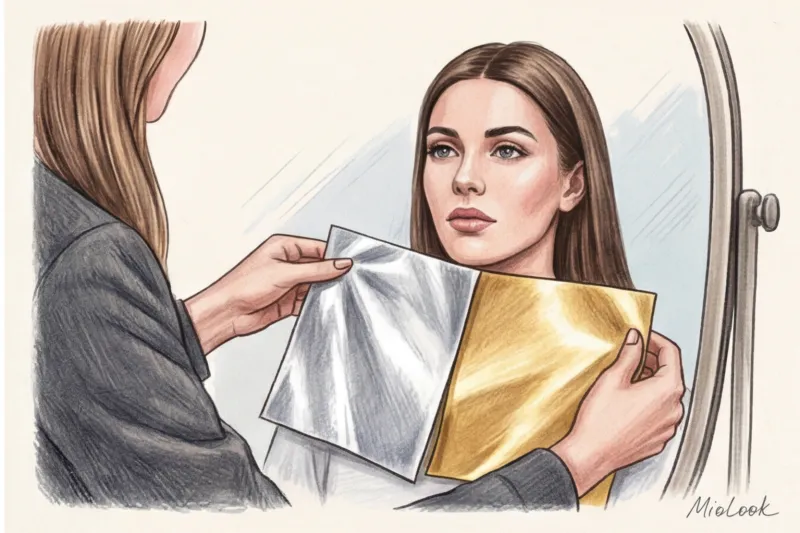
Forget the vein tests. Simply place a clean, white sheet of paper over your makeup-free face. If your skin appears yellowish or peachy against it, use 14-karat lemon gold as a base. If your skin appears pinkish or grayish, use platinum or silver as a base. When in doubt, invest in high-quality matte rose gold.
Step 3: Add Dynamics
A basic capsule collection should always include one statement piece in a contrasting metal to prevent the look from appearing too sleek and set. Modern jewelry etiquette strictly prohibits wearing complete sets (earrings, necklace, ring, and bracelet from the same collection). Mix things up.
Are you unsure about your choice?
Try MioLook for free: A smart AI stylist will select the perfect look and accessories based on your unique features.
Get access — €0.99 onceRemember the key: jewelry is like makeup you don't have to remove at night. It illuminates your face from below, creating highlights on your skin. Don't fall prey to the outdated rule of "gold for warm, silver for cool." Manipulate textures, play with the proportions of alloys, and you'll see how even the simplest basic wardrobe will gain polish and personality.