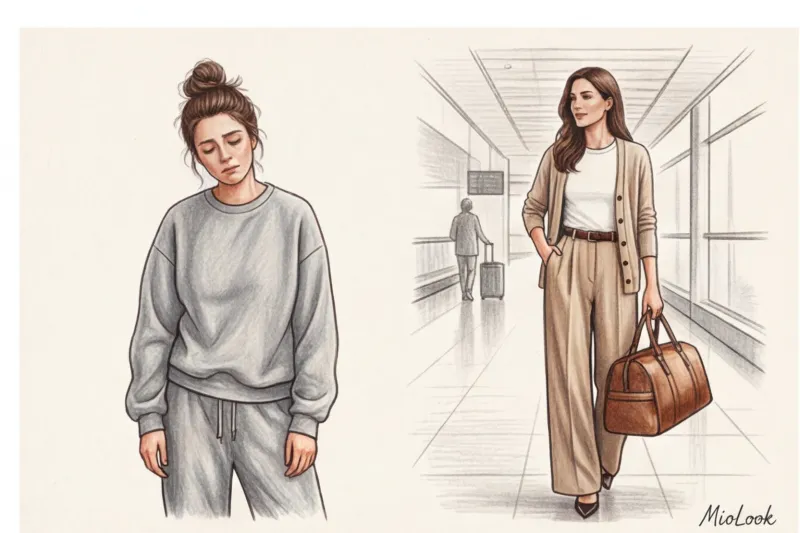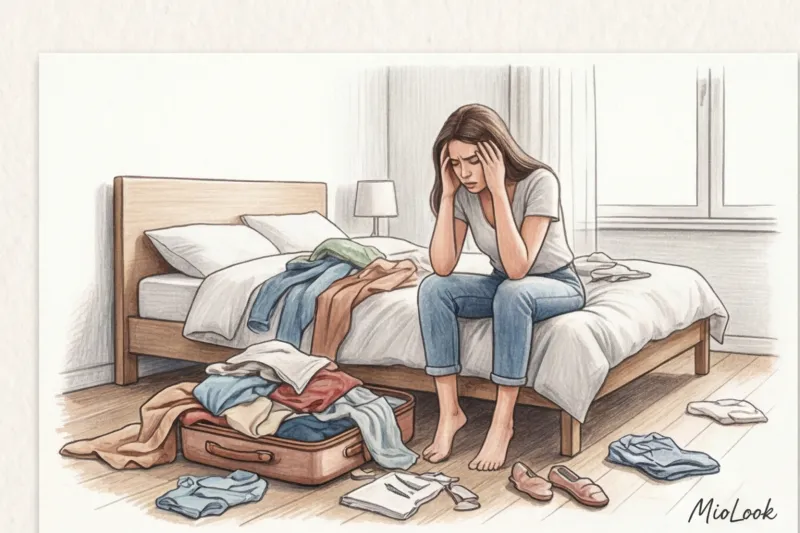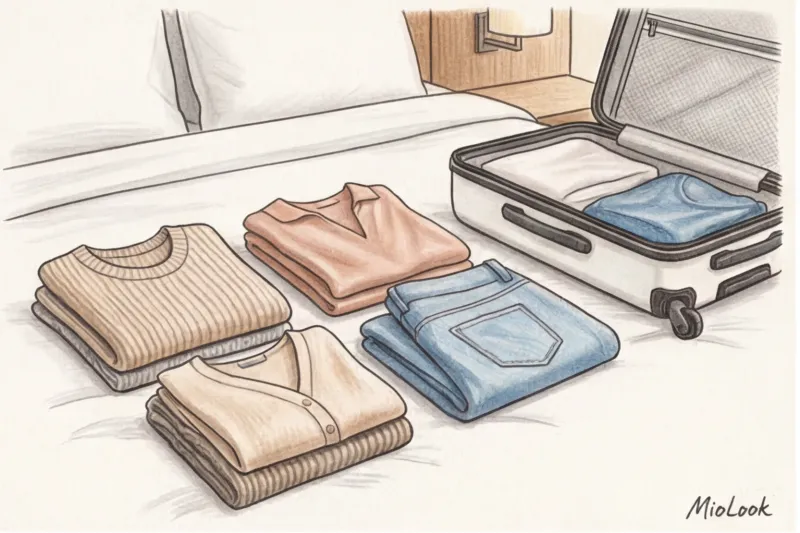
September 2018. Milan. Forty minutes before an important dinner, I pull the iron out of the hotel closet to freshen up my favorite cream-colored, heavy silk blouse. One press of the steam button, and rusty water, laced with limescale, hisses onto the delicate fabric. The blouse is ruined forever, my look is ruined, and I'm left frantically searching for a replacement. That very evening, I vowed never again to rely on hotel irons to care for delicate fabrics.
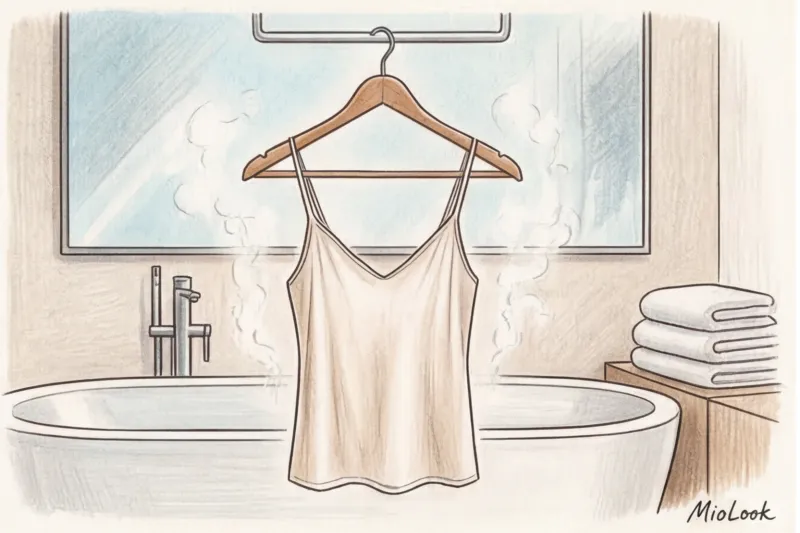
After 12 years of working as a stylist and regularly attending Fashion Weeks, I've realized one incontrovertible truth. The question of How to iron clothes on vacation without an iron , should be decided long before boarding the plane. We spend hours choosing the perfect outfit, but we forget that flying in a suitcase is a severe stress test for any fabric. Today, I'll share professional behind-the-scenes tricks that save your wardrobe on location shoots when you don't have a professional steamer handy.
Preparation starts at home: wrinkle-resistant fabrics
When packing vacation capsules for my clients, I always say: it's better to prevent a disaster at the planning stage than to deal with it in the hotel room. Ever notice how some things come out of your suitcase looking perfect, while others look like they've been chewed? It's all about the physics of fibers.
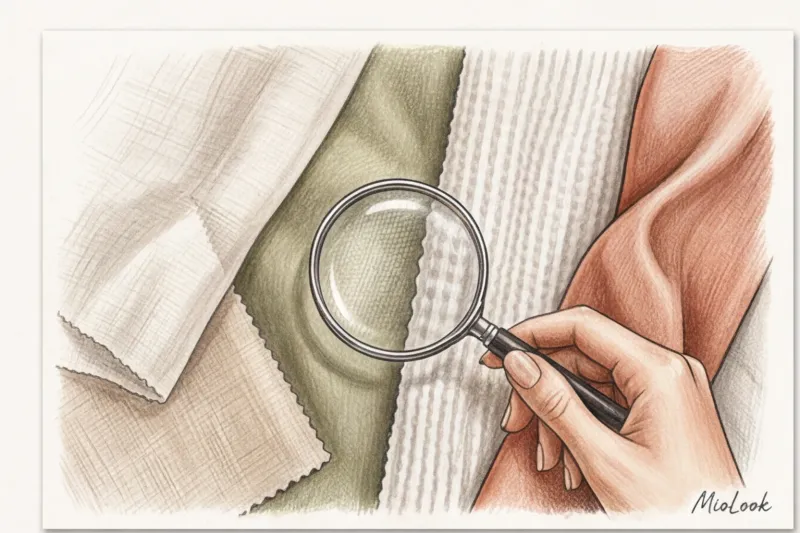
The concept of a "travel-friendly" wardrobe is based on choosing the right textures. If you plan your looks using the smart wardrobe feature in MioLook Be sure to pay attention not only to the palette but also to the composition. The program allows you to catalog items, and I highly recommend adding tags by fabric type—it will save you hours when packing for a trip.
What to buy: smart textiles and the right blends
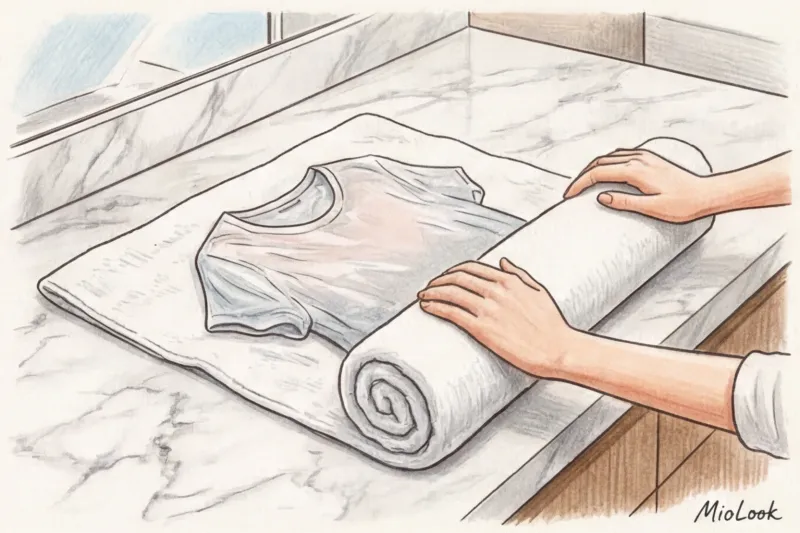
Pure cotton weighing less than 120 g/m² will wrinkle even if you just look at it. When on vacation, swap it for high-tech alternatives. Tencel, cupro, and modal are your best friends. These man-made fibers, made from natural cellulose, are incredibly flexible and flow beautifully without creating hard creases.
According to the WGSN 2024 report on the future of travel wardrobes, demand for clothing made from wrinkle-resistant blended fabrics has grown by 40%. And textile technologists confirm that adding just 5–10% elastane or high-quality polyester to cotton thread reduces its wrinkling by three times. The fiber acquires "shape memory" and springs back to its original shape.
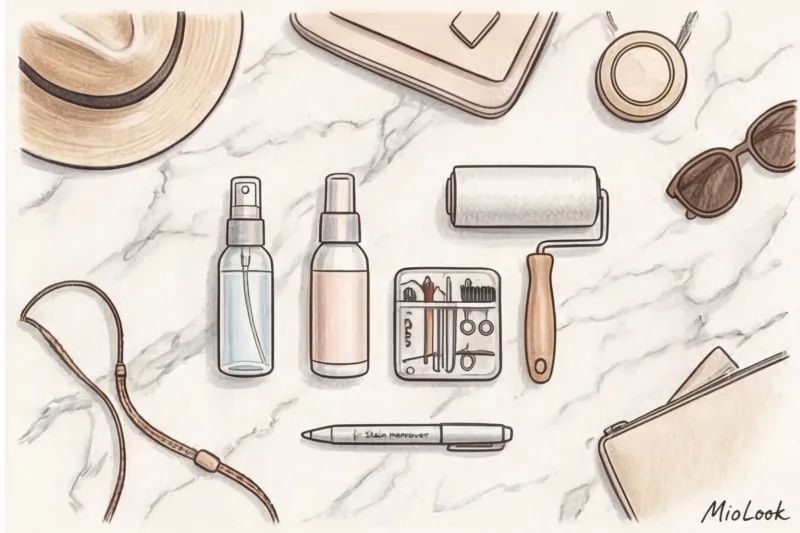
Textured fabrics are a special life hack. Pleated, crinkled, ribbed, bouclé, and terrycloth fabrics visually absorb any small wrinkles thanks to their uneven surface. A crinkled viscose dress can literally be twisted into a knot, tossed in the bottom of your bag, and worn to dinner that evening, and it will look flawless.
What to Leave at Home: Fussy Fabrics for Vacation
Every rule has its exceptions, but some materials are simply not made for travel. 100% linen is a wonderful, breathable material, but only wear it if you embrace the "quiet luxury" aesthetic and are prepared to wear a slight creasing with your head held high. Formal linen suits with creases are best left for the city.
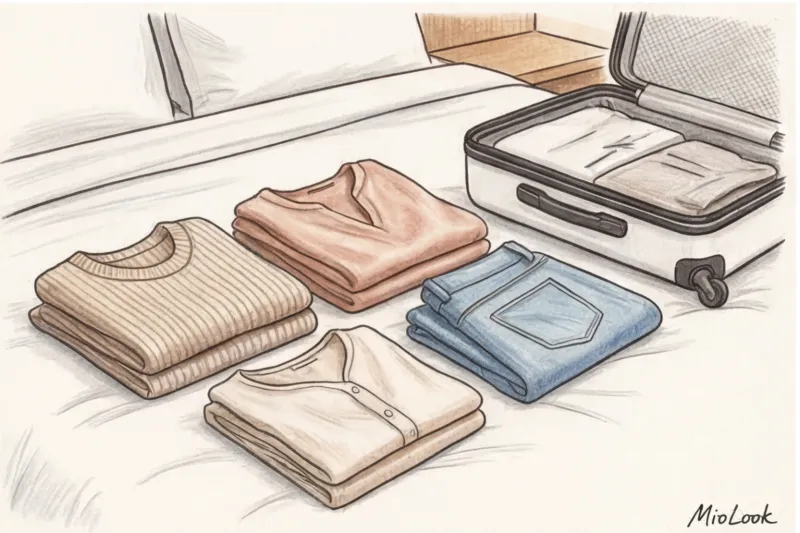
Also on the stop list are dense satin (where every micro-crease is visible) and thin poplin without special "non-iron" treatments. The risk of using hotel irons on such delicate fabrics is too great: rust, limescale, and burnt synthetic fibers from previous guests on the soleplate can ruin the garment in a second.
Your perfect look starts here
Join thousands of users who look flawless every day with MioLook. A smart AI stylist will help you put together the perfect vacation capsule.
Get access — €0.99 oncePacking Secrets: How to Transport Your Items Without Wrinkles
The main cause of hard creases isn't the pressure on your items inside the suitcase. The real enemy is the friction between items in the semi-empty space during transport. As the suitcase rolls along the baggage carousel, the fabric shifts, creating creases that are then held in place by the weight from above.
A backstage secret we use when transporting couture collections: thin plastic dry-cleaning bags. By placing them between layers of delicate garments, you create an airy, gliding layer. The fabric glides over the plastic without catching on adjacent items. This method works flawlessly for silk dresses and slip skirts.
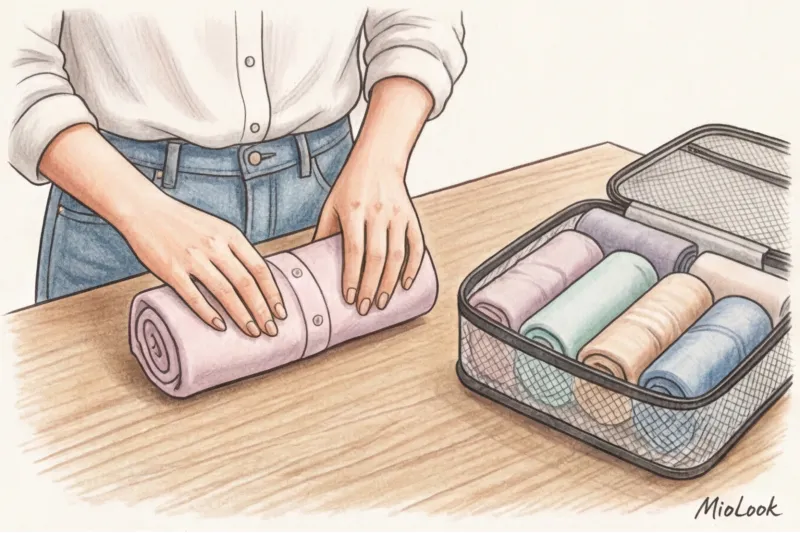
Roll method versus classic folding
Research by travel ergonomics experts reveals impressive statistics: rolling reduces deep creases by 60% compared to traditional stacking. The key is that rolling prevents sharp corners and folds in the fabric.
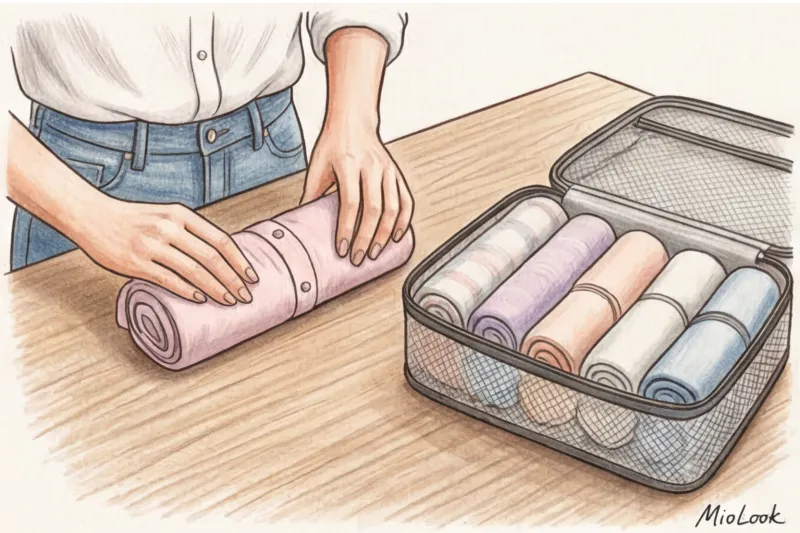
How to do it right:
- T-shirts and knitwear: Fold the sleeves inward, fold the garment in half lengthwise, and then roll it tightly from the bottom up, pushing out the air.
- Jeans: Fold the pant legs together and roll from the hem to the waistband.
- Fixation: Use packing cubes. Rolls should be placed tightly together to prevent them from unrolling during transit.
Important limitation: This method is absolutely NOT suitable for jackets with a sharp shoulder line, lined jackets, or classic trousers with creases. Twisting will distort the adhesive interlinings inside the jacket, making them impossible to restore without a professional press.
How to Iron on Vacation Without an Iron: 5 Stylists' Best Practices
If creases do appear and you don't want to risk using a separate iron, professional ironing techniques can be used. It's important to understand that there's no one-size-fits-all solution—the method must be adapted to the specific fiber type.
Wrinkle Release Spray: Must-Have or Marketing Phenomenon?
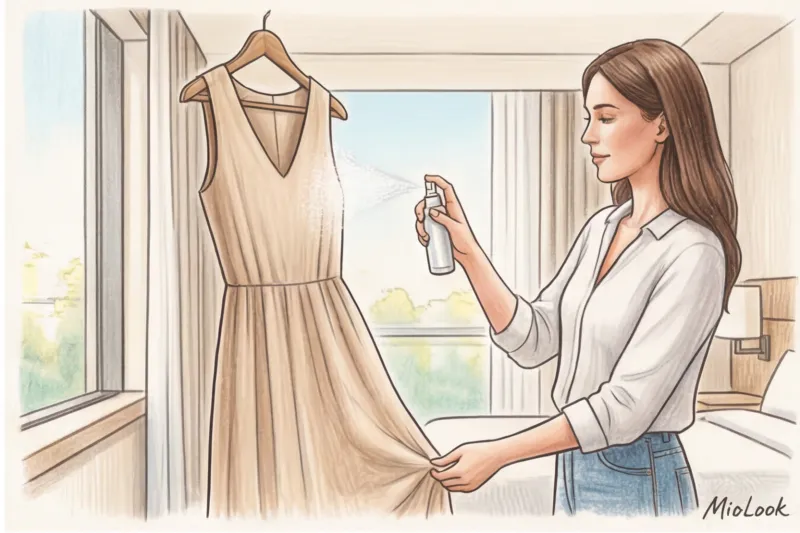
Many of my clients are skeptical of wrinkle-removing sprays, considering them a marketing gimmick. But they're pure chemicals. These sprays contain special surfactants that penetrate the fibers and temporarily relax the polymer bonds within the thread.
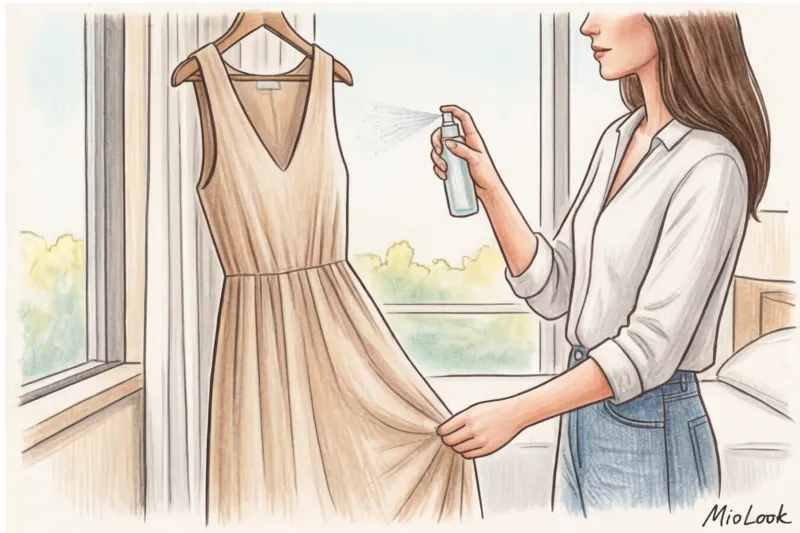
Instructions for use from stylists:
- Hang the item on a hanger.
- Spray generously onto the wrinkled areas (the fabric should be slightly damp, but not wet).
- The most important thing: Gently pull the fabric with your hands in different directions and downwards, creating tension. Without this mechanical action, the spray won't work!
- Leave to dry for 1