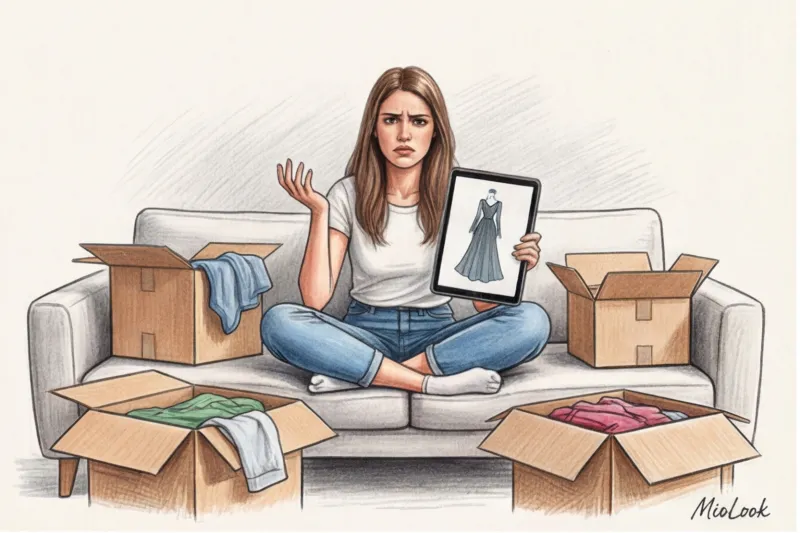
How many times have you walked into a boutique determined to buy that perfect hat, only to leave ten minutes later feeling down? It's a familiar scene: you pull on yet another woolen garment, look in the mirror, and see a tired-looking person with big cheeks and harsh shadows under their eyes. The result is always the same: you decide that hats simply "don't suit you."

I'm Darina Marchenko, a certified colorist and image stylist. Over 12 years of working in the portrait sector, I've heard this complaint from hundreds of women. But the problem isn't your appearance or the shape of your skull. The problem is harsh fitting room lighting and a lack of understanding of the laws of optics. That's why today trying on hats online becomes not just a fun digital toy, but the most precise and safe tool for a stylist. We discussed the fundamental principles of working with proportions in more detail in our a complete guide to choosing a headdress , and in this article, I'll show you how technology can save you stress and help you find the perfect accessory without leaving your home.
Why trying on hats online is more accurate and safer than using a mirror in a shopping center
I had a case in my practice that perfectly illustrates this problem. My client Anna rejected 20 (!) premium hats at an expensive boutique. She found each model hideous. The reason was the store's overhead halogen lighting: it fell directly from above, creating deep, black shadows under the eyes, nose, and cheekbones. This effect artificially ages the face by at least five years. That same evening, we uploaded her photo to the app for a virtual try-on in soft daylight, and the third basic beanie (the one she had rejected during the day) turned out to be perfect.
The psychological factor of shopping can't be ignored either. We're always in a hurry in the store. We pull off our hats as we run, our hair gets staticky, we sweat in our winter jackets, get scared by our disheveled reflection, and run away. Online shopping allows you to evaluate your look with a cool head. You can take several photos with different hairstyles, in natural light, and methodically review your options.
Access to MioLook for €0.99 — one-time payment
A smart AI stylist will create the perfect look for you without stress or rush.
Get access — €0.99 onceThe biggest myth of style: why face type doesn't matter when trying on hats online
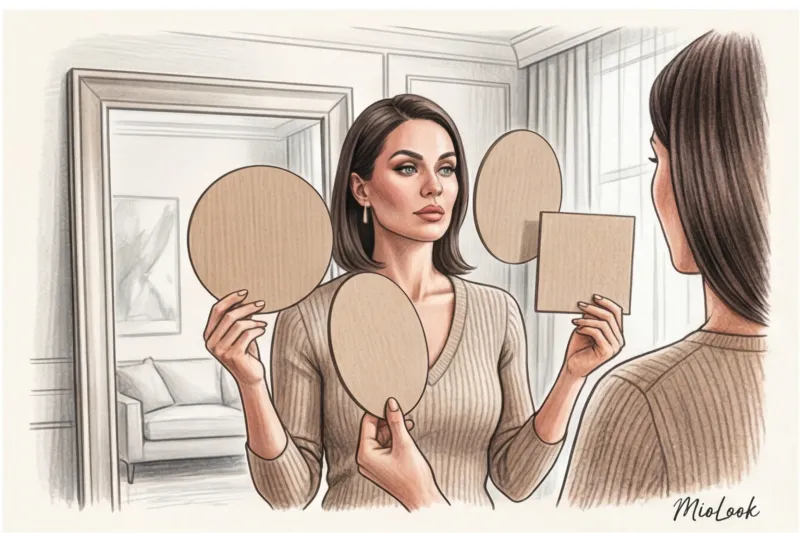
If you open any classic style article, you'll see advice along the lines of, "A round face needs asymmetry, while a square face needs soft lines." Forget it. The face is a living, fluid 3D form, not a flat geometric figure from a geometry textbook.
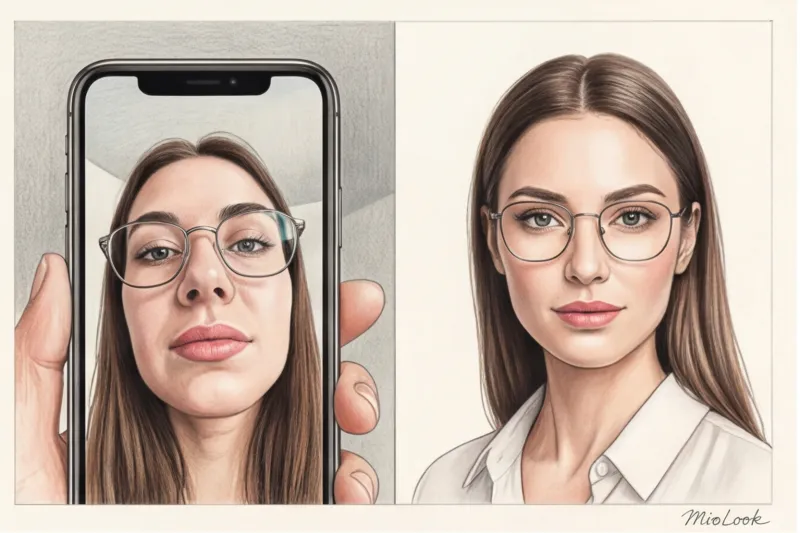
Moreover, when it comes to digital fitting, optics come into play. The front camera of most smartphones is equipped with a wide-angle lens with a focal length of around 28mm. According to academic portrait photography guidelines (and confirmed by lab tests like DxOMark in 2023), such a lens inevitably distorts proportions at close range: it artificially exaggerates the center of the face (making the nose appear wider) and "tilts" the edges (making the forehead appear more massive and the cheekbones narrower compared to a standard 50mm lens).
Choosing a hat based on your facial contours in a selfie is pointless because the camera has already distorted your actual shape. You need to consider completely different parameters.
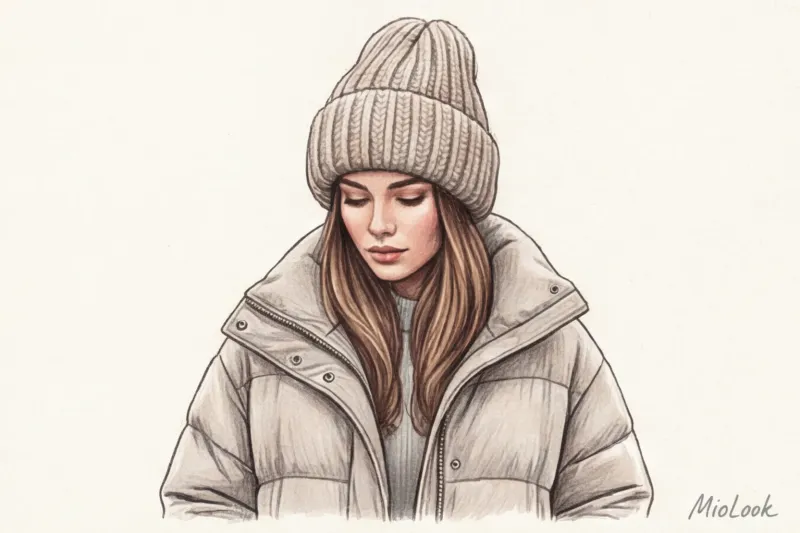
The main secret of practicing stylists is this: the balance of the hat's volume should be consistent with the volume of your outerwear (shoulder width), and not just the width of your cheekbones. Even if you have a graceful, narrow face, a small, thin ribbed hat will look comical if you wear it with a massive down jacket.
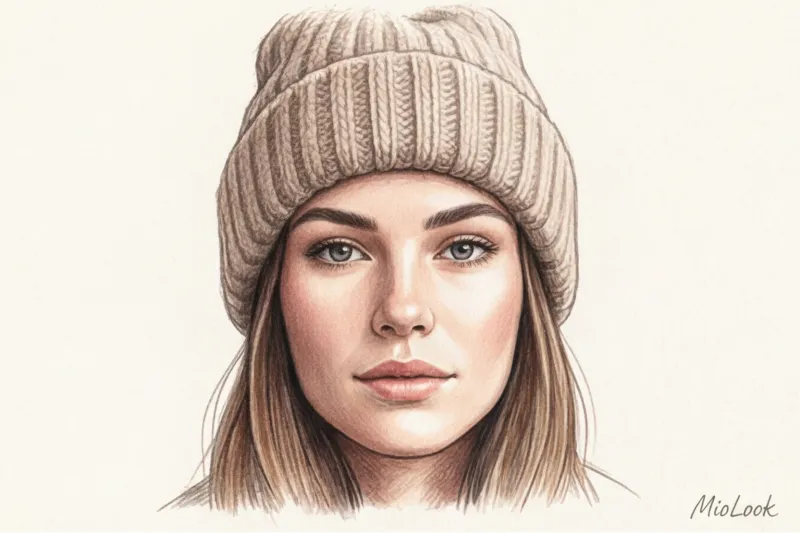
How to Take the Perfect Photo for a Virtual Try-On: 3 Rules
AI algorithms work brilliantly, but they require high-quality source material. If you take a photo from the bottom up in a dark hallway, no virtual fitting room will save the day. Here are three ironclad rules for photo preparation:
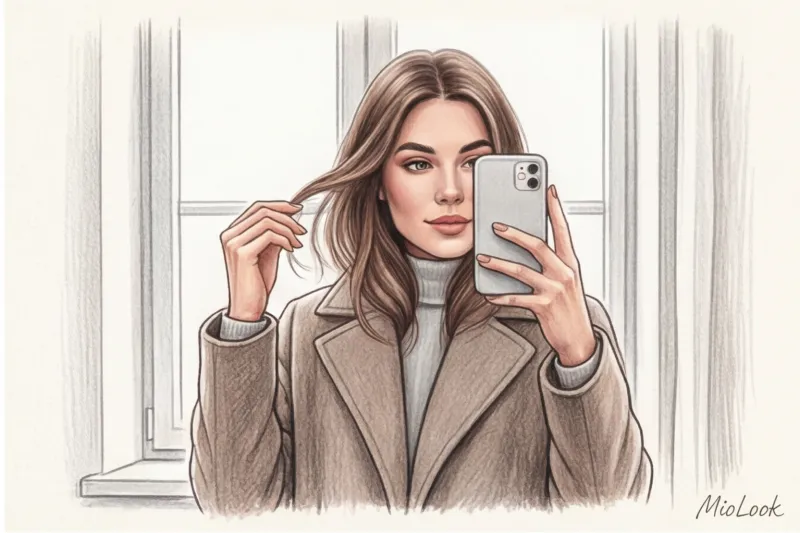
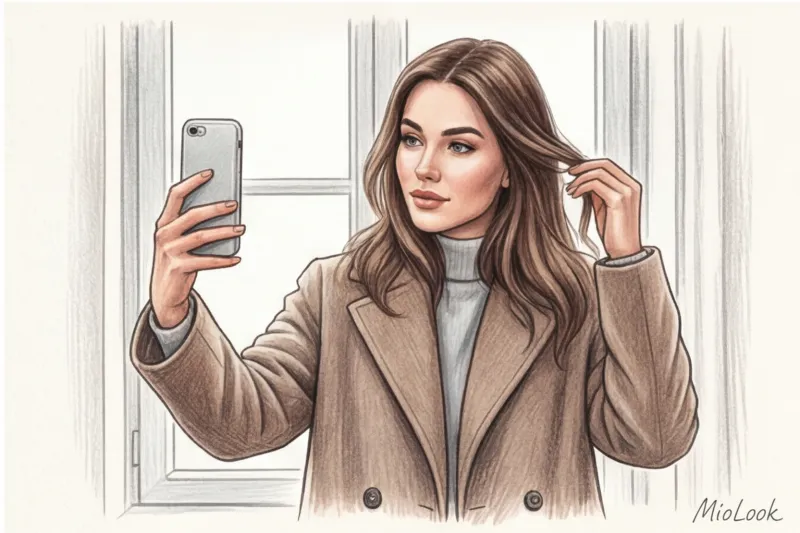
- Lighting. Stand facing a window. You want diffused daylight that will evenly illuminate your face without harsh shadows. This will allow the algorithm to accurately determine your skin tone and correctly apply the shadows from the virtual visor or lapel.
- Perspective. Hold your phone strictly at eye level. Moving the camera down will make your jaw heavy, while moving it up will make you look like an alien with a giant forehead. A straight-on angle is crucial for assessing the depth of a hat.
- Clothes in the frame. Never take photos in a tank top. Wear a turtleneck sweater, coat, or jacket that you'll actually wear with the item. This will allow you to assess the width of your silhouette.
Let me point out an important limitation right away: This method does NOT work. If you're trying to judge a large fur hat with earflaps while sitting in front of the camera with bare shoulders, the proportions will be hopelessly off, and you'll falsely conclude that the item is too big.
The Dangerous "Bald Effect" in Camera and How to Avoid It
Have you ever noticed how in some photos wearing hats, your face appears puffy and out of place? This is the so-called "bald spot effect." When we comb our hair back and back before a fitting, our face loses its natural contouring. Hair acts as a visual delimiter, creating vertical lines that make us look slimmer.
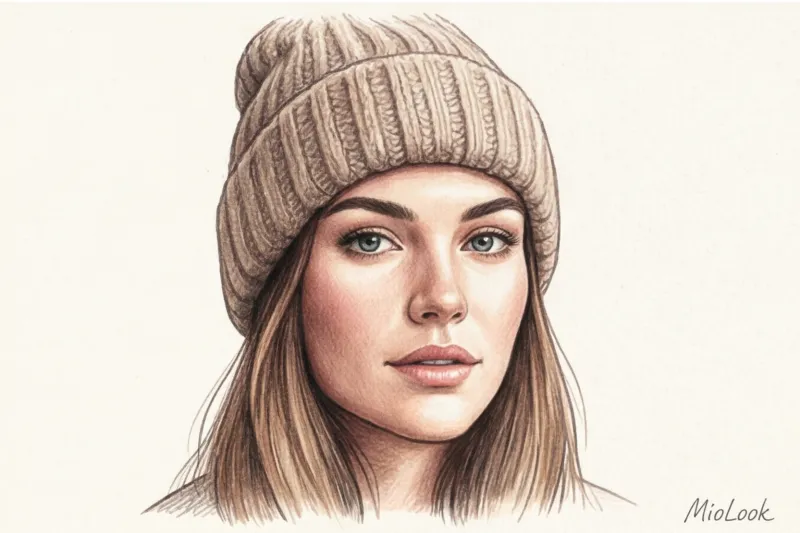
Before taking a selfie for the AI fitting room, be sure to let a few strands of hair out from your face. If you have bangs, leave them visible. Properly placed strands can alter the visual shape of your face much more than the width of your beanie's lapel.
Your perfect look starts here
Join thousands of users who look flawless every day with intelligent algorithms.
Get access — €0.99 onceColor Correction: How Headwear Color Works as a Reflector
A hat is the only item of clothing that fits so closely to your face. It's located in the most critical portrait zone and directly reflects color onto your skin. According to the PANTONE Color Institute's 2024 report on the influence of adjacent shades on skin perception, the wrong shade can highlight pigmentation you didn't even realize you had.
A common mistake is buying a solid black hat simply because it's "practical." In reality, solid black (like a poorly chosen earthy khaki) absorbs light. It "eats" the face's volume, instantly emphasizing nasolabial folds and under-eye circles. You can easily test the difference in the app: try emerald instead of olive, and you'll see how the cool undertone literally "erases" the signs of sleep deprivation.
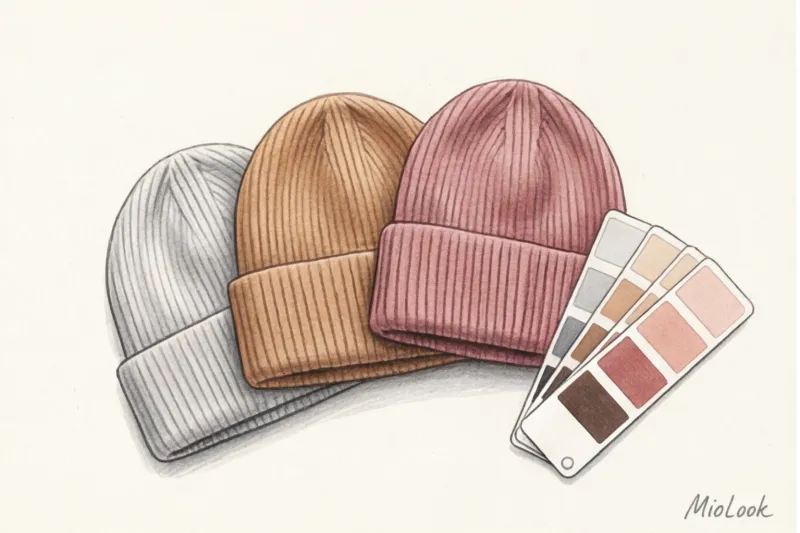
Basic shades that refresh your appearance on screen and in real life
If you're unsure where to start with a virtual try-on, try out these three foolproof options (by the way, a great basic hat made from blended yarn will cost between €40 and €80, and these colors will make it look more expensive):
- Pearl Gray: A great alternative to heavy graphite, it highlights the whites of the eyes and adds radiance to the face.
- Camel and warm caramel: The golden reflections of these shades perfectly neutralize blue-violet circles under the eyes.
- Dusty Pink: Works as a light blush, giving tired skin a fresh, rested look.
Step-by-step algorithm: try on a hat through an app or service
To ensure the process produces real results, not just a couple of funny pictures, follow a proven algorithm.
Step 1: Download. Upload the correct selfie MioLook app (with daylight, loose strands and outerwear).
Step 2: Selecting a shape. Start with basic silhouettes to understand how much volume you need. Compare a snug-fitting beanie, a voluminous chunky knit hat with a cuff, and a simple beret.
Step 3: Adjusting the fit. This is an insider rule that's often forgotten. Moving a hat up or down just 1–2 centimeters dramatically changes the appearance of the forehead and nose. If the AI pulls the hat right down to the eyebrows, the face will appear wider. Adjust the fit manually, slightly revealing the hairline.
Step 4: Palette. Once you've found the right volume, click through all the available colors. Focus not on the header itself, but on how your face color changes in the frame.
A stylist's checklist: 5 signs that a hat really suits you
How do you know you've found the perfect option on-screen? Follow this short checklist. If everything matches, you can confidently search for a similar model in-store or order online.
- Maintaining balance: The width of the crown or voluminous cuff is not narrower than your cheekbones. The face does not look "overtightened."
- Even tone: The color of the accessory makes the skin tone visually more even, without bringing out redness or yellowness.
- Harmony of volumes: The hat should be proportionate to the shoulder width of your outerwear in the frame.
- Air presence: There is enough space between the eyebrows and the lower edge of the headdress (at least 2-3 fingers), the look does not seem heavy.
- Psychological comfort: When you look at the screen, you recognize yourself. You don't feel like you're wearing someone else's clothes or a carnival costume.

Choosing a hat should no longer be a lottery with fitting rooms, poor lighting, and a bad mood. Virtual fitting offers the most important thing: the opportunity to calmly and analytically evaluate volumes and colors. The secret to the perfect hat lies not in the season's fashion trends, but in the mathematics of proportions: the right volume compensates for the width of the down jacket's shoulders, and a well-chosen shade acts as a ring light for your face.