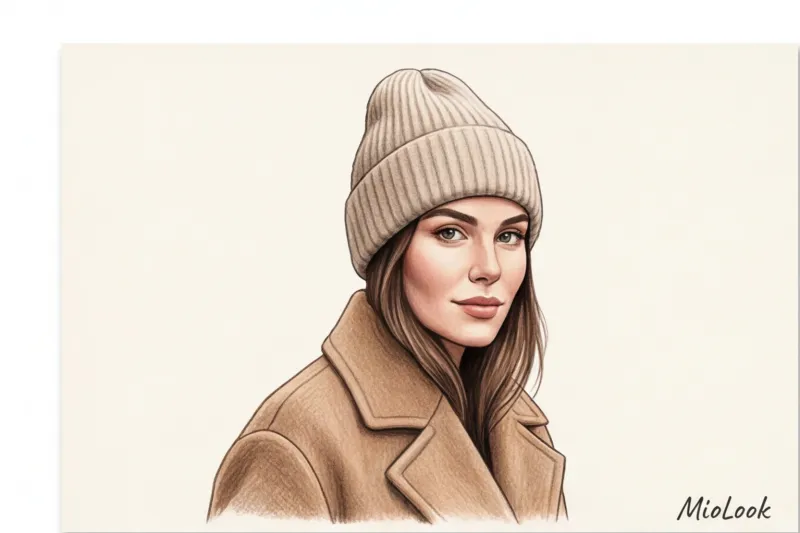
Every November, I hear the same phrase from my clients: "Olena, I bought a gorgeous coat, but the moment I put a hat on it, I turn into a teenager at the skating rink. And my hair is gone forever." In 14 years of working as a stylist, I've learned that the hair section is the most tricky part of a winter wardrobe. You can invest in the perfect bag and flawless shoes, but the wrong hat will ruin the proportions of your look in a second.
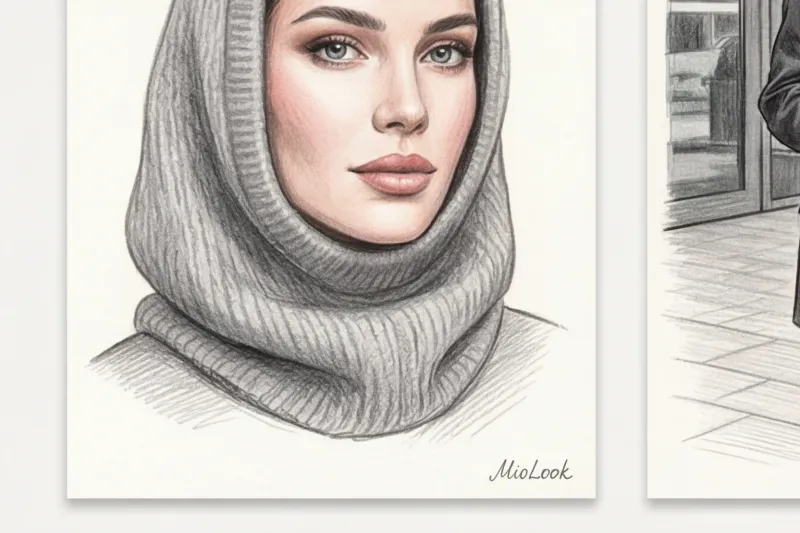
We have already discussed the architecture of winter accessories in more detail in our The complete guide to essential hats and scarves But today I want to dissect the most controversial, yet brilliant, piece of clothing of recent seasons. We'll talk about how to save your hair, stay warm, and why street style fashion often harms real women.
Bonnet vs. Balaclava: What's the Difference and Why We Don't Need a Ski Mask
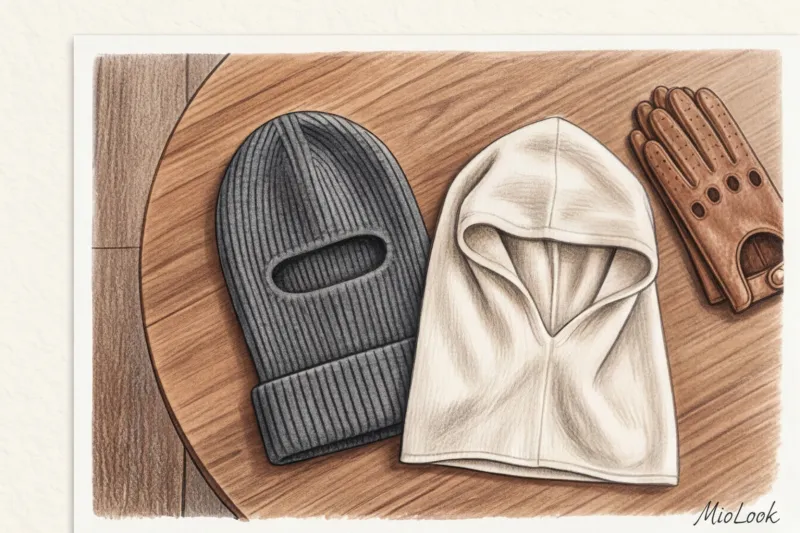
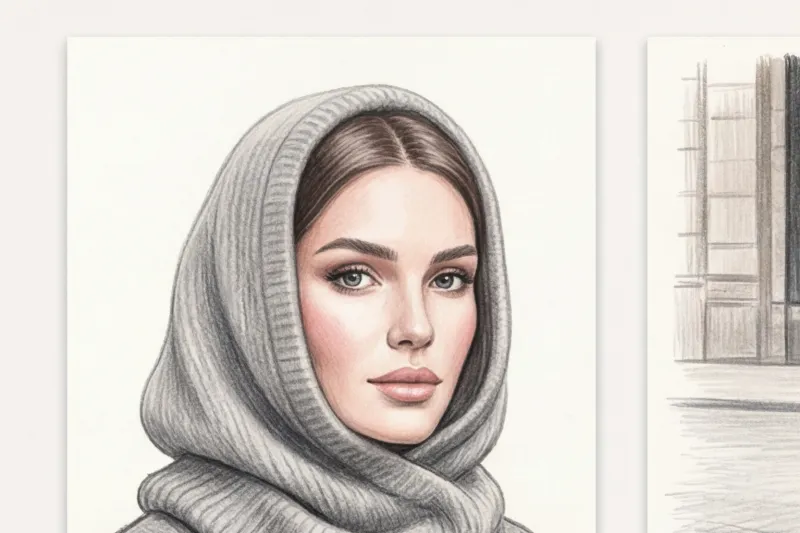
First, let's clarify the concepts, as brands often confuse these two terms on their labels. A balaclava is a tight-fitting accessory that hugs the head and neck like a second skin (hello, skiers and bank robbers). A bonnet is a soft, loose hood combined with a bib that rests on the shoulders.
The trend for tight "ski" balaclavas is, frankly, detrimental to a basic wardrobe. Tightly stretched knitwear accentuates even the slightest morning puffiness, calls for sculpted cheekbones, and often makes a mature, high-status look appear childish. A truly basic garment is a loose hood.
One of my clients, a top manager at an IT company, absolutely refused to wear hats. They slicked down her fresh blowout and left unsightly creases on her forehead from the elastic of her beanie. We replaced the hats with the only loose cashmere hood available. The problem went away that same day.
The right bonnet works like a good Instagram filter: the loose fabric around the cheeks visually makes the face narrower and more graceful, adding the necessary “airiness.”
Your perfect look starts here
Join thousands of users who look flawless every day with MioLook. Artificial intelligence will help you style your clothes.
Get access — €0.99 onceHow to Wear a Bonnet: 4 Stylish Stylist-Inspired Ideas
It's easier than you think to successfully incorporate this accessory into your wardrobe. The key is to maintain a balance of volume: if we create a bulky top with a hood, the overall silhouette should remain collected. Let's look at specific formulas for how to wear a hood in the city.
With a classic straight coat: play on textures
A stiff, double-breasted coat with an English collar often looks too formal. The soft, fluffy knit of the hood offsets this excessive formality, creating a relaxed chic look.
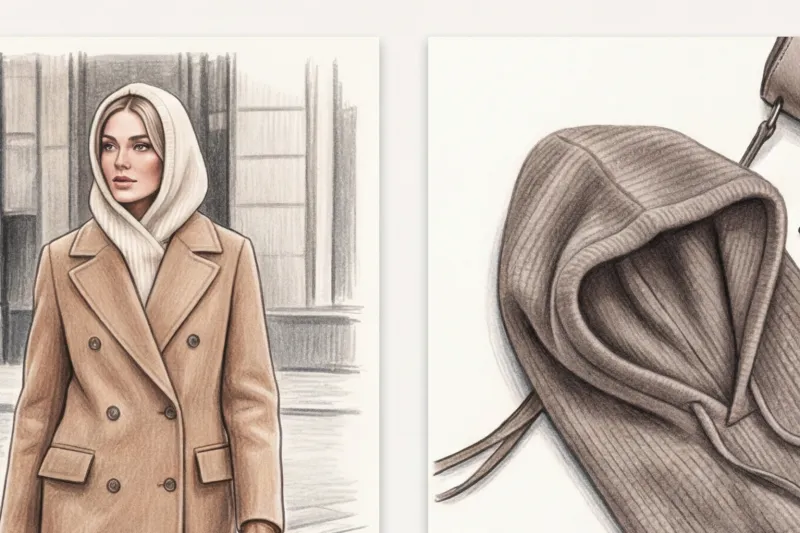
I love using rich contrasts or monochrome here. A camel coat and a cream-colored hood look luxurious, or a deep graphite top with a taupe accessory. Be sure to let the bib over the lapels—it creates a beautiful layered look.
With a voluminous down jacket or eco-fur coat
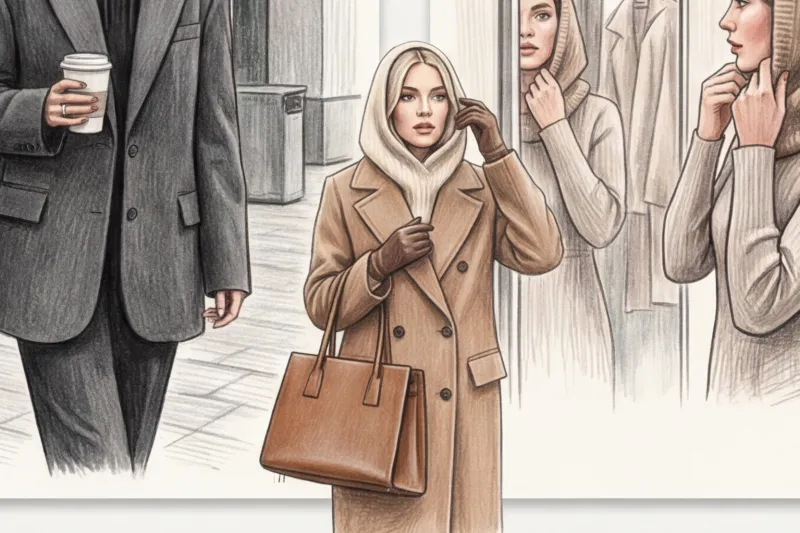
Have you noticed the "small head" effect? When you wear a bulky down blanket or a fluffy eco-fur coat and pull a thin beanie over your head, your body proportions become distorted. A bonnet adds just the right amount of volume on top, balancing out the broad shoulders of your outerwear.
Plus, the hood's thick bib securely covers your neck and collarbones. No more trying to wrap a three-meter scarf over an already bulky down jacket.
With a men's-style jacket: for warm winter or the office
This trick is a real lifesaver for those who travel by car. If the walk from the parking lot to the office is just a minute, there's no need for a heavy coat. Wear a thin, smooth hood under an oversized jacket.
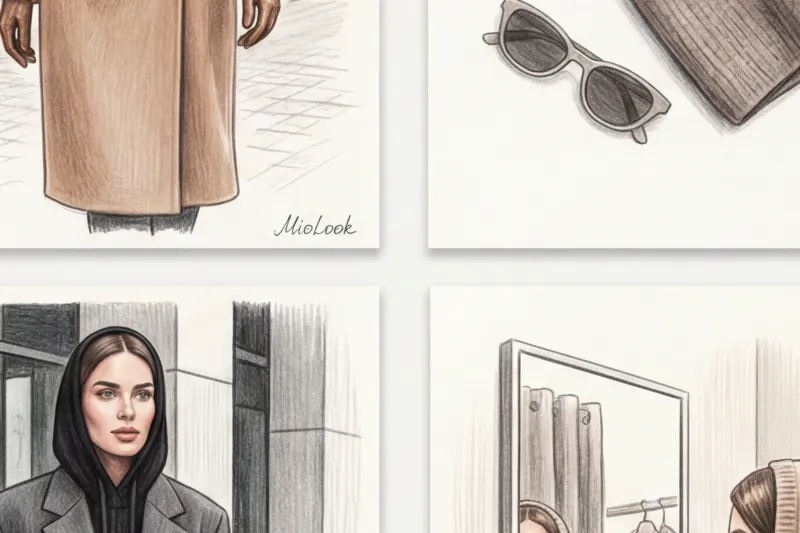
Indoors, you simply flip the hood back (creating a stylish neck tie effect) or remove it completely. By the way, in the app MioLook There's a great visualization feature—you can upload a photo of your jacket and see how hoods of different colors will look with it without having to buy them.
The Anatomy of the Perfect Accessory: A Composition That Pays Off
As a stylist, I always firmly discourage clients from cutting corners on items that are close to their faces. Hats, scarves, and hoods are in direct contact with your skin and hair.
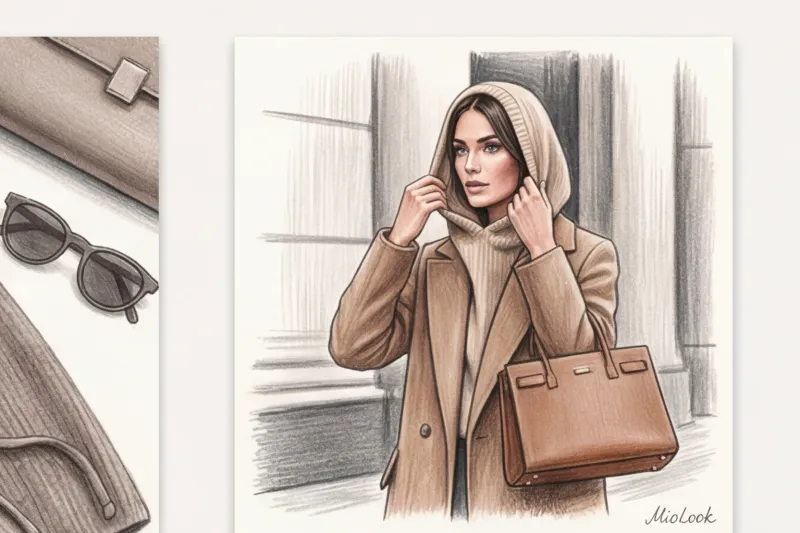
Let's do some wardrobe math (cost-per-wear). A premium hood made of good cashmere (at least 2-ply) will cost you around €150-200. In our climate, you'll wear it about 100 days a year. It will last you at least three seasons without losing its shape. So, the cost per wear is about €0.50. Now let's take an acrylic equivalent for €30. It will pill in three weeks, your hair will get static, and your head will sweat outside and get cold in the wind.
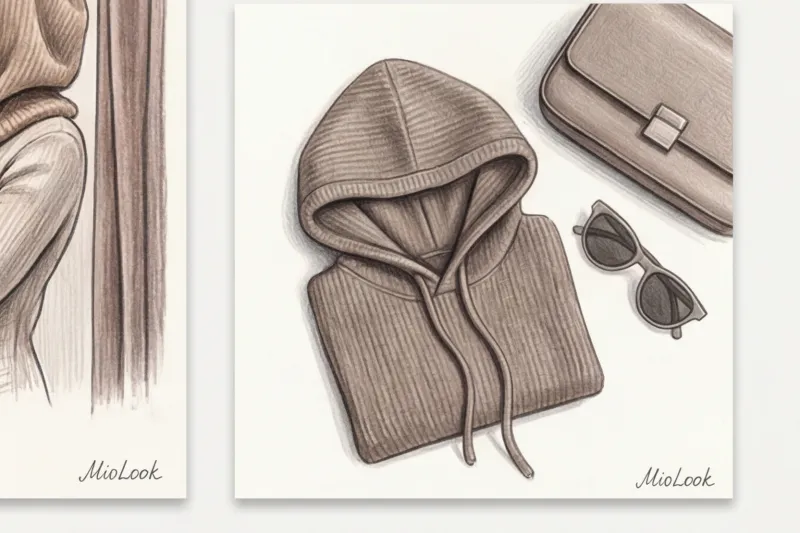
- Taboo: Acrylic and polyester (more than 20% of the composition) create a greenhouse effect, causing hair roots to instantly become greasy.
- Ideal: 100% extrafine merino (wicks away moisture, doesn't itch), cashmere or a blend of both.
- For the texture: Angora or mohair (but be prepared for them to shed lint on dark coats).
McKinsey's 2024 consumer research confirms this shift: shoppers are increasingly eschewing fast-fashion accessories in favor of "micro-luxury"—a single, expensive item that elevates the status of an entire look.
The Biggest Mistake: How to Avoid Looking Like a Schoolgirl
Any utilitarian item carries the risk of simplifying an image. The biggest mistake I see on the streets is a complete surrender to "relaxed sport." A hoodie, puffy ski pants, a backpack, and Ugg boots are fine for a walk with the dog in the countryside. In the big city, they look childish.
To elevate this accessory into a grown-up, elegant wardrobe, we need strong counterpoints. Wear a soft knit hoodie with a more defined tote bag rather than a shapeless shopper. Add leather gloves instead of knitted mittens. Complete the look with square- or pointed-toe shoes. The contrast between relaxed knitwear and architectural leather is the foundation of the style.
Access to MioLook for €0.99 — one-time payment
Finding it hard to figure out how to combine your closet items? A smart AI stylist will help you find the perfect look in seconds.
Get access — €0.99 onceA bonnet in a business wardrobe: how to maintain status
Is it okay to wear a bonnet to an important business meeting? Yes, if you choose it wisely and remove it correctly. Trend analysis based on the latest Miu Miu and Max Mara shows reveals a clear trend: designers have elevated this headwear from a formal accessory to an elegant essential.
For a business wardrobe, the texture of the knit is crucial. Avoid voluminous cables, bobbles, and aran stitches—they evoke thoughts of grandma's trunk and ski resorts. Choose a smooth machine knit or a lightweight, delicate ribbed knit.
When does this accessory NOT work? In ultra-conservative corporate dress codes (banks, high-end legal professions), where only a silk scarf or a classic felt hat is permitted over a formal coat, a neutral palette (ecru, deep chocolate, navy, or oatmeal) fits perfectly into business casual.
A practical checklist: how to choose a hood in a store
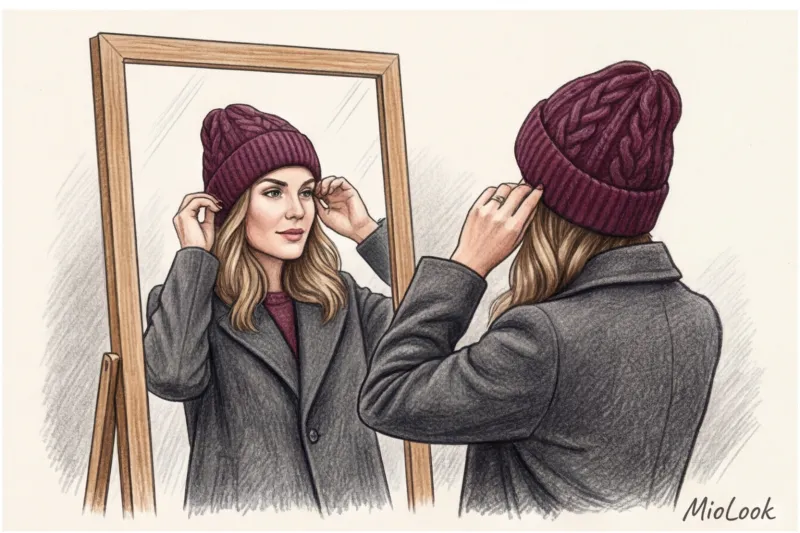
During shopping assistance, I teach clients not to just look at the color of an item, but to test it in motion. Here's my process for testing it in the fitting room:
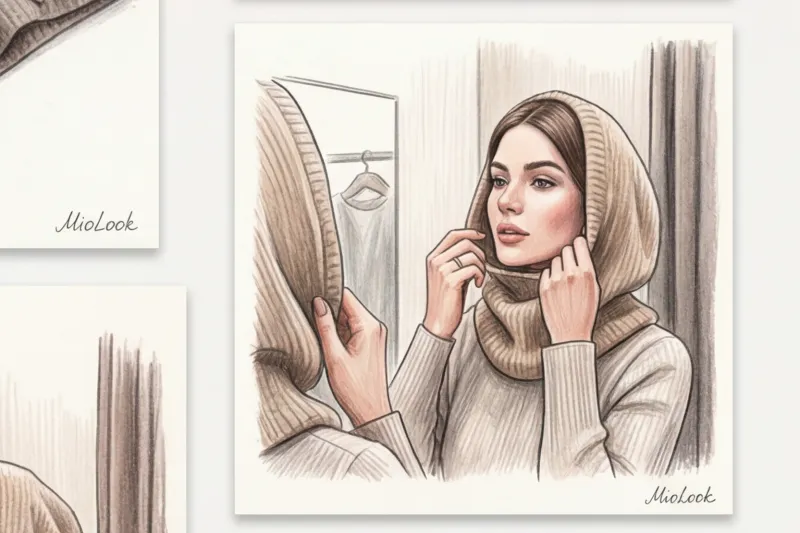
- Two-finger test. Put the hood on. You should be able to fit two fingers between your cheek and the edge of the knitted fabric. If the fabric digs into your skin, leave the item on the shelf.
- Checking the shirtfront. The bottom should be long and wide enough to rest flat on the collarbones and fit under the coat. If the bib is too short, it will bunch up at the neck, disrupting the line of the shoulders.
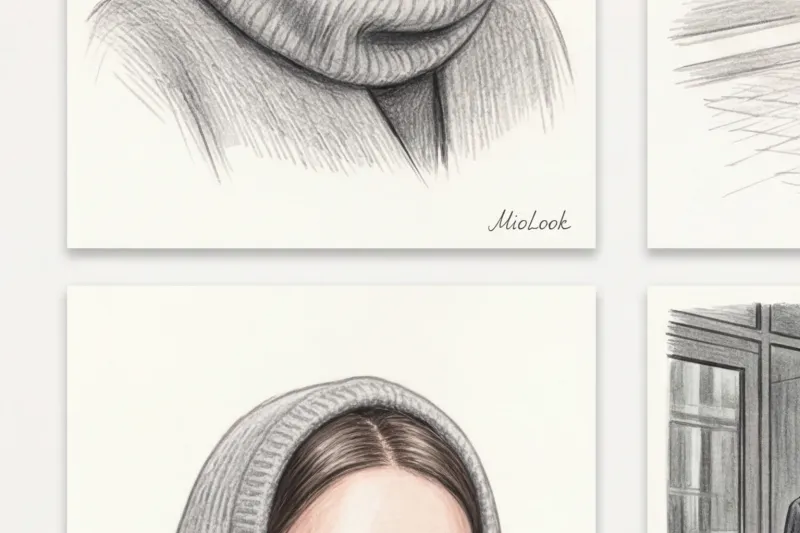
- Static test. Just take the hood off and put it back on a couple of times in front of the fitting room mirror. Does your hair stand on end and crackle? It's cheap synthetic, even if the label says "wool" (it probably only contains 10%).
Headwear no longer has to be a compromise between warmth and a beautiful hairstyle. Invest in a high-quality, loose-fitting bonnet, add a few structured accessories, and you'll achieve a look that looks expensive, protects from the wind, and saves you time in the morning in front of the mirror.