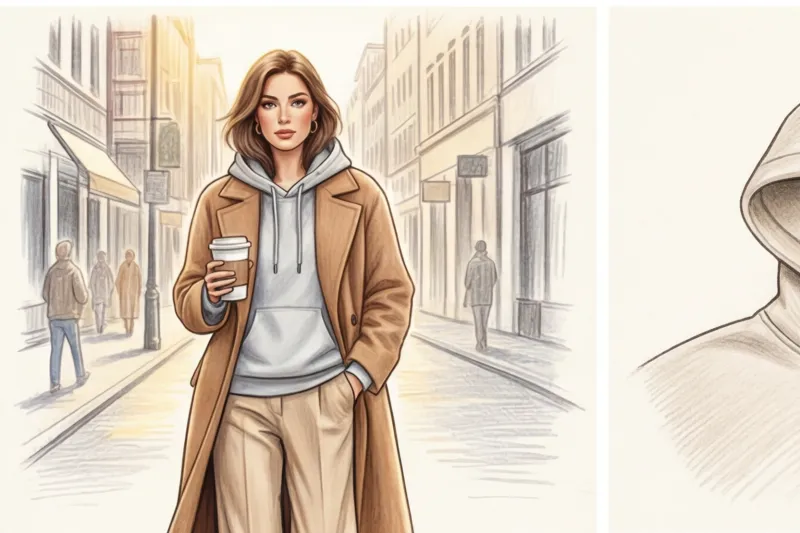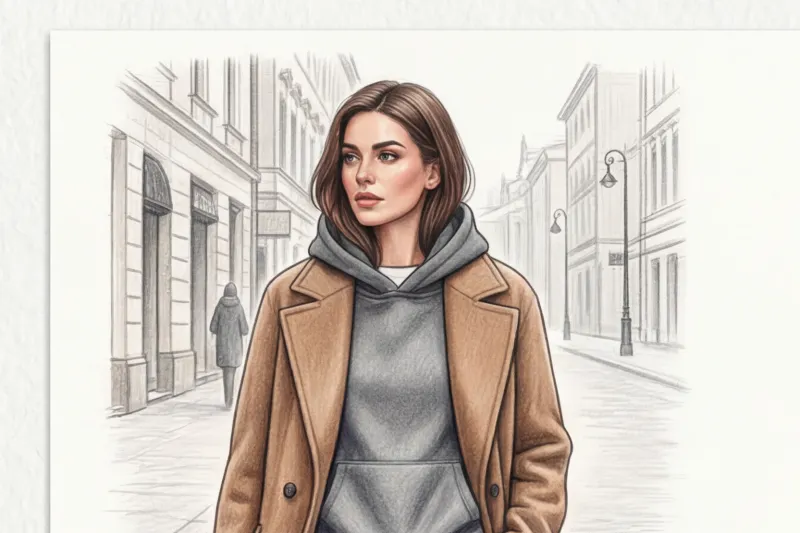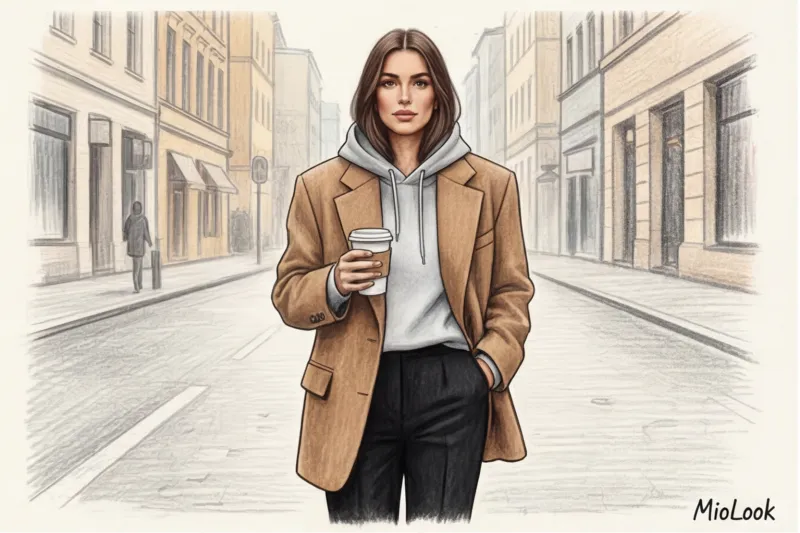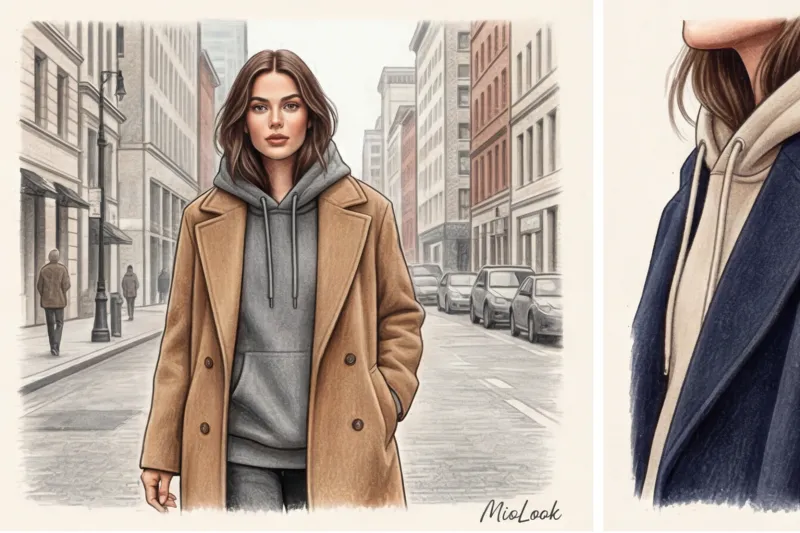
It's a familiar situation: you're looking at a photo of Hailey Bieber or a street style photo from Copenhagen, where girls masterfully mix oversized sweatshirts with formal outerwear. Inspired, you put on your favorite sweatshirt, throw on a coat, go to the mirror, and... see not a style icon, but a teenager who hastily threw on his dad's jacket to run out for bread. Why does this happen? Spoiler: it has nothing to do with color.
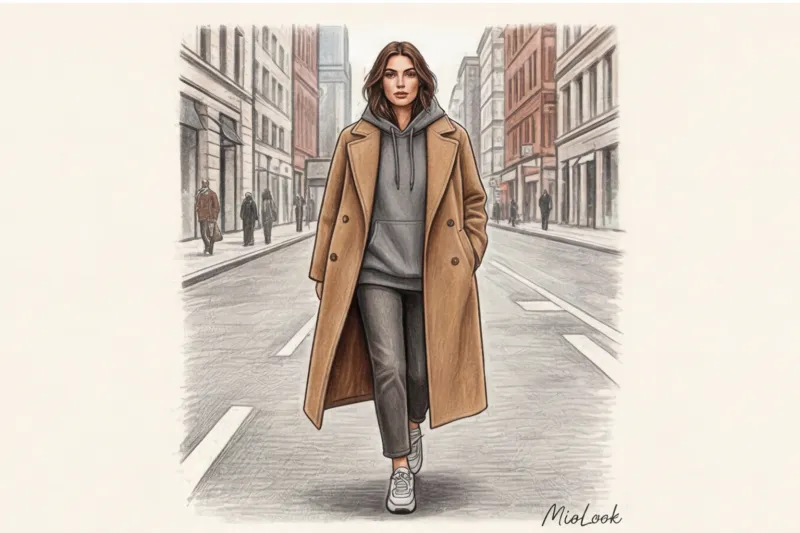
In 12 years of working as a personal stylist and textile specialist, I have realized one thing: stylish Women's hoodie and coat looks are based not on intuition, but on pure physics. Fabric density, the coefficient of friction of the materials, and the geometry of the cut are crucial. If you don't take these factors into account, even items from luxury brands will look sloppy.
In this article, we'll explore the architecture of layering from a clothing construction perspective. If you're just planning on buying the right basics, I highly recommend checking out our complete guide first. What to wear with a hoodie: secrets to stylish and luxurious looks , where I go into detail about the anatomy of perfect knitwear.
Layered architecture: why not every hoodie and coat create stylish feminine looks
The biggest mistake I see on the street every day is trying to pair a thin, mass-market hoodie with an equally thin, mid-season coat. In the professional world, we call this a "texture clash." When two soft, shapeless materials overlap, they create a wrinkled, rag-like effect.
The golden rule of layering is: the outer layer should always be denser, heavier and harder than the inner one The coat acts as an architectural frame.
- For hoodies: Look for fabric with a density of at least 350-450 GSM (grams per square meter). This is so-called heavyweight cotton, which holds its shape without hanging off the body.
- For coats: The ideal density of drape or wool for multi-layered looks starts from 600-800 g/m².
"An eco-friendly wardrobe isn't just about recycled plastic. It's about items that last longer than just one season. A high-density coat won't shrink after dry cleaning and will maintain its shape for years, concealing any unevenness in the inner layers," says Sophia Müller.
If you wear a heavyweight hoodie (400 GSM) under a lightweight viscose-blend robe coat (300 GSM), the knitwear will simply "break" the silhouette of the outerwear. Every seam, kangaroo pocket, and fold in the sleeves will be visible.
Access to MioLook for €0.99 — one-time payment
A smart AI stylist will select the perfect look based on your clothes and body shape.
Get access — €0.99 onceThe Armhole and Shoulder Seam Rule: The Stylists' Main Secret
Last month, a client, a top manager at an IT company, contacted me. Her request was as follows: "I bought a gorgeous cashmere coat, but when I wear a sweatshirt underneath, I can't lift my arms, and the sleeves bunch up like an accordion. I feel like a caterpillar."
We started to investigate and measured the coat's sleeve width at the biceps. It turned out the coat had a classic, rigid set-in sleeve, cut precisely at the shoulder. first limitation: classic armhole is not designed for bulky knitwear.
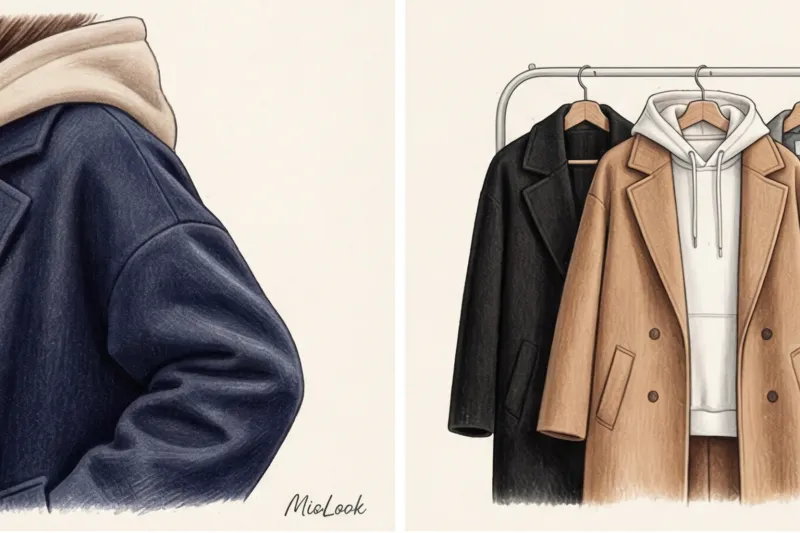
To maintain freedom of movement and a breathable layer (which, by the way, is what keeps us warm in winter), the coat sleeve width at the biceps should be at least 4-5 cm wider than the sleeve of your sweatshirt. Look for the following shoulder cuts:
- Dropped shoulder: the seam goes 5-10 cm below the natural shoulder line.
- Raglan: the sleeve is cut out together with the shoulder part of the back and the front (perfectly smooths out the volume).
- One-piece sleeve: complete absence of shoulder seam, maximum freedom.
Choosing the perfect coat for layered looks
Silhouette is everything. Slim-fit styles and coats with a tight dart under the bust are absolutely not suitable for pairing with relaxed knitwear. This is one case where my rule has no exceptions: save the fitted coat for silk blouses and thin turtlenecks.
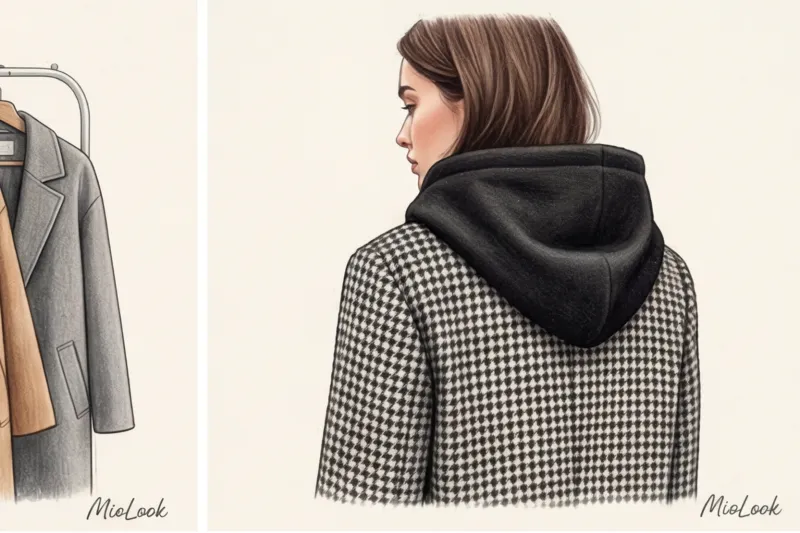
To create status images, invest in:
- Men's cut coat: Straight lines, accentuated shoulders, midi or maxi length.
- Cocoon coat: Slightly tapered at the bottom, it perfectly conceals a voluminous belly or hips, even if you wear a thick hoodie inside.
- Oversized pea coat: A shortened version for those who drive a lot.
By the way, the ability to skillfully incorporate such voluminous pieces into your style often depends on understanding your basics. I recommend studying our material about a combination of archetypes in style so that the mix of sport and classic looks organic on you.
Fabric composition and lining: the invisible foundation of the look
Now, about what fashion bloggers don't mention. A 2023 study by The Woolmark Company confirms that synthetic materials accumulate static charge exponentially when rubbed against each other. If your coat has a 100% polyester lining and your hoodie is made of cotton with a polyester brushed finish, you'll get more than just sparks when you take it off.
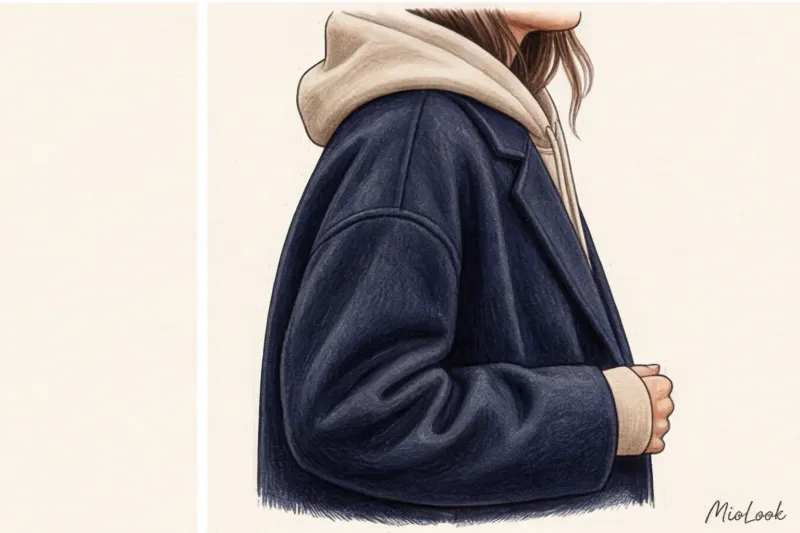
You'll get "stickiness." The coat won't slide over the knitwear; it'll catch on it, pull up when you walk, and the whole look will be thrown off. Look for outerwear with a lining made of viscose, cupro or natural silk They ensure perfect glide of layers.
The Hood Matters: How to Avoid the "Hump" Effect
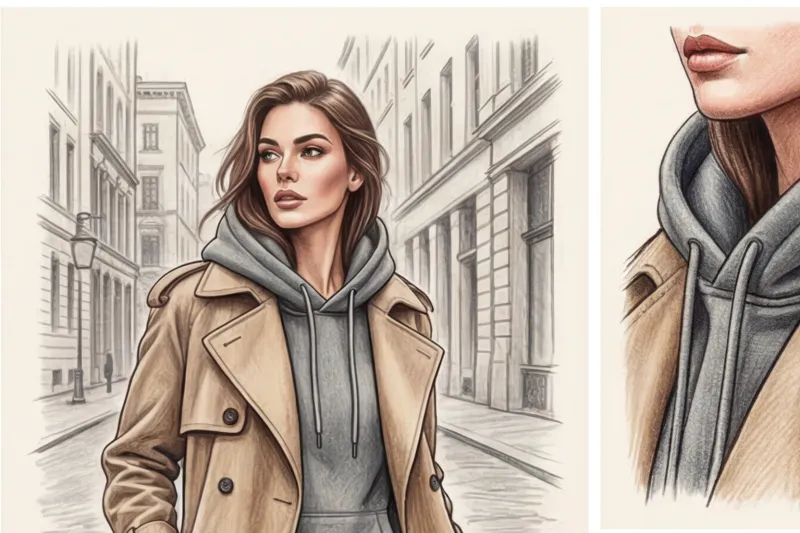
A cheap hoodie gives itself away with a thin, single hood that hangs forlornly on the back, bunching up into an awkward fold. A high-status item always has a hood made of a double layer of fabric (and sometimes three layers), which maintains its hemispherical shape even when removed.
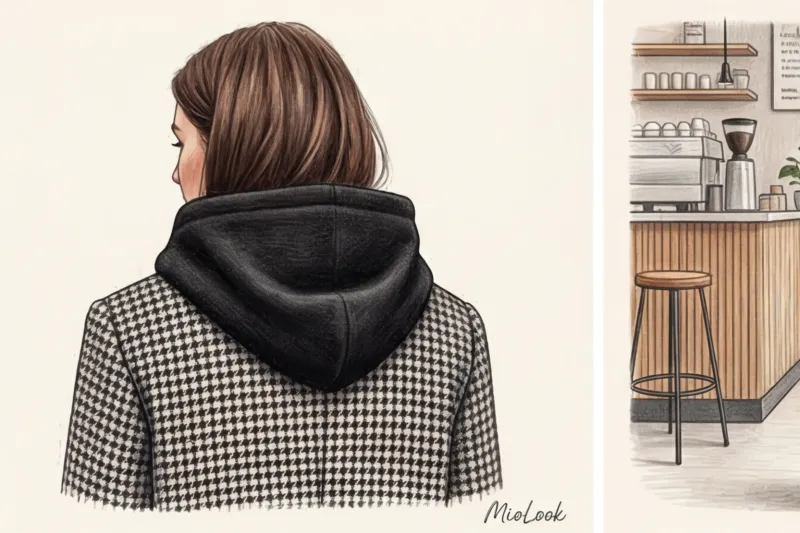
On-set instructions—how stylists style a hood for the perfect shot (and life):
- Put on the coat and pull the hood all the way out.
- Straighten the English collar of the coat so that it lies flat.
- The hood of the hoodie should cover the back of the coat collar, but do not overlap the lapels in front.
- Hood drawstrings are a visual distraction. If they're long and have cheap metal fasteners, simply remove them completely. This will instantly make the garment look more expensive.
Your perfect look starts here
Join thousands of users who look flawless every day with MioLook.
Get access — €0.99 onceHoodie and Coat: Women's Looks for Different Dress Codes
According to a McKinsey report on the state of the fashion industry, the boundaries between work and home wear have become completely blurred. But that doesn't mean you can wear the same clothes you slept in to the office.
Smart casual for a creative office
If you don't have a strict dress code, go eclectic. Choose a basic gray or off-white hoodie without a single logo. Pair it with wide-leg palazzo pants with a crease (this is important—the crease creates verticality and a sense of style). Top it off with a straight camel-colored coat. On your feet, pair with chunky-soled loafers or square-toe ankle boots. For inspiration, check out our article about business clothes for women — there are many examples of working with textures.
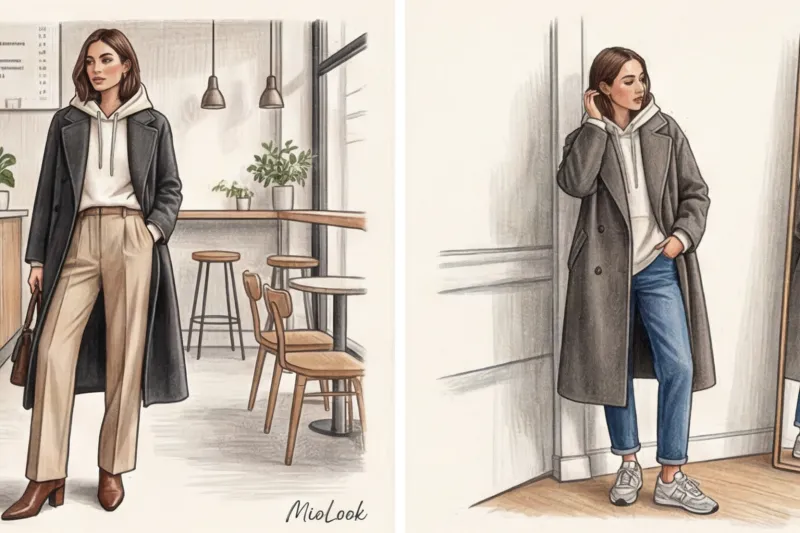
Elegant sport-chic for the weekend
Swap your usual sweatpants for straight-leg jeans made of thick, non-stretch denim (100% cotton). Add a wrap coat tied loosely and a leather crossbody bag with a crisp, rigid shape. The contrast between soft (hoodie) and stiff (bag, denim) is what makes the look interesting.
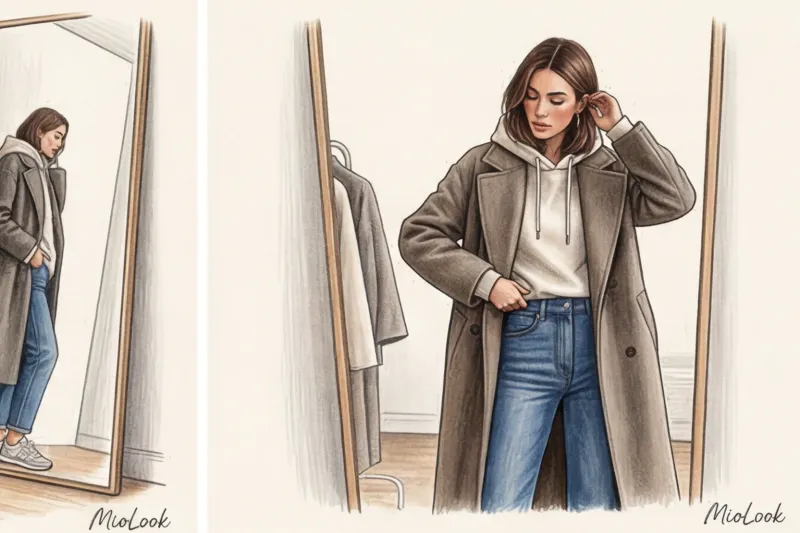
Putting together such multi-layered outfits in the morning can be difficult. To avoid wasting time in front of your open closet, I recommend digitizing your clothes. Upload a photo of your coat and favorite sweatshirts to MioLook , and the algorithm itself will offer you fresh combinations taking into account the current weather outside.
Common Layering Mistakes: A Debriefing
It's time to debunk the biggest myth that influencers are selling us. A tracksuit (hoodie + sweatshirt joggers) under a classic coat is NOT stylish for real life in 90% of cases.
In a retouched Instagram photo of a girl posing with a glass of matcha, it looks cool. In real life, on the subway or at the supermarket, it looks like you're taking out the trash in your pajamas, throwing on a decent coat to keep warm. A tracksuit needs to be "broken in."
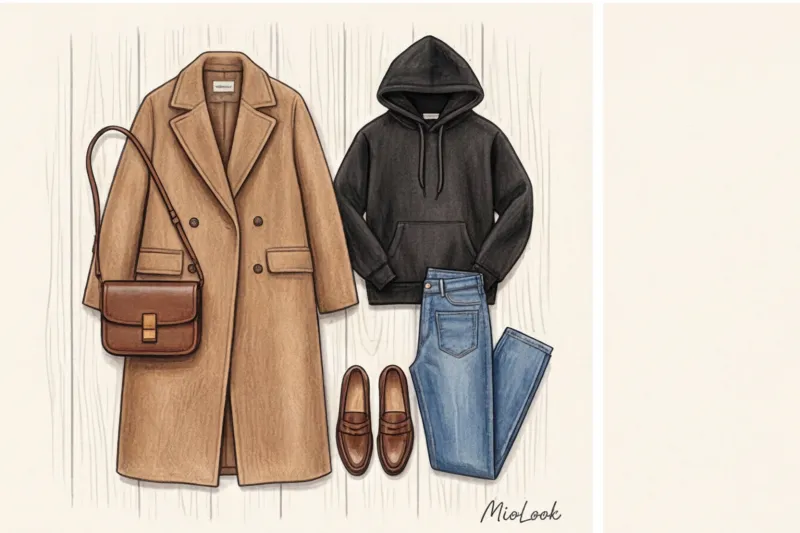
Two more fatal errors:
- Active print with a strict check pattern: If the coat has a pattern (houndstooth, tartan), the hoodie should be completely monochrome.
- Length mismatch: A hoodie should never stick out more than 3-4 centimeters from the hem of a short coat or jacket. Otherwise, you'll cut off your proportions and visually shorten your legs.
Ready to get started?
Try MioLook's free plan—no commitments or card required.
Get access — €0.99 onceChecklist: 5 steps to the perfect look before going out
Before you leave the house in your new layered look, do a quick test in front of the mirror:
- Freedom Test: Raise your arms parallel to the floor. If the coat is pulling at your back and the sleeves are stuck on your forearms, the armholes are too tight.
- Neck test: Look at your profile. The hood shouldn't cut into your neck or make you slouch.
- Balance of volumes: Is your top bulky? Make sure the bottom is structured. No shapeless maxi skirts made of thin viscose paired with a heavy top.
- Static control: Lightly rub the coat fabric against the hoodie. If you hear a crackling sound, apply an antistatic spray to the inside of the coat lining (never spray it on the knit fabric itself).
- Shoe check: A bulky top requires a visual counterbalance underneath. Thin ballet flats will look lost; opt for shoes with a thick sole or a bold toe.
The secret to a luxurious layered look lies not in the number of brands you wear at once, but in the mathematical precision of their combination. Invest in dense fabrics, pay attention to the armhole width and lining composition, and your everyday hoodie will take on a whole new, classy quality.