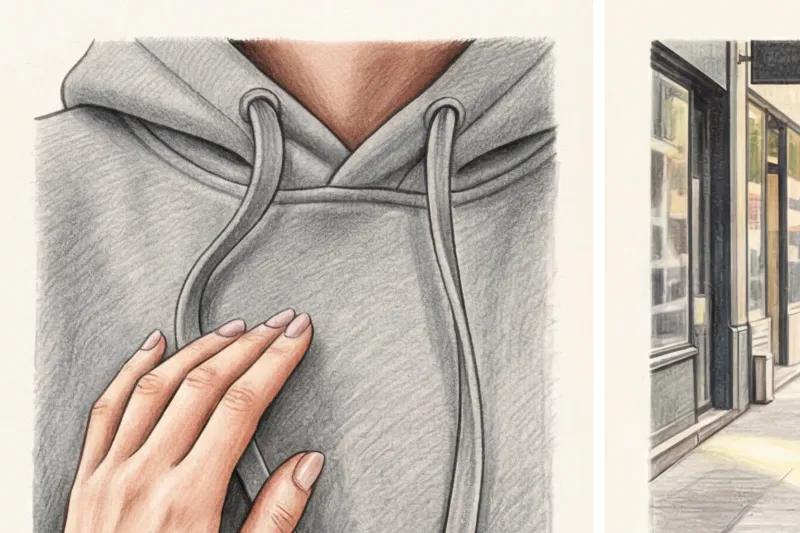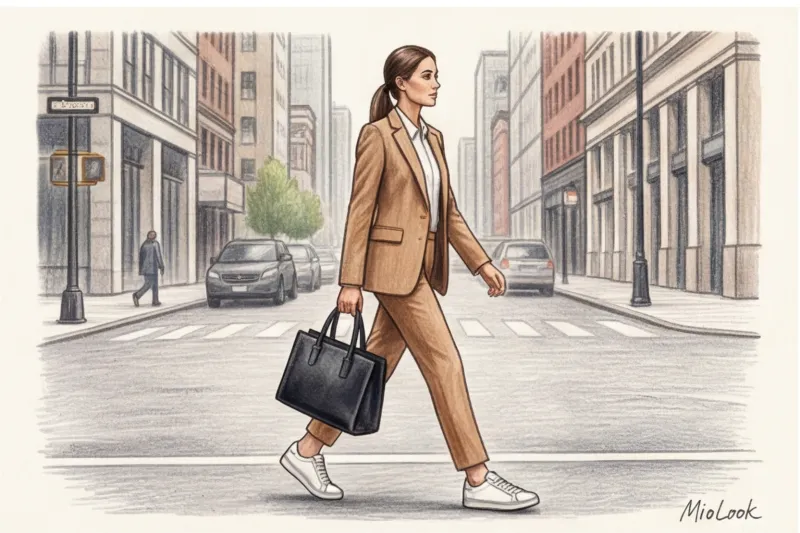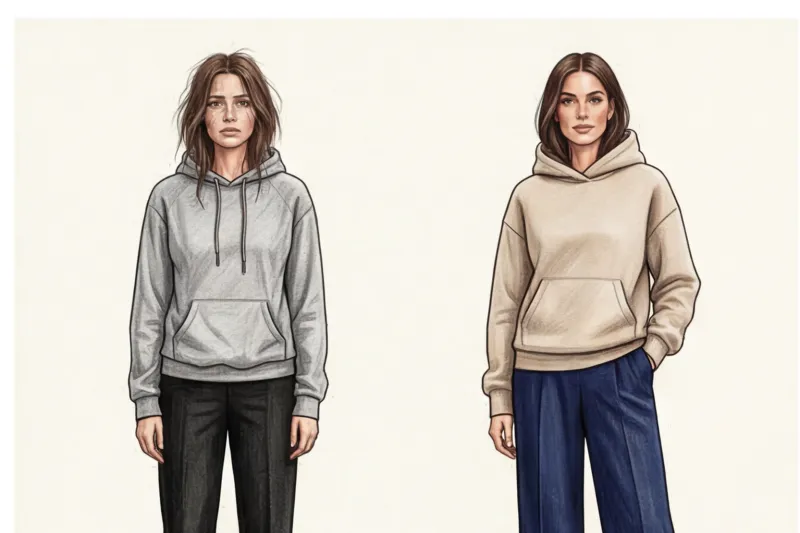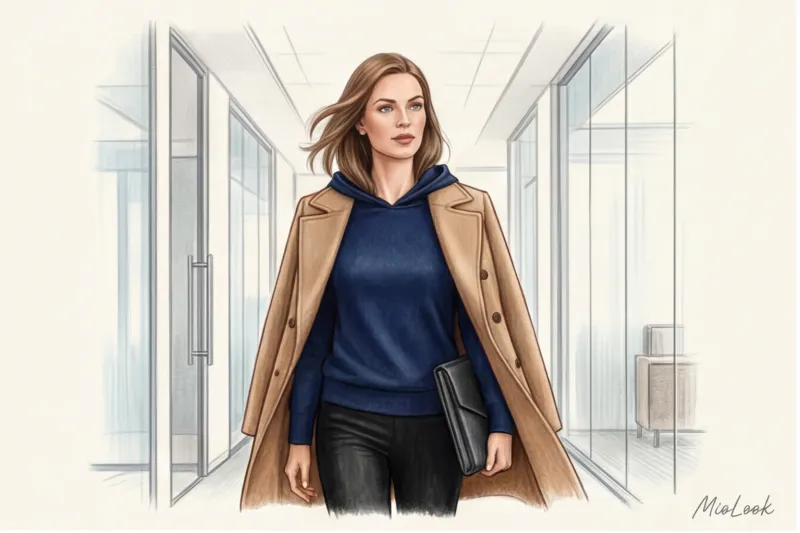
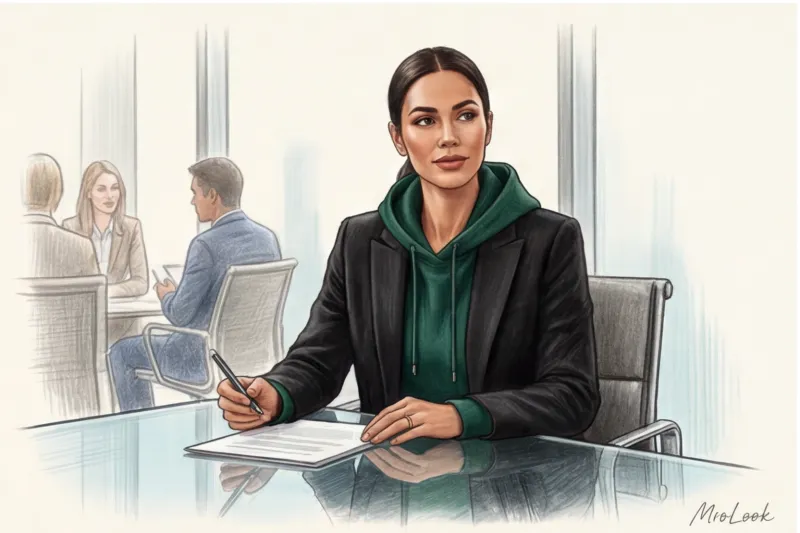
I remember the look on the face of my client, the CIO of a major fintech company, when she first saw herself on a recording of an important Zoom board meeting. She was wearing her favorite, incredibly comfortable gray hoodie. “Darina, I look like a tired intern, not like someone making decisions worth millions,” she told me the next day. And she was right. Finding the right Women's office hoodies — that's quite a challenge: the line between "modern leader" and "person who forgot to change after the gym" is frighteningly thin.
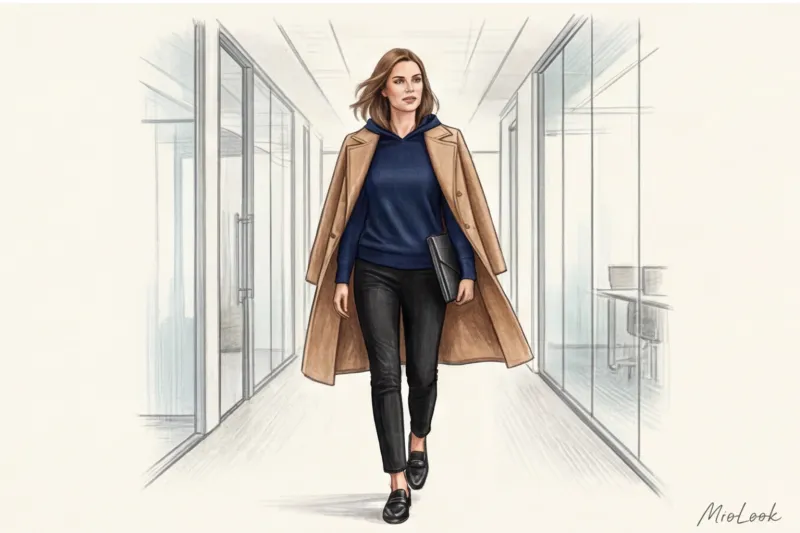
As a stylist and colorist, I often encounter requests for a "status look and 10 hours of absolute comfort." I've already discussed the architecture of this style in more detail in our The complete guide to women's sporty-casual office wear But today we'll dig deeper. Forget the clichéd advice from the glossy magazines of the 2000s. We'll explore the cut geometry, color temperature, and fabric density that transform ordinary knitwear into professional armor.
Women's Office Hoodies: Why the Old Rules of Sporty Casual No Longer Apply
If you feel like the corporate world has finally given in to the hoodie craze, you're not alone. According to a global report McKinsey (2024) More than 65% of companies have permanently relaxed their dress codes since the pandemic, moving from Business Traditional to Smart and Sport Casual. But herein lies the main pitfall.
Relaxing the dress code doesn't mean eliminating visual hierarchy. What we see in street style (hyper-oversized garments, dropped buttonholes, huge brand logos on the chest) is categorically unsuitable for a conference room. True office athleisure is clean lines, mathematically precise proportions, and a complete absence of visual noise.
"Your knitwear should look like it was custom-made in a tailor's shop, not bought from the sportswear department on the way to work."
Your perfect look starts here
Join thousands of users who look flawless every day with MioLook.
Get access — €0.99 onceThe Anatomy of Perfect Office Knitwear: Fabric, Cut, and Color
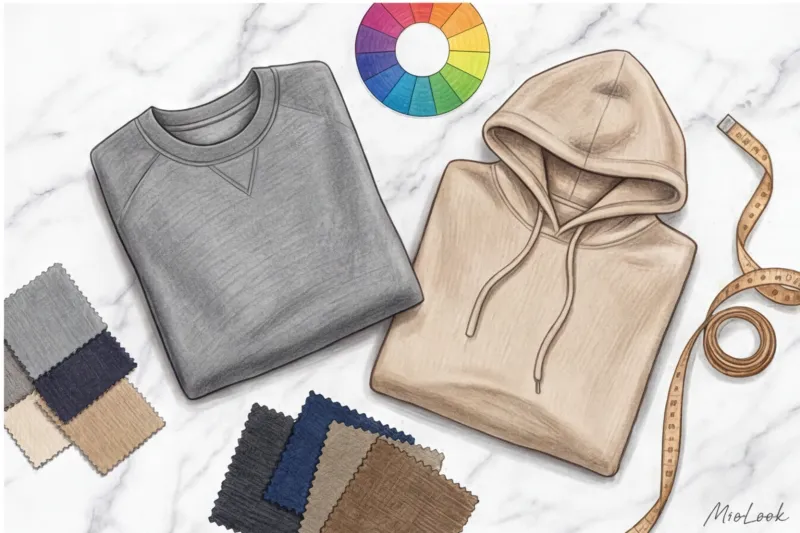
As a colorist, I always pay close attention to how fabric refracts light. This is a fundamental rule: the finer and more matte the knitwear, the cheaper and more casual it looks. A sporty, relaxed cut requires compensation in the form of premium materials. Only the contrast of textures adds complexity to a look.
Texture is key: density from 320 g/m² and no fleece
Over 12 years of practice, I've discovered a golden rule for office sweatshirts: they should hold their shape almost like a jacket. If the fabric flows over the body, highlighting every fold of your underwear, it's a piece for the couch, not the office.
- Ideal compositions: thick cotton (diagonal fleece) with a density of 320 to 400 g/m², cashmere, blended fabrics (for example, 80% cotton and 20% silk or viscose, which give a noble, subtle shine).
- Absolute taboo: fleece, visible fluffy brushed fabric (it will inevitably roll up on your elbows from rubbing against the table), elastic bands on the cuffs that are stretched out like an accordion.
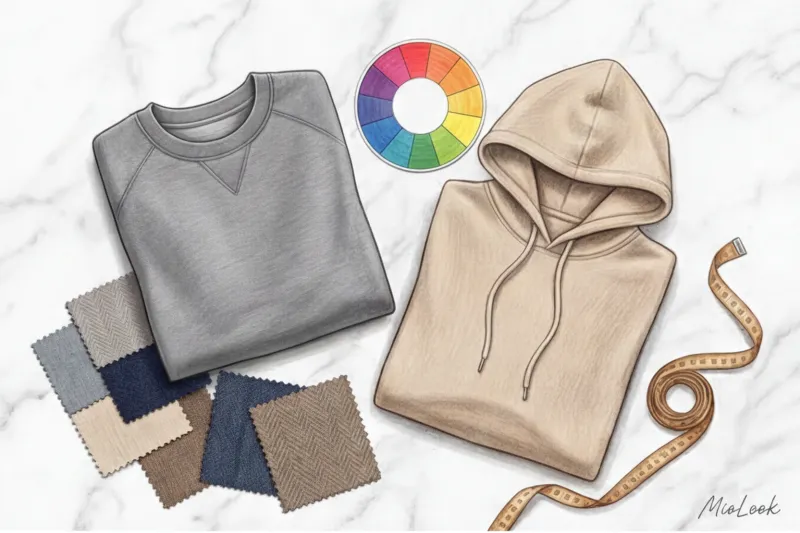
The Color of Status: How Color Raises the Level of Formality
And now for my favorite mythbuster: a basic black hoodie is the worst investment for a business wardrobe. Black cotton fleece fades faster than any other color. After just three washes, it takes on a whitish, washed-out undertone that instantly ruins the look's status.
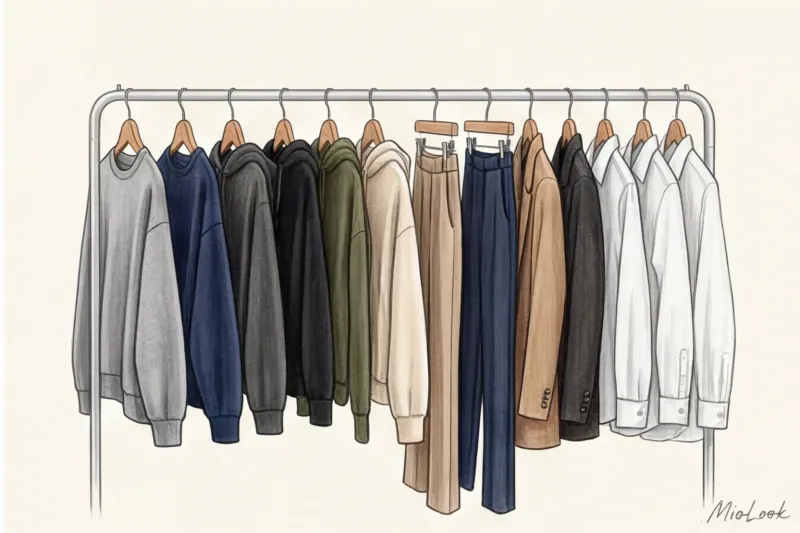
Instead, embrace the magic of deep, jewel-toned hues. Emerald, sapphire, burgundy, dark chocolate, or rich graphite. A navy blue sweatshirt in heavy cotton is psychologically reminiscent of a classic blazer. A monochrome look (for example, a chocolate hoodie with chocolate palazzo pants) creates a continuous color vertical that visually elongates and always looks luxurious.
The biggest myth among stylists: "Just throw a jacket over a hoodie."
Open any article about athleisure and you'll see this advice. Close it. As a practitioner, I officially declare: 90% of the time, trying to pull a classic office blazer over a heavy hoodie ends in style disaster and physical torture.
It's the mathematics of tailoring. Most modern hoodies have a drop shoulder and wide armholes. A classic fitted jacket has set-in sleeves and a high, narrow armhole. When you try to match them, the hoodie fabric bunches up under the arms. This creates a "cabbage" effect, making your figure bulky and physically unable to lift your arms.
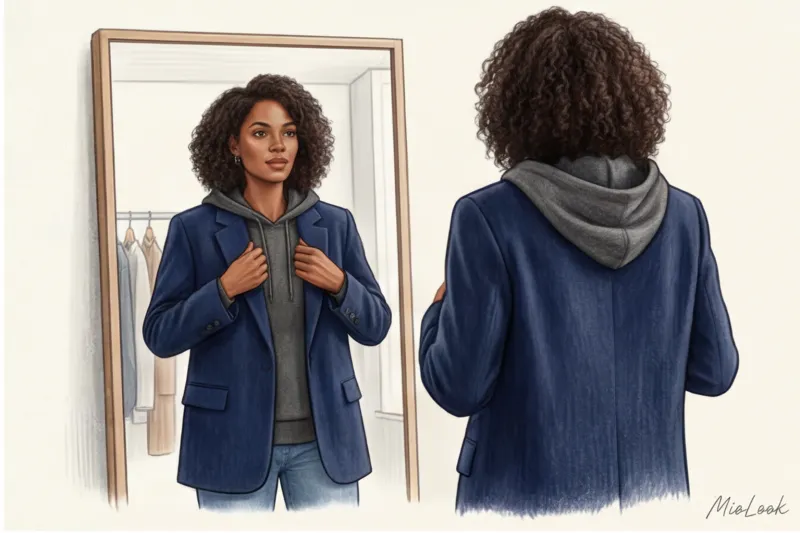
How to fix this? If you want to layer, you'll need an oversized menswear-style jacket with a deliberately flared shoulder line. But to be fair, this technique doesn't work for everyone. If you have a pronounced inverted triangle body shape (broad shoulders, narrow hips), this design will make your upper body look monumental.
Best alternatives to the layering jacket for office wear:
- Structured straight cut coats.
- Trench coats made of very dense gabardine.
- Suit-cut vests (worn over a sweatshirt, creating a business-like geometric shape without clashing sleeves).
To avoid having to wonder in front of the mirror whether your current jacket will go with your new oversized sweatshirt, I recommend digitizing your clothes. Upload them to MioLook — a smart algorithm will help you assemble the capsule and show you which silhouettes actually fit together, saving you hours in the morning.
Style Guide: How to Wear Women's Hoodies and Sweatshirts to the Office
The key to integrating sportswear into the business environment is a strict balance of volumes. The rule is: one relaxed thing requires one strictly structured one Here are two surefire formulas I use for my female executive clients.
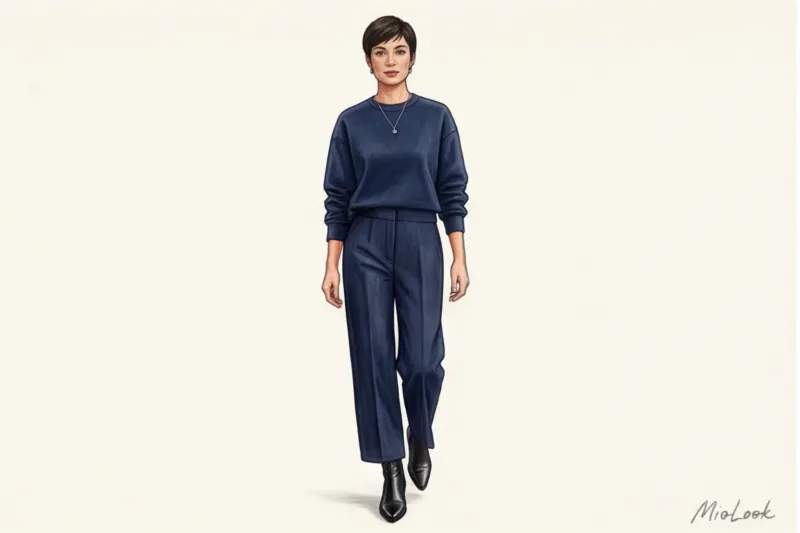
Sweatshirt + wide-leg trousers with creases + loafers
A crease in trousers is a powerful marker of formal style. It acts as a visual anchor. When you pair a loose, deep-colored sweatshirt with heavy wool suit pants, the crease offsets the relaxed fit of the top.
Be sure to use the French tuck technique. Tuck just a small portion of the sweatshirt's elastic into the front waistband of your trousers, slightly to the side. This will define your waist and show that the fullness of your top is a design feature, not your actual build.
Hoodie + midi skirt (pleated or pencil) + thigh-high boots
A play on polar contrasts. The utilitarian nature of the hood is brilliantly balanced by the femininity of the midi length. But the choice of footwear is crucial here. Forget sneakers—they'll instantly relegate the look to the "weekend" category. We're looking for leather tube boots with a wide shaft that extends under the hem of the skirt. This continuous line from the waist to the toe brings the silhouette together.
Ready to get started?
Try the MioLook free plan—no commitments required. A smart AI stylist will help you find the perfect look.
Get access — €0.99 onceThe Devil is in the Details: Shoes and Status Accessories
In archetype theory, the hoodie is considered a "Good Guy"—simple, accessible, and down-to-earth. To elevate it to the level of business casual, we need to add attributes of the "Ruler" archetype. Accessories are these attributes.
Shoes should be decidedly formal. No mesh running shoes. Opt for structured smooth leather loafers, pointed-toe ankle boots, or classic brogues.
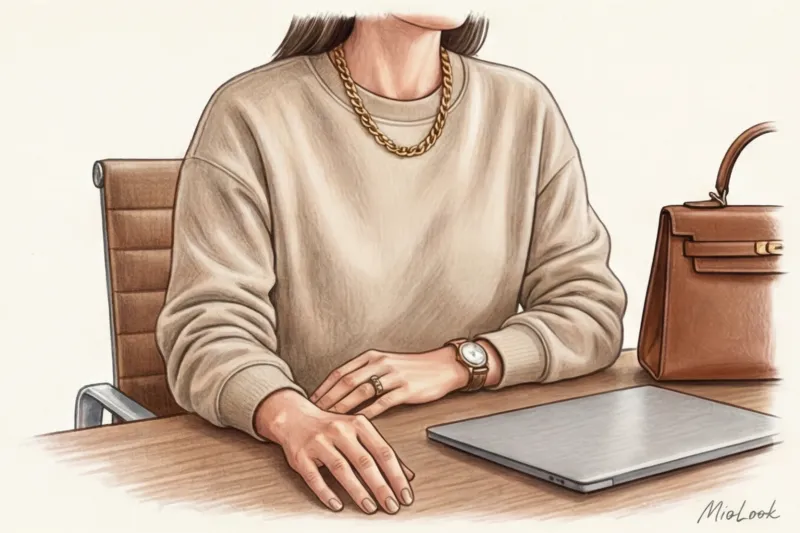
Jewelry is your key to elevating knitwear. The softness of sweatshirt fabric calls for a strong metal. A chunky, geometric chain (gold or rhodium) worn directly over the neck of a sweatshirt works wonders. Add a masculine watch on a metal bracelet, and the formality level skyrockets.
Bags follow the same rule. No soft shoppers, shapeless totes, or nylon backpacks. Only a rigid frame: a tote, satchel, or briefcase made of thick leather that holds its shape even when empty on a table.
Checklist: Will your knitwear pass face control at the office?
Before wearing your favorite sweatshirt to a meeting, run it through this short filter. If there's even one "no," save it for a stroll in the park.
- Absolute purity of the canvas: The absence of any inscriptions, prints, or even micro-logos of the brand on the chest.
- Impeccable condition: There is no pilling on the sides, the color is not washed out at the seams, the elbows are not stretched out.
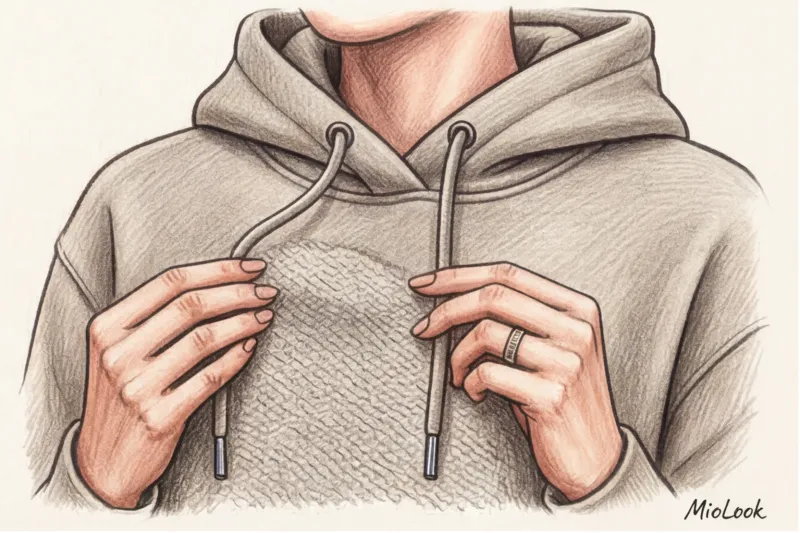
- Fittings: If it's a hoodie with drawstrings, the aglets (tips) should be metal. Plastic sealed ends instantly give away the mass-market look.
- Architecture: The hood is made from a double layer of fabric and holds its shape tightly on the back, rather than hanging like a dull rag.
Conclusion: A new level of business comfort
Wearing a hoodie to the office is no longer a sign of laziness or rebellion against the system. It's a conscious choice for a modern woman who values her body and her time. We no longer have to endure the digging seams of stiff blouses to prove our professionalism.
But comfort doesn't have to be synonymous with sloppiness. Invest in a truly premium sweatshirt in the right, deep shade. Pair it with impeccable pleated trousers and a sturdy bag. And you'll see how your attitude at work meetings changes—when you're incredibly comfortable, yet look your best.