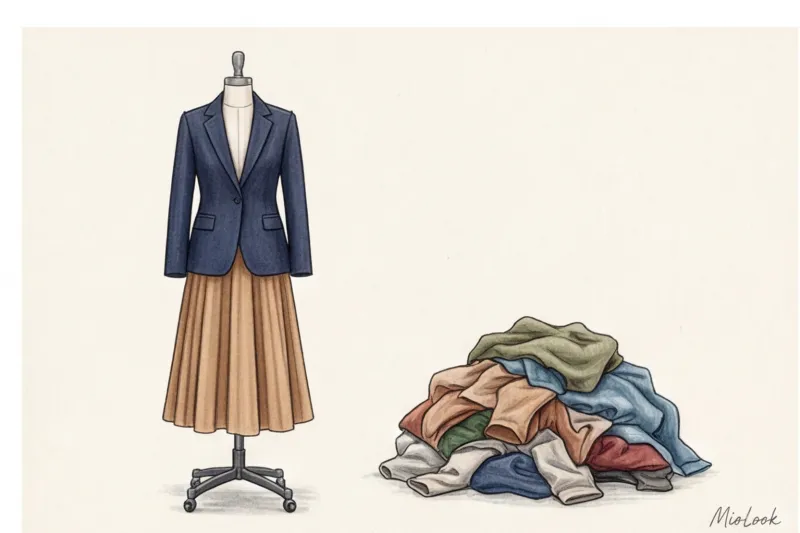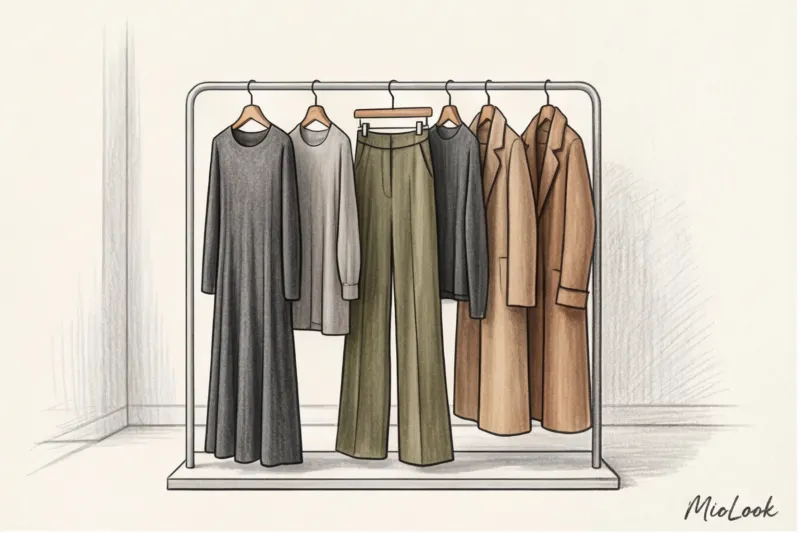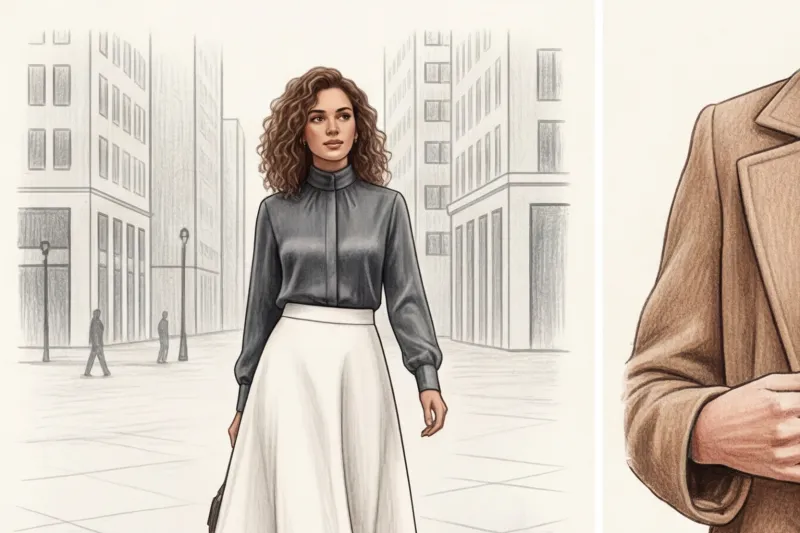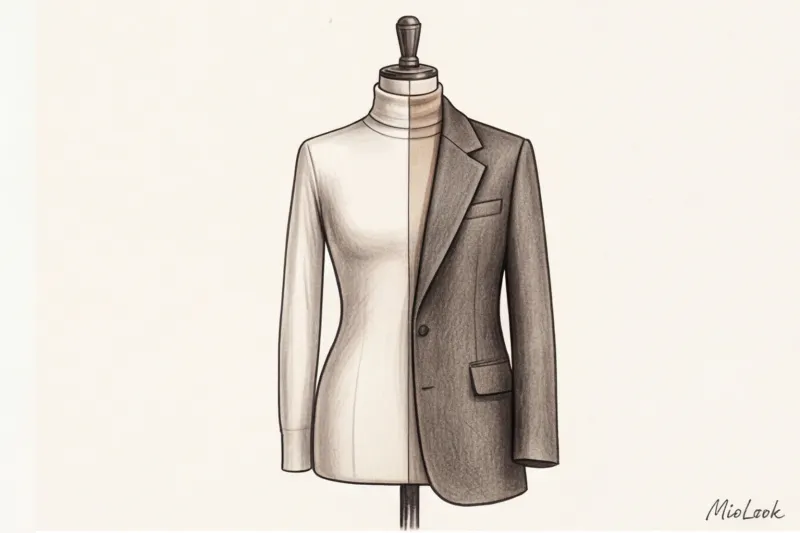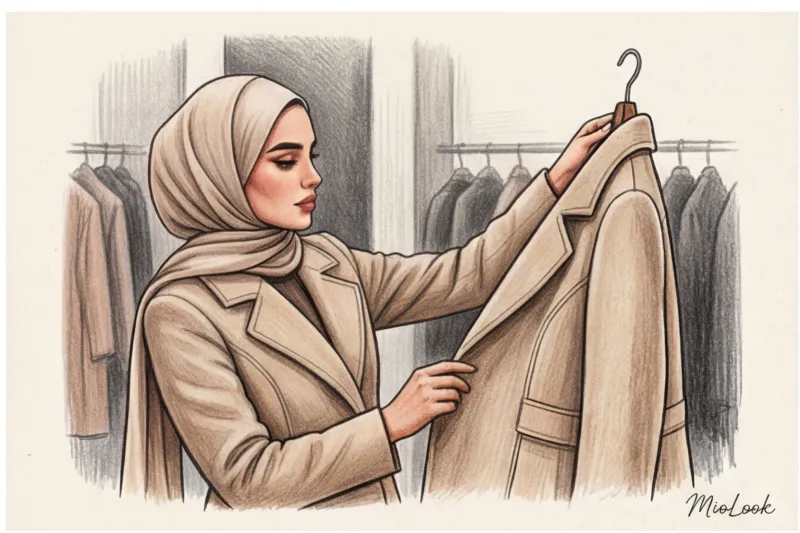
Did you know that about 80% of returns of high-necked clothing from mass-market stores occur for the same annoying reason? In a studio photo, the item looked thick and structured, but in daylight it turned out to be treacherously translucent or revealing anatomical details. Over the years as a stylist, I've learned that putting together a stylish high-necked wardrobe isn't just a shopping spree. It's a true quest for compromise.
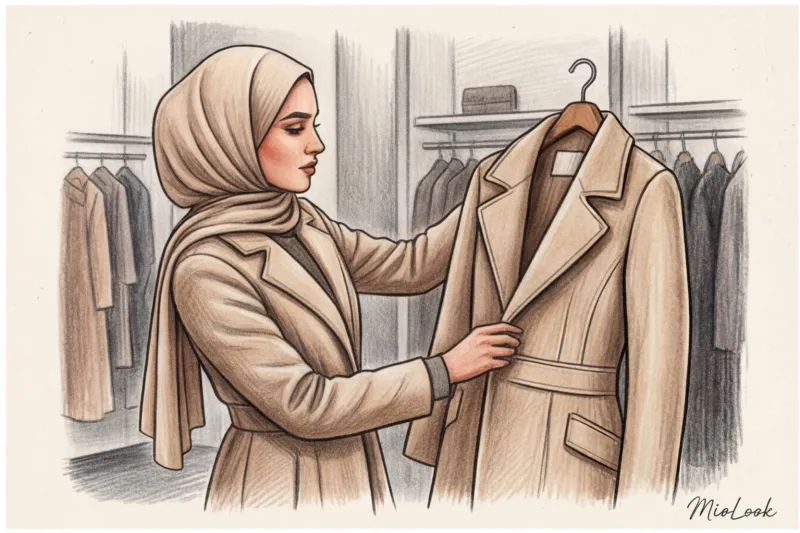
This question becomes especially pressing when you're trying to figure out how to choose clothes to wear with a hijab while still looking modern and classy, without spending an hour and a half getting ready every morning. In this article, we won't discuss religious canons—we'll leave that to the experts. We'll look at a modest wardrobe through the eyes of a stylist: through the prism of "fashion architecture," proportions, and smart technology. We've already covered how digitalization is changing this segment in more detail in our The complete guide to virtual try-ons online for modest fashion , and today we'll look at specific algorithms for combining items without grueling trips to the mall.
Modest Fashion and Tech: Why Is Finding the Right Essentials So Hard?
The fashion industry is obsessed with micro-trends these days. The drop-waist of the 2000s, crop tops, total transparency, and slits—all of these look great on the runway, but they make searching for a basic turtleneck akin to an archaeological dig. Women choosing modest fashion are forced to double-filter trends: the item must not only be current but also meet strict criteria (sleeve length, closed neckline, complete opacity).
Traditional online shopping often fails here. You order a midi dress online, but the photo doesn't convey how it will sit over a layered outfit or how its collar will clash with the volume of the scarf.
According to the State of the Global Islamic Economy Report (2023), the modest fashion market is experiencing double-digit growth annually, yet the mass market still woefully underperforms to meet consumer needs. And a McKinsey study (2024) confirms that professional women over 30 experience the greatest shortage in the segment of covered, yet structured, office wear.
I've encountered this myself more than once when putting together capsule collections for clients. Ordering ten shirts in the hopes that at least one will be the right thickness is a colossal waste of time and stress.
How to choose clothes for a hijab: the basic architecture of the silhouette
The secret to luxurious, high-necked looks lies in one term: architectural tailoring. Take a look at the collections of brands like COS or Massimo Dutti in the €100–€250 price range. They don't simply drape fabric around the body; they shape it. When a look avoids décolletage and exposed skin, it's the shoulder line that establishes the entire silhouette's status.
The key here is volume balance. I always tell my clients: use the "one loose element" formula. If you're wearing wide, flowing palazzo pants, the top should be moderately loose, but definitely structured (for example, a jacket with a defined shoulder line). Two overly voluminous elements will make you look like a monument.
Proportions and Layering: How to Avoid the "Cabbage" Effect
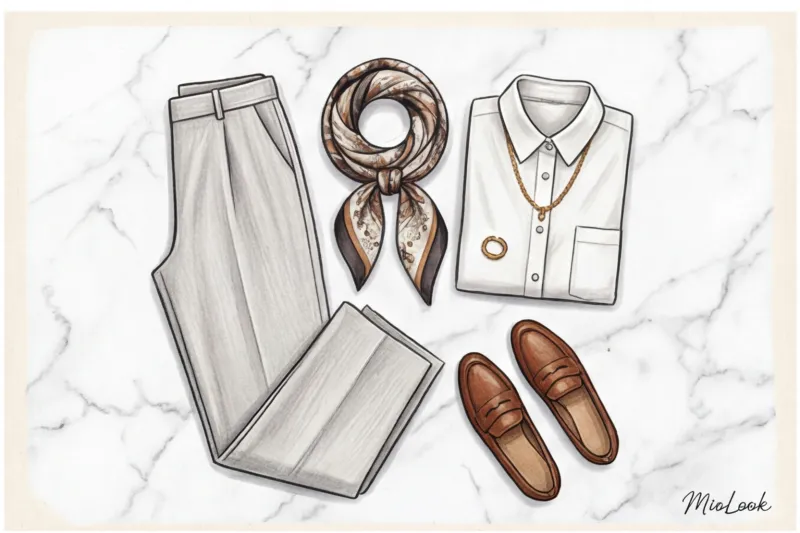
Layering is the salvation of modest fashion, allowing you to adapt summer trends to a more modest wardrobe. But the line between a stylish look and a "cabbage" effect is very fine. The main principle of clothing construction is that there should always be "air" between layers to maintain the fabric's geometry.
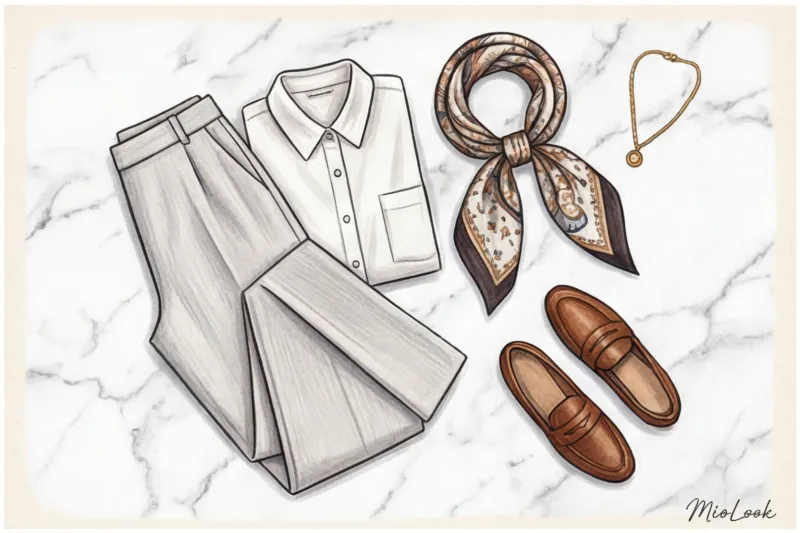
Distribute the density wisely. The bottom layer should always be thinner and more elastic than the top layer, otherwise bulges and creases are inevitable. A thin 100% merino turtleneck under a heavy cotton shirt is a yes. A shirt under a thin knit vest is a definite no. It's also crucial to consider the volume of the hijab in the portrait area: avoid complex jabot collars or massive coat lapels if you wear a headscarf untucked. They will clash.
Fabrics and textures: what instantly gives away a cheap item?
Nothing cheapens a modest look like the wrong texture. The main enemy of a modest wardrobe is thin viscose knitwear (the same one used to make 90% of turtlenecks in basic mass-market clothing). It treacherously highlights underwear, the slightest folds of the body, and anatomical details, destroying the very idea of modest fashion.
Opt for shape-supporting materials: heavy cotton (from 180 g/m²), wool blends, tweed, or heavy silk. Always hold the garment up to the light. If you're buying online, always enlarge the photo and check the composition: more than 5% elastane in a thin fabric is a warning sign that the garment will be too tight.
Access to MioLook for €0.99 — one-time payment
A smart AI stylist will select the perfect look based on your preferences and proportions.
Get access — €0.99 onceTrying on Muslim looks from photos: How an AI stylist is changing the rules of the game
For a long time, the main problem with online shopping was the inability to assess the actual fit. But now technology has advanced to the point where trying on Muslim outfits from photos has become more than just a toy, but a fully-fledged stylist's toolkit. You upload a photo of yourself in basic, low-profile clothing, and a neural network recognizes your proportions and overlays new items based on their physical properties.
Algorithms MioLook For example, they can mathematically accurately estimate how a specific style (say, an A-line dress) will flatter your figure. My personal test: I ran 20 basic shirts and jackets through the app to understand how the AI calculates the volume of a hijab in the portrait area. The result was astonishing—the system correctly displays any collar/headscarf conflicts even before you hit the "pay" button.
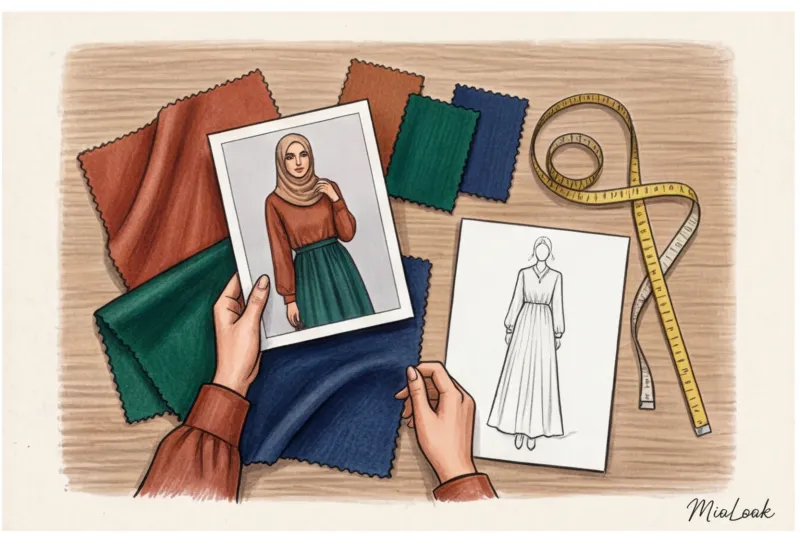
Just last week, one of my clients saved €350 on a seemingly gorgeous coat. We visualized it with her everyday hijab color on the app and realized that the complex mustard shade of the coat made her complexion look off when paired with her usual nude headscarf.
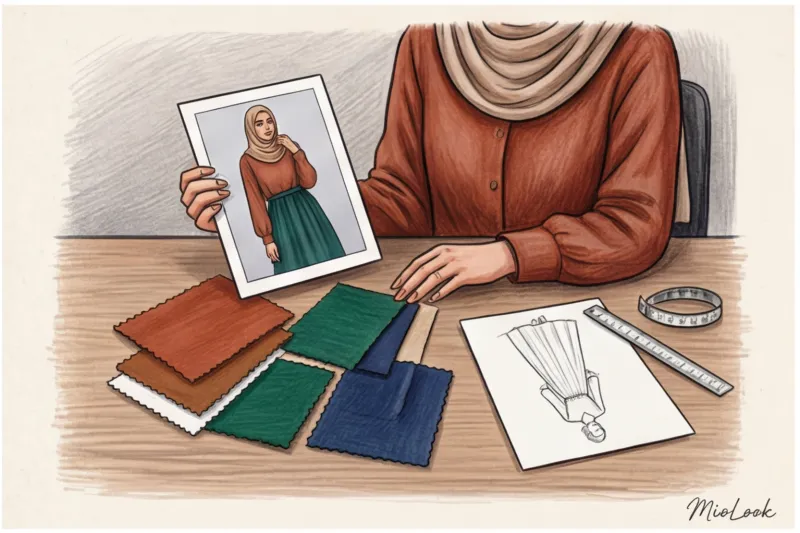
Solving the V-neck and sleeve length problem
Virtual try-ons offer a brilliant solution to the problem of adapting everyday trends to modest fashion. Like a slip dress or a V-neck sundress from Zara's new collection? Just wear it in the app over your favorite basic turtleneck.
To be honest, the technology has its limitations. Algorithms still struggle to calculate light refraction on very complex drapes made of fine chiffon (physical testing is still needed for such items). But for visualizing multi-layered sets of dense fabrics (layering), it's a complete game-changer.
The Oversized Myth: Why Shapeless Clothes Ruin a Modest Look
It's time to dispel one of the most pernicious myths in modest fashion. Many sincerely believe that "for clothes to be truly modest and not emphasize the figure, they must be three sizes too big." This is a fatal mistake.
Oversized hoodies, shoulder seams dropped to the elbows, and baggy dresses don't conceal the figure. They make it look bulky, visually adding 10 kilograms and detracting from the elegance of the look. Shapeless, baggy clothes often look downright sloppy, especially in professional settings.
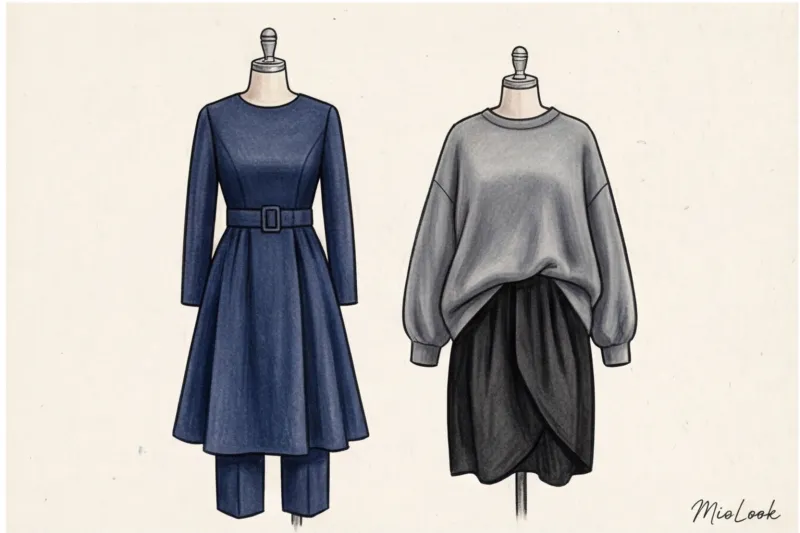
True, closed-toe fashion is built on a perfect fit. A properly oversized garment is one that sits loosely but has clear, defined lines. The armholes should be in place, the sleeves should fall precisely to the wrist (not dangling at the fingers), and the darts should guide the fabric, creating a relaxed fit rather than a baggy look. It's tailoring (the art of tailoring) that distinguishes a high-status garment from a cheap one.
Your perfect look starts here
Join thousands of users who look flawless every day with MioLook. Digitize your wardrobe today.
Get access — €0.99 onceHijab and Corporate Dress Code: The Experience of Successful Women
Integrating the hijab into the strict boundaries of business formal and business casual is a distinct art form. I recall a telling case of a lawyer client of mine. Before working with us, she would spend four hours in a shopping mall, desperately searching for an opaque white blouse to match her strict dress code. Once we switched to digital fittings and fabric density analysis using catalogs, her preparation time dropped to 15 minutes a day.
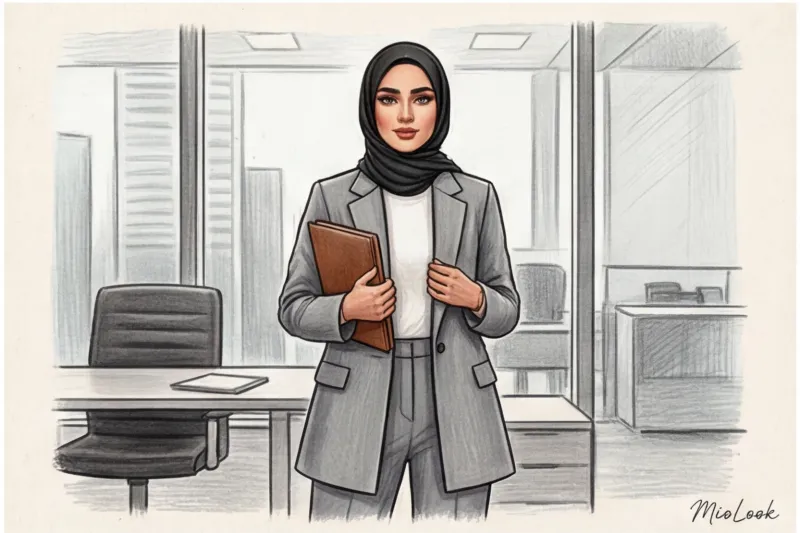
The foundation of a professional, closed wardrobe is three-piece trouser suits (a vest solves the problem of see-through shirts), long double-breasted blazers, and midi-length skirts (between midi and maxi) made of heavy suiting wool. In a business environment, a monochrome color palette works well—pants, top, and scarf all in the same shade (for example, deep navy blue or graphite). This visually elongates the silhouette, eliminating any horizontal lines that could distort the proportions.
Checklist: Assembling a Functional Capsule via the App
Theory is great, but let's get practical. Here's how to test your future look in 15 minutes, ensuring every item you buy is 100% functional and doesn't just sit there like dead weight in your closet with its tags on.
- Take the right photo. Take a photo in a fitted or semi-fitted basic outfit (a turtleneck and leggings/jeans) in good daylight. It's important to stand up straight so the AI can accurately calculate your proportions.
- Upload the database to the AI fitting room. Start testing from the bottom. Try on wide-leg palazzo pants or maxi skirts. See how the length pairs with your usual footwear.
- Build the architecture of the top. Add a longer jacket or a structured shirt. Pay close attention to the balance of volumes—has the silhouette become too boxy?
- Sync with hijab. Layer on top the shades of the scarves you wear most often. You'll be surprised how often a warm beige trench coat clashes with the cool ash-pink silk of a scarf.
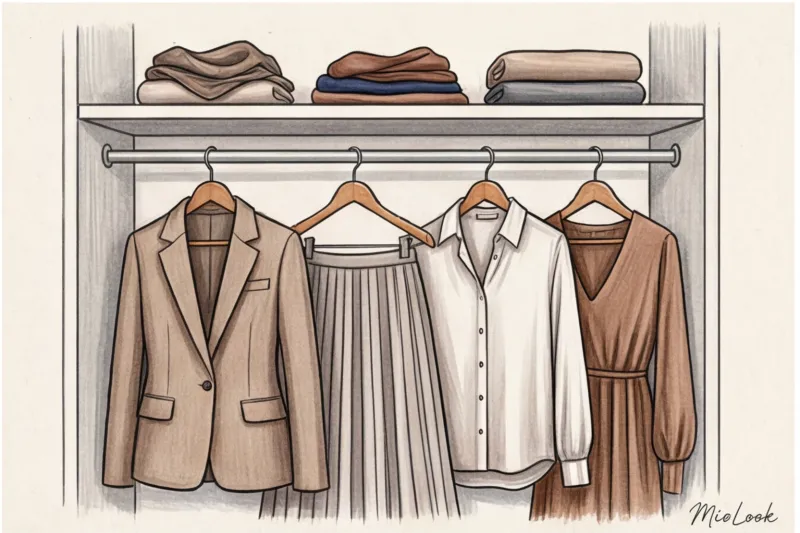
Ultimately, elegance isn't about the amount of money spent, but the precision of the decisions made. Using smart technologies like virtual try-ons allows you to transform modest fashion from intuitive experiments into a precise, calculated system. Stop buying things at random—leave the routine to algorithms, and reserve for yourself the pleasure of being beautiful and confident every day.