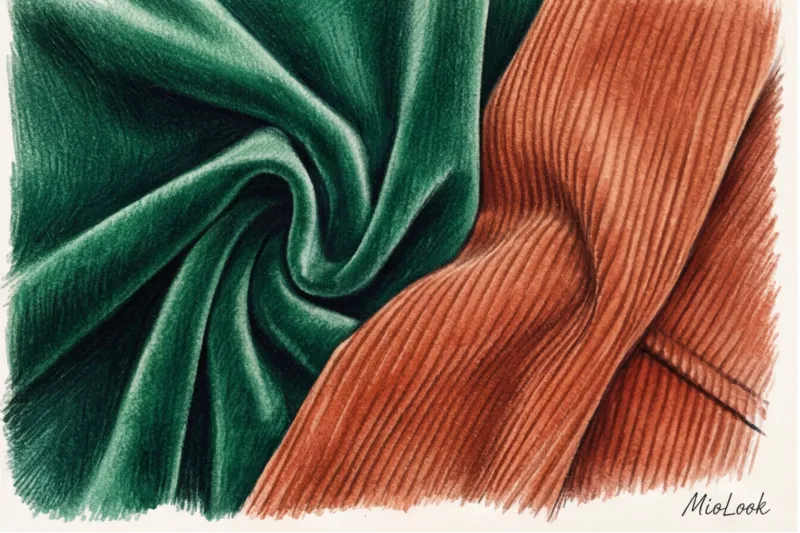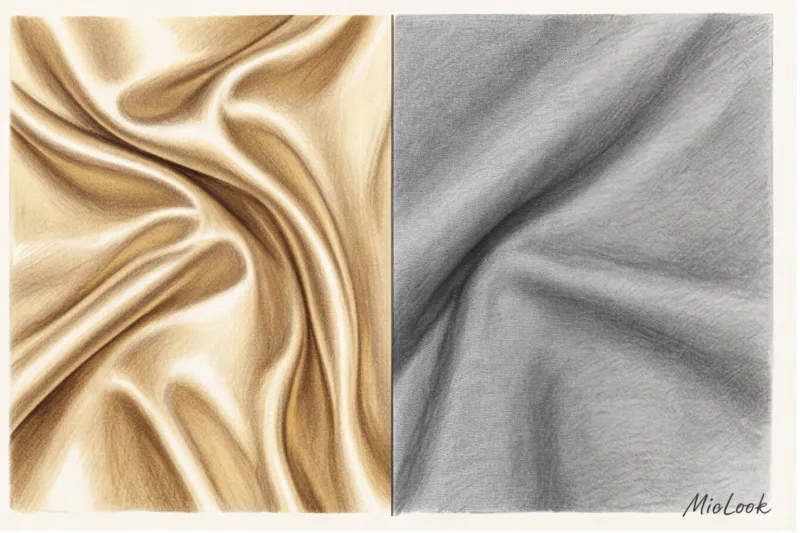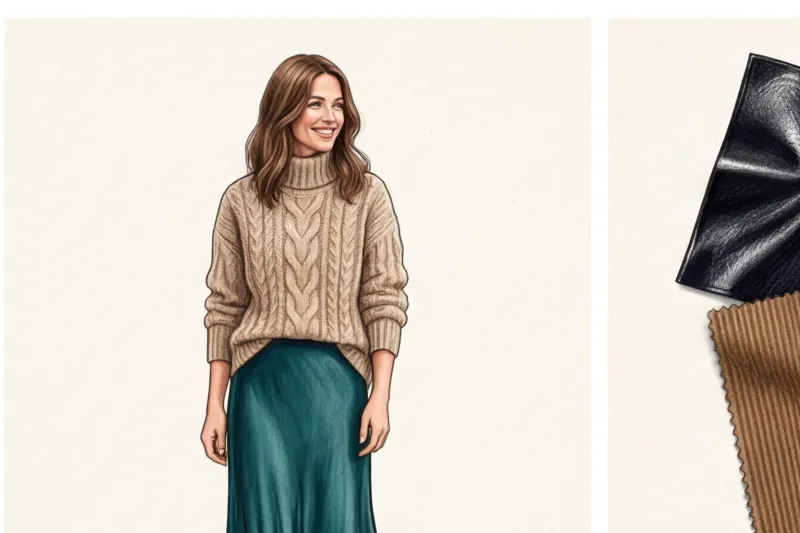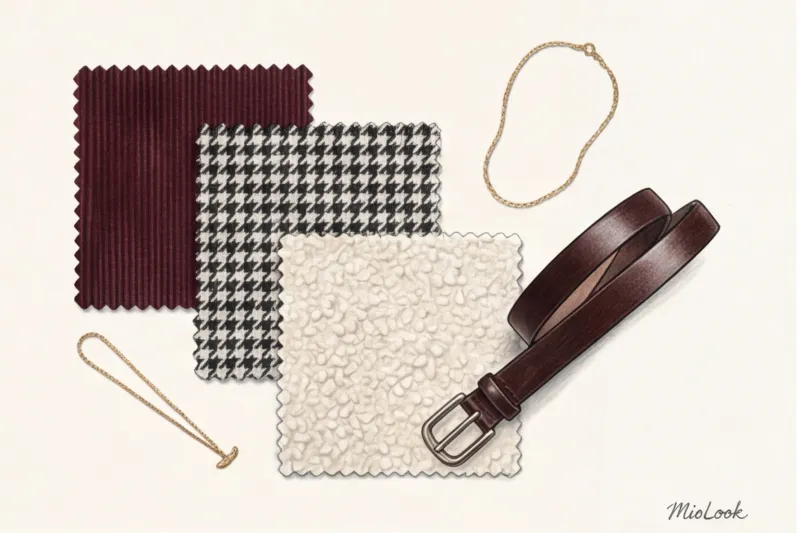
"I have a closet full of expensive cashmere sweaters and excellent wool trousers, but in the mirror I just see a gray spot." This was the phrase that began my acquaintance with Anna, a top manager at an IT company. Her winter wardrobe was impeccable in quality, but completely dull in appearance. Why? Because it completely lacked a play of textures.
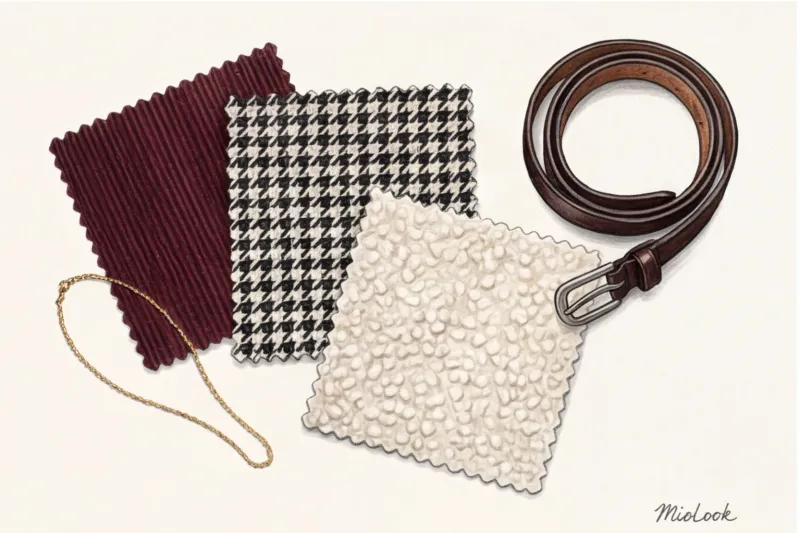
We talked about visual dynamics in more detail in our A complete guide to combining prints in clothing: the rules of a stylish capsule collection But today I want to talk about the physics of fabrics. Smooth knits and basic suiting wool are a great foundation. But it's textured, complex materials like corduroy, tweed, and bouclé that transform an outfit into a stylish statement.
Why the autumn-winter capsule dies without textures
In 14 years of working as a stylist and colorist, I've discovered one ironclad rule: color behaves completely differently depending on the surface it's applied to. In summer, we wear smooth, light-reflecting fabrics—silk, viscose, satin. They add vibrant color to the shades. In fall and winter, we need a different "visual weight."
Matte, fleecy, and loose materials absorb light. This is why winter black in bouclé looks deep, luxurious, and enveloping, while smooth black viscose in November feels cold and flat.
"We added just two pieces to Anna's wardrobe: an emerald corduroy jacket and a cream-colored, thick tweed skirt. The wardrobe instantly came alive, even though we didn't even change its basic color palette."
How to Wear Corduroy: From a Professor's Office to a Modern Basement
For a long time, corduroy was associated exclusively with 1970s university professors or children's overalls. Today, it's an intellectual staple. According to the WGSN Institute's 2024 report, tactile materials are experiencing a huge boom as people tire of the digital smoothness of screens.
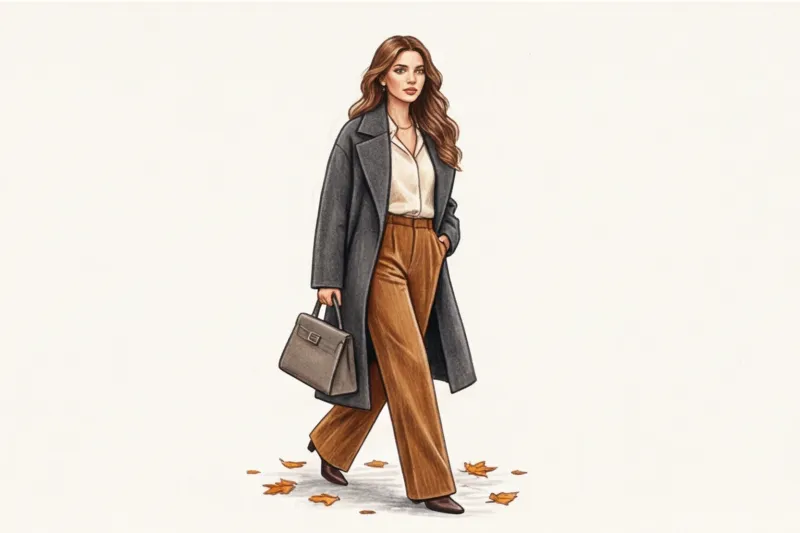
The main rule: corduroy absolutely requires contrast. If you think, What to wear with corduroy To avoid looking heavy, remember this formula: a textured matte bottom always calls for a smooth or fluffy top. Pair corduroy trousers with a silk blouse, fine cashmere, or a fluffy mohair sweater.
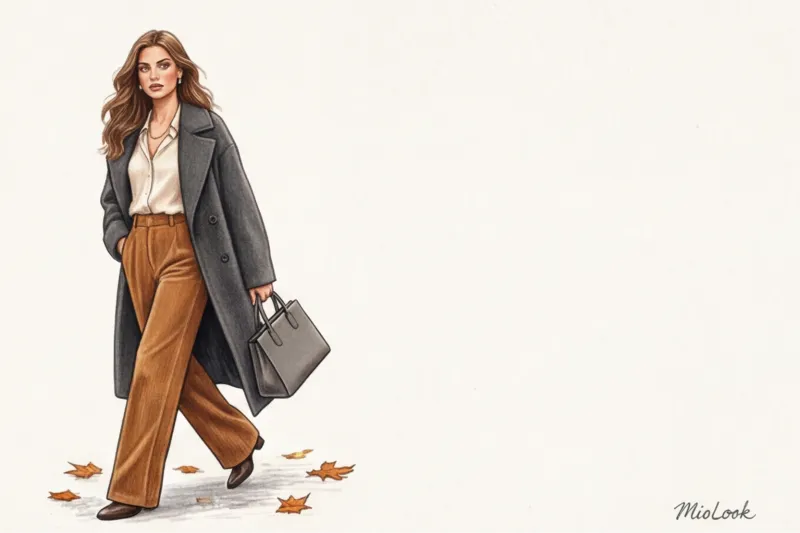
Color also matters. Black corduroy often looks washed-out and collects dust. But deep, complex shades—burgundy, chocolate, pine—look incredibly expensive. Pants in these colors can be found in the €60–€120 range, and they'll give any boring classic a run for its money.
Scar anatomy: how to avoid adding visual pounds
There's a pernicious myth: textured fabrics make you look fat. This isn't true. Dense materials act like a corset—they cinch the figure, while thin, smooth knits treacherously accentuate every fold. But there's a technical nuance to corduroy—the width of the rib.
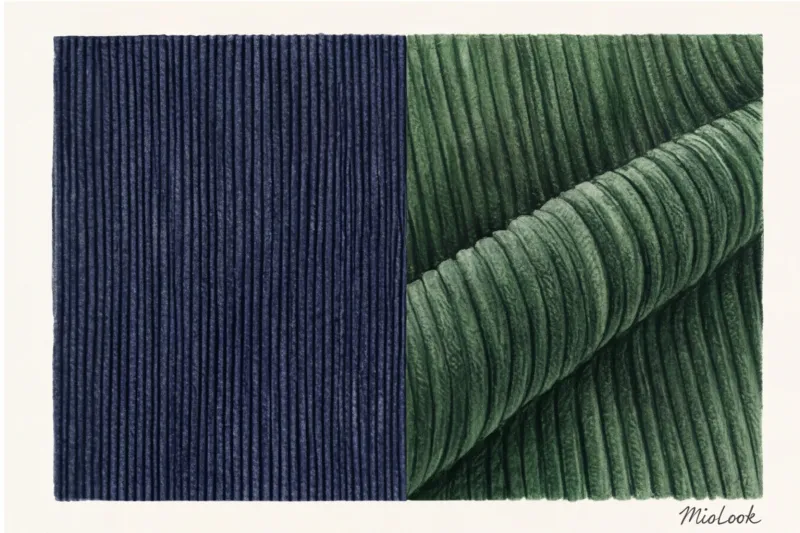
- Micro corduroy (pinwale): From 14 to 21 ribs per inch. Ideal for fitted shirts, pencil skirts, and petite models.
- Large scar (wide wale): 3-5 ribs per inch. Looks ultra-fashionable, but has strict restrictions.
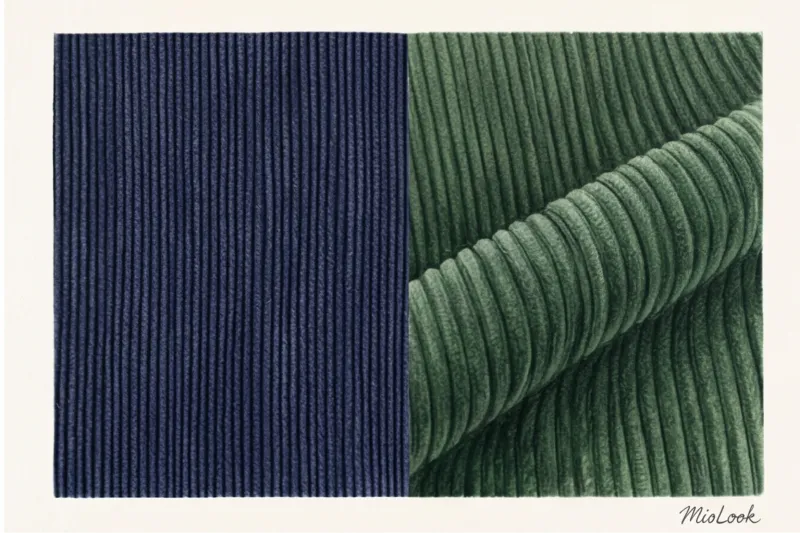
A practical example: a client with pronounced hips (a pear-shaped figure) bought a pair of skinny trousers with a large ribbed weave. The transverse tension of the fabric widened the ribbed weave on her hips, visually adding two sizes to her figure. How did we fix this? We changed the fit. Palazzo trousers with a crease in the same large corduroy, on the other hand, elongated her silhouette with their distinct vertical lines cascading straight from the hip.
Access to MioLook for €0.99 — one-time payment
A smart AI stylist will select the perfect look using textured items from your wardrobe.
Get access — €0.99 onceTweed: How to Wear the "Status" Fabric Without Looking Older
Tweed is a material with a colossal historical legacy. And therein lies its main danger. The "grown-up aunt" syndrome sets in the moment you pair a classic tweed jacket with a pencil skirt, pumps, and (heaven forbid) a strand of pearls.
To make tweed work for you, not against you, its pomposity needs to be ruthlessly tempered. This is my favorite stylistic technique.
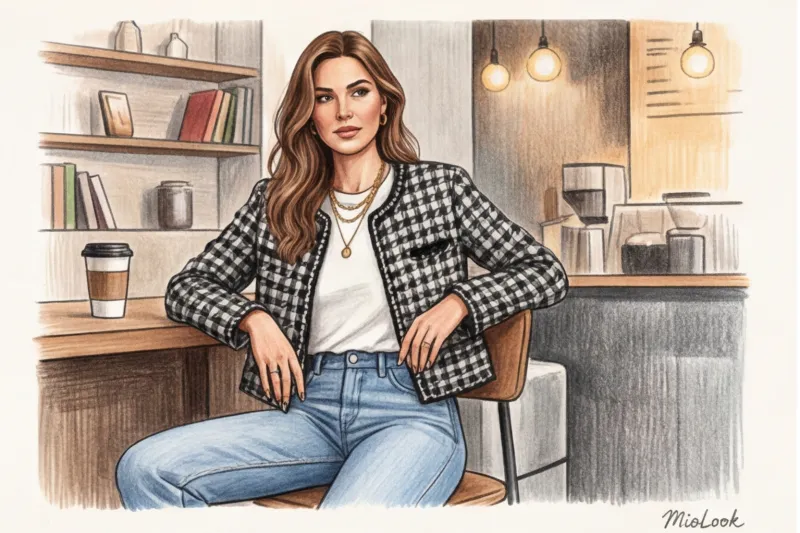
The formula for rejuvenating tweed is simple: pair it with overtly edgy or ultra-casual pieces. A basic white T-shirt made of heavy cotton (at least 180 g/m²), straight-leg blue jeans with a raw hem, and chunky Chelsea boots with a tractor sole. Throw a tweed jacket over it, and you'll get a look reminiscent of Parisian chic, not the attire of a retired diplomat's wife.
Bouclé: the cozy architecture of your look
Bouclé is often confused with tweed, but they are different. Bouclé (from the French boucler, meaning to curl) is created from knotted threads, giving it a characteristic loose, astrakhan-like texture. Thanks to the principles of architectural cutting taught at design schools like Parsons, we know that a loose texture is best suited to creating soft, streamlined silhouettes.
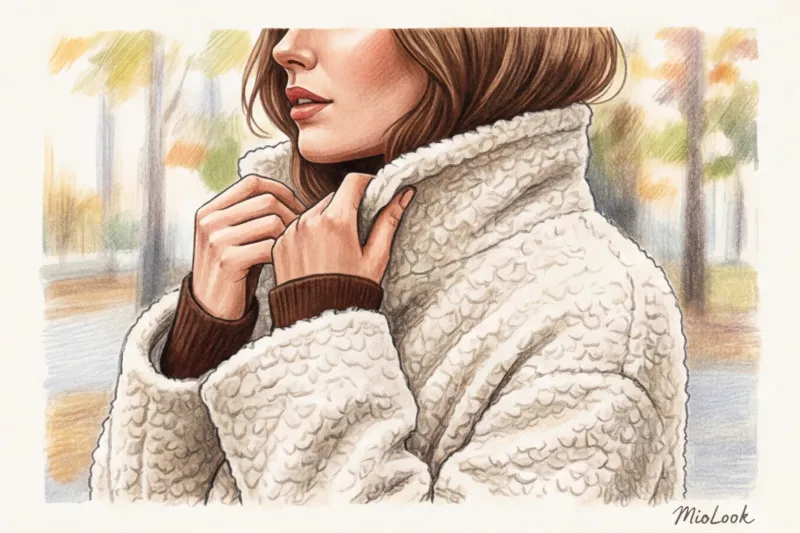
Bouclé is ideal for women with soft, flowing curves. A bouclé cocoon coat will fit you perfectly, unlike a stiff, double-breasted drape coat that will feel stiff.
But there's a catch: due to its knotted structure, bouclé is prone to severe pilling when rubbed. Therefore, when choosing a jacket or coat in the store (especially in the €80-€150 range), look for a blend that contains at least 60-70% wool and around 30% synthetics (polyester or acrylic). Synthetics aren't the enemy here, but the reinforcement—it will prevent the loose fabric from stretching at the elbows.
The Three Textures Rule: How to Avoid the "Cabbage" Effect
When my clients start incorporating textures, the pendulum sometimes swings the other way, and the look ends up overloaded. Remember: pairing chunky corduroy with thick tweed in the same outfit is a bad idea. They start to clash for attention, creating excessive visual weight.
Use the "Smooth + Fluffy + Textured" rule.
- Unsuccessful: Tweed skirt + chunky knit sweater + suede boots. (Too heavy, makes you look boxy.)
- Successful: Smooth leather skirt (Smooth) + mohair sweater (Fluffy) + tweed jacket (Embossed).
Don't forget that hardware also adds texture. If your jacket has prominent metal buttons, avoid chunky chains around your neck. To avoid having to remember all these formulas, you can use the "smart wardrobe" feature in MioLook , which will help you create harmonious combinations from your own items.
Your perfect look starts here
Join thousands of users who look flawless every day with MioLook.
Get access — €0.99 onceStylist's checklist: choosing high-quality textures in the store
I never buy a garment for a client without giving it a thorough test drive in the fitting room. Textured fabrics are tricky, and here's what to check before you go to the checkout:
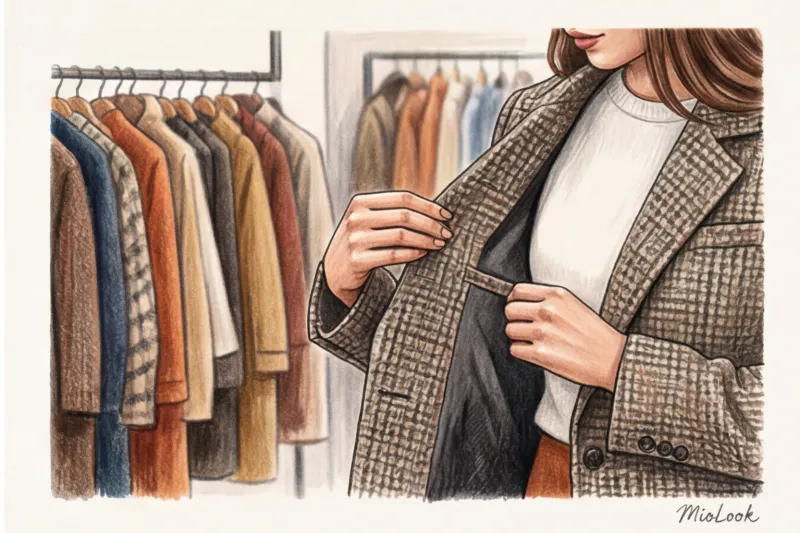
- Shedding test for tweed and bouclé. Put the jacket on over a black or dark cotton top, move around vigorously for a couple of minutes, and then remove the jacket. If the top is covered in lint, leave it at the store. It will ruin everything underneath.
- Checking the direction of the velvet pile. Run your hand down the pant leg, then up. The nap should lie smoothly in one direction. Sometimes, with cheap tailoring, the pieces are cut in different directions, causing one leg to appear darker than the other.
- Having the right lining. A jacket made of textured fabric (especially bouclé) without a slip-on lining (viscose or cupro) is a style crime. It will catch on shirts, ride up when you walk, and distort your silhouette.
- Knee test. Rub the corduroy lightly but firmly between your fingers in an inconspicuous area (for example, on the inseam). If the lint is easily compressed and doesn't bounce back, bald "mirrors" will appear on the knees of these trousers within a month.
Textured fabrics are the secret ingredient that takes a wardrobe from "normal" to "expensive and sophisticated." Don't be afraid to experiment with ribs, knots, and weaves. Start small—swap your usual cotton or wool pants for a pair of the right micro-corduroy, add some smooth silk, and you'll be surprised how much your everyday look changes.