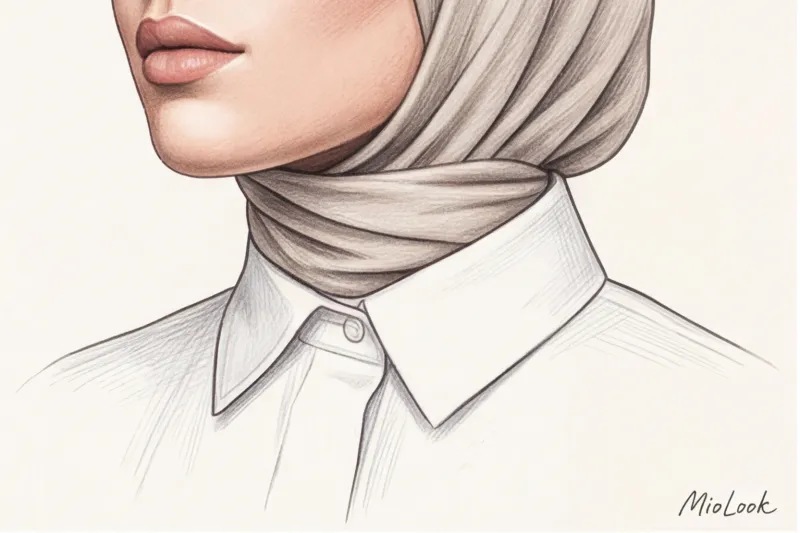
I had a client who irreparably ruined a €450 vintage Dior silk scarf in just one evening. And no, she didn't spill red wine on it. She simply applied a generous amount of heavy foundation and powdered it "like they taught me on YouTube." By the end of the dinner, the edge of the scarf that touched her chin was a dirty beige mess. That's when I realized that standard glossy magazine advice about makeup longevity is catastrophically ineffective when it comes to friction.
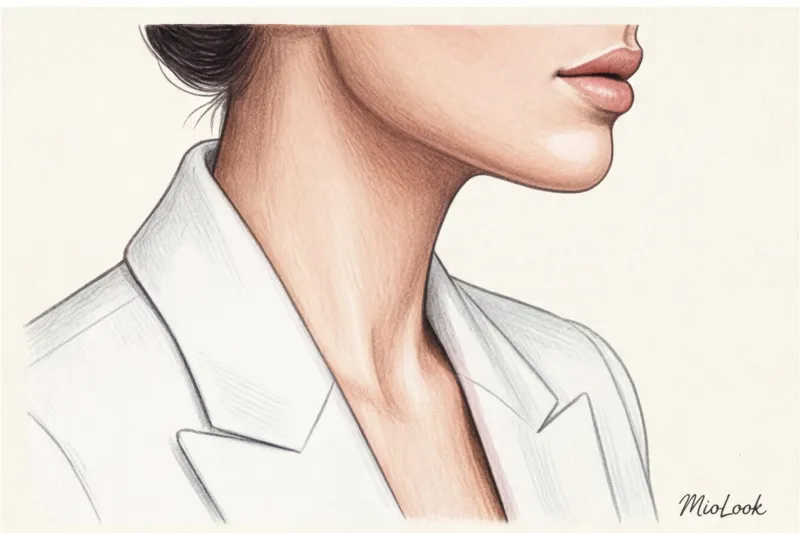
I regularly receive requests about How to set makeup so it doesn't smudge Light collars, turtlenecks, or hijabs. Most women are looking for the "magic" concrete powder. But the secret to a clean wardrobe lies not in the amount of talc on the face, but in the correct architecture of the polymer layers. This problem is especially acute in modest fashion, where clothing covers the neck and hair. We discussed the architecture of such looks in more detail in our The complete guide to hijab makeup.
Why Makeup Transfers to Clothes: The Physics of Friction
Eye-tracking studies adapted for the fashion industry by the Nielsen Norman Group (2023) clearly demonstrate that when a woman wears a full-length garment or a hijab, 100% of the interviewer's visual attention is focused on her face and neck. Makeup becomes the single most important accessory. Any smudged makeup or dirty stain on the collar instantly ruins the image's status.
Why does pigment migrate so easily onto fabric? It's a combination of three factors: sebum (sebum), mechanical friction, and temperature. Under tight clothing or a scarf, the skin temperature on the jawline and neck is 1–1.5 degrees Celsius higher than normal. This localized "greenhouse effect" softens waxy and creamy foundation bases, making them vulnerable to the slightest touch.
The difference between sweat resistance and friction resistance
The biggest misconception is to buy foundation with a label waterproof (waterproof) and hope it doesn't stain a white shirt. Water resistance simply means the product isn't water-soluble. But it does withstand mechanical shearing very well.
Even ultra-mattifying foundations will stain turtlenecks if their finish isn't sealed. A matte foundation clings to the skin, but its top microlayer remains a dry pigment that, when rubbed against fabric, acts like chalk on a blackboard—it simply crumbles and embeds itself in the fibers.
Your perfect look starts here
Join thousands of users who look flawless every day with MioLook. A smart assistant for your wardrobe.
Get access — €0.99 onceHow to set makeup without staining clothes: layering
Having a background in painting, I always perceive the face as a canvas. In art, there's the concept of "adhesion"—the bond between layers of paint and the surface. You can't simply apply oil paint to bare fabric and expect it to hold together. You need a primer, drying layers, and a final varnish. The same laws of physics and chemistry apply to makeup.
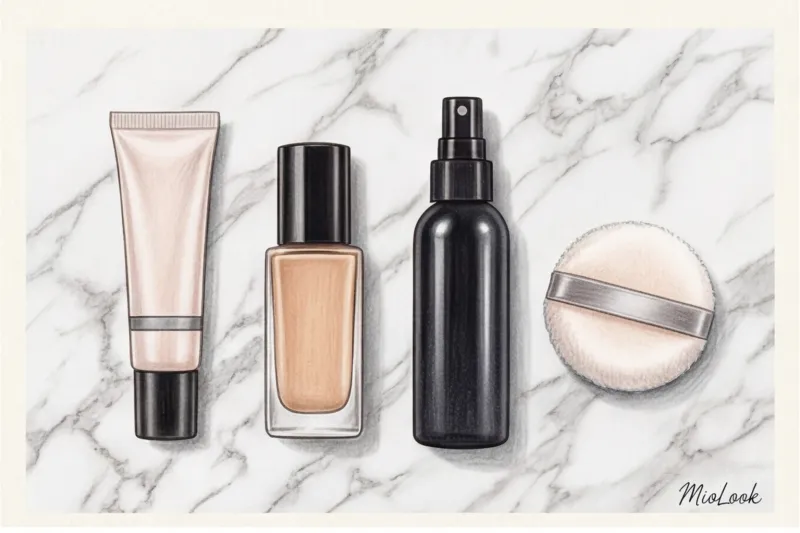
The biggest mistake is trying to set your makeup with one heavy layer of powder at the very end. This creates a heavy mask that cracks when you make facial expressions. A rule of thumb for professional makeup artists is: three thin layers are always more reliable than one thick one. Every creamy texture should be set with a powder or a setting spray.
Sandwich Technique: The Secret to Reinforced Concrete Durability
This technique allows the pigment to be "fused" into the skin rather than simply applied on top. It takes a little longer, but the results will exceed all expectations.
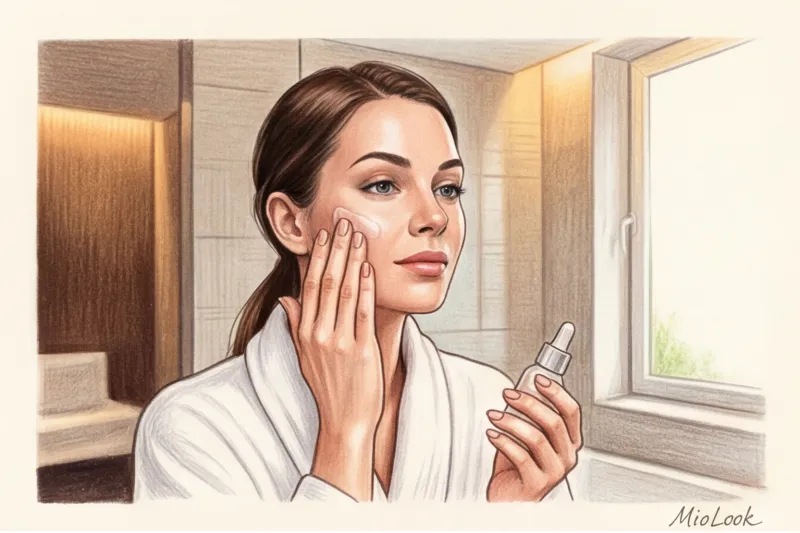
- Step 1: After applying the treatment (and allowing it to fully absorb!), apply primer and lightly spray with setting spray. Let it dry.
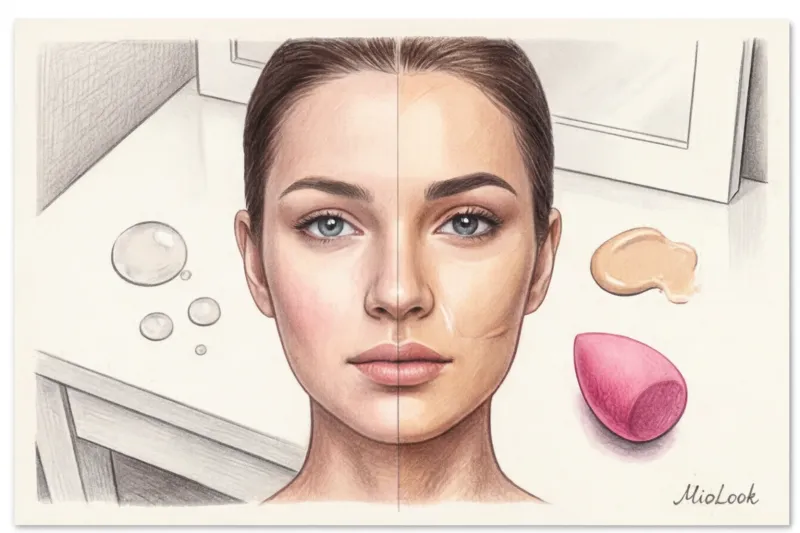
- Step 2: Apply foundation and concealer. Secret: Spray a damp sponge with setting spray and pat it into your face. This literally imprints the polymers into the foundation.
- Step 3: Apply ultra-fine powder and finish your look with a final generous mist of setting spray.
Setting Sprays: Look for Polymers, Not Just Water
In my experience, eight out of ten women make a fatal mistake: they try to set their makeup with thermal water or a moisturizing mist. This is disastrous for longevity. Water with glycerin only softens the makeup and accelerates its transfer to clothing.
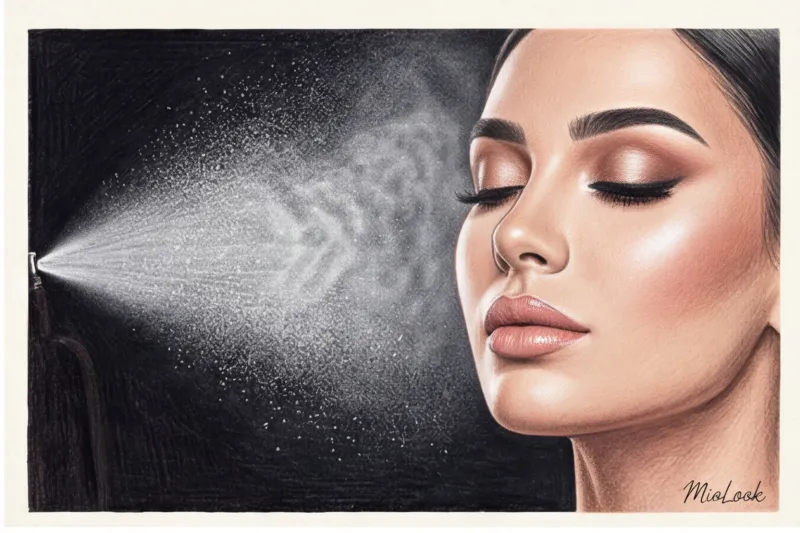
You need to learn to distinguish between two types of products:
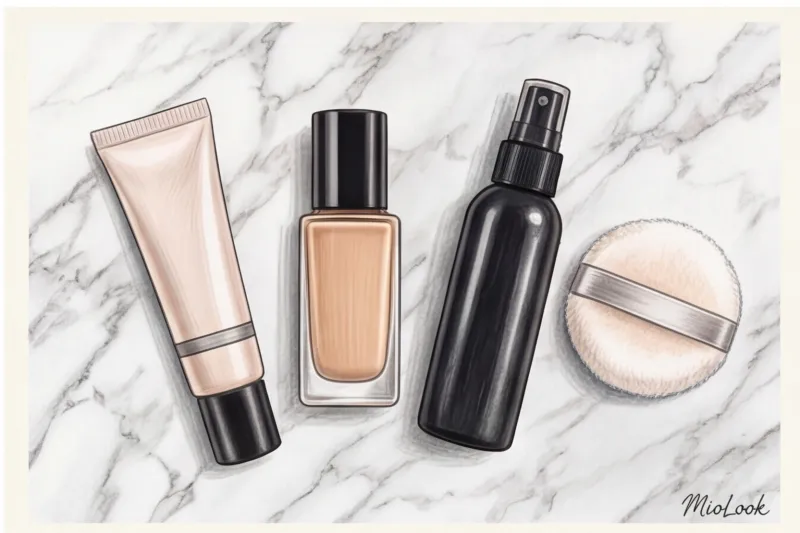
- Setting Spray: It removes powder, blends layers of makeup together, and often contains moisturizing ingredients. It makes skin beautiful, but it can be difficult to remove from friction. does not protect.
- Fixing Spray: Contains polymers (film-forming agents), which create that invisible shield.
“When choosing an anti-friction spray, look for it at the top of the ingredients list PVP (polyvinylpyrrolidone), AMP-Acrylates Copolymer or PVP/VA Copolymer These are the very polymers that form an elastic film that is resistant to mechanical shear."
Many people are wary of the alcohol found in fixatives (Alcohol Denat). Yes, it can dry out the skin with daily use. But it's the alcohol that allows the polymers to evaporate quickly and set as a film without disturbing makeup. For special occasions, such as wearing a white collar or a light-colored hijab, a spray containing alcohol and polymers is your best ally.
Important limitation: This polymer armor will NOT work if you use a purely oil-based foundation. A water- or alcohol-based polymer spray will simply roll off, like water from a greasy frying pan. The foundation and setting spray must match the base.
Access to MioLook for €0.99 — one-time payment
A smart AI stylist will select the perfect look based on your individual characteristics and wardrobe.
Get access — €0.99 onceAnti-Friction Powders: Setting vs. Finishing
Did you know that powders come in two completely different classes, based on their chemical composition and functionality? Using the wrong powder on your jawline is a surefire way to stain your clothes.
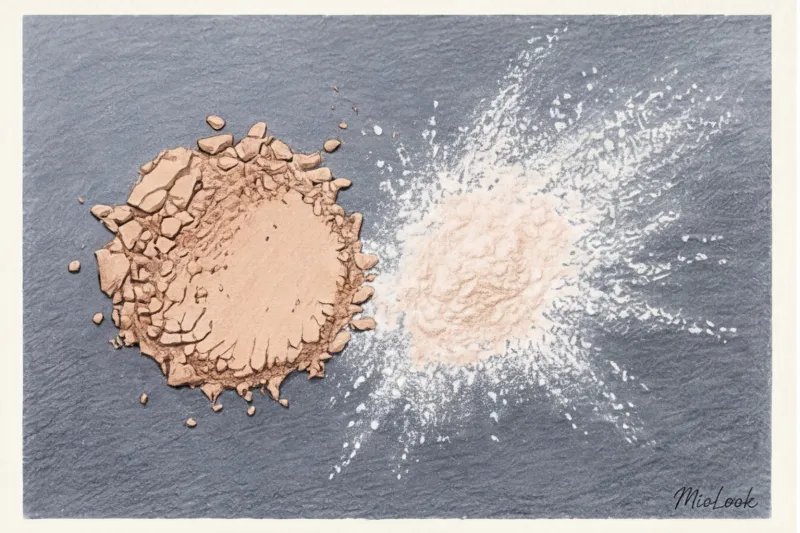
Setting powder Most often, it's talc-based. Its purpose is to absorb sebum and mattify. When rubbed against silk or cotton, talc easily transfers to the fabric along with the foundation pigment.
Finishing powder Silica-based finishing powder is milled 3-5 times finer than regular powders. Silica doesn't so much mattify as it creates a microscopic, perfectly smooth barrier. Fabric literally glides over it without catching makeup. A good finishing powder in the mid-price range will cost €30-€50, but it will save thousands of euros worth of clothes.
Baking error when in contact with fabric
This brings us to the main myth I want to dispel. Many beauty bloggers recommend the "baking" technique (applying a thick layer of loose powder for 5-10 minutes) for areas that rub against clothing. I strongly advise against this method for the neck and jaw.
Why? A thick layer of talc overdries the skin, making it rough. It begins to act like fine sandpaper. The collar, constantly moving across this rough surface, creates micro-friction and literally scrapes all your powder and foundation right onto the collar. To prevent friction, the surface should be smooth, not squeaky dry.
Specific areas: chin, jaw, and neck
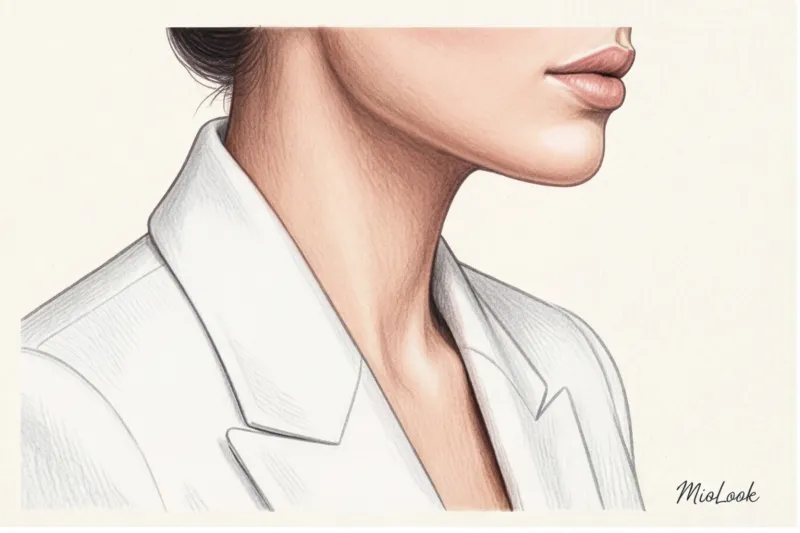
In modest fashion, the jawline is known as the "death zone" for makeup. It's where the greatest tension and friction between the fabric and the skin occurs.
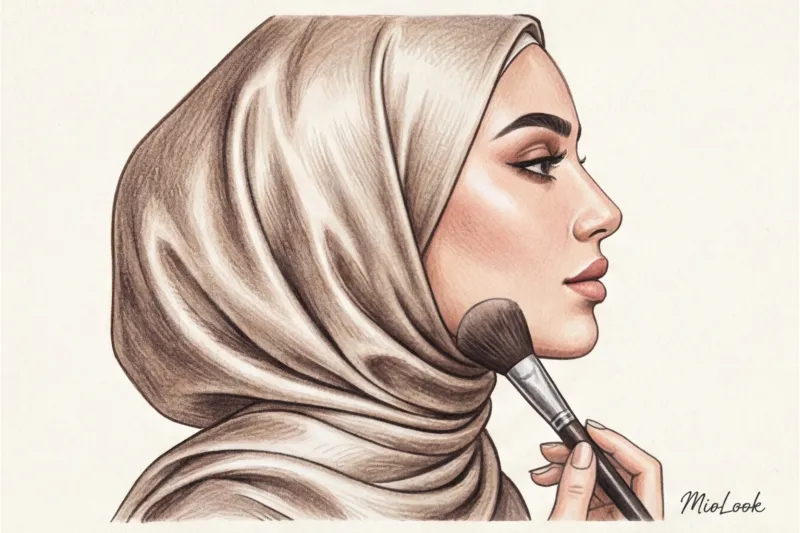
We were once preparing a client for a presentation at a major forum. She was wearing a formal, off-white suit by Massimo Dutti and a matching silk hijab. To prevent a disaster, we used a professional trick.
Instead of dragging foundation down our neck, we blended it evenly along the jawline with a translucent concealer. We smoothed the vellus hairs on our lower jaw and upper neck with a clear, ultra-strong hold brow gel (applied with a sponge). The gel created an impenetrable yet invisible film that prevented the pigment from sliding down. The brow remained crystal clear even after eight hours of wear and vigorous brow articulation.
Ready to get started?
Try the free plan—no commitments required. Organize your wardrobe and find flawless combinations.
Get access — €0.99 onceChecklist: 5 steps to setting your makeup before going out
We'll distill all the principles into a clear algorithm that takes minimal time but delivers 100% results.
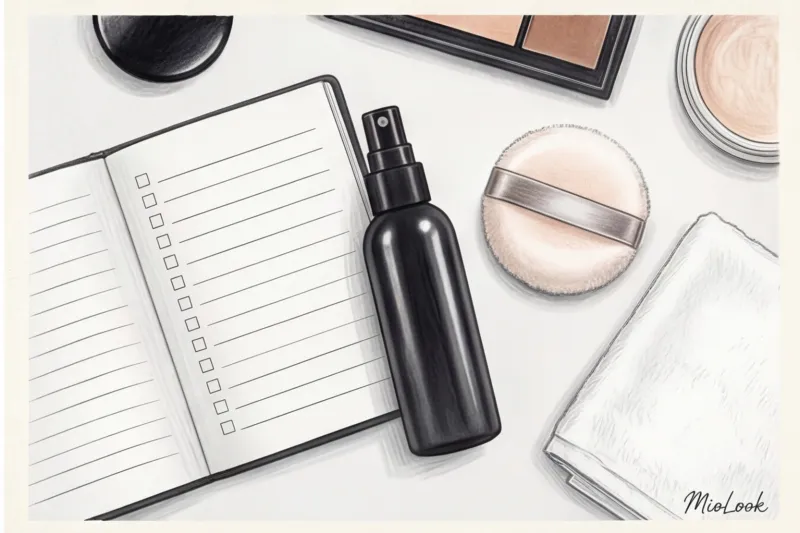
- Preparation and holding (minimum 10 minutes). Never apply foundation directly over cream. Let the foundation soak in, then blot off any excess with a dry tissue.
- Sandwich base. Spray your face with fixing spray before applying foundation, and also apply it to a sponge for blending.
- Local smoothness. Powder areas that may come into contact with fabric (chin, jaw) with silica-based powder instead of talc. Use a velour puff to press the product into the skin.
- The final barrier. Apply a generous amount of polymer-based holding spray. Critical: Let it dry naturally for exactly 60–90 seconds. Don't flick it or use a hair dryer—the polymers need to bond naturally.
- Crash test. Before putting on a white shirt or light-colored scarf, place a clean, dry paper towel on your jaw and apply gentle pressure. If the towel comes out clean, you're ready to go out.
Conclusion: A flawless look without compromise
Reliable makeup hold isn't magic or buying the most expensive product at the store. It's a matter of simple physics: we replace the rough friction of talc with the smooth glide of a polymer film. Experiment with textures, read the ingredients, and remember the "three thin layers" rule.

Ultimately, clean makeup and stain-free clothing are what separate a simply beautiful look from a truly "expensive" and prestigious one. When you're confident your collar will remain immaculate until late in the evening, your posture becomes straighter and your gestures freer.