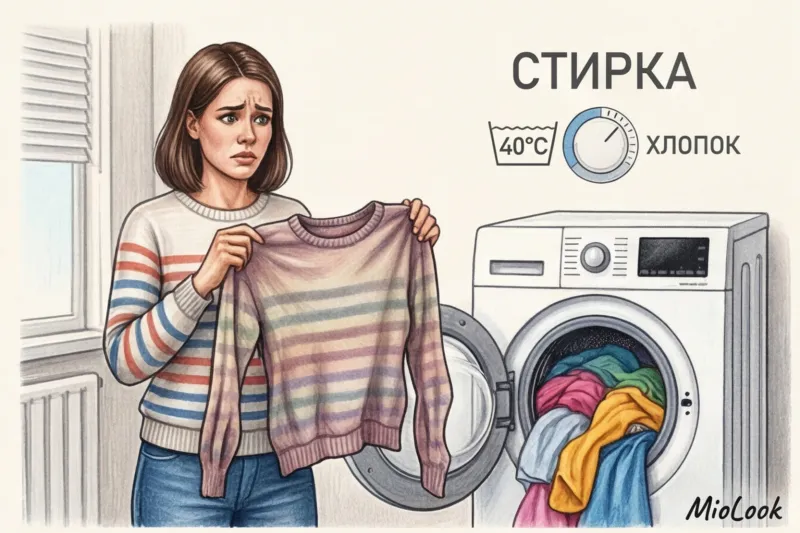
A couple of years ago, a client of mine nearly cried when she pulled a premium cashmere sweater out of her closet. The luxurious garment had lost its shape at the shoulders, developed strange lumps, and the fleece itself had become stiff, like felt. The cause wasn't voracious moths or a manufacturing defect. The sweater had been hanging for months on a thin wire hanger from the dry cleaner, and was washed in the washing machine after every other wear, along with her jeans. This scene broke my heart.
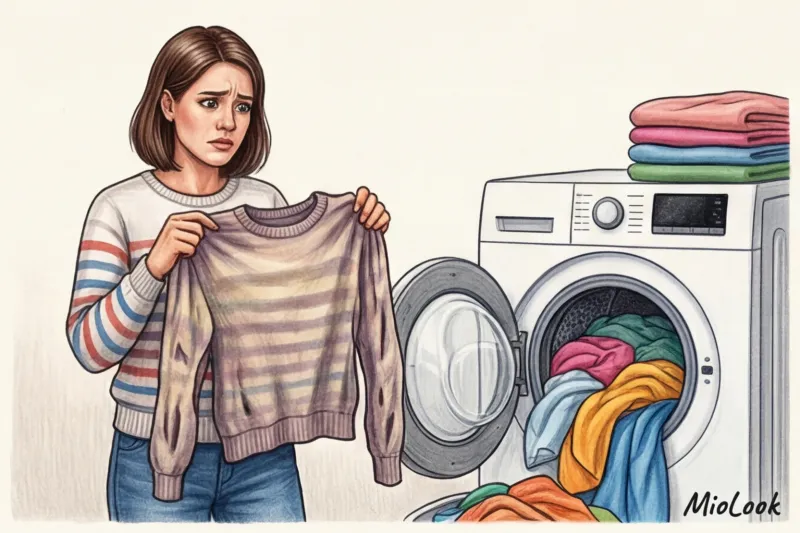
Over 14 years of sorting through wardrobes, I've come up with a sad but true statistic: about 70% of clothes end up in landfills not because they've been worn to the point of being worn to the point of holes in the elbows. They've simply been washed out and ruined by improper storage. If you're looking for an answer to this question, How to extend the life of clothes , I have great news for you - proper care of things is based on the principle of reasonable laziness.
We talked in more detail about the philosophy of taking care of things in our the complete guide to conscious fashion and creating an eco-friendly wardrobe Today, I want to put this philosophy into practice. We'll explore specific steps that will not only save you thousands on new items but also significantly reduce your environmental footprint.
Why the Way We Wash Our Clothes Is Killing Our Wardrobes (and the Planet)
We're used to throwing clothes in the laundry basket after wearing them once. Wear a blouse to the office—into the wash. Wear a jumper to dinner—into the wash. This habit, instilled in us by laundry detergent commercials in the '90s, confuses a slight loss of freshness with actual soiling.
Water, temperature fluctuations, and the mechanical friction of the drum destroy the fabric structure much faster than wearing it. Each wash cycle leaches dye and weakens the threads. But there's another, more fundamental problem. According to a major 2023 report by WRAP UK (Waste and Resources Action Programme), extending the active life of clothing by just nine months reduces its carbon, water, and waste footprint by 20-30%.
Surprisingly, up to 25% of a T-shirt's carbon footprint is generated not in the factory in Bangladesh, but in your bathroom—during the washing, drying, and ironing process. The most eco-friendly and gentle care is airing. If your item smells like restaurant food, simply hang it on the balcony or in a well-ventilated room overnight. The smell will be gone in the morning, and the fibers will be intact.
Secrets of Labels: Marketing vs. Real Care
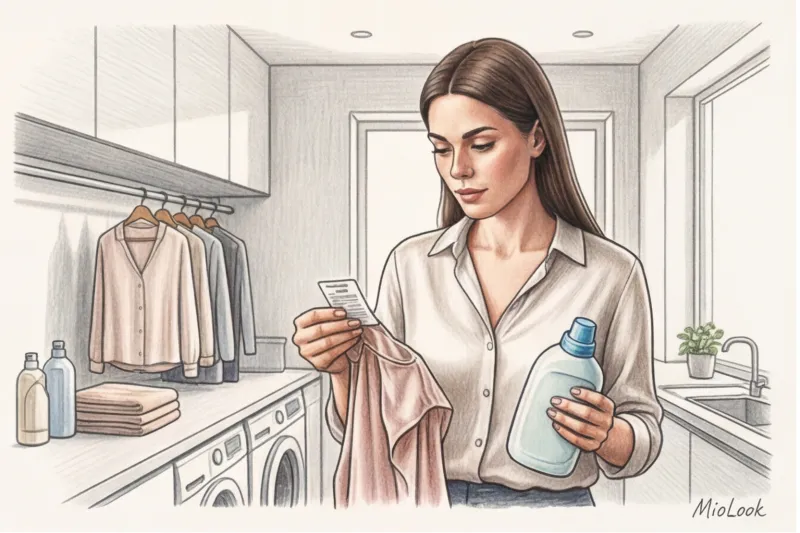
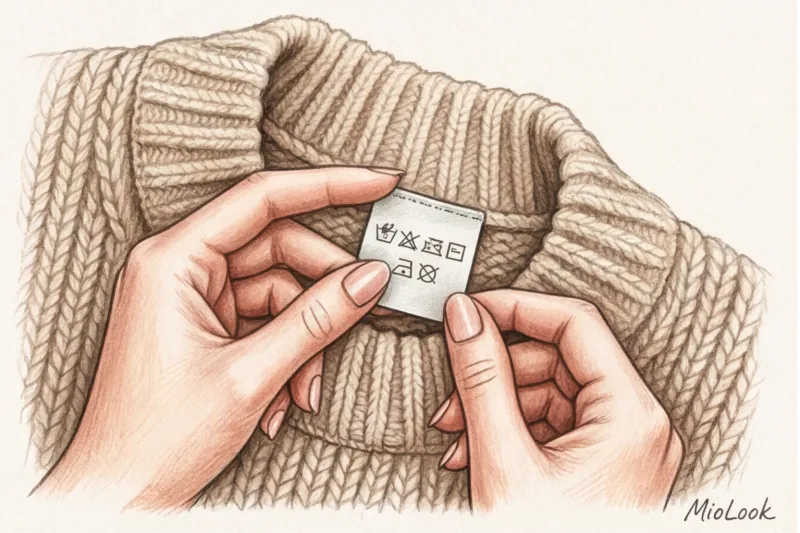
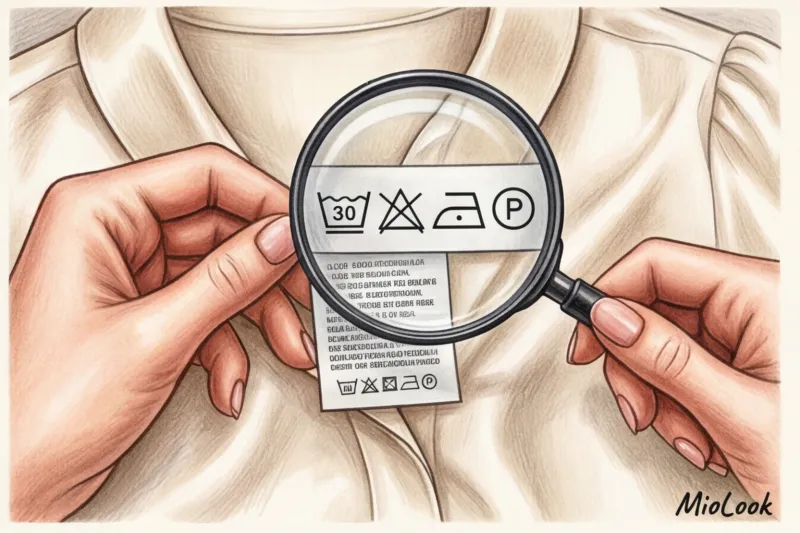
Clothing manufacturers often treat us like we can't tell silk from polyester. Reading the fabric composition is much more important than blindly trusting the symbols on the tag. Why? Because brands are playing it safe.
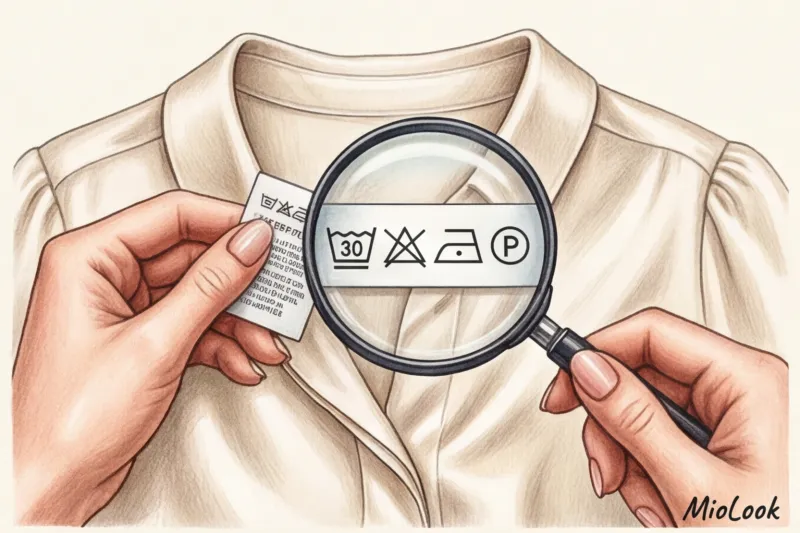
If the label says wash at 30°C, that doesn't mean the cotton will instantly dissolve at 40°C. It simply means the brand disclaims any responsibility for any shrinkage at temperatures above the minimum. However, there's one symbol that has become the basis for an entire industrial myth.
Dry Cleaning Myth: Why Dry Clean Only Can Often Be Ignored
You probably have a silk blouse or a basic cashmere sweater with a scary inscription. Dry Clean Only (Dry clean only). A counterintuitive insight they won't tell you at the dry cleaner: 80% of the time, you can safely ignore this tag.
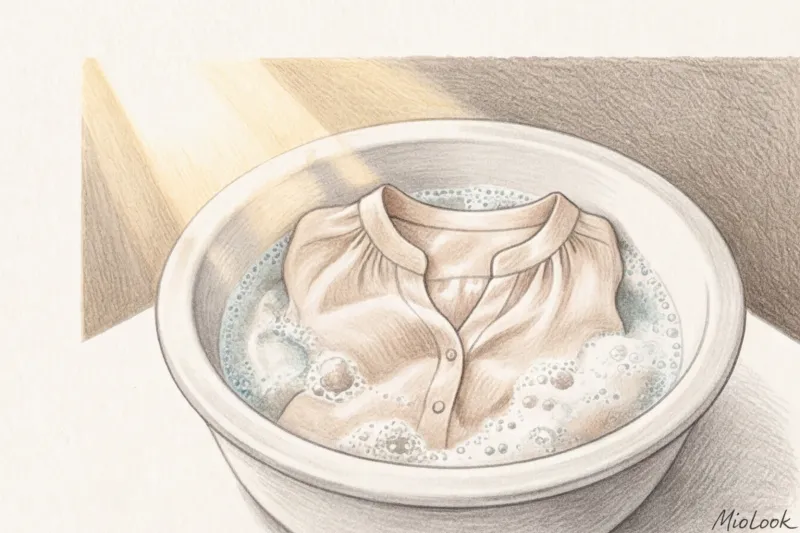
Traditional dry cleaning uses perchloroethylene, a highly toxic solvent. While it's excellent at removing grease, it also aggressively dries out natural protein fibers (silk and wool). After 5-6 dry cleanings, your luxurious sweater will become brittle and dull. Most fine cashmere and silk items can and should be hand washed in cool water using baby shampoo or a special liquid detergent.
"Dry cleaning is really only necessary for structured items: jackets with bonded linings, coats with complex linings, and items with non-removable hardware. Water will cause them to warp. The rest is a matter of careful handiwork." This is a rule I repeat to every client.
Your ideal image begins Here
Join thousands of users who look flawless every day with MioLook. Digitize your wardrobe and create stylish combinations.
Get access — €0.99 onceEco-friendly washing: how to extend the life of your clothes right in the washing machine
If you can't avoid doing laundry, do it smart. How to extend the life of clothes At the cleaning stage, it comes down to three basic rules of the washing machine.
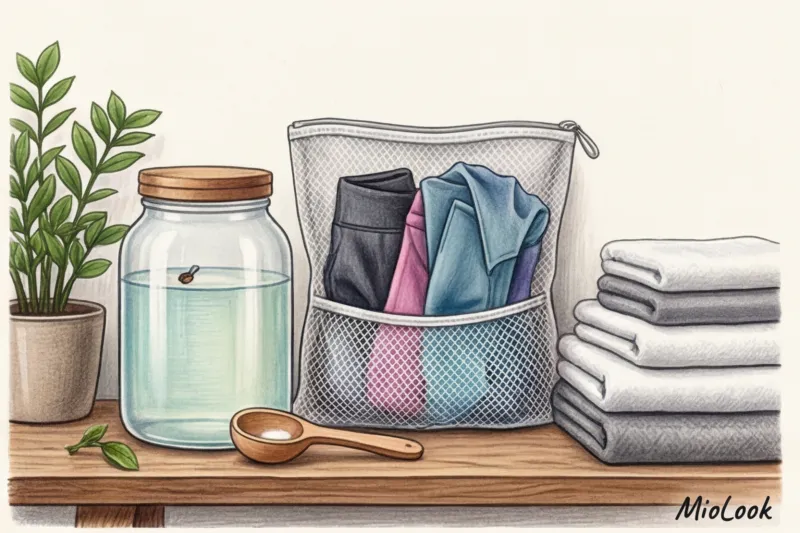
First, switch to 30°C. Modern enzymes in detergents work perfectly in cool water. Reducing the temperature from 40 to 30 degrees not only saves the color of mass-market items but also uses 40% less energy.
Secondly, ditch laundry detergent for good in favor of liquid gels. Dry powder rarely rinses out completely at low temperatures. Its microgranules get stuck between the fibers of the fabric and act like sandpaper, rubbing the threads with every stroke.
Third, pay attention to synthetics. According to a 2022 report by the Ellen MacArthur Foundation, washing polyester, nylon, and fleece releases millions of microplastic particles into the water, which escape filters and end up in the oceans. I highly recommend using special laundry bags (like Guppyfriend). They not only trap microplastics but also protect the garment itself—the bag prevents hardware from slamming into the drum, and the fabric is not subjected to unnecessary friction.
Important limitation: Never wash items in a half-empty drum. Floating freely in the water, clothes slam against the walls and each other more violently. The drum should be 2/3 full—this way, items are washed by gentle friction rather than harsh impacts.
Drying and ironing: where we make the most fatal mistakes
If washing weakens a garment, machine drying simply destroys it. High temperatures destroy elastane (spandex), which is added to 90% of jeans, T-shirts, and dresses today. Have you noticed your favorite skinny jeans starting to sag at the knees? Chances are, you've overdried them in the machine or on a hot radiator.
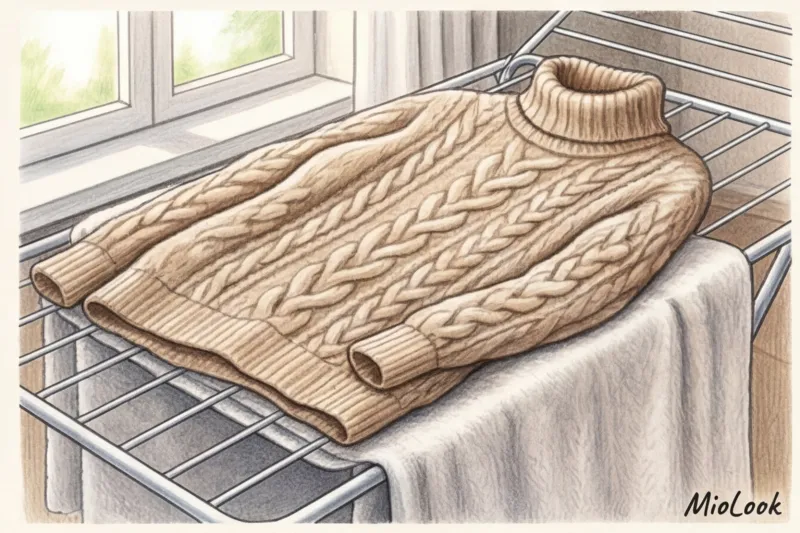
The Woolmark Institute is categorical in its recommendations: wool and any heavy knitwear should be dried exclusively flat. By hanging a wet, heavy sweater on a drying rack, you can stretch it two sizes by hand. Lay a towel on a table, place the sweater on top, return it to its original shape, and let it dry.
As for ironing, my top professional tip is to buy a steamer. We don't use irons on set at all (except for creases in trousers). The hot soleplate of an iron sets the fibers, makes dark fabrics shiny (creases), and burns away the microfibers. Steam works differently: it penetrates the fibers, straightens them from the inside, and kills 99% of bacteria, restoring freshness without washing.
Try MioLook
A smart AI stylist will create the perfect look for you. Analyze your wardrobe and save time on your morning routine.
Get access — €0.99 onceStylist's Tools: A First Aid Kit for Saving Your Favorite Items
Many people write off a piece of equipment at the first sign of wear, even though it can be revived in five minutes. My professional first aid kit always includes three tools that should be in every home.

- Machine for removing lint (pilling). It's important to understand the nature of pilling: it doesn't occur because the fabric is cheap. Any yarn is made up of short fibers. In areas of friction (like underarms or around a bag), these fibers become loose and form balls. This is a normal physical process, even for premium cashmere. An electric machine (or a special comb) removes these pilling, and the sweater regains its boutique-quality appearance.
- Natural bristle brush. Forget about sticky rollers! They leave a microscopic layer of adhesive on the fabric, which makes dust stick even faster. A good brush combs out dust, hair, and dried-on dirt right from deep within the fibers. This is a lifesaver for coats and dark jackets.
- Cedar blocks and lavender sachets. It's time to leave toxic mothballs with mothballs in the past. Natural cedar not only repels insects but also absorbs excess moisture in closets, leaving a subtle, luxurious scent.
Proper Storage: How Hangers Affect Durability
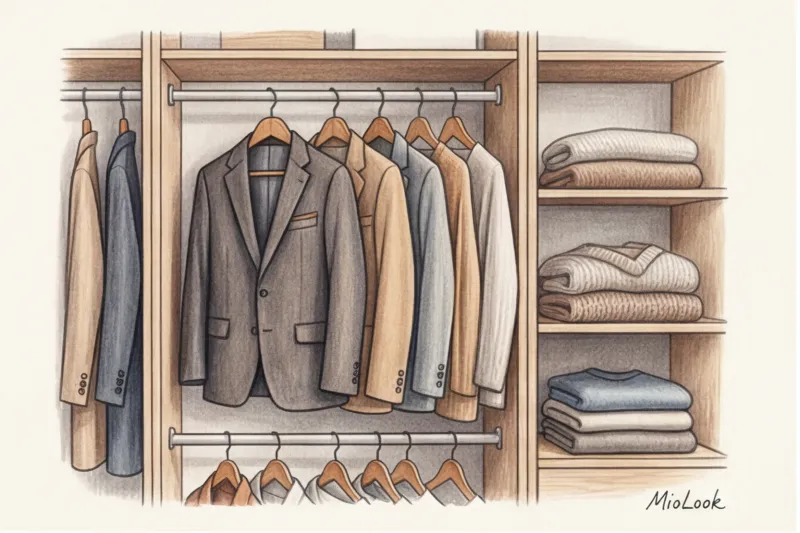
Organizing your space is also part of the care routine. Let's start with the radical: right now, open your closet and throw out all the thin wire hangers you brought home from the dry cleaner. They're designed solely for transporting items from the dry cleaner to your home. The pinpoint pressure from the thin wire will permanently deform the shoulder seams.
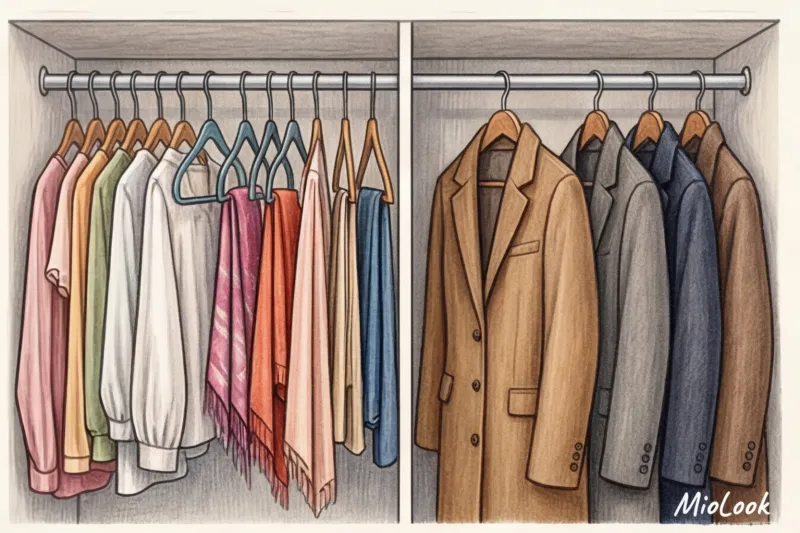
Replacing hangers is the easiest way to add visual value to your wardrobe and save clothes. For heavy coats and structured jackets, use wide wooden hangers (with a wing width of at least 4 cm). For silk blouses, dresses, and tank tops, thin velvet (flocked) hangers are ideal—nothing slips off them.
Seasonal storage also requires careful consideration. Never leave down jackets and wool coats in plastic dry cleaner bags over the summer. Plastic doesn't allow air to pass through, and fabric doesn't breathe, creating an ideal environment for bacteria to grow and a musty odor to develop. Use only bags made of breathable cotton or spunbond.
Checklist: A Care Routine to Extend the Life of Your Clothes
To extend the life of clothes , all you need to do is develop a few simple habits. Wardrobe maintenance shouldn't become a second job. Here's your basic mindful consumption checklist:
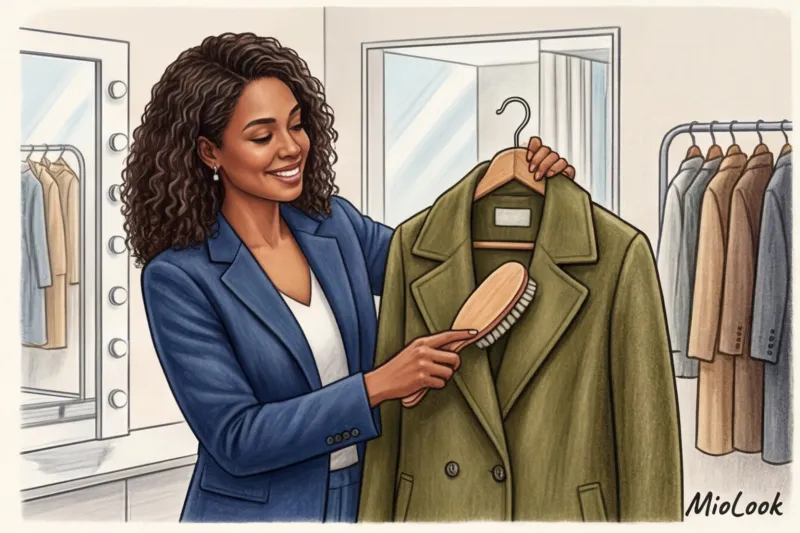
- Daily routine: After removing an item, don't throw it straight into the closet or wash it. Hang it on a chair for a couple of hours to air out. Brush the hem of your trousers or coat if it's been slushy outside.
- Monthly check: Once a month, inspect your basic items. Machine-sew knits to remove pilling, and check the buttons on your shirts for looseness. Mending a button takes three minutes, while searching for a replacement can take hours.
- Immediately after purchase: Cut off the long, prickly tags from the side seams (they can damage delicate fabrics when rubbed), but be sure to photograph the contents before discarding the tag.
Eco-friendly care isn't about expensive products and endless trips to the dry cleaner. It's about being mindful and giving your items a chance to "rest." Treat your clothes like an investment, even if they were bought on sale at H&M. Proper care blurs the lines between mass-market and luxury: a well-cared-for, clean viscose garment will always look more prestigious than washed-out, pilling premium silk.
Ready to get started?
Try a free plan—no commitments. Organize your closet and create capsule wardrobes in just a few clicks.
Get access — €0.99 once