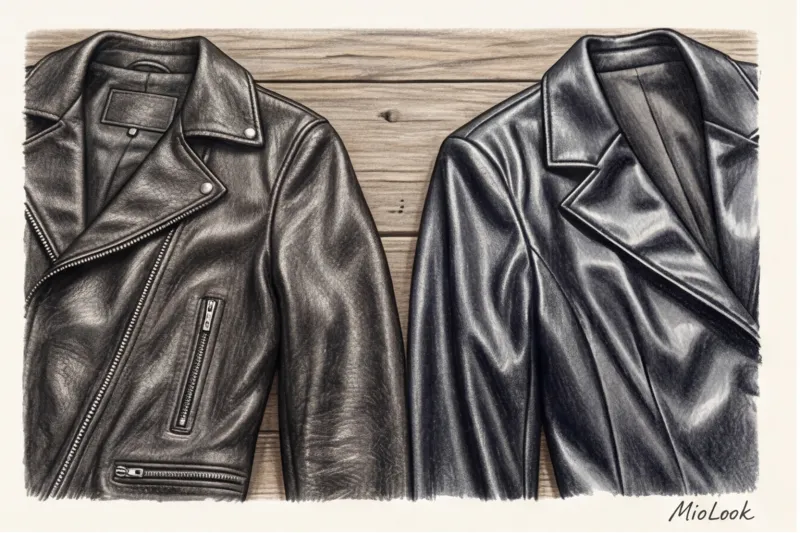
An hour before an important event. My client, in a panic, pulls out the long-awaited Zara faux leather trench coat from the parcel, and it looks like a dinosaur chewed it up and spat it out. The shipping creases were so severe that the coat was standing upright. So we start frantically googling... How to smooth out a leather jacket , finding advice on forums, one more dangerous than the other.
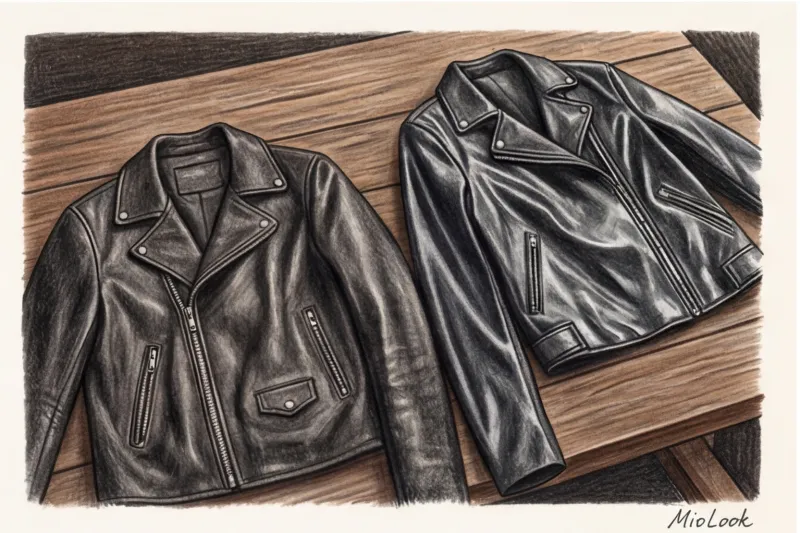
In my 12 years as a personal stylist, I've seen dozens of ruined jackets, burned by irons and rotted by "grandmother's" steam methods. Spoiler: the popular advice to hang a jacket over a boiling bath is slow-burn for today's mass-market fashion. I wrote more about the basic routine in our a complete guide to caring for leather items , but today we will talk about emergency care.
In this article, I'll explain how materials work without fluff or abstractions, and give you step-by-step instructions that will save your item (and your budget).
The Anatomy of Folds: Why Genuine Leather and Faux Leather Wrinkle Differently
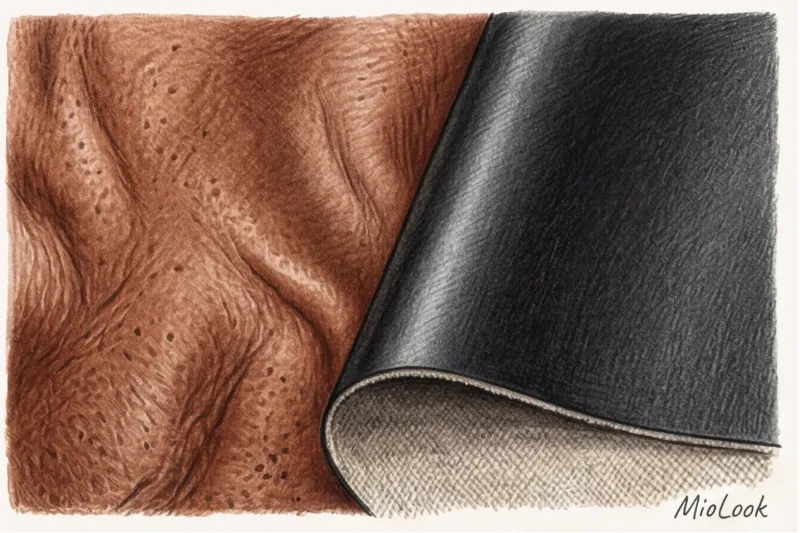
Before you iron, you need to understand the physics of your jacket. Genuine leather is made up of collagen fibers. These fibers are elastic, have a natural "memory," and respond to heat, moisture, and tension. Creases are usually soft and smooth.
Eco-leather (polyurethane or PU) is a completely different story. It's a synthetic film applied to a fabric base. According to the International Union of Leather Technologists (IULTCS, 2023), polyurethane lacks the inherent elasticity of collagen. When a mass-market item (like H&M, Mango, or Stradivarius) is tightly packed in a shipping bag and left there for weeks under the weight of other boxes, the film literally breaks.
If you're unsure what exactly is hanging in your closet, I recommend you study the material Leather, suede, or faux leather: how to make the right choice for your status The main rule to remember is that what saves natural leather will instantly melt synthetic leather.
How to Smooth a Leather Jacket: 3 Safe Methods
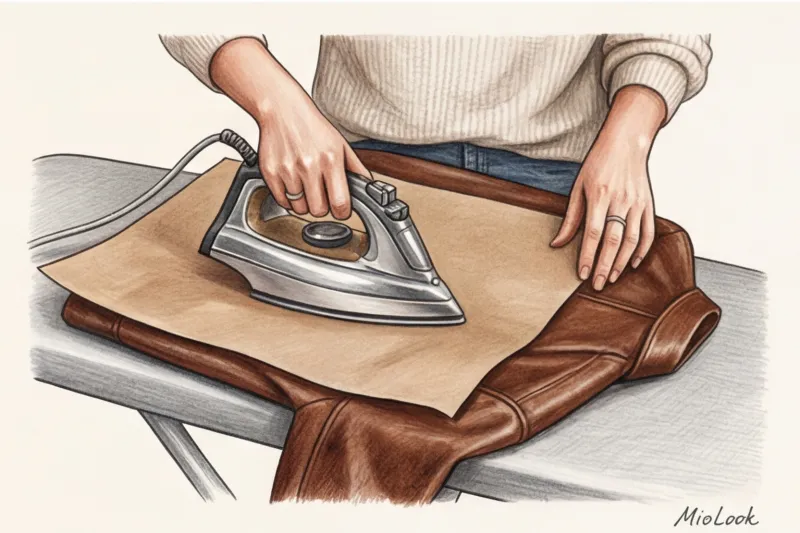
The basic principle of working with genuine leather is minimal thermal impact. If you are looking for a way, How to smooth out a leather jacket Made from 100% sheepskin or calfskin, avoid direct contact with hot metal.
"One of my clients tried to iron a vintage Massimo Dutti leather jacket through a terry towel. As a result, the texture of the terry loops was permanently imprinted on the smooth leather. It was impossible to save the €300 item."
Instead of fabric, I always use thick, smooth brown kraft paper. It conducts dry heat well, but doesn't leave marks or absorb the skin's natural oils.
Method 1: Ironing through craft paper (without steam!)
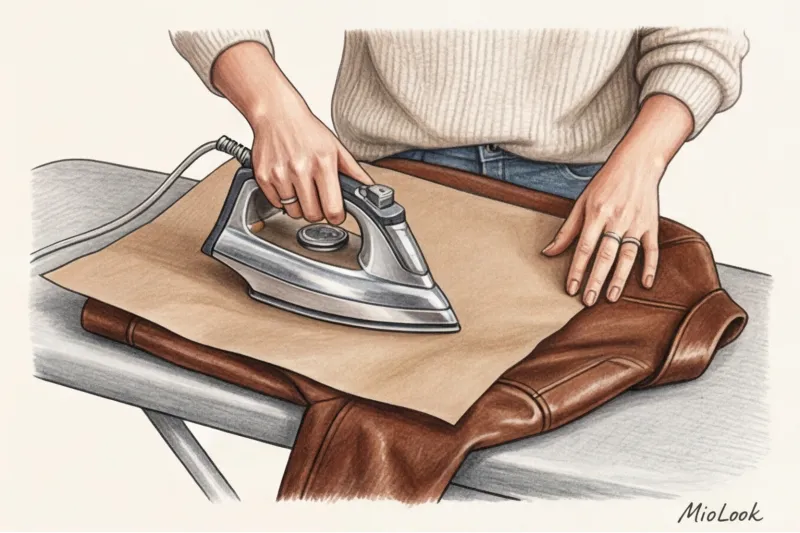
This method is suitable for smooth leather without pronounced texture. You will need an iron with Necessarily with the steam function turned off and a craft sheet without prints.
- Empty the iron reservoir to prevent an accidental drop of boiling water from ruining your item.
- Set the minimum temperature mode - “Silk” (about 110°C).
- Place the jacket on a flat, hard surface.
- Cover the fold with craft paper.
- Movement technique: Don't move the iron back and forth! Press the iron down for 2-3 seconds, lift it, and move it to the next area. The skin should be warm, but not burnt.
Method 2: Cold Press for Localized Wrinkles
For thick biker leather or thick collars, heat treatment is often useless—the material simply springs back. Pressing is the way to go.
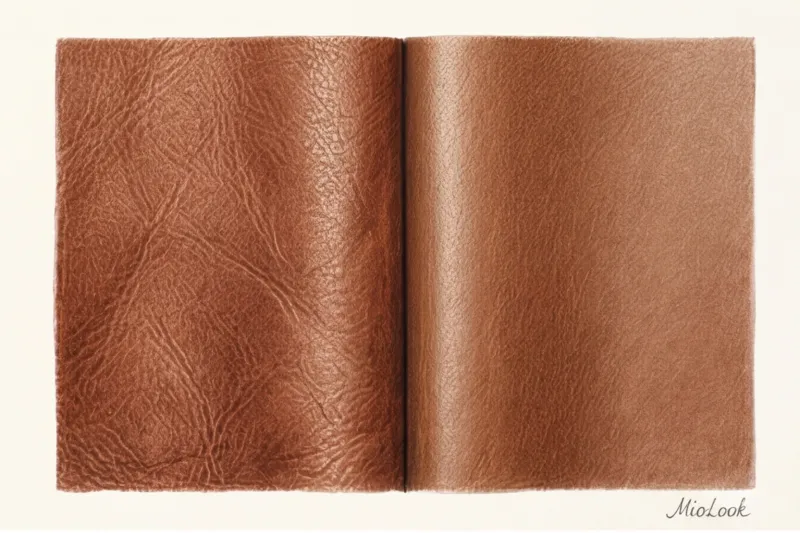
Lay the jacket flat on a table and smooth out the folds with your hands. Place a piece of soft flannel on top (to protect the hardware), then a stack of heavy encyclopedias or art books on top of that. Let it sit for 12-24 hours. This is the safest method for expensive designer items, guaranteed not to over-dry the leather.
Your perfect look starts here
Join thousands of users who look flawless every day with MioLook. Smart wardrobe organization in your pocket.
Get access — €0.99 onceSaving Eco-Leather: How to Remove Wrinkles Without Melting Polyurethane
Synthetic materials require a completely different approach. It's strictly forbidden to iron eco-leather from the front, even through the thickest protective layer. Technical data sheets from polyurethane manufacturers (such as BASF) indicate that irreversible deformation of the film begins at 100°C, and at 160°C it simply melts, fusing to the paper or fabric.
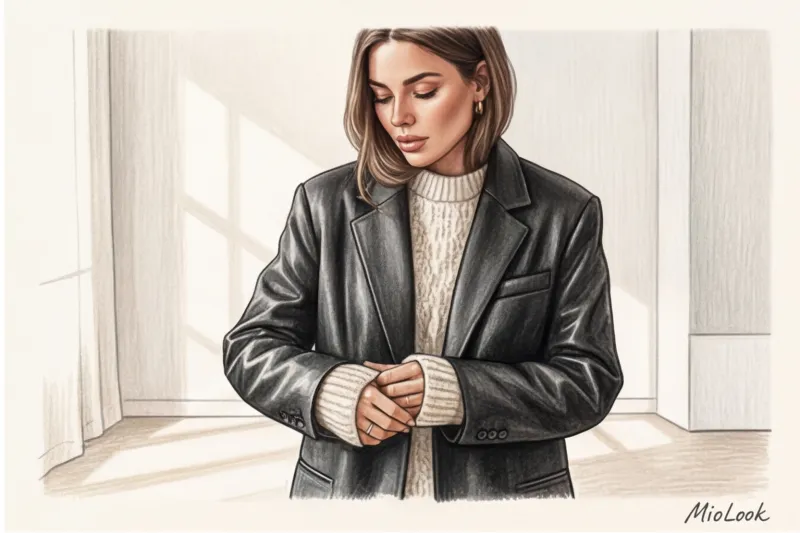
How We Saved That Zara Trench Coat Two Hours Before Going Out? With the Right Steaming Technique exclusively from the reverse side.
- Turn the jacket inside out and hang it on a wide hanger.
- Take a handheld steamer. Keep the nozzle at a distance. at least 20-30 centimeters from the fabric lining.
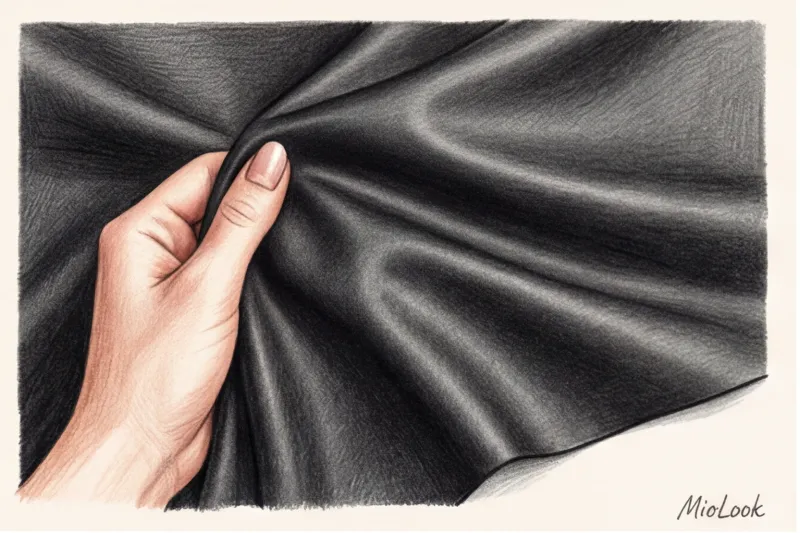
- Gently pull the problem area downwards with your free hand while the steam warms the fabric.
- Let the item cool completely (about 15 minutes) before turning it inside out.
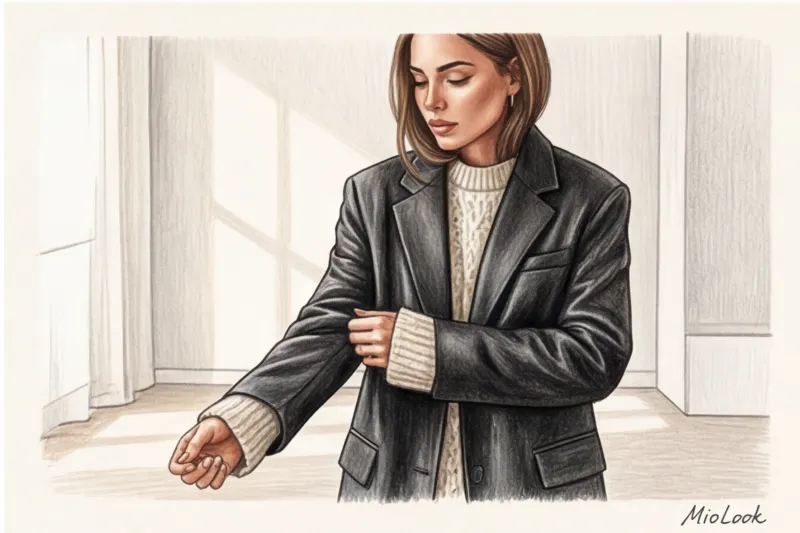
Another effective life hack is the "Natural Heat" method. Sometimes the best iron for faux leather is your own body. Put on a jacket over a thick hoodie or sweater and wear it around the house for about an hour. The body temperature (36.6°C) combined with the tension on your elbows and shoulders will gently smooth out any creases.
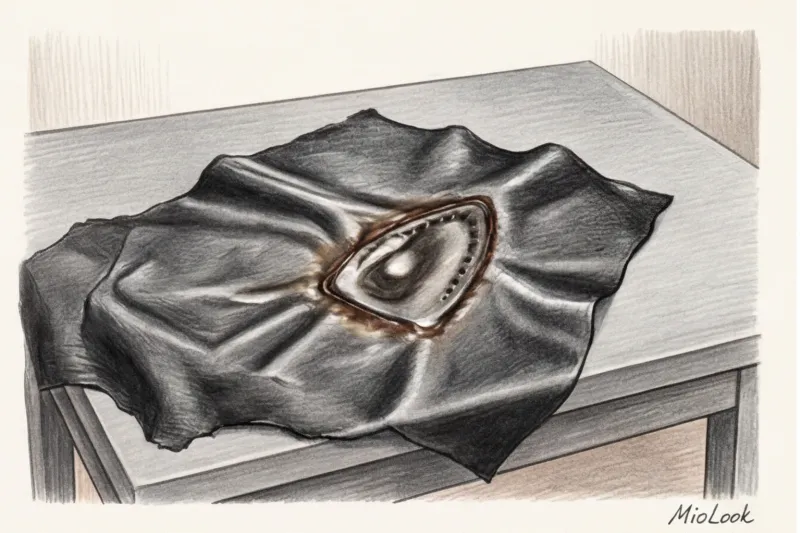
The Main Taboos and Myths: Mistakes That Will Ruin Your Item
The internet is full of harmful advice that appears in every article. I want to dispel the most dangerous of them once and for all, drawing on recommendations from European dry cleaning associations.
Myth 1: “Hang your jacket in the bathroom and turn on a hot shower.”
This is a real killer for modern faux leather. Steam penetrates the fabric base beneath the polyurethane. The synthetic film prevents moisture from evaporating. As a result, after a couple of weeks, your jacket begins to smell damp, and mold grows inside, destroying the adhesive. The film simply begins to peel off in blisters.
Myth 2: Using a hair dryer on high temperatures.
A hair dryer produces an uneven, uncontrolled flow of air that's too hot. This causes polyurethane to shrink and lose its shine, while genuine leather instantly dries out, loses its natural oils, and cracks at the folds.
Myth 3: Shoe stretching sprays.
Many people try to soften hard creases with chemical stretchers. Don't do this. These are formulated for rough shoe leather. On a thin jacket, especially a colored one, they will leave permanent dark stains. Incidentally, I mentioned other habits it's time to give up in the article. Outdated Style Rules: Which Fashion Myths Are Time to Forget?.
Access to MioLook for €0.99 — one-time payment
A smart AI stylist will create the perfect look for you. Digitize your clothes and forget about the "nothing to wear" problem forever.
Get access — €0.99 onceStorage Architecture: How to Hang Leather Items to Prevent Wrinkling
Solving the problem of creases is always more expensive and difficult than preventing them. Proper storage is the foundation of any capsule wardrobe.
Cheap, thin wire hangers from the dry cleaners are the worst enemy of leather jackets. They stretch the shoulders, creating unsightly "loopy" marks that are nearly impossible to remove. A proper coat hanger should have an anatomical curve and a shoulder width of at least 4-5 centimeters. Excellent wooden options can be found at IKEA or Zara Home for mere pennies compared to the price of a ruined jacket.
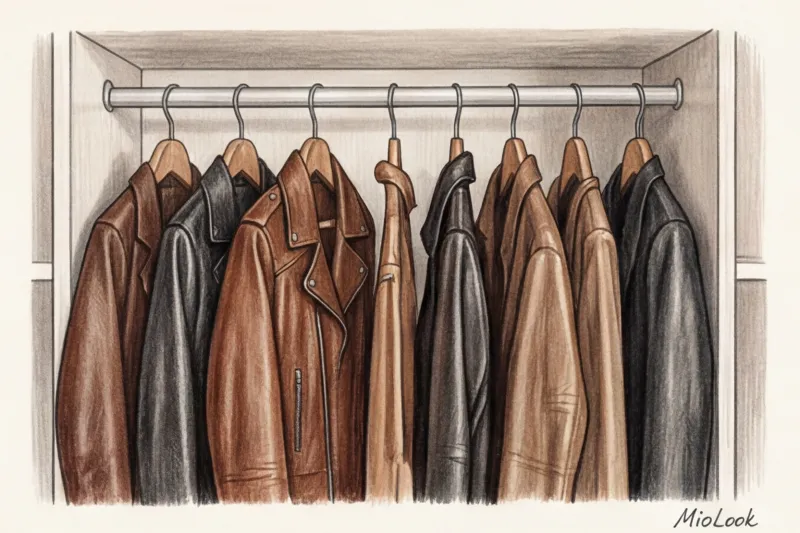
The second rule: space. Leather needs to "breathe." Don't squeeze your jacket between your wool coat and jeans so tightly that the closet door barely closes. Friction and pressure are guaranteed to create new creases.
And finally, covers. Plastic bags should be thrown in the trash immediately after returning from the store. If you're storing your jacket for the off-season, use only breathable bags made of spunbond or cotton. To properly manage seasonal storage, I recommend adding all outerwear to a MioLook - this way you will always know what you have without rummaging through your closet.
Checklist: First aid for a wrinkled jacket 15 minutes before departure
If you're just minutes away from going out and your outfit looks unkempt, follow this clear algorithm. This is my personal protocol for preparing clothes for fashion shoots.
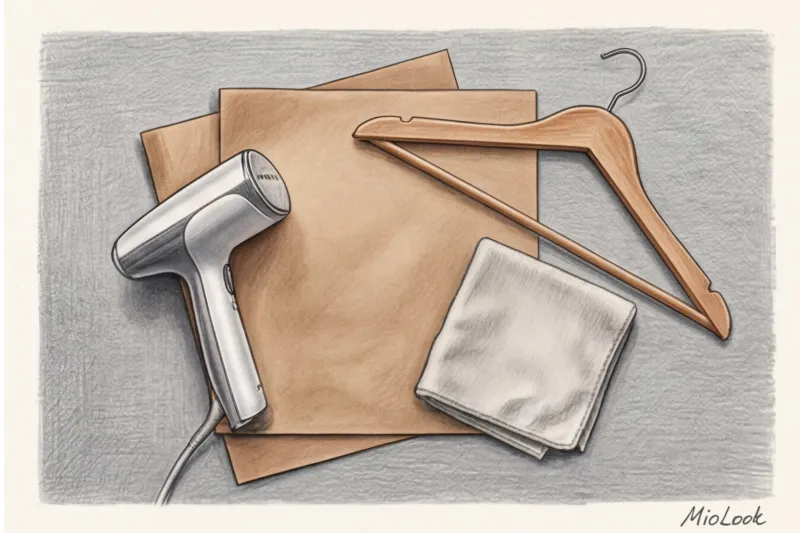
- Step 1: Assess the scale of the disaster and the material. Look at the label. 100% Leather or 100% PU/Polyurethane? Your instrument depends on it.
- Step 2: Warmth of hands. Small creases on the elbows can be easily removed by vigorously rubbing them with your palms. The friction creates a gentle heat that makes the material pliable.
- Step 3: Local intervention. For faux leather: steam the inside of the garment for 2 minutes (from a distance of 20 cm). For genuine leather: iron for 1 minute without steam through kraft paper, only on the most severe creases.
- Step 4: Fixing the shape. Immediately put the jacket on over a thick sweater and zip it up. The material will cool, molding to your body rather than the shape of a bag.
Wrinkles in clothing are a temporary problem, easily fixed in 10 minutes if you understand the physics of the process. However, iron-scorched polyurethane or overdried leather are permanent. Take your time, test any temperature method on an inconspicuous area (for example, the inside of the collar), and always choose the gentlest approach.