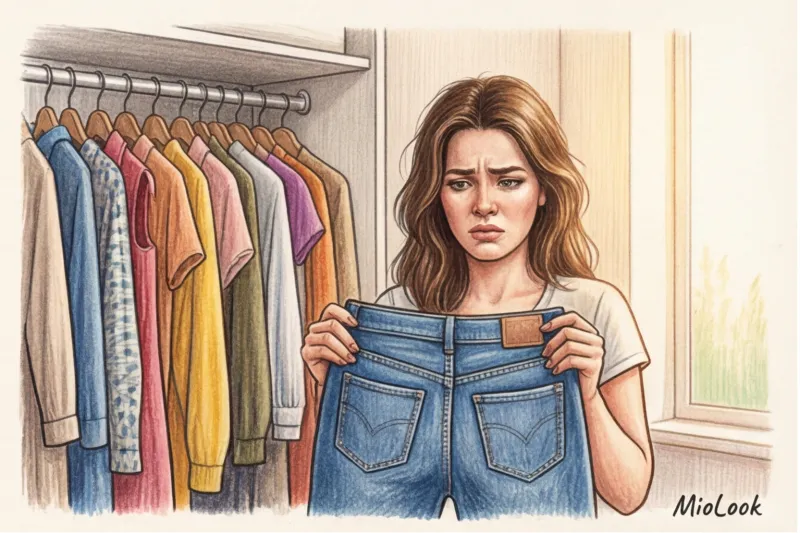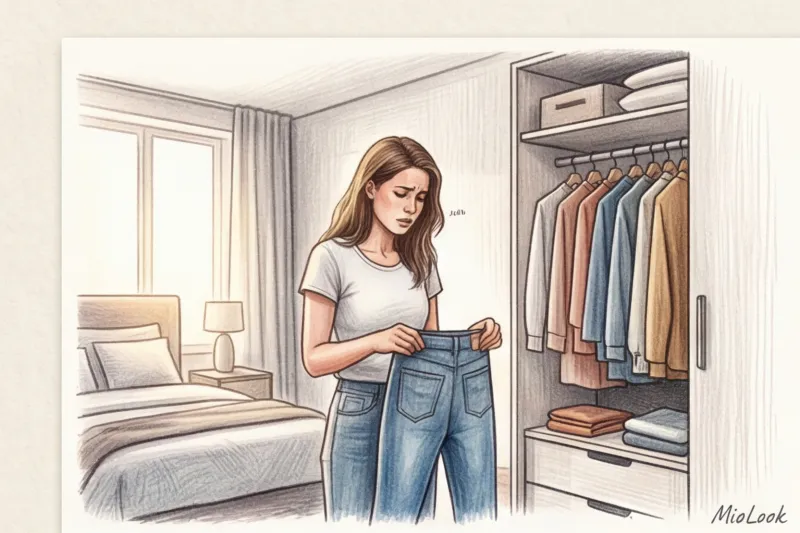
Seven out of ten women I work with as a stylist keep their personal "guilt shelf" in the back of their closet. It's a stack of clothes they wore before pregnancy, before a stressful job, or before a hormonal imbalance. When they ask me, How to dress if you've gained weight , your first instinct is to buy a couple of shapeless sweaters from a mass-market store to tide you over until better times. But the paradox is that those "better times" may never arrive precisely because of the contents of your closet.
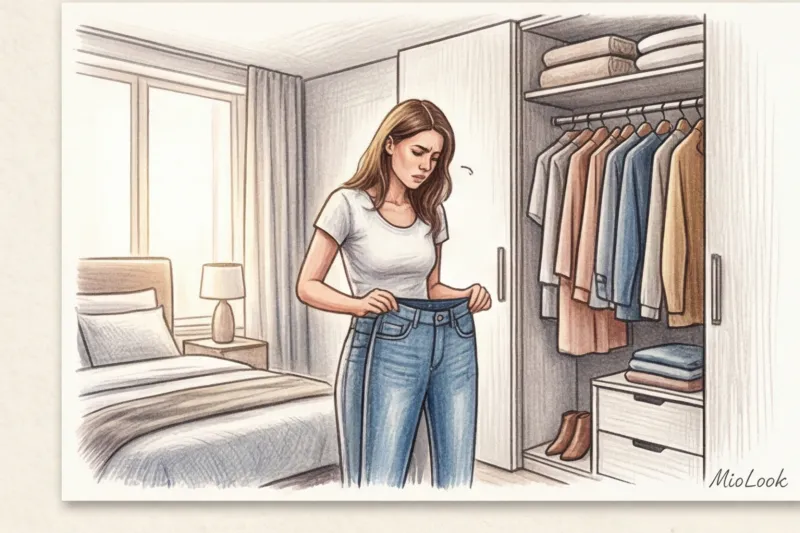
One of my clients spent five years buying cheap knitwear for just one or two seasons, denying herself quality items "until she lost weight." When we calculated her expenses, it turned out she'd spent on these temporary substitutes enough to buy a full premium wardrobe from Max Mara or COS. We discussed in more detail how our attitudes prevent us from looking luxurious in the here and now in our a complete guide to the psychology of style and body acceptance.
Let's change the rules of the game. Instead of punishing ourselves with cheap fabrics or trying to squeeze into old boxes, let's build a "transitional wardrobe" of smart materials that will serve you faithfully, no matter what the scale says.
Postponed Life Syndrome: Why Do We Wait for the "Ideal" Weight?
Wardrobe deferred syndrome is an unspoken beauty taboo we impose on ourselves. We believe that high-quality silk, perfect tailoring, and expensive accessories must be "earned" by wearing a certain size.
In 2012, researchers Hadjo Adam and Adam Galinsky introduced the term into psychology enclothed cognition (embodied cognition). They proved that the clothes we wear literally program our cognitive processes and self-esteem. By putting on a cheap, shapeless, compromising item bought on the run, you send a signal to your brain every day: "I'm not good enough right now; my current form isn't worth investing in."
"By buying things you don't like simply because they fit, you reinforce your sense of insignificance. Your wardrobe should serve the you of today, not the fantasy you have of yourself in a year."
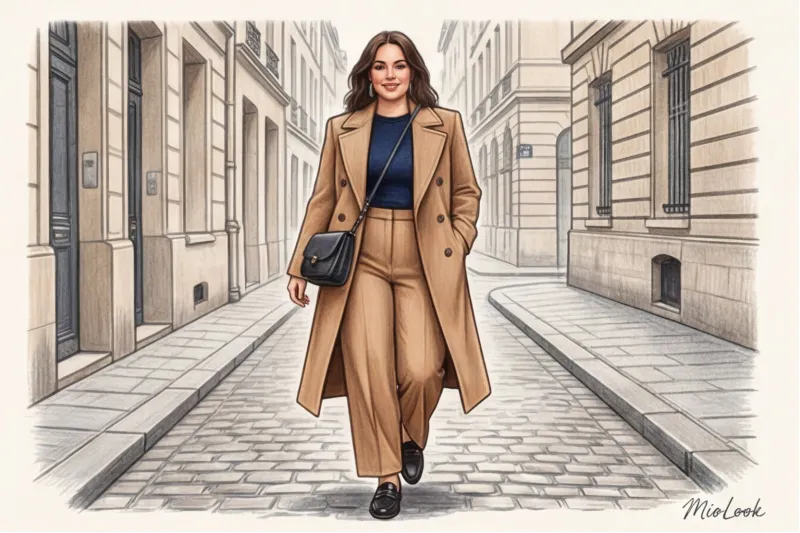
Working in Paris, I noticed a striking difference in mentality. The concept of "motivational items" is practically nonexistent in French women's wardrobes. If a woman gains weight, she goes to a tailor or buys perfectly fitting trousers a size larger. She doesn't deny herself the pleasure of being elegant today.
Access to MioLook for €0.99 — one-time payment
A smart AI stylist will select the perfect look for your current figure.
Get access — €0.99 onceWardrobe Punishment: Why You Shouldn't Keep Old Clothes for Motivation
A popular piece of glossy magazine advice is: "Hang your college jeans up in a prominent place so they motivate you not to eat after six." As an expert, I declare: this isn't motivation; it's a sophisticated form of daily self-harm.
Physiologically, this advice works in exactly the opposite way. Daily staring at clothes you can't fit into and struggling to fasten a tight belt triggers the release of cortisol. According to psychosomatic research, wearing physically uncomfortable, tight clothing can increase baseline levels of the stress hormone by 15% throughout the day. What does cortisol do? It tells the body to store energy, blocking fat breakdown and promoting the accumulation of visceral fat in the abdominal area. The cortisol loop is complete: you stress about your belly, wear tight clothes, stress even more—and your belly doesn't go away.
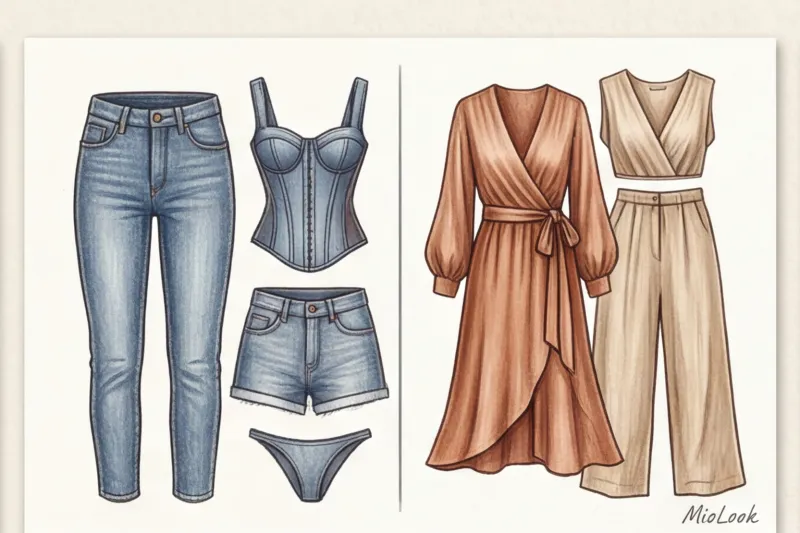
There's also an environmental aspect. 70% of women keep clothes that are too small for them. These jeans, silk blouses, and wool jackets hang in the closet for years, oxidizing, warping on hangers, becoming moth-eaten, and turning into expensive textile waste. A garment should live and function, not be a museum piece from your past.
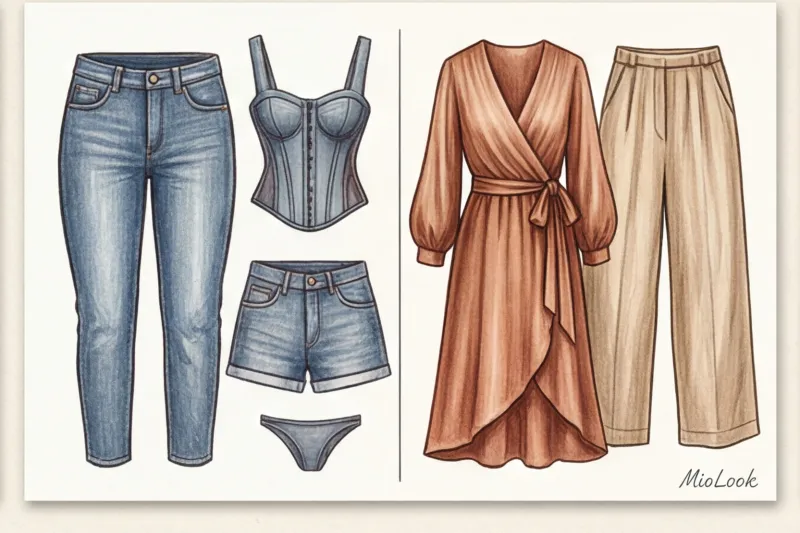
How to dress when you've gained weight: shifting the focus from concealment to quality
The main mistake when losing weight is trying to "hide" your extra pounds under thin, oversized clothing. But cheap knitwear and polyester treacherously reveal any changes in your figure. Thin fabric clings to every fold, creates static, and creates a greenhouse effect, causing puffiness by evening.
Abandon the "hide flaws" paradigm. Shift to a "highlight texture and contour" strategy. Dense natural fabrics—wool crepe, high-density cotton (from 180 g/m²), heavy silk—work like a soft exoskeleton. They don't break at the folds and create clear, flattering lines.
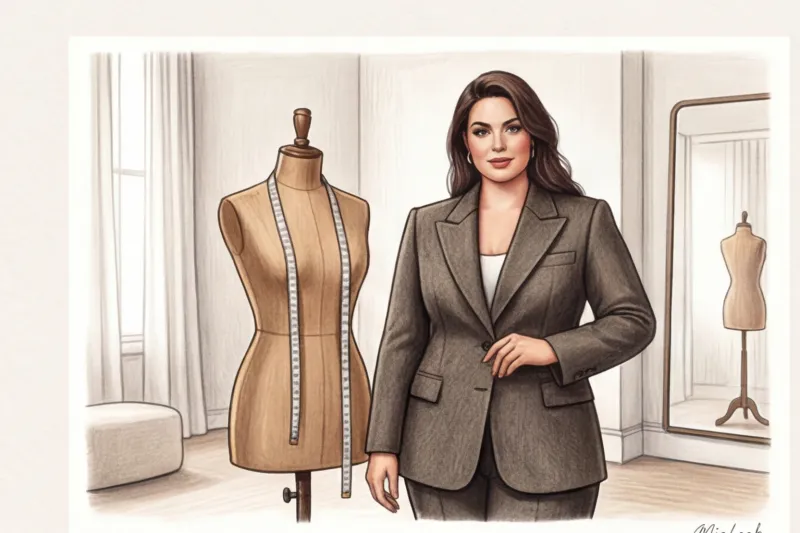
Incorporate the concept of "eco-luxe in your current size" into your life. You deserve to touch good cashmere and wear a perfectly tailored coat right now, whether you're a size M or XXL.
Smart Fabrics and the Right Cut: Advice from a Textile Expert
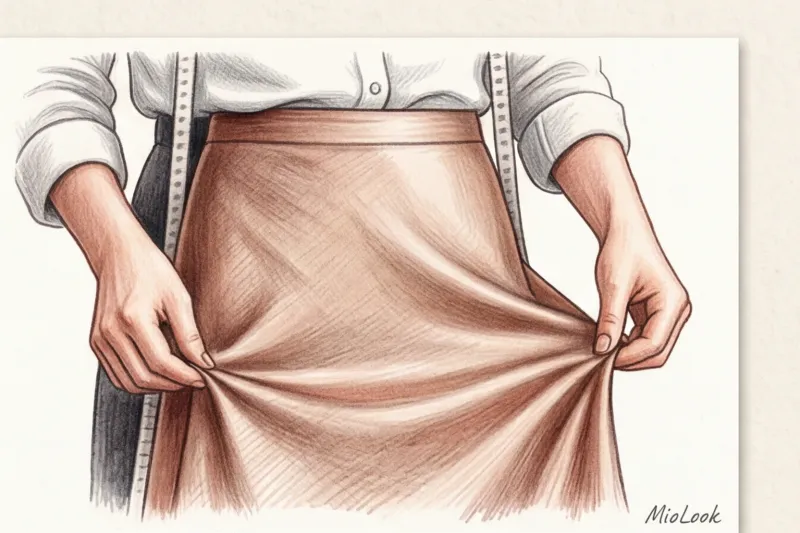
As a textile expert, I always look for items that exhibit engineered flexibility. If your weight fluctuates, pay attention to the following engineering nuances:
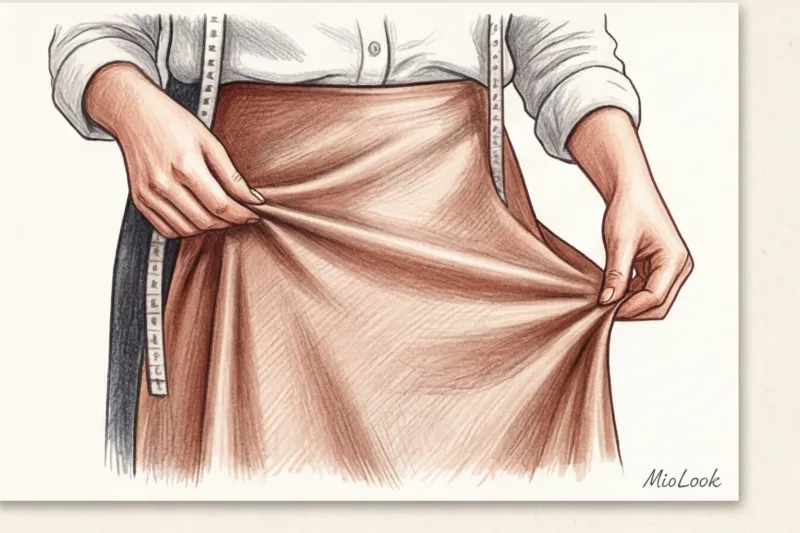
- Bias cut: A creation of the legendary Madeleine Vionnet, the fabric is cut at a 45-degree angle to the grain. According to textile engineering reports, this cut gives the material a natural springiness without a gram of synthetic elastane. A bias-cut skirt will flow elegantly across your hips, even if your waist size changes by 1-2 sizes.
- Generous seam allowance: The secret to expensive brands and custom tailoring: Turn trousers and jackets inside out before purchasing. If the brand leaves 2.5–3 cm of extra fabric in the seams, it's a great investment. Any competent tailor can adjust the garment when you gain weight or take it in when you lose weight.
- The dangers of thin viscose: Avoid flimsy viscose (especially those below 120 g/m²). Because of its low twist, it loses its shape catastrophically quickly, stretching out at the knees and hips by mid-work, creating an untidy look.
Your perfect look starts here
Join thousands of users who look flawless every day with MioLook, finding styles to suit any body type.
Get access — €0.99 onceTransitional Capsule Wardrobe: 5 Pieces That Adapt to You
The "Transition Wardrobe" is a capsule wardrobe that can tolerate weight fluctuations of 5-7 kilograms. Here are five formulas I regularly use with my clients:
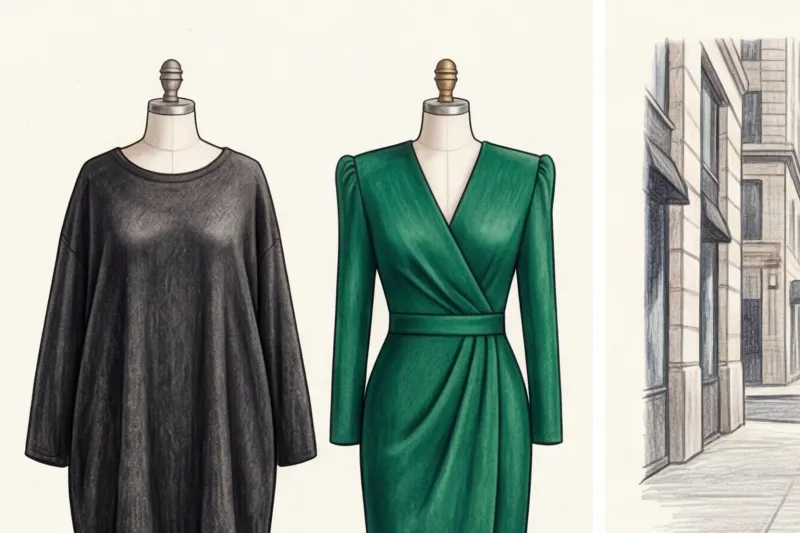
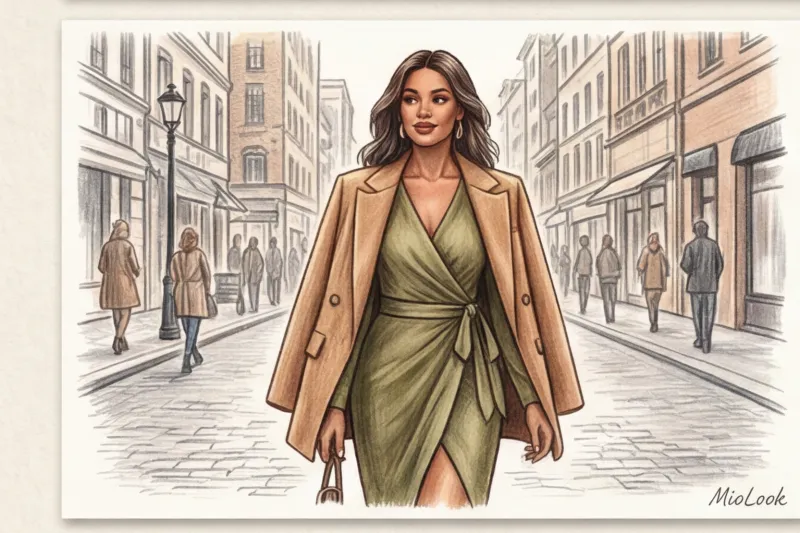
- Wrap dress made of thick silk or wool blend. Diane von Furstenberg's ingenious design. The lack of a rigid waist seam allows you to adjust the fit yourself every day.
- Trousers with side adjusters. A classic element of tailored menswear. Unlike elastic, which gathers fabric into unsightly bulges on the stomach, side buckles allow you to adjust the waist by 3-4 cm while keeping the front of the trousers completely flat.
- Loose jacket with soft shoulder line. Avoid the stiff shoulder pads of the '80s. Opt for deconstructed jackets in flowing wool (like those in the Giorgio Armani style). They add structure without making the body feel like armor.
- Pleated skirt made of shape-stabilizing fabric. Pleating creates vertical lines that visually elongate the silhouette. The main rule: pleats should be stitched 10-15 cm down from the waist to prevent the skirt from adding bulk to the stomach.
- Ribbed knit. Choose a thick viscose with added nylon or elastane (for example, from Massimo Dutti or COS). The ribbed fabric works like an accordion—it hugs the body but is dense enough to not be see-through or tight.
A tear-free inventory: digitizing your closet with the MioLook app
The hardest part of losing weight is separating your emotions from your clothes. The visual clutter of clothes that don't fit you drains your energy every morning. I recommend moving your wardrobe to a digital environment: it reduces anxiety and allows you to see your assets objectively.
Use the virtual wardrobe feature in MioLook app Take photos of the items that look perfect on you right now. Use the app to create a capsule collection of 10-15 items. You'll be surprised, but mathematically, you can create over 40 unique looks from just 12 perfect items.
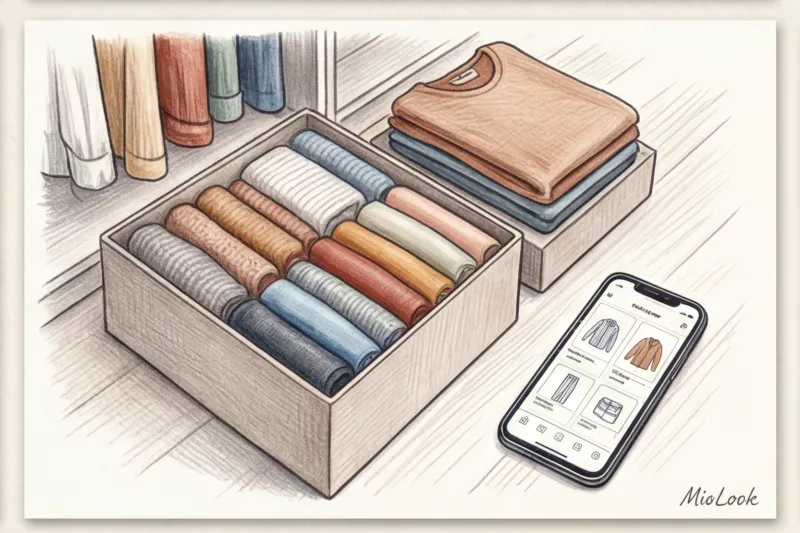
What should you do with physical items that have become too small? Put them away. Put them in vacuum-sealed bags, label them, and put them on the highest shelf or in the pantry. Removing triggers from your visual field is the first step to reducing that cortisol. You should open your closet and see only those things that are ready to serve you today. This saves at least 20 minutes of your morning time and a ton of nerve cells.
Your Action Plan: How to Reclaim the Joy of Style Tomorrow
Knowledge without implementation remains just text. To break the cycle of procrastination, follow these four steps this weekend:
- Step 1: Honest measurement. Take a tape measure and measure your current measurements. No tears, no judgment. They're just numbers—like GPS coordinates you need to plot the right route.
- Step 2: Packing the illusions. Gather all your "motivational things" and "for when I lose weight" items. Put them out of sight.
- Step 3: Invest in today. Buy one flawless, statement piece in your current size. It could be the perfect pair of wool palazzo pants or an impeccable jacket. Feel how your posture changes when your clothes fit snugly.
- Step 4: Shift the focus to accessories. Bags, shoes, silk scarves, watches, and jewelry are size-neutral. They're always with you. Invest in statement-making accessories—they're what make a look luxurious.
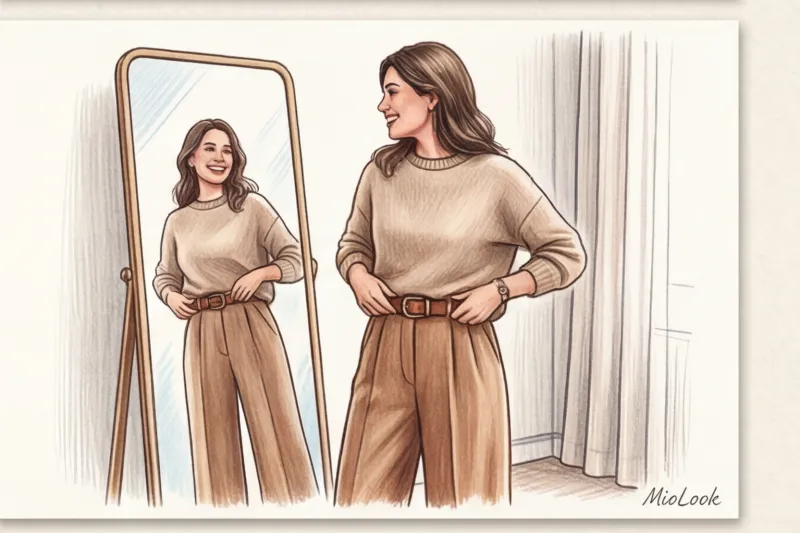
Style isn't measured by the letters on a label. The only criterion that matters is how confident and comfortable you feel in your clothes right now. Allow yourself to be beautiful in the present moment, because life happens today, not after you lose five kilograms.
Ready to get started?
Organize your closet and create perfect looks from what suits you right now.
Get access — €0.99 once