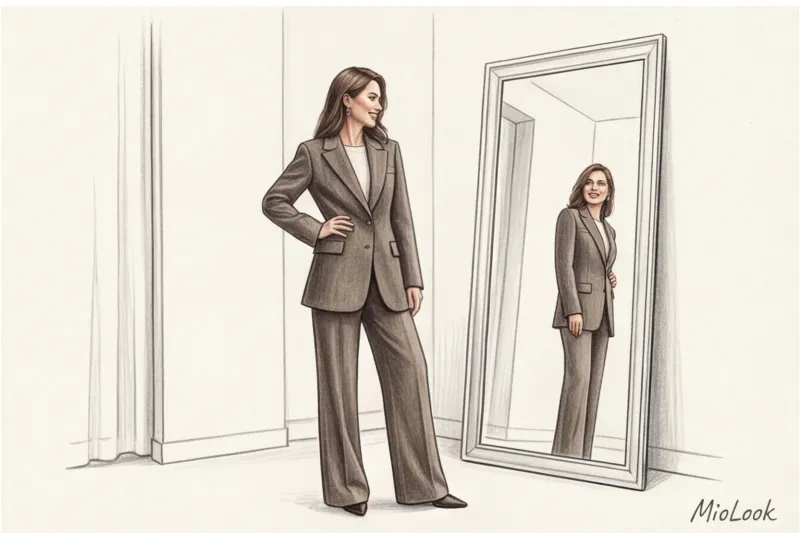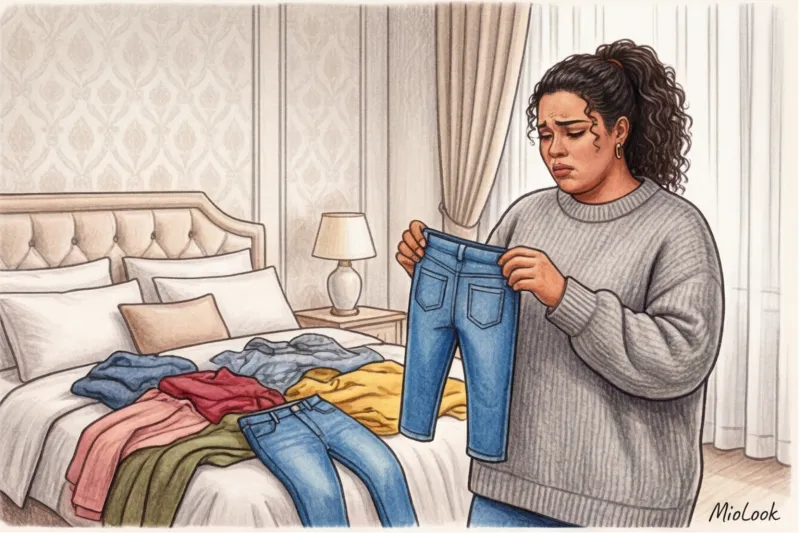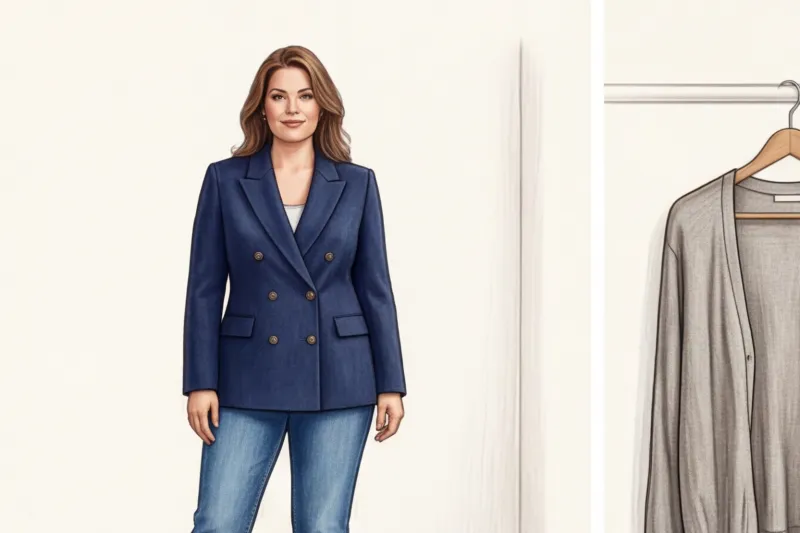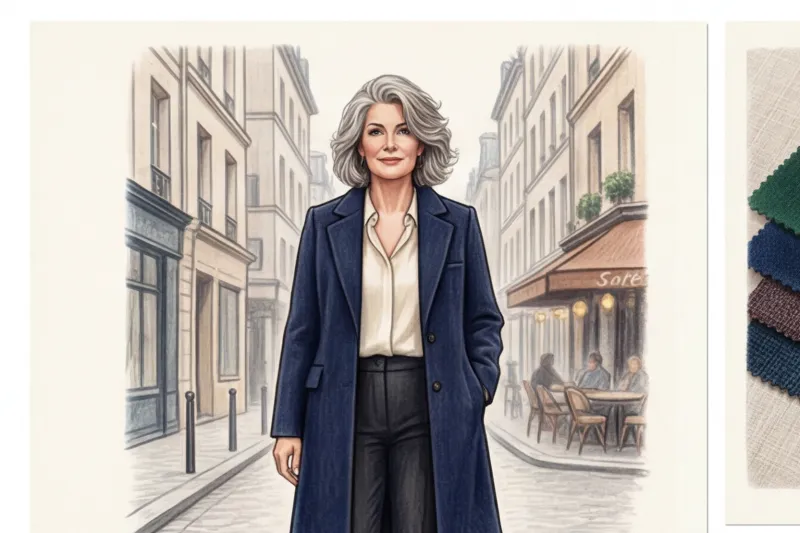
I once had a client who had been hiding her luxurious size 75F in shapeless men's hoodies for 10 years. Every shopping trip ended in tears in the fitting room: her shirts would betrayingly part her chest, revealing her underwear, and her dresses would make her look three sizes bigger. Wondering, What clothes are suitable for large breasts? Many women mistakenly believe the problem lies in their bodies. Spoiler: there's nothing wrong with your body. The problem lies in industrial patterns.
As a stylist and colorist, I often see how improper cutouts and fabric textures ruin the harmony of a silhouette. We've covered body architecture and how technology is changing the way we shop in more detail in our complete guide to MioLook: An AI-powered app for choosing clothes based on your body shape Today, I propose abandoning outdated advice like "how to hide and visually reduce" and approaching the styling of a large bust from the perspective of architecture, the physics of tissue, and the mathematics of proportion.
The Anatomy of Fit: Why Standard Patterns Are Lying to You
Let's be honest: today's mass market operates under a "dictatorship of average sizes." Ninety percent of popular brands—from Zara to COS—design their fits for a standard B cup, or at most a C cup. What happens when a manufacturer makes an item in size L or XL? They simply increase the width.
From a clothing design perspective, a large bust requires more than just a wide bustline, deep bust dart If there's no dart, or if it's designed for a size B, the fabric will inevitably stretch at the widest point and hang like a tent at the bottom, adding an extra 10 kilograms to your waist. This is why a basic €40 shirt from a regular store often fits worse than a well-cut vintage blouse. For a larger bust, the ease allowance (the air space between your body and the fabric) should be at least 4-6 cm, depending on the density of the fabric.
Style Step Zero: Why It All Starts With the Right Underwear
No bra, even the most ingenious design from Prada or Tom Ford, will work if the base is crooked. According to international bra-fitting studies (in particular, the 2023 BSI reports), approximately 80% of women wear the wrong bra size.
"A common mistake: a bra band that's too loose and a small cup. This causes the bust to drop below its natural line, constricting the waist and creating a bulky silhouette."
The golden rule of proportions: The fullest point of your bust should be exactly halfway between your shoulder and elbow. Lift your bust to this level with the right bra, and you'll be amazed—you'll instantly gain a waist, and your stomach will appear flatter. Only after this step should you consider the fit of knitwear and blouses.
Your perfect look starts here
Join thousands of users who look flawless every day with MioLook. A smart AI stylist will analyze your proportions.
Get access — €0.99 onceThe main stylistic myth: is it necessary to hide volume?
The psychological pattern of wanting to "hide" is all too familiar to me. Women with fuller busts often wrap themselves in oversized chunky knit sweaters or dolman sleeve tops. In my experience, nine out of ten clients with a D+ cup size intuitively gravitated toward hoodies during their first fitting.
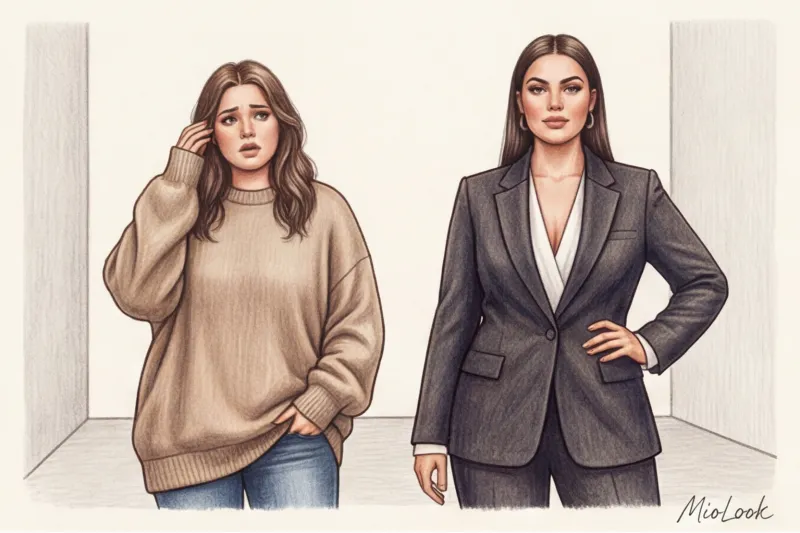
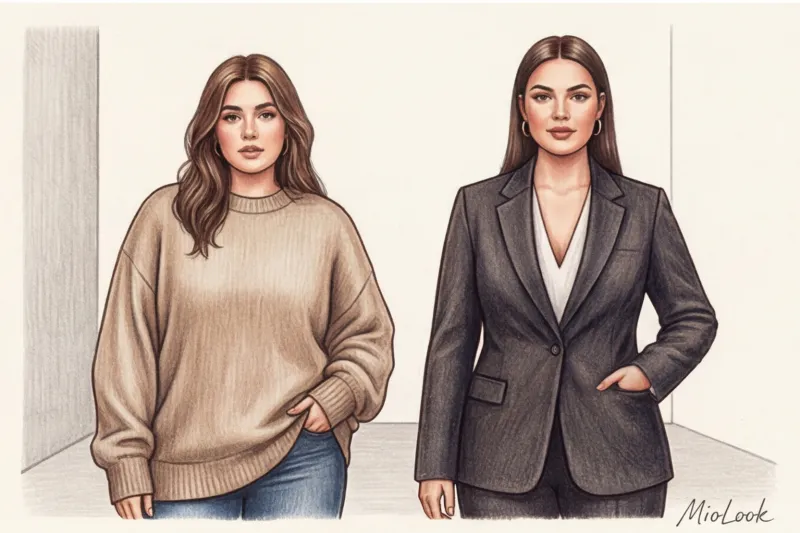
But physics works differently: a shapeless robe falls from the highest point (your chest) in a straight line. It ignores curves and turns you into a monolithic rectangle. The only thing worse than a batwing for a full bust is a thin cardigan with small buttons worn next to nothing. It's time to shift from the "hide flaws" paradigm to the "balance proportions" approach. You need structured fabrics, a defined shoulder line, and a well-balanced neckline.
Top 5 Necklines That Create the Perfect Neckline
Necklines are the frame for your portrait. They work with your facial features, neck length, and bust size. The key here is to expose your collarbones. Exposed collarbones always add airiness and fragility to a look.
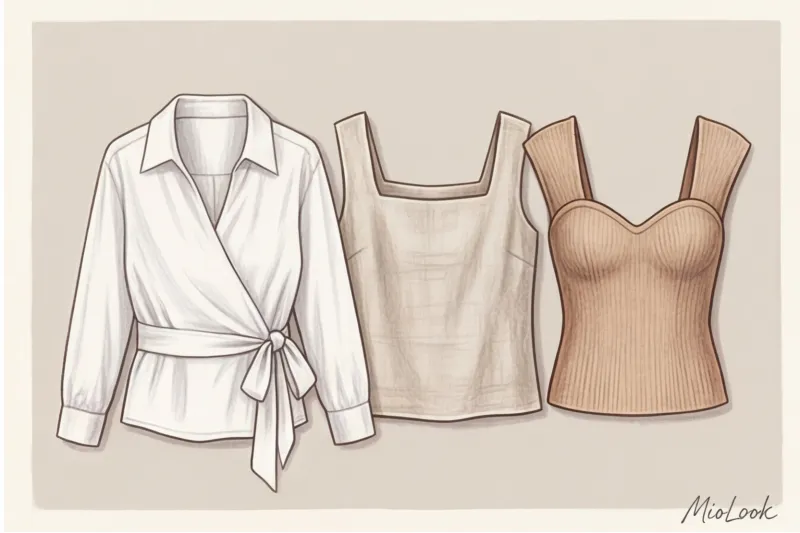
V-shaped and U-shaped: classics with nuances
A V-neckline really elongates the neck and creates the desired vertical line. But there's a strict rule regarding depth: for daytime and business looks, the bottom of the neckline shouldn't fall below the cleavage. Any deeper, and you're crossing the line between elegance and boudoir.
A wide U-neck (or deep scoop neck) is an underrated style. It's ideal for women with a full bust, narrow, sloping shoulders, and full hips (a pear-shaped figure). It visually broadens the shoulders, balancing out a heavy bottom.
Square and Heart: Line Architecture
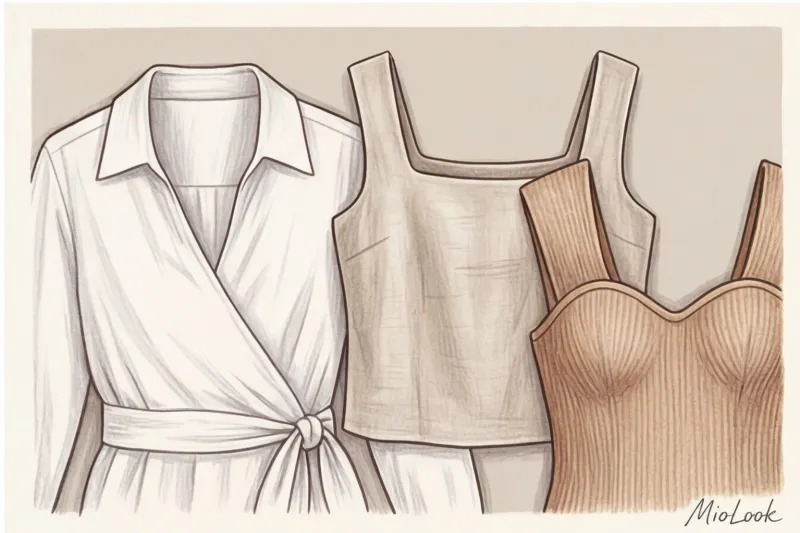
A square neckline is my personal favorite for creating an "expensive" look. The straight angles of a bob create a rigid geometry that contrasts brilliantly with the soft, natural curves of a bust. A sweetheart neckline, on the other hand, follows natural curves. It adds a feminine touch, but requires perfect fit: bra straps should never show through the corners.
Wrap: The Magic of the Diagonal
Why is the famous wrap dress, designed by Diane von Furstenberg in 1974, still considered iconic? The diagonal line cuts the full bust in half, shaping the waist even where it's less defined. But be careful: The fabric on the wrap should hang loosely. If you see any creases, the garment is too small, even if the shoulders are in place.
Ready to get started?
Try a free plan - no commitment. MioLook will help you put together a capsule where all the things fit together perfectly.
Get access — €0.99 onceForbidden Techniques? Debunking Stereotypes About Closed Necks
Open any article from the 2000s and you'll read: "Turtlenecks are strictly forbidden for girls with large breasts." I love busting this myth. A closed neckline is contraindicated for you. only in the event that you wear a thin, flimsy turtleneck as a separate and only layer of clothing.
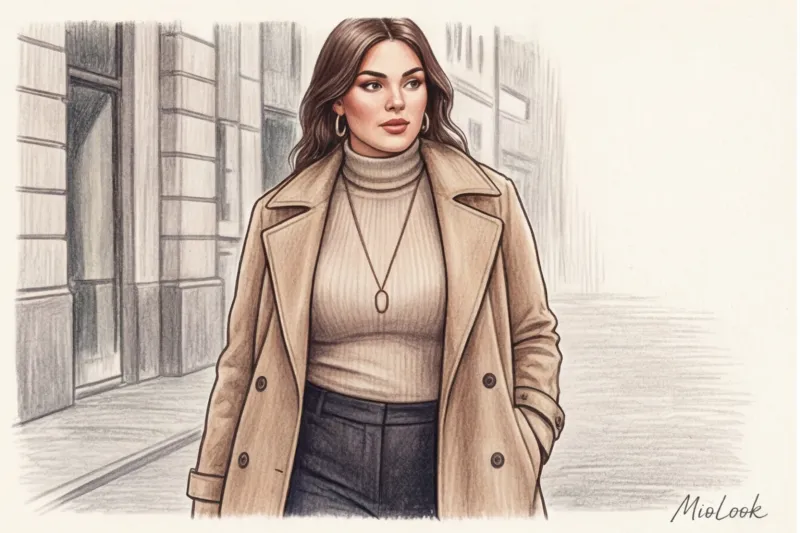
As a stylist, I can assure you: the right heavy ribbed turtleneck is your ally when layered. Wear a turtleneck in a basic color and layer it with a structured jacket, heavy vest, or trench coat, which we've been working on for a while. don't fasten What's going on? The edges of the jacket create two distinct, contrasting vertical lines that visually "cut" the bust.
The second trick: sautoirs (long chains) and pendants on a V-shaped chain. By wearing them over a button-down collar, you artificially create that same V-shaped neckline, breaking up the monolithic splash of color on the chest.
Fabrics and Prints: The Physics of Materials for a Fuller Bust
As a colorist, I constantly work with light and shadow. You must be aware of how your clothing reflects light. Satin, shiny silk, lurex—all these materials act like a magnifying glass. Highlights on prominent points (and on a large bust, they will always be there) visually add another 1-2 sizes to the volume. This is critical for video calls or photo shoots.
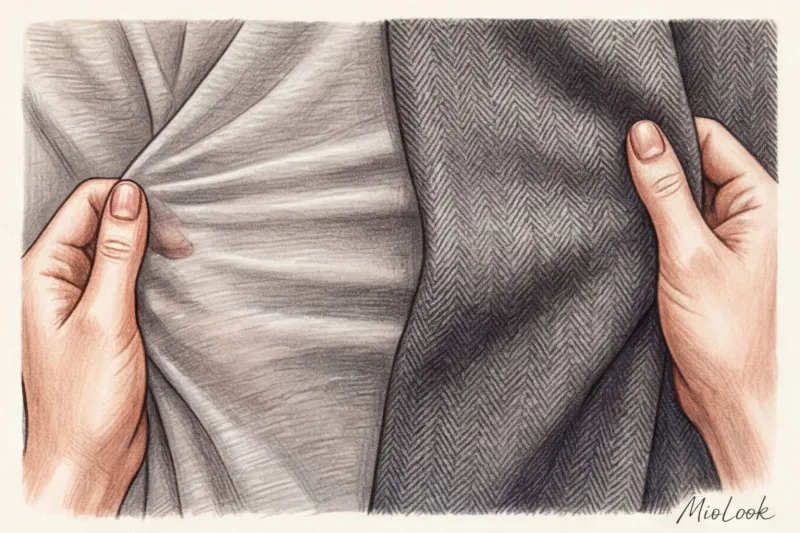
Opt for matte textures: they absorb light and make body contours more defined. As for prints, keep them proportionate. A small millefleur-style flower against a large bust looks lonely and makes the bust appear even larger due to the contrast in size. Choose medium- to large-sized prints.
Fair Limit: Avoid cowl neck draping at the neckline. This fabric physically adds volume where there's already some. A light drape, however, under bust (in the Empire style), on the contrary, perfectly structures the silhouette.
Density is king: why thin knitwear is the enemy
Thin viscose, cheap polyester, and flimsy jersey have no "skeleton." They can't hold their shape and simply cling to every fold, bra elastic, and the slightest unevenness. Your salvation is density. Cotton from 180 g/m², high-quality denim, suiting wool, and structured jersey (such as ponte). Even with a fitted silhouette, these fabrics create a corset effect.
Checklist: How to choose the perfect top in the MioLook store or app
So, you're in the fitting room. To ensure that an item (whether it's a €30 top or a €250 jacket) becomes a successful investment, perform three essential tests:
- Tension check: Look at the buttons from the side. If there are "eyelets" (gaps through which skin can be seen) between them, the item is too small in the chest. Don't buy it in the hopes of losing weight—the fit at the shoulders will also be affected.
- Raised Hands Test: Raise your arms up as if you were reaching for a book from a high shelf, then lower them. If the neckline has moved down and the fabric has bunched up over your chest and won't return to its original position, the pattern is not right.
- Freedom in the armhole: The armhole (opening for the arm) should not cut into the armpit. A finger should fit easily between the fabric and the body.
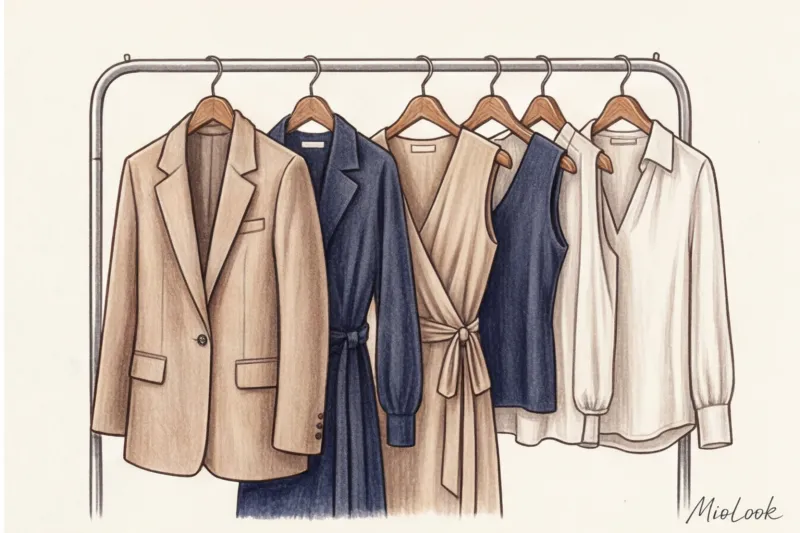
In the digital age, there's no need to waste hours in frustrated shopping malls. AI algorithms MioLook applications They analyze your individual proportions, taking into account not just the size on the tag, but also the ratio of your bust, waist, and shoulder width. The system suggests garments with the right cut and darts that will fit your figure perfectly, saving you time and stress.
A large bust is a stunning asset that requires careful styling. Stop blaming your body for not fitting into the average mass-market standards. Choose sturdy fabrics, smart necklines, and don't be afraid of layering. Once you start buying pieces designed with your body in mind, choosing clothes in the morning will become less stressful.