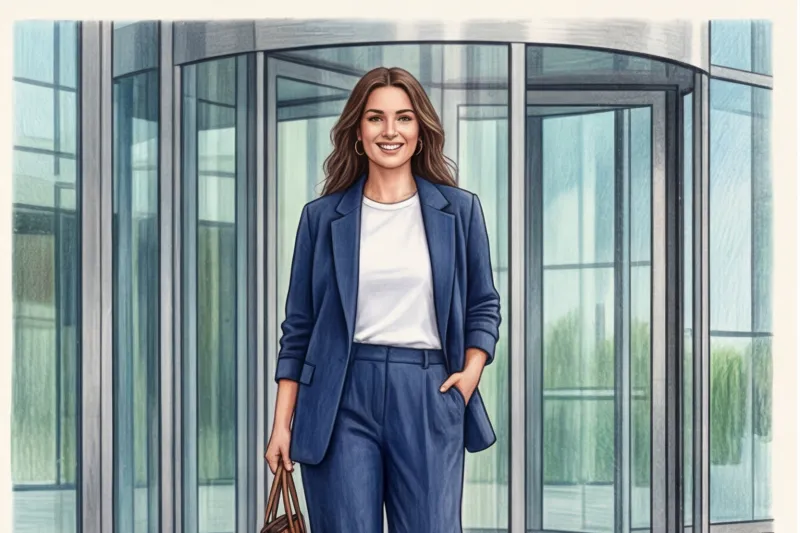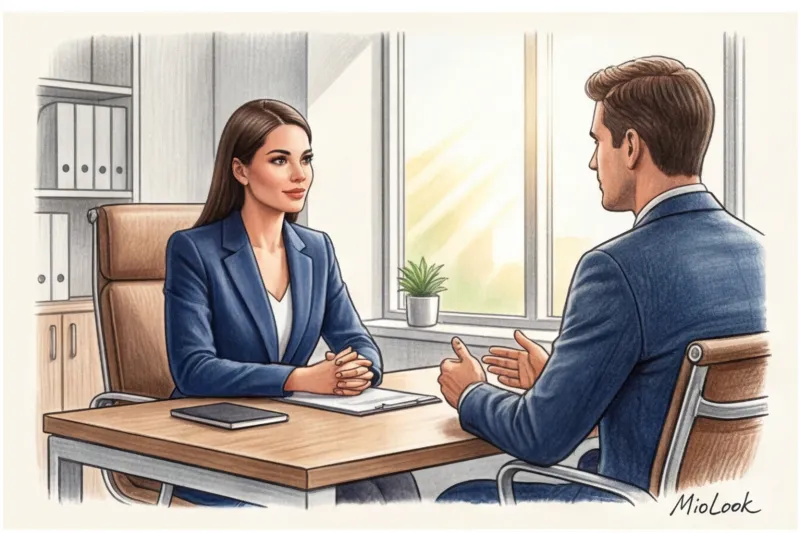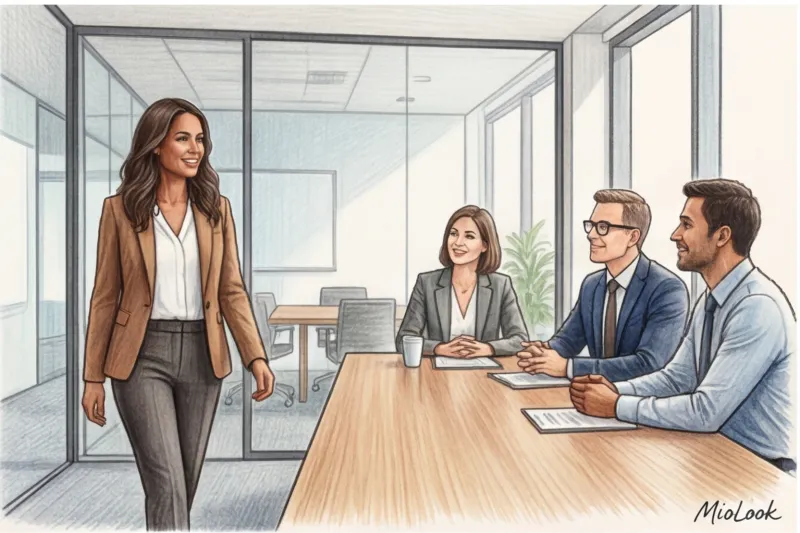
Over 12 years of working as a stylist-coach, I've analyzed hundreds of employment cases for my top-management clients. And do you know which case stood out to me the most? A brilliant developer from Silicon Valley repeatedly failed final interviews. He had an impeccable resume, but he approached startups in stiff three-piece suits. Once we swapped his armor for premium smart-casual—a cashmere jumper, a high-quality polo shirt, and a casual blazer—he received three offers in a month. This case perfectly illustrates the main rule: the question of How to dress for an interview , has long gone beyond simply “looking neat.”
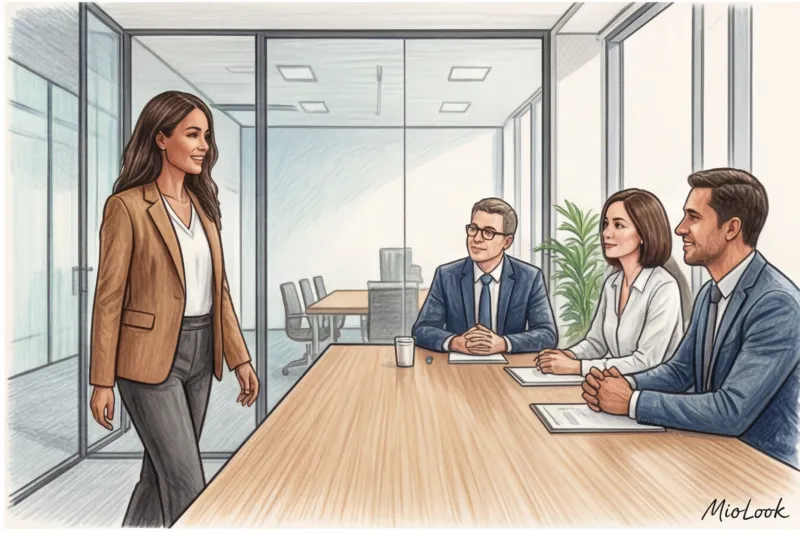
Today, we won't be talking platitudes like clean shoes and ironed shirts. Instead, we'll explore the neuroscience of trust, cognitive psychology, and the theory of Enclothed Cognition. I'll show you how to use visual triggers to bypass HR professionals' critical filters and land your dream job. We covered the basic mechanisms of the brain in more detail in our comprehensive guide: Psychology: How Clothing Affects First Impressions.
How to Dress for a Job Interview: The Neuroscience of Trust
Your resume may be scrutinized for weeks, but the recruiter's brain decides whether you're "the one" in less than a second. Research by Alexander Todorov of Princeton University has proven that it takes us just 100 milliseconds to assess a stranger's competence and trustworthiness based on their silhouette and facial features.
Recruiting is dominated by a cognitive bias known as the "Halo Effect." If your jacket fits perfectly, holds your shoulders perfectly, and doesn't wrinkle, the interviewer's brain automatically (and unconsciously) attributes other positive qualities to you. "She has a perfectly tailored jacket, so she's just as meticulous in reporting and time management"—that's how this logic works.
Albert Mehrabyan's 55% Rule states that in a face-to-face meeting, the words you speak account for only 7% of your influence. Your intonation accounts for 38%, and your visuals (how you look and move) account for a whopping 55%.
That's why a perfect answer to a tricky question can fall on deaf ears if your visual message screams insecurity or sloppiness.
Embodied Cognition Theory: How Clothes Change Your Confidence
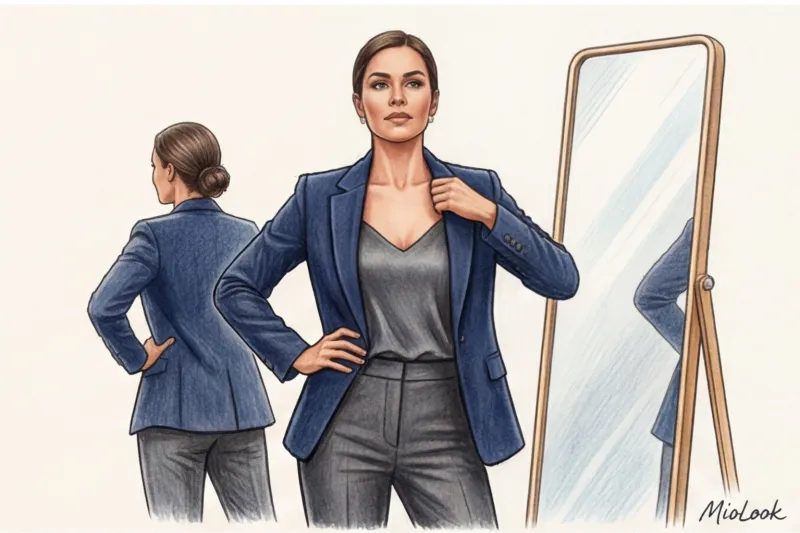
Adam Galinsky, a researcher at Northwestern University (USA), coined a startling term: Enclothed Cognition (embodied cognition). He demonstrated that the symbolic meaning of clothing physically influences the wearer's cognitive abilities.
Structured tailoring—jackets with defined shoulders, dense fabrics like Super 120s wool, or starched collars—literally forces you to stand up straight. This change in posture sends a signal to your brain, lowering cortisol (the stress hormone) and increasing testosterone. You begin to speak louder, pause more confidently, and fidget less.
I often use this hack in my practice. My clients and I collect "power outfits"—images of strength. To avoid wasting mornings in front of your closet, I recommend digitizing these outfits. For example, using an app. MioLook You can create and save an interview capsule in advance. Simply open your phone, put on your tried-and-true look, and conserve your mental energy for the tough interview questions.
Access to MioLook for €0.99 — one-time payment
A smart AI stylist will find the perfect look for your next interview.
Get access — €0.99 onceThe Insider Effect: Adapting to the Company's DNA and Culture
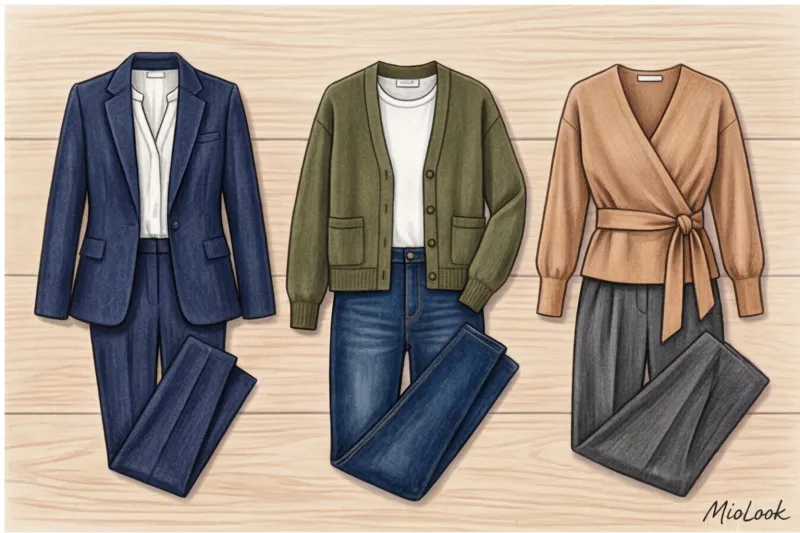
People are biologically programmed to trust those who are similar to them. In psychology, this is called in-group favoritism (in-group favoritism). Your job in the interview is to visually say, "I'm in your pack. I understand your rules."
I tracked my clients' conversions and came up with a golden rule. "Level + 10%" The optimal attire for an interview should be exactly 10% more formal than the company's casual dress code. How do you know? Check the company's social media, look at photos from corporate events, or look at videos from the office. Estimate the average temperature in the hospital and take a step up.
Corporate sector: banking, finance and law
Business Traditional and Formal standards reign here. Your goal is to convey reliability, conservatism, and respect for hierarchy.
- Fabrics: Smooth textures. Fine suiting wool, silk, dense cotton. No linen or loose knits.
- Cut: Stiff collars, closed shoes, fitted or semi-fitted silhouettes.
- Colors: Dark blue (navy), graphite gray, pure white.
Technology and IT: Startups and Big Tech
A world where a suit can cost you your job. Smart casual and business casual reign supreme. Flexibility of thought and comfort are prized.
- Fabrics: A mix of textures. Cashmere, high-quality dark denim without fraying, and heavyweight knitwear (from 180 g/m²).
- Cut: Layering replaces formality. A blazer over a basic, quality T-shirt (no prints) or turtleneck.
- Shoes: Clean, minimalist leather sneakers or loafers.
Creative industries: marketing, PR, design
Creative Professional Style. Your clothes are part of your portfolio. They demonstrate your keen eye and understanding of trends.
- Cut: Current silhouettes are acceptable: moderate oversize, asymmetry, deconstructivism.
- Details: Accent accessories. Interesting glasses frames, unusual yet simple shoes.
- Brands: Items from local niche designers or conceptual brands (COS, Arket) will work better than boring mass-market classics.
The "Too Dressy" Mistake: Why Hyper-Formalism Ruins an Offer
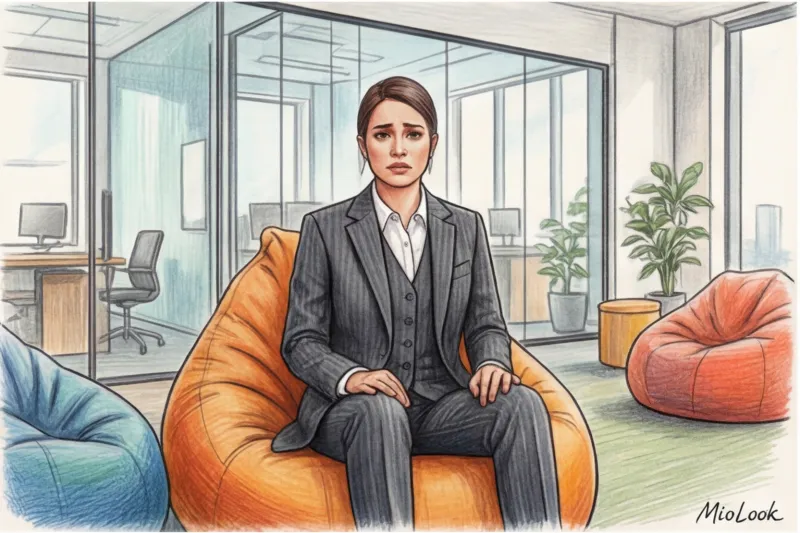
It's time to kill the old myth "it's better to be overdressed." In today's world, this is dangerous advice. Why?
When you show up in a suit and tie to an Agile team where the founders are all wearing hoodies, you create cognitive dissonance. You convey rigidity, inflexibility, and adherence to outdated corporate norms. Subconsciously, they decide, "He won't fit into our culture; he's too slow for our sprints."
The other extreme is overdressing. Evening fabrics (satin, velvet, lurex), excessive shine, an abundance of logos, or jingling bracelets steal the spotlight. The recruiter should remember your expertise in data analytics, not the shimmer of your blouse.
Your perfect look starts here
Join thousands of users who look flawless every day with MioLook.
Get access — €0.99 onceHow to Dress for an Interview: A Palette That Sells Your Competencies
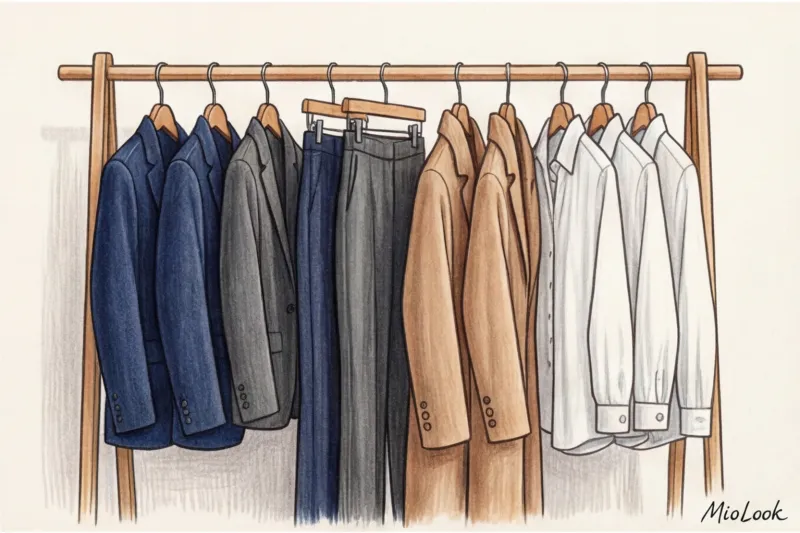
Color is the fastest way to convey information to the interviewer's brain, bypassing critical thinking. Corporate HR research shows that the right color can increase a candidate's perceived credibility by 30%.
- Dark blue (Navy): The ultimate champion. Projects leadership, logic, teamwork, and reliability. When in doubt, wear Navy.
- Grey: The color of the eminence grise. It speaks of an analytical mind, calmness, and a high degree of autonomy. An excellent choice for financial analysts and engineers.
- Black: Strong, authoritative, yet dangerous. A black suit can be perceived as distancing or even passive-aggressive. Stylist's advice: Always soften black with textures (like wool or cashmere instead of smooth synthetics) or offset it with white/cream.
- White and beige: Openness to dialogue, meticulousness, and thoroughness. Ideal for positions related to communications or customer service.
Fair disclaimer: when it does NOT work. If you're interviewing for an art director position at a glossy magazine or creative agency, a total navy blue look will make you invisible. In such cases, you need measured pops of bright red, cobalt, or even neon to show your boldness.
The Devil in the Details: Status Markers and Grooming
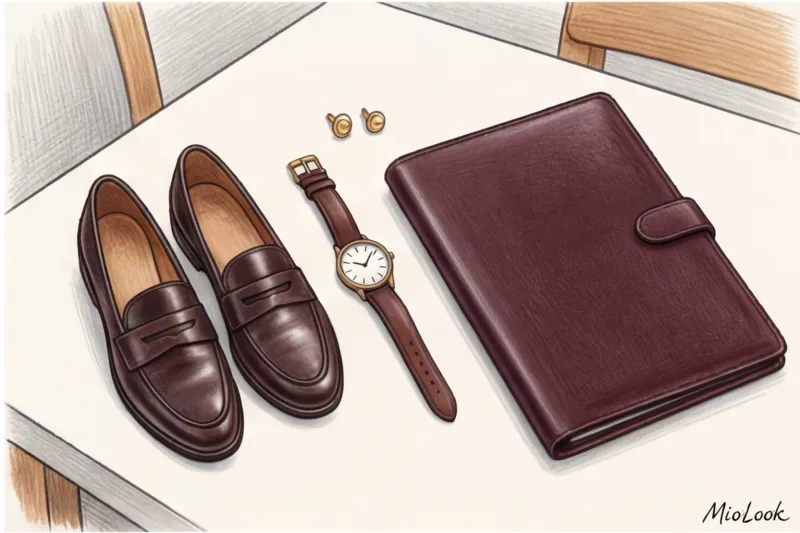
One HR director at a major bank once confessed to me, "I can forgive an inexpensive suit, but worn-out heels or dirty toes are an immediate no-no." Shoes are a key trigger for assessing status and attention to detail. A good pair of basic shoes (in the €150-€300 range) pays for itself with a successful first interview.
Another secret known only to practicing stylists: the shape of your bag influences the perception of your intelligence. Soft, shapeless hobo bags or backpacks are subconsciously associated with sloppiness and mental disorder. Choose structured bags or rigid document folders—they convey composure and order.
The psychology of scent: not wearing perfume during an interview is 100 times better than the most expensive niche brand. You never know what the recruiter is allergic to or has a negative association with (perhaps it was their ex-wife's scent). Don't take any chances.
Checklist: How to Plan Your Look 24 Hours Before an Interview
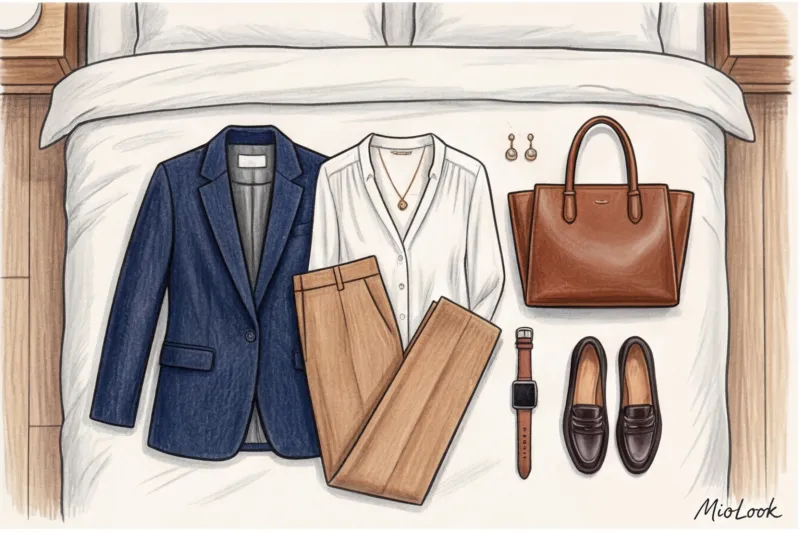
The morning before an interview is high cortisol time. If you start ironing your shirt an hour before leaving and discover a stain, your stress levels will skyrocket. Here's my workflow:
- Photo test: Put on the entire outfit (including shoes!) and take a full-length photo in daylight. The mirror will distort the proportions, while the camera will show an objective picture. To automate this process, use the "smart wardrobe" feature in MioLook — there you can evaluate how things interact with each other visually.
- Clothing stress test: Sit on a chair for 15 minutes. Is your skirt or pants significantly wrinkled? Raise your arms—is your stomach showing, or are your armholes pulling? You should feel physically comfortable.
- Plan B: Your structured bag should contain: extra nylon tights (for women), a lint roller, and shoe wipes.
Ready to get started?
Try the free MioLook plan to digitize your wardrobe and create looks without stress.
Get access — €0.99 onceSummary: Clothing as a Tool for Attention Management

Clothes will never replace your hard skills. You won't get a Senior Analyst job just by wearing the perfect cashmere blazer. But the right outfit can remove visual barriers that could otherwise overlook your skills.
Remember the most important thing: the ideal interview look is one that the recruiter won't even be able to recall in detail after the meeting. They won't recall the brand of your shirt or the pattern on your tie. But they will clearly remember your confident presence, your professionalism, and the feeling of absolute appropriateness you conveyed from the very first second.
Treat your wardrobe not as a fashion statement, but as a business tool. Digitize your successful business capsule collections, invest in the right textures, and let your clothes work for your career, not against it.