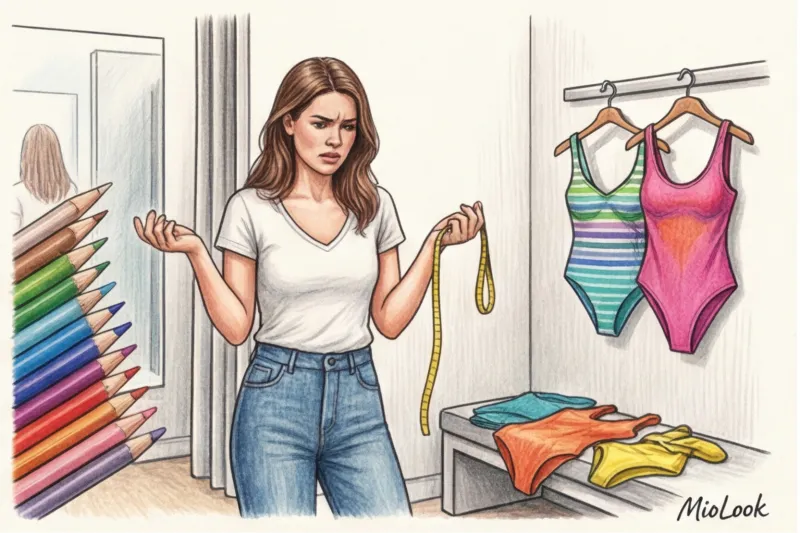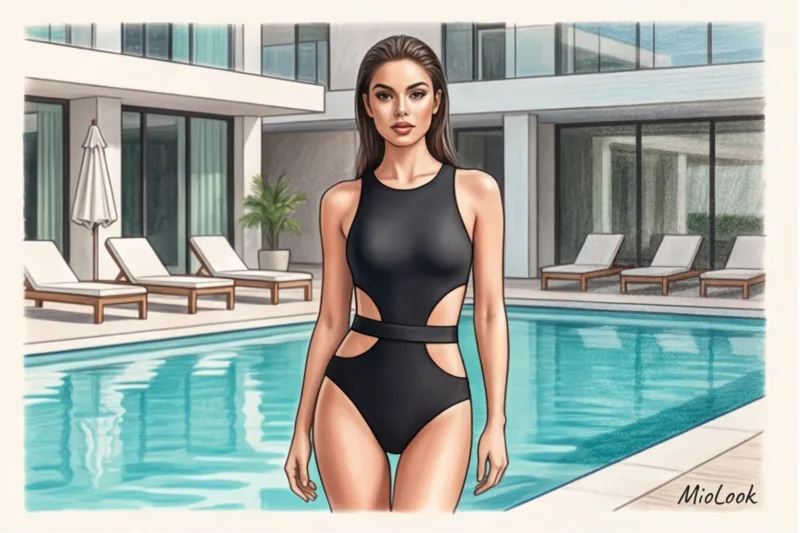
Remember that feeling? The harsh fluorescent light of a fitting room, skin tired from a long winter, and a dozen swimsuits that fit you completely differently than they do on a perfect studio mannequin. I'm sure this scenario is familiar to everyone.
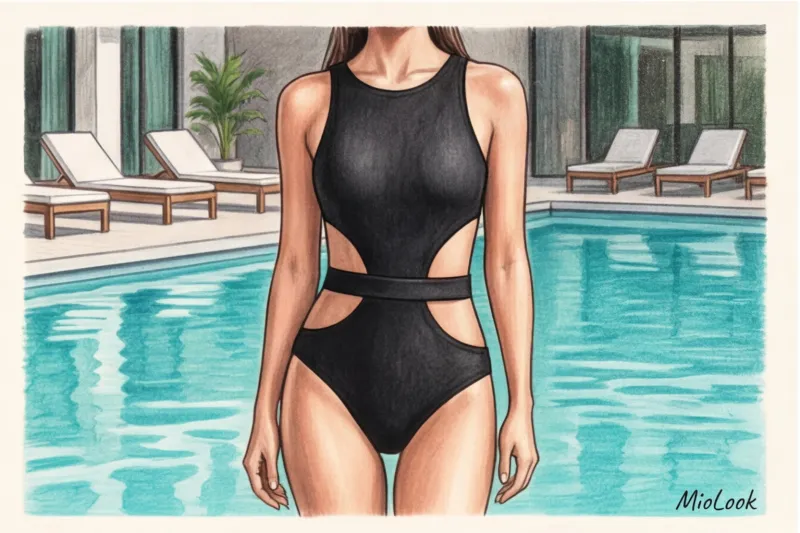
After 12 years of working as a personal shopper, the question of How to choose a swimsuit according to your body type I hear this every spring. And every time, I see the same plea in my clients' eyes: "Help me hide it." But let's be honest. Trying to disguise yourself under layers of excess fabric on the beach is a losing strategy. Instead of hiding, we'll use the laws of architecture and optical illusions.
If you still divide yourself into "apples," "pears," or "inverted triangles," forget it. We've covered why this method is outdated in our a complete guide to body types and clothing selection Today we're talking about lines, fabric density, and proper focus.
Forget about "apples" and "pears": modern geometric beach style
The classic fruit-based system of body typing is hopelessly outdated. It forces women to focus on their "flaws" and fosters insecurities. The modern Milanese approach to styling, which I apply in my practice, dictates a different rule: we don't disguise the figure, we direct the viewer's attention.
One of my clients, Anna, spent years buying bikini shorts, believing they hid her wide hips. What was really happening? The horizontal line of the shorts cut her leg right at the widest part of her thigh, visually making her pelvis look even heavier and bulkier. As soon as we switched her to high-cut bikinis, her hips "disappeared," and her legs seemed endless.
To stop guessing in the fitting room, you can use silhouette visualization feature in MioLook Artificial intelligence helps you assess how specific cut proportions work with your body structure before you go shopping.
The Biggest Myth of Beachwear: Why Black Doesn't Make You Look Slimmer
There's a ingrained stereotype: a matte black one-piece swimsuit is a one-size-fits-all solution for losing two sizes. As a stylist, I have to disappoint you: on the beach, it works exactly the opposite.
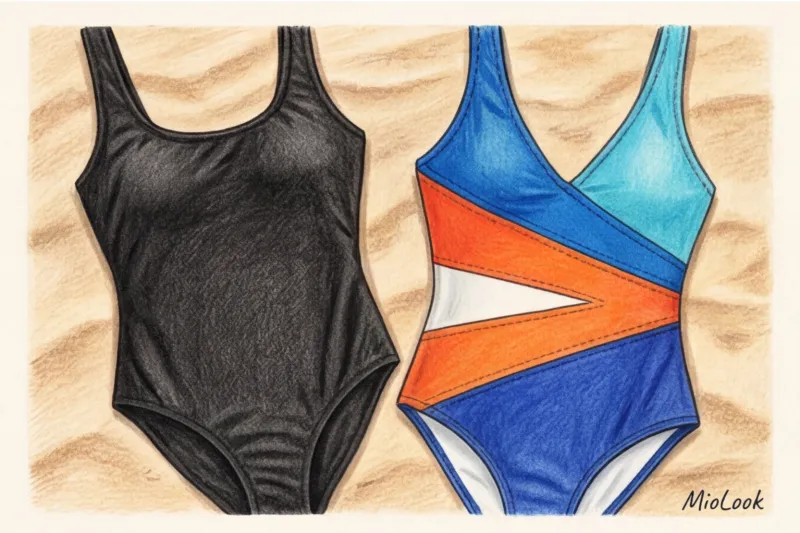
According to PANTONE Color Institute analysis reports and WGSN trend research (2024), matte black completely absorbs light. Against the backdrop of light sand and bright sunlight, it creates a massive, monolithic dark spot. Black creates a clear outline that, with treacherous precision, outlines absolutely every curve and fold you so desperately wanted to hide.
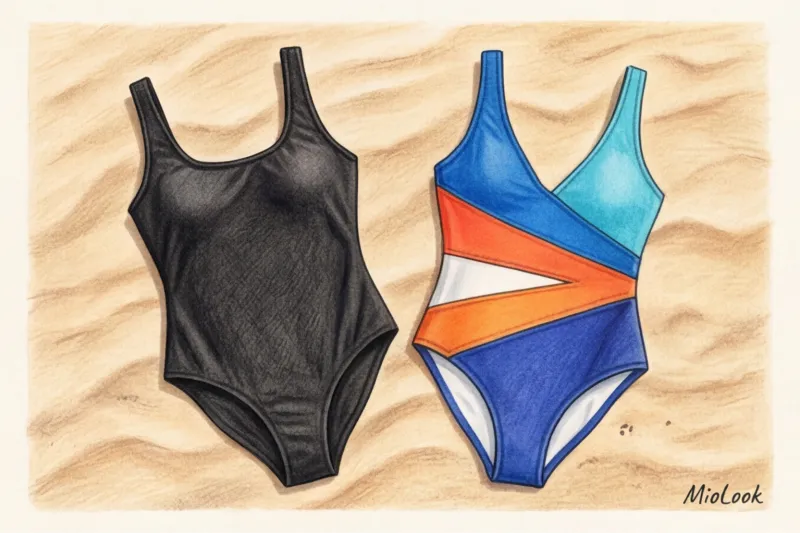
Instead of monochrome, styling utilizes the Müller-Lyer law—an optical illusion that distorts size. A swimsuit with contrasting side panels (color blocking) or diagonal lines literally "cuts" volume at the sides, creating a new, more graceful silhouette. Light and bright details draw attention away from areas you consider problematic, shifting the focus to the chest, shoulders, or waistline.
Access to MioLook for €0.99 — one-time payment
A smart AI stylist will select the perfect look and help you put together a vacation capsule.
Get access — €0.99 onceHow to choose a swimsuit for your body type: solving specific problems
Let's leave rigid labels in the past. The same woman can have small breasts but a tummy, or curvy hips with broad shoulders. So before shopping, stand in front of a full-length mirror and identify one or two specific visual goals you want to achieve.
Goal: To lengthen the legs and balance the hips
Avoid swimsuits with shorts, low-waisted bottoms, and wide side ties. These elements create additional horizontal lines that shorten your height and visually widen your hips.
Your secret weapon is a high French cut (a nod to '80s aesthetics). It reveals the groin crease and visually adds a good 5-7 centimeters of length to your legs. To balance out a heavy bottom, shift the emphasis upward: choose one-shoulder bras, ruffled styles, or styles with a bold print.
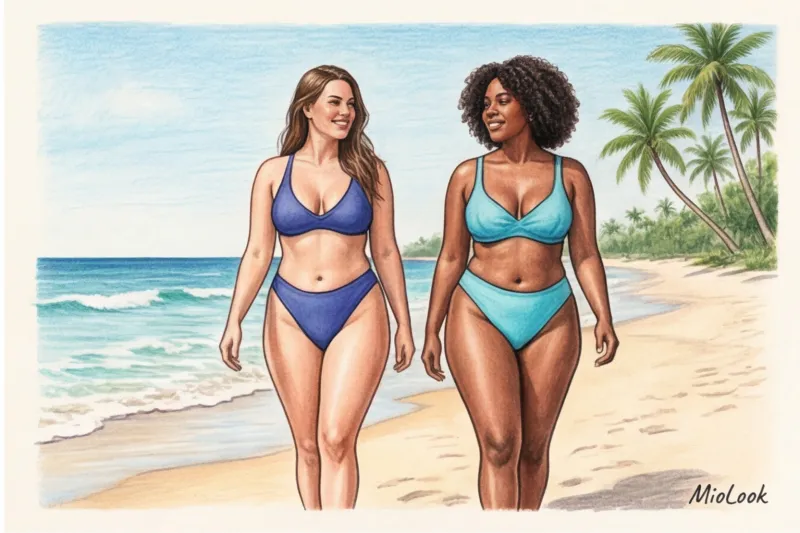
But there's a key caveat: this technique WON'T work if you have a naturally long torso and short legs, paired with low-waisted bottoms. In this case, you'll only accentuate the disproportion. You'll need a combination of a high waist and a high cut thigh.
Objective: to visually create or emphasize the waist
If your figure is closer to a rectangle and your waist is not clearly defined, we will create it using geometry.
- One-piece wrap-around models. The diagonal draping on the stomach visually narrows the center of the figure.
- Cut-outs (shaped cutouts). Symmetrical cutouts on the sides of a one-piece swimsuit create the illusion of an hourglass silhouette, even if you never have one.
- Retro landing. Two-piece swimsuits where the bottoms have a wide, tight waistband that sits exactly at the narrowest part of your waist.
Objective: reliable support and a beautiful bust line
Classic triangle bras with thin ties are the worst enemy of a full bust. They dig into the neck, create tension, and offer no support. Studying the patterns of lingerie brands like Oysho and premium H&M lines, I see a clear trend: high-quality support is built on a hidden architecture.
For larger busts, look for a balconette style with hidden underwire (when the underwire is sewn into the fabric), wide straps that don't roll, and a secure back closure instead of knots.
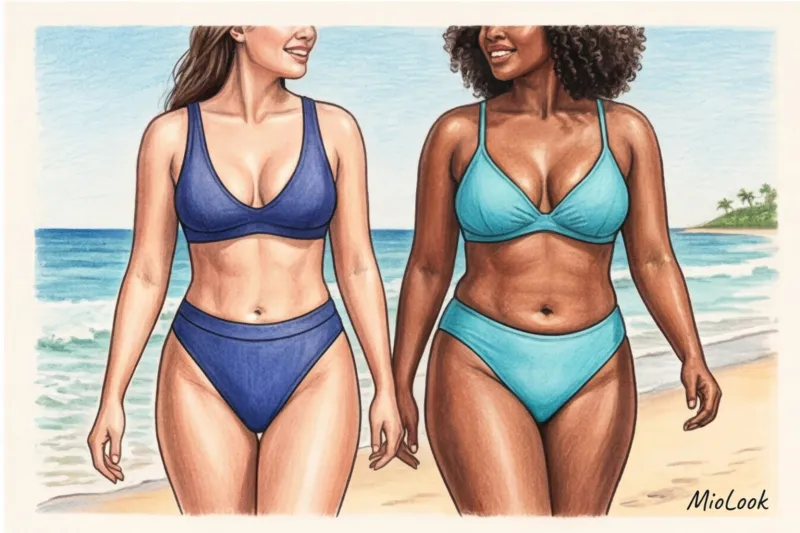
Textured fabrics (stripes, heavy ribbed fabrics) and minimalist bandeau tops work well for smaller busts. Texture adds the necessary 3D volume without the need for awkward push-ups.
Task: delicate tummy tuck
Forget shiny, glossy fabrics—they magnify any uneven skin. Opt for matte textures and small, chaotic prints (animal prints, ripples, abstracts). Unlike solid fabrics, prints distract the eye, making the contours of your belly less noticeable.
Look for styles with a hidden shaping mesh (power mesh) inside. Micro-draping around the stomach area also works wonders: the fine folds of fabric disguise the volume much more aesthetically pleasing and comfortable than a rigid, constricting compression garment.
Fabric Architecture: What to Look for Before Going to the Fitting Room
A beautiful cut is pointless if a swimsuit is made of cheap polyester that will sag after your first swim. Lingerie technologists agree on one thing: the fabric should act as an elastic frame.
Pay attention to the composition. The optimal shaping effect is achieved with 18% to 25% elastane (or spandex). If the elastane content is less than 15%, the swimsuit will be comfortable but will not provide the necessary support and shape.
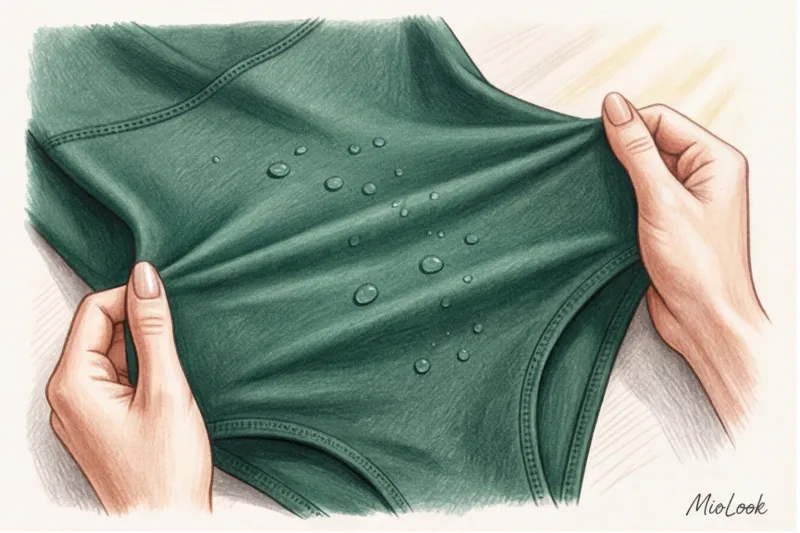
The second essential requirement is a double layer of fabric. This isn't just a sign of brand quality, but also a guarantee that the swimsuit won't become see-through when wet.
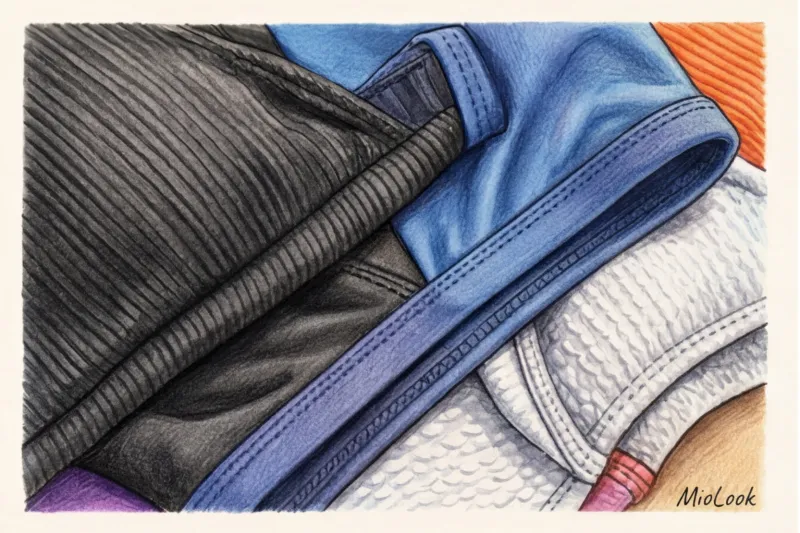
Texture also plays a significant role: ribbed, seersucker, and terry fabrics have a higher density. They smooth out the skin's microrelief and act as a gentle sculptor, bringing the silhouette together.
Your perfect look starts here
Join thousands of users who look flawless every day with MioLook, finding the perfect combination of textures and shades.
Get access — €0.99 onceStylist Checklist: Crash Test a Swimsuit in the Fitting Room
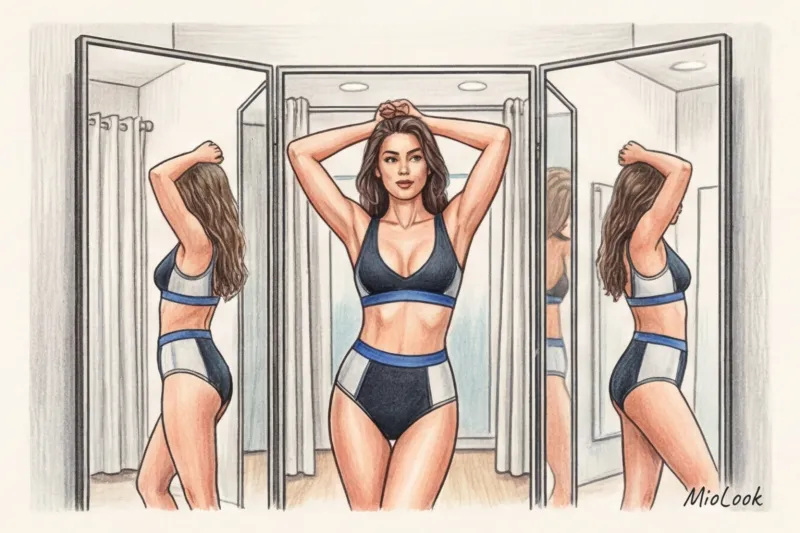
Never buy a swimsuit by simply standing in front of a mirror in it. In my practice, I make my clients perform a mandatory crash test. Here are four steps to avoid disappointment on the beach:
- Rule of dynamics. Be sure to raise your arms high, lean forward, and sit on the ottoman. Your bra shouldn't ride up your ribs, and your briefs shouldn't cut into your skin when you bend.
- Reserve for getting wet. This is the most important rule that many people don't know: water relaxes fabric fibers by 5-7%. A dry swimsuit in the fitting room should fit you perfectly. very tightly , bordering on mild discomfort. While it fits loosely when dry, it turns into a parachute in water.
- Checking the rubber bands. The edges of the swimsuit (especially at the hips and back) should not cut into the skin, creating non-existent folds. If the elastic cuts in, order a size up; don't rely on the numbers on the tag.
- Back test. Be sure to use a second mirror or your smartphone camera to assess the fit from behind. The bottoms should flatter your buttocks, not flatten them.
Your pre-vacation action plan
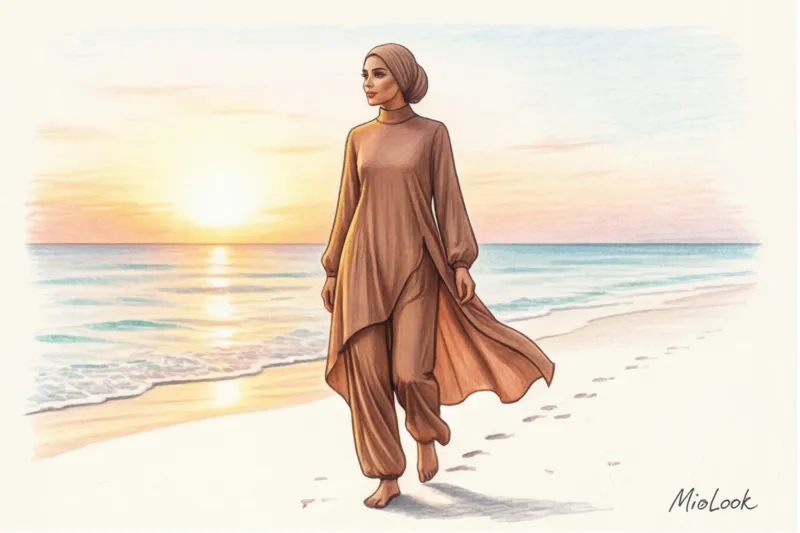
When packing for vacation, don't buy half the store's inventory. To feel confident, simply put together a well-designed mini capsule. MioLook wardrobe You can plan your beach looks in advance: you'll only need two suitable swimsuits (one one-piece for active recreation and one two-piece for an even tan) plus a versatile cover-up or an oversized linen shirt.
Stop criticizing your body in the fitting room. If a garment fits poorly, it's the manufacturer's cut that's the problem, not your figure. Use thick textures, draw attention with geometric cutouts, and remember: the best swimsuit is the one you forget about immediately after you hit the beach, enjoying summer and your confidence.