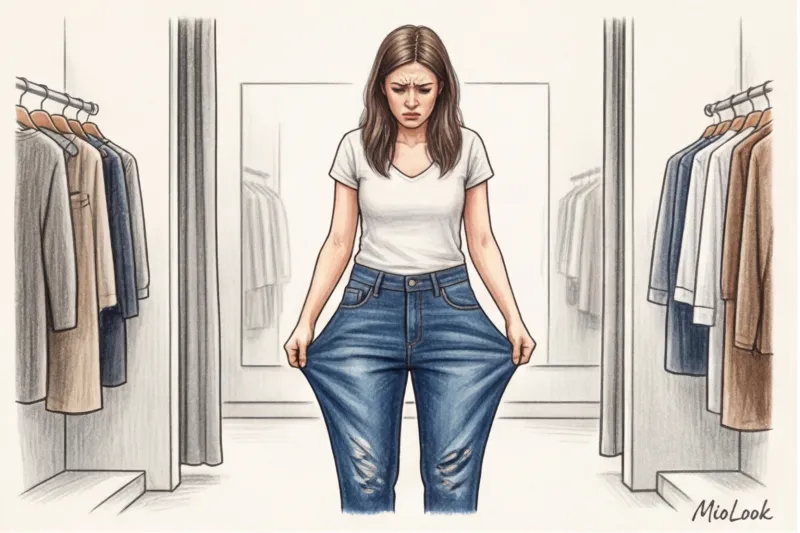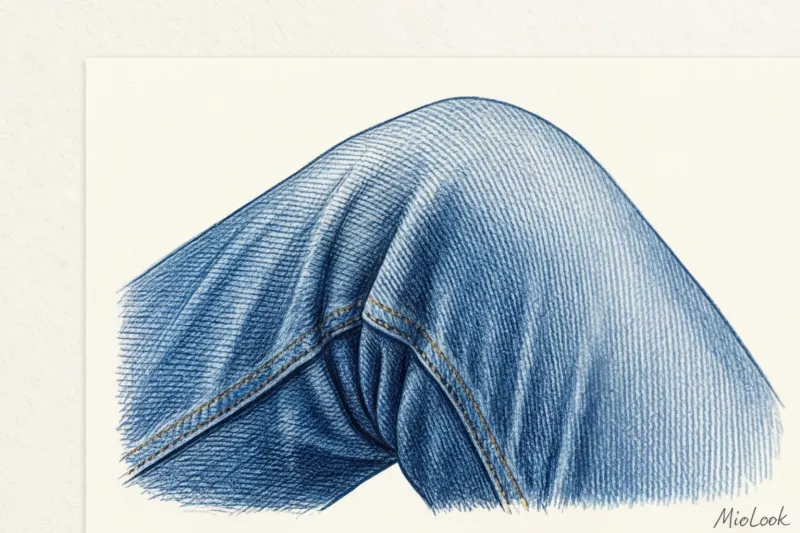
Have you ever noticed how your perfect pair of jeans in the morning turns into shapeless, baggy jeans by lunchtime? You look in the fitting room mirror—the fit is impeccable. You buy them, happily wear them to the office, and a couple of hours later you feel the fabric has sagged and all the shine has disappeared. My name is Olena Kovalenko, I've been a personal stylist for 14 years, and the problem of denim shrinking is the number one complaint from new clients.
We have already discussed the basic principles of fabric evaluation in more detail in our a complete guide to choosing quality clothing And today I want to talk about the physics of denim. We'll break it down, How to choose quality jeans that will survive hundreds of wears, flights, and long working days at a desk, remaining in pristine condition.
The Anatomy of Denim: Why Do Jeans Stretch Out at the Knees?
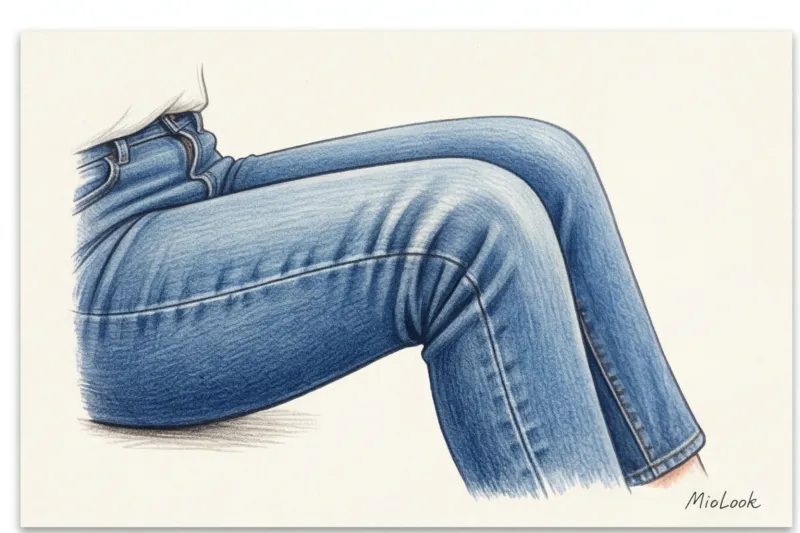
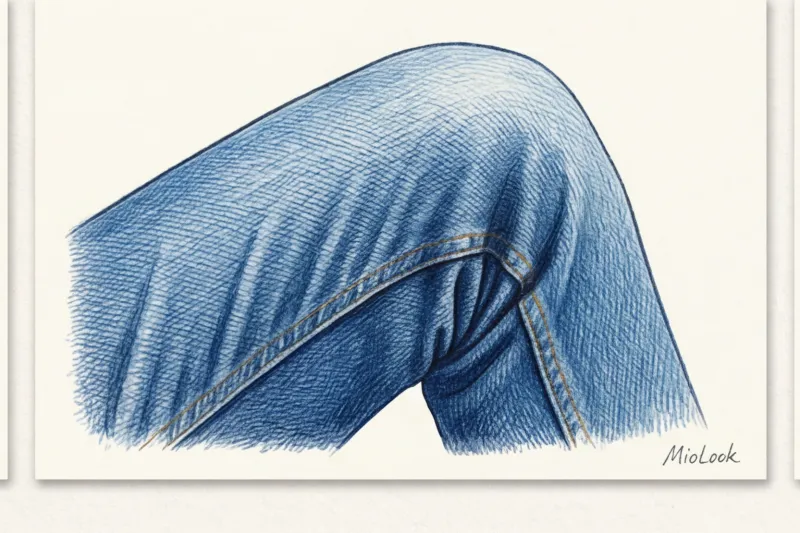
Let's face it: the knee joint is an area of extreme stress for any clothing. When you sit down, the fabric on your thigh and knee is stretched to its limits. If the material doesn't have the necessary elasticity, the fibers simply stretch and remain in that position.
One of my clients once bought a pair of premium jeans for €500 before an important informal interview at an IT company. She chose a slim-fit pair made of 100% heavy cotton, firmly believing in the rule that "real jeans shouldn't stretch." After two hours of waiting in the chair, her lap had developed such blisters that her look went from elegant smart casual to casual. The problem wasn't the brand, but rather that we'd ignored the key factor—the fabric's recovery rate.
"The biggest myth about denim is the belief that 100% cotton never stretches. The reality is harsh: if 100% cotton is tight at the folds, it will stretch faster than cheap stretch and will never return to its shape on its own. It simply has a zero-return rate."
It is the ability of the fibers to act like a spring, compressing back after deformation, that distinguishes jeans as an investment from a one-season item.
The main secret: how to choose high-quality jeans based on composition and density
To understand, How to choose quality jeans , you need to stop looking at brand logos and start reading the internal labels. The industry has come a long way, and today, the best manufacturers use an engineering approach to yarn.
Ideal Density: Why Ounces Matter
Denim weight is measured in ounces (oz) per square yard. Mass-market denim almost never displays this number on tags, but the difference is easy to tell by touch.
- Up to 10 oz: Lightweight summer denim. It wears out quickly and barely holds its shape. Suitable only for loose, flowing silhouettes.
- 12–14 oz: The gold standard. This is the kind of thick yet comfortable denim you need for your basic wardrobe.
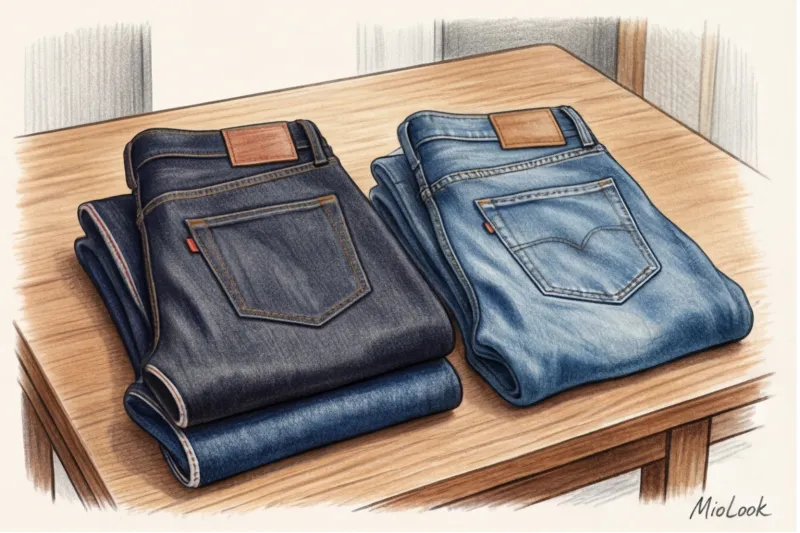
- From 15 oz: Heavy selvedge. Looks luxurious, lasts for decades, but requires a painful break-in period.
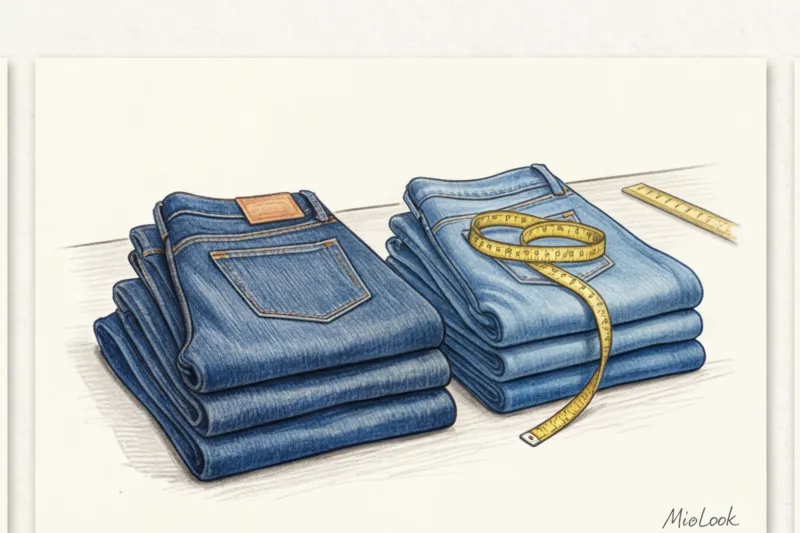
How can you check the density if the label doesn't list ounces? Try crumpling a pant leg in your fist. Proper denim (12-14 oz) should offer slight resistance, feel dry and firm to the touch, and not feel like a thin knit T-shirt.
Correct elastane and spring effect (Lycra T400)
Many people are afraid of elastane like the plague, considering it a sign of cheapness. And they are right if they see it on the tag. 95% cotton, 5% elastane Regular elastane breaks down from body heat, friction, and washing. 5% elastane is the recipe for a disposable item that will become wavy within a month.
The magic of modern technology lies in other words: look on the label elastomultiester (elastomultiester) or trade mark Lycra T400 This is a two-component reinforcing thread. A 2023 report by research company WGSN confirms that the use of elastomultiester increases the shape retention of skinny trousers by three times.
The ideal formula for blended denim for skinny and straight fits looks like this: 92–95% cotton + 3–6% elastomultiester + 1–2% elastane Cotton provides texture, elastane provides initial stretch, and elastomultiester acts as a spring, causing the fabric to return to its original state.
Your ideal image begins Here
Join thousands of users who look flawless every day with the MioLook smart wardrobe.
Get access — €0.99 onceForensic Shopping: 5 Hidden Signs Your Jeans Will Last a Long Time
In stylist circles, there's a term called "detective shopping." At private shows like Première Vision in Paris, buyers first turn the clothes inside out. The inside out tells no lies. Here are five signs I always look out for.
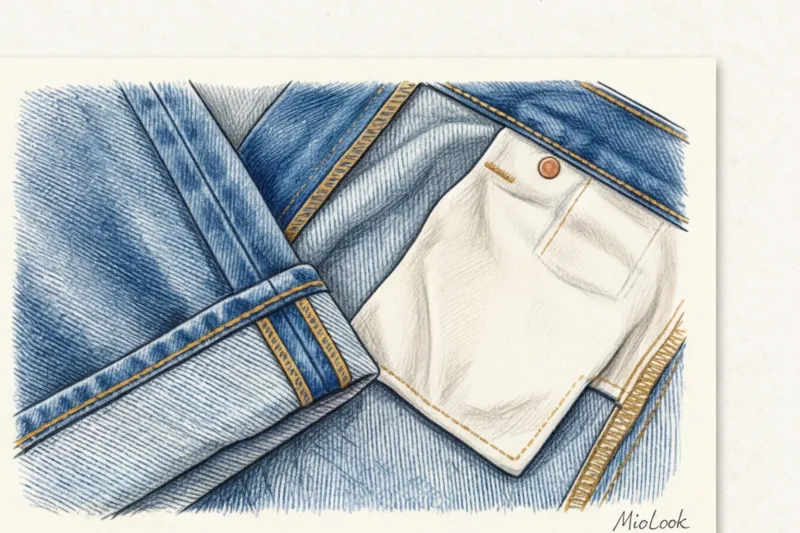
- Chain stitch: Look at the hem of the pant leg from the inside. The seam should resemble a chain. It's elastic and moves with the fabric, unlike a cheap single stitch that snaps under tension.
- Lap seam: The inner thigh (where the legs rub against each other) should have a double flatlock seam. The edges of the fabric are tucked in. If you use a regular overlock stitch, the jeans will wear out in a couple of months.
- Copper fittings: Scrape the rivets from the inside. They should be copper or brass, not some cheap painted alloy that will peel off after the first wash. I only accept YKK or IDEAL zippers.
- Pocket bags fabric: Put your hand in your pocket. The burlap should be made of thick cotton (twill) so your fingers won't show through. If the pocket is thin and slippery, the manufacturer has cut corners.
- Reinforced belt loops (Bartacks): Belt loops should be secured with tight zigzag stitches, not a simple straight stitch.
How does style affect fabric deformation?
My advice about elastomultiester doesn't work for all styles. The choice of material directly depends on the amount of space between your skin and the denim.
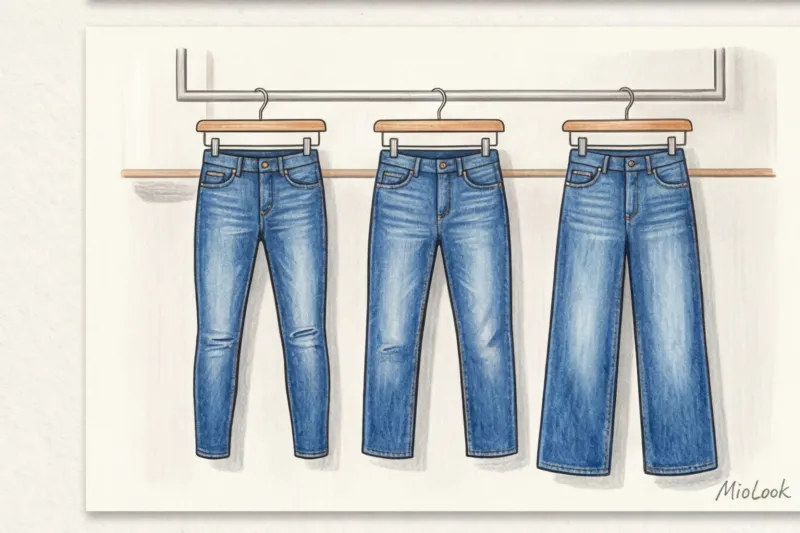
Skinny and slim. This is the highest risk zone. Here, the fabric is literally stretched over the joints. If you prefer this type of cut, the elastomultiester in the composition is essential. Otherwise, blisters are guaranteed.
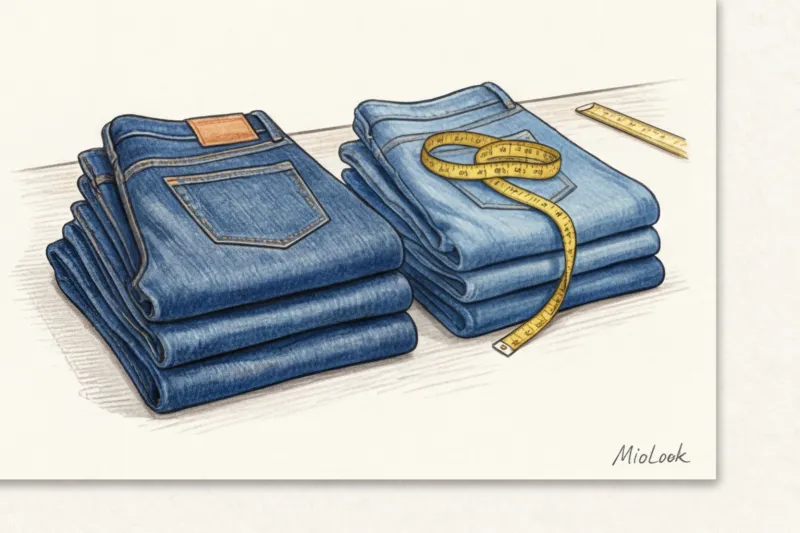
Straight and mom jeans. They require a proper balance. I recommend reading our article about ideal jeans for tall girls , where we discuss the fit of straight-leg styles in detail. There should be at least 1.5–2 cm of space around the knee.
Wide-leg jeans (palazzo). But here's where the rule changes! Wide tubes can and should be made of 100% ring-spun cotton. The fabric doesn't touch the knee at all when bent, so there's nothing to stretch. However, pure, dense cotton will create a beautiful architectural fold.
Test Drive in the Fitting Room: How to Check Out Jeans Before Buying
Never buy jeans just by twirling them in front of the mirror. I make all my clients do a rigorous test drive right in the fitting room. It takes exactly a minute, but saves hundreds of euros.
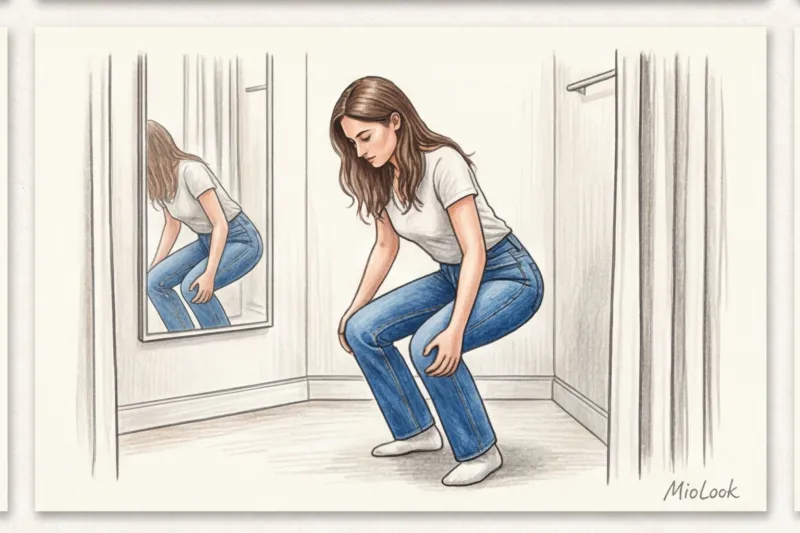
1. Pinch test. Stand up straight. Pinch the fabric around your knee. For straight-leg styles, you should easily pull about 2 cm of fabric. If the fabric is already taut like a drum when standing, it won't hold up when you sit.
2. Return test. Grasp the fabric on your hip with both hands and stretch it outward about 5 cm. Release it quickly. It should snap back into place with a resounding click. If the surface begins to ripple slightly, hang the jeans back on the rail; they're already tired.
3. 10-second squat. My favorite technique: Sit on a ottoman in the fitting room (or do a deep squat), bending your knees more than 90 degrees. Hold for 10 seconds. Stand up and look at your knees in the mirror. Denim with good recovery It will straighten out in a second. Bad denim will leave noticeable dents.
Proper care: how to wash jeans so they don't lose their shape
Many people believe the myth: "If your jeans have stretched out, wash them in hot water and they'll shrink." Yes, they will shrink. Right up until you sit in the washing machine. Frequent hot washes are a shape-killer.
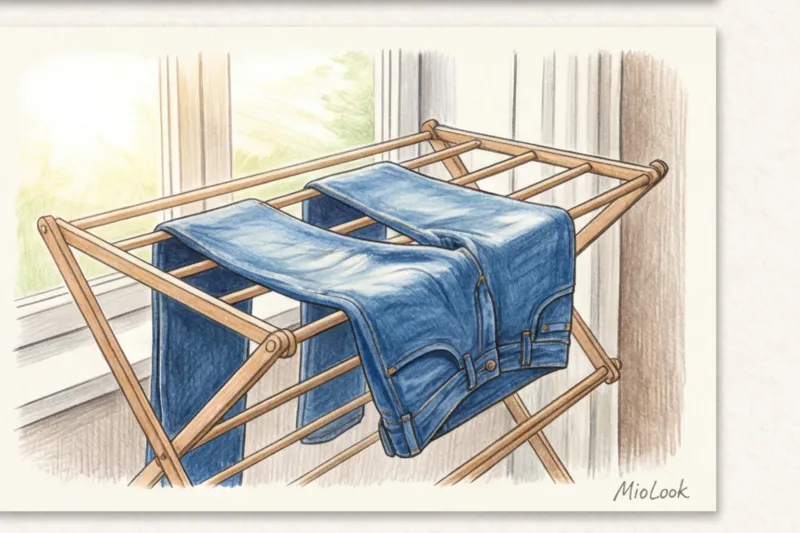
Care instructions that will triple the life of your denim:
- Washable up to 30 degrees. Turn inside out, zip up all zippers. Do not spin aggressively (maximum 600 rpm).
- No tumble dryers. This is a categorical no-no. The high temperature in the drum literally melts elastane and elastomultiester. Removing warm jeans from the dryer will leave you with a garment with a ruined spring. Dry only flat or over a strong hanger, away from the radiator.
- Optimization of washing. Jeans don't need to be washed after every wear. To effectively track how often you wear your jeans and your CPW (cost per wear), I recommend my clients an app. MioLook It helps you manage your wardrobe like an investment portfolio.
Access to MioLook for €0.99 — one-time payment
A smart AI stylist will choose the perfect look for you and help you digitize your wardrobe.
Get access — €0.99 onceA Stylist's Checklist: A Cheat Sheet for Choosing Quality Jeans
Building a smart wardrobe is always about quality, not quantity. Finally, I'd like to summarize all our steps in a short checklist:
- Compound: If we take skinny/straight jeans, we look for the words on the label elastomultiester or Lycra T400 (optimally 3-6%). For wide pipes, use 100% dense cotton.
- Touch: The fabric should be dense, heavy (12-14 oz), and provide resistance in the hand.
- Back side: We check the chain stitch at the bottom of the legs, the tight pockets and the copper rivets.
- Fitting room: Do a 10-second deep squat and watch how quickly the blisters on your knees disappear after you rise up.
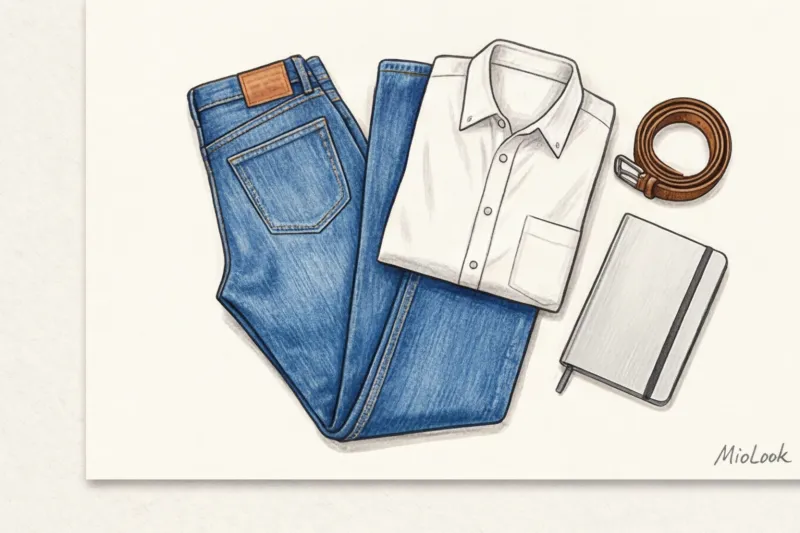
Trust me: it's better to invest the time and buy the perfect basic jeans for €100-€150 that will last you five years than to buy five bad pairs for €20 each season. Cheap denim that sags by midday instantly cheapens the entire look, even if you're wearing an expensive cashmere sweater over it. Invest in the right basics, check the insides, and your jeans will always look great on you.