How to Choose a Prom Dress: A Stylist's Top Secret and the Cost-Per-Wear Principle
According to the Global Fashion Agenda (2023) analytical report, approximately 78% of evening gowns are purchased and worn exactly once. Just think about it: meters of stiff taffeta, kilometers of tulle, and hundreds, sometimes thousands of euros, all ending up in a dark bag on the back shelf of a dressing room right after dawn. When people come to me with a request, How to choose a prom dress I always start my work not by analyzing the latest catwalk trends, but with cold mathematics and strategy.
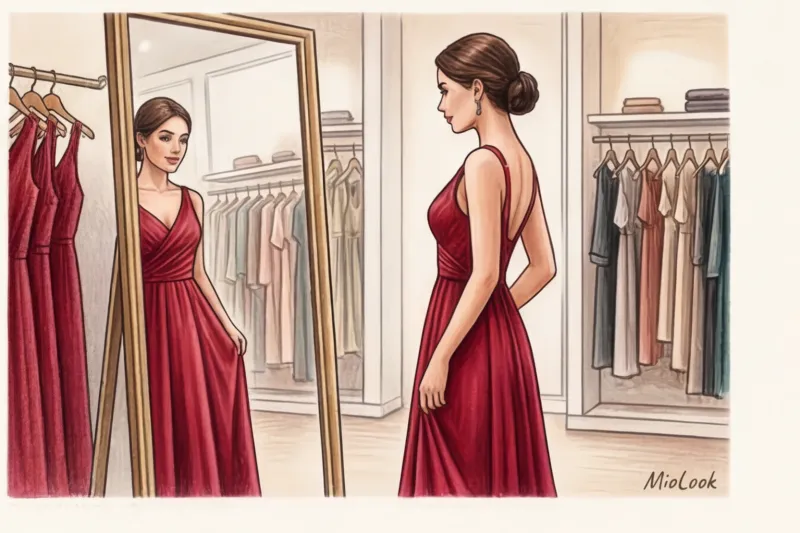
The era of "cake dresses"—bulky, unwieldy, corseted garments that make it impossible to breathe—is gone forever. And it's not just that they're physically difficult to get into a car or dance freely until dawn. Modern luxury communicates entirely different values: mindfulness, comfort, and intellectual chic. Over 12 years of working in the styling industry, I've noticed a clear trend: women with good taste no longer want to look like rigid porcelain dolls. They embrace freedom of movement and choose pieces that work for them, not the other way around.
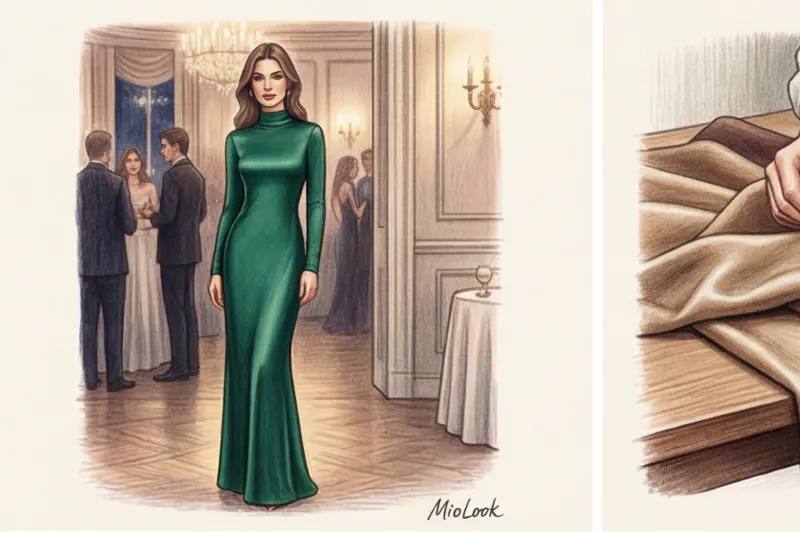
My main professional secret and the absolute foundation of any investment wardrobe is the Cost-Per-Wear (CPW) principle. Let's use a real-life example. You buy a full dress with intricate embroidery and rhinestones for €600. You wear it once. Its real value to you is €600. Now imagine a simple slip dress made of thick, heavy silk for the same €600. You wear it to graduation. A couple of months later, throwing on a voluminous menswear jacket, you wear it to a university party or exhibition. In the fall, you accessorize it with a cashmere sweater and Cossack boots for dinner, and the following spring, you wear it to a friend's wedding. Just ten wears instantly reduces the cost of the item to €60 per wear. This is a whole new level of financial awareness.
"Luxury isn't something that dazzles in the spotlight one evening. True luxury is impeccable tailoring and premium fabric that last for years, adapting seamlessly to the changing context of your life."
For this formula to work in practice, you need the "blank canvas" concept. This means choosing a dress devoid of busy, intrusive embellishments. You're investing in superb design: perfect darts, a well-defined shoulder line, a flawlessly flowing silhouette. Such a dress becomes a noble backdrop for your appearance, and its stylistic mood can be endlessly changed. I discussed in detail which textures and shapes will be relevant for seasons to come in my article about Spring/summer fashion trends: what to invest in?.
To avoid the mistake of impulse buying, I suggest three essential steps that we always go through with our clients before going to the checkout:
- Three-reason test. Ask yourself, "Where else could I wear this?" If you can't immediately think of three completely different scenarios (for example, a social presentation, a birthday party at a restaurant, or a trip to the theater), feel free to leave the item on the hanger.
- Digitization of potential. To visually plan future looks with your “blank canvas,” upload a photo of your dress directly from the fitting room to MioLook app The smart wardrobe feature instantly shows you which jackets, cardigans, and shoes from your current closet will pair perfectly with it.
- Focus on accessories. A simple dress looks like a million bucks when paired with the right statement shoes or quality jewelry. You can change them up depending on the dress code, as we discussed in the guide. accessories in the style of quiet luxury.
Current trends in evening fashion: what the catwalks are broadcasting
Have you noticed that most graduation yearbooks from ten years ago look like chronicles of a provincial theater? Girls often confuse stage provocation with evening elegance, choosing outfits that make it impossible to dance or breathe. When clients ask me, How to choose a prom dress To look back on photos years from now with pride rather than a hint of shame, I always suggest shifting your gaze from mass-market fashion to the catwalk. But you need to look wisely.
The global vector of contemporary fashion is the aesthetics of "quiet luxury." If you analyze the latest collections Saint Laurent or couture shows Schiaparelli You won't see endless layers of cheap tulle there. High fashion today conveys an intellectual chic, where cut and texture speak louder than any glitter. Adapting high fashion for a school or university prom isn't about blindly copying runway looks, but rather taking the very essence of a trend and translating it into the language of real life.
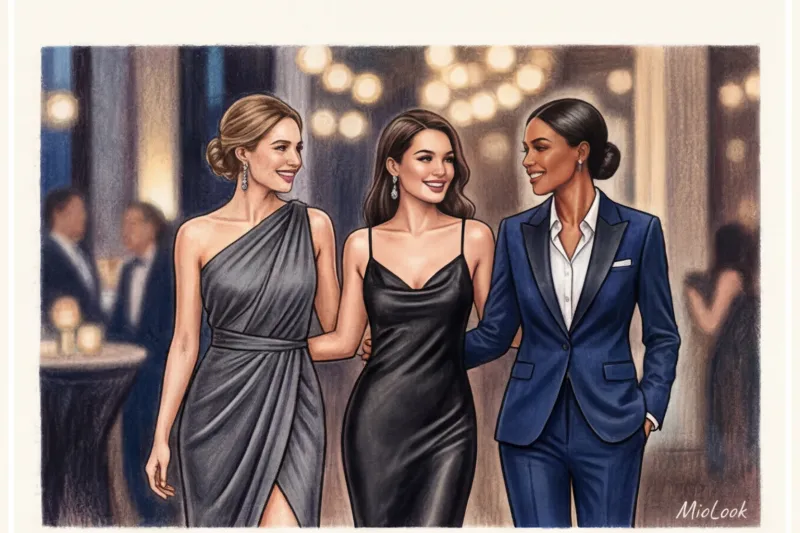
Architectural minimalism and status laconism
Many young girls are genuinely surprised when, in the fitting room, I decisively push aside the puffy embroidered dresses and offer a completely smooth model made of heavy crepe. "But it's too simple!" — is the most common reaction. Here I always debunk the biggest prom myth: a dress without a single rhinestone always looks much more expensive than one covered in glitter.
Why is this so? Classy simplicity is built on uncompromising clean lines and a rigid, geometric neckline. A square neckline (a bob), a deep, narrow V-neck, or sculpted shoulders create a visual framework. When a garment is stripped of embellishment, darts, seam quality, and the fabric's hold come to the fore. Cheap machine-made glass beads on a €150-€200 dress instantly reveal its origins, while intricate hand embroidery costs thousands of euros and rarely fits within a prom budget.
By opting for a minimalist approach to decoration, you're playing on the field of intellectual elegance. In my experience, eight out of ten clients who tried on an architectural column dress noted that their backs instinctively straightened. The austere shape dictates a completely different, more refined flow of movement.
Lingerie Style: Silk Slips and Corsets
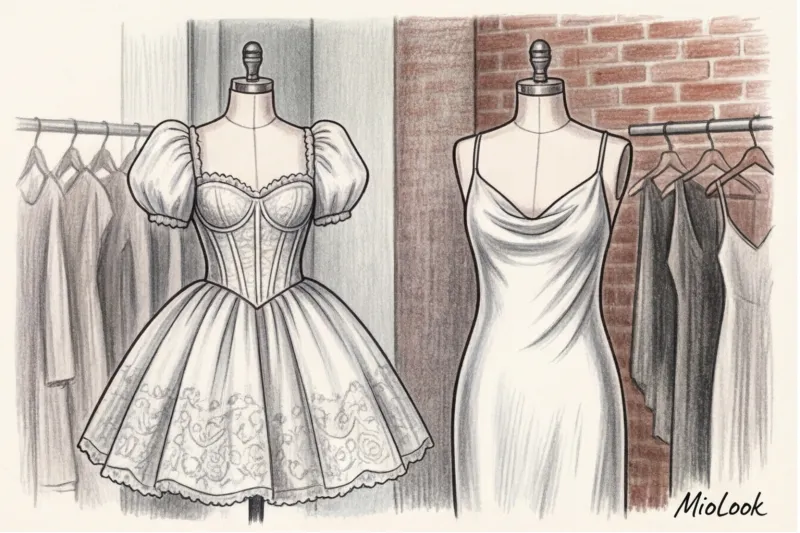
The aesthetic of the 90s is currently experiencing a phenomenal renaissance, but it has become significantly more complex. Lingerie style today is not just a challenge, it's a refined sensuality. A key investment here is the classic bias-cut slip dress. This ingenious technique, popularized by Madeleine Vionnet in the 1920s, makes the fabric flow like water, gently hugging the contours of the body without clinging tightly.
However, choosing a silk slip for prom can be dangerous—if the fabric is too thin, it can look like a regular nightgown. My professional advice: always check the fabric's density. The ideal silk weight for an evening out is between 19 and 22 momme. This fabric has a refined matte sheen and doesn't accentuate even the slightest details of your figure or lingerie.
The second key trend in lingerie is the return of structured corsets. To integrate a corset into a minimalist look without appearing vulgar, it's important to strike a balance between revealing and covering. A thick, matte corset without lace looks great paired with wide, pleated palazzo pants or a strict maxi skirt. The neckline, however, shouldn't be too extreme.
If you find it difficult to independently assess how harmoniously the proportions of the top and bottom are combined, I recommend uploading photos of the items to the "smart wardrobe" feature in MioLook The neural network will help analyze your silhouette and advise you if your look requires volume adjustments.
Access to MioLook for €0.99 — one-time payment
Not sure which style is right for you? Upload your measurements and preferences into the app—the algorithms will select the perfect outfit for your special evening, taking into account your style and the latest runway trends.
Get access — €0.99 onceDrapery and asymmetry
For those who find pure minimalism too bland, the catwalks offer complex cuts inspired by French couture and the art of draping ancient statues. The technique of mannequin-based shaping (where fabric is shaped directly onto the figure) creates unique volumes that work as a perfect optical illusion.
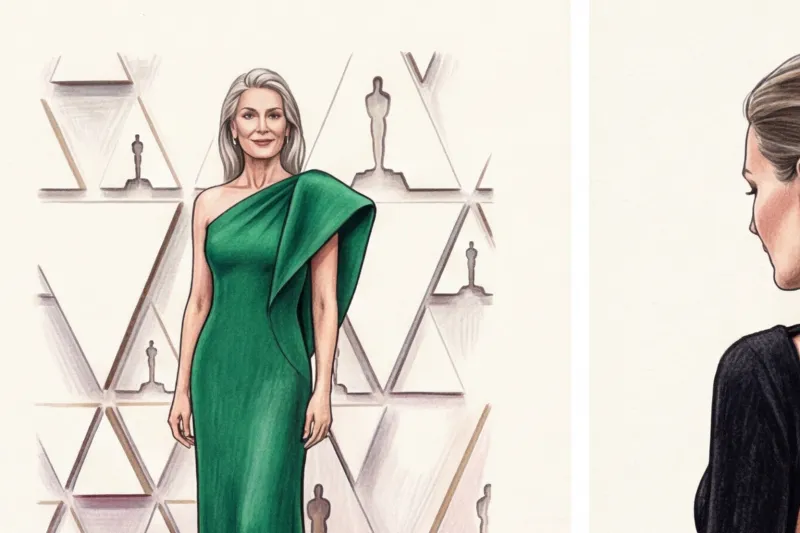
Asymmetry—whether it's a one-shoulder neckline, a cascading sleeve, or an intricate knot at the waist—is a powerful tool for a stylist. Over the years, I've learned that the right draping can correct virtually any nuance. Diagonal pleats at the waist and stomach visually elongate the silhouette and minimize bulk, while sculpted gathers on the bodice add beautiful texture where needed.
The only thing "But" Drapery doesn't tolerate skimping on materials. Stiff, static-prone polyester will stiffen and visually add a few pounds. Look for dresses made of flowing fabrics—thick viscose, cupro, or a silk-elastane blend (good options in this range start at €250-300). The fabric should be vibrant and flexible, otherwise an asymmetrical cut will turn from a design idea into an awkward mistake.
I always tell my clients: when choosing a trendy style with a complex cut, ask yourself one question: Will I be able to wear this dress in three years to a social dinner or a friend's wedding? If the dress's architecture is self-sufficient and the color is elegant, the answer will be yes.
Timeless styles: individual architecture of your look
The fruit basket is out. "Apple," "pear," "inverted triangle"—these terms from the glossy magazines of the early 2000s are long overdue for the sack. Abandoning the outdated "body types" of dresses in favor of an architectural approach to proportions is a fundamental step toward creating a truly prestigious evening wardrobe.
Have you ever wondered why actresses look flawless even in the most minimalist outfits on the red carpets of Cannes or Venice? The secret isn't in perfect measurements, but in the precision work of tailors. Professional tailors don't think in terms of fruit, but rather in the laws of geometry: axes, volumes, tension lines, and fabric weight distribution.
"A dress should be an architectural structure, the proportions of which exalt the female figure," Christian Dior asserted when creating his iconic New Look silhouette. And this engineering principle works flawlessly.
Instead of frantically concealing hips or shoulders, we build the right frame. Strict tailoring principles such as product balance And ease allowance A prom dress shouldn't fit like a second skin. There should always be some air between you and the fabric. It's this gap of a few centimeters that creates the illusion of fragility and allows the material to flow gracefully as you move—when you walk to the stage to receive your diploma or dance—rather than bunching up into unsightly, sideways folds.
A-line and sheath dresses: a versatile base
These are the investment styles that never look outdated. But the devil, as we know, is in the millimeters. How do midi and maxi lengths change the perception of an outfit?
A midi-length sheath dress—straight below the knee, revealing the tiniest part of the calf—exudes sophisticated sexuality and refined European chic. It's the perfect length for more intimate prom settings: an elegant restaurant dinner, a party on an outdoor terrace, or a cocktail party. In this outfit, you look more like a socialite than a schoolgirl.
A maxi A-line dress with a perfectly proportioned, mathematically calculated flare from the hip is a surefire choice for classic gala balls. The fabric's movement is crucial here. Choose a thick, heavy silk or crepe that will roll in large waves, maintaining its shape even when walking briskly.
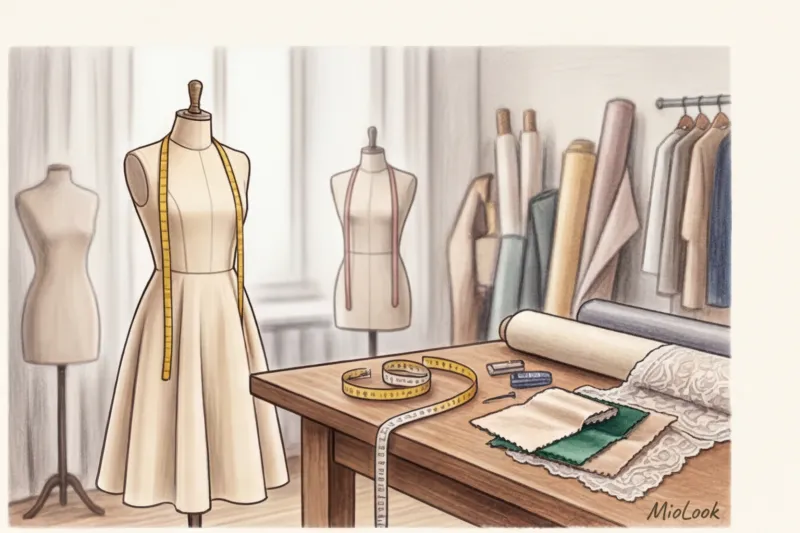
To figure out which of these basic options will best fit into your future life, I strongly recommend analyzing your current belongings. Upload a photo of your potential purchase to the "smart wardrobe" feature in MioLook The app will help you visualize whether you can wear this case with your favorite jackets or shoes to other events in the future. An investment is only worth it when it complements your personal style, not when it sits in a case for years.
Tuxedo and pantsuit: elegant provocation
Let's move on to a technique adored by stylists and often dreaded by clients. If you want your look to be talked about with admiration, forget about full skirts. A flawless white or black tuxedo worn bare—or, if the dress code and personal comfort require a more conservative look, paired with a heavy silk top—is the most memorable outfit at any celebration.
Back in 1966, Yves Saint Laurent, with his provocative Le Smoking, proved that a woman in a strict, masculine cut looks more disarming and fragile than in the deepest neckline. It's a play on contrasts that hits the mark.
However, the rules for choosing an evening suit do not forgive carelessness. This is not a business suit for the office; different cutting rules apply here:
- Lapel architecture: They should be pointed ( peak lapels ) or shawl-like. Ideally, they should be made of a contrasting material—matte silk, satin, or grosgrain.
- Shoulder line: The shoulder girdle should be monumental. Subtly accentuated, defined shoulders create a dominant, confident silhouette.
- Length and fold of the trouser leg: Classic, wide-leg palazzo pants should practically touch the floor, completely covering the heel and leaving only the toe visible. This visually elongates the legs and creates that uninterrupted vertical line.
A high-quality wool-blend evening suit in the premium ready-to-wear segment will set you back approximately €500–€800. Sounds like a hefty sum for one evening? Consider Cost-Per-Wear. You can wear the trousers with a cashmere sweater on a date, and throw the jacket over a silk slip for the theater. It's a wise investment that will last for a decade.
I'll be honest: who wouldn't wear this look? A pantsuit requires a steely posture and absolute inner freedom. If you plan to slouch all evening or feel insecure without your usual dress, a tuxedo will lose its magic. This is an outfit for those who are prepared to carry themselves with regal dignity.
Fabrics and textures: what instantly gives away an expensive look
You can copy the patterns of a couture dress down to the millimeter, but if it's made from fabric that costs 10 euros a meter, the magic will disappear the moment you step into the banquet hall. Fabric is the foundation. It determines whether an outfit will look like a smart investment or a forced compromise.
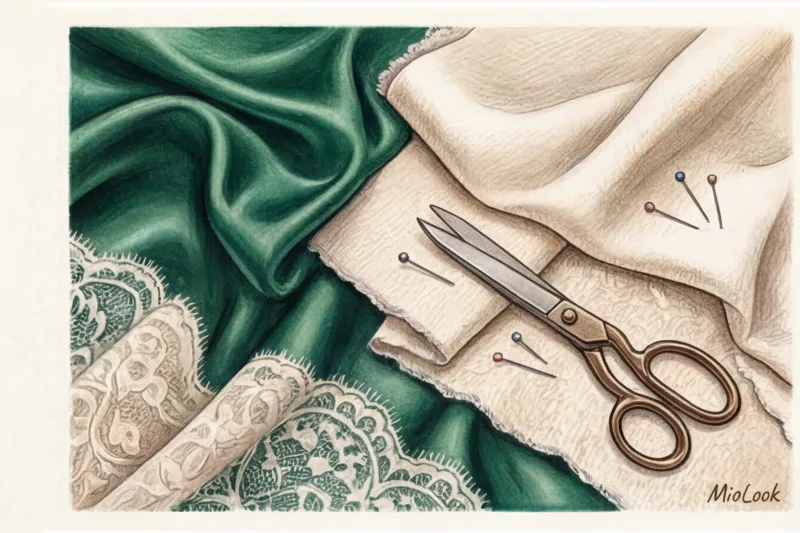
In the premium segment, there is an unspoken hierarchy of materials that buyers and stylists discern in a split second. At the top of the pyramid is traditionally natural silk It sits on the body like liquid metal, without creating any angular creases. It is immediately followed by heavy crepe — my absolute favorite for evening wear. Thanks to its density, it acts as a lightweight frame, delicately elongating the silhouette and concealing even the slightest imperfections.
If silk isn't on your budget, the modern textile industry offers luxurious alternatives: high-quality cupro (often referred to as "vegan silk") and dense Tencel Cupro is made from cotton fiber, so it has excellent hygroscopic properties, is breathable, and is visually indistinguishable from expensive matte silk. These fabrics fall in heavy, beautiful folds rather than sticking out like a pole.
"Evaluate fabric not only with your eyes, but also with your camera lens. Prom means hundreds of flash photos, and that's where cheap material fails miserably."
The tactility of a fabric directly impacts how a dress fits and how you move in it. When testing a look, be mindful of the trickiness of artificial lighting. Matte and semi-matte textures absorb the camera's light, making the figure appear slimmer and the color visually deeper. Meanwhile, cheap, glossy synthetics act like a mirror: the flash reflects off it as white spots, erasing the architecture of the cut and highlighting even those nuances of the figure that aren't really there.
Let me share some inside information. A colleague of mine, the head buyer at a Milanese concept store, once showed me how professionals check the quality of fabrics in closed showrooms. These are two simple steps I now ask every client to follow:
- Crease test: Firmly squeeze the hem of your dress in your fist for 10-15 seconds. If the fabric straightens out and remains almost smooth, you've got it. If it becomes covered in a network of small, hard creases, like a paper bag, imagine what your hip area will look like after an hour of sitting at a desk.
- Weave density rating: Look through one layer of fabric at a bright light source. A loose, translucent weave means the seams will start to unravel after the first few active dances.
By the way, when girls plan their capsules in MioLook , artificial intelligence algorithms help take into account the textures of clothing, suggesting how to balance a flowing dress with the right structured jacket for a cool evening.
To completely insure you against mistakes, I have compiled an uncompromising stylist's stop list for any evening outings:
- Thin electrifying polyester: It's weightless, so it'll never create that monumental fold. However, it does stick to your feet, collecting static and creating a "greenhouse" effect.
- Hard tulle: It's stiff, scratches your hands mercilessly, and looks like a mosquito net. If you're looking for volume, look only for soft, flexible Euronet.
- Cheap shiny satin: The absolute champion of cheapening an image. It wrinkles at the first glance, and in photographs it always looks damp and unkempt.
Access to MioLook for €0.99 — one-time payment
Start creating perfect images with the help of artificial intelligence
Get access — €0.99 onceColor and Palette: How to Choose a Shade Without Stereotypes
Forget the "four seasons" theory. Dividing your appearance into a strict "winter" or "spring" is as much of a stylistic anachronism as the obligatory matching of your bag and shoes. In modern optics, we work with color temperature and contrast. The ideal color works like a professional ring light: it should illuminate the face, counteract signs of fatigue after long exams, and look classy even without elaborate makeup.
The Pantone Color Institute regularly emphasizes in its analytical reviews of evening dress codes that color directly influences the psychological perception of an image. Instead of flat neon or bold, bright colors, I suggest my clients invest in a "jewelry" palette: deep sapphire, rich emerald, noble ruby, or dark amethyst. In practice, these tones have a unique property: they visually enhance the value of even simple mid-range dresses (in the 150-300 euro range), highlighting the iridescent texture of the fabric, whether flowing silk or thick crepe.
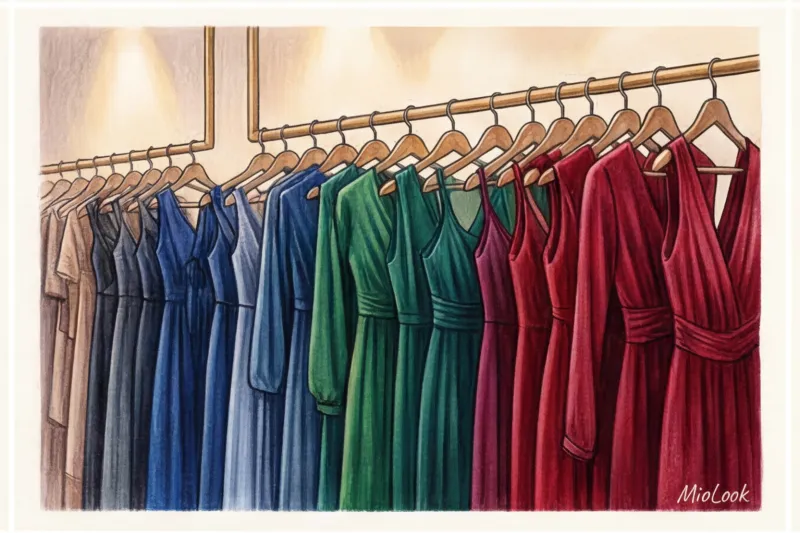
If the drama of dark tones isn't your thing, try complex monochrome pastels. Important: we're not looking for strawberry marshmallow or baby blue, but rather complex, slightly dusty tones. Pearl, the color of expensive champagne, dusty rose, or the incredibly trendy butter yellow are the quintessence of aristocracy. Their delicacy acts as reflectors, creating a soft, cinematic glow in evening photographs.
And perhaps my favorite point is all-black. Almost every season, I encounter resistance from mothers in the fitting rooms: "Not black, it's a celebration, not mourning!" It's time to finally dismantle this stereotype. Black for evening wear is the ultimate Parisian chic and an ode to the architectural tailoring of Yves Saint Laurent. The main secret to choosing a black prom dress without looking too formal boils down to one rule: balance texture and skin exposure.
To make dark monochrome pop, the fabric shouldn't feel like a solid armor. Choose styles with a deep V-neck, an open back, thin spaghetti straps, or an asymmetrical one-shoulder cut. Your own skin will be the best accent. And to assess in advance how seamlessly such an outfit will fit into your future life, I recommend using virtual fitting room at MioLook By uploading a photo of your dress to the app, you'll immediately see how chic this "prom" outfit will look with your favorite oversized jacket or chunky boots at future parties.
Shoes and accessories: how to avoid overloading your look
There's one ruthless rule in styling: a single, poorly chosen accessory can completely ruin hours of painstaking work on a silhouette. This stylistic disaster most often occurs at the final stage of an evening outfit, when the irresistible urge to "add a little something extra" hits.
A few years ago, I had a client who bought a flawless, minimalist slip dress for 800 euros. Luxurious, heavy silk, a perfect bias-cut fit, not a single unnecessary seam. But for the final dress rehearsal, she brought a massive, multi-tiered, rhinestone necklace from a mass-market store. The illusion of an expensive outfit was instantly shattered. The dress instantly looked like a synthetic knockoff, because the cheap shine of the plastic stones visually cheapened and negated the noble texture of the fabric.
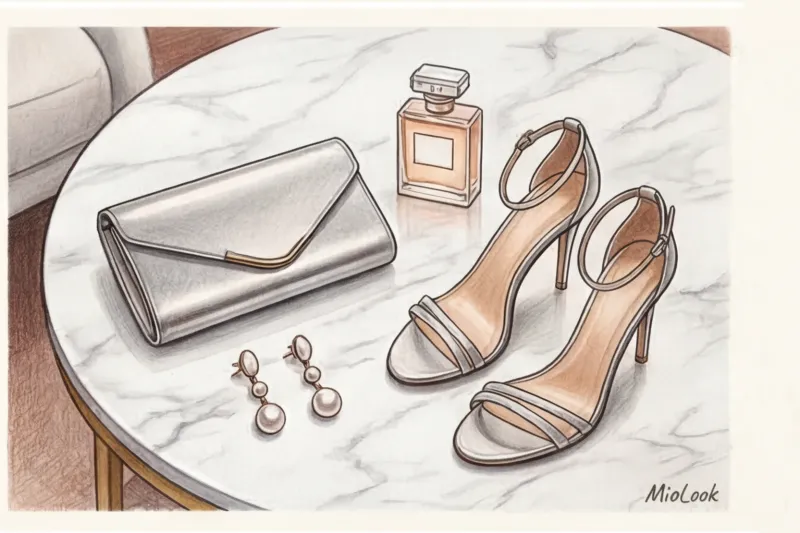
This is a clear illustration of how it works balance rule The formula I ask you to learn by heart is: complex dress = simple accessories, simple dress = accent jewelry If you've chosen an outfit with bold asymmetry, architectural draping, or a rigid corset, your details should be nearly invisible. If you've chosen a simple white tuxedo, you can indulge in a large, sculptural piece.
Jewelry Minimalism vs. Fast Fashion
Avoid wearing a matching set or matching your necklace to your shoes. In modern eveningwear, jewelry is clearly trumping flashy costume jewelry. Opt for subtle lines: a delicate tennis bracelet, diamond studs (or high-quality lab-grown diamonds), or a strand of irregular baroque pearls.
High-quality vintage earrings are also a great investment. For example, sleek 80s-inspired gold-plated clip-on earrings add a touch of Parisian chic without being too vulgar. To ensure your earrings don't clash with your neckline, I recommend planning your look in advance using an app. MioLook This step saves you from impulsive purchases of unnecessary shiny clutches that then gather dust on shelves for years.
Investing in your step: shoes with a future
Buying lavishly embellished shoes with rhinestones just for a prom dress is a financial crime against your wardrobe. You'll wear them for exactly one evening, after which they'll remain in the box forever.
Consider your evening shoes a long-term investment. Why do stylists always insist on minimalist sandals with thin straps or classic pumps? Because a pair of perfect black or nude shoes made of high-quality suede or soft leather for 300–400 euros will pay for itself dozens of times over. You'll wear them for the next 10 years—with straight jeans on dates, with silk skirts at the theater, with business suits for important presentations.
Thin straps create a barefoot effect, visually elongating your silhouette without stealing the spotlight from the design of your dress. This is the perfect foundation that complements you, rather than overshadows you.
Your ideal image begins Here
Join thousands of users who look flawless every day with MioLook.
Get access — €0.99 onceStylist Checklist: 5 Steps to Buy
Nine out of ten outfits that look perfect in the window can disappoint you the first time you try them on. The problem here has nothing to do with your body measurements, but with the lack of a systematic approach to shopping. I had a very instructive experience: a luxurious €850 silk maxi dress turned out to be completely transparent in the flashbulbs of reporters in the wedding photos. Since then, I've developed a strict five-step protocol that every item must pass before we take it to the checkout.
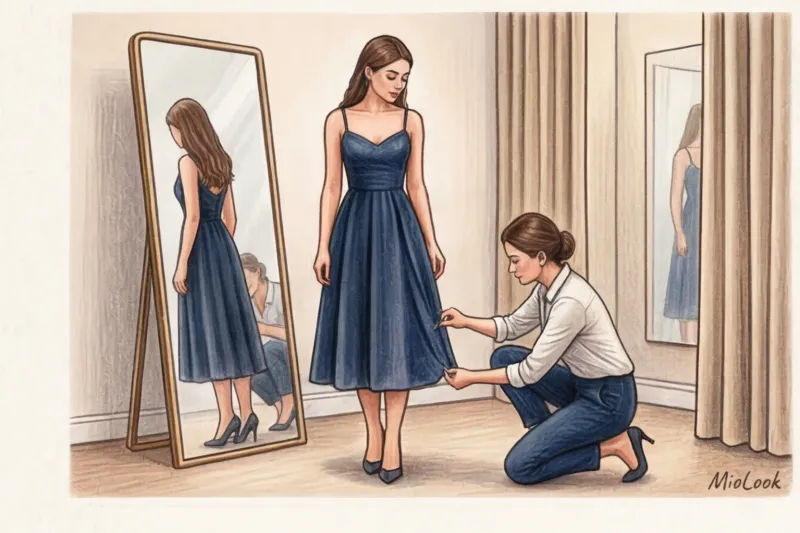
Step 1: Determine your budget with a tailor in mind
The biggest mistake beginners make is spending their entire savings on the garment itself. Factory patterns are based on an average mannequin, not a living person with unique proportions. I insist: a perfect fit is everything. A mid-range dress for €150-€200, tailored exactly to your measurements, will visually outshine a sloppily fitted couture dress costing several thousand. Always allow 15-20% of your total budget for atelier services. Shortening the hem to accommodate heel height, repositioning darts across the bust, or taking in the waist—this isn't a whim, but a necessary step in turning a simply good garment into your personal armor.
Step 2: Choose the right shapewear BEFORE trying on your dress
It's a complete utopia to buy a complexly cut dress and then try to find an invisible bra to go with it. The architecture of an evening look begins with the foundation. You should wear the exact seamless underwear or nude bodysuit you plan to wear to the ball. If you're considering a slip dress or a form-fitting silhouette, high-quality shapewear (like Spanx or the basic Skims lines) is essential even for the slimmest women. It will smooth out skin micro-reliefs, hide elastic band marks, and ensure the proper, expensive glide of the fabric.
Step 3: Test drive in the fitting room
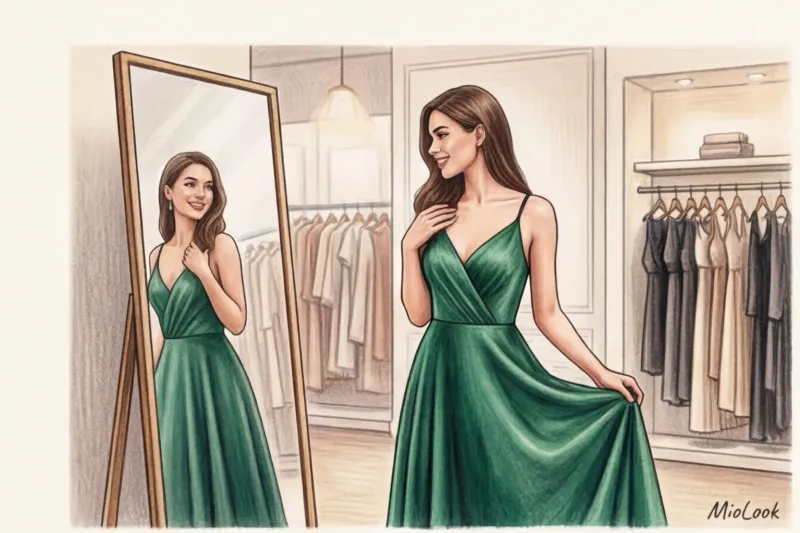
The store's booth is your laboratory. It's not enough to simply stand in front of the mirror, suck in your stomach, and freeze. When choosing a prom dress, you should clearly understand that you'll be spending at least 8-10 active hours in it. Sit on a pouf: are the corset bones digging into your ribs? Is the thigh slit riding up too high? Raise your arms, mimic a hug with your classmates. Do a few energetic dance steps. If the garment restricts your movement, prevents you from breathing fully, or makes you constantly tug at your bodice, leave it on the hanger without the slightest regret.
Step 4: Lighting Analysis
Let's return to my story with the translucent silk. Fluorescent lights in boutiques often distort the actual picture, creating overly flattering shadows and altering the color temperature. Be sure to leave the booth and go into the common area, preferably closer to natural light from a window. A second, equally important test is to ask a friend or consultant to take a photo with a smartphone flash. This will instantly show how the fabric reflects, whether the color cheapens under artificial light, and whether the material becomes treacherously transparent. To objectively compare the fit of different styles from different angles, I recommend saving all photos from fittings in MioLook — this way you can evaluate each option with a fresh eye at home and put together a complete look without missing a single detail.
Step 5: Check seams and fittings
The back of a garment reveals its status and durability far more than a flashy logo. Turn the dress inside out. Look for signs of expert tailoring: closed (so-called French) or carefully bound seams, no knots or loose threads. Pay attention to the lining—it should be made of breathable viscose or cupro, not static-producing polyester that will stick to your legs. A concealed zipper should slide perfectly smoothly and be equipped with a hidden hook at the top. This small hook absorbs the tension of the fabric, preventing the zipper from coming undone during a dance. High-quality hardware (such as YKK zippers) is a sure sign that the brand hasn't skimped on the hidden processes.
Never buy a dress with the thought, "I'll definitely lose a few pounds by summer." Buy the size that fits you perfectly today. You can always have a dress taken to a tailor's, but trimming out missing centimeters without losing the original cut is a nearly impossible task, even for an experienced tailor.
Your Preparation Strategy: Action Plan for the Final 4 Weeks
Finding the perfect outfit and finally finding the answer to the question of how to choose a prom dress is only half the battle. The other half, where 90% of girls stumble, is properly preparing for the big day itself. According to statistics from major event agencies, more than half of guests at high-profile events experience discomfort not because of a poorly chosen style, but because of the simple rush they had the day before. The stress of the last forty-eight hours can ruin the joy of buying even a couture masterpiece. To ensure you're sipping chilled lemonade in anticipation of the big day instead of popping sedatives in the fitting room, I've put together a strict timeline for you.
Week 4: Planting Architecture (Why the Atelier Doesn't Tolerate Fuss)
Timeliness in getting to the atelier is something you absolutely mustn't compromise on. Never leave fittings until the last week. Firstly, during the ball and wedding season, top-notch tailors are booked every minute. Secondly, complex textures behave unpredictably and require time to "shrink."
I had a telling case: a luxurious slip dress made of heavy, flowing silk (costing around 800 euros) required three adjustments. The bias-cut fabric stretched under its own weight, and the hem had to be realigned several times. A tailor is like a plastic surgeon for your clothes. Allow at least three to four weeks so the tailor can leisurely remove an extra 1.5 centimeters from the waist, reposition bust darts, or adjust the angle of the straps. It's these invisible millimeters that transform a simply beautiful dress into a garment that feels tailored to your individual measurements.
Weeks 3-2: Taming the Shrew
If you think you can dance all night in brand-new pumps taken out of the box an hour before going out, you're making a classic rookie mistake. Breaking in your shoes is essential to avoid bloody blisters on a big night out. Leather is a living material that needs time to adapt to the anatomy of your foot.
Wear your evening shoes or sandals at home with a thick cotton sock and walk in them for 20-30 minutes each day—for example, while making breakfast or answering emails. If the leather (especially patent leather) is too stiff, gently warm the problem areas with a hairdryer directly on your foot. This will soften the material and gently shape it without affecting the appearance of the shoe last.
Week 1: Dress rehearsal of the image
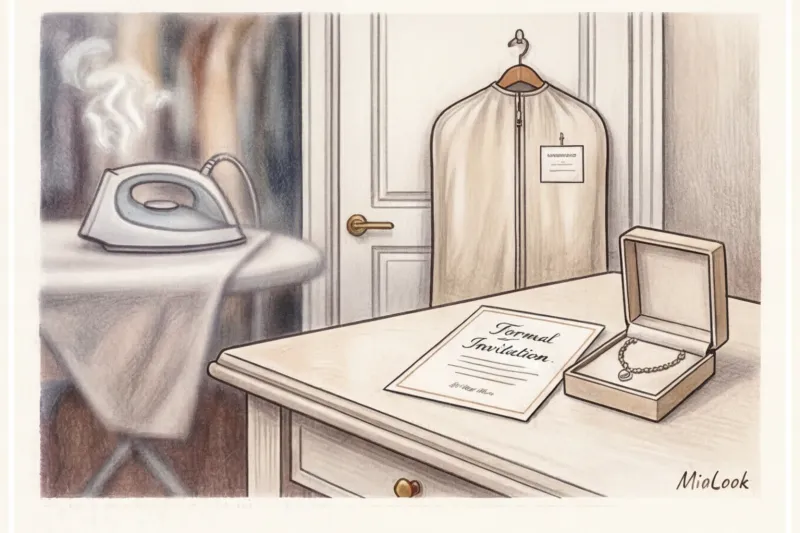
Trying on the complete outfit a few days before the event is your safety net. You should wear the dress with your chosen seamless shapewear, shoes, and all the jewelry. Do a makeup and hair trial to assess the overall shape. Move around: sit on a low sofa, raise your arms, and simulate hugs with your classmates. The dress shouldn't restrict your breathing or force you to constantly adjust your cleavage.
Be sure to take a full-length photo of yourself in daylight with a flash. To professionally analyze the results, I always recommend uploading the resulting shots to the "smart wardrobe" feature in MioLook When looking at your look on your smartphone screen, you'll immediately notice if a chunky single earring clashes with an asymmetrical collar, or if your hairstyle looks too heavy for the delicate silk.
Day X: Advice from the stylist
My final piece of advice will be brief: self-confidence is your most important and most valuable accessory. No diamond choker or intricate corset will save your look if you slouch, constantly tug at your hem, or are afraid to take an extra step.
If you followed the plan to the letter, your basics are flawless: the seams are in place, your shoes don't rub, and your miniature clutch is tucked away with mattifying powder and a silk bandage. Square your shoulders, lift your chin slightly, and allow yourself to be luxurious. After all, personal style is about expressing your inner spirit, not just demonstrating good taste. And when the party's over, you can easily digitize this outfit through MioLook so the algorithm can help you style it for future dinners, theater premieres, or your friends' weddings.