Did you know that 78% of evening gowns are worn exactly once in a lifetime? These aren't just words, but hard statistics from the Global Fashion Agenda 2023 analytical report. Imagine: months of searching, endless fittings, tailoring at the atelier—all only to have the item gather dust in a bag on a distant shelf for years. If you're looking for the perfect a prom dress you can wear later , we will have to forget the stereotypes about rigid corsets with rhinestones and meters of rustling tulle.
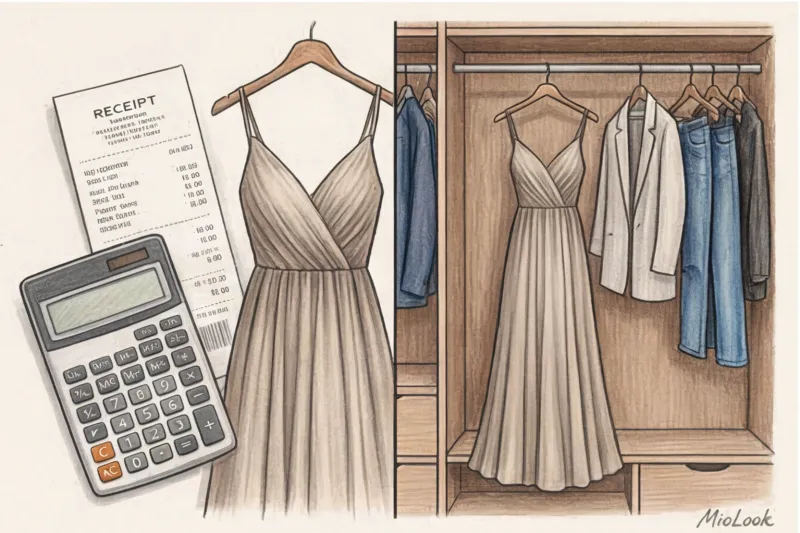
I, Sophie Müller, as a stylist and advocate of conscious fashion, offer a fundamentally different approach. We will rely on the physics of fabrics, the architecture of cuts, and the rigorous mathematics of cost-per-wear. My goal is to teach you to appreciate the hidden potential of a garment while still in the fitting room.
The Anatomy of an Investment: Why We're Ditching Dresses for One Evening
Buying an evening gown often becomes purely emotional. We see a beautiful picture, imagine ourselves in the spotlight, and forget to ask the most important question: "What will happen tomorrow?" We covered this in more detail in our The complete guide to choosing a prom dress , but here I want to focus specifically on the financial strategy for your wardrobe.
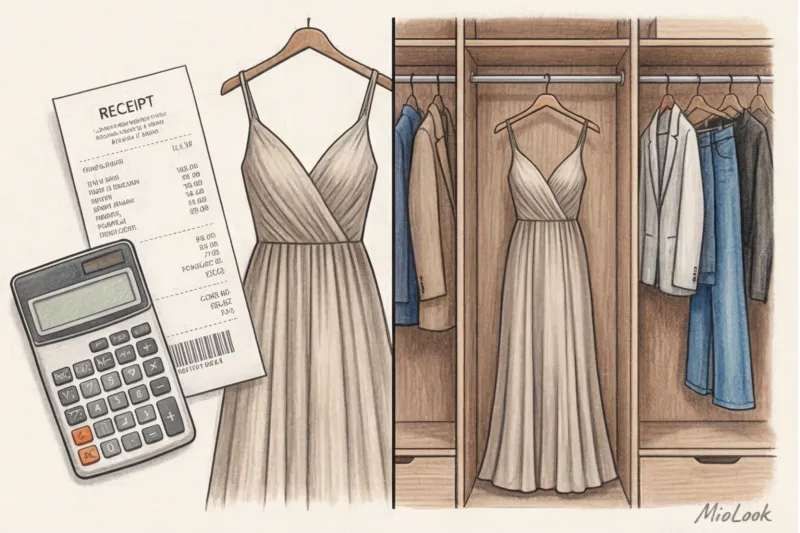
Let's do the math. You buy a typical mass-market "party" dress for €50, wear it once, and then throw it away. Your Cost-Per-Wear (CPW) is €50. Alternatively, you invest €600 in an impeccably tailored midi dress made of heavy crepe from a COS- or premium-brand. You wear it to prom, then to a friend's wedding, then style it with a sweater for the theater, and wear it to the office with a blazer 12 more times. Your CPW is only €40. Paradoxically, a high-quality and expensive item costs you less.
Sustainable fashion isn't just about recycled plastic. It's about clothes we wear often, for a long time, and with great pleasure.
The "Basic" Silk Myth: How to Choose a Fabric That Won't Let You Down
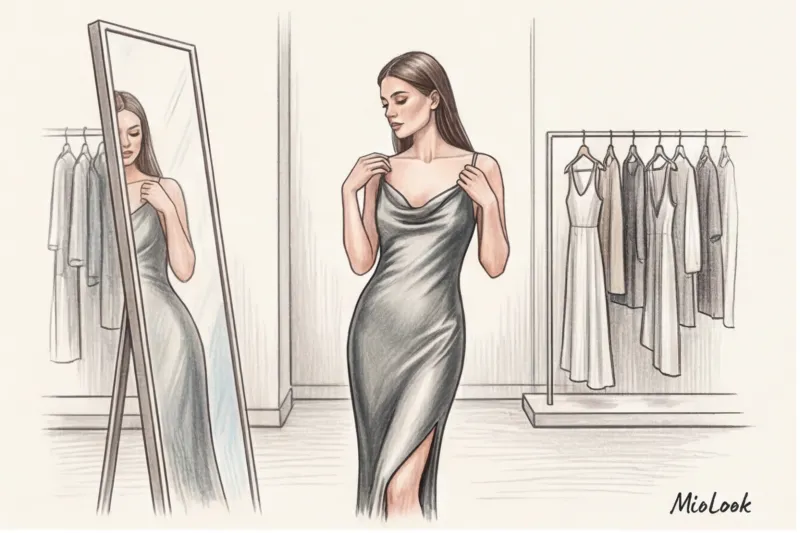
In almost every article about a functional wardrobe, you'll find the advice: "Buy a silk slip dress—it's an absolute staple." As a textile expert, I strongly disagree. A thin, shiny slip dress is a poor investment unless you're a master of style at level 80.
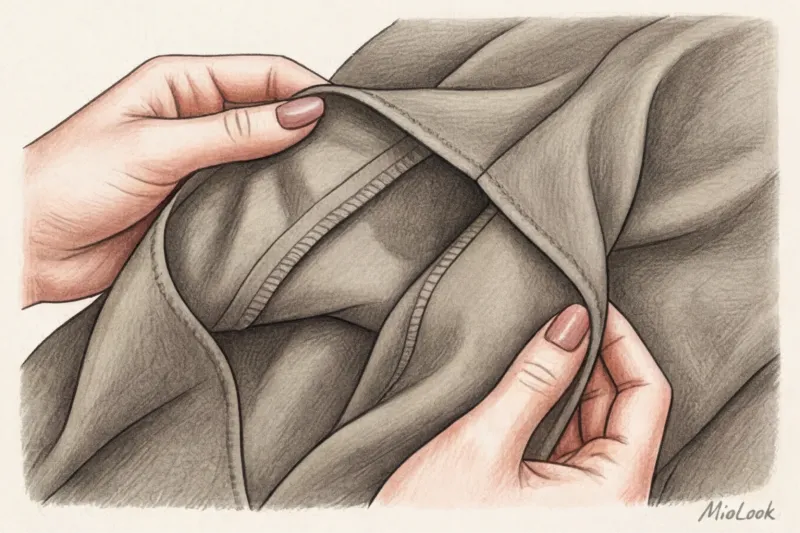
Why? Thin, glossy silk treacherously highlights the slightest nuances of your figure, the texture of your underwear, and the seams of your tights. But the main problem is that it doesn't perform well in layered outfits. According to the research platform Textile Exchange, smooth, low-density fibers have extremely poor abrasion resistance. As soon as you put a wool cardigan over such a dress, the fabric will begin to bunch up, become staticky, and cling to your legs.
Look for heavy, dense materials. Architectural cuts made of matte cupro, dense viscose, or smooth suiting wool (cool wool) integrate much better into everyday wear. A matte texture always looks more expensive and more appropriate for daytime wear than the sheer gloss of flowing satin.
Natural vs. engineered fibers
100% natural silk is a fashion statement, but it's a fickle diva when it comes to regular care. Even a drop of clean water stains it, and it wrinkles so easily that by the end of the evening, your thighs will be a network of creases. For real life, I recommend high-quality blended fabrics. For example, viscose with 5-7% elastane or modern, dense Tencel.
I had a telling case: a woman bought a stunning, expensive dress, but the manufacturer cut corners and installed a cheap acetate lining. As a result, the dress created a "greenhouse" effect, and the slightest contact with her everyday cashmere sweater caused an electric shock. Always check the lining's composition—it should be breathable viscose, cupro, or cotton.
Your perfect look starts here
Join thousands of users who look flawless every day with MioLook. Its smart algorithm will help you create dozens of looks with just one item.
Get access — €0.99 onceThe Perfect Prom Dress You Can Wear Later: 4 Styles
Analyzing the digitized wardrobes of hundreds of women in the app MioLook I've highlighted four fail-safe silhouettes. They make the most seamless transition from evening dress code to everyday smart casual.
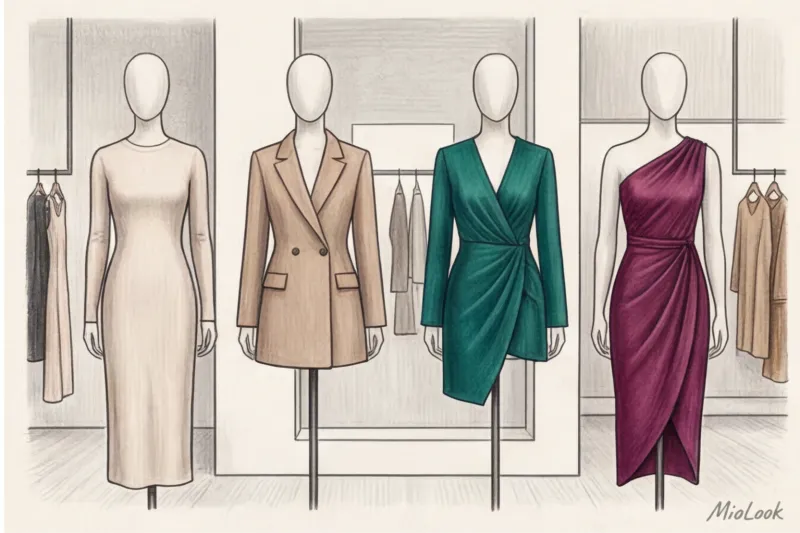
Architectural minimalism (column dress)
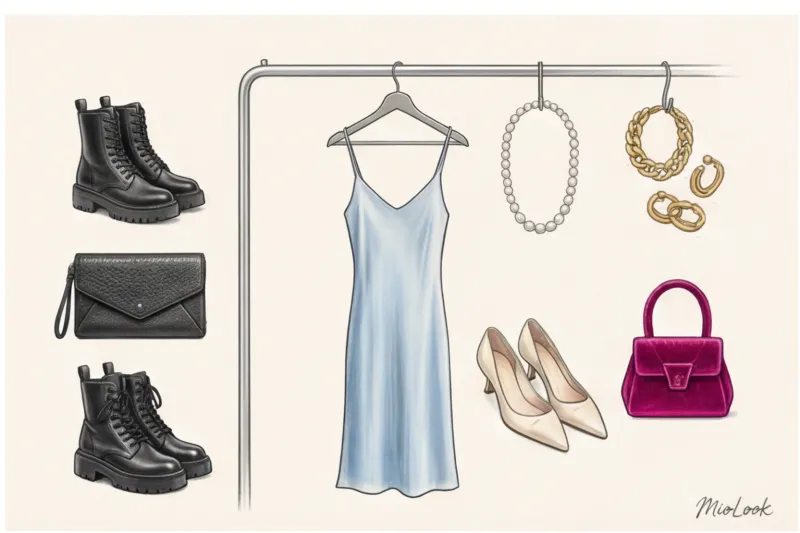
Clean, straight lines and a complete lack of embellishment. In the evening, this dress serves as a blank canvas for statement bracelets, statement earrings, and bold makeup. And the next day, it becomes the perfect base for voluminous chunky knit cardigans or denim jackets.
Deconstructed suit cut (dress-jacket)
The masculine elegance of a shoulder-length dress and the femininity of a mini or midi length all rolled into one. It's a brilliant investment: you look bold at graduation (especially paired with stilettos and a sleek hairstyle), and a couple of months later, you can confidently wear it to an interview at a creative agency or to university classes, having swapped heels for flats.
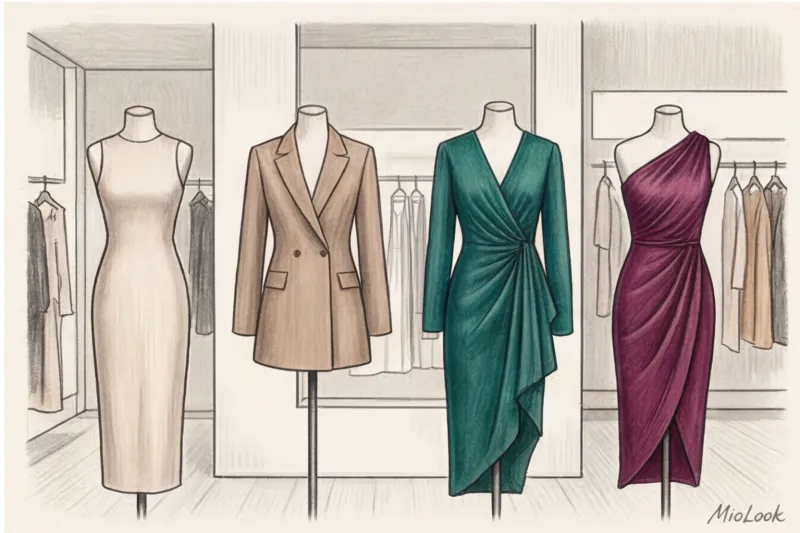
Complex asymmetry
One-shoulder dresses or styles with asymmetrical hemlines don't require complicated hairstyles. The asymmetry itself draws the eye, making the look modern and edgy. In the future, such a complex cut can easily be tamed by layering a tailored oversized blazer over the top—and you've got yourself a look ready for a Friday night dinner.
The Three-Layer Rule: How to Style an Evening Dress in a Casual Wardrobe
The main secret of stylists that instantly reduces the solemnity of a dress is neutralizing textures. A prom dress can't be worn "as is" every day; it needs the right, deliberately rough-hewn companion.

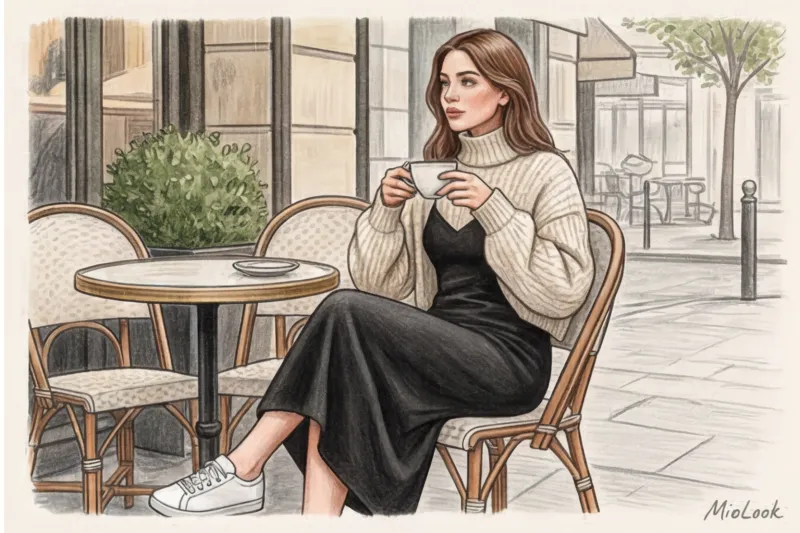
One of my regular clients bought a tailored black slip made of thick cupro. For prom, we styled it with a Hollywood wave and red lipstick. A week later, she wore it to an exam: we added a first layer—a white cotton T-shirt UNDER the dress. And in late fall, the same dress saved her on a date: we paired an oversized gray men's blazer OVER the dress and finished the look with chunky loafers and white socks.
- First layer (bottom): Thin merino wool turtlenecks, basic white t-shirts with a weight of at least 180 g/m², or tailored shirts instantly transform an evening outfit into a stylish urban sundress.
- Second layer (top): Oversized hoodies without prints (a play on the contrast between relaxed sportiness and elegance), men's blazers, and chunky textured knit sweaters with only the hem showing.
- Shoes are your main tool: No elegant pumps for everyday wear! Only rugged Cossack boots, chunky Chelsea boots, rugged Derbies, or minimalist light-colored sneakers. Footwear grounds the look.
Stylist Checklist: Dress Inspection Before Buying
Before taking an item to the checkout, conduct a quick physical inspection right in the fitting room. Of course, this checklist doesn't work if you're specifically looking for a delicately hand-embroidered couture dress for a single photo shoot. But for a functional wardrobe, these are strict rules that shouldn't be broken.
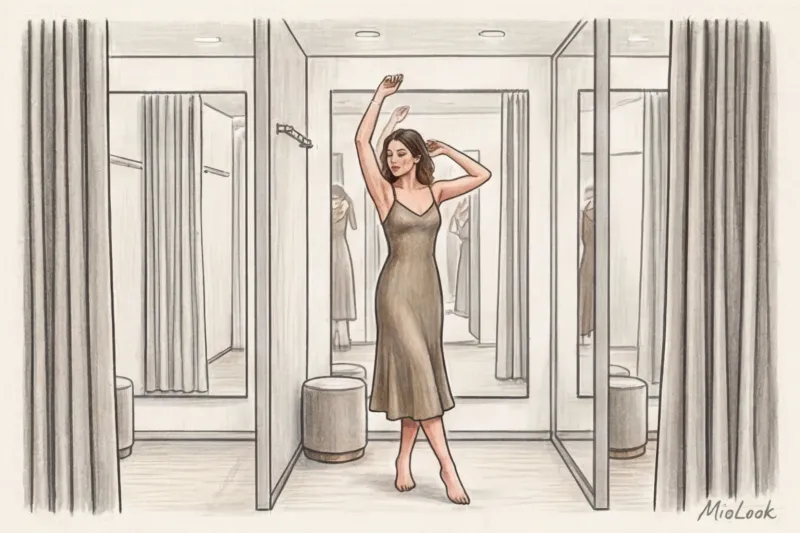
- Light test: Go to a window or stand directly under a bright fitting room light. The fabric shouldn't be see-through. If the outline of your legs is clearly visible through the hem, the material is too thin for comfortable everyday wear without special undergarments.
- Movement test: Sit on the ottoman. Raise your arms and take a wide step. The ergonomic cut should allow you to live in this dress, move actively, and not just stand there like a beautiful statue.
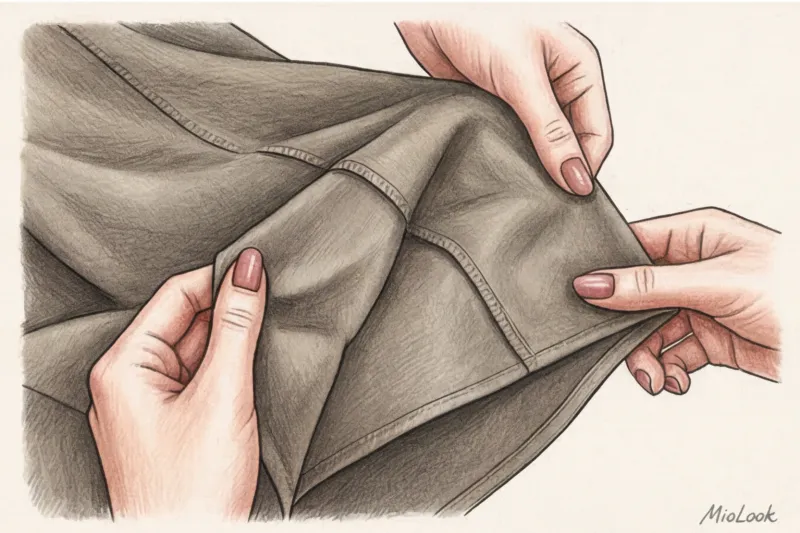
- Inspection of seams and allowances: Turn the dress inside out. A quality brand always leaves at least 1.5–2 cm of fabric in the seams (seam allowances). Why? So that the garment can be adjusted if your measurements change over time. Also, evaluate the hem: can the hem be shortened at the tailor's without ruining the proportions of the silhouette?
- Analysis of fittings: Cheap plastic zippers that snag at the seams and flimsy buttons betray poor quality faster than the fabric itself. A reliable garment has a zipper that's sewn in evenly, a smooth-running slider, and tightly sewn buttons.
Results: Your graduation is just the beginning
Let's be honest: your prom will fly by. Your makeup will be washed off, your hair will be down, and your pins will be tossed off with relief. But your dress's story shouldn't end there. Don't let beautiful things become disposable props.
Take stock of your current wardrobe today. What will you wear with your next purchase? Do you have chunky shoes, a favorite oversized sweater, or the perfect basic t-shirt? If you can instantly imagine three or four outfits for completely different life situations, congratulations, you've found the perfect long-term investment.