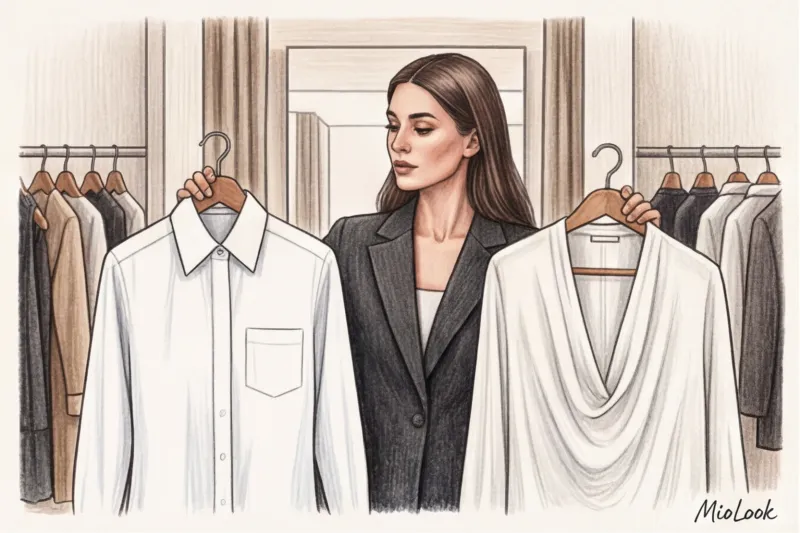
Do you know what item most often hangs untouched in my male clients' closets for years? That same "perfect crisp white shirt" that glossy magazines persistently list as must-have items. The irony is that in pictures it looks prestigious, but in real life it feels like cardboard. We've already discussed this paradox in more detail in our A complete guide to creating a basic wardrobe for men without mistakes.
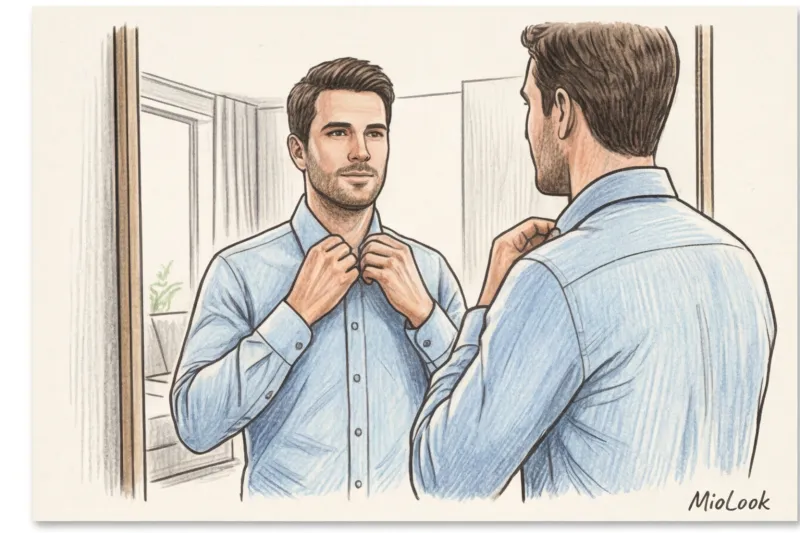
In 12 years of working as a personal stylist, I've learned one hard and fast rule: if a piece doesn't feel comfortable within the first 10 seconds of trying it on, it's relegated to the "dead 80% of your wardrobe." Men are incredibly pragmatic. They don't value abstract beauty at the expense of comfort. So today we'll explore... How to choose a men's shirt that your partner (or you yourself) will actually want to wear every day, and not just under duress at a corporate event.
Why the Old Rules Don't Work Anymore (and How to Choose a Men's Shirt for Real Life)
Savile Row's rules, which dictate stiff, starched collars and heavy poplin fabrics, are hopelessly outdated for 90% of modern professions. According to a WGSN study (2024), the global shift in men's fashion has firmly established hybrid smart-casual as the new standard for business dress code.
I had a client, an IT director from Berlin, who complained that he hated shirts. We conducted an inventory: all his shirts were classic cut, made of thin, 100% cotton with no stretch, with stiff armholes. The moment he reached for the keyboard or grabbed the steering wheel, the fabric would painfully dig into his shoulders. We replaced this "classic" nightmare with shirts made of soft twill with 2% elastane. The result? He stopped wearing hoodies to the office.
"The main rule of a modern base is uncompromising tactile comfort. A shirt should reflect your status, but feel like your favorite home shirt."
The modern men's capsule wardrobe is built on pieces that adapt to movement. Don't try to squeeze yourself into a formal suit shirt if your daily schedule consists of flights, coffee shop meetings, and working on a laptop.
The Anatomy of Comfort: How to Choose the Right Shirt Size
The most common mistake is buying a shirt solely based on the collar size. Mass-market brands (especially giants like Inditex or H&M Group) sew garments using standardized patterns to minimize fabric waste in production. This leads to one critical problem: dropped armholes.
The lower the armhole (sleeve opening), the cheaper the production, because the sleeve is easier to sew into the straight tube of the base. But for you, this means that any time you raise your arms, the shirt instantly parachutes out of your trousers. Avoid overtly baggy silhouettes, but also forget about the outdated Slim Fit, which hugs the torso like a second skin. Trending Regular Fit (straight cut) and Tailored Fit (slightly fitted but still allowing some air to escape).
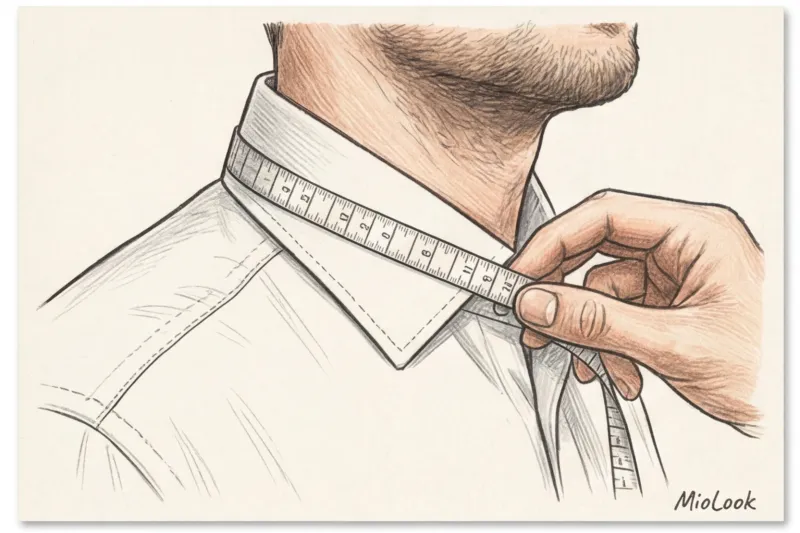
Collar: The Two-Finger Rule and Hidden Traps
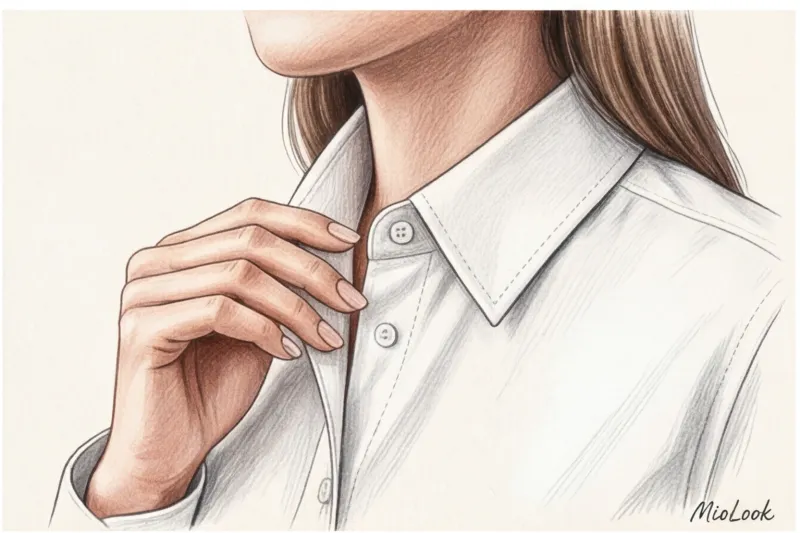
The gold standard for collar fit is that two fingers should fit comfortably between the button and the neck. Why not one? If you buy a 100% cotton shirt, it will naturally shrink by 1-2% after the first wash at 40 degrees Celsius. A collar that fits snugly in the fitting room will feel mercilessly tight at home.
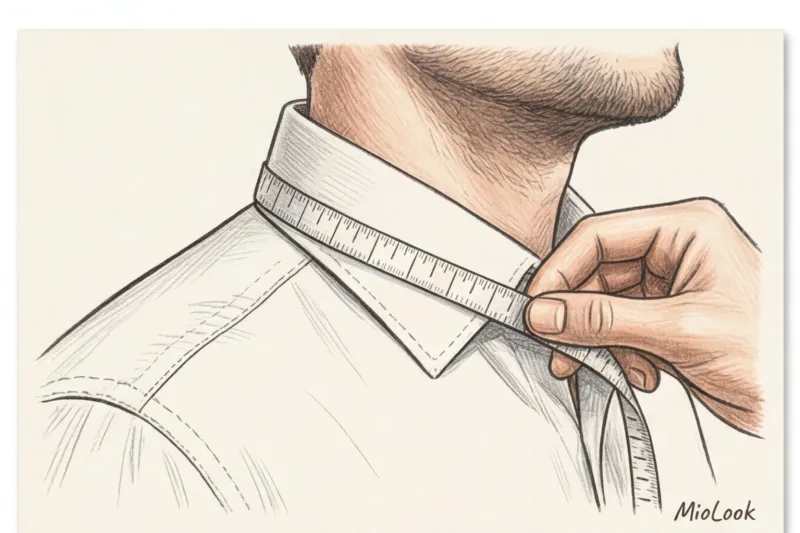
Shoulder Seam and Armhole: How to Check the Fit
The shoulder seam should lie directly on the acromial bone (where the shoulder meets the arm). If the seam has slipped down, the shirt is too big; if it has slipped toward the neck, it's too small. Regarding the armholes, look for styles where the fabric in the armpits doesn't hang loosely, but also doesn't cut into the skin. High, neat armholes allow for maximum freedom of movement.
Sleeve length: measured at the wrist bone
With the cuff unbuttoned and your arm hanging down, the sleeve edge should reach just to the base of your thumb. When you fasten the cuff, it will rest slightly higher, on your wrist bone. This length allows the shirt cuff to peek out from under your jacket sleeve by a perfect 1–1.5 cm—the hallmark of a well-groomed, expensive look.
Access to MioLook for €0.99 — one-time payment
A smart AI stylist will help you digitize your wardrobe and show you how a new shirt will pair with your jackets.
Get access — €0.99 onceChoosing a Collar: 3 Basic Options for a Modern Wardrobe
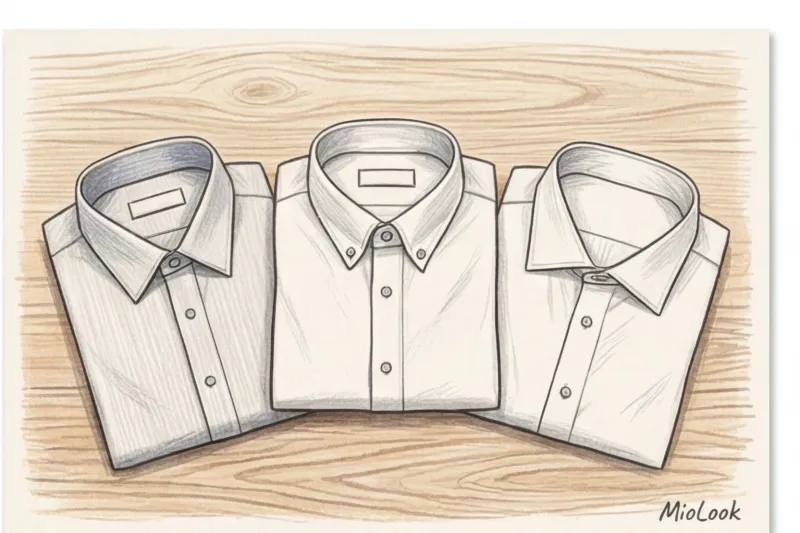
The collar shape determines how formal you look. You don't need to understand dozens of variations—three are enough to cover 99% of life situations:
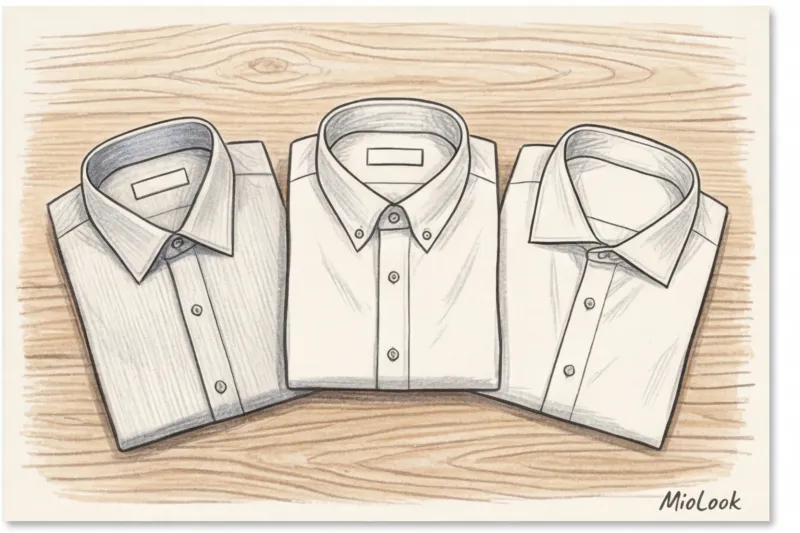
- Classic (Kent): The corners point downwards. It's a versatile workhorse. But honestly: without a tie under an unbuttoned jacket, it often falls apart and looks a bit sloppy.
- Shark (Cutaway): The corners are flared out wide. My favorite option for a classy "Italian" style. Ideal for men with a larger frame and broad facial features, as it visually balances the proportions. Looks luxurious with a chunky tie knot.
- Button-down: The king of smart-casual style. The collar corners are fastened to the shirt with small buttons. This American invention (originally for polo players) looks perfect worn solo, under a cardigan, or a casual jacket.
Secret from a stylist: If your partner never wears ties, buy him only button-down collars or shirts with hidden buttons Under the collar (hidden button-down). This way, the collar will always stand up nicely and won't spread across your collarbones throughout the day.
Fabric is everything: how to choose a men's shirt by material
The weave type of a fabric affects how it will wear and wrinkle. Let's look at the three main textures:
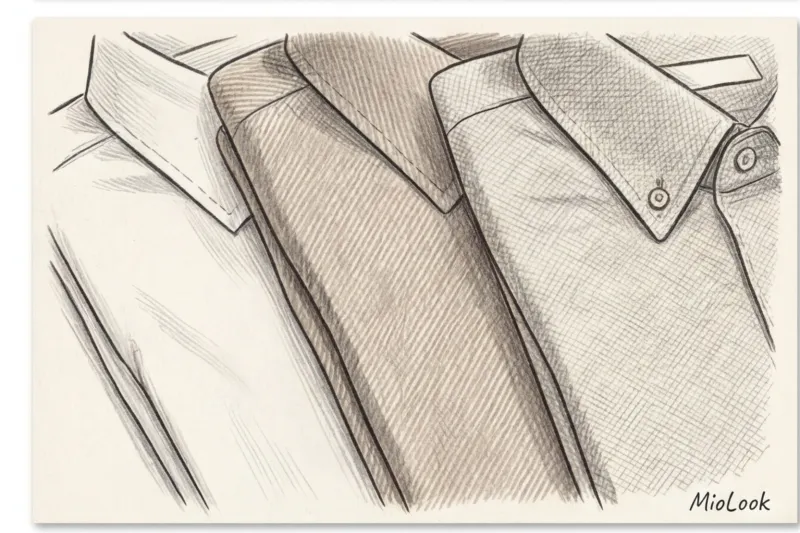
- Poplin: Smooth, fine, silky. It's a classic, strict style. The downside? It wrinkles with just one breath. If you wear a poplin shirt under a sweater, it will wrinkle in unsightly, stiff creases. Save it for formal wear only.
- Twill: It has a diagonal weave (rib), which makes the fabric denser, softer, and more textured. Twill drapes beautifully and wrinkles significantly less. It's the best choice for everyday office wear.
- Oxford: A textured cotton with a checkerboard weave. It's dense, incredibly durable, and looks stunning with a slight, natural creasing. A perfect pairing with jeans and chinos.
If you want to delve deeper into quality, look at the thread count. The optimal balance for everyday wear is between 80 and 100. Many people pursue premium shirts with a TC of 120–140 (double twist), but it's important to understand: the higher the number, the finer and more delicate the fabric. Such "luxury" is extremely impractical for everyday wear.
The Non-Iron Myth: Why I Don't Recommend No-Iron Shirts
This is perhaps the most counterintuitive rule I often have to argue with when I'm shopping. Men adore the "Non-Iron" label, believing it's a lifesaver.
But do you know how this effect is achieved? Cotton fibers are impregnated with special synthetic resins (usually formaldehyde-based) and baked at high temperatures. The fabric becomes glassy to the touch. not breathing , disrupts the body's thermoregulation and can cause irritation in men with sensitive skin.
When does this NOT work? Of course, if you're a pilot or a businessman spending 20 hours on flights without access to a steamer, non-iron is a necessary evil. But for everyday life, it's better to choose high-quality twill that irons in 3 minutes, or a shirt made of heavy cotton with 2-3% elastane.
Your perfect look starts here
Join thousands of users who look flawless every day with MioLook. Artificial intelligence will find the perfect combinations.
Get access — €0.99 onceA Practical Brand Analysis: Where to Find the Perfect Shirt (Massimo Dutti, COS, Zara)
Shopping for clothes in the mass market is always a sleuth's job. You need to be able to bypass the obvious junk and find the gems. Here's my expert breakdown of European retailers in the mid-price segment.
Zara
I wouldn't recommend buying classic shirts from Zara's main department—they're too polyester-heavy and the patterns aren't consistent. But their premium line Zara Origins (around €50–60) is a whole other level. There you can find a thick, heavy, well-cut Oxford shoe that looks on par with Scandinavian minimalist brands.
Massimo Dutti
My favorite in the €60-€80 price range. Massimo Dutti's patterns are historically designed for taller heights and broader shoulders than those of their parent brand, Zara. They have a fantastic fit. Tailored Fit — it removes excess volume at the waist, but leaves room in the chest. The fabrics are purchased from good Italian factories. If you calculate the correct cost-per-wear (cost per exit) A Massimo Dutti shirt pays for itself much faster than budget-friendly alternatives, as it can withstand three times more washings.
COS
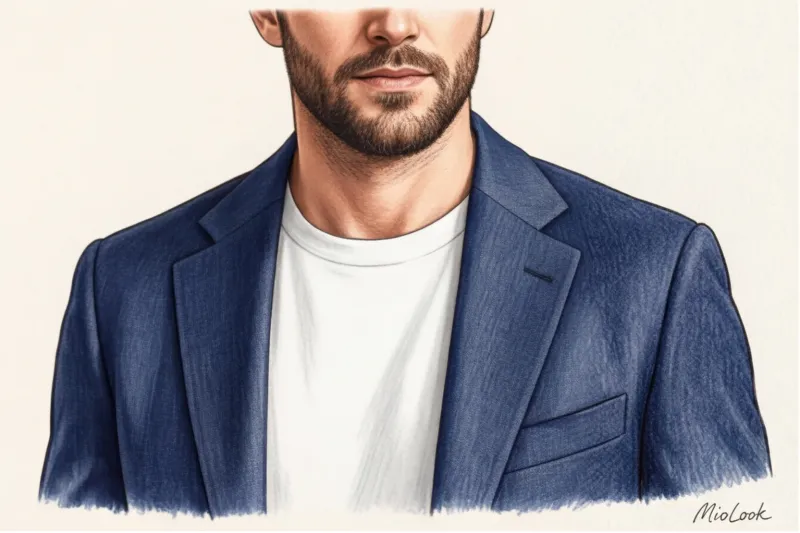
If you're looking for architectural, slightly relaxed minimalism, this is the place for you (prices range from €70-€90). COS makes shirts from very thick cotton with excellent fittings. Their Regular Fit fits are looser than those of Spanish brands, making them ideal for layering (for example, wearing an unbuttoned shirt over a basic white T-shirt).
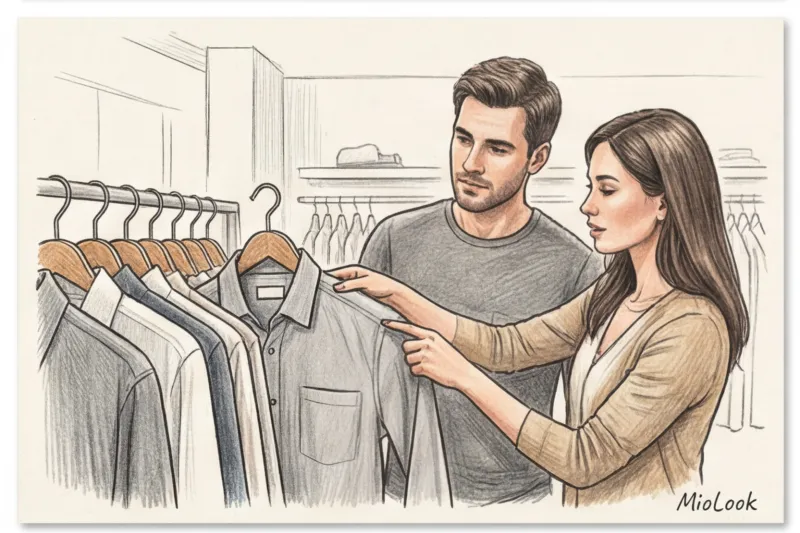
Stylist Checklist: 5 Steps to Take in the Fitting Room Before Buying
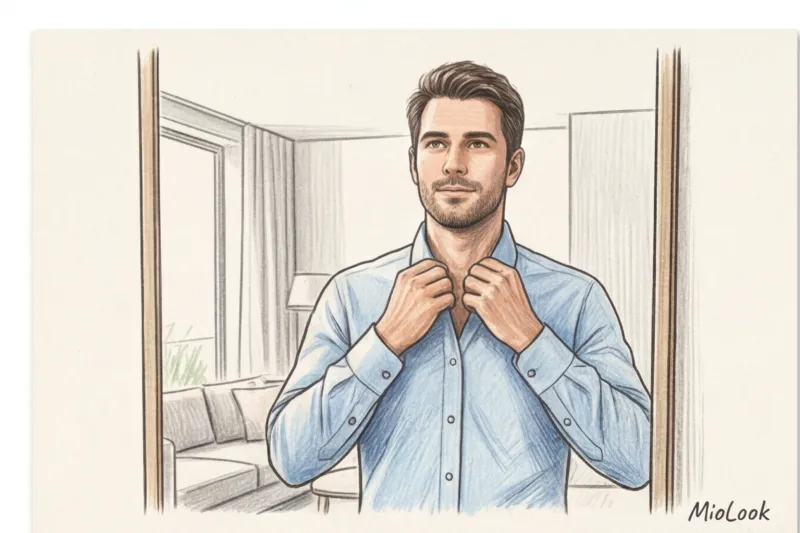
Have you chosen a style? Great. Now send this text to your man (or take a screenshot) when he goes into the fitting room. To prevent your shirt from shrinking in the closet, you need to perform 5 essential tests right in the store:
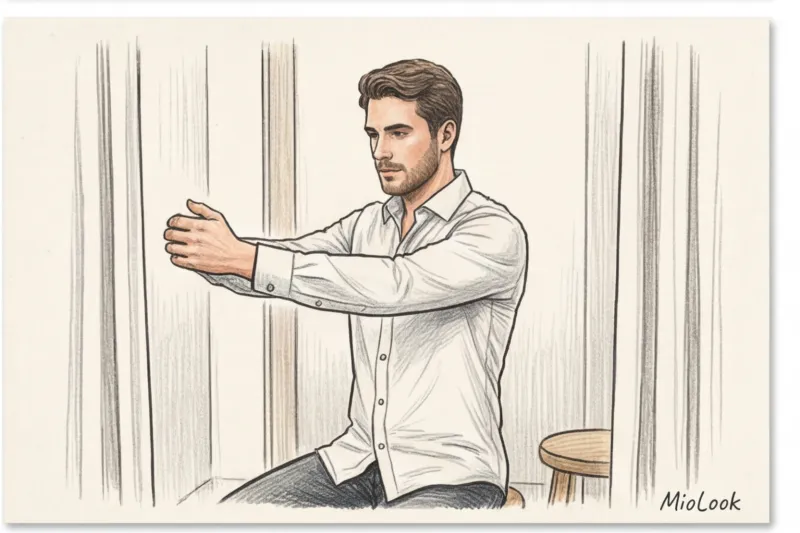
- Sit on a chair (or ottoman in the fitting room). When standing, the abdomen is always tucked in. When we sit, the waist size increases. The buttons on the abdomen should not be pulled apart or cause an "X" shape on the fabric.
- Hug yourself by the shoulders. Bring your elbows together in front of you. If the fabric at your back is dangerously flapping or restricting your movement so much that you can't raise your arms, the armholes are too tight or you need a larger size.
- Tuck your shirt into your pants and raise both arms up. Is there more than 2-3 centimeters of fabric coming out? The pattern is poor, the armhole is too low.
- Bend your arm at the elbow to a right angle. The cuff of a properly fitting shirt should stay on the wrist, not ride down to the middle of the forearm.
- Run your hand along the inside of the collar and seams. If cheap nylon threads are used, they will prick your neck. The skin on your neck is thin, and by the end of the day, micro-scratches will develop into a red, irritated area.
Style isn't a set of rigid rules, but an understanding of how a garment works for you. The right men's shirt should be invisible to its wearer: it shouldn't tug, shouldn't require constant tugging, and shouldn't make you want to rush home to change. Invest time in finding "your" fit in mass-market clothing, pay attention to the density of the fabric, and forget about chemical treatments forever. When your wardrobe consists of items that feel good on your body, self-confidence comes automatically.