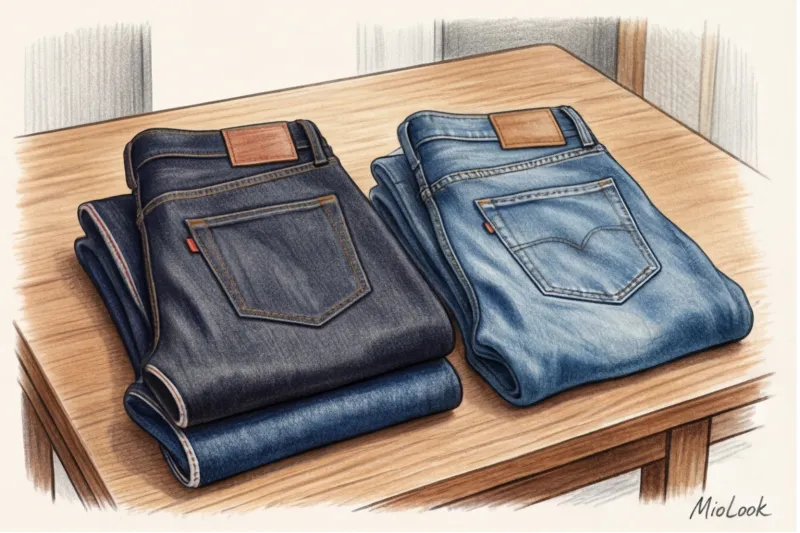
It's a familiar scene: a man has expensive, prestigious Japanese jeans made of thick selvedge denim in his closet, but every morning he stubbornly pulls on an old, slightly faded pair from the mass market. And it's not a matter of conservatism or bad taste. In 14 years of working as a personal stylist, I've learned one ironclad rule of men's wardrobe: clothes shouldn't demand attention or cause physical discomfort.
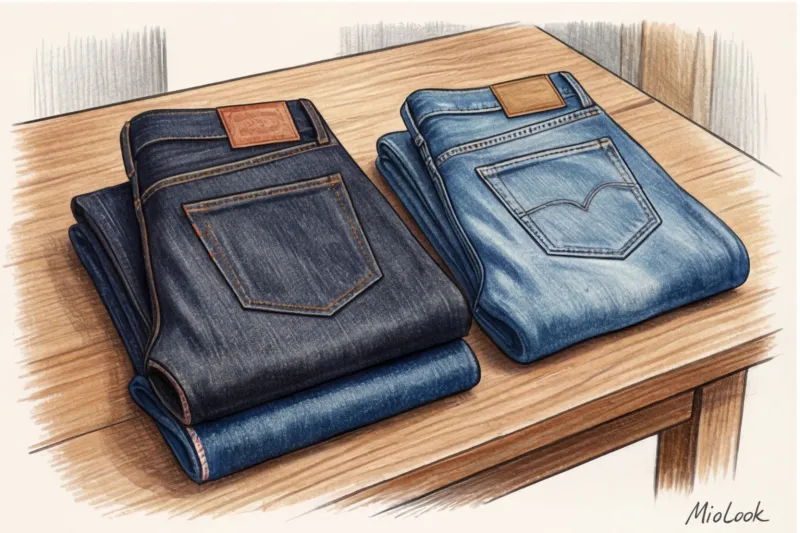
If a garment chafes, presses on your stomach after lunch, or restricts your movement when getting into the car, it's destined to become a museum piece on the back shelf. That's why the question of how to choose men's jeans begins not with current trends, but with physiology and body structure. We've already discussed the principles of creating a working base in detail in our The complete guide to creating a basic men's wardrobe.
Why He Doesn't Wear New Jeans, or the Myth of "Correct" Denim
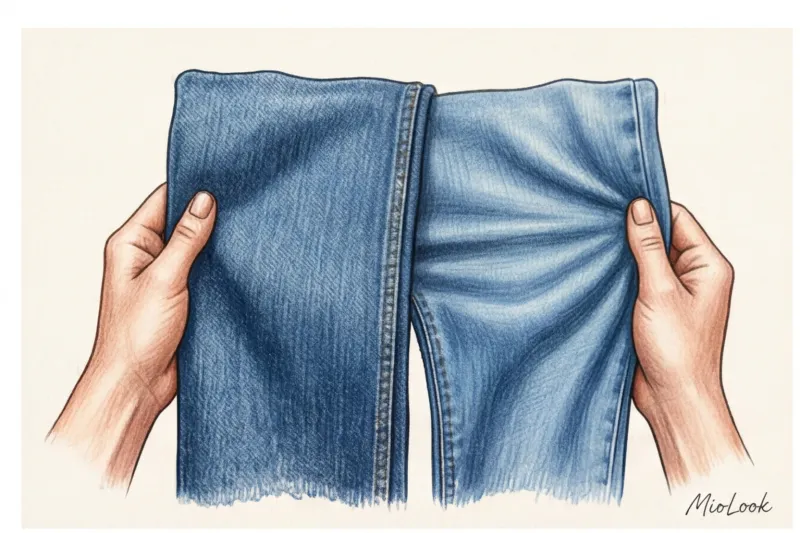
A couple of years ago, a client—the IT director of a large company—came to see me. During our first consultation, he complained that his wife had given him a pair of iconic Japanese jeans for €400. They were beautiful, thick, made of 100% raw cotton (Raw Denim), with a distinctive selvedge. Do you know how many times he wore them? Exactly once. It turned out that the thick, stiff fabric was digging into his knees so much while driving that by the evening, he'd grown to hate the gift.
Glossy magazines often propagate the myth: "Real men's jeans should be made of 100% stiff cotton and be worn in for months, molding to the body." It sounds romantic, but it's completely impractical for today's fast-paced lifestyle. Men wear only 20% of their wardrobe 80% of the time, precisely because of tactile comfort.
Instead of suffering for the sake of supposed authenticity, I encourage clients to shift their focus to functionality. Comfort is more important than authenticity. Light stretch isn't a feminine touch, but an absolute must-have for active men. There's only one exception: this approach doesn't work for devoted fans of vintage style and rugged workwear—they have completely different fit requirements.
How to Choose Men's Jeans for Your Body Type: Forget the "One Size Fits All"
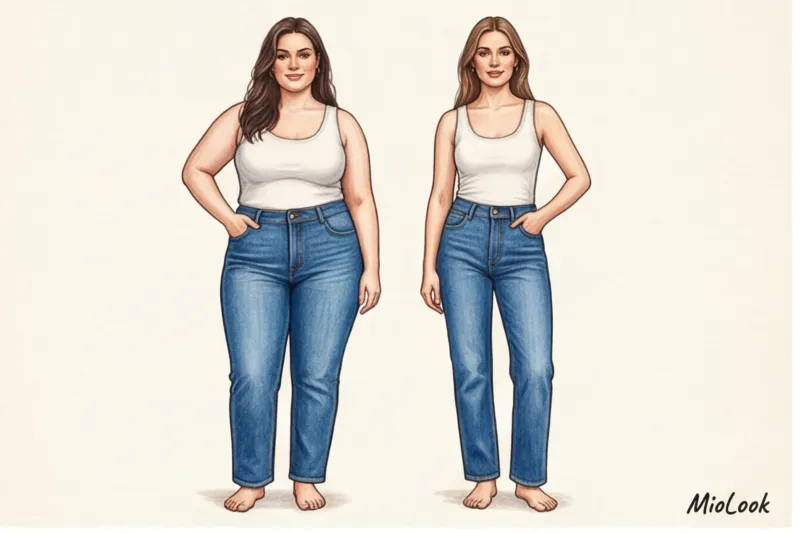
Most men walk into a store and, out of habit, ask for "straight fit" jeans. The paradox is that the classic straight fit doesn't suit everyone. On thin guys, it often hangs baggy, making the figure look shapeless, while on larger men, it creates the effect of massive columns instead of legs.
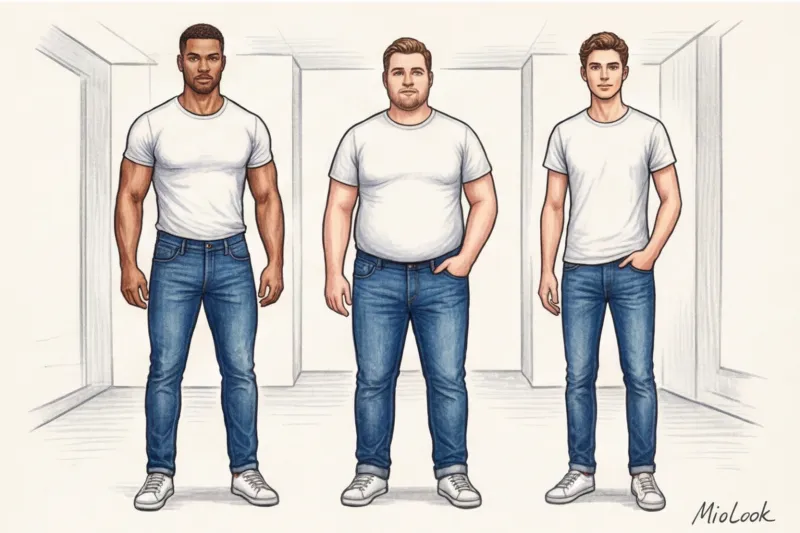
For 80% of my clients, the Tapered cut—a tapered fit—is a lifesaver. They offer the necessary room in the hips (especially important for comfort while sitting), but taper gently toward the ankle, creating a modern, streamlined silhouette without excess fabric at the bottom.
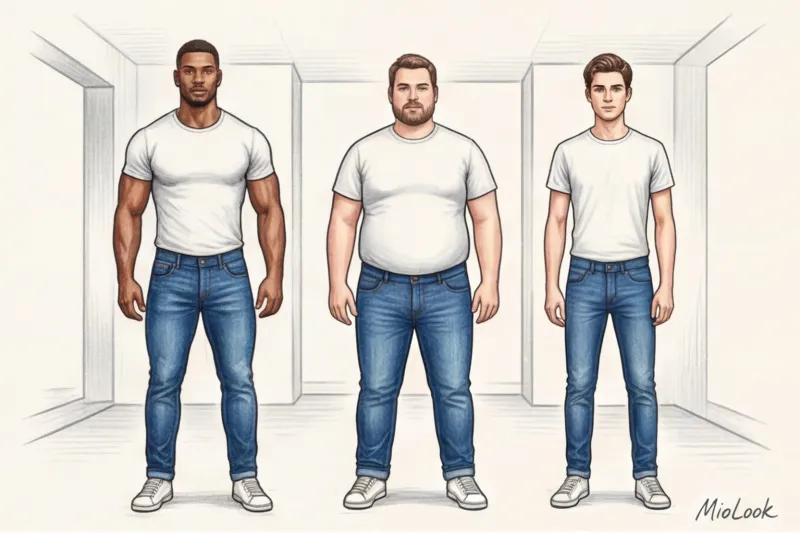
Athletic build (wide hips and calves)
The biggest pain point for gym-goers is standard fit. If jeans are too tight in the thighs and calves, they inevitably bulge out at the waist like a huge bubble. You have to cinch the belt tightly, bunching the fabric up, which looks incredibly sloppy.
The solution: the Athletic Fit style. Brands developed it specifically for athletic figures—these styles offer extra volume in the buttocks and hips while maintaining a narrow waist and tapered leg. No more choosing between quad comfort and a proper waist.
Having a tummy (apple shape)
The worst thing a man with a noticeable belly can do is buy low-rise jeans. The waistband will dig under the belly, visually pushing it outward and creating that "muffin-pan" effect.
The right strategy: choose a mid-rise fit with 1-2% elastane. The waistband should sit just below the natural waistline, gently supporting the stomach rather than cutting into it. A straight or slightly tapered cut will help balance your body proportions.
Access to MioLook for €0.99 — one-time payment
A smart AI stylist will help you integrate new jeans into your wardrobe and create dozens of looks.
Get access — €0.99 onceThe Anatomy of a Perfect Fit: Rise, Inseam, and the Signature Chair Test
To understand how to choose men's jeans online or in-store, you need to learn how to read the labels. Standard labeling consists of two letters: W (Waist) and L (Length/Inseam). But here lies the main pitfall of online shopping: vanity sizing.
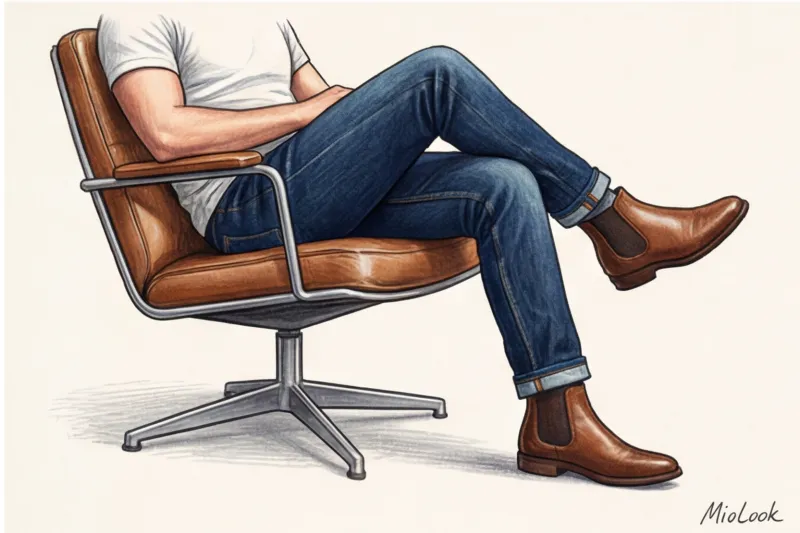
A 2023 study by The Washington Post clearly demonstrated that the stated waist size of a 32 can vary dramatically across brands. One brand might actually measure 32 inches, while another might measure 34 or even 35 inches. Manufacturers intentionally understate the waist size on the tag to make it more palatable for consumers to "fit" into a smaller size. Therefore, relying solely on standard sizes is pointless—you should always look at the specific brand's sizing chart in centimeters.
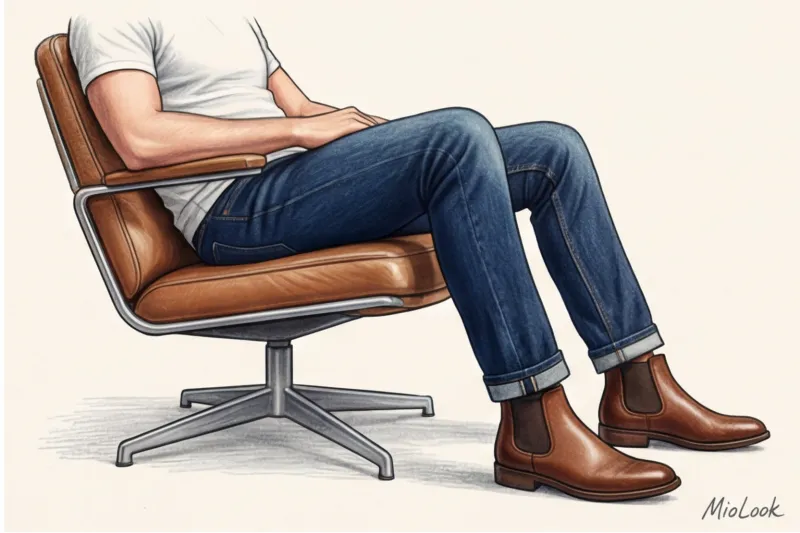
But the most important parameter is the rise, which is divided into the front rise and the back rise. To check if the pattern fits you, I have every client do a "chair test" right in the fitting room.
The "Chair Test" rule: put on a pair of jeans, button them up, and sit on the ottoman in the fitting room. If there's a deep gap in the back, revealing your underwear, or the front button is mercilessly digging into your stomach, take them off immediately. They're not your style, even if the brand is prestigious.
Fabric composition: when 100% cotton only does harm
Turning your jeans inside out and checking the white inseam tag can tell you how comfortable you'll be at the end of a long workday. For years, premium denim was considered to be made exclusively from 100% cotton.
It's counterintuitive, but today's ideal formula for comfort for an active man looks like this: 98–99% heavy cotton and 1–2% elastane (spandex). In my experience, when buying basics, these types of garments last just as long, but they don't make me want to change into something soft immediately after getting home.
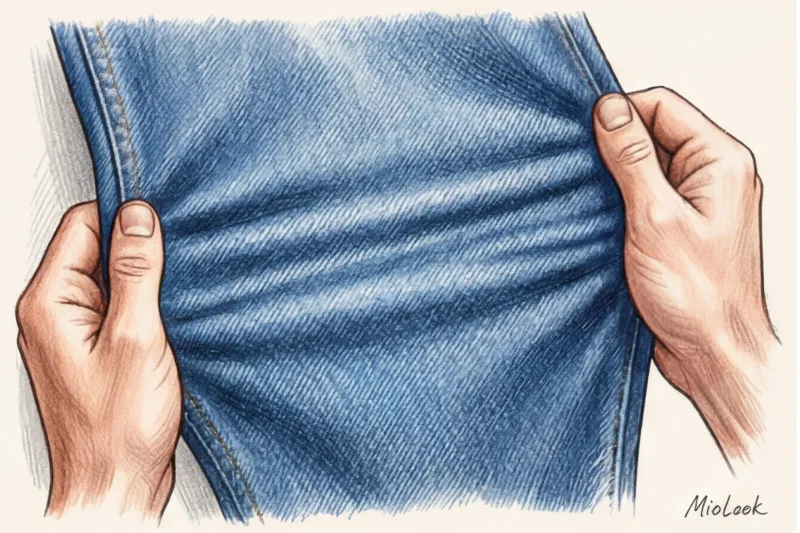
It's important not to overdo it. If the composition states 3% elastane or more (as well as a high percentage of polyester), this is a warning sign. Such fabric is too thin and will quickly stretch out, losing its original shape, and telltale blisters will appear on the knees after just a couple of weeks of active wear.
Top successful brands for different budgets: from mass-market to premium
Finding your perfect brand is half the battle. Over the years, I've built a pool of trusted manufacturers whose cuts and fabric quality rarely disappoint. Of course, fit varies from person to person, but these brands are worth testing first.
Budget segment (30–60 €):
Uniqlo is the clear winner in this category. Their basic selvedge denim (to which they cleverly added that all-important percentage of elastane) looks three times more expensive than it actually is. It's a great option for those looking for simple, unadorned styles.
Mid-price segment (70–150 €):
Specialized denim brands reign supreme here. At Levi's, be sure to try the 502 (an excellent tapered cut) and the 541 (that athletic fit for sporty guys). Lee and Massimo Dutti also make excellent basic options without heavy distressing (the latter is ideal for a smart-casual aesthetic).
Premium segment (250–450 €):
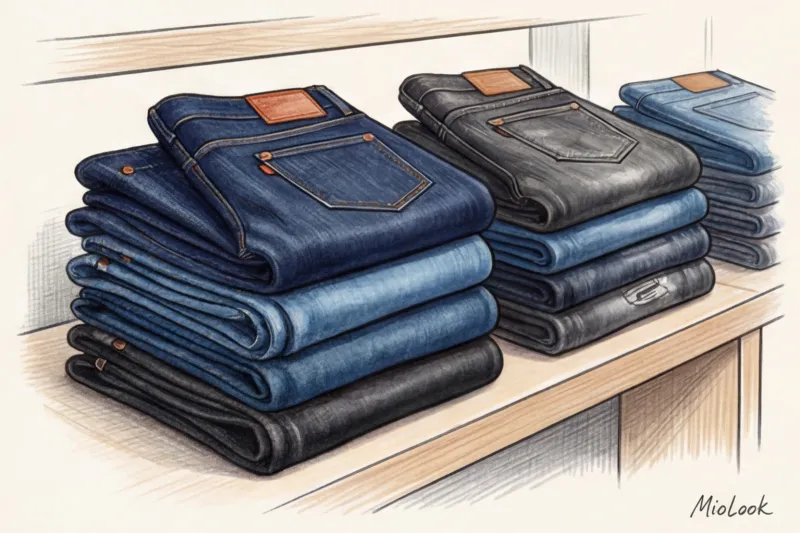
If your budget allows, consider Jacob Cohen (incredible comfort, a light patchouli scent on the fabric, and classy hardware) or AG Jeans. According to WGSN, a 2024 analysis, Italian and American premium brands continue to lead in dyeing and finishing technologies for soft denim.
Tired of picking things up manually?
Digitize your closet with MioLook: the app will analyze your items and suggest what to wear with your new jeans.
Get access — €0.99 onceChecklist: 5 steps before taking your jeans to the checkout
To finally answer the question of how to choose men's jeans without regretting your purchase, I've put together a short guide. You can copy this list right now and send it to your man via messenger before his shopping trip.
- Check the button tension. Button your jeans. You should be able to fit one finger comfortably between your belly and the waistband. If you can fit two, they'll slip; if you can't fit one, you'll have trouble breathing after dinner.
- Do a deep squat. And that same "stool test." The fabric shouldn't be bursting at the seams or restricting circulation in the calves.
- Critically evaluate the length. Wear your usual shoes. The pant leg should form a single, neat crease at the front. If the hem is bunched up with three or more pleats, it visually steals 5-7 centimeters of height. Feel free to take them to a tailor.
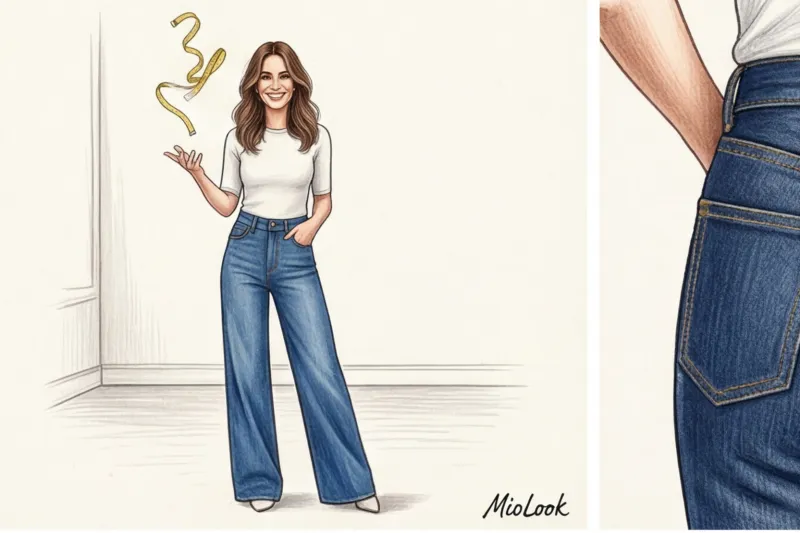
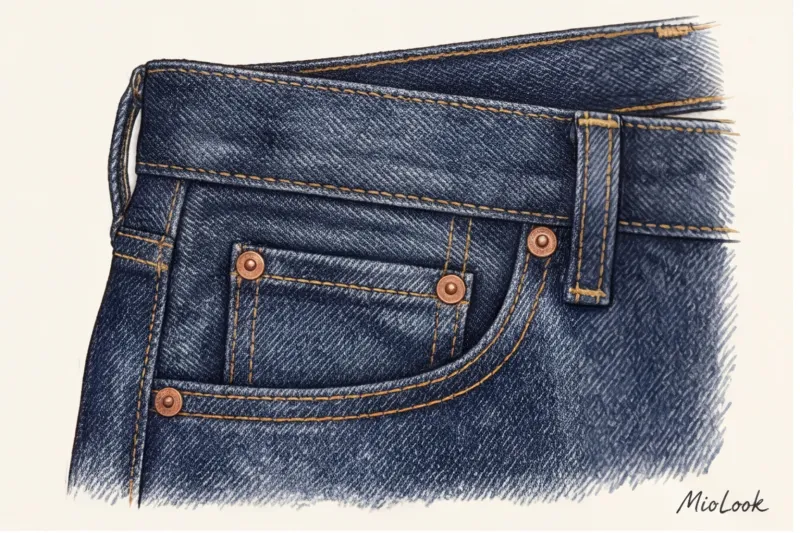
- Look at the back pockets. Pockets that are too large make the buttocks appear flat, while pockets that are too low visually shorten the legs and create a sagging silhouette. Pockets should be positioned exactly at the fullest part of the buttocks.
- Appreciate the versatility of color. Dark indigo, free of artificial scuffs, holes, and contrasting seams, is the safest choice. It pairs with 80% of shoes and is suitable even for casual Fridays at the office.
Finding the perfect jeans takes time, but the results are worth it. Stop buying for the ideal fantasy version of yourself who's willing to tolerate stiff denim for the sake of a lumberjack look. Buy for real life, where comfort and freedom of movement come first. And to ensure your new jeans fit seamlessly into your current wardrobe, digitize your items in an app. MioLook — a smart algorithm will suggest dozens of fresh combinations with what you already have.