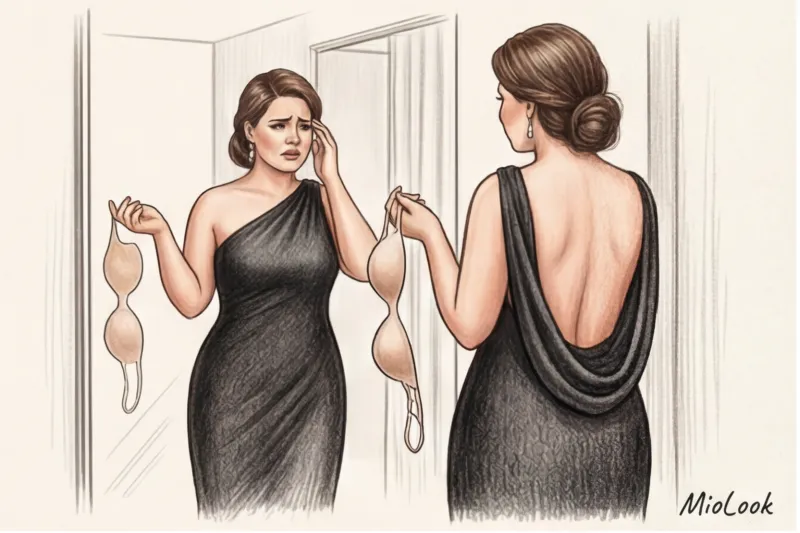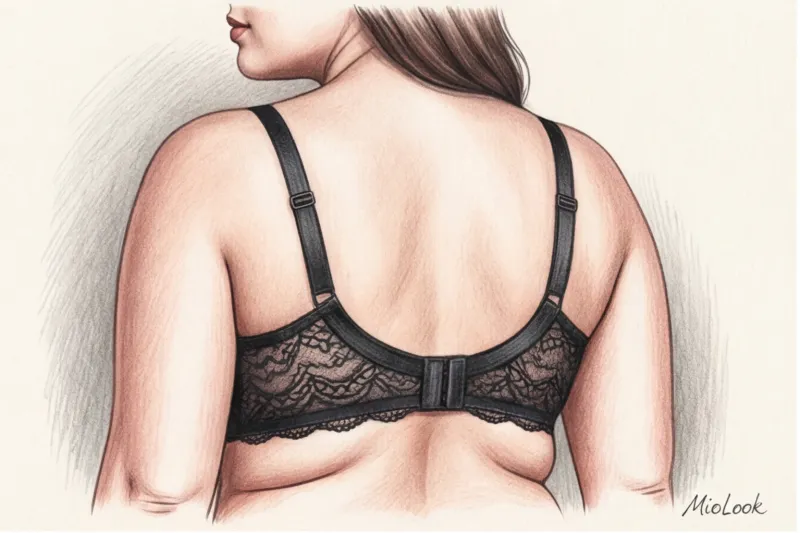
Let's be honest. If you're blessed with a luxurious D, E, F, or larger size, shopping in the lingerie department often feels like a form of torture. For decades, the mass-market industry has offered curvy women a choice without a choice: either beige "granny parachutes" as thick as bulletproof vests, or flimsy lace undergarments that treacherously push your breasts toward your waist. As a personal stylist, I see this compromise every day.
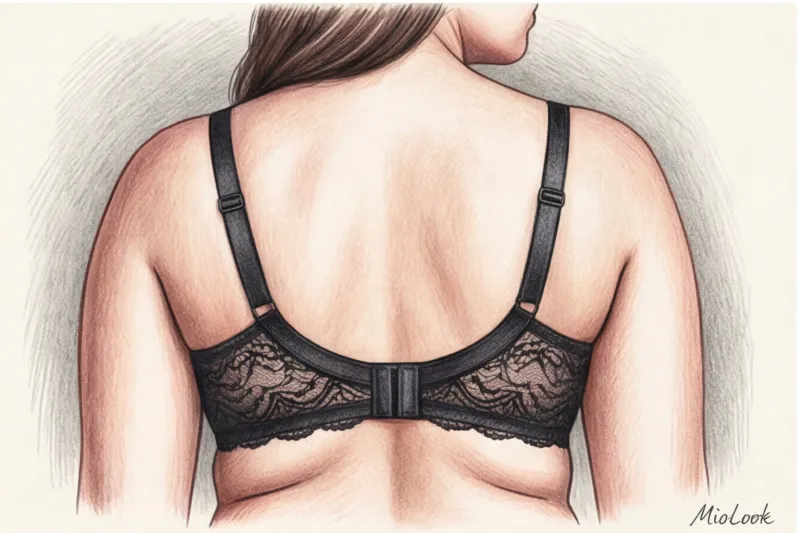
My name is Isabella Garcia, and after 12 years of working with women's wardrobes, I've learned one hard truth: no suit, even the most expensive, will fit well without the right undergarment. And no, you don't need straps as wide as a seat belt. We discussed the basic anatomy of sizes in more detail in our complete sizing guide , and today we will move on to aerobatics.
If you've been searching for " How to choose a bra for large breasts ", get ready to forget everything you've been taught by sales associates in chain stores. We'll be applying a rigorous engineering approach that will allow you to wear the finest lace, deep V-necklines, and still feel completely supported.
The Anatomy of Support: Why Bra Straps Shouldn't Hold Your Breasts
Breasts of size D and above are a significant physical strain. According to biomechanical research (specifically, the 2023 reports of the University of Portsmouth's Breast Health Research Group), breasts of size F can weigh up to 1.5–2.5 kilograms. Imagine hanging two liter bottles of water around your neck on thin strings. This is exactly what happens to your spine when you wear the wrong bra.
In professional bra fitting, there's a golden 80/20 rule. Exactly 80% of the weight and support should come from the bra's band, and only 20% from the straps. A properly fitting bra works like a suspension bridge, with the band acting as the strong, load-bearing supports and the cups and straps merely the cables that define its shape.
"If by the end of the day you're left with deep red marks on your shoulders from the straps digging in, it doesn't mean you need wider straps. It means your belt is too big and isn't doing its job."
Shifting weight onto the shoulders not only leads to poor posture and chronic headaches due to tight trapezius muscles, but also visually lowers the chest line, making the silhouette heavier and the figure appear squat.
Your perfect look starts here
Join thousands of users who look flawless every day with MioLook. Our smart AI stylist will help you integrate the perfect lingerie into your everyday looks.
Get access — €0.99 onceThree ironclad rules: how to choose a bra for large breasts without mistakes
When I accompany clients shopping, we never look at the design first. We look at the frame. Here's the basic bra-fitting algorithm used by the International Guild of Lingerie Stylists.
Belt Rule: Density is everything
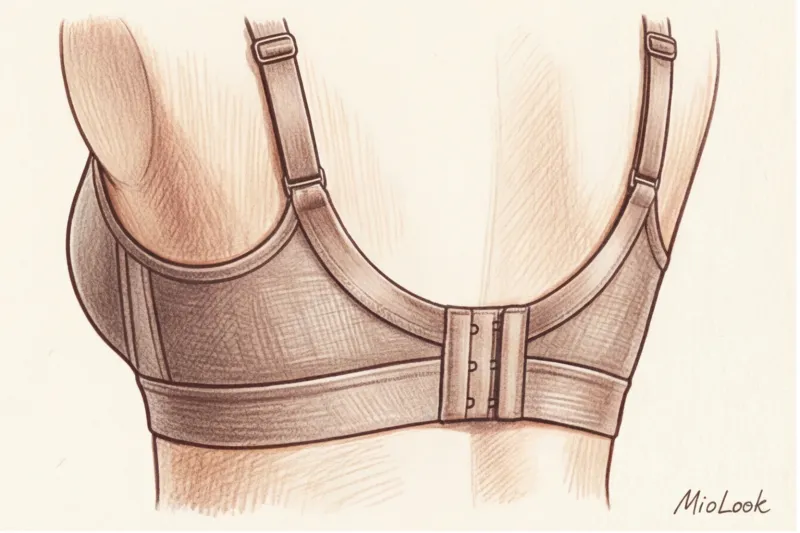
The belt should be strictly horizontal, parallel to the floor. If it slides up your back, creating an arc, remove it immediately; this size is too big for you.
I always have my clients do a tension test: no more than four fingers (or two placed edgewise) should fit under the band when fastened at the back. If you can pull the band 5-7 centimeters away from your back, there will be no support. And remember the important rule of buying: a new bra should always fit snugly. the weakest (extreme) hook. The elastane in the fabric will inevitably stretch after a couple of months, and then you'll have to refasten it tighter.
The underwire rule: coverage of the entire breast
The underwire is the foundation of the cup. It should rest solely on the ribs, never digging into the soft tissue of the breast itself. The underwire end should point exactly to the center of the armpit.
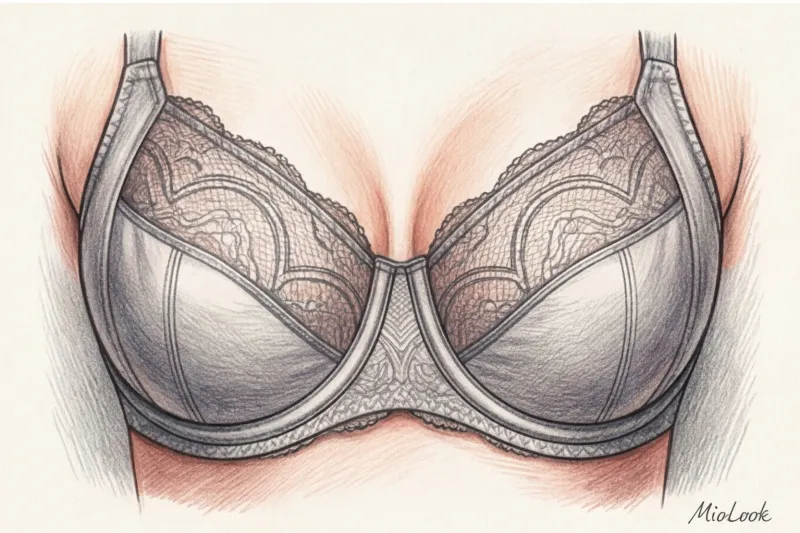
The most common mistake mass-market manufacturers make is using narrow, U-shaped underwires for larger sizes. They damage the tissue and create a dreaded side-boob effect, which then shows through as rolls under knitwear.
The rule of the bridge: a perfect fit to the sternum
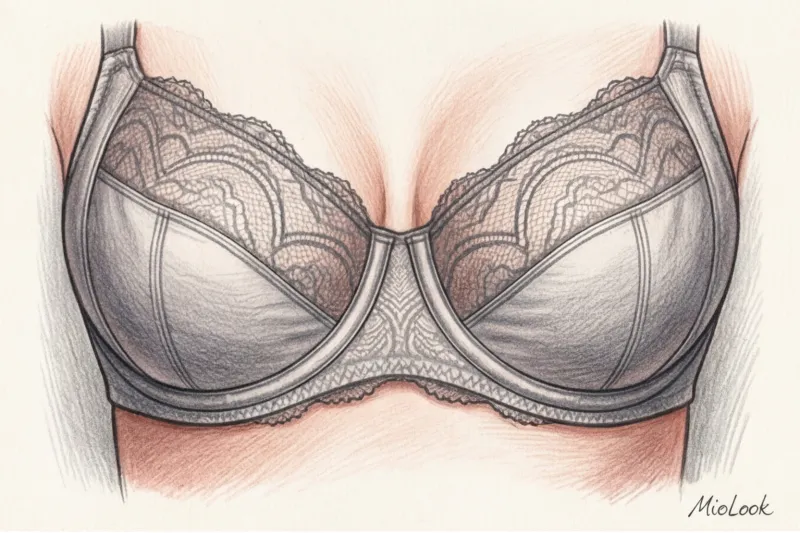
The bridge is the center part of the bra between the cups. Ideally, it should rest firmly and securely against your breastbone.
If the bridge is "hanging in mid-air" or protruding, the diagnosis is clear: the cup is too small. Large breasts simply push a tight design away from the body. The only exception to this rule is very close-set breasts (when the distance between the breasts is less than one finger width). In this case, a high bridge will physically press against the tissue, so you need specific styles with a lower center.
The best styles: from basic to Mediterranean necklines
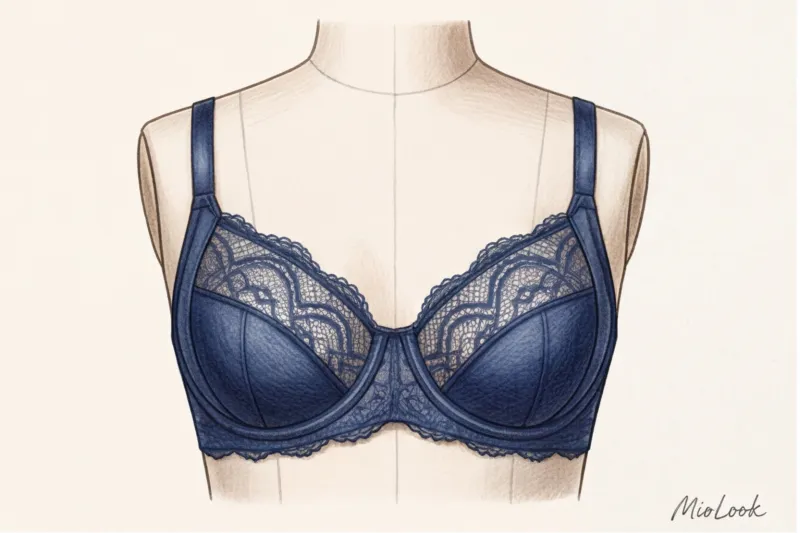
According to the analytical agency WGSN (2024), lingerie architecture is making a global comeback. Shapelessness is becoming a thing of the past. And this is the best news for those with luxurious curves, because our best friend is technology. cut-and-sew (cut cups, sewn from 3-4 parts).
Unlike smooth molded cups that simply cover the breasts, a tailored bra uses seams to shape the breasts. Vertical seams lift the breasts, horizontal seams create projection, and diagonal seams center them.
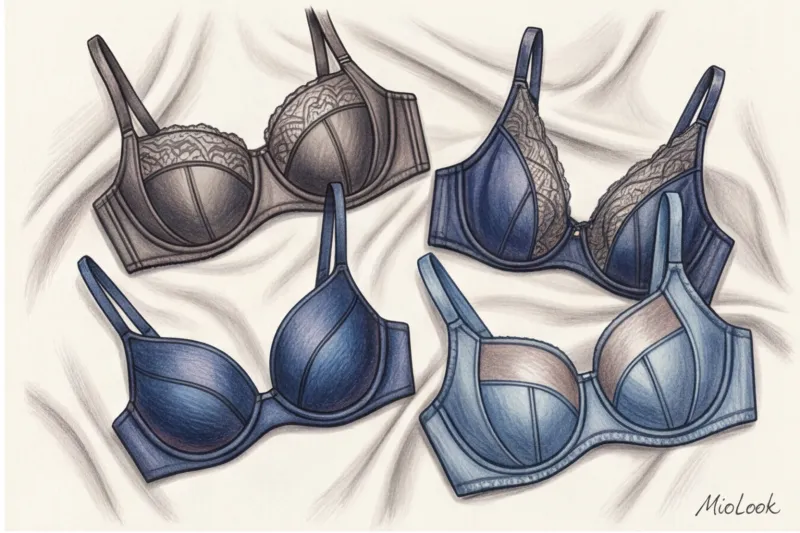
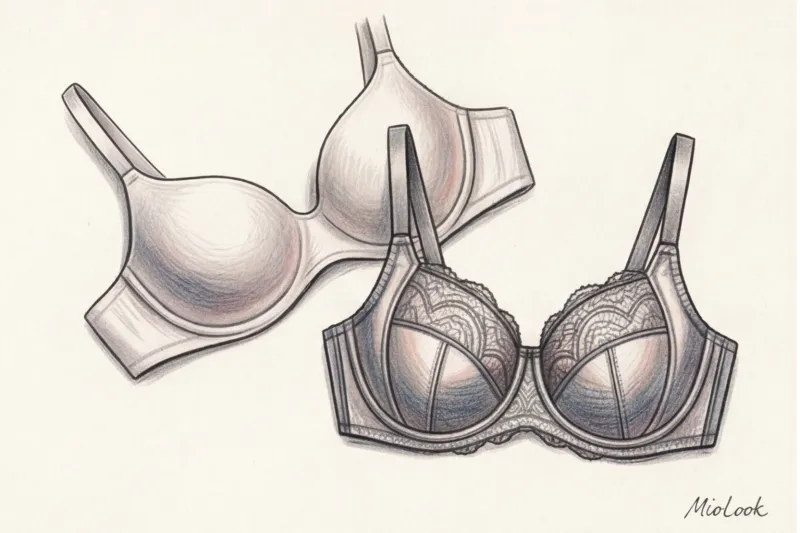
A stylish woman with a size D+ should definitely have three styles in her wardrobe:
- Full-cup with side sling: A staple of any basic wardrobe, look for styles with an additional vertical detail on the side of the cup. This side-cut gathers the bust from the armpits and draws it forward. The silhouette instantly becomes slimmer, freeing up the arm area.
- Balconette: A design that pushes the bust upward, creating a "shelf" effect. Ideal for square necklines, empire-line dresses, and wide décolletés. The underwire is typically wider, making it comfortable for fuller busts.
- Plunge: An extremely low-cut bra. Yes, you can wear a plunging neckline with a size F! Plunge proves that oversized, full-coverage cups are a myth.
My personal style formula for a summer evening that my clients adore: The right lace plunge + silk wrap dress + big statement earrings = a chic, relaxed Mediterranean look.
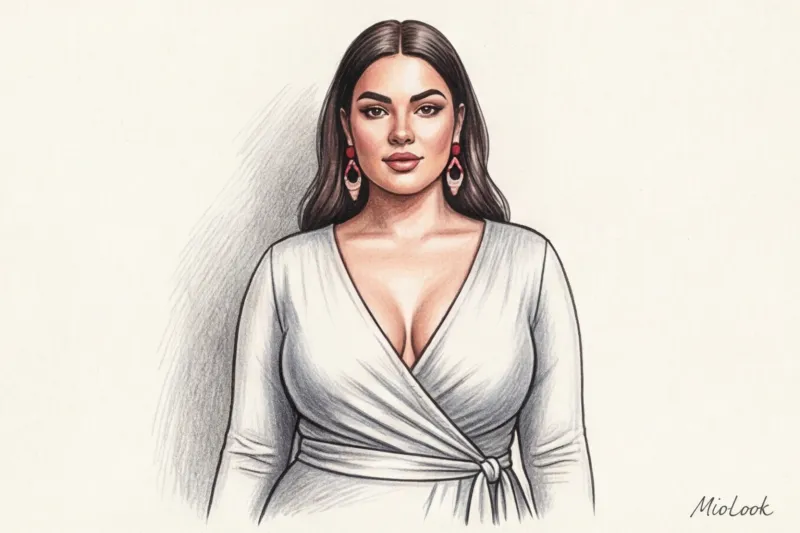
But there is a fair limitation here: The plunge style isn't for everyone. If your breasts have become soft and sagging after weight loss or breastfeeding, they will tend to bulge toward the center with a classic plunge bra. In this case, look for plunge styles with a firm, non-elastic mesh along the top edge of the cup.
Access to MioLook for €0.99 — one-time payment
A smart AI stylist will create the perfect look based on your proportions and favorite styles. Upload your wardrobe and receive ready-made capsule collections every day.
Get access — €0.99 onceEnemies of Your Figure: What to Avoid if You're a Size D+
Know, How to choose a bra for large breasts — that's only half the battle. It's important to know what to run from and not look back.
First of all, forget about molded T-shirt bras (smooth T-shirt bras made from a single piece of foam). The foam doesn't hold the shape of larger breasts; instead, heavy breasts compress the foam under their weight. As a result, the breasts look flat, shapeless, and spreading toward the armpits. If you want a smooth look under a thin office shirt, choose spacer bras made from 3D material, which breathes and adapts to your anatomy.
Secondly, I want to dispel the main, most harmful myth of the lingerie industry. Old-style minimizers don't make you look slimmer. They make you look wider.
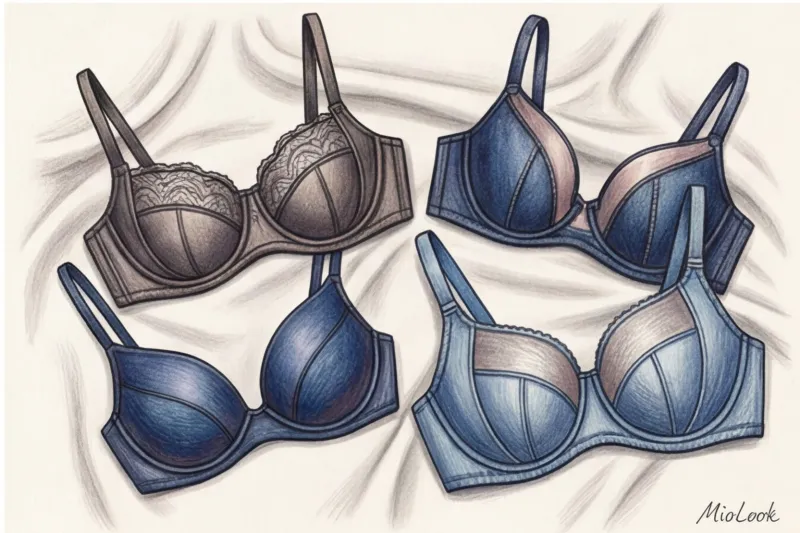
A classic minimizer works by flattening full breasts against the rib cage. Yes, the forward projection is reduced by a couple of centimeters. But where does the volume go? It's pushed into the sides! The breasts merge with the arms, visually eliminating the waist and turning the upper body into a monolithic square. Instead of flattening the breasts, they should be gathered and pushed forward with a tailored bra with side support.
Stylist Secrets: How to Properly Integrate Lingerie into Your Wardrobe
Underwear isn't just a hygiene necessity; it's a tool for body sculpting. One day, a client named Marina, a top manager at an IT company, came to see me. A luxurious size 75G, she exclusively wore shapeless, oversized sweaters because she was self-conscious about her breasts, which, in her old underwear, dipped almost to her waist.
In styling, there's a "golden ratio" rule for the bust: the most prominent point (the apex) should be exactly halfway between the shoulder line and the elbow. We chose a thick balconette bra for Marina, which lifted her bust to the correct height—about 5 centimeters above her normal position.
The effect was shocking. Space appeared between her breasts and stomach, revealing her slender waist. Marina looked in the mirror and said, "I feel like I've lost 5 kilograms in ten minutes." That's how the right fit works under a business suit or summer dress.
For office wear, especially in summer when fabrics tend to be thinner (such as 120 g/m² cotton or fine viscose), opt for bras made of thick, flat lace. It doesn't show through clothing as much as textured French Chantilly lace, but it still provides a firm frame that prevents your breasts from swaying as you walk, maintaining a sleek look.
Checklist: Test-drive the perfect bra in the fitting room
Save this step-by-step plan to your phone. Next time you find yourself in the fitting room with a pile of bras, give it a thorough test drive. Only if a bra passes all 4 stages is it worth your money.
- Raised Hands Test: Raise both arms sharply upward and stretch. The belt should stay in place, pinned to your ribs. If it jumps up onto your back and your breasts treacherously peek out from under your underwire, the belt is hopelessly too big.
- Tilt test: Lean forward 90 degrees and shake your shoulders slightly. If the cup depth is correct, your breasts will stay in. If they spill out toward the center, creating a double fold above the rim, the cup is too small or the style is too revealing for your soft tissues.
- Thin Turtleneck Test: Never try on a bra on bare skin alone. Always bring a thin knit T-shirt or turtleneck to the fitting room. Put it on over the bra. Look at your silhouette from profile: your chest should point straight ahead, not drooping. Evaluate your back: a band that's snug but wide enough (at least 3 hooks) shouldn't create deep rolls.
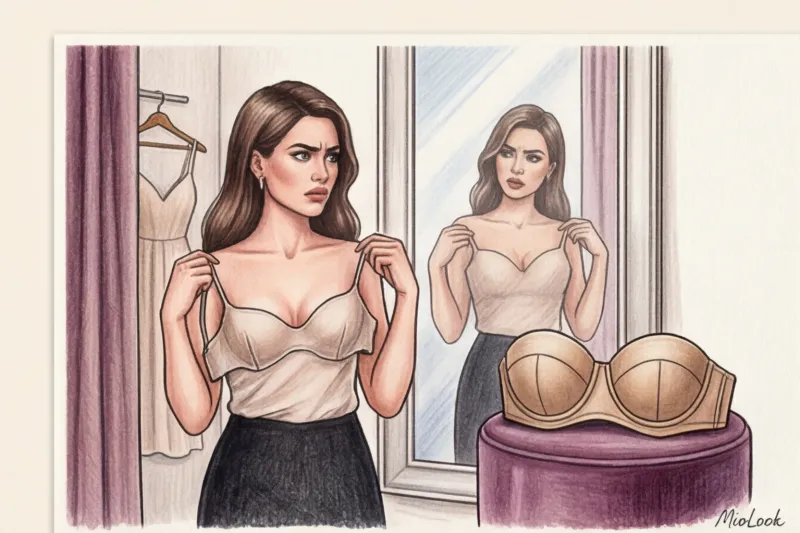
- The final chord is the release of the straps: Slide the straps off your shoulders. Surprise! The bra should stay in place, and your breasts should only drop slightly (1-2 cm). If the strapless bra collapses, you're trying on a pretty but useless garment.
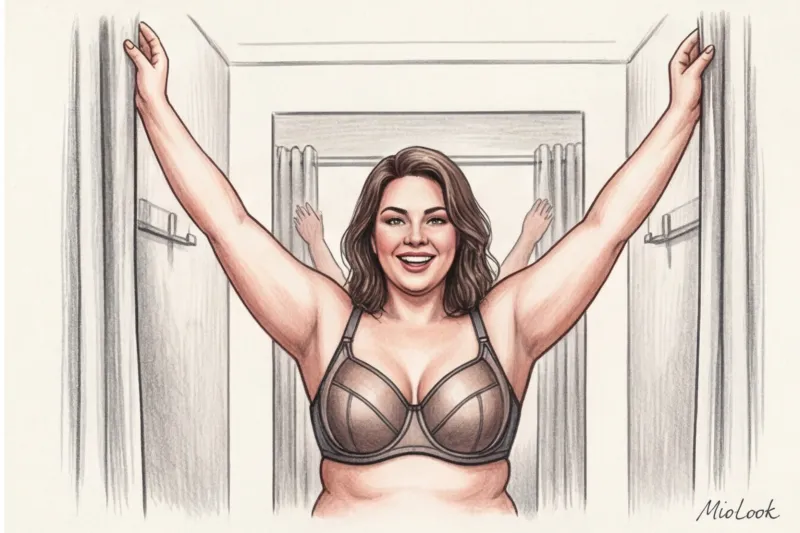
A luscious bust isn't a reason to hide in loose clothing and endure physical discomfort. When you find your perfect lingerie staple, built with a snug waistband and the right underwire, your wardrobe will take on a whole new look. You'll start wearing things you never even considered before, and your posture will become regal and confident. Start with this basic foundation, and you'll see how your reflection in the mirror changes!