Let's do some math. Let's say you buy a great wool jacket for the office for €200. You wear it twice a week, about 30 weeks a year. That's about 60 times, or 400-500 hours of wear. Now let's take your favorite loungewear. You change into it every evening after work and spend half your weekends in it. That's over 1,500 hours of wear per year. The math is ruthless: loungewear works three times harder in your wardrobe than any streetwear item.
When I explain this concept to my clients, many of them are completely rewired. We're used to dry-cleaning evening dresses and preserving cashmere coats, but we throw our lounge joggers in the washing machine with our bedding on a harsh cycle. We've covered why a high-quality home essential changes the way we feel in our guide. Homewear for women: aesthetics and self-love And today we will talk about the purely practical side of the issue.
Proper care of your loungewear isn't a chore, but a direct way to save money. In this article, I'll share professional algorithms that will help keep your favorite cozy items looking new.
The Anatomy of Wear: Why Home Clothes Age Faster Than Street Clothes
One of my clients once complained, "Katarzyna, I bought a stunning modal lounge set from Oysho for €90, and a month later it looks like a doormat." We started looking into her routine, and it turned out the set had been washed on a quick cycle at 60 degrees along with jeans. For the delicate fiber, this is like sandpaper.
A home capsule is subject to enormous hidden stress. We don't just walk around in it—we rub against textured sofa upholstery, accidentally splatter oil on the stove, sweat while sleeping, and use harsh cleaning chemicals. That's why we use the concept of cost-per-wear (cost per outlet).
"A premium loungewear set for €100, which will last you two years with proper care, will cost you 13 cents per day of wear. A cheap pair of €30 pajamas that will pill after the third wash and end up in the trash within a month costs you €1 per day. Skimping on quality always costs more."
To ensure premium knitwear delivers value for money, three key risk factors must be minimized: thermal shock (incorrect water temperature), chemical burns (aggressive detergents), and mechanical damage (incorrect spin cycle and drum friction).
The Main Enemy of Comfort: How Fabric Softeners Are Ruining Your Clothes
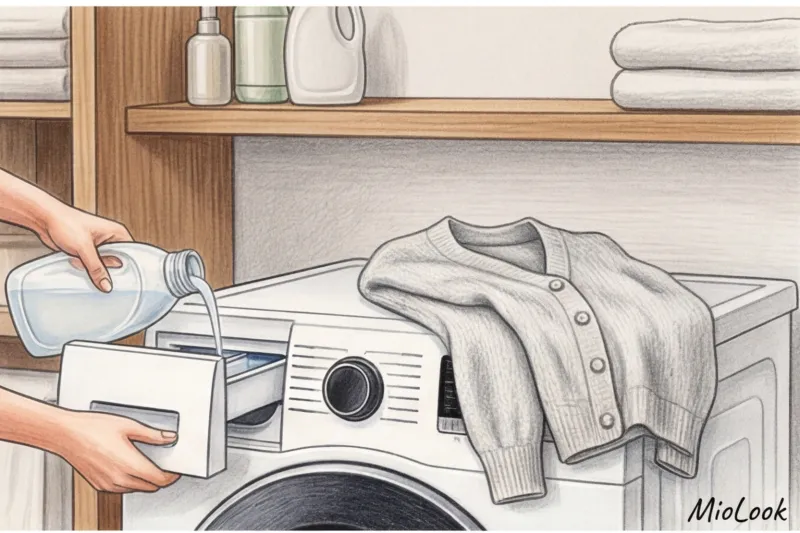
If you want to prolong the life of your clothes, here's the most counterintuitive piece of advice. Using fabric softener is the worst thing you can do to your homemade knitwear.
We're used to believing advertising that promises "incredible softness and the scent of a spring meadow." But the technological standards of European brands, such as the Swedish COS (in their internal protocols for 2024), explicitly discourage the use of fabric softeners in their basic lines. Here's why:
- Silicone film. Fabric softener doesn't physically soften fabric. It simply coats each fiber with a layer of silicone and animal fats. According to the Textile Institute (2023), after five washes with fabric softener, the breathability of cotton knitwear drops by 30%. The fabric stops breathing.
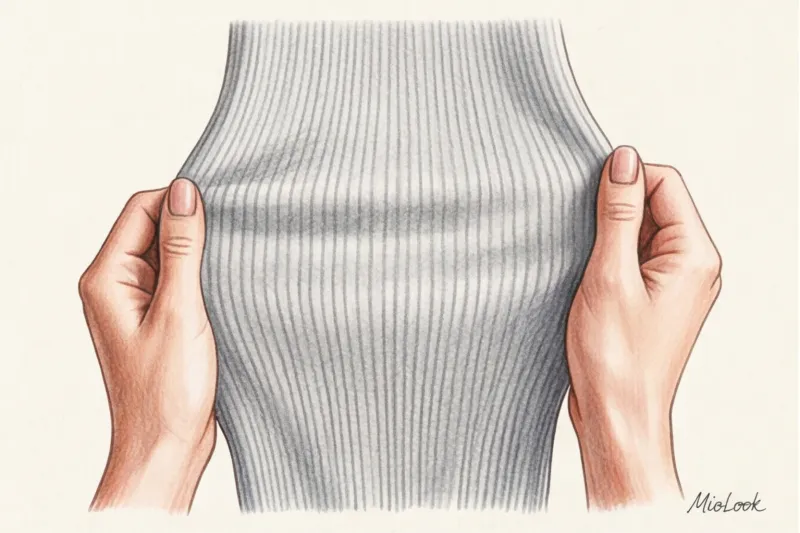
- The death of elastane. Have you noticed how quickly the knees on your favorite joggers stretch out? The chemicals in fabric conditioners break down the polyurethane fibers (elastane, spandex), causing them to lose their ability to shrink back.
- A trap for bacteria. The silicone film traps microparticles of sweat and sebum within the fibers. You take out clean underwear, but as soon as it warms up from your body, a musty odor appears.
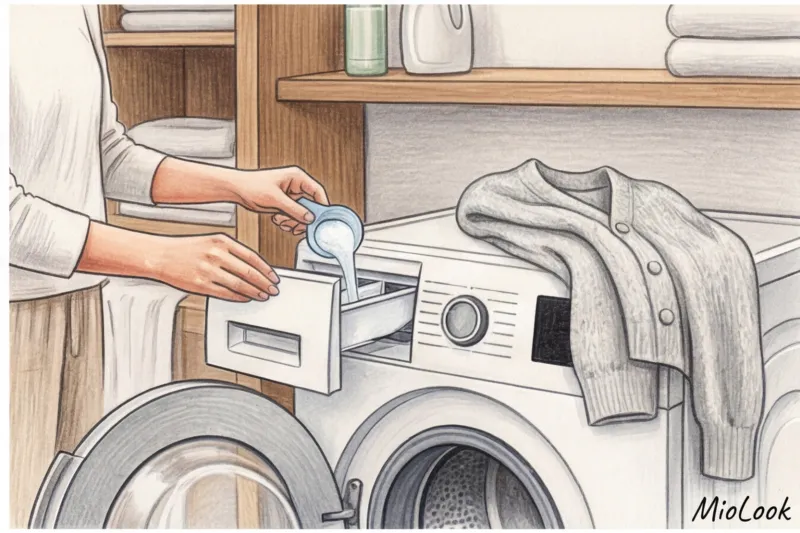
Practical solution: Replace your fabric softener with regular white vinegar (9%). Simply pour 3-4 tablespoons into the fabric softener compartment. It neutralizes any remaining alkaline detergent, naturally softens the water, seals the dye into the fabric, and rinses out completely without leaving a scent.
Access to MioLook for €0.99 — one-time payment
Digitize your wardrobe and plan your at-home looks with an AI stylist.
Get access — €0.99 onceProper care of home clothes by fabric type
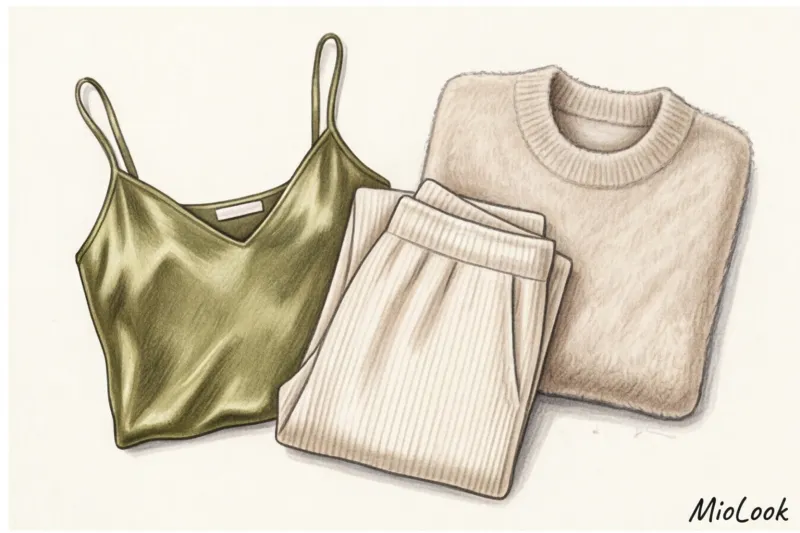
Dividing laundry into "light" and "dark" is a relic of the past. Caring for loungewear requires sorting by type of material, otherwise delicate viscose will be hopelessly ruined by the rough fittings of cotton sweatshirts.
Cotton and linen: base from Zara Home and H&M
Domestic cotton often becomes stiff, like cardboard. To avoid this, pay attention to the fabric weight when purchasing (ideally, 180 g/m² or more). The main care rule here is temperature.
Many people wash cotton at 60°C, thinking this will kill bacteria more effectively. However, modern liquid detergents contain enzymes that effectively break down protein and oil stains at 30–40°C. At temperatures above 40°C, these enzymes simply "cook" and stop working. Linen robes should never be overdried—remove them from the dryer while they're still slightly damp, otherwise the fibers will become brittle.
Modal, viscose and silk: the delicate fabrics of Intimissimi
Modal (improved viscose) is the king of loungewear. It's silky, breathable, and drapes beautifully. But it does have a drawback: when wet, its fibers lose up to 50% of their strength.
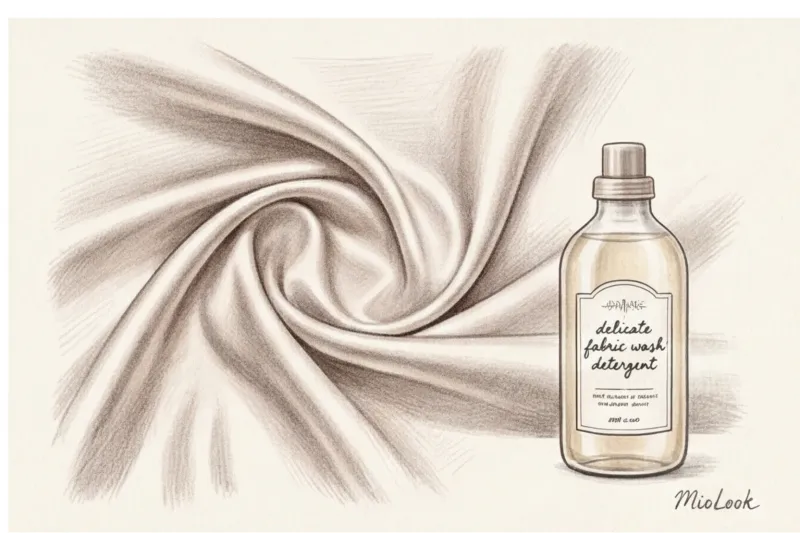
Last year, I conducted a personal experiment: I bought two identical modal tops for home use. I washed one with powder, the other with liquid gel. After three months, the first one lost its shine and became rough. The reason is simple: undissolved powder granules (zeolites) act as a micro-abrasive, scratching delicate fabrics. For silk and viscose, use only liquid detergents, temperature 20–30°C and be sure to place items in a mesh laundry bag.
Knitwear and cashmere: cozy sets from Massimo Dutti
Wool and cashmere lounge suits are expensive (ranging from €150–€300), but they offer unrivaled winter comfort. The biggest mistake in caring for them is temperature fluctuations. If your washing machine cycles at 30°C (86°F) but rinses with ice-cold tap water (around 10°C (50°F), the cashmere will be shocked and shrink two sizes.
A stylist's secret: homemade cashmere should be washed as little as possible. Instead, air it out. Leave the sweater on the balcony overnight (if it's not too humid)—natural wool is self-cleaning and easily releases odors. After washing, dry the knitwear horizontally on a towel. Avoid hangers—the weight of the wet fabric will cause irreversible deformation.
First Aid: Removing Stains and Pilling from Home Clothes
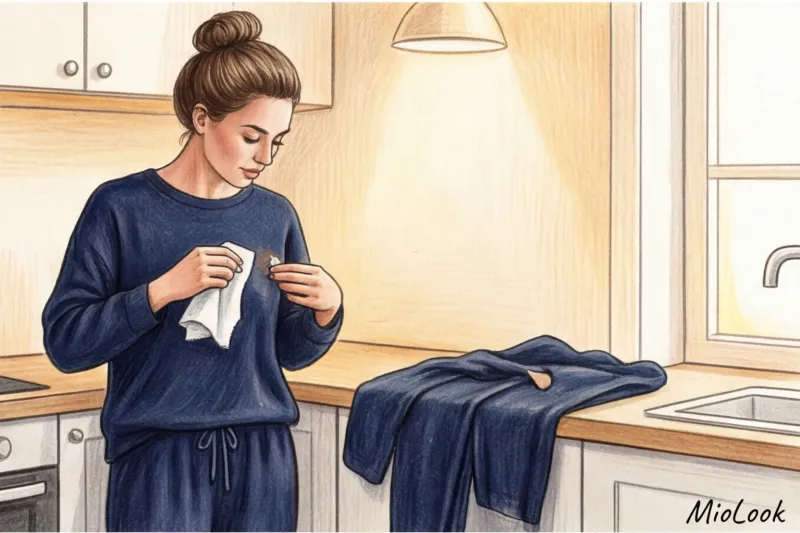
Loungewear often suffers from kitchen accidents. A typical scenario: you drip olive oil on your favorite light-colored joggers, get upset, and throw them in the laundry basket until Saturday's wash. This is a fatal mistake. Within 3-4 days, the oil will polymerize in the fibers, making it impossible to remove in a regular wash.
Life hack from stylists: As soon as you spot a grease stain, apply a drop of regular dishwashing liquid (such as Fairy or Dawn) to it. Rub it in gently with your finger, let it sit for 15 minutes, and then throw it in the washing machine. Dishwashing liquids are specifically formulated to break down food fats, which is something regular laundry detergents are less effective at.
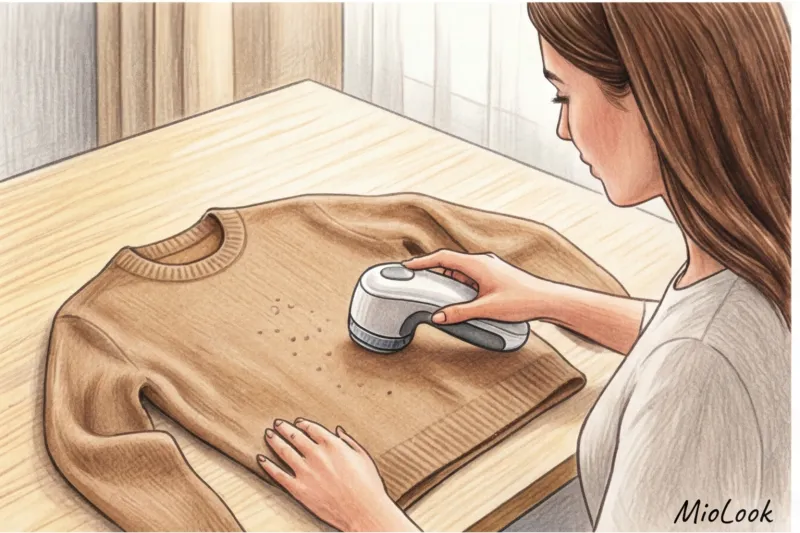
The second problem is pilling. It appears in areas of maximum friction: inner thighs, elbows, and armpits. Don't try to pick it off with your fingers—you'll pull the threads and thin the fabric.
- Use an electric machine for flat knits (cotton, viscose, smooth wool). Lay the item flat on a hard table—never hang it up or on a soft sofa, as the blades will catch the fold and create a hole.
- For fluffy cashmere or angora, use a special cashmere comb, which gently combs out matted fluff.
Fair warning: This method of removing pilling It doesn't work On fabrics with a loose, textured bouclé knit. Using a machine on such cardigans will simply cut off the decorative knots, ruining the design.
Home Wardrobe Rotation: A Stylist's Secret to Longevity
Did you know about the 72-hour rule? The elastane fibers in your loungewear, leggings, and t-shirts stretch under the influence of body heat and mechanical tension. To ensure the fibers shrink back and the garment retains its shape, it needs to rest in the closet for at least two days. If you wear the same knitwear every night for a week, your knees and elbows will stretch out permanently.
That's why the formula for the ideal home capsule includes at least three active rotation kits:
- Active set: Thick joggers and a sweatshirt/T-shirt (cotton with added polyester for durability). We wear these for cooking, cleaning, and playing with the kids.
- Relaxed set: Soft modal, fine cashmere, or loose viscose. We wear this while reading a book on the couch or drinking our morning coffee.
- Sleeping set: breathable cotton or silk that does not restrict movement.
Clearly separated functions protect expensive, delicate fabrics from kitchen grime. To manage your capsule effectively, try MioLook — A smart wardrobe manager will help you digitize your items so you remember to rotate outfits and give them the time they need to recover.
Storing your home capsule: hangers or shelves?
How you store your loungewear between wears critically impacts its appearance. Please stop hanging heavy knit pants and knit cardigans on hangers. Gravity is the enemy of knitwear. The weight causes the garments to stretch out, creating unsightly "ears" on the shoulders from the corners of the hanger.
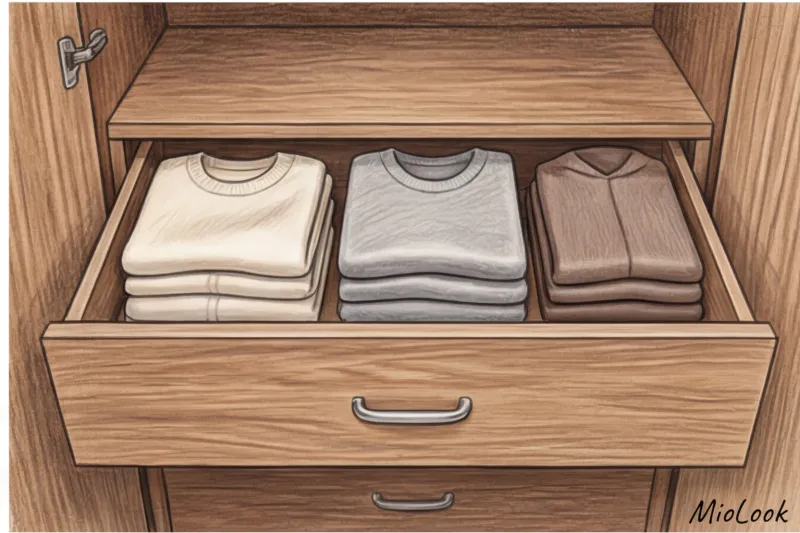
For T-shirts, long-sleeved shirts, and slim trousers, I highly recommend vertical storage, following the Marie Kondo method. Fold items into rectangles and stack them vertically in a drawer (like file folders). Firstly, you'll be able to see your entire home capsule at a glance. Secondly, items won't get crushed under each other's weight, as they do in traditional stacks.
The only exception is silk or viscose robes and shirts. They should be stored exclusively on soft velvet hangers. The velvet coating provides the necessary friction, preventing slippery silk from slipping and becoming misshapen.
Your perfect look starts here
Join thousands of users who look flawless every day with MioLook.
Get access — €0.99 onceChecklist: Home Clothes Care Routine
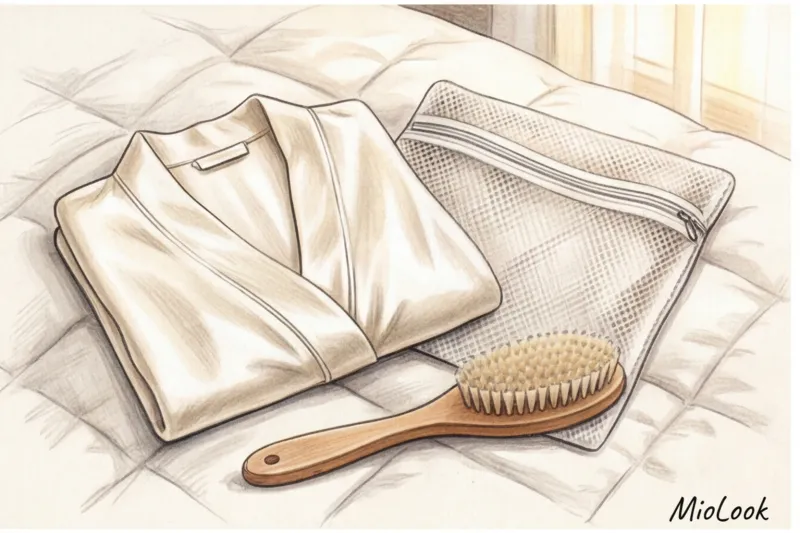
To save you from having to remember all this information, I've put together a short checklist for you. Take a screenshot and use it before every wash. Caring for your loungewear will become automatic and quick:
- Sort by weight. Don't wash thin viscose T-shirts with heavy jeans or terry towels, even if they're the same color. Heavy items, when wet, will literally clog the delicate fabrics in the drum.
- Check your pockets. A forgotten paper napkin or receipt will turn into fine snow crumbs that will take hours to clean off dark knitwear with a lint roller.
- Turn inside out. Always turn joggers, sweatshirts, and t-shirts inside out before washing. This will prevent the front side from rubbing against the metal drum and causing pilling.
- Reduce the spin speed. For cotton, set the spin cycle to a maximum of 800 rpm, and for viscose, modal, and silk, set it to a maximum of 600 rpm. It's best to let the item dry for an hour longer than the fibers will be twisted and torn apart by the centrifuge.
If you remember just one rule from this article, let it be a paradigm shift. Treat your loungewear with the same respect you would your office jacket. Stop using fabric softener, lower the washing temperature, and let them rest for 72 hours. You'll be surprised how long mass-market items can look like premium items if properly cared for.