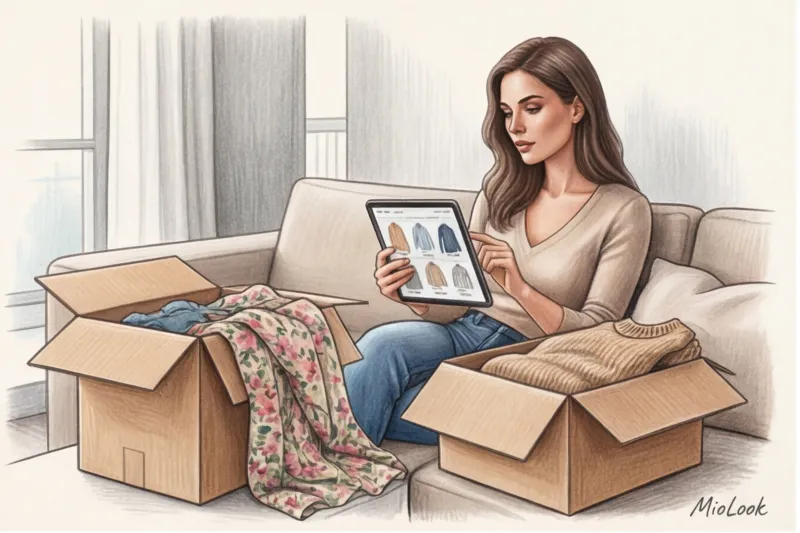
According to e-commerce statistics for 2024, denim consistently holds an anti-record: almost 40% of jeans purchased online are returned to the warehouse. We order our usual size, eagerly unpack the package, only to find the item either misses the waist or hangs loosely. Find out. How to choose jeans without trying them on , became a question not only of saving time, but also of preserving the nervous system.
Most advice online boils down to one thing: "Take a measuring tape and measure your hips." As a practicing stylist, I'll say it bluntly: forget this advice. It doesn't work. We've covered this phenomenon of mass errors and returns in more detail in our The Complete Guide: How to Buy Clothes Online Without Returns , but today we'll talk exclusively about denim.
The "M-Size" Trap and Why We Keep Getting It Wrong
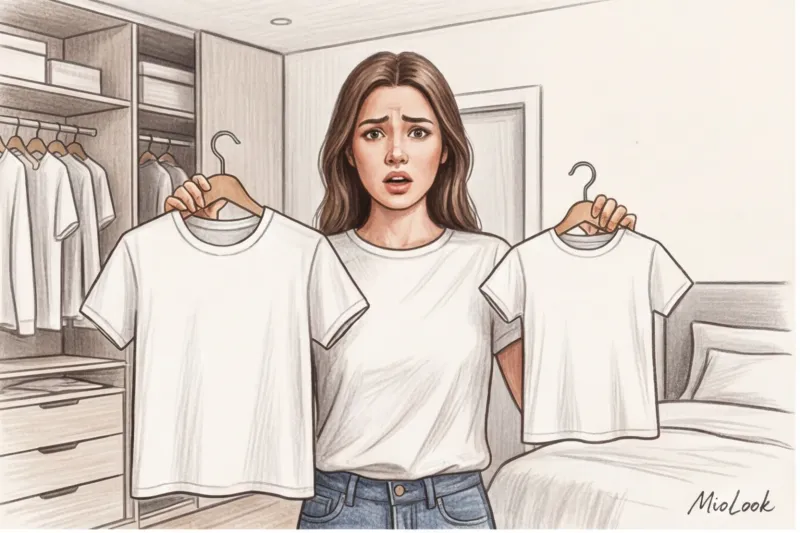
Have you ever noticed that your size 28 at Zara, COS, and Levi's are three completely different universes? You haven't gained or lost weight. You've simply encountered a phenomenon. Vanity Sizing (flattering sizes).
According to research into denim industry standards, brands intentionally label items in smaller sizes to create a more comfortable experience for consumers. On average, the actual waistband of jeans can be 1.5–3 inches (approximately 4–7 cm) larger than stated on the tag. You might buy a W28, but in reality, you'll get a W30. In the budget segment (€30–€60), this margin of error is greatest, as patterns are cut in large stacks, and the lower layers of fabric are always shifted.
Another illusion is the studio photos on the website. What you see on the model is often the result of powerful studio lighting, which blurs unevenness, and, more importantly, invisible clips on the back. Just because a garment fits the model like a glove doesn't mean the patterns are perfect. It means the stylist did a good job with the clips during the shoot.
The key to successful online shopping is a complete shift from emotion ("what a beautiful color!") to the dry mathematics of your wardrobe.
Access to MioLook for €0.99 — one-time payment
A smart AI stylist will select the perfect look based on your parameters.
Get access — €0.99 onceCounterintuitive stylist rule: measure your jeans, not yourself
I had a client who ordered 15 pairs of jeans from different online stores in a month and returned 14 of them. On the 15th try, we stopped, sat down, and applied a method called "reverse engineering." What does it mean?
Never measure your own body before buying jeans. Measure your most comfortable clothes.
Your waist measurement changes throughout the day: after a heavy lunch, depending on your cycle phase, or even how deeply you inhaled before tightening the tape. Furthermore, a soft tape measure doesn't account for the tension of thick denim. Your favorite, perfectly fitting pair of jeans, however, is a ready-made, calibrated template.
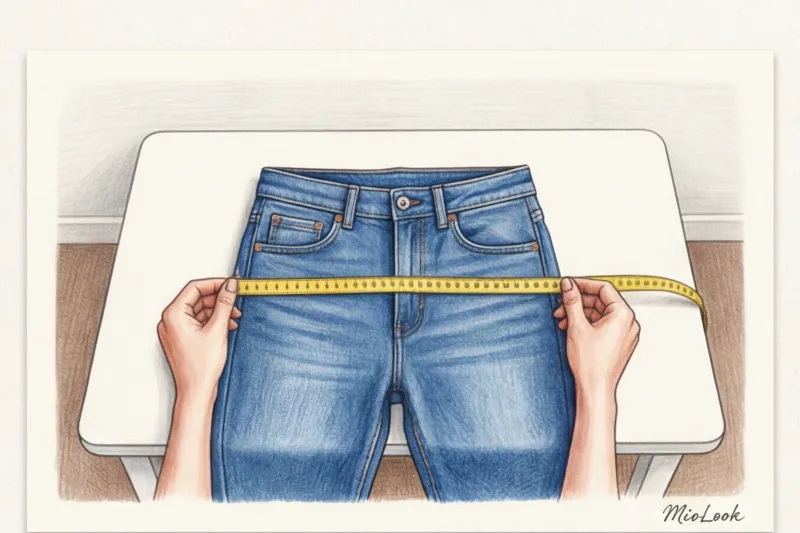
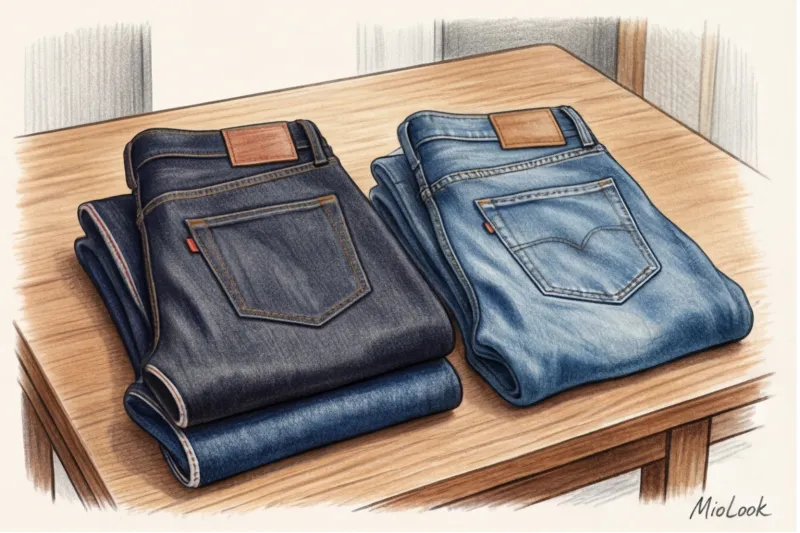
Use Flat Lay Rule Lay out your best jeans on a hard table (not on the bed!). Button and zipper them. Smooth the fabric thoroughly with your hands to remove wrinkles, but do not stretch it artificially. This is how we'll be taking critical measurements.
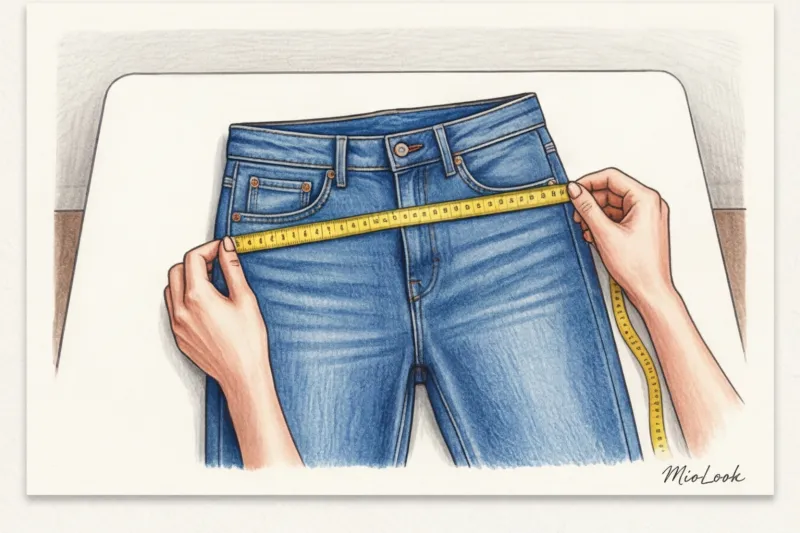
Three Critical Denim Dimensions Everyone Forgets
- Front Rise and Back Rise (front and back seat height). Most women only look at the waist circumference, forgetting that the waist is at different heights. I kept statistics of my looks in MioLook app And I discovered something amazing: just 1 cm difference in my Front Rise measurement can make the difference between wearing these jeans every week or leaving them in my closet forever. Be sure to measure the distance from the crotch seam to the top of the button.
- Inseam (length along the inner seam). Measured from the crotch to the hem of the leg. Knowing your inseam in centimeters allows you to buy jeans with the perfect length, without having to take them to a tailor.
- Leg Opening (width of the leg at the bottom). This measurement is responsible for proportions. A narrow ankle visually enlarges the hips, while the correct width (18 to 22 cm for straight styles) balances the silhouette and fits perfectly with your favorite ankle boots or loafers.
Fair warning: This mathematical method works flawlessly for classic denim (straight, mom jeans, skinny). However, it does NOT work for jeans with an asymmetrical waistband or paperbag styles with a strong gather at the waist—the fit in these styles is always individual.
Fabric Formula: Reading the Composition Like a Pro
The fabric composition of a pair of jeans tells you more about them than their price. The "Composition" line holds the answer to why some jeans last for years, while others turn into sweatpants after two months.
If you see 100% Cotton (Rigid Denim) Be prepared for the fabric to be unforgiving. This denim should be purchased strictly true to size, and sometimes even a size up if you prefer a looser fit. It may feel stiff as cardboard at first, but over time, the cotton adapts to your body heat and fits perfectly.
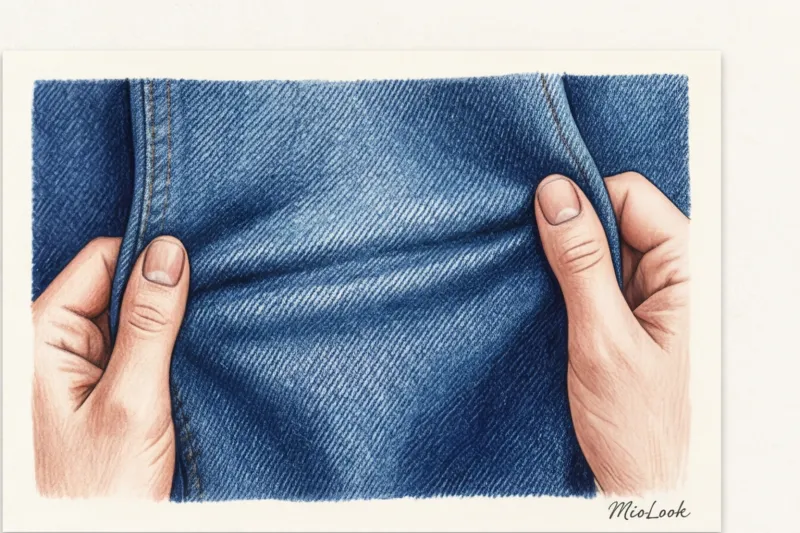
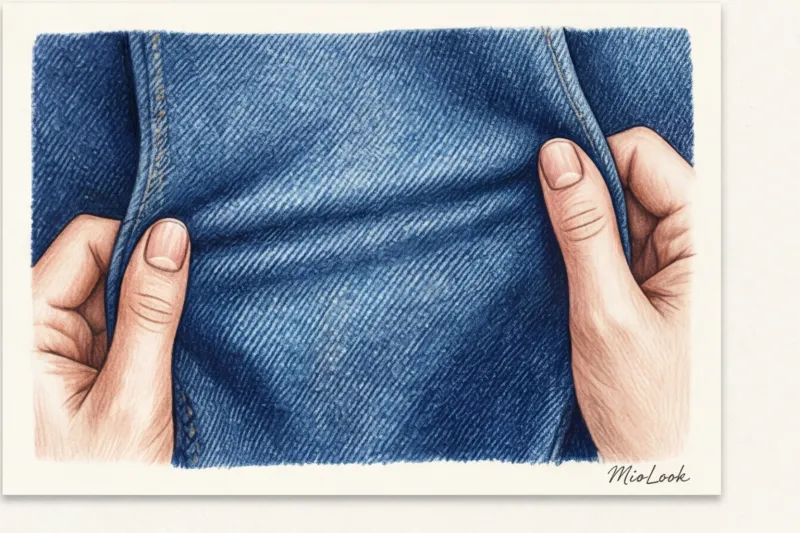
It's a completely different story - the magic of elastane According to fabric manufacturers' specifications, the classic "98% cotton + 2% elastane (spandex)" formula stretches the waistband up to 1.5 inches (almost 3-4 cm) within the first few hours of wear. If you're trying on stretch jeans at home, a strict rule applies: they should zip up with a slight amount of effort, "as you exhale." If they fit comfortably right out of the box, they'll be slipping off tomorrow.
Beware of the polyester trap. Jeans containing more than 10-15% polyester will be soft, but they will quickly lose their shape. Polyester is responsible for those stretched knees and blisters on the buttocks that remain impervious even after washing at high temperatures.
Your perfect look starts here
Join thousands of users who look flawless every day with MioLook, preserving the parameters of their best clothes.
Get access — €0.99 onceVisual Analytics: What to Look for in Online Store Photos
Let's move on to analyzing the photos. There's a strict rule among professional stylists: if an online store doesn't show a high-quality photo of the back of jeans, we close the tab. This is almost always an attempt to hide poor fit.
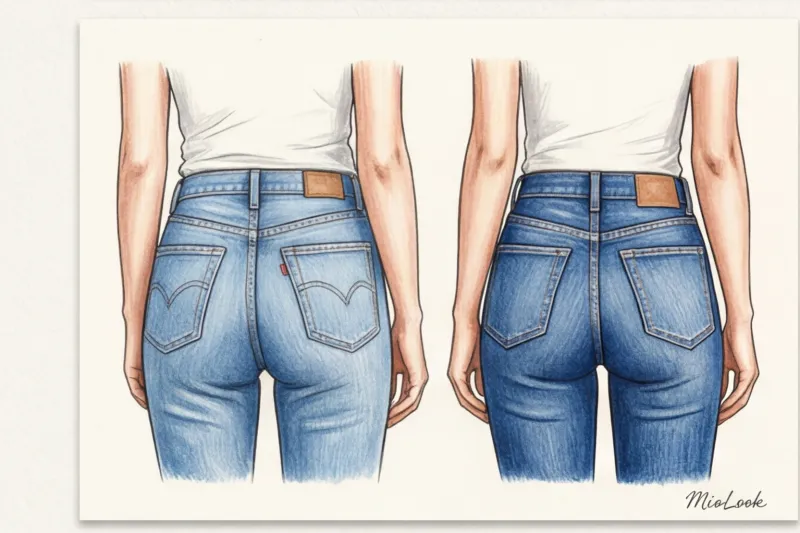
Here's what you need to look at when you zoom in on the picture:
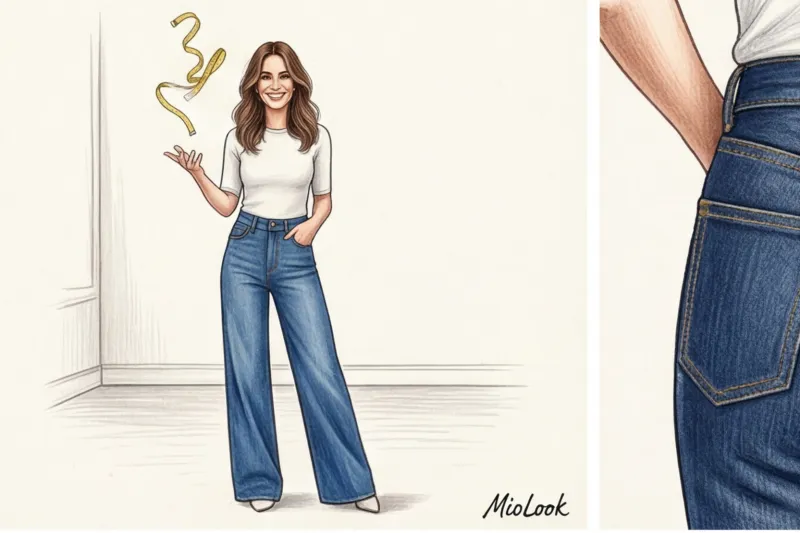
- Back pocket analysis. Their size and placement are like free plastic surgery. If the pockets are too small and widely spaced, the buttocks will appear flat and wide. Ideal pockets should be proportionate to your proportions and slightly tapered toward the center.
- Yoke corner (V-shaped seam at the back above the pockets). The deeper the "V" is, the better the jeans will fit around your lower back, eliminating that annoying gap when you sit down. A straight yoke creates a squared-off look.
- Side seam assessment. If the website features a walk-through video or 360° photos, look at the side seam. If it starts to roll forward near the calf, it's a fabric flaw. This garment will always twist on your leg as you walk.
Checklist: A Step-by-Step Guide to Buying Denim Without Mistakes
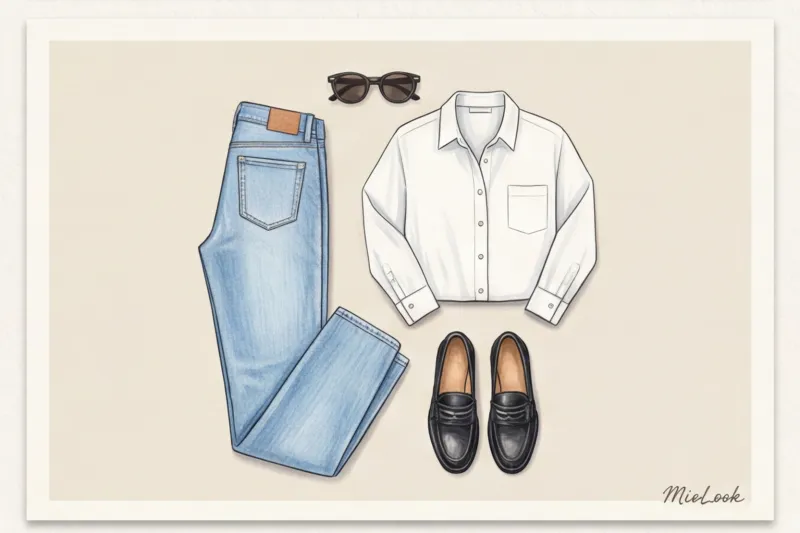
Let's compile all this knowledge into a clear action plan that you can screenshot before your next online shopping trip.
- Collect the database. Measure your best jeans (Front Rise, Waist Buttoned, Hips at the Bottom of the Fly, Inseam) and write down these numbers.
- Find the right Size Guide. Never rely on a generic marketplace size chart! Look for the chart on the specific brand's official website, and ideally, for measurements specific to the specific model.
- Check the composition. Is there elastane? If so (2% or more), feel free to subtract one size from your comfort level—the fabric will stretch.
- Conduct a visual audit. Look at the yoke, pockets, and side seams. No back photo means no purchase.
- Digitize the results. Use the smart wardrobe feature in MioLook To save successful models and their precise parameters, you won't have to re-measure anything next time.
What to do if your jeans arrived but they don't fit perfectly
Even with a perfect algorithm, there are missteps. This is normal. Every fitting isn't a failure, but rather a collection of data for your personal style formula.
If your jeans fit in the hips but are too big in the waist (a common problem for hourglass figures), don't rush to return them. Having your denim taken in at a reputable tailor's center back seam costs around €15-€25. It's a small investment that will transform a mass-market item into a custom couture piece that fits your figure perfectly.

If your 100% cotton jeans are a little loose all over, you can try an old trick: wash them at 60 degrees (instead of the recommended 30-40 degrees) and tumble dry. Cotton will shrink about half a size. But remember: this trick is strictly prohibited for jeans with elastane—high temperatures will simply destroy the elastic threads, causing the fabric to ripple.
Ultimately, buying the perfect jeans online isn't magic or luck. It's a system. Stop trying to squeeze yourself into abstract letters on tags. Research the measurements of the clothes that make you happy, read the fabric composition, and trust the line more than pretty studio photos.