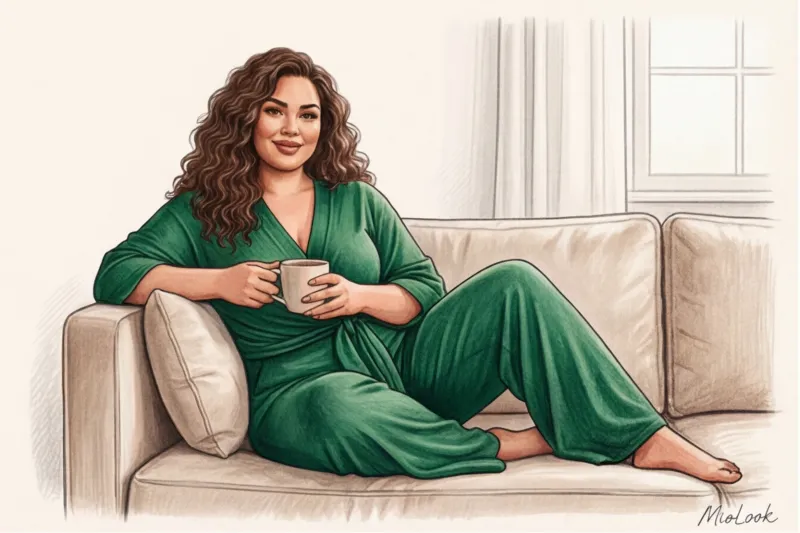
Open your loungewear closet. What do you see there? Faded T-shirts with five-year-old conference logos? Stretched sweatpants that are "easy to clean"? Over 12 years of working as a personal stylist, I've noticed a paradox: we spend hundreds of euros on business suits to impress colleagues, but at home, alone with the most important people—ourselves and our families—we wear clothes we can't bear to throw away.
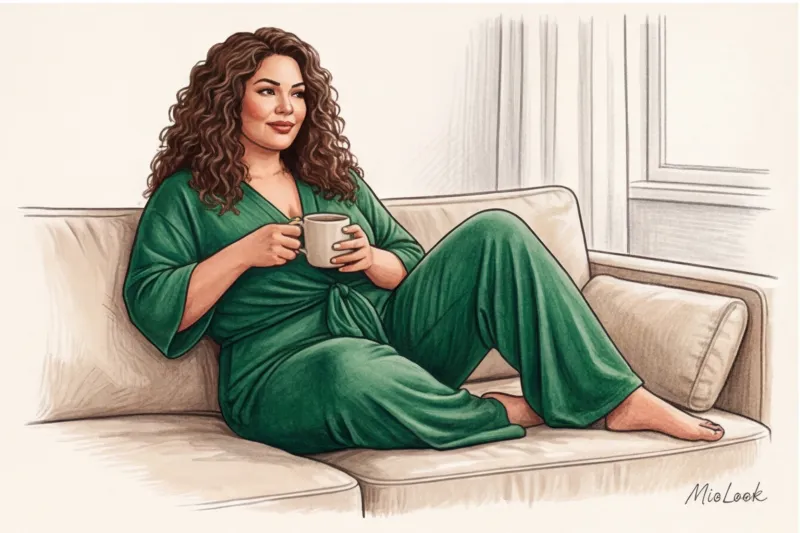
This problem is especially common when discussing loungewear for plus-size women. We're used to hiding our bodies behind shapeless layers of fabric, forgetting that comfort doesn't have to be synonymous with sloppiness. We discussed the architecture of a cozy wardrobe in more detail in our The complete guide to stylish loungewear: comfort and aesthetics at home Today, we'll explore how proper tailoring and textile chemistry can dramatically change the way you feel at home.
The Psychology of Home Wardrobe: Why Oversized Clothes Won't Save Plus-Size Loungewear
Did you know that your brain literally reads the clothes you wear and adjusts your behavior accordingly? In 2012, Northwestern University researchers H. Adam and A. Galinsky coined the term Enclothed Cognition (embodied cognition). Their experiments proved that clothing directly influences our cognitive functions. When you put on a stretchy, shapeless robe, your brain receives the signal: "We're sick, we're tired, we're hiding."
One of my clients, Anna (size 54 EU), worked remotely and constantly complained of a lack of energy. Her uniform at home consisted of her husband's old T-shirts, three sizes too big. There's a persistent myth that oversized clothing is a plus-size figure's best friend. In reality, it's quite the opposite. Shapeless clothing weighs down the silhouette, blurs proportions, and, worst of all, constantly twists around the body while sleeping or lounging on the couch.
"When we replaced Anna's T-shirts with a flowing, semi-fitted modal set, everything changed—from her posture in front of the computer to her tone on Zoom calls. She stopped 'apologizing' for her presence in the space."
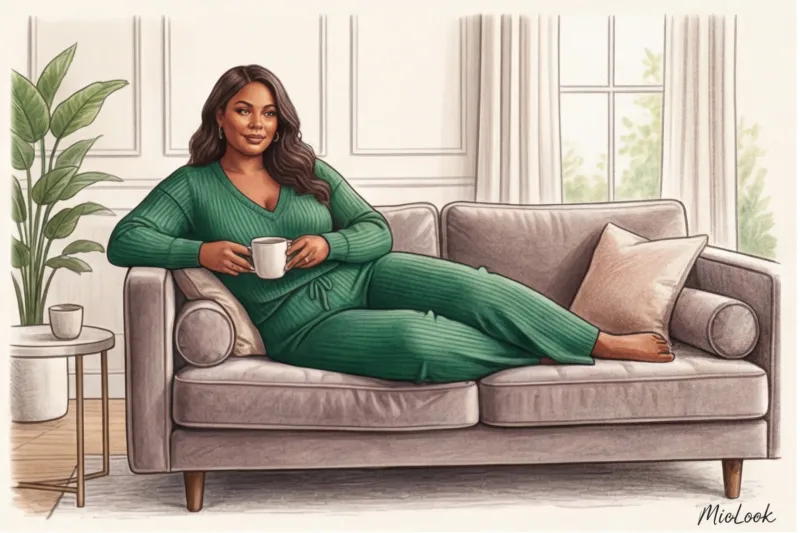
The "dress for yourself" concept means we choose architectural yet soft cuts that allow freedom of movement (in the shoulders and hips) while still maintaining a defined shape. You deserve to look beautiful while making your morning coffee.
The Anatomy of Comfort: Textile Science for Loungewear
When buying pajamas, we habitually look for "100% cotton" on the tag, considering it the standard. I'm about to say something unpopular, but 100% cotton is a poor choice for a sleep capsule. Yes, it breathes, but it doesn't drape at all, quickly loses its shape at the knees and elbows, and becomes stiff after a dozen washes.
If you are looking for the perfect material, consider the next generation of artificial fibers (made from natural cellulose): modal, tencel and bamboo viscose The textile industry's data is unforgiving: modal absorbs 50% more moisture than regular cotton. This is critical for curvy women, as body temperature regulation often requires more hygroscopic fabrics.
Here's the formula for the ideal formula, which I came up with after testing dozens of brands for pilling (pill formation):
- Base (92-95%): Modal or Tencel. They have amazing fluidity, beautifully hugging the curves of the body rather than standing rigid.
- Elasticity (5-8%): Elastane (spandex). Without it, any pants will turn into "bubbles" at the knees by the evening of the first day.
- Density (GSM): Look for fabrics with a weight of 200–240 g/m². Thinner knits (150 g/m²) will be treacherously see-through and highlight even the slightest imperfections in the skin.
This rule has one limitation: modal doesn't tolerate harsh washing. If you're used to washing everything at 60 degrees Celsius with a hard spin cycle, the fabric will quickly lose its silkiness. Only 30 degrees Celsius and liquid detergent are suitable.
Access to MioLook for €0.99 — one-time payment
A smart AI stylist will create the perfect home look that will highlight your best features.
Get access — €0.99 once5 Common Mistakes When Choosing Loungewear for Plus Size Women
Even knowing the right fabric composition, it's easy to make a mistake in cutting. Here are the five biggest mistakes I regularly see in wardrobes.
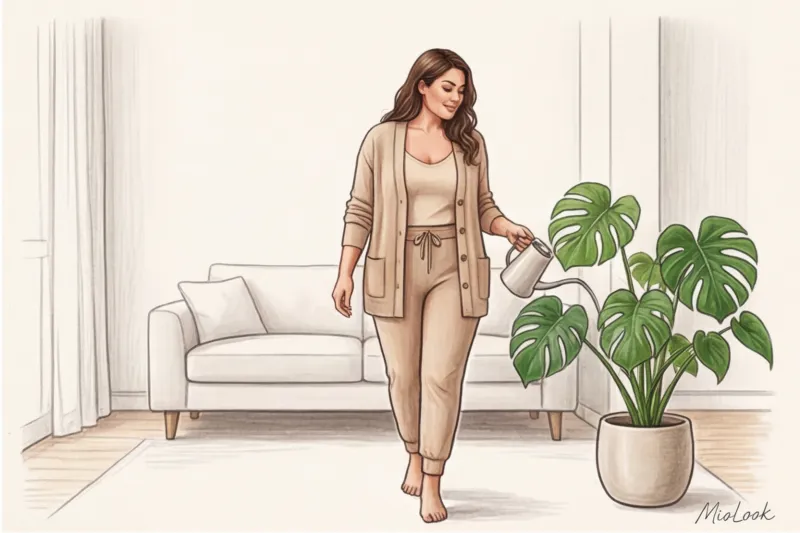
- The "things for the dacha" syndrome. Wearing street clothes (old jeans, stiff sweatshirts with tight necklines) at home means depriving your body of proper rest. Street fabrics are not designed for lying on the couch.
- Rough internal seams. For plus-size women, this is a real disaster. The thick overlock seam on the inner thigh can rub your skin raw after just a couple of hours of vigorous cleaning. Choose items with flatlock seams or seamless styles.
- Fine ribbed knitwear without a dense base. Ribbed fabric is trendy right now, but thin "noodles" tend to come apart in the largest areas, visually deforming the figure.
- The elastic bands at the waist are too tight. If you have a red mark on your stomach from the elastic after an hour of sitting, throw those pants away. They're not just uncomfortable, they're compressing your internal organs and impairing circulation and digestion. Look for wide (at least 4 cm), soft waistbands with a drawstring.
- Ignoring layering. The temperature at home fluctuates. Instead of a thick hoodie, consider a thin viscose long-sleeve top and a soft kimono cardigan to easily regulate the temperature.
Putting together a capsule collection: stylish plus-size loungewear
You don't need a separate, huge closet for your home essentials. Five or six carefully chosen items that can be combined into 10 different looks are enough. This is the principle of interchangeability. Color palette plays a key role here.
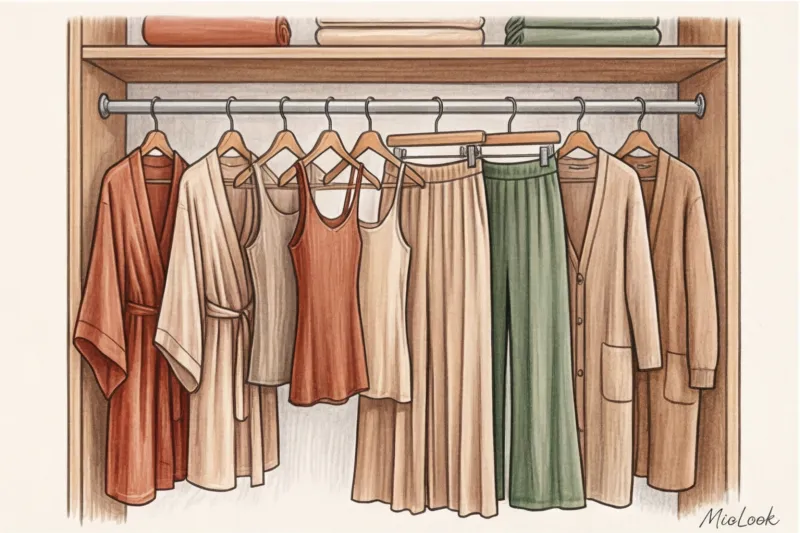
Forget bland dusty pinks or cartoon bear prints—they'll flatter your look. Opt for deep, refined tones: emerald, terracotta, sapphire, dark chocolate. They look expensive and visually elongate your silhouette. To easily put these pieces together, I recommend downloading them to an app. MioLook — a smart wardrobe will help you see how pants from one pajama set go with a cardigan from another.
For relaxing on the sofa and sleeping
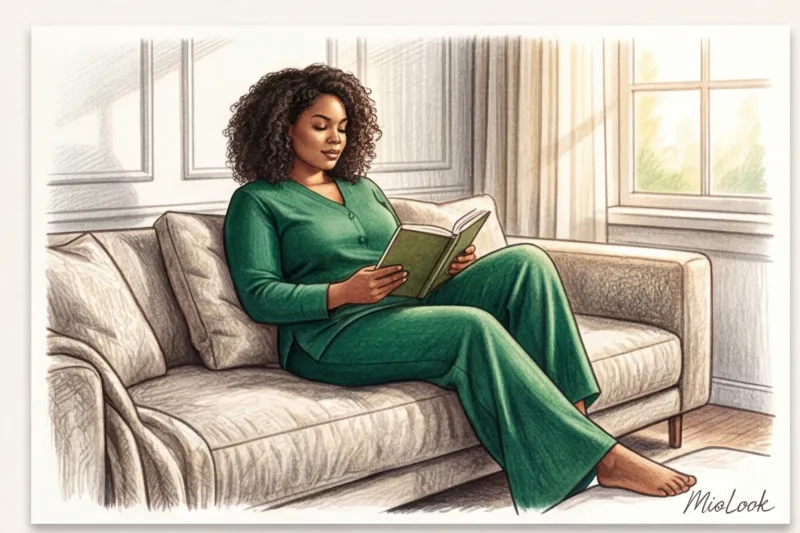
Loose pajama-style shirts (with a button-down collar) and wide-leg palazzo pants are ideal for relaxed lounging. A V-neck perfectly elongates the neck and accentuates the décolleté. For underlayers, choose seamless, non-wired tops—they provide gentle support without compressing the lymph nodes, which is especially important for those with a fuller bust.
For active business and remote work
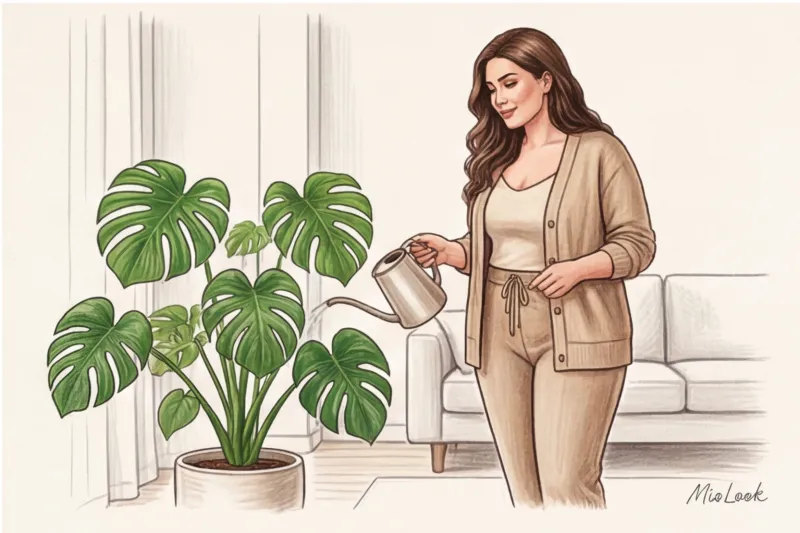
If you need to clean the apartment or have a call with colleagues, palazzo pants can get in the way. Opt for joggers in heavy French terry (loop-knit with the fabric facing inward) and a semi-fitted long sleeve top. For those who prefer a feminine style, consider midi shirt dresses in soft linen or warm flannel. They offer the aesthetics of a dress but the functionality of a work uniform.
A delicate problem: how to avoid chafing
Glossy articles rarely talk about physiology, but we will discuss it openly. The problem chub rub (chafing of the inner thigh) occurs not only in the summer outdoors, but also at home if you wear short shorts or dresses on your bare skin.
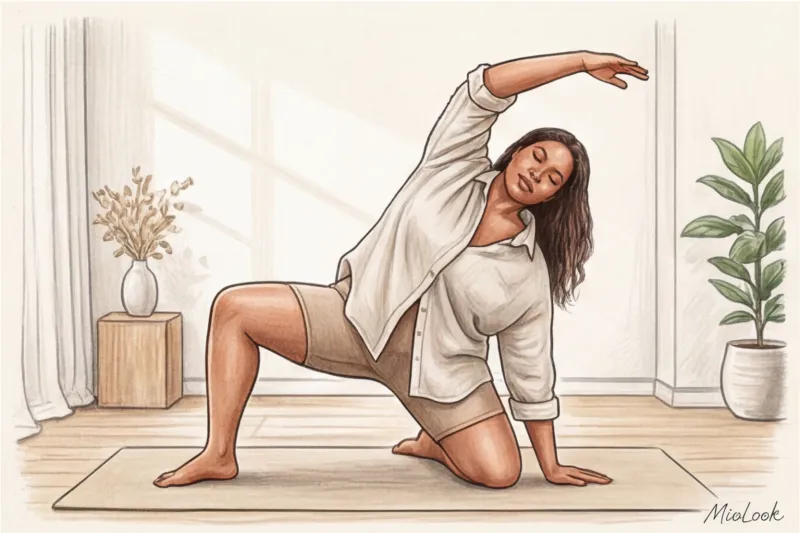
The main rule: no short boxer shorts with a thick gusset seam. This seam is your biggest enemy. Instead, integrate seamless Bermuda shorts or cycling shorts made of breathable microfiber into your lounge wardrobe (these basic styles cost around €15-20). They can be worn on their own with a voluminous shirt or layered under house dresses.
The same goes for breast support. It's tempting to remove an underwire bra at home, but for larger breasts, a complete lack of support often leads to back pain. The solution is soft modal bra tops with a wide band under the bust (at least 3 cm) and no back fastenings.
Your perfect look starts here
Join thousands of users who look flawless every day with MioLook, starting right from home.
Get access — €0.99 onceChecklist: 15-Minute Household Inspection
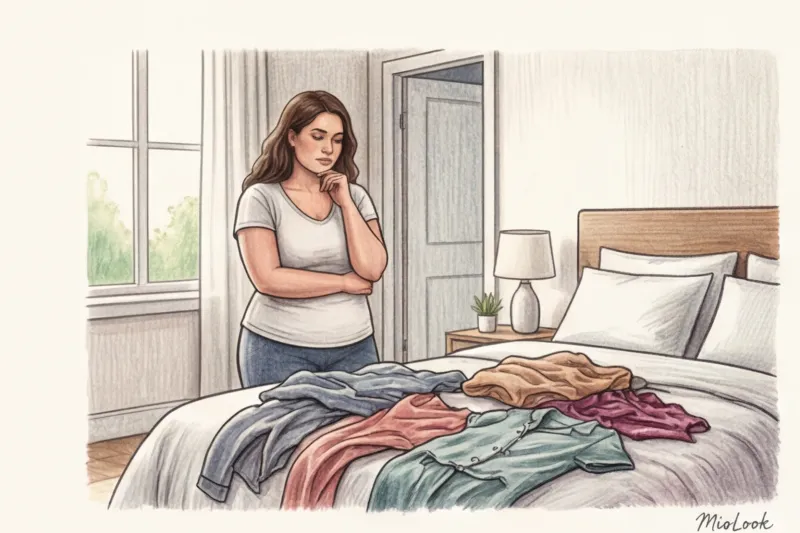
Ready for a change? Let's take a quick inventory of what's currently on your "home" shelf.
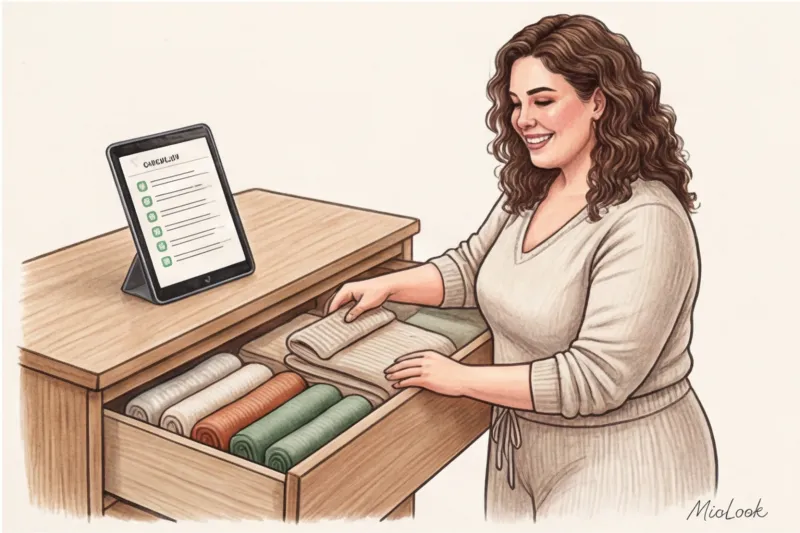
- Test for pellets and courier. Take out the item and ask yourself one question: "If a cute delivery guy rang the doorbell right now or friends dropped by unexpectedly, would I answer it wearing this, or would I run and change?" If the latter, it's time to go.
- Physical discomfort test. Put aside anything that pricks, presses on your stomach, slips down, or makes you constantly tug at your hem.
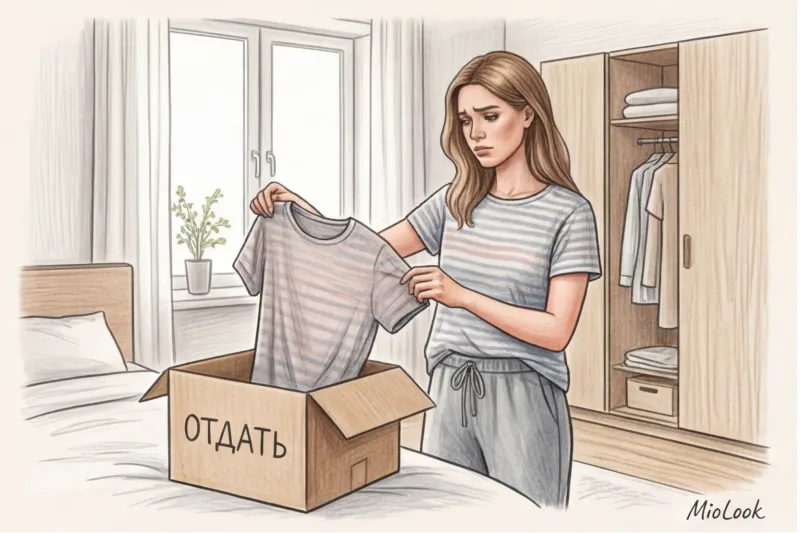
- Eco-friendly disposal. Don't throw textiles in the trash! Old cotton items are highly recyclable. Donate them to special textile bins (H&M or local collection centers).
Where to start when upgrading? Don't buy too much at once. Invest in one high-quality modal suit in a deep, rich shade (a good set will cost around €60-€100). With regular wear and proper washing, such a quality piece will last 1-1.5 years.
Loungewear isn't what we wear when no one's looking. It's what we put on when we're connecting with ourselves. By stopping treating your home as a place to "wear out" old clothes, you'll notice a miraculous increase in your productivity, mood, and, most importantly, your love for your body.