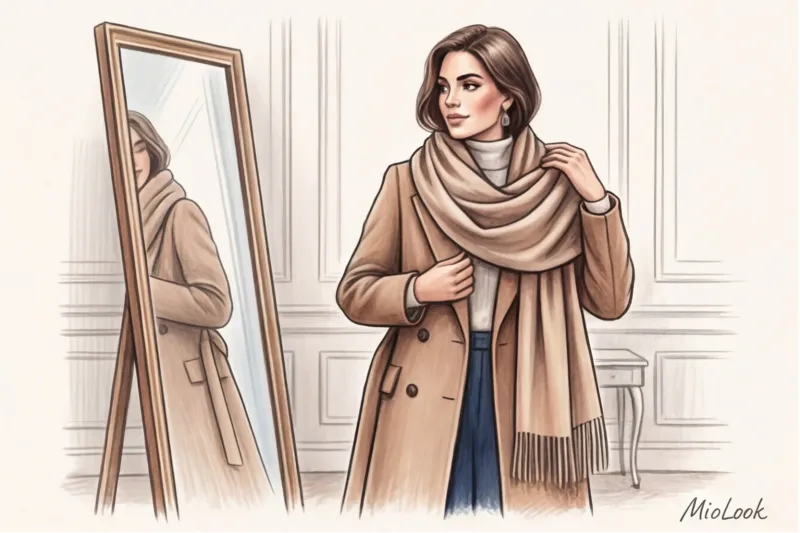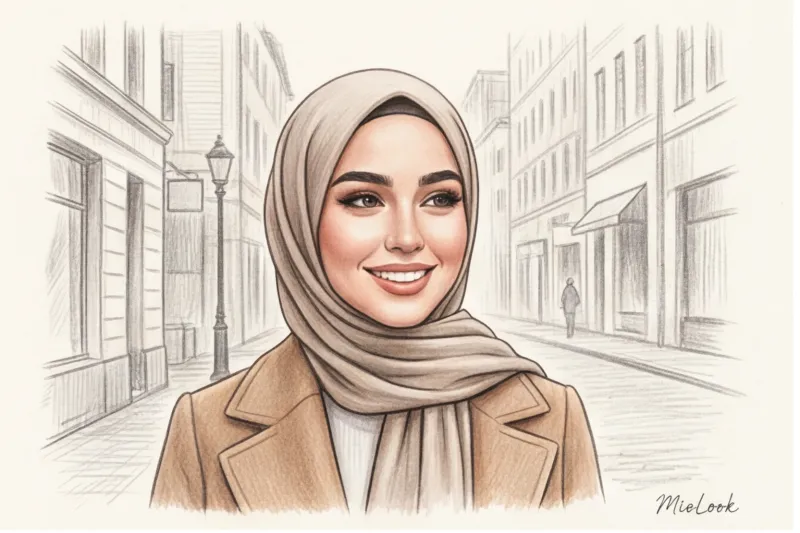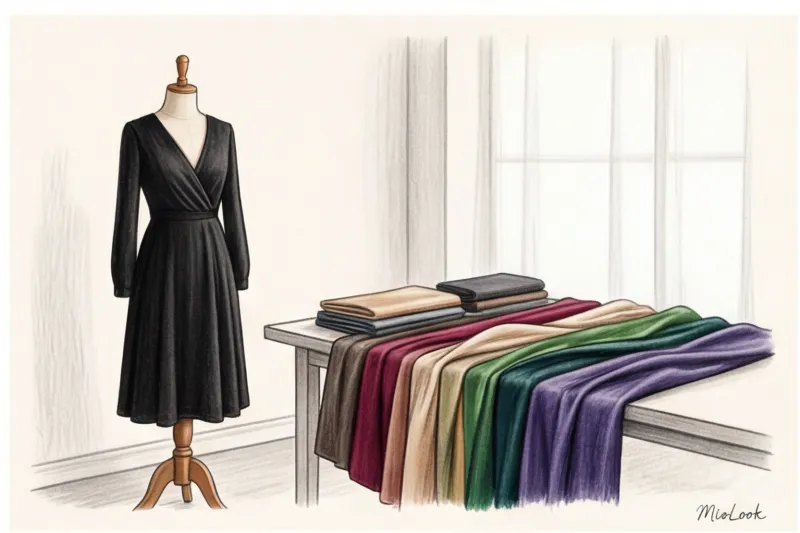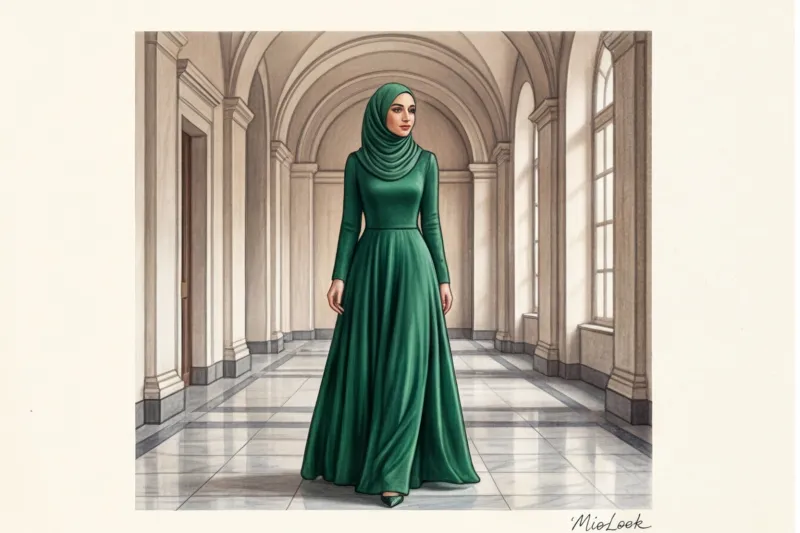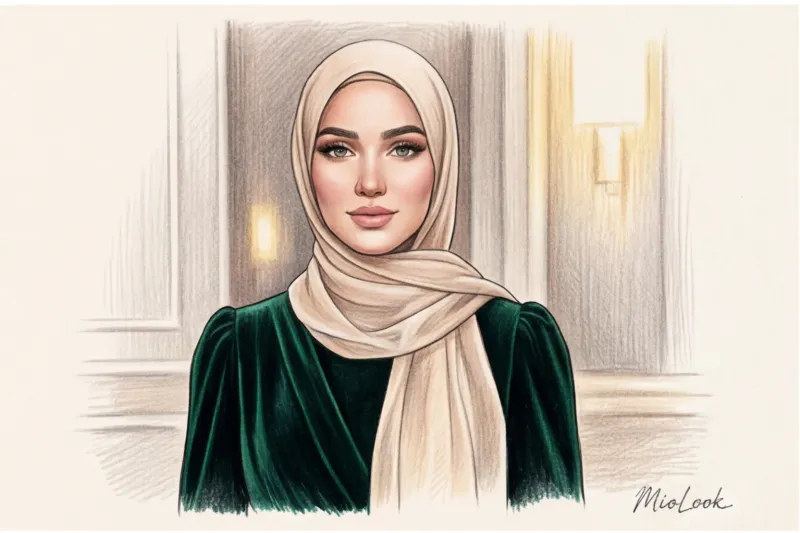
Backstage at the Elie Saab show during Paris Fashion Week, I observed something incredibly interesting. Models were trying on evening gowns embroidered with thousands of shimmering crystals, but the brand's stylists deliberately framed their faces with completely opaque, matte fabrics. There was no shimmer in the portrait area. I then asked the show's head stylist, "Why don't you use silk to match?" His answer became my golden rule: "Shimmer must have a foundation, otherwise the woman disappears, leaving only the dress."
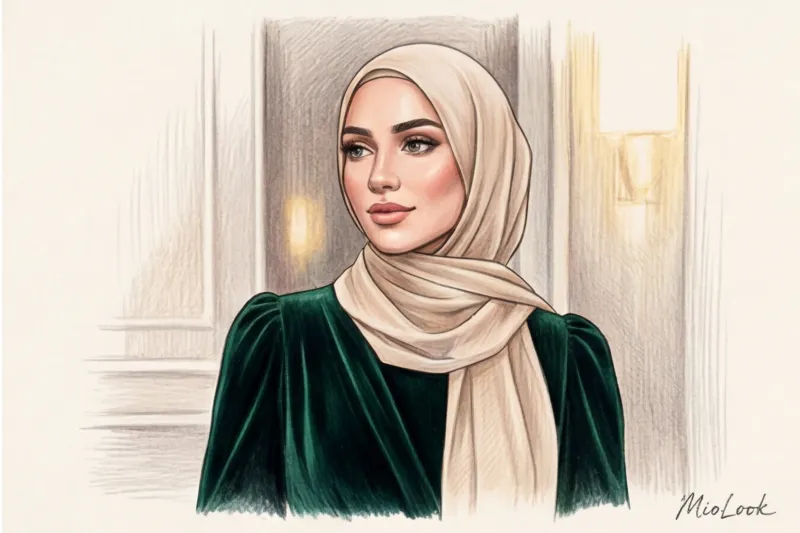
When choosing a hijab to go with an evening dress, 90% of women make the same mistake: they try to find a scarf made of the exact same fabric as the outfit, or, out of desperation, they resort to their favorite, yet completely casual, stole. Both of these extremes mercilessly cheapen the look.
Of course, for a radiant complexion, it's not just the texture that's important, but also the right skin tone. I've covered how coloristics works with your skin's undertone in more detail in our The complete guide to choosing a hijab color But today we'll talk about more subtle matters—the "physics of texture." We'll talk about how fabric reacts to spotlights and camera flashes, and why perfectly matching materials is the worst thing you can do to your evening look.
The "Everyday Habit" Trap: Why Your Favorite Scarf Will Ruin Your Evening Dress
Let me share a story from my experience. A client of mine from Dubai purchased a luxurious couture dress worth several thousand dollars for a charity gala dinner. For the final fitting, she wore her everyday hijab made of premium viscose jersey. She felt comfortable in it, it fit perfectly, and she planned to wear it to the event. The result? In the mirror, it looked like she'd draped a yoga scarf over the work of art.
Everyday textures—the microscopic ribbing of knitwear, the light fluff, the matte porosity of cotton—clash sharply with the sheen of evening fabrics. The reflectivity index of basic cotton approaches zero. When paired with silk or sequins, the law of "visual weight" is violated. Your face should look as formal as your overall silhouette.
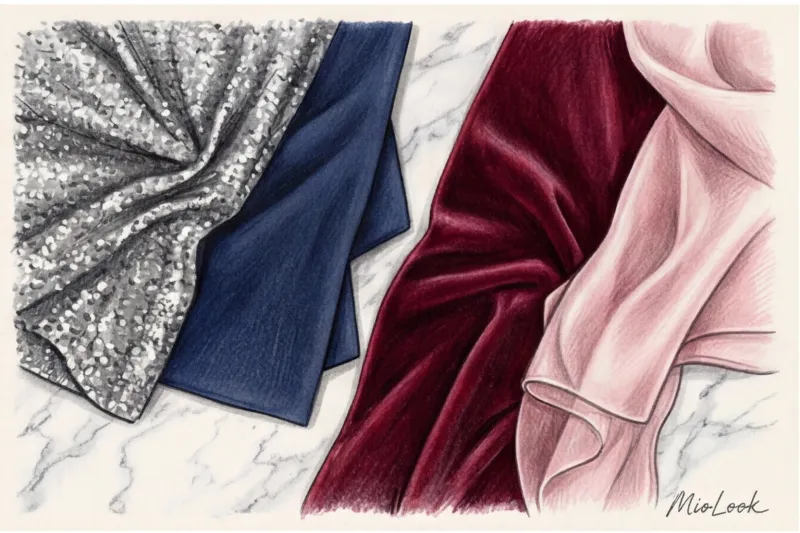
Over 12 years of working as a stylist, I've developed a strict rule: the hijab fabric must match the status of the event, even if you're opting for a minimalist look. Basic 180g/m² cotton has no place on the red carpet.
The main rule of a stylist: contrasting textures when choosing a hijab for an evening dress
Forget the old myth that accessories should blend with your outfit. Buying ready-made outfits where the hijab is sewn from scraps of evening gown fabric is a fatal stylistic mistake. The abundance of a single complex texture turns a woman into a motionless, monumental statue.
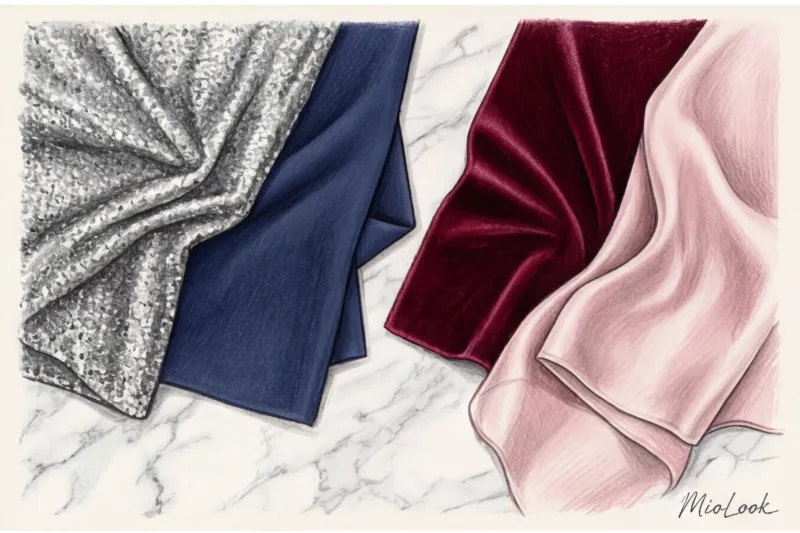
The secret is real status and expensive wardrobe It lies in radical contrast. This technique was used by the great couturiers of the past. In the 1950s, Cristóbal Balenciaga created heavy architectural coats from thick velvet, but always framed the portrait area with stiff, yet translucent organza or weightless tulle.
The formula for perfect balance is: Smooth requires Textured, Matte requires Shiny, Heavy requires Weightless.
What to wear under heavy fabrics (velvet, brocade, thick lurex)
If your dress is made of a fabric with a weight of 250 g/m² or more (such as winter velvet or jacquard brocade), the scarf should be as lightweight as possible—no more than 50–80 g/m². A velvet hijab paired with a velvet dress will visually add 10 kilograms to your figure and completely "eat up" your neck, depriving your silhouette of air.
The perfect solution for heavy dresses is natural silk chiffon. It falls in soft, translucent layers, creating a graceful distance between the monumental dress and your face.
Try on the look before you buy
Not sure if chiffon will go with your velvet dress? Upload a photo to MioLook's smart AI stylist and see how different textures look on you.
Get access — €0.99 onceIdeal pairs for flowing fabrics (silk, sequins, satin)
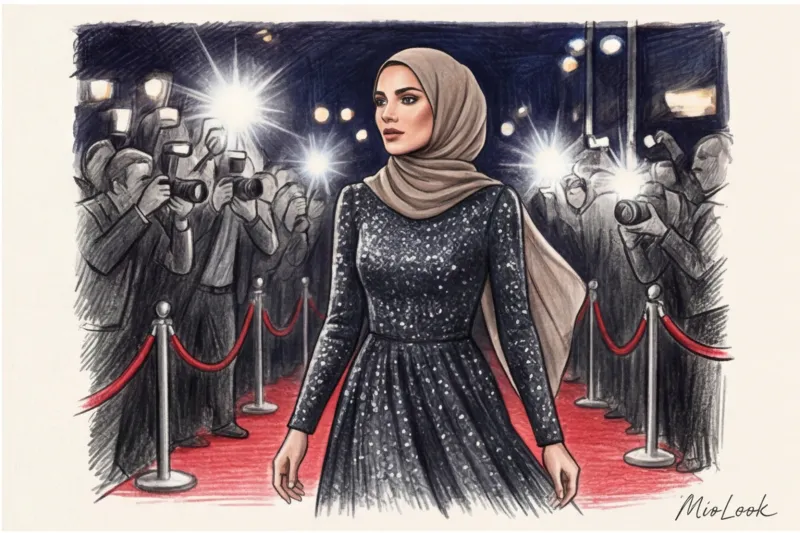
A sequin-covered dress or silk slip is a strong light reflector. If you pair it with a sleek satin hijab, you risk looking like a disco ball. The shimmer will be too much, and your features will be lost in the shimmer.
To properly ground the shine of your dress, choose luxurious, matte yet luxurious fabrics. Crepe de Chine or crepe georgette are the best choices. They have a matte, slightly grainy surface that absorbs light and creates the perfect, calming backdrop for evening jewelry.
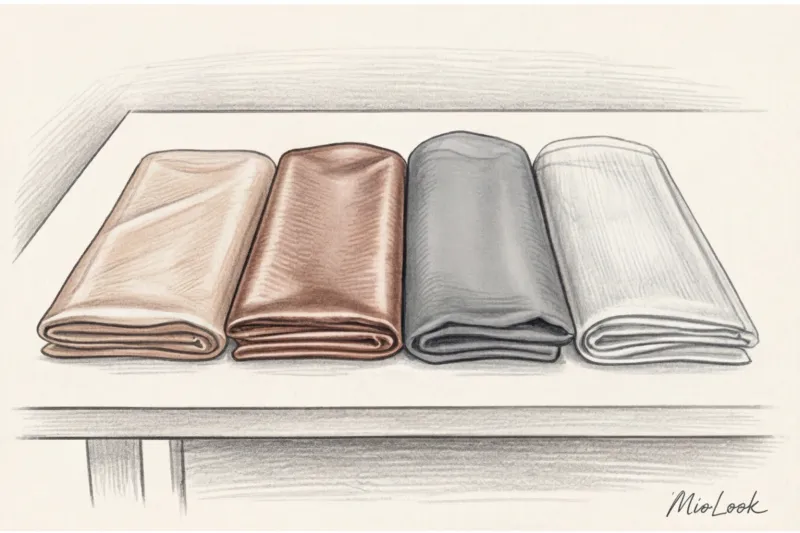
Top 4 Investment Fabrics for a Formal Hijab
You don't need dozens of evening scarves. Four well-chosen textures are enough to cover 100% of formal occasions. And here I advise you not to skimp: a premium $50 hijab made of natural silk can easily "save" and make a $100 mass-market dress look luxurious. The opposite rule never works.
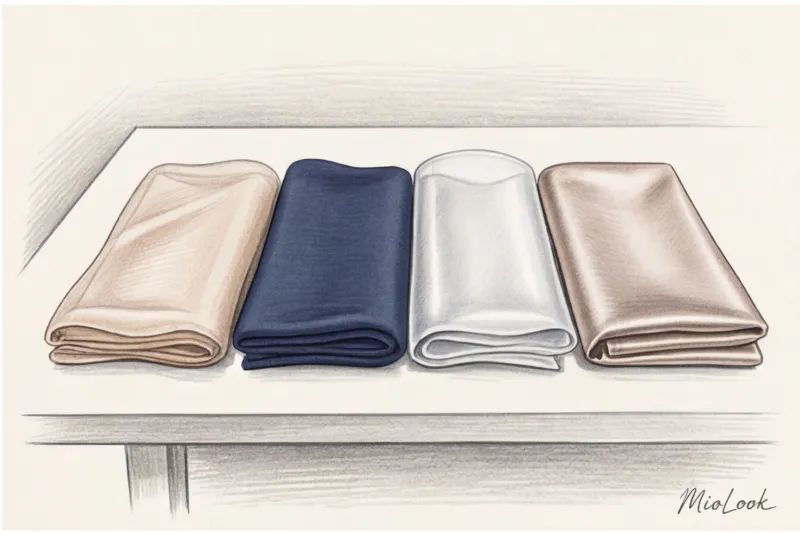
- Natural silk chiffon. Provides an aristocratic translucence. Drapes perfectly in multiple layers across the chest without creating a "cabbage" effect. Indispensable for dresses with a stiff, embroidered bodice.
- Crepe Georgette and Crepe de Chine. Matte elegance. This fabric barely wrinkles, holds its shape perfectly without adding bulk, and never glares under cameras. It's my favorite go-to for clients with a Black Tie dress code.
- Organza. An architectural fabric. Unlike flowing silk, organza stands firm. This property allows for stunning updos and voluminous, sculpted folds around the face, which are currently at the peak of popularity in high fashion.
- Duchess Silk (Duchess Satin). A dense, heavy satin with a delicate, pearly sheen. A luxurious choice, but with strict limitations.
"Satin fabrics act like mirrors. If the model has the slightest oiliness, puffiness, or uneven skin, the smooth satin against the face will act like a magnifying glass. The flash will reflect off the scarf onto the chin, visually making the face appear wider," the renowned Parisian portrait photographer Jean-Luc warned me during one shoot.
That's why, if you're not confident that your makeup will remain perfectly matte all evening, opt for crepe instead of satin.
Color, Light, and Camera Flashes: How the Hijab Works in Evening Light
We're used to trying on outfits and assessing their shades in the daylight by the fitting room window. But let's be honest: where do celebrations take place? In banquet halls with subdued, warm lighting, under the glare of spotlights and under the gaze of dozens of smartphones flashing their lights.
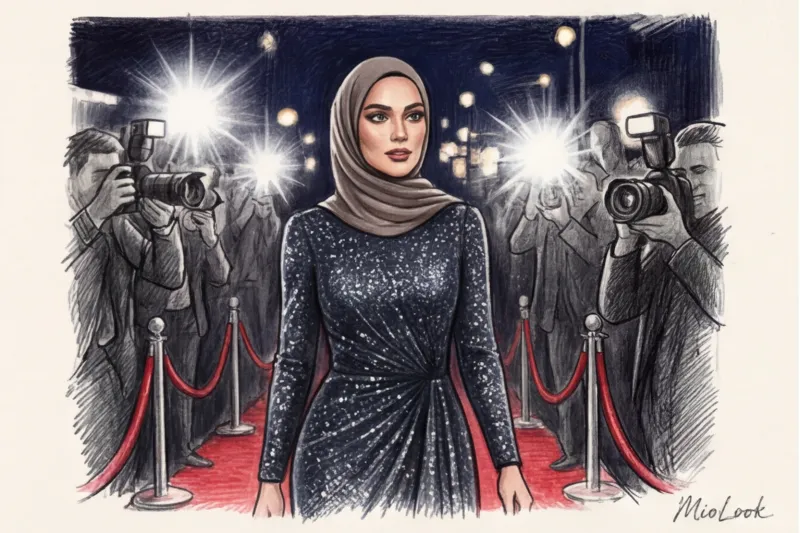
Under artificial light, the complex shades of fabrics change beyond recognition. The dark blue velvet of the dress and the dark blue chiffon of the hijab are optically two completely different colors in the evening. Velvet absorbs the light, sinking into an inky depth, almost black. Chiffon, meanwhile, transmits light through its fibers, becoming a shade lighter and brighter.
I always do a simple test drive with my clients: we turn off the lights in the fitting room and take selfies with flash, holding different fabrics to our faces. The difference is enormous. As I mentioned before, referring to the principles from our article on visual color illusions Matte textures (crepe) work like a professional photographer's softbox. They gently diffuse the harsh light from your phone, blurring fine wrinkles on your face. Glossy finishes, on the other hand, act as a hard reflector.
Can't decide on a shade?
Try MioLook for free: A smart AI stylist will analyze your appearance and select the perfect palette for an evening out.
Get access — €0.99 onceChecklist: Putting Together a Flawless Look (Hijab with an Evening Dress)
If you're standing in a fabric store right now, hesitating in front of the mirror, or packing your shopping cart online, here's your step-by-step guide.
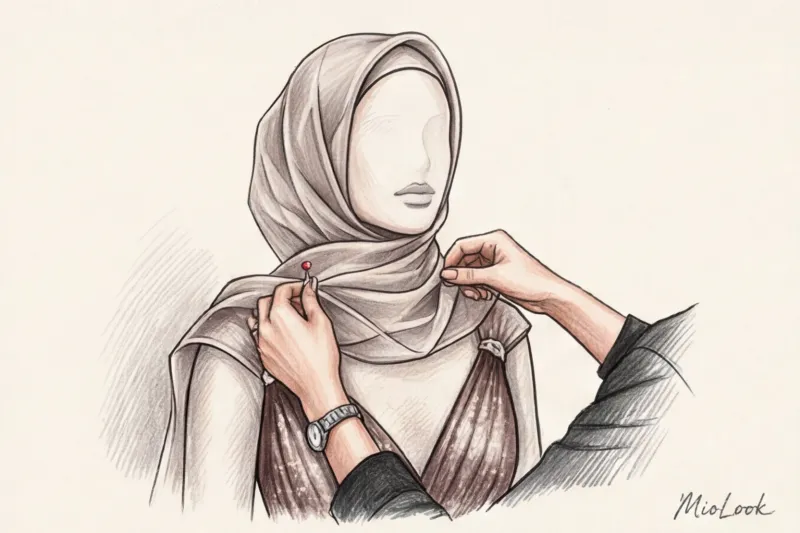
- Step 1: Assess the "weight" and sheen of the dress. Is it heavy or light? Shiny or matte? Write down these two characteristics.
- Step 2: Choose the opposite. If the dress is heavy and matte (wool crepe), choose a light and shimmery hijab (silk chiffon with lurex). If the dress is light and shiny (silk slip), choose a heavy and matte hijab (thick crepe de chine).
- Step 3: Flash test. Take a photo of the fabric near your face with a flash in a dark room. If your face looks sallow or wider than usual, the fabric isn't right for you.
- Step 4: Technical base. Evening fabrics are treacherously slippery. Be sure to choose the right cotton hijab (bony) to match your scarf. The cotton base will create the necessary friction to prevent the intricate, slippery organza structure from sliding down the back of your head mid-party.
The perfect evening look is always a subtle play on undertones and the ability to combine the incompatible. Don't be afraid to break the rules and eschew boring, ready-made "fabric-on-fabric" outfits. Let contrasting textures highlight your individuality, and you'll attract admiring glances, not camera flashes reflected off a poorly made satin.
And if it’s still difficult to create a complex multi-layered image on your own, delegate this task to algorithms. Smart Wardrobe Features of the MioLook App You can try on all the texture combinations virtually in advance, saving yourself the stress and money before the big night.