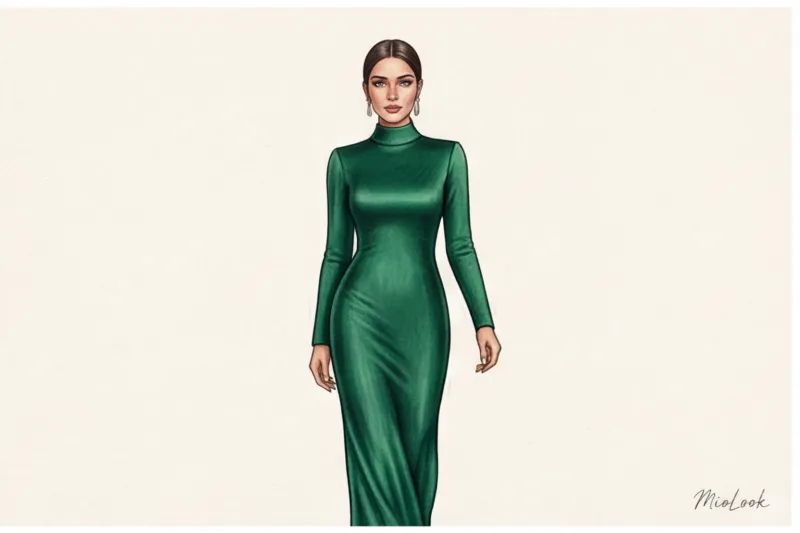
There's a persistent myth: "The more coverage a dress has, the easier it is to hide figure flaws and save on tailoring." Over 12 years of working with premium textiles and styling, I've learned that in practice, it's quite the opposite. A fully covered Muslim evening dress is a continuous, monumental canvas of fabric. The absence of a neckline, slits, or exposed skin means the eye has nothing to focus on except the silhouette's architecture. Any seam defect, cheap sheen, or poorly placed dart becomes catastrophically noticeable.
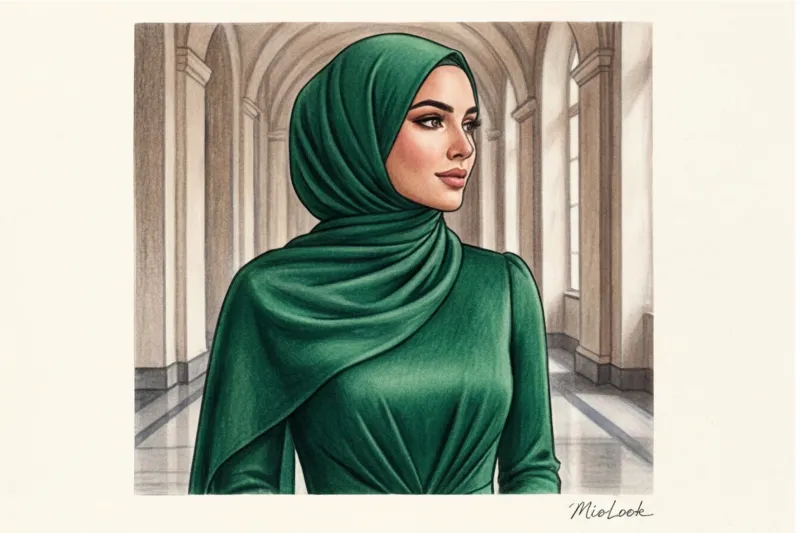
Today, Muslim evening dresses are no longer a purely local phenomenon, but have become the vanguard of "quiet luxury." I discussed the phenomenon of modest fashion as a status marker in more detail in our The Complete Guide to Evening Dresses: A Symbol of New Luxury In this article, we'll explore the anatomy of the perfect high-necked outfit: from the physics of fabrics to the strict rules of protocol.
Muslim Evening Dresses: From Religious Norm to Global Standard of Luxury
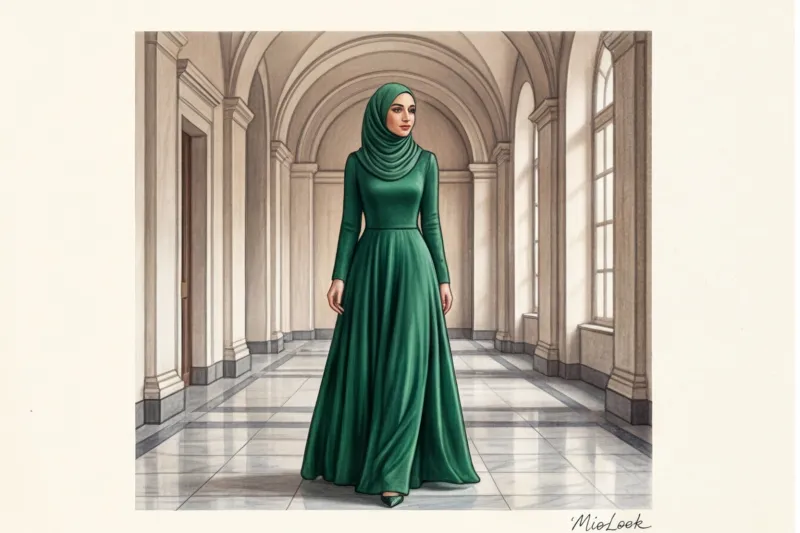
Last year, I put together a wardrobe for a client from the UAE invited to a prestigious European film festival. We eschewed the typical red carpet "naked" dresses and opted for a full-length maxi dress in heavy emerald cady with an integrated hijab. The result? Her look became one of the most talked-about in the gossip columns. The veil is intriguing, and the impeccable fit commands respect.
The numbers confirm this shift in perception. According to the State of the Global Islamic Economy Report, the modest fashion market is steadily on track to reach $375 billion by 2025. And according to a McKinsey study State of Fashion (2024) It's clearly stated that the aesthetics of a covered body are merging with the global trend toward minimalism and intellectual fashion. Socialite executives, celebrities, and influencers are increasingly choosing high-necked column dresses simply because they look expensive.
The secret to this transformation lies in balance. Contemporary Muslim eveningwear takes the strict requirements of the hijab (opacity, loose fit, covered shoulders and arms) and applies them to high fashion patterns. The result is pieces that convey dignity, not restrictions.
Closed-Length Architecture: Why Modesty Requires the Highest Craftsmanship
A revealing dress is often held in place by a rigid corset or taut fabric. A full-length dress should flow without being clingy, yet maintain a feminine shape. This presents a complex mathematical challenge for a clothing designer.
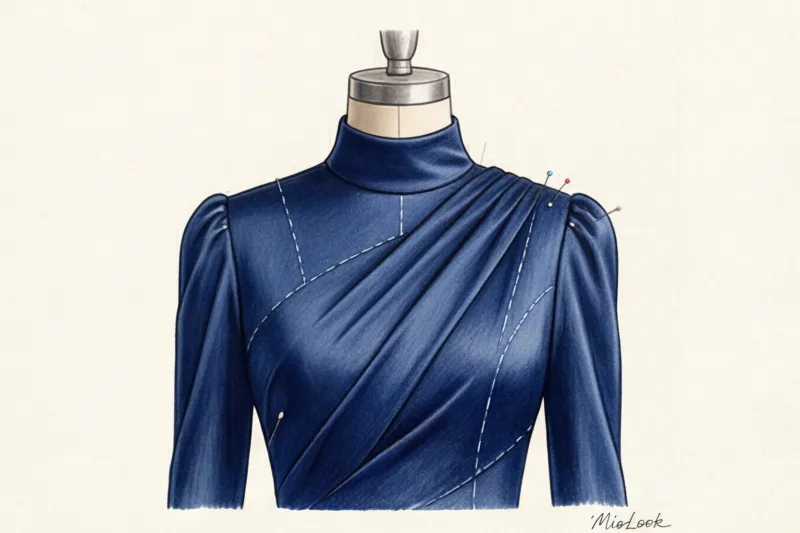
"If you're sewing a column dress with long sleeves, the shoulder line becomes the compositional center of the entire look. A half-centimeter off the armhole will turn an elegant outfit into a shapeless sack."
A key problem with the mass-market segment is the poorly fitting sleeves. In an attempt to make the garment universal, manufacturers lower the armholes. This causes the entire bodice to stretch with even the slightest arm movement, creating unsightly creases across the chest. In a premium Muslim dress, the armholes are always high and well-defined, allowing for free movement during a formal occasion without disrupting the bodice's structure.
Your perfect look starts here
Join thousands of users who look flawless every day with intelligent wardrobe selection.
Get access — €0.99 onceThe role of fabric density in silhouette formation
The way a fabric falls (its drape) is critical to maintaining modesty. Thin, flowing materials like cheap chiffon cling to the legs as you walk, treacherously outlining the body's contours. To avoid this, eveningwear uses shape-retaining fabrics with a high weight (from 220 g/m²).
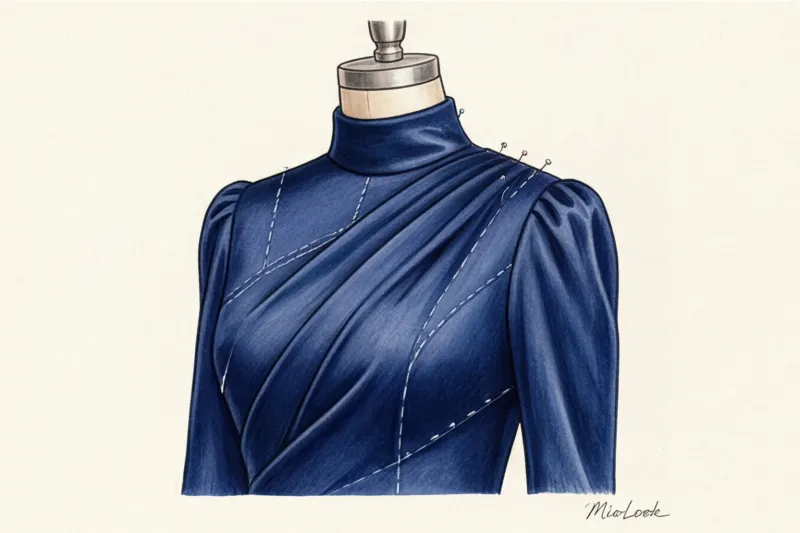
The dense material creates a so-called "air cushion" between the body and the dress. The garment moves freely, moving around the figure without clinging to it. This effect is what distinguishes a €500 dress from a €50 equivalent.
Textile Science: Choosing Durable and Breathable Fabrics for Cover-Ups
Imagine you're at a multi-hour celebration wearing a floor-length dress with long sleeves and a full headdress. If this outfit is made of 100% polyester, it will create a greenhouse effect within just twenty minutes. Tactile analysis and knowledge of the fiber properties are a matter of physical survival at the event.
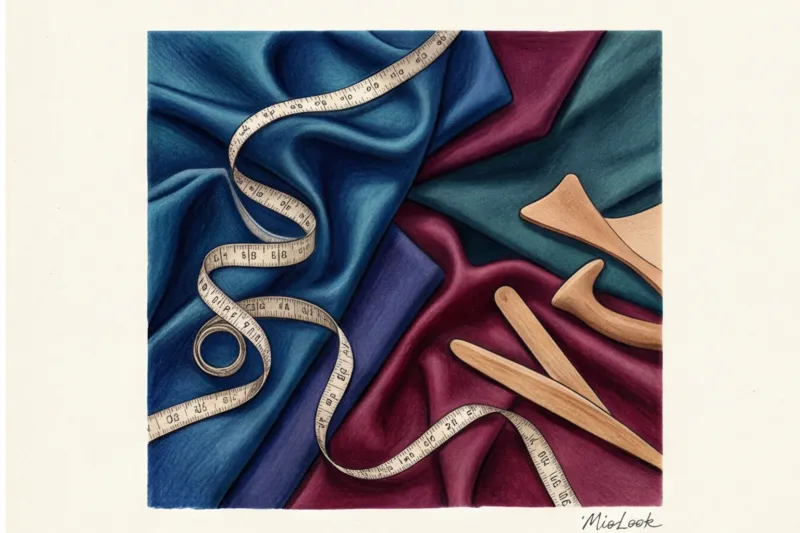
As a textile expert, I categorically advise against synthetics for full-body coverage. Thermal conductivity studies show that the difference in comfort between natural silk and polyester in closed-cell clothing can reach 40%. Silk wicks heat away from the skin, while polyester traps it.
What I recommend paying attention to when choosing:
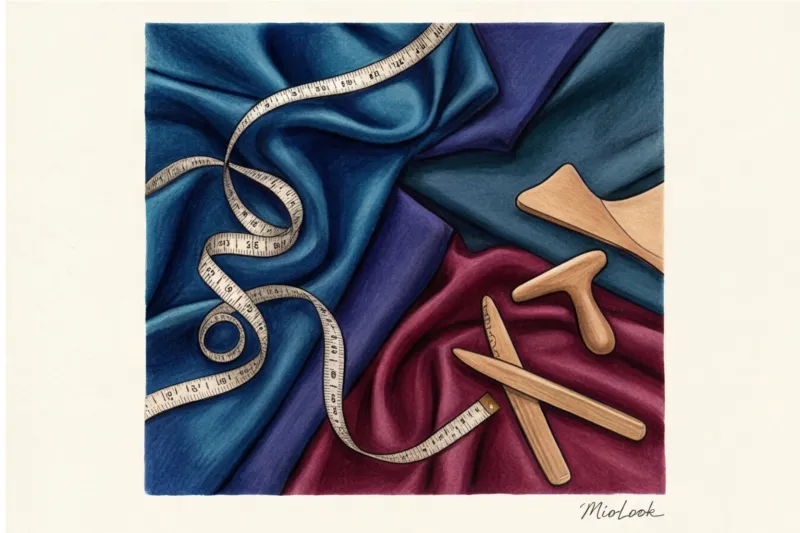
- Organic heavy silk (cady or crepe de chine): Ideal temperature regulation. It has a refined matte finish that looks elegant in artificial evening light, unlike the cheap, glossy sheen of synthetic satin.
- Cupro: A wonderful eco-friendly alternative to silk, made from cotton linters. The fabric flows smoothly, feels cool against the skin, and holds its color well. A high-quality evening dress made from cupro typically ranges from €250–€450.
- Premium Tencel: It has the highest hygroscopicity and is produced in a closed cycle.
Look for the OEKO-TEX or GOTS labels on the labels. This guarantees that the dyes used for deep evening shades are safe for prolonged contact with hot skin.
Dress codes and types of celebrations: how to adapt a Muslim evening dress
One of the most important rules of styling is to match the texture to the level of the event. Not every high-neck dress is equally appropriate for a wedding and a formal reception.
Gala Dinners and Black Tie
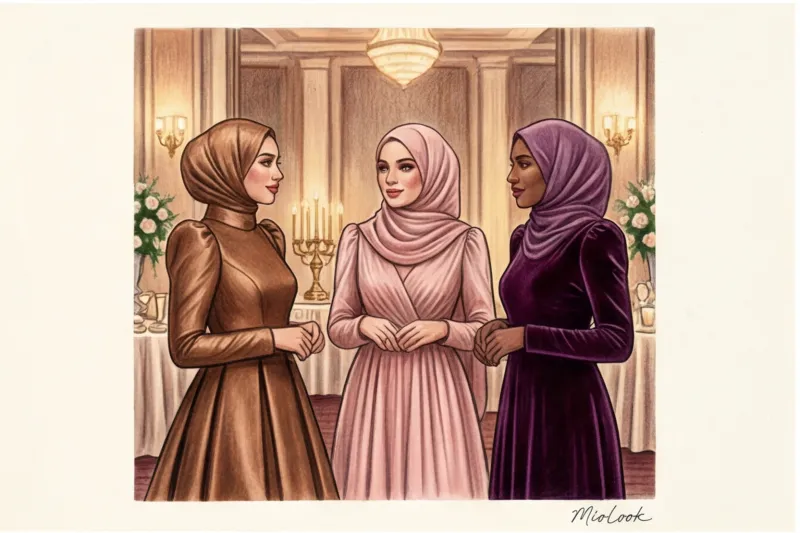
For events with a strict dress code, I always offer my clients absolute minimalism in cut, offset by the complexity of color. Deep emerald, royal sapphire, dark burgundy, or architectural black. No scattered rhinestones or overdone lace. Only impeccable cut and luxurious fabric.
Pay special attention to headwear. For Black Tie, voluminous, intricately wound hijabs will simplify the look. The best choice is a smooth silk turban or a minimalist hijab made from the same fabric as the dress itself. Monochrome visually elongates the silhouette.
Nikah, weddings and family celebrations
Here, protocol is relaxed. A light, pastel palette is encouraged: dusty rose, pearl, and pistachio. Layered dresses with a top layer of weightless silk chiffon or organza are perfect for such occasions. Delicate hand embroidery with silk threads or crystal inlays along the cuffs and collar are acceptable.
Accessories and styling: the art of accentuating a closed background
A solid, one-color dress is a luxurious yet demanding canvas. Accessorize it with small, bland embellishments and the look will appear dull. Overdo it, and it will veer into theatricality.
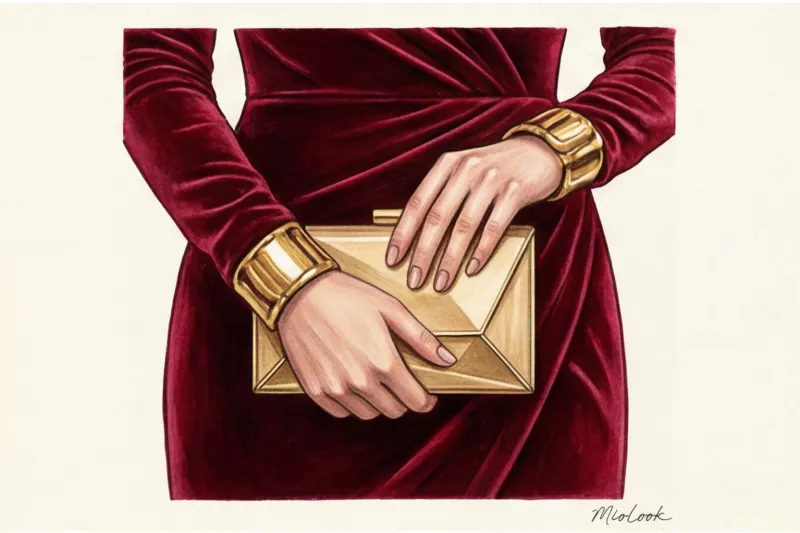
My favorite styling tricks that instantly up the ante of a closed-off look:
- Over-the-sleeve cuff bracelets: Forget about thin chains around your neck—they'll get lost against the thick fabric. Instead, wear a chunky, rigid metal bracelet directly over a long silk sleeve. This creates a stunning contrast of textures.
- Architectural bags: Soft handbags will soften a flowing dress. Choose rigid box clutches (minaudières) made of metal, acrylic, or velvet. The strict geometric shape of the bag "gathers" the flowing silhouette of the dress.
- Correct footwear: Open sandals with thin straps paired with a monumental floor-length dress look disharmonious (as if the legs are separate and the dress is separate). Choose classic closed-toe pumps with a thin stiletto heel—they complete a sleek, elegant look.
Access to MioLook for €0.99 — one-time payment
Not sure what accessories will go with your dress? Our smart AI stylist will find the perfect look in seconds.
Digitize your wardrobeA stylist's checklist: how to evaluate the quality of a Muslim evening dress before buying
As I've already mentioned, a high-necked dress is unforgiving. Before shelling out €300-€800 for an evening gown, do a quick audit in the fitting room. Here's my personal quality checklist:
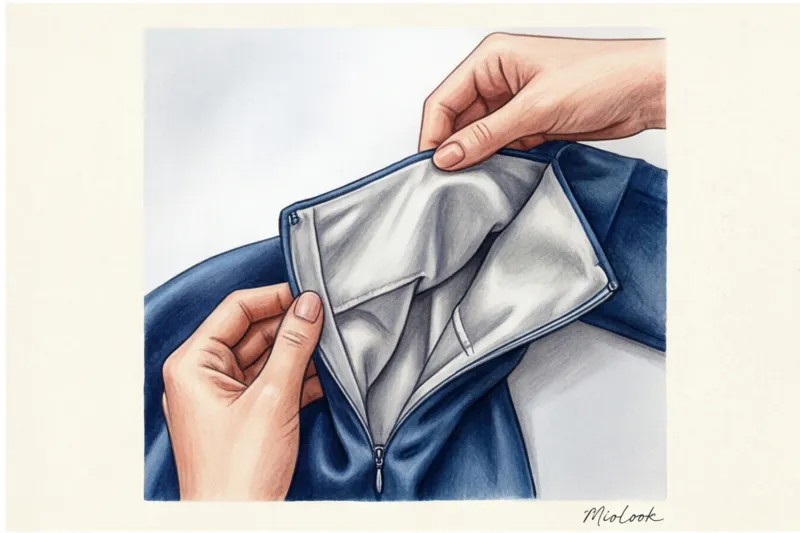
- Analysis of the inside: Look for hidden (French) seams or bias binding. If a thin silk dress is finished inside with a regular, heavy-duty overlocker, the brand has skimped on the technology. This type of seam can chafe and pull the fabric.
- Lining test: This is critically important! If the dress's top is made of premium cupro and the lining is 100% polyester, it won't regulate temperature. The lining should be made of viscose, lyocell, or thin silk.
- Crease test: Squeeze the fabric in your fist for 10 seconds and release. If deep, hard creases remain, you'll look unkempt on your way to the reception.
- Functional fittings: A sure sign that the brand deeply understands the needs of Muslim women is the concealed zippers on the cuffs. They are invisible from the outside, but allow for easy ablution (wudu) before prayer without removing the entire garment.
Fair warning: When do these rules not apply? I never recommend dresses made of 100% matte silk for outdoor celebrations in hot climates. Despite its luxury, thin, unlined silk immediately shows the slightest trace of moisture. For summer garden weddings, it's better to choose a dress made of a tightly woven Tencel and cotton blend—it's much more forgiving in the heat.
When choosing a Muslim evening dress, remember: true luxury doesn't scream glittery rhinestones or deep necklines. It lies in the impeccable quality of the fabric, the hidden French seams, and your absolute comfort. Invest in the quality of what touches your skin, and your confidence will speak for itself.