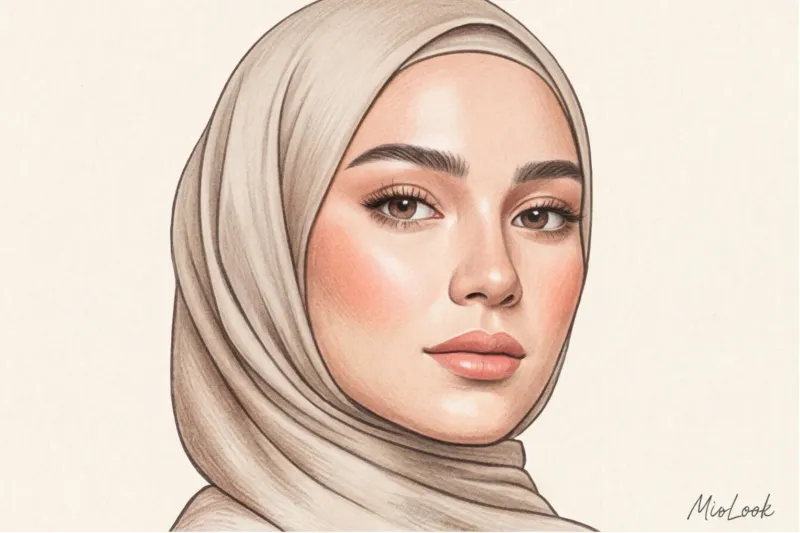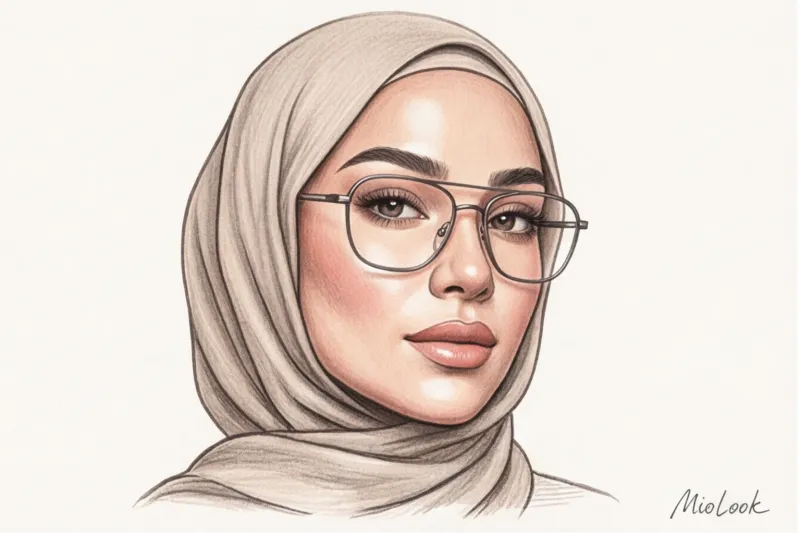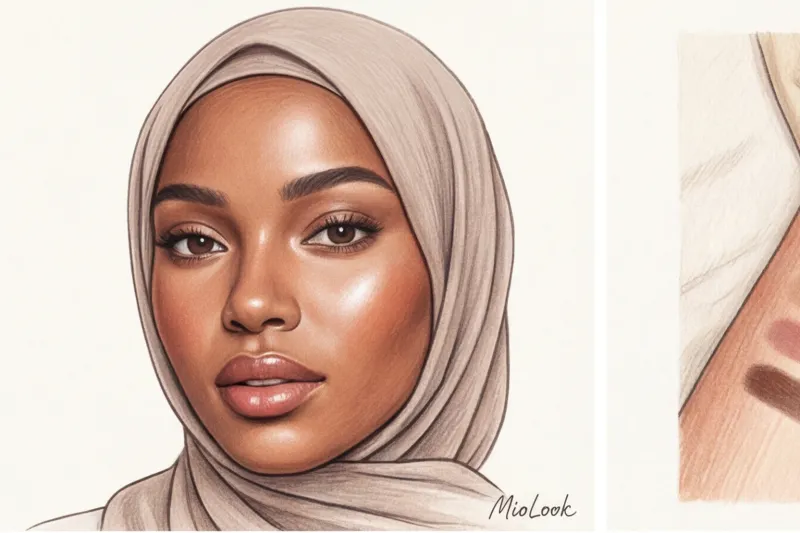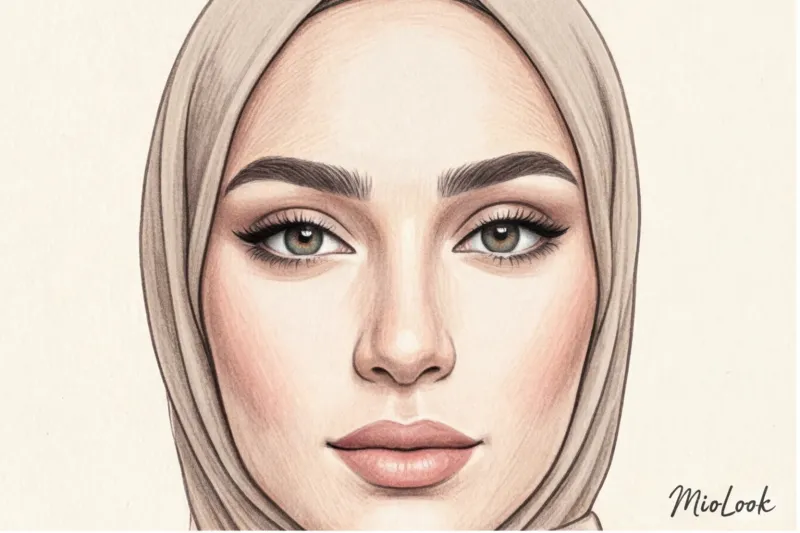
In 2019, backstage at Dubai Modest Fashion Week, I witnessed a scene that forever changed my attitude toward makeup. Under the blindingly bright lights, models literally "lost" their faces: their thick, conventional foundation began to melt, creating a waxy mask effect. Makeup artists had to quickly remove their makeup and switch to breathable, water-based formulas. It was then that I realized: when your hair and neck are covered with fabric, your face is unforgiving of even the slightest carelessness.
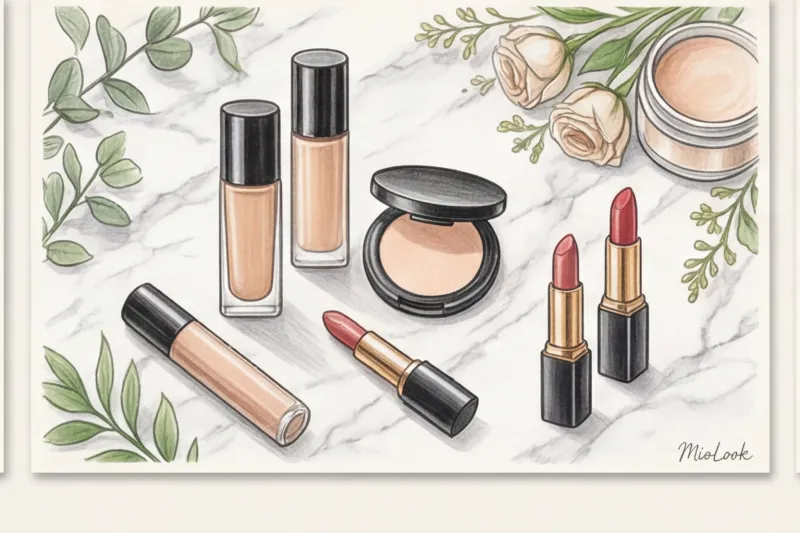
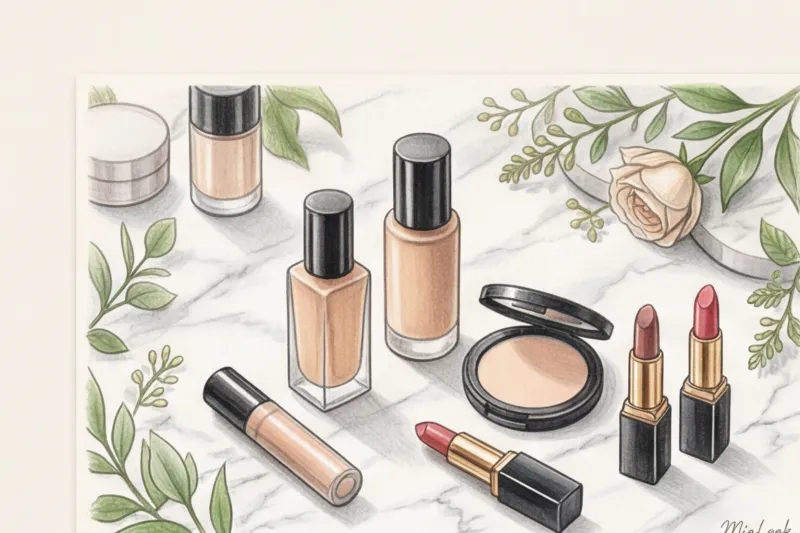
Today, halal makeup is no longer a niche topic for a select few. It's a high-tech segment of the beauty market that addresses the main aesthetic challenge of modest fashion—the need to create a flawless, uncluttered face that captures 100% of the visual attention. We discussed facial architecture in more detail in our A complete guide to hijab makeup and highlights.
Let's explore how the chemical properties of permeable polymers are a game-changer and why this quality standard is worth incorporating into your routine, even if you're not religious.
What is halal makeup cosmetics, exactly?
My new clients often confuse three concepts: vegan, organic, and halal cosmetics. This is a big mistake. Vegan lipstick may contain pure ethyl alcohol, while organic cream may contain animal fats (for example, non-certified beef or pork fat). Halal certification is the strictest filter available.
According to certification bodies (such as ESMA in the UAE), halal makeup products strictly exclude:
- Alcohol (ethanol) — is prohibited not only due to religious norms, but also because it destroys the skin’s lipid barrier.
- Carmine (E120) — a popular red dye derived from insects (cochineal). In halal lipsticks and blushes, it is replaced with mineral pigments.
- Animal fats and collagen - if they are obtained without complying with halal standards.
But the ingredients are only half the story. Certification ensures the purity of production lines. The assembly line where halal foundation is bottled could not previously have produced a product containing prohibited ingredients. This guarantees absolute chemical purity, which is sought by allergy sufferers worldwide today.
The Wudu-Friendly Concept: How Waterproof Makeup Works
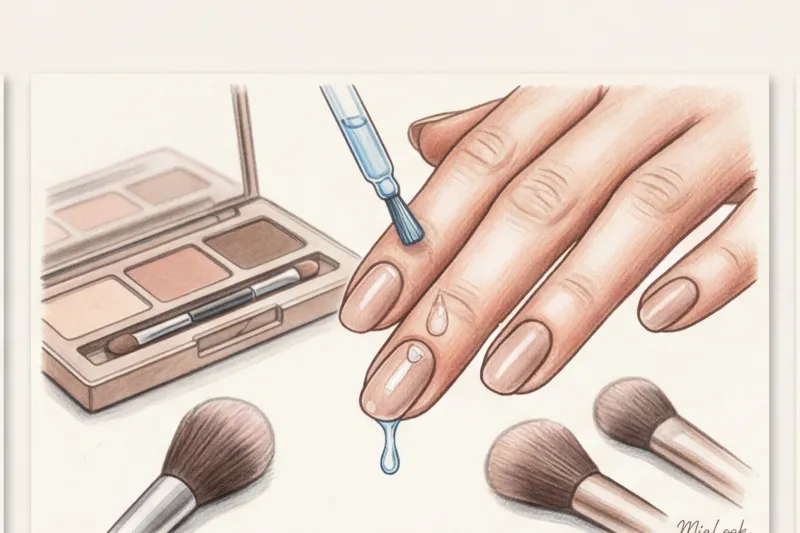
For makeup to be suitable for performing ablution (wudu), water must reach the skin and nails. Conventional cosmetics rely on thick silicone films to ensure durability, which act like a raincoat: water simply rolls off them.
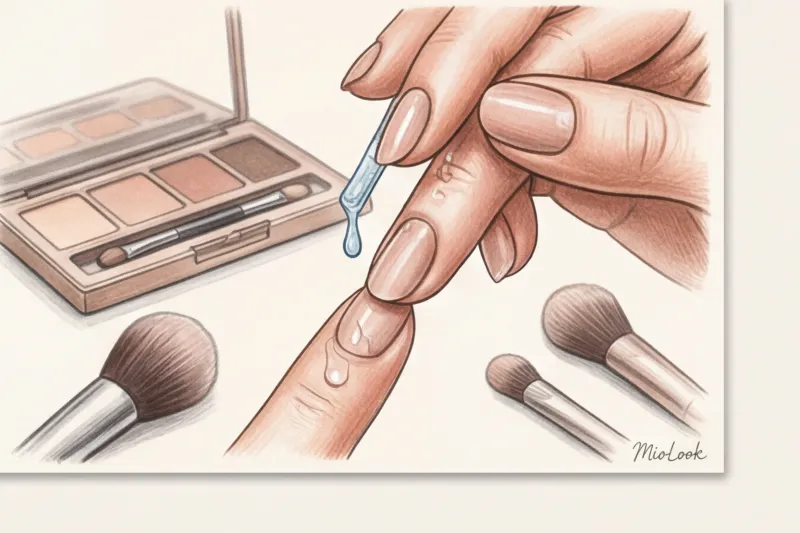
Chemical engineers use Wudu-friendly products water-permeable polymers Imagine a mosquito net at a microscopic level. The polymer mesh holds the pigment on your face, but there's enough space between the meshes to allow oxygen and water molecules to pass through.
Your perfect look starts here
Join thousands of users who look flawless every day with MioLook. Artificial intelligence will help you choose makeup and clothes.
Get access — €0.99 onceThe Illusion of Lightness: Why Hijab Makeup Requires the Perfect Base
According to eye-tracking research by Nielsen Norman Group (2023), in a typical person's appearance, a person's gaze is divided between their hairstyle, décolleté, jewelry, and face. But when it comes to clothing that covers them, the focus of attention shifts dramatically. The face becomes the sole visual magnet.
That's why the slightest carelessness—crumpled concealer, crumbling mascara, or stained foundation—in a halal look looks not just like a mistake, but like a stylistic disaster. Here, makeup functions as an accessory. Flawless, delicately radiant skin replaces the sparkle of jewelry and the play of textures on exposed skin.
Myths and reality: does breathable makeup last all day?
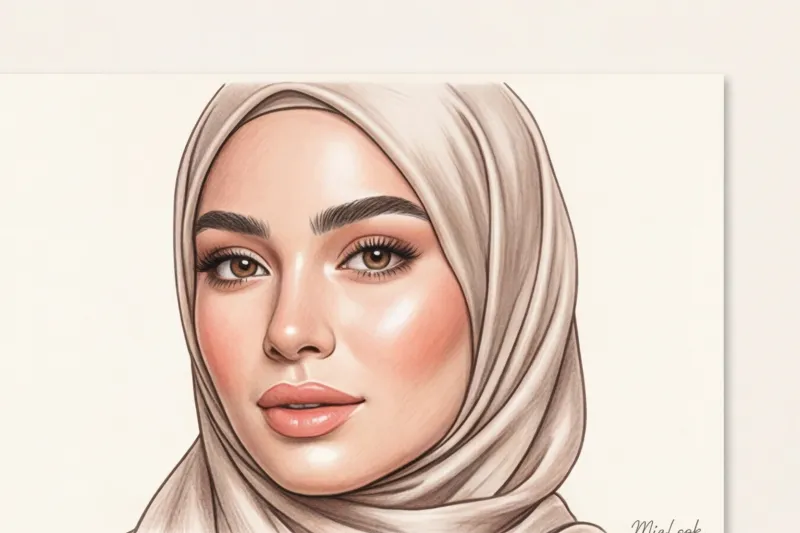
The most common question I get from my clients is: "If foundation is waterproof, does that mean it will run from sweat within two hours?" This is a major misconception.
Counterintuitive fact: next-generation breathable polymers more durable , than "opaque" matte silicones. Why? When you apply a thick conventional foundation, sebum (sebum) can't reach the surface. It accumulates under the silicone film, destroying it, and the cream begins to treacherously roll into the nasolabial folds.
A breathable formula works differently. It allows sebum to reach the surface in microscopic doses, mixing with the pigment. As a result, makeup doesn't crack, but creates a "second skin" effect. Moreover, studies show that the rate of pigment oxidation (when the tone turns red by evening) under a dense layer is 2.5 times higher than in oxygen-permeable formulas.
Top 5 Mistakes When Switching to Halal Cosmetics
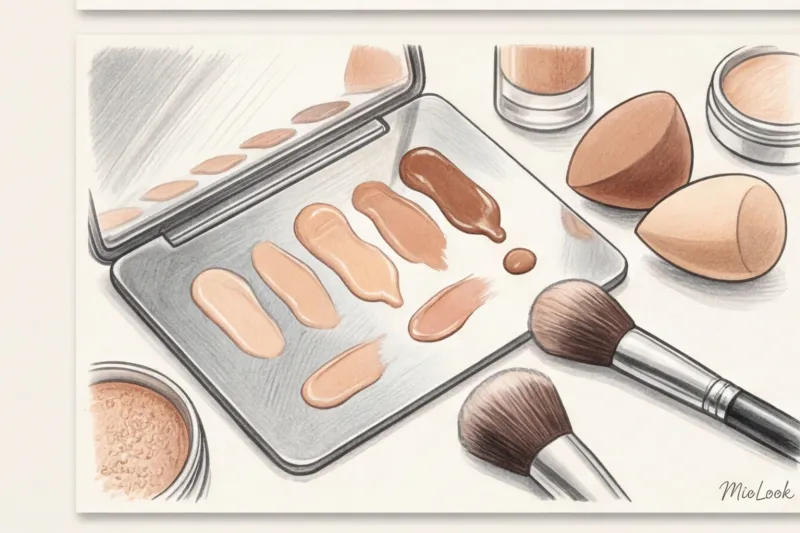
Over my 10 years of work, I've seen hundreds of women attempt to update their makeup kits on their own. And they almost always end up making the same mistakes. It's important to understand: light, breathable shades have their limitations. They won't cover active acne or severe pigmentation—that requires targeted color correction.
Here are 5 critical mistakes that ruin the whole effect:
- Use of aggressive primers. Applying a heavy, dimethicone-based pore-filler under a water-permeable foundation is pointless. It creates a barrier, defeating the purpose of Wudu-friendly skin.
- Concrete dusting. Halal makeup values a vibrant glow. A thick layer of talc creates a lifeless mask effect. Replace talc with translucent mineral rice powder.
- Aggressive makeup removal. Breathable formulas don't require harsh surfactants. If you use hydrophilic oils, make sure they emulsify easily, otherwise residual oil will clog pores.
- Ignoring the undertone of mineral pigments. Since halal cosmetics do not use carmine, red and pink shades are created with iron oxides. They often have a warm (brick) undertone. If you have a cool complexion, test the blush only in daylight.
- Concealer conflict. Trying to layer a lightweight halal concealer over a heavy mineral oil eye cream will cause the product to instantly crease.
Ready to get started?
Try the MioLook plan for free—no commitments required. Create your perfect virtual makeup bag and plan your looks in advance.
Get access — €0.99 onceBuilding a Basic Halal Cosmetics Bag: A Stylist's Checklist
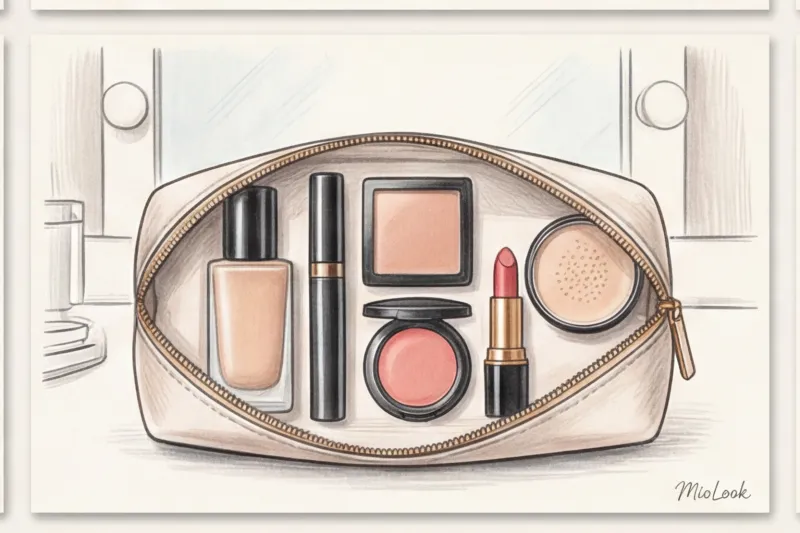
To avoid buying too much, start with the basics. High-quality halal cosmetics in Europe cost approximately €20–€40 for a mass-market product, and from €80 for a premium one.
- Foundation: Look for lightweight, water-based mineral tints or loose mineral powders. They even out skin tone without clogging pores.
- Blush: Creamy textures based on plant extracts (without carmine) give the most natural “frosty blush” effect.
- Eyes: Alcohol-free mascara is a lifesaver for brittle lashes (alcohol is incredibly drying). For a more expressive look, use traditional kohl (kajal)—it's hypoallergenic and visually brightens the whites of your eyes.
- Lips: Lipsticks based on carnauba or candelilla wax (vegan alternatives to beeswax).
“By the way, if you are unsure which mineral shades will suit your color type, I strongly recommend uploading your portrait photo to MioLook AI algorithms will analyze the contrast of your appearance and suggest the optimal palette without lengthy testing in the store."
Business Etiquette and Halal Makeup: How to Look Classy
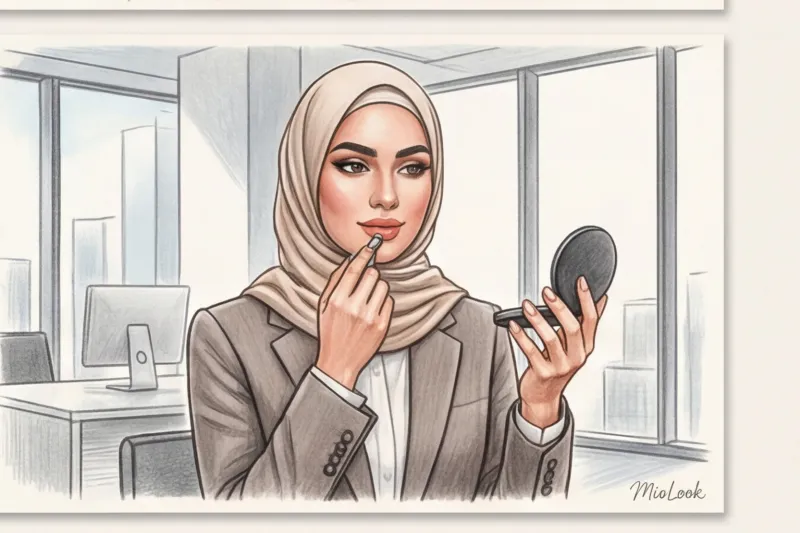
The business environment has its own rules. If you're going to negotiations or an interview at a company with a strict dress code, your makeup should convey confidence and competence.
For the office, I recommend adapting breathable makeup to matte and satin finishes. Excessive shine (glass skin) can be perceived as out of place in a conference room. Use muted shades: instead of a glossy gloss, use a dusty rose lip tint; instead of shimmery eyeshadow, use a matte sculpting powder in the crease. Detailed instructions on creating a high-status look can be found in the materials. Business Makeup: Rules, Instructions, and Common Mistakes And Expert Image: A Wardrobe for Your Personal Brand.
The Future of the Beauty Industry: Halal as the New Standard Clean Beauty
Did you know that secular women make up a significant portion of halal cosmetics buyers in Europe today? According to the analytical agency Grand View Research (2023), the global halal cosmetics market will reach €144 billion by 2031. This explosive growth is not only driven by Muslim women.
The fact is that the halal standard perfectly aligns with the global trend toward conscious consumption (Clean Beauty). Women are tired of harsh chemicals, microplastics, and animal testing. By purchasing a certified product, you receive a guarantee of ethical production and the purity of its ingredients.
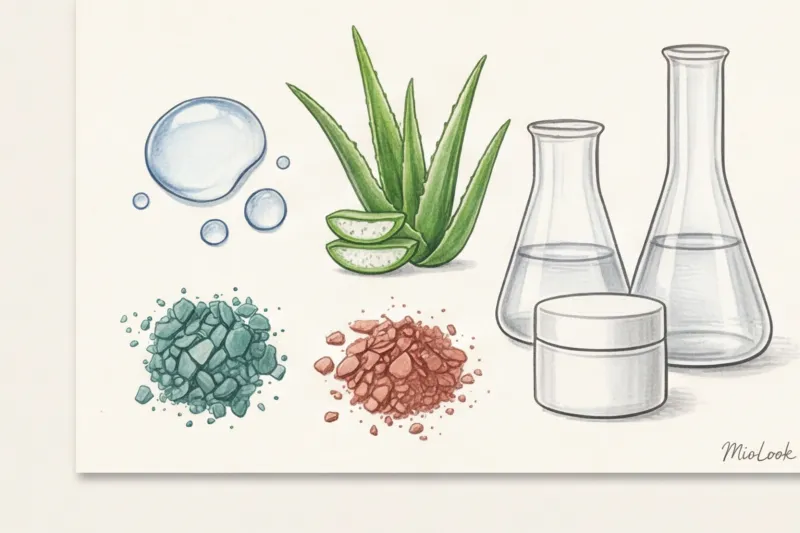
Switching to breathable, halal makeup isn't just about swapping brands on your bathroom shelf. It's an investment in the long-term health of your skin. Avoiding drying alcohol and clogging silicones allows your skin to breathe, reduces the risk of breakouts, and maintains its lipid barrier. Start by switching your foundation, and you'll see how your skin's appearance will change forever within a month.