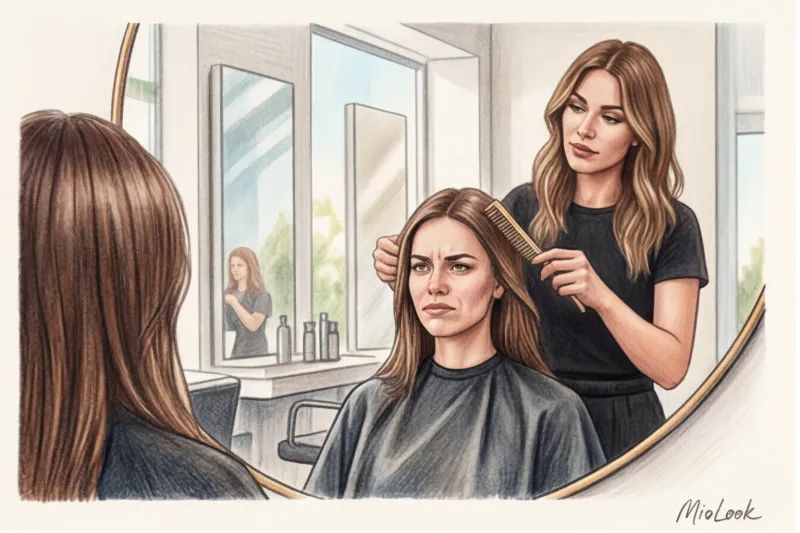
Every morning, about 80% of women engage in a losing battle with their hair. They vigorously straighten stubborn curls with a flat iron, generously spray fine strands with hairspray in an attempt to create volume, and firmly believe that their "bad" face shape is to blame. Sound familiar? As a colorist and image consultant, I see it all the time.
Let's be honest: choosing a haircut solely based on the shape of the face (circle, square, oval) is hopelessly outdated. The same "round" face shape in a Romantic and a Gamine requires completely different lines, volumes, and textures. The secret to the perfect look lies not in conforming to the mythical "perfect oval," but in understanding the architecture of your body. This is where Kibbe hairstyles come into play.
Why Kibbe Haircuts Work Better Than Face Shape
In 1987, David Kibbee published the book "Metamorphosis," in which he proposed a revolutionary idea: our appearance is a balance of masculine (Yang) and feminine (Yin) principles, expressed in our bone structure. The head does not exist separately from the body. The line of your jaw, the width of your cheekbones, the set of your eyes—all are an architectural extension of your figure.
After 12 years of practice, I've grown tired of counting how many Gamine-type clients have been advised for years to hide their "round cheeks" behind long, boring, straight locks. One day, a woman came to me with exactly this request. We took a risk and created a short, choppy pixie. The result? Her graceful neck was revealed, her eyes appeared enormous, and her face gained a more sculpted appearance. Her hair no longer weighed her down.
I discussed in more detail how the lines of the body intersect with the lines of the face and general proportions in our The Complete Guide to Kibbe Types The main rule: your haircut should follow your natural shape, not conflict with it.
Stylist's Secret: How to Match the Kibbe Cut to Your Hair Texture
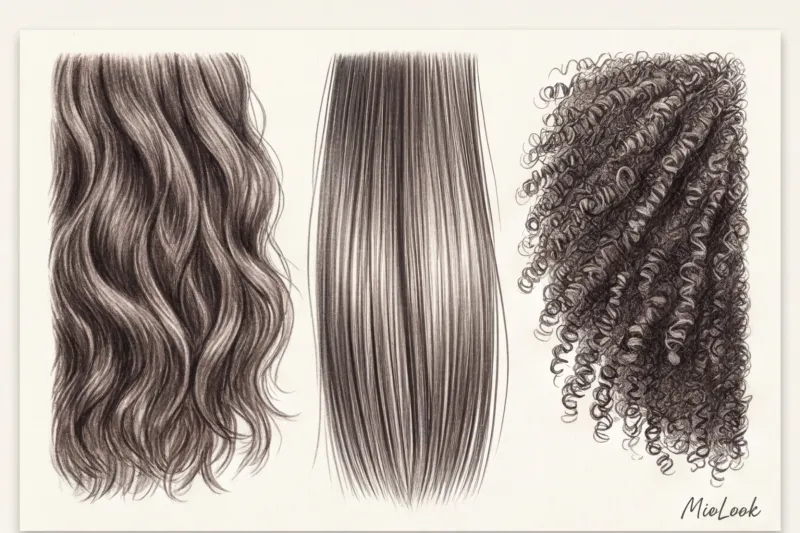
Here's where the interesting part lies. The Kibbe type gives us perfect line (haircut shape), but we also have texture (porosity, density, thickness of hair). This is physics that can't be argued with. Ignoring texture is the main reason why a "picture-perfect" haircut at home turns into a disaster.
As a stylist, I would never suggest a classic sleek bob with extensions to a Dramatica with thin, glassy hair. Why? Because without natural thickness, this cut would detract from the look, leaving the hair hanging like sad icicles. We'll seek a compromise between a tight cut and subtle thickening with styling products.
According to a 2024 study by the WGSN Institute, a properly selected architectural haircut that takes into account the natural growth and texture of the hair reduces the time spent on daily morning styling by 60-70%.
What should you do if your hair type calls for a strict, sleek, geometric shape, but your hair is naturally frizzy and curly? Find a balance. Leave the natural texture, but give it a sharp, geometric cut. Before committing to a radical change, I always advise my clients to test out the new look. MioLook — a smart AI stylist will show you how the selected line integrates into your proportions.
Access to MioLook for €0.99 — one-time payment
A smart AI stylist will select the perfect look.
Get access — €0.99 onceDramatic Family (Dramatic, Soft Dramatic): Status and Large Geometry
Dramatic types are pure Yang. Sharp angles, vertical lines, sculptured shapes, and status symbols are key. Their hair should always look well-groomed, expensive, and architectural.
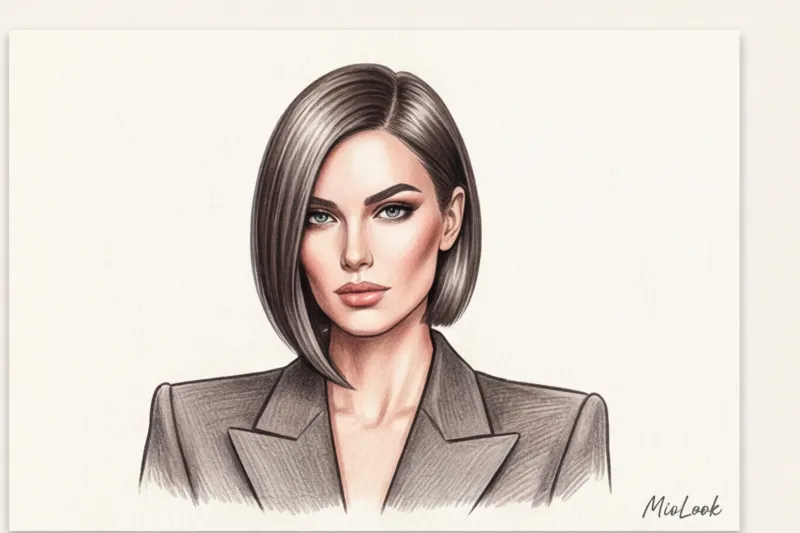
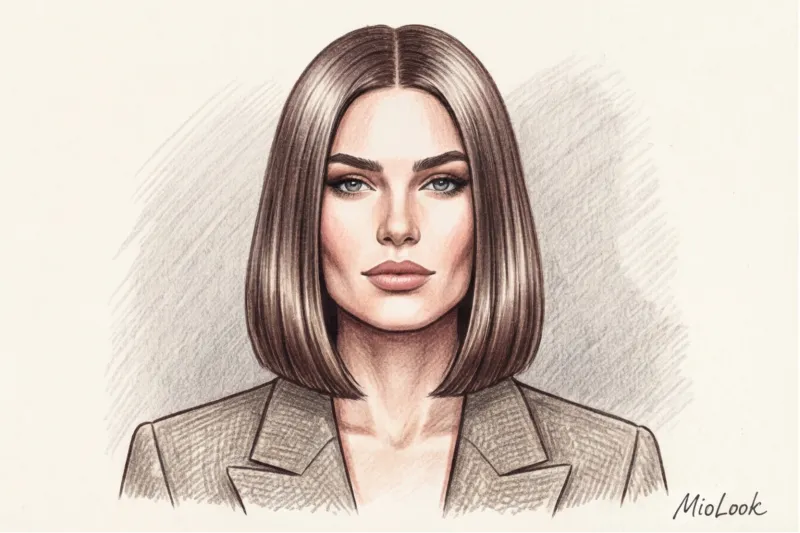
- Pure Dramatic: Your everything is sculpted smoothness, asymmetry, and clear, tight cuts. Strict architecture without any "accidental" flyaways. A sleek bob, slicked-back hair, and perfectly straight long strands.
- Soft Dramatic: A pinch of Yin is added to the Yang framework. Your ideal choice is a large, luxurious wave with volume at the roots. Recall the look of an Italian diva (Sophia Loren or Monica Bellucci).
Taboo: A subtle dandelion effect, tousled beach waves, and messy buns on top. What makes a Natural look stylish, a Dramatic look makes a Dramatic look unkempt. Perfectly styled Dramatic hair is the foundation for look expensive and prestigious in a business environment.
Romantic Family (Romantic, Theatrical Romantic): Softness and luxurious roundness
Romantics are the ultimate Yin. The essence of this personality type lies in the complete absence of sharp angles. Your lines are circles, spirals, and soft arcs.
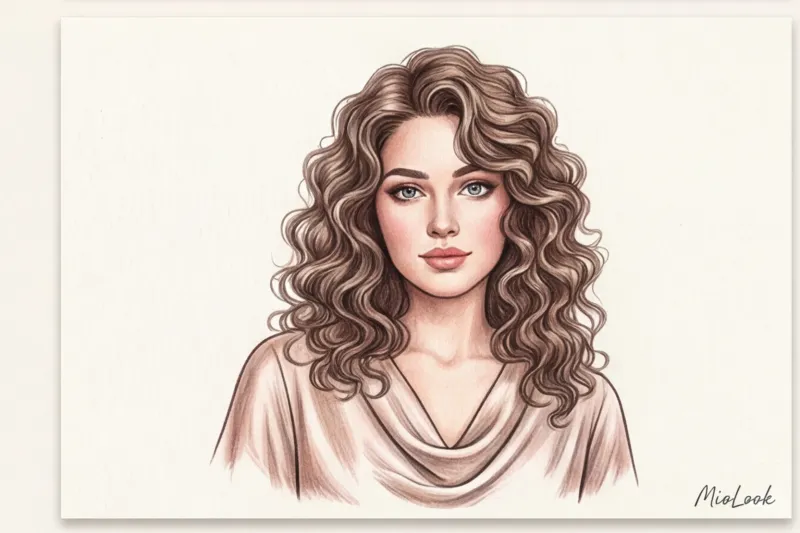
There's a pernicious myth that Romantics absolutely can't wear short hair. It's not true! It's possible, but the shape is critical. It should be a soft, rounded bob with a slight curl, not a strict, graphic cut.
I had a case in my practice: a client with a pure Romantic type, succumbing to impulse and the androgynous trend, got an ultra-short haircut with shaved sides. Her soft, rounded features instantly "smoothed," her facial contours visibly sank, and she looked ten years older. We spent over a year growing out the right cascade and restoring her natural feminine glow.
- Pure Romantic: Cascading haircuts, soft curls, voluminous and airy styling that frames the face like a cloud.
- Theatrical Romantic: You can add a touch of edginess, such as a tousled or side-swept fringe, without losing the overall femininity and softness.
Taboo: Strict geometric bobs, tightly slicked ponytails, men's ultra-short haircuts with clippers.
Your perfect look starts here
Join thousands of users who look flawless every day with MioLook.
Get access — €0.99 onceClassic Family (Classic, Soft/Dramatic Classic): Symmetry and perfect control
Classic hairstyles are a rare and perfect balance of Yin and Yang. The secret to your beauty lies in symmetry and moderation in everything. Your hairstyle should never steal the show; it simply gracefully frames a symmetrical face.
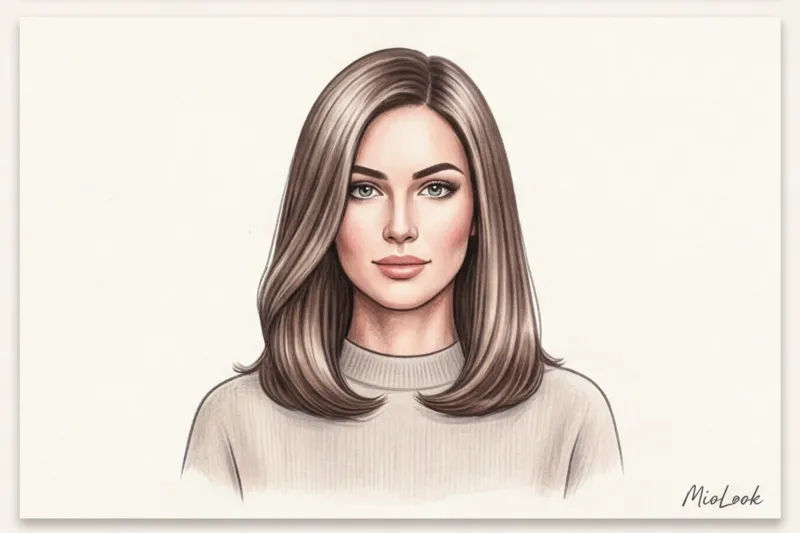
The ideal Classic hairstyle is a close-cropped style, medium length, and smooth transitions of color and shape. Nothing flashy. It suits Classics incredibly well. Strict hairstyles for the office every day: sleek low buns, neat shells and classic French bob.
Taboo: Dramatic asymmetry, shaved sides, unnaturally bright hair colors, a "creative mess." Remember: while Gamin looks good with a slightly disheveled look, Classic's messy bun looks like he simply forgot to comb his hair this morning.
Natural Family (Natural, Soft/Flamboyant Natural): Freedom, wind and texture
The Natural philosophy is described in one phrase - effortless chic (effortless chic). You have a wide, slightly blunt bone structure that demands freedom. Your hair should look as if it was styled by a gentle sea breeze, not by two hours of curling iron.
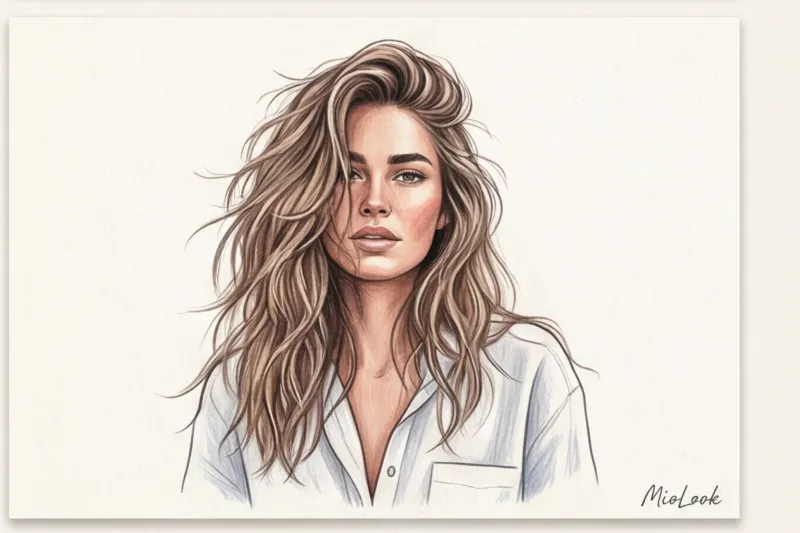
- Flamboyant Natural: You look good with a lion's mane, layered haircuts (the much-talked-about shag and wolf cuts are made for you), textured strands, and loose lengths.
- Soft Natural: Softened layers, delicate casualness, loose, slightly tousled braids.
I always tell my natural clients: you're the only lucky ones who actually pull off the trendy messy buns. What looks sloppy on others looks incredibly stylish and natural on you.
Taboo: Varnished "helmets" of hair, tight ballerina buns, strict geometry with straight cuts - all this makes the Natural's face heavy, and the features - rough.
Gamine Family (Gamine, Soft/Flamboyant Gamine): Contrast, boldness, and dynamism
Gaminas are a clash of Yin and Yang without blending them. Contrast, dynamism, compactness. Your magic lies in the fact that you thrive with short hair. What makes other women look "boyish" transforms Gaminas into graceful elves with huge, expressive eyes.
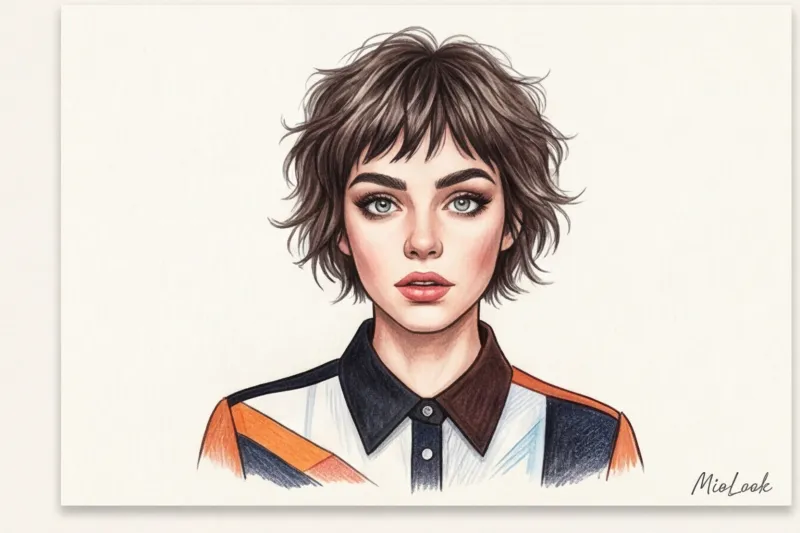
- Flamboyant Gamine: Sharp, daring asymmetry, torn bangs of different lengths, contrasting coloring.
- Soft Gamine: More soft curls around the face, shorter textured bob, cute yet dynamic details.
These haircuts fit perfectly into everyday style of creative industries , where Gamins can allow themselves the most daring experiments with form, while remaining organic.
Taboo: Long, straight, sleek hair of one length (the "mermaid" effect). On Gaminas, it looks as if the hair has a life of its own, visually elongating the petite figure.
Checklist: How to prepare for a salon visit based on your hair type
Knowing your hair type is half the battle. The other half is communicating this information effectively to your hairdresser. Salon stylists think in technical terms, not Kibbe's terms. Here's how to prepare properly:
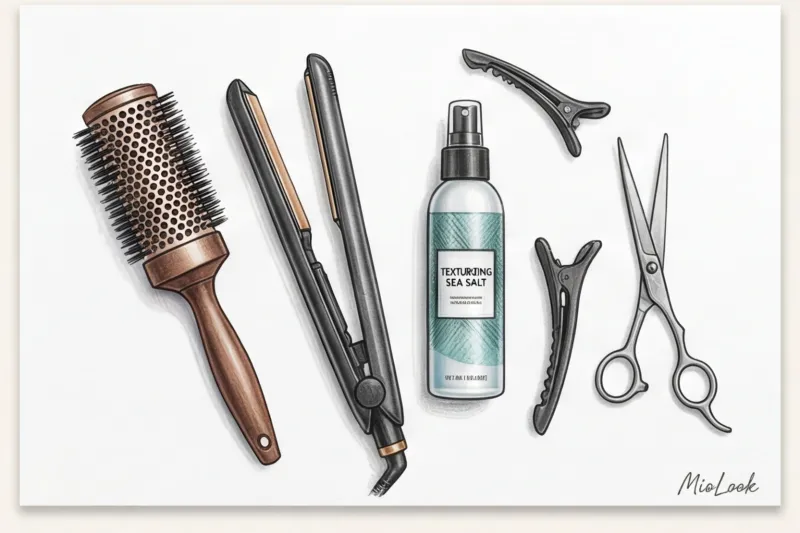
- Determine your dominant line: Is it edgy (Dramatic), soft (Romantic), symmetrical (Classic) or casual (Natural)?
- Analyze your hair texture: Is it thick or thin? Straight, wavy, or curly? Porous or smooth?
- Choose your references wisely: Find 3-5 photos of celebrities your Kibbe type and with similar hair structure Don't show your stylist photos of Zendaya (a Natural with thick curls) if you're a Classic with fine, straight hair. Save your best examples in MioLook app so that they are always at hand during your visit to the salon.
- Use the correct words: If you're a Romantic or Natural, ask your stylist for "layers," "soft thinning," and "graduation." If you're a Dramatic or Classic, use words like "tight cut," "graphic," and "no thinning."
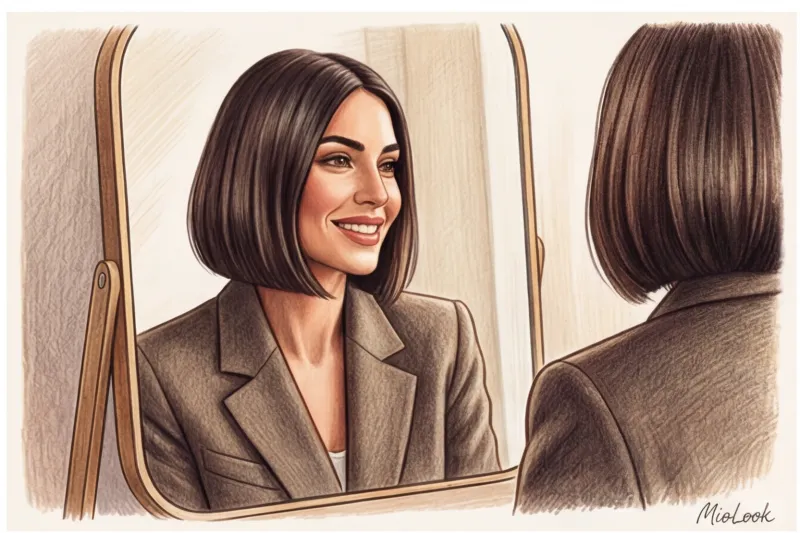
The perfect haircut isn't the one trending on TikTok or in glossy magazines. It's the architectural shape you wake up with, already beautiful, because it's created according to the laws of your personal geometry.