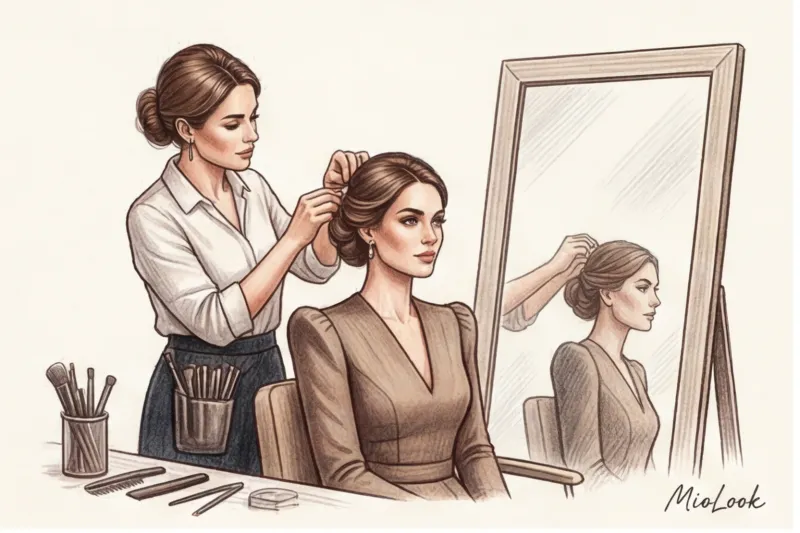
Did you know that the head, neck, and shoulders—your head and shoulders—account for up to 40% of the visual weight of your entire look? You can spend weeks searching for the perfect outfit and take it to the tailor for a perfect fit, but one mistake in the mirror half an hour before going out can ruin everything. The right hairstyle for a dress neckline It's not just a matter of aesthetics or a passing trend. It's pure architecture, a work with proportions, and, oddly enough, the physics of materials.
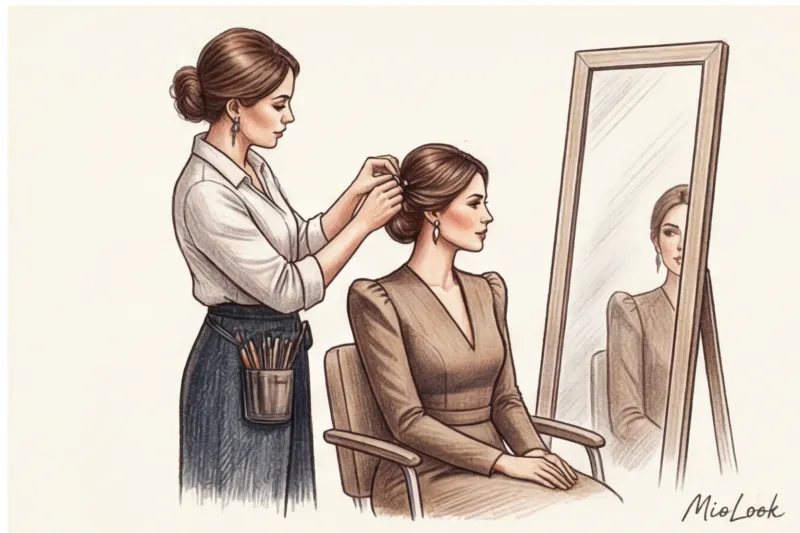
I talked about the global construction of the silhouette in more detail in our a complete guide to wedding hairstyles and image architecture But today we'll explore practical scenarios for any occasion—from a strict office dress code to the red carpet—and discover why what looks stunning with silk hopelessly ruins the look with heavy velvet.
Image Architecture: Why a Hairstyle to Match a Dress's Neckline Makes All the Difference
There's an unshakable rule in styling: hair is the inverted foundation of your look. If you're building a house, you start at the bottom. When we perceive a person visually, we "read" them from the top down.
This is where the law of volume balance, based on the golden ratio, comes into play. In ideal classical proportions, the height of the head is exactly 1/8 of the total height. As soon as we wear a dress with a full skirt (for example, a New Look silhouette) and simultaneously create a super-voluminous backcombed hairstyle, we disrupt this proportion, turning the figure into an hourglass figure, about to burst down the center. A full bottom calls for a compact top, while a flowing, form-fitting silhouette, conversely, requires an airy hairstyle for balance.
"An unfortunate choice of styling in relation to the neckline can visually 'cut off' the neck and add 5-7 non-existent kilograms to the figure. Hair shouldn't conflict with the geometry of the cut—it should continue it."
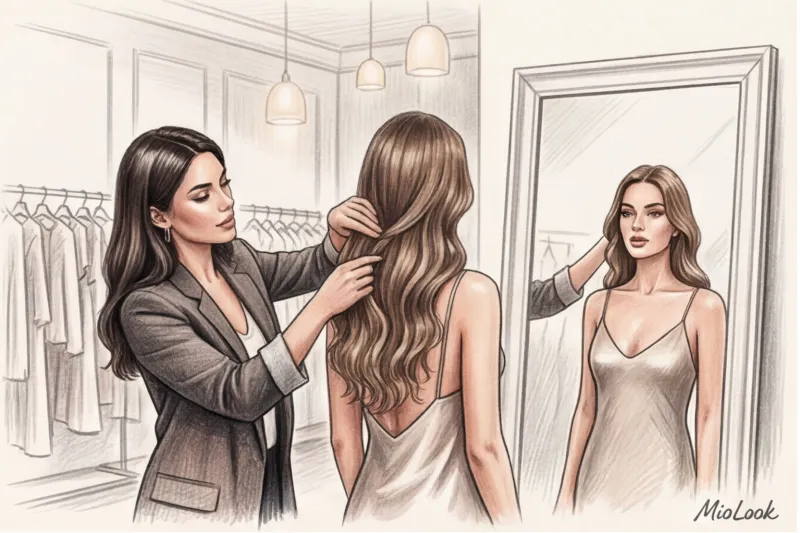
In my experience of creating an architectural framework for an image, we always plan the installation to The final dress fitting, not afterward. This is the only way to assess the actual silhouette dimensions.
Access to MioLook for €0.99 — one-time payment
A smart AI stylist will select the perfect look based on your proportions.
Get access — €0.99 onceV-neck and neckline: how to lengthen the silhouette correctly
The main goal of any V-neck is to create a strong, vertical line. It's the most flattering cut, visually slimming. But what happens when you let down heavy, perfectly straight hair that falls like a thick curtain across your collarbones? You literally destroy that vertical line with a horizontal edge, ruining the entire effect of the neckline.
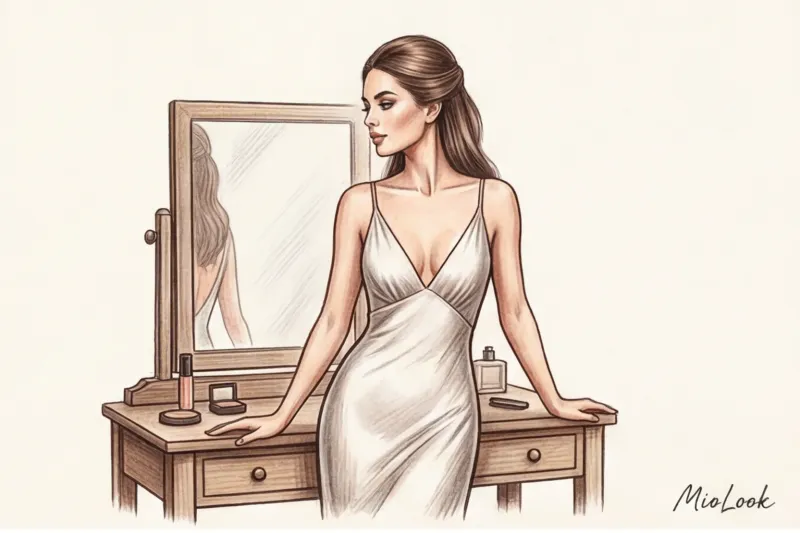
Deep V-neck
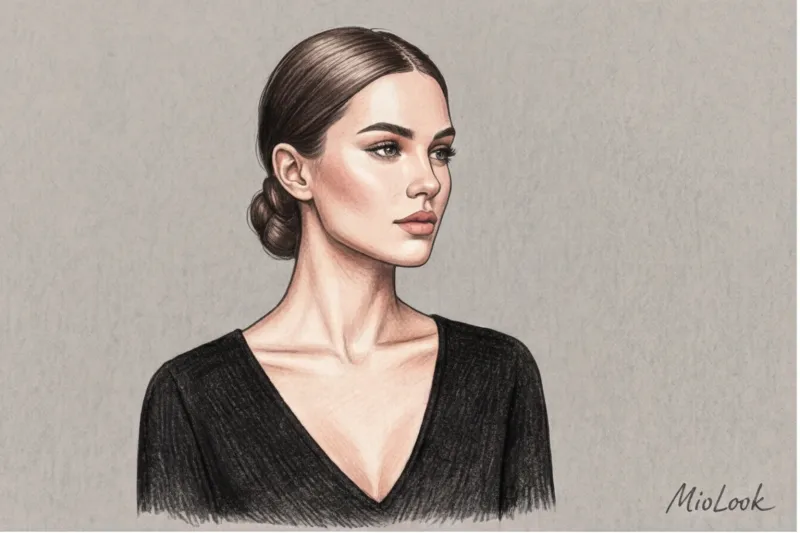
If the neckline reaches the solar plexus (a popular evening option), sleek buns, high ponytails, or a daring slicked-back style for a wet-hair look are ideal. This opens up the neck and allows the eye to move freely downwards.
Limitation: This advice does NOT work if you have an oblong, rectangular face. A sharp, vertical neckline combined with slicked-back hair will make your features too sharp. In this case, loose hair is acceptable, but it should be tucked behind your ears or tossed to one side.
Wide V-neck
For more delicate, wide options (often seen in mid-market dresses like Massimo Dutti or COS), a semi-updo—the classic "malvinka"—is a perfect choice. Soft, textured waves falling down the back and shoulders soften the sharp angles of the neckline while still keeping the collarbones exposed.
Closed neck, stand-up collar and American armhole (Halter)
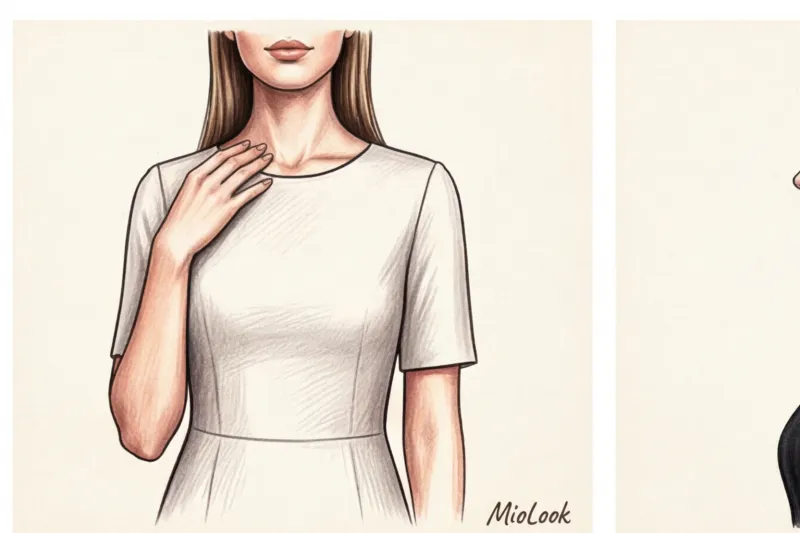
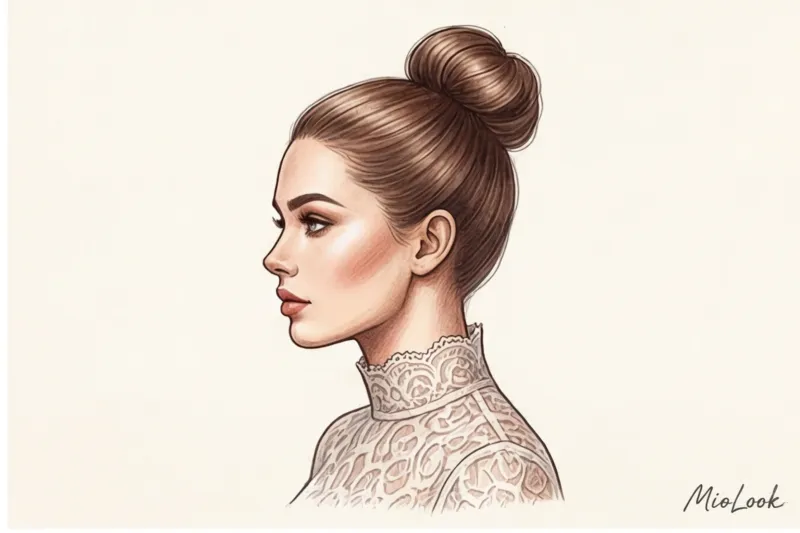
A high-neck or halter neck is a high-risk area. Leaving your hair loose risks creating a "head resting directly on your shoulders" effect. Your neck visually disappears completely.
Over 12 years of working with clients, I've seen my share of beauty disasters, but one stands out. My client chose a luxurious, sequined, halter-neck dress for a gala dinner and insisted on wearing her hair loose and voluminous. The result? By mid-evening, the hair on the back of her head had become a stiff, uncombable tangle.
The fact is that, according to trichologists and textile technologists, friction against synthetic fabrics, stiff lace, or beads severely damages the hair cuticle. Strands become electrified and lose up to 30% of their moisture in one evening due to static electricity.
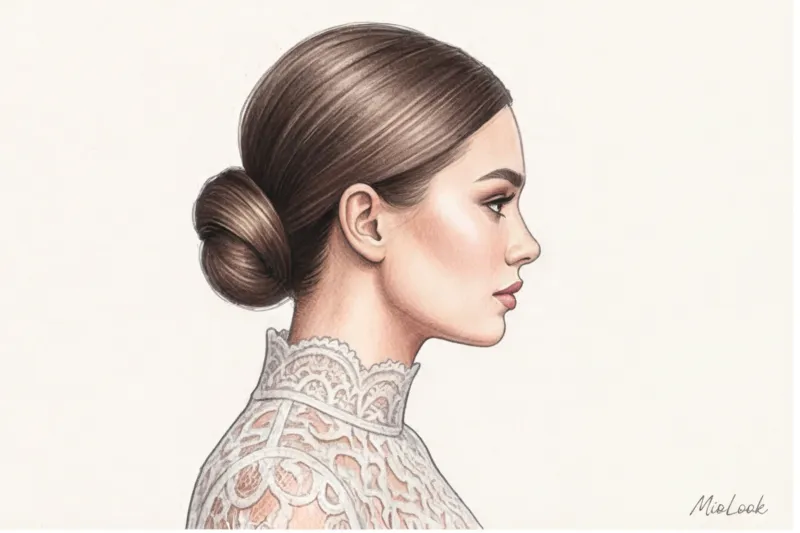
The correct solution: High knots, elegant French twists, or sleek high ponytails. If you're looking for a sophisticated look, check out our selection. hairstyles for business ladies - Many of these hairstyles are ideal for dresses with a stand-up collar.
Boat Neck and Off-Shoulders: Playing with Horizontals
Audrey Hepburn's signature bateau neckline acts as a strong horizontal line, visually broadening the shoulders. The hairstyle's goal here is to either add a saving vertical or maintain the intended retro elegance.
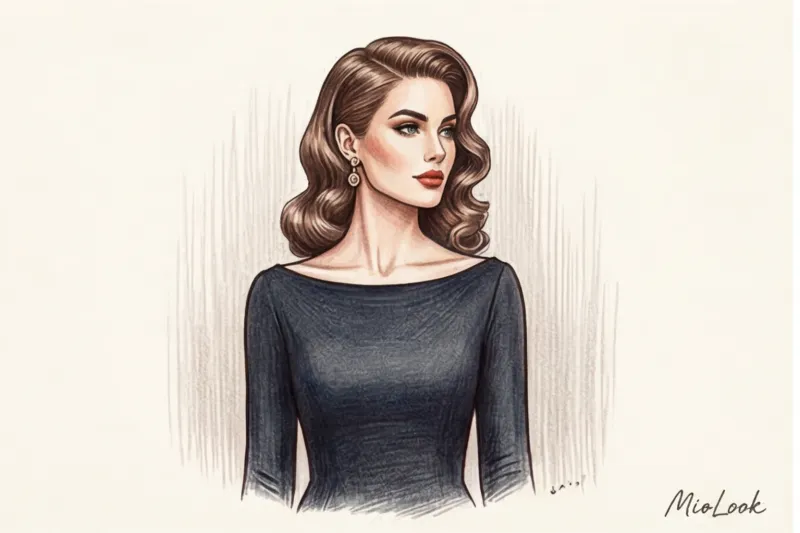
If you let your long hair down and part it symmetrically across your chest, your upper body will become a perfect square. Geometric illusions are merciless. To avoid this, embrace asymmetry: sweep a Hollywood wave to one side or create a low side bun. An open neckline on one side will create the necessary movement.
Open Back: Breaking the Main Stylists' Stereotype
If you open any standard style article, you'll read the same thing: "An open back only requires a hairdo, otherwise why did you even buy that dress?" This is a myth that needs to be busted.
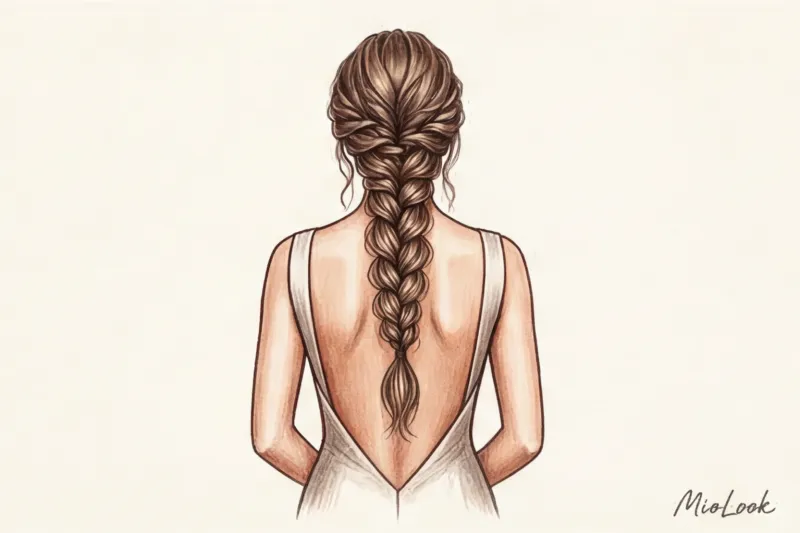
A low, slightly loose braid or a gentle wave falling precisely down the center of a deep back neckline acts as a directional arrow. It visually makes the back even more graceful, and the neckline itself deeper and more dramatic. In this case, the hair acts as an accessory in its own right, replacing a sautoir (back decoration).
When to apply: The choice depends solely on the embellishment. If the back of the dress features intricate lacing, embroidery, or crisscross straps, we definitely tie the hair up to avoid creating visual distraction. If it's a simple, sleek U-neckline on a minimalist silk slip, use the hair to create depth.
Asymmetrical necklines and one-shoulder dresses
The golden rule of working with asymmetrical cuts is to restore visual balance. Nature strives for equilibrium, and our eyes perceive only balanced images harmoniously.
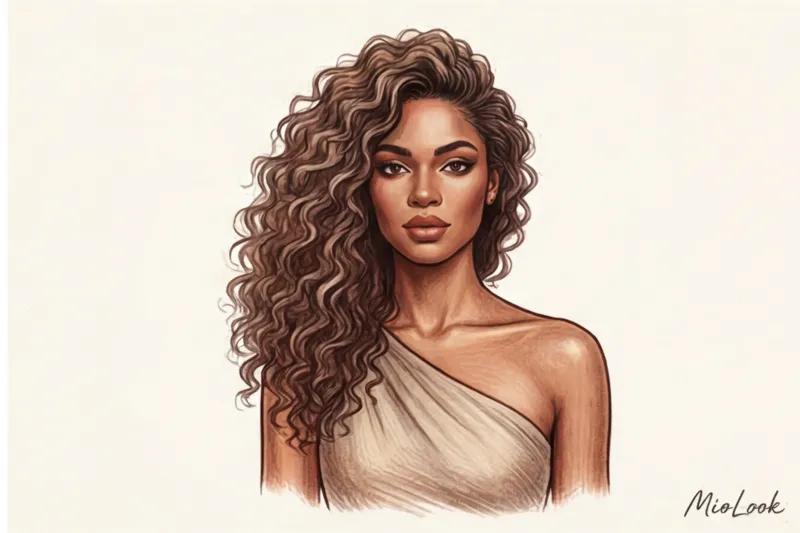
The algorithm is simple: if the fabric covers the right shoulder, we throw all the hair over the left. And vice versa. This allows for an even distribution of visual weight. Sleek, asymmetrical buns, offset toward the exposed shoulder, work great for creating a trendy contrast.
By the way, if you doubt the correctness of the proportions before an important event, try the "smart wardrobe" feature in MioLook The app allows you to assemble your entire look and evaluate the distribution of visual weight before you start styling.
Fabric texture and styling: a subtle but critical connection
As a textile specialist, I always emphasize to my clients that the texture of the fabric dictates the choice of styling products just as much as the cut itself. WGSN research (2024) confirms that modern styling demands complete consistency across materials.
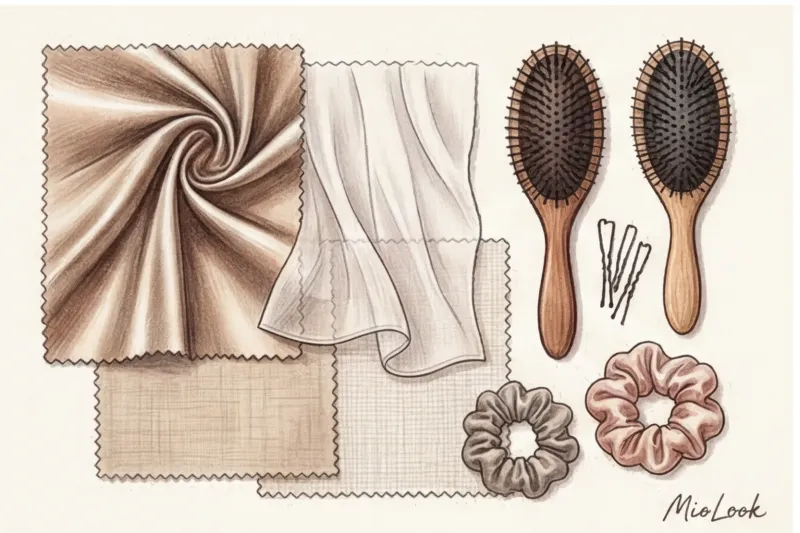
- Smooth silk (from 19 momme) and satin: These fabrics reflect light and look expensive. They call for glossy, well-groomed waves or perfectly sleek buns. Loose, matte curls, treated with a dry texturizer, will instantly simplify the look, creating a contrast between the elegance of silk and the tousled appearance of the head.
- Dense jacquard (from 250 g/m²), velvet, heavy linen: These materials have great physical and visual weight. They will withstand structured, complex hairstyles with precise architectural forms. A light, romantic braid will simply be lost against a backdrop of heavy damage.
- Light chiffon and eco-cotton: The perfect base for airy, tousled buns and beachy waves. The key to sustainable fashion here is to avoid harsh aerosol hairsprays. The lightness of the fabric should be supported by the hair's movement.
Your perfect look starts here
Join thousands of users who look flawless every day with MioLook
Get access — €0.99 onceStylist Checklist: How to Choose a Hairstyle to Match Your Dress in 5 Minutes
To avoid standing in front of the mirror in a panic, learn this short four-step algorithm that I use before every shoot.
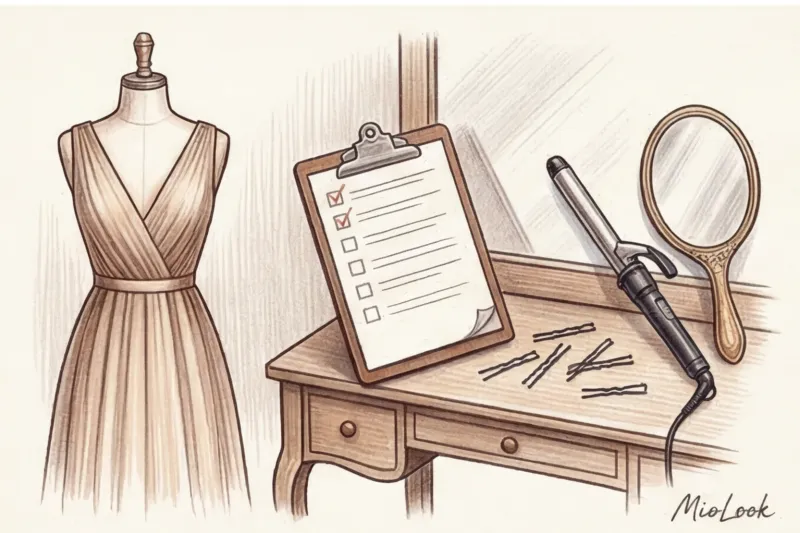
- Step 1: Estimate the volume of the skirt. A sheath dress allows for volume on the head. A full ball gown requires hair that's kept tightly pinned up.
- Step 2: Look at the neck line. If the neck is covered with fabric, the hair should be up. If the deep vertical part is exposed, we can leave the strands half-gathered.
- Step 3: Check the texture. Is the fabric shiny? Add a shine spray to your hair. Is the fabric matte and textured? Use a salt spray or matte paste.
- Step 4: Test in motion. Walk around the room. If your hair gets caught in the sequins on your shoulders or tangled in the intricate lacework at your back, immediately gather it into a bun or ponytail.
Your dress isn't just a piece of fabric, and your hair isn't a separate element with a life of its own. It's a unified system. Stop fighting the geometry of your outfit and start using your hair as the primary tool to highlight the lines of your cut and your individuality.