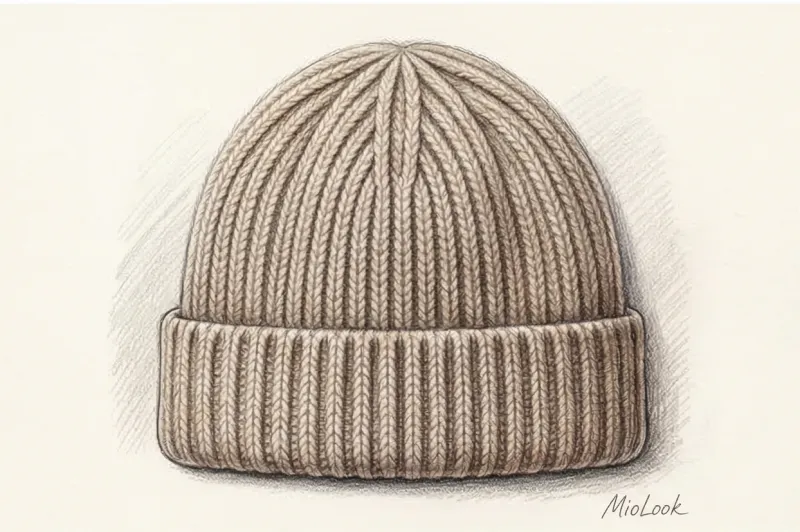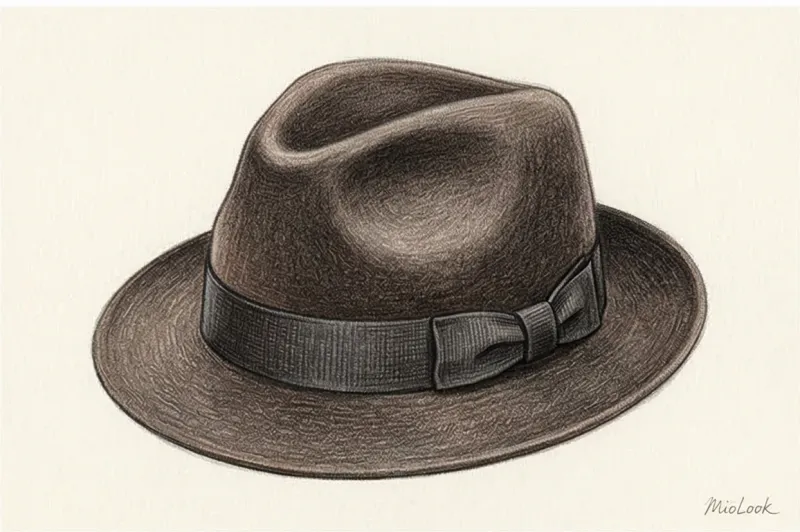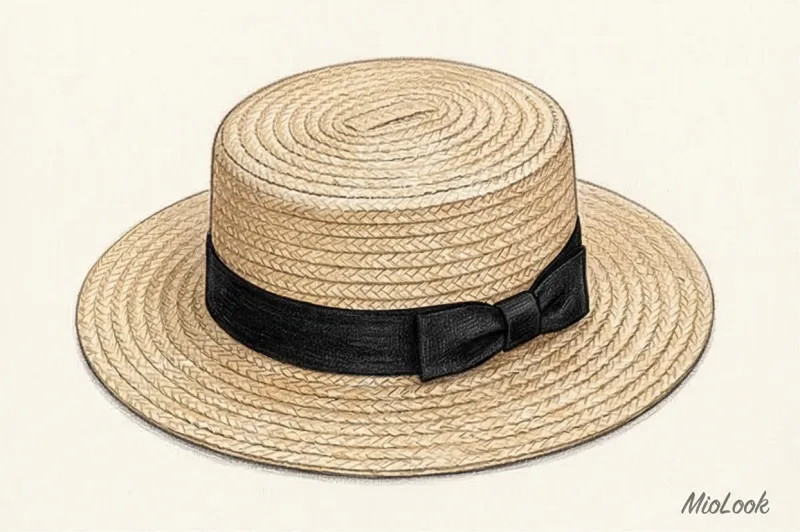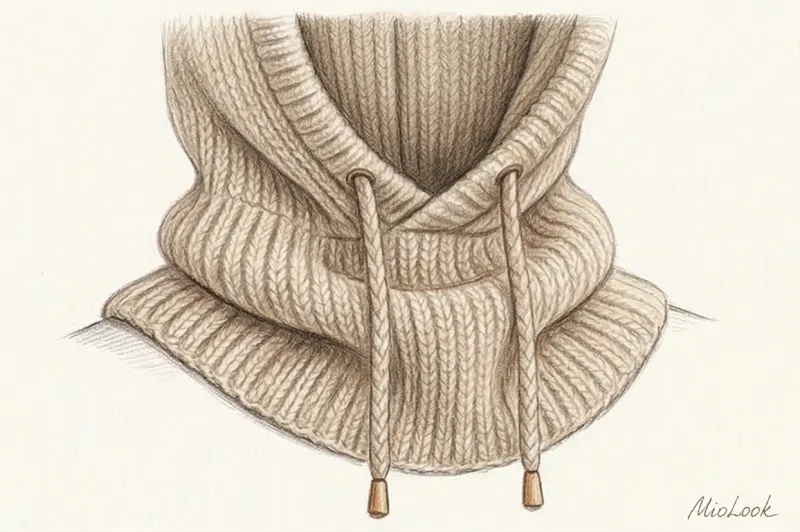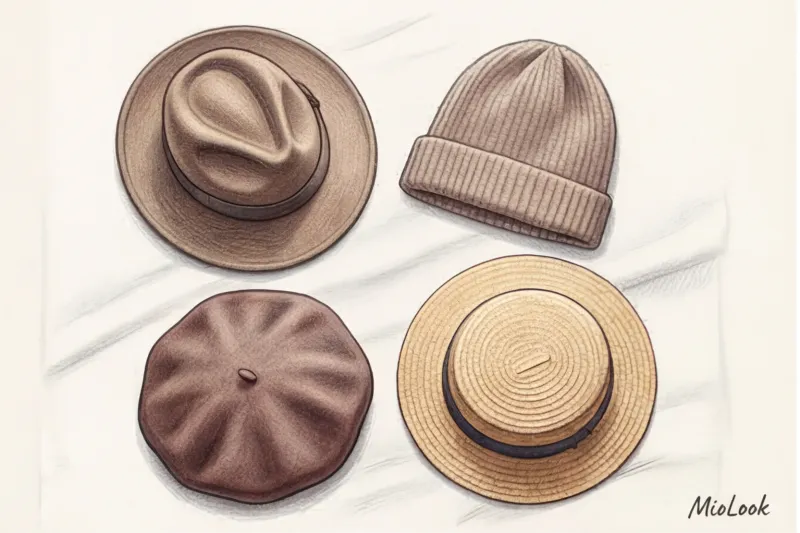
Types of Headwear: A Complete Fashion Glossary
Do you know what my clients' most common complaint is after shopping online independently? "Isabella, I ordered a gorgeous hat, but in real life it looks like an animator's prop." Over 12 years of working as a personal stylist, I've learned that to choose the right hat, types of headwear , we need to stop calling everything "just a hat." The difference between an elegant silhouette and a comical look lies in millimeters and the right terminology.
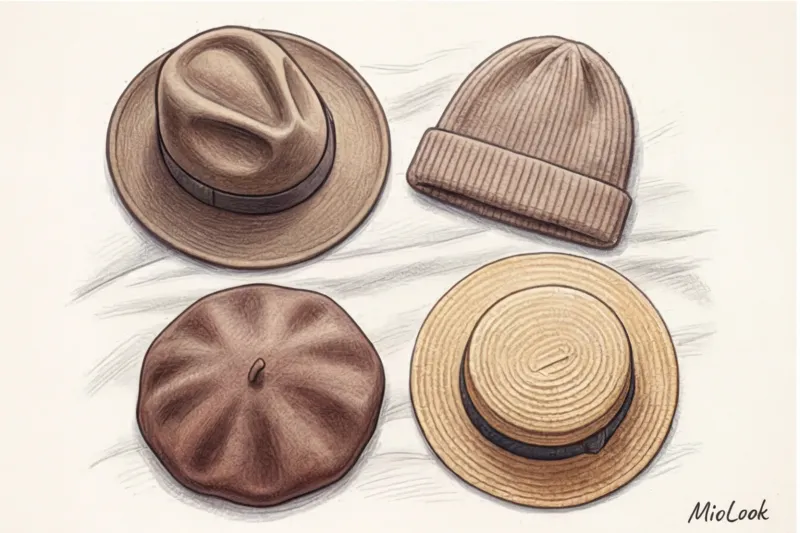
Let's start with the basic anatomy used by professional milliners. Any classic hat consists of three key elements. Tulya (crown) — this is the main part that covers the head; it is its height and shape that determine the character of the thing. Fields (brim) — a protruding part that not only protects from the sun, but also balances the proportions of your figure. And finally, tape — a decorative element at the base of the crown, which often serves as a color accent.
"Understanding these three terms is your most important tool when shopping online. When searching for an accessory on global platforms like Farfetch or Mytheresa, searching for 'hat' will return 5,000 random results. But if you search for 'fedora 8cm brim' or 'teardrop crown', you'll save hours of time and avoid returns."
To avoid confusion in the variety, I propose dividing all headwear into 4 main categories, based on their architecture and purpose. The first is rigid form (felt and straw hats that hold geometry). The second one is soft form (berets, caps that take the shape of the head). The third one is winter (functional knitwear and fur). And the fourth, which has taken over the catwalks in recent years, sport-chic (baseball caps and Panama hats). Let's look at each of them in detail.
Structured Hats: Fedora, Trilby, Boater
When we talk about hard form, Fedora — is an absolute, uncompromising staple. Its main distinguishing feature is the distinctive indentations on the crown: one at the top (often teardrop-shaped) and two on the sides, where your fingers rest comfortably when you take the hat off. The brim of a fedora is usually medium-width and can be slightly drooping or straight. My favorite formula for fall, and it works without fail: fedora + voluminous trench coat + leather loafers = cinematic chic. This look exudes confidence and intellectual sexiness.
Fedora is often confused with her younger sister, Trilby The difference lies in the brim: the trilby's is noticeably narrower and always curves slightly upward at the nape. Historically, it was the hallmark of British aristocrats at the racetrack, but today, the trilby fits perfectly into smart casual. However, as a stylist, I must add an important caveat: the trilby isn't flattering for everyone. If you have wide cheekbones or prominent features, a narrow brim will visually widen your face. In such cases, always opt for a fedora.
For the warm season, the status base is Boater And Panama The boater hat is distinguished by its completely flat crown and stiff, straight brim; this is a nod to Venetian gondoliers and early 20th-century French chic. A true Panama hat (which, incidentally, is woven in Ecuador from toquilla straw) is more flexible. When choosing structured summer hats, the density of the weave is critical. According to WGSN reports for 2024, consumers have become much more conscious, and UPF protection is now the main criterion for choosing a straw hat. The tighter the fibers (a fino weave is ideal), the better the hat protects your skin from UV rays, transforming it from a simply beautiful accessory into an investment in youth.
Soft uniforms: Berets, Caps and Baker Boy
While hard hats create distance and impart severity, soft shapes work to bring people closer together. Beret — This is my personal favorite and the main secret of Parisian and Mediterranean style. It conveys a creative ease and bohemian spirit. But how often do I see women on the street who pull their berets down over their ears, as if they were a shower cap! The main rule of berets is how to properly angle them. It should never sit exactly in the center. Push it to one side, revealing the hairline on the other side, or pull it back slightly toward the back of the head. Asymmetry is what makes a beret stylish.
They bring a completely different mood Kepi (Newsboy) and caps Baker boy (newsboy cap). This is a striking example of how a strictly masculine work accessory from the early 20th century became a symbol of feminine audacity. The stiff peak, combined with the voluminous, soft crown, made up of eight wedges, creates excellent volume at the top of the head.
Many people are afraid of caps, considering them too "dressy," but the secret is in the styling. Never wear them with overtly masculine or military-style pieces—you risk looking like a character from Peaky Blinders. Instead, try my favorite combination: a chunky knit sweater + a silk midi skirt + a cap = a play on contrasts. The rough texture of the cap perfectly highlights the delicacy of the silk. If you're unsure whether this combination will suit you, try putting together the look in MioLook — the virtual fitting room perfectly shows how the proportions are balanced.
Modern Casual: Baseball Caps and Bucket Hats
Just five years ago, wearing a baseball cap anywhere other than the gym or a morning jog was considered bad form. Today, thanks in large part to the shows of Celine and Balenciaga, baseball cap The trouser suit is no longer just a sporty, utilitarian item. It's become a way to ground overly formal or formal looks. When my client wears an expensive pantsuit, it can look too formal. But add the right detail, and the look comes alive. Remember this formula: an oversized menswear jacket + a basic baseball cap (without flashy logos) + chunky sneakers. This is the epitome of modern street style, looking both expensive and effortless.
No less interesting transformation was experienced Bucket hat (fisherman's bucket hat). From activewear and '90s streetwear subculture, it confidently made its way onto the runway. Prada's iconic nylon bucket hat forever changed the status of this accessory.
Today, the choice of materials dictates the season and mood of the look. In summer, we choose heavy cotton, denim, or raffia. In fall and spring, textures come into play: bucket hats made of eco-leather, corduroy, or even faux fur (shearling). A leather bucket hat provides excellent protection from drizzle and adds a stylish touch to any basic trench coat or overcoat. When buying, pay attention to the width of the brim: it should slightly cover the eyebrow line, creating a touch of mystery, without obstructing visibility. A good mid-range eco-leather bucket hat will cost you around €60-120, making it a great investment for your transitional wardrobe.
How to choose the right hats for your face and body shape
"Isabella, I don't look like a hat!" If I had a euro for every time I heard that phrase, I'd already have a villa on the Costa Blanca. Let's dispel this limiting fashion myth once and for all: there are no women who don't suit any type of headwear. There are only those who haven't yet figured out the geometry of their face and body. Choosing the right accessory isn't an innate gift, but the pure mathematics of lines, proportions, and an understanding of your natural features.
Before we move on to analyzing the portrait zone, let's discuss a basic stylist rule that should never be broken. Remember: the width of the brim of the hat should never exceed the width of your shoulders If this rule is ignored, you will visually lose height, appear shorter, and your head will look disproportionately large.
I had a particularly revealing case in my practice. My client, Marta, came to me with an inverted triangle figure (broad shoulders, narrow hips). She had always avoided statement hats, fearing they would draw attention to her massive shoulders. I suggested a counter-intuitive approach and chose a thick felt hat with a wide brim (about 10 cm) in a rich burgundy shade. The effect was stunning: the wide brim created a perfect geometric counterbalance. Her silhouette instantly lengthened, gained harmony, and her shoulders appeared more delicate and graceful against the large hat.
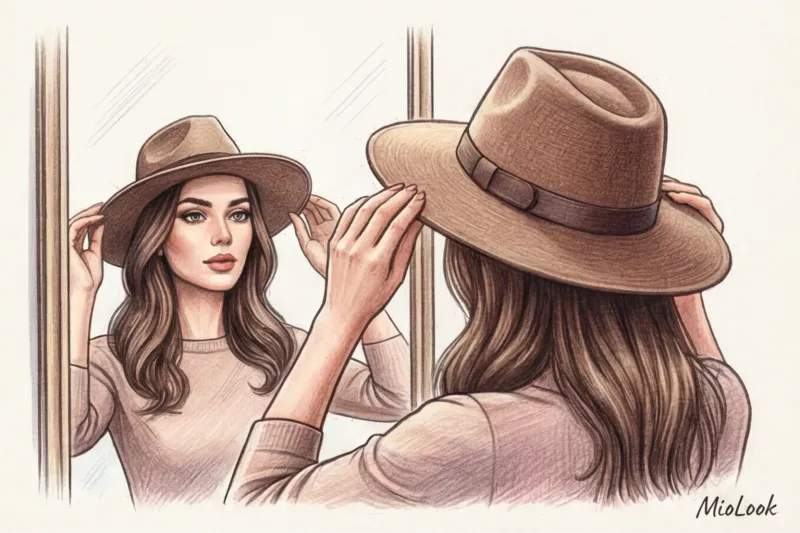
Now let's move on to the rules for different face shapes. The principle of compensation is at work here—we give the face what it naturally lacks.
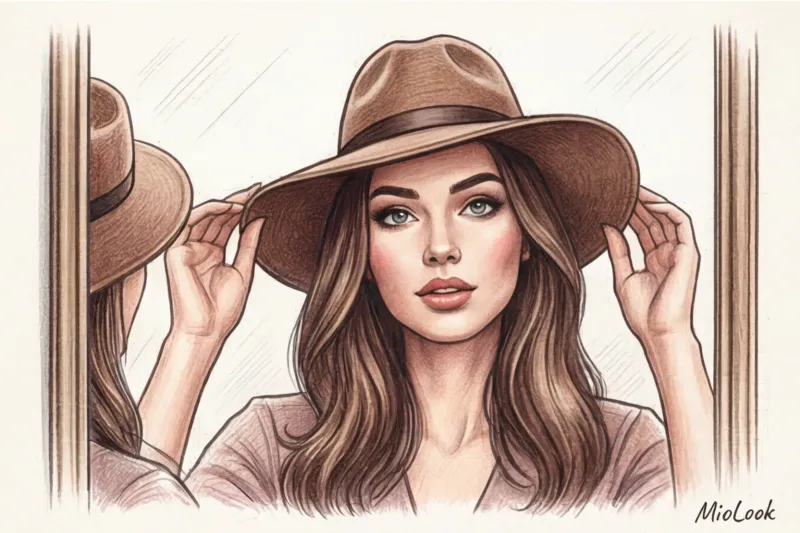
- Round face: If you have soft cheeks and a subtle chin, your main goal is to add angles and vertical lines. Rounded shapes are absolutely out of the question (no bowler hats). Geometry and asymmetry are essential. A classic fedora with a high crown and crisp, graphic dents is the ideal choice. If you choose a beret, forget about wearing it centered. Create a bold diagonal angle by tilting it to one side—this diagonal line will act like a sculptor, visually elongating the oval shape.
- Long face: Here, the exact opposite strategy is needed. Avoid high crowns, which will visually lengthen the face. Your ideal investment is a boater hat with a completely flat crown. This shape creates a strong horizontal line that visually cuts through the length of the face. For modern casual wear, deep bucket hats, pulled just below the brow line, work great—they elegantly conceal the height of the forehead.
- Square face: For a face with a strong jaw and prominent cheekbones, look for softening elements. Avoid hard lines, precise geometry, or sharp creases on the crown. Soft lines, smooth transitions, and a touch of casualness are your trump card. Consider floppy hats with wide, wavy brims. A soft, flowing wave of felt or straw will distract attention from the angularity of the lower third of the face and add a Mediterranean, relaxed feel to your look.
"To avoid buying accessories blindly, I always recommend trying them on in front of a full-length mirror, or better yet, taking a photo of yourself. A camera is more objective than our reflection."
A great way to practice your visual acuity is to upload photos of yourself wearing different types of hats. the "smart wardrobe" feature in MioLook By analyzing your looks side by side in the app, you can objectively assess your proportions: where the brim cuts off your height, and where the crown shape perfectly balances your features.
Access to MioLook for €0.99 — one-time payment
A smart AI stylist will analyze your proportions and select the perfect look based on your individual features.
Get access — €0.99 onceHeadwear and Personal Branding: Status Accessories for Experts
In 2023, a client, a sought-after public speaking coach, approached me. Her main request was: "At large international conferences and networking events, I get visually 'swept away' by the crowds of identical beige trench coats and formal business suits. I want to be remembered by the audience even before I begin speaking."
We added just one detail to her basic look—an emerald fedora made of thick rabbit felt (costing around 250 euros, a brilliant investment in recognition). The effect exceeded all expectations: within a couple of months, she was recognized in professional circles as "that charismatic girl in the green hat." In my experience, this is the best proof that well-chosen types of headwear — it’s not just seasonal protection from bad weather, but a powerful tool for building a personal brand and your visual business card (signature piece).
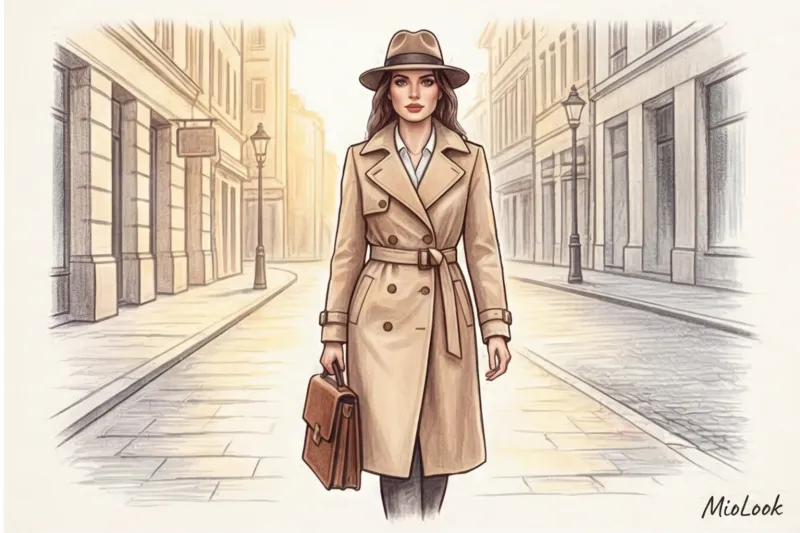
There's an immutable rule in style psychology: the geometry of your accessories dictates how others perceive your character. Different shapes send completely different hidden signals:
- Hard felt hat (fedora, boater, trilby): The crisp crown and rigid brim subconsciously convey structure, control, discipline, and unquestionable authority. It's the ideal choice for lawyers, financial consultants, or top managers who need to establish a sense of professional respect from the very beginning.
- Soft forms (beret, textile panama, cap): The absence of a rigid framework sends the message: "I'm open to dialogue, flexible, and think outside the box." Soft lines are associated with creativity, empathy, and accessibility. It's a wonderful bonding tool for psychologists, designers, and creative professionals.
"Your hat speaks for you even before you've even said hello. Choose it as carefully as you choose your words for your first pitch."
This effect is especially evident when integrating hats into wardrobes for outdoor public speaking engagements and professional street style photo shoots. As a stylist, I often prepare speakers for such events, and a hat serves several practical and image-building purposes.
First, it physically keeps the audience's attention focused on your portrait area. Secondly, it protects your hairstyle from sudden wind or humidity (believe me, nothing ruins a great photo like disheveled hair stuck to your face). According to research on visual content perception, a contrasting accessory in the portrait area increases speaker memorability by 40%.
However, there's an important professional tip for outdoor photography: if you wear a wide-brimmed hat on a sunny day, be careful that it doesn't cast a harsh, black shadow over your eyes, obscuring your gaze. The solution? Slightly push the hat back or choose a hat with an upturned brim.
To find your perfect "calling card," you don't have to buy half the boutiques' selection. I always recommend my clients first take photos of their current outerwear, upload them to MioLook and visually create sets with different hat shapes. This allows you to understand, without spending extra money, what will enhance your personal brand: strict geometric shapes or creative softness.
Headwear Accessories: The Art of Styling
Let's be honest: designer hats from renowned fashion houses like Maison Michel or Philip Treacy can cost anywhere from €800 to €1,500. But as a practicing stylist, I'll let you in on a professional secret. You don't have to spend that much to look luxurious. Customization is the key to transforming a basic piece into something exclusive. Different types of hats serve as a magnificent canvas for your personal creativity.
My favorite styling trick, which I often use on shoots, is to take a high-quality but completely understated felt hat for 100 euros and add a vintage brooch found at an antique market for 50 euros. The visual value of such an accessory instantly skyrockets to luxury levels. However, geometry is crucial here. Vintage brooches are never pinned directly in the center of the forehead—that would trivialize the look and look comical. The correct placement for the accent is on the side, at the junction of the crown and brim, right above the grosgrain ribbon. If there's no ribbon, the brooch is pinned a couple of centimeters above the brim, preferably on the left side (historically, this was the European etiquette).
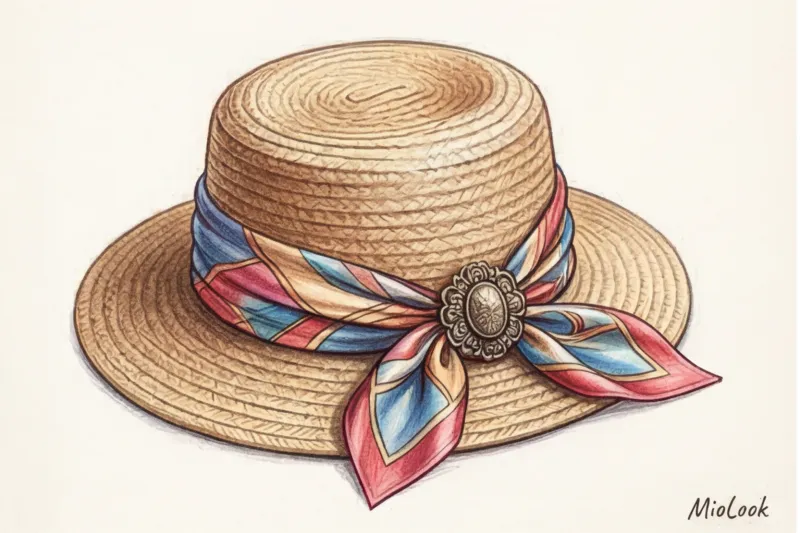
The next level of mastery is silk scarves (bob). The secret to a luxurious look lies in the contrast of textures: matte straw or thick felt are perfectly accented by the glossy sheen of silk. Remove the standard factory band from your Panama hat or boater and wrap a vibrant silk scarf (70x70 cm) around the crown. Leave the ends loose, adding a Mediterranean-inspired, relaxed touch to your silhouette. And for windy days, try the iconic Grace Kelly-style technique: tie the scarf directly over your hat (this works especially well with soft shapes and wide-brimmed styles) and secure it in an elegant knot under your chin. This not only looks cinematic but also secures your hairstyle.
To help you remember which scarf goes perfectly with a particular hat, I highly recommend digitizing your accessories. Save your finished combinations in MioLook - This will save you a lot of time in the morning when getting ready.
Access to MioLook for €0.99 — one-time payment
Start creating perfect images with the help of artificial intelligence
Get access — €0.99 onceAnd finally, veils. Many clients mistakenly associate them exclusively with retro drama. It's time to break that stereotype! A modern take on the veil is bold and ironic, not overly theatrical. For evening and cocktail occasions, I suggest micro-veils made of stiff French netting, reaching just to the bridge of the nose. The key styling rule: if you're wearing a veil, the rest of your look should be underscored by its modern, even masculine edge. A tailored tuxedo with minimalist stilettos, and a simple pillbox hat with a micro-veil—that's the formula for a flawless evening outfit that's guaranteed to turn heads.
Etiquette: When should a woman remove her head covering?
According to the authoritative British etiquette guide Debrett's (2023 edition), the rules for wearing head accessories remain one of the most confusing areas of modern dress codes. I regularly receive panicked messages from the cloakroom of an upscale restaurant: "Isabella, do I have to take off this fedora or can I keep it on at the table?" To clear up any confusion, let's break down the mechanics of these rules.
The historical context explains everything. Why are male and female etiquette rules so radically different? For centuries, a man's gesture of removing his hat signaled the absence of a hidden weapon and vulnerability (an echo of the knightly era and the removal of a helmet). For women, however, the situation was different: hats were attached to complex, multi-layered hairstyles with dozens of long pins. Removing them in a party meant literally destroying the entire structure of the head. Therefore, social etiquette allowed women to leave their hats indoors, recognizing them as an integral part of their attire.
Today, the main rule I impart to my clients is this: define the function of your item. There is a clear distinction between utilitarian and decorative accessories. Utilitarian types of headwear — these are knitted winter hats, warm hoods, or fur hats with earflaps, whose only purpose is to protect you from the cold outside. We take them off Always when entering any room. But decorative pieces—an elegant pillbox hat, a veil, a fascinator, or a structured boater—are the architecture of your look. They stay with you inside.
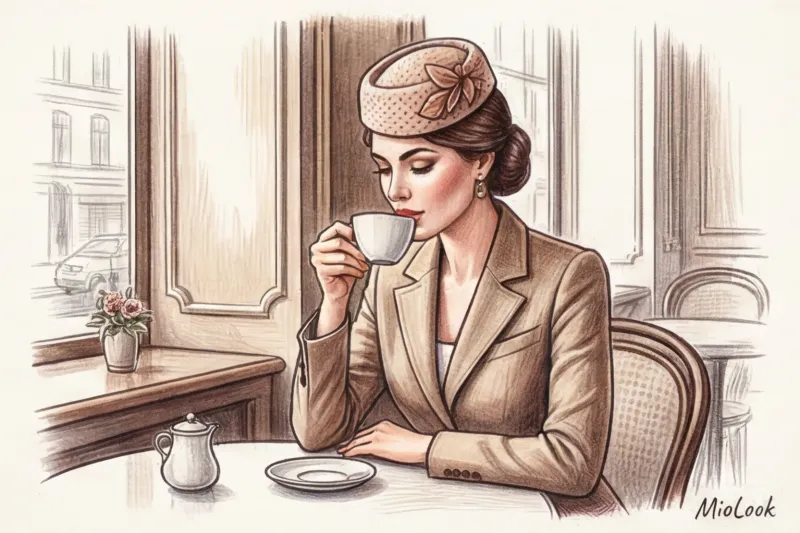
How do these modern rules apply in specific locations? In a restaurant, you have every right to wear an elegant hat during lunch or brunch. However, after 6:00 PM (the transition to evening dress code), daytime hats with brims are customarily removed. At the theater or opera, the strict rule of "respect for one's neighbor" applies: even if your hat is a 1,200-euro couture masterpiece, if its crown or brim obstructs the view of audience members behind you, it must be checked into the cloakroom. The only exception is miniature fascinators.
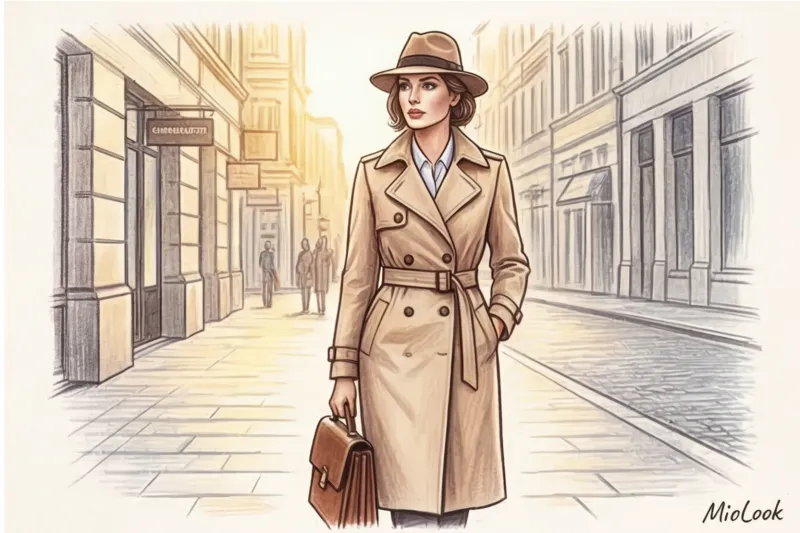
In the office and at business meetings, norms today dictate maximum openness. Wide brims cast shadows on the eyes, creating a psychological barrier and interfering with eye contact. During important negotiations, I strongly recommend removing any large hats to convey a clear message.
"In the business world, your accessory shouldn't speak louder than your argument. If your hat prevents your interlocutor from seeing your facial expression, take it off."
And here we come to the most strict taboo. Sports caps: the strict rule is "always remove" in a business setting. This is non-negotiable. Even if you're wearing a limited-edition baseball cap from Loro Piana or Balenciaga made of premium cashmere, it's unacceptable in a business context, in the office, or at a formal dinner. Leaving a baseball cap on is seen not as a fashion statement, but as a banal disregard for those present.
To avoid getting confused about these nuances before an important outing, I recommend separating accessories by their purpose right away. When uploading your purchases to MioLook , simply add the tags "street" or "indoor" to them. This will save you a ton of time and stress when putting together the perfect look for a social event.
Checklist: How to integrate new headwear into a capsule collection
According to an analytical report from the Lyst platform for early 2024, over 60% of designer hats purchased online are worn only once, after which they end up on the top shelves of wardrobes. Why is this? The problem isn't face shape or boldness. The problem is a lack of system. When you add new types of hats to your everyday arsenal, they shouldn't exist in a stylistic vacuum—they need to be skillfully integrated into your current base.
To ensure that a purchase doesn't become just another "museum piece" in a closet, I've developed a step-by-step implementation algorithm for my clients.
Step 1: Start with a neutral base
Don't buy a statement fuchsia hat with feathers if it's your first time. I always insist: your initial investment should work for you, steadily reducing the cost per wear. A camel-colored fedora or a classic black baker boy cap are the perfect starting point.
These two options will cover 80% of your transitional looks. Beige perfectly highlights the portrait area and visually refreshes the face, while black adds a graphic touch and brings together even the most relaxed casual look.
Step 2: Choose the right outerwear
The most common mistake I see on the streets of European capitals is trying to pair a structured hat with the voluminous hood of a down jacket. This creates a volume conflict at the neck, the brim bumps into the collar, and the hat constantly slides down onto the forehead.
Remember the rule: strong shapes require smooth shoulders. Your ideal pairing is a double-breasted wool coat without a hood (in the spirit of a simple classic) or a structured classic trench coat. If you wear a voluminous scarf, tie it in a low knot, leaving some space around the neck.
Step 3: Agree on invoices
The secret to a luxurious look lies in the tactility and consistency of materials. Smooth straw (boater) contrasts beautifully with coarse linen or crushed cotton in the summer heat. Dense rabbit felt, however, requires support from cashmere, tweed, or thick, smooth leather.
Never mix overtly summery materials with heavy winter clothing. A straw hat paired with a drape coat doesn't look eclectic, but simply awkward, betraying a lack of foresight.
Step 4: Practice in front of a mirror
Buying a hat is only 10% of the success. The other 90% is how you wear it. Take 15 minutes, stand in front of a full-length mirror, and find your perfect angle. A beret pulled back conveys a relaxed bohemian air, while a beret pulled asymmetrically over one ear exudes daring Parisian chic. A fedora pulled slightly over the eyes adds a touch of cinematic mystery.
Record your successful combinations: take a photo of them on yourself and upload them to the "smart wardrobe" feature in MioLook This way, you'll digitize your ideas and no longer waste your mornings agonizing over an open closet.
Investing in Form: Storage Rules
Imagine this: you bought a luxurious fedora made of premium felt for 350 euros, threw it on a shelf, and a month later its brim has become wavy and the crown is irreversibly deformed. As a practitioner, I implore you: never hang felt hats on sharp hooks in the hallway—their own weight will pull the material out.
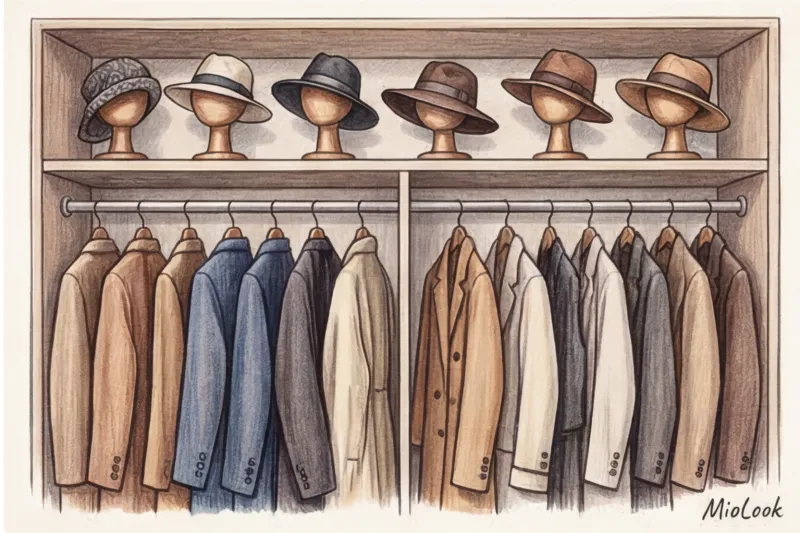
Statement accessories demand respect. How should hats be stored to keep them in shape? Only in special hat boxes (rigid cardboard or coffered). They should be stored crown-side down if the brim is upturned, or on a completely flat surface. For berets, caps, and soft Panama hats, special wooden or foam hat holders are ideal; they will maintain the hat's shape during the off-season.
Your ideal image begins Here
Join thousands of users who look flawless every day with MioLook.
Get access — €0.99 onceA hat isn't just a utilitarian item to protect yourself from the wind or hide a bad hairstyle. It's a powerful styling tool, the finishing touch that brings the entire look together, transforming a simple "set of clothes" into a personal statement. Don't be afraid to experiment, try on unusual shapes, make mistakes in the fitting room, but find your own. After all, true elegance begins where the fear of being noticed ends.
Guide Chapters
What is a snood in clothing: types, features, and how to wear it
What is a hobo bag: description, types, and styling rules
Aviator sunglasses: what they are, their history, and frame types
Stud earrings: what they are, types, and features
Stud earrings are the most basic and popular type of earrings. Learn how they're constructed and which types of clasps are considered the most secure.
Fedora Hat: What It Is, Its Distinctive Features, and Style
What is a balaclava: meaning, types, and combinations
Baguette bag: what it is, the history of its creation, and what to wear it with
What are mittens: types and styling rules
What are ear cuffs: types, features, and styling rules
Congo earrings: what they are, types, and what to wear them with
What is a baktus: description and features of a knitted scarf
Messenger bag: what it is, its features, and what to wear it with
Wayfarer sunglasses: what they are, the history of the model, and what to wear them with
Satchel bag: what it is, its features, and what to wear it with
Women's harness: what it is, types, and what to wear it with
What Is an Anklet: Types, Shapes, and Styling Rules
A complete guide to anklets, covering their history, popular shapes, and essential rules for styling them with different footwear and clothing.
What is a boater: history, features, and what to wear it with
Saddle bag: what it is, its distinctive features, and what to wear it with
Phalangeal rings: what they are and the main types
What is twilly: definition and ways to style the accessory
Sash belt: what it is, features, and styling rules
Cloche hat: what it is, its history, and what to wear it with
Tishade glasses: what they are, types, and what to wear them with
Chandelier earrings: what they are and how to wear them
What Is An Arafatka: Features, History, and Styling Guide
Explore the history, distinctive features, and modern styling methods of the traditional Middle Eastern scarf known as the arafatka.
Panto frames: what they are, their distinctive features, and how to wear them
Minaudière: What it is in fashion, photos, and style rules
Sautoir: What It Is and Types of Necklaces | Fashion Glossary
What Is a Muff in Clothing: Types, History, and Styling
A complete guide to the muff, exploring its rich history, modern variations, and how to style this elegant winter accessory.