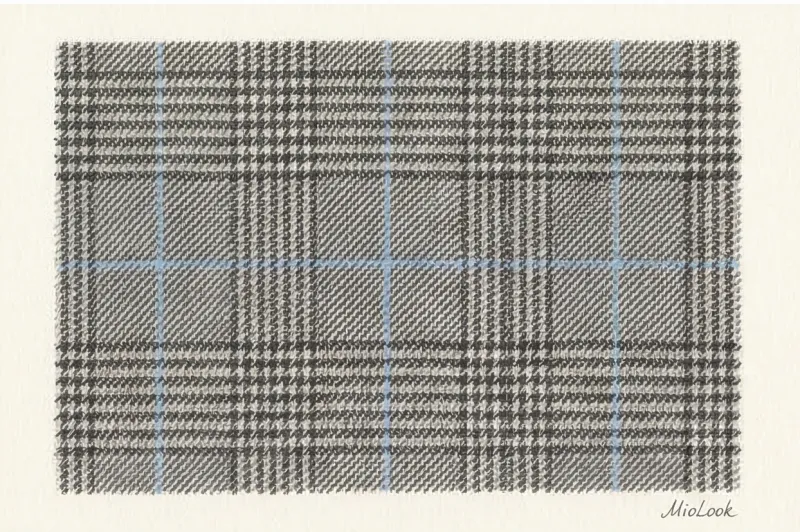
What is glen check print?
Glenchek (Prince of Wales) — is a classic geometric fabric pattern that forms large squares by intersecting light and dark stripes, within which a small houndstooth pattern (pie de poule) appears.
Historically, the pattern originated in Scotland in the 19th century in the Glenurquhart valley, from which it received its original name (Glen check). A second common name, "Prince of Wales check," was given to the pattern by Edward VIII (Duke of Windsor). In the 1920s, he made this Scottish pattern a popular element of men's formal and formal wardrobes, from where the print later migrated to women's fashion.
Distinctive features of the ornament
Glen check is based on a complex twill weave. Groups of small stripes intersect at right angles, creating the visual effect of large and small blocks with scalloped edges.
Classic glen check is not applied using textile printing, but is created by interweaving pre-dyed fibers in wool, tweed, or worsted fabrics. The traditional color palette includes achromatic shades: black, white, and various shades of gray.
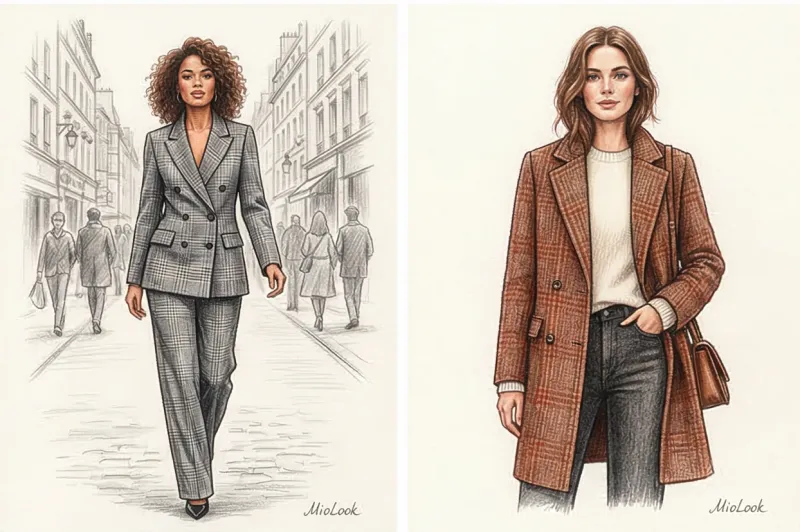
The key difference between the Prince of Wales sub-style and basic glen check is the presence of a thin colored thread (overcheck) applied over the main gray-black pattern. This contrasting thread is most often red, blue, pink, or brown.
What to combine with
In a business wardrobe, a pantsuit or pencil skirt in a glen check pattern is combined with solid-color basics: a white shirt, a silk blouse, or a smooth black turtleneck.
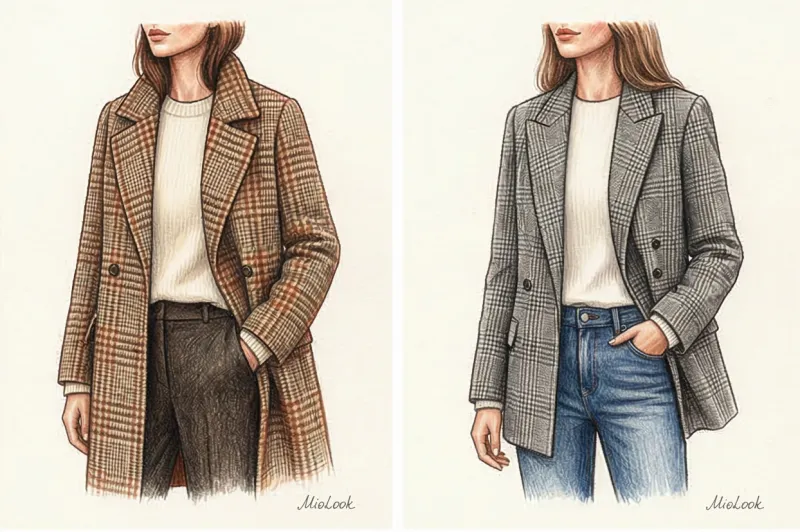
For a smart-casual look, a structured Prince of Wales check jacket serves as a statement piece. It pairs perfectly with straight-leg blue jeans, a basic T-shirt, and leather loafers.
It's recommended to match colored details in an outfit to the contrasting thread (overcheck) present in the fabric. For example, a burgundy sweater or bag would complement a gray suit with a burgundy crossover stripe.
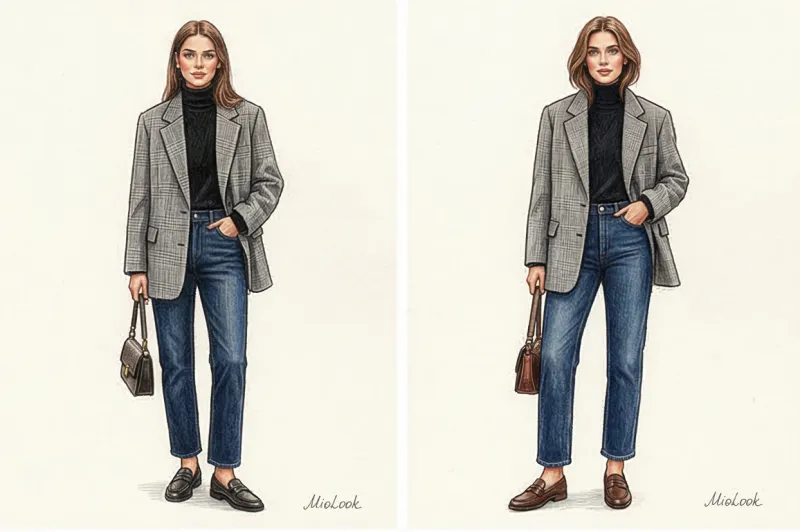
Glen check requires caution when pairing with other prints due to its highly graphic nature. It's safest to pair it with very fine stripes on a shirt or subtle polka dots on accessories, avoiding pairing it with other bold checks.