
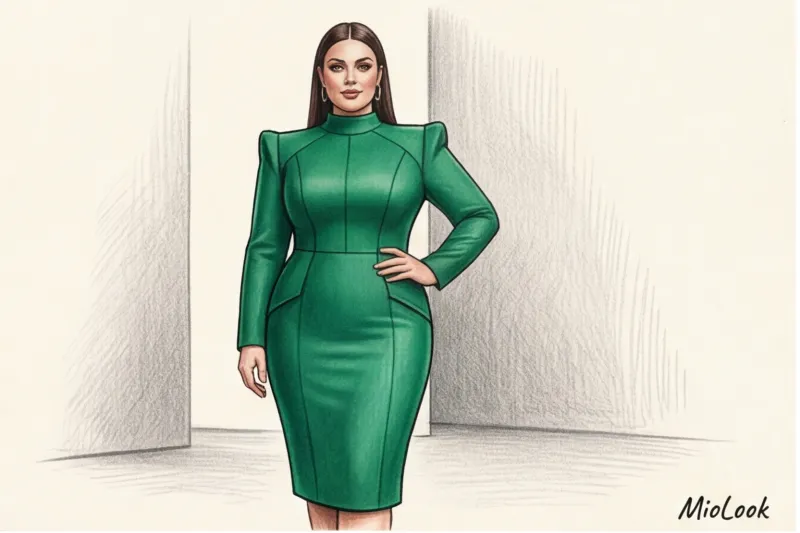
Backstage at the Christian Siriano show at New York Fashion Week in 2019, I witnessed a scene that forever changed the way I approach styling. Siriano is one of the few designers who masterfully works with plus-size figures. While other brands tried to hide curvy models in shapeless black robes, he dressed them in fuchsia and emerald. The secret wasn't in the color, but in the heavy, almost architectural fabric that sculpted the silhouette. And if you're still wondering, What dresses suit plus size girls? Forget the advice to "wear black and hide flaws." We'll be talking about physics, the density of materials, and the optical illusions of tailoring.
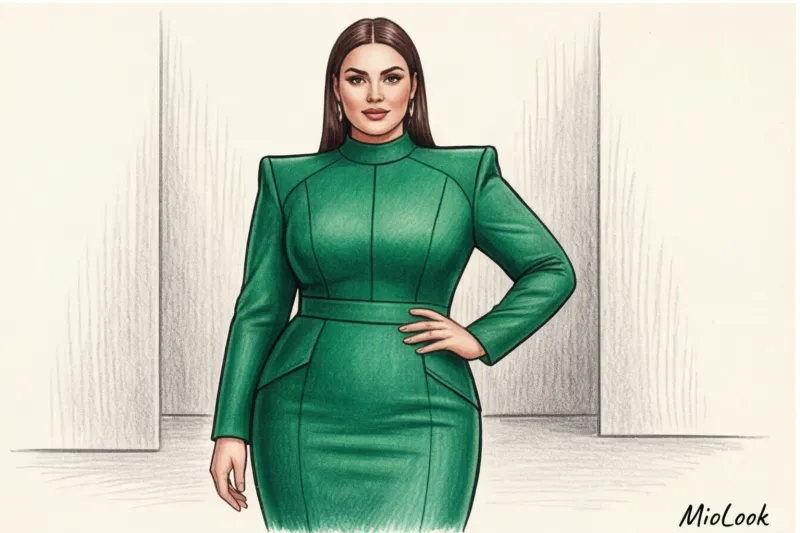
We talked about the basic principles of creating such a wardrobe in more detail in our the complete plus-size style guide Here we'll take a detailed look at the anatomy of the perfect dress.
The Architecture of Cut vs. the Myth of Black: The Main Rule
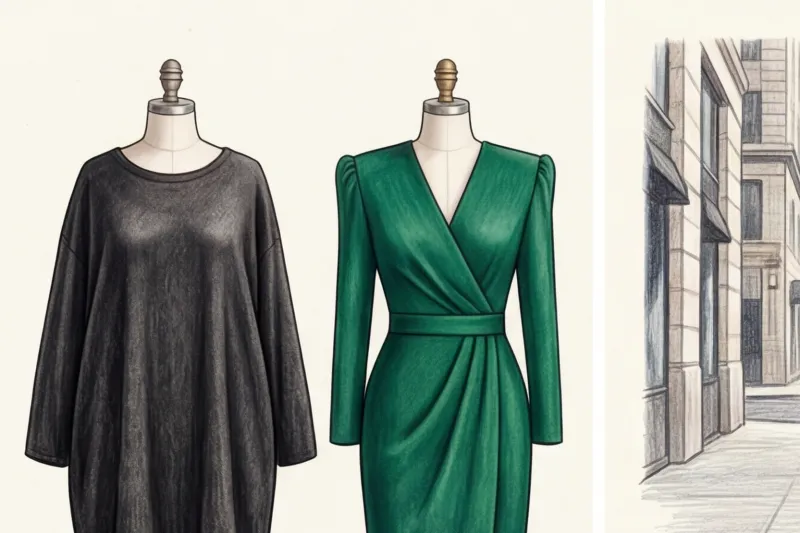
The "hide in a dark robe" paradigm is outdated. Moreover, it visually expands the figure. Imagine building a house. You wouldn't hang wallpaper without a rigid frame, would you? The same thing happens to your body when you wear thin knitwear.
Black doesn't create a slimming effect if the dress is made of flimsy fabric. Thin viscose will act like a second skin, mercilessly highlighting even the slightest imperfections, creases from underwear, and contours of the body. It's not the color that slims. It's the density of the material and the design of the cut.
In plus-size styling, we use the concept of GSM (grams per square meter). The ideal fabric density for figure-shaping dresses ranges from 250 to 400 g/m². Anything thinner than 200 g/m² requires heavy-duty shapewear or simply won't work.
One of my clients, Anna, came in for a wardrobe review wearing her favorite black sundress made of thin jersey. She was convinced that black made her look smaller. As an experiment, I suggested she try on a ripe cherry-colored midi dress made of thick cotton with elastane. The difference was dramatic. The bright, yet thick dress with darts visually made Anna look two sizes slimmer because it held its shape , and did not follow the contours of the body.
What dresses suit plus-size women: 5 styles that always work
When choosing the perfect silhouette, it's important to remember the "air" rule. The optimal gap between your body and the fabric should be 2-3 cm. The dress shouldn't dig into you as you move, but it shouldn't hang baggy either. It's the structural elements—a crisp shoulder line, a defined collar, and accent cuffs—that pull the look together and establish the right proportions.
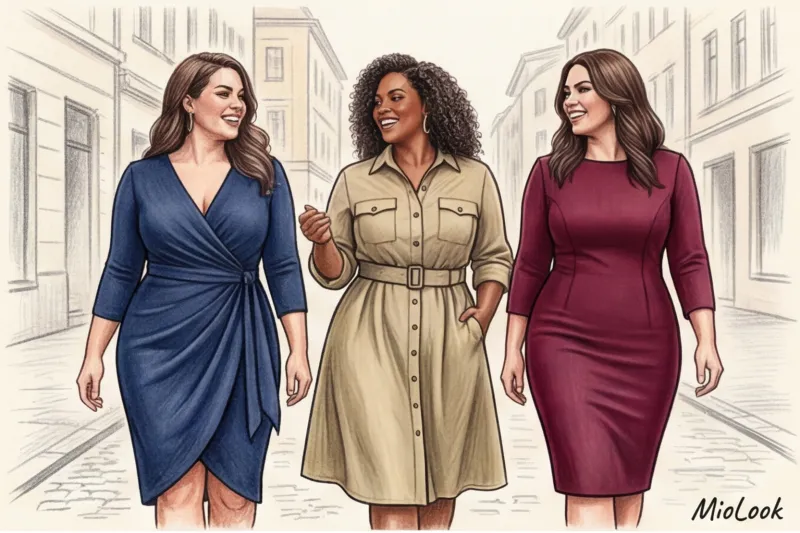
The Wrap Dress: Diane von Furstenberg's Ingenious Invention
Created in the 1970s, the wrap dress is a mathematically precise masterpiece. It employs the classic Müller-Lyer illusion. The diagonal line of the wrap cuts through the figure's volume, artificially creating a waist where it should be, even if you have a naturally apple-shaped figure.
In addition, a V-neck of the correct depth exposes the collarbones and visually lengthens the neck by 3-5 cm, lightening the portrait area. But there is an important limitation: This only works with the right fabric. If you choose too-thin jersey, the wrap dress will instantly turn into a dressing gown. Look for styles made of thick crepe, suiting viscose, or heavy silk.
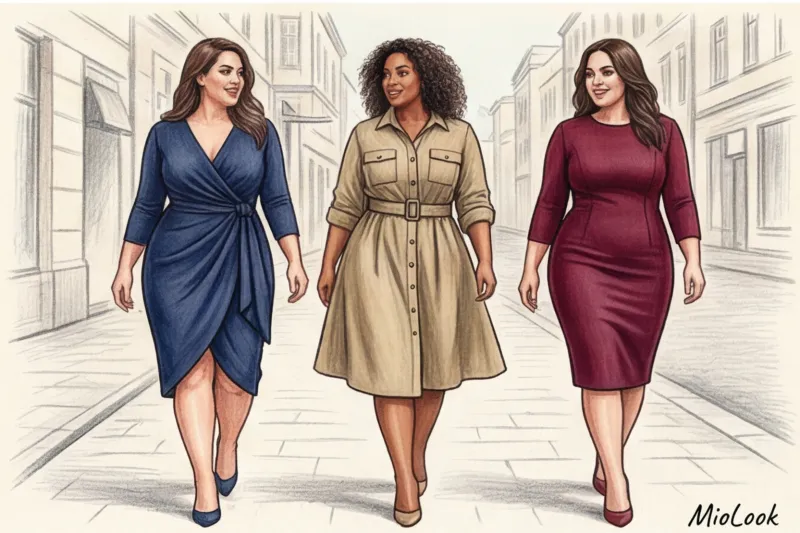
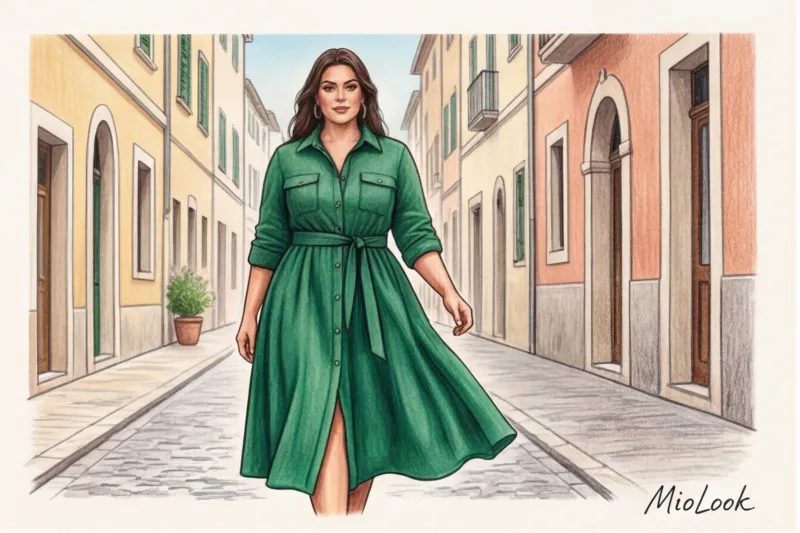
A shirt dress in dense fabric: the magic of verticals
This is an absolute must-have for those who want to appear taller and slimmer. The button placket acts as a central vertical color, drawing the eye up and down rather than left to right. The crisp collar draws attention to the face and structures the shoulders.
I discussed in detail how to style such strict silhouettes for work in the article about office clothes for plus size women What should you absolutely avoid? Patch pockets on the chest—they'll add unnecessary bulk where we're trying to create a sleek silhouette.
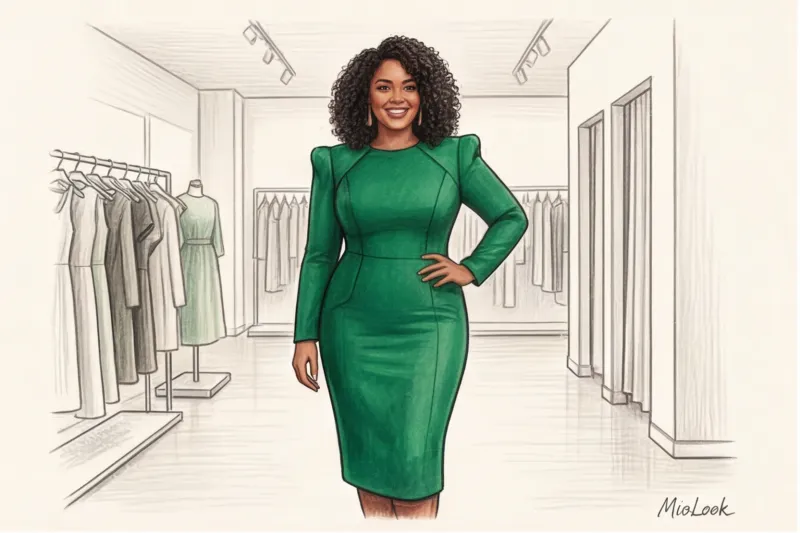
A slightly fitted sheath dress with regular darts
Many plus-size women are wary of sheath dresses, confusing the concept of "semi-fitted" with "tight." A well-designed sheath dress relies on darts. These structural seams gather excess fabric under the bust and at the waist, creating a beautiful hourglass silhouette.
Your personal smart wardrobe
Upload photos of your dresses to MioLook. Our AI stylist will analyze your clothes and suggest which styles really flatter your figure.
Get access — €0.99 onceLength Matters: How to Find Your Perfect Proportion
When working with shapes, horizontal lines are our worst enemies or best friends, depending on where they are placed. The hem of your dress is the most powerful horizontal line in the image. Where it falls, the eye is drawn.
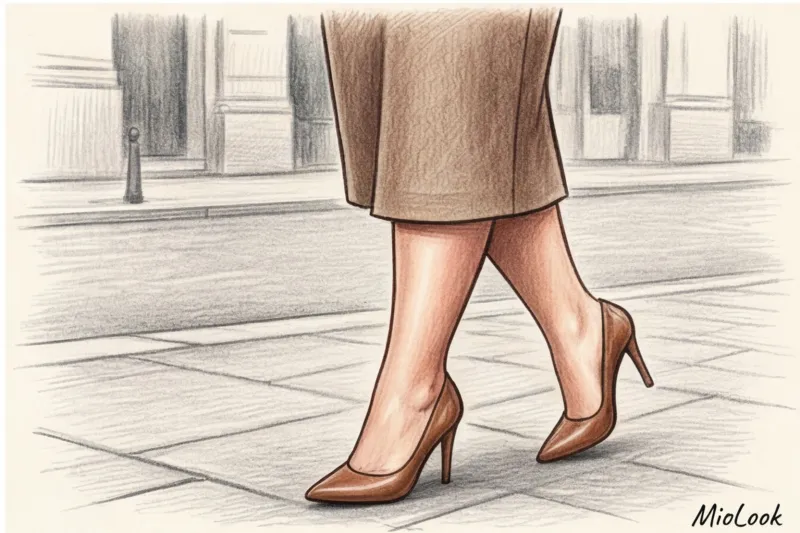
There's a golden rule for hemlines that I apply to all my clients: a dress should always end at the narrowest part of your leg. For some, this is just below the knee (the so-called "Italian length"), for others, it's the thinnest part of the calf (the classic midi).
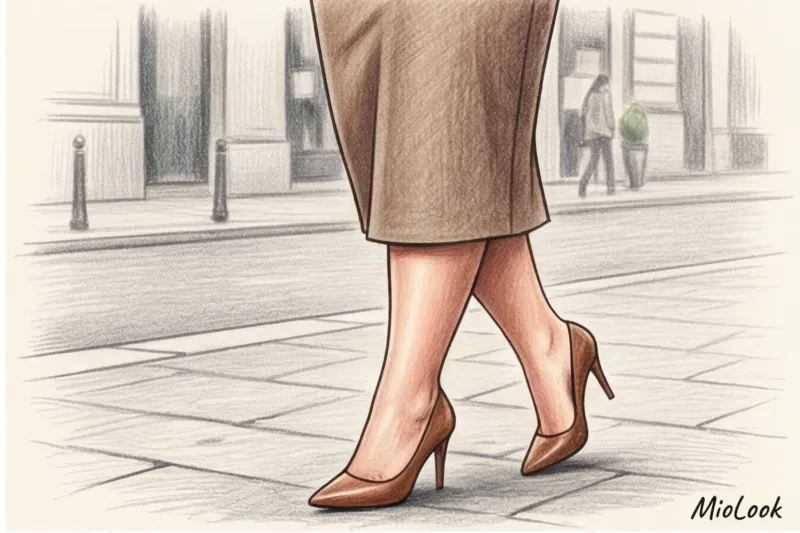
If your hem cuts off your leg at the widest part of your calf, you'll visually add 5-7 kilograms to your weight. How do you find the right length? Take a piece of thick fabric or a towel, stand in front of a mirror wearing the shoes you plan to wear, and slowly lift the fabric from your ankle upward. You'll see for yourself the millimeter where your leg looks most graceful.
Beware of maxi lengths without slits. A floor-length dress made of thick fabric will transform a plus-size figure into a monolithic column. A slit in the side or front is essential to show off the leg dynamically and allow for that extra air.
Dangerous trends: which dresses visually add pounds
Fashion often dictates trends that look great on size zero models but drastically distort the actual female figure. Let's debunk a few myths.
Tiered dresses and empire style. There's a persistent stereotype that babydoll dresses (cut off below the bust) or tiered "parachutes" conceal the belly. In reality, they actually add volume. The fabric falls vertically from the fullest point of the bust, creating the illusion of pregnancy and ignoring your actual (possibly much slimmer) underbust.
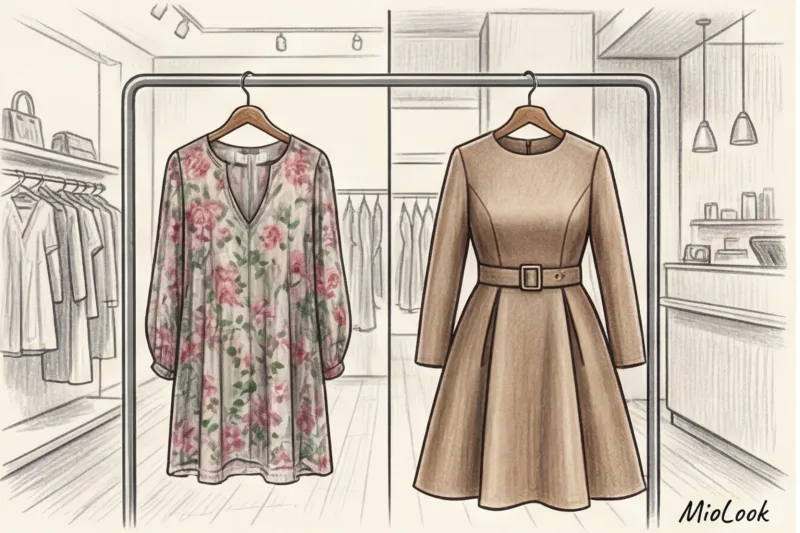
Fine ribbed knitwear. This material has the insidious property of stretching along curves, making the ribbing in those areas wider. The result is a "caterpillar" effect, which brands tactfully gloss over in their advertising posters.
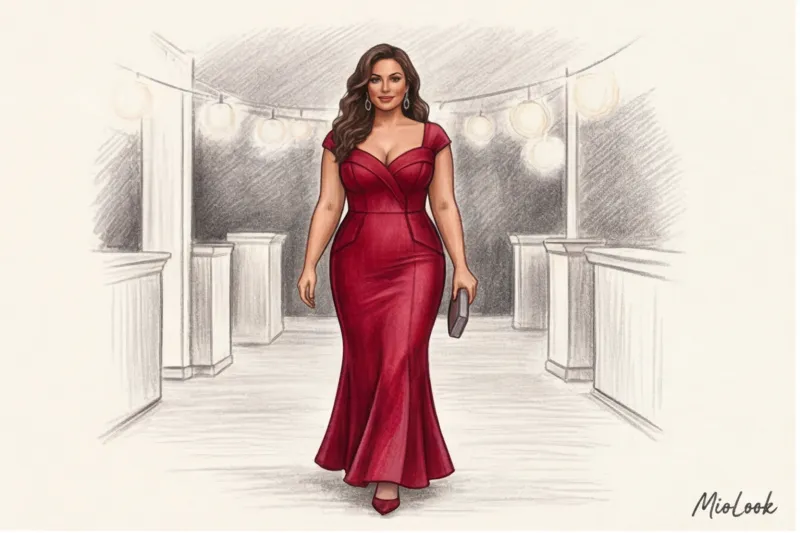
Satin and shiny fabrics. According to a 2023 study on textile optics by the Fashion Institute of Technology, glossy textures reflect light in a way that visually increases the 3D volume of an object by 10-15%. Satin acts as a magnifying glass for even the slightest texture of the skin.
Don't know what to wear with your favorite dress?
Try MioLook. Our smart AI stylist will create the perfect look from your clothes in seconds.
Choose an imageDetails that change everything: prints, sleeves, and slits
The architecture of the cut is the foundation, but the details determine the final result. For example, prints. Many plus-size women choose small florals, hoping they will make them look more inconspicuous. Mistake. A small pattern on a larger figure is lost, creating the effect of sofa upholstery. You need large, rhythmic geometric patterns or abstract designs. Asymmetrical diagonal prints are the best solution for contouring.
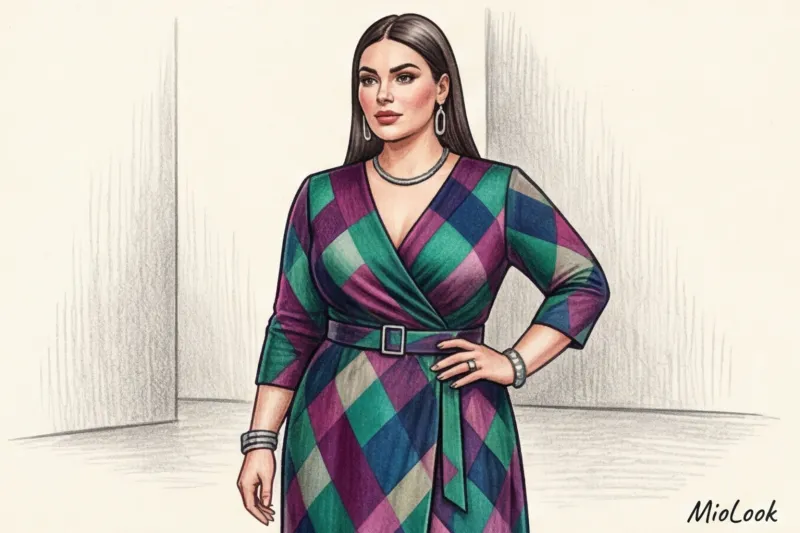
Sleeves are even more of a challenge. Avoid short, cap-length sleeves that end right at the widest part of your forearm. Opt for 3/4-length sleeves—they expose the thinnest part of your arm (the wrist) and end at waist level, visually accentuating it.
Side slits and asymmetrical hemlines are a great way to create movement. When a dress's hem is uneven, it's harder for the eye to register the actual dimensions of the figure. This is a favorite technique among designers at Fashion Week when working with plus-size models.
A stylist's checklist: how to choose that perfect dress in the fitting room
Over 12 years of practice, I've developed a strict checklist for fitting rooms. Don't buy a dress until you've done these tests:
- Density and crumpling test. Crinkle the hem in your fist and hold for 5 seconds. If a sharp crease remains, the fabric is unsuitable. You'll look unkempt an hour after leaving the house.
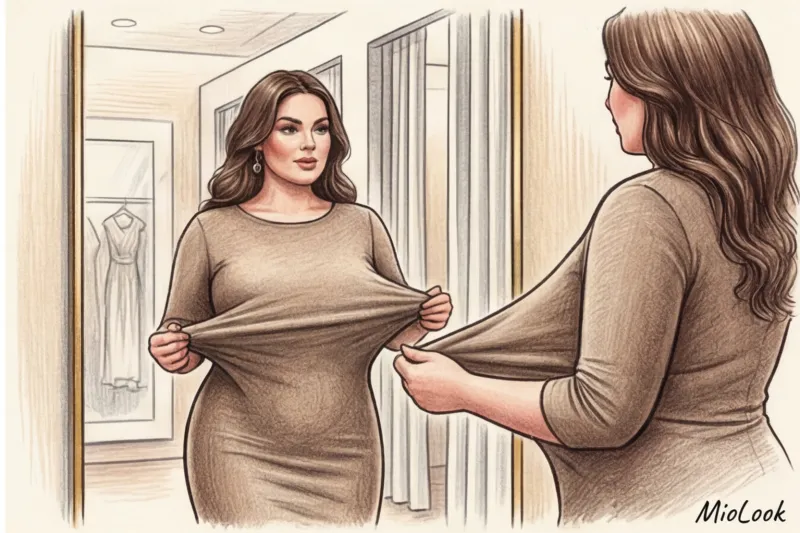
- Movement test (squat test). Sit on a chair in the fitting room. The dress shouldn't bunch up in the groin or stomach. If the buttons on the chest or stomach are stretched and form "eyelets," it's the wrong size.
- Assessment from behind. We often look at ourselves only from the front. Turn your back to the mirror. The right dress shouldn't highlight your bra line or create a bulge in your back.
Last but not least, any architectural dress requires a solid foundation. Smooth lines are ensured by properly selected underwear (not necessarily tightly cinched, but seamless and the right size). If your old dresses no longer bring you joy, upload them to MioLook app — Sometimes a fresh look from artificial intelligence helps find new ways to style long-forgotten items using belts or jackets.
Clothes are your tool for communicating with the world. A dress shouldn't just fit; it should become a secure framework within which you feel completely free and flawless.