Cold Test Drive: Why Your Routine Goes Wrong
Time it. Exactly three hours after you step from the freezing cold outside into your heated office, your heavy foundation will begin to wear off. First, your cheeks will feel tight, then the foundation will settle into fine lines, and by the end of the workday, your face will look like it's been dusted with chalk. Sound familiar?

I remember my first serious makeup test drive: -15°C outside, a biting wind, followed by an eight-hour shoot in a studio where powerful heaters made the air drier than the desert. By evening, my carefully set makeup was literally cracking. That's when I realized: creating winter makeup for every day shouldn't be a matter of "smearing it on thickly," but rather a process of layering—just like putting together a winter outfit.
When we discuss the basic principles that I wrote about in detail in the article Everyday Makeup: Step-by-Step Tutorials and Ideas We often forget about seasonality. In winter, our face needs not just a decorative covering, but reliable "thermal underwear" for our skin.
Why Your Summer Makeup Routines Don't Work in Winter
The biggest mistake I see women make between November and March is trying to use summer mattifying products in the winter's temperature swings. You leave the house (-10°C), get into a warm car (+20°C), walk down a windy street, and enter the office where the radiators are cranked up to max.
According to dermatologists, humidity in heated rooms rapidly drops to a critical 20%. Under these conditions, the process of transepidermal water loss (TEWL) is triggered. Dry air literally acts like a pump, drawing water molecules out of your epidermis at twice the normal rate.
"Winter makeup should act as a barrier. If your foundation doesn't contain moisture-retaining ingredients, it will begin to draw moisture from the skin to maintain its texture on the face," confirm cosmetic chemists and technologists.
The era of "cast-iron" Instagram makeup is officially over. Heavy matte textures don't just feel uncomfortable in winter—they accentuate skin texture, highlight flaking you never even knew you had, and visually age your face by at least five years.
Access to MioLook for €0.99 — one-time payment
A smart AI stylist will select the perfect look based on the season and your preferences.
Get access — €0.99 onceThe Biggest Myth: Why Powder Kills Makeup's Longevity in Cold Weather
Now I'm going to tell you something that can change your beauty routine. Powdering your face to make your makeup last longer in winter is a fatal mistake.
We're used to thinking that powder "pinches" foundation to the face and makes it last. This works great in July at 30°C. But in winter, in the dry office air, talc and silica (the main components of most powders) act as aggressive absorbents. They don't discriminate between sebum (oil) and precious moisture. Powder greedily absorbs the remaining water from your skin. The result? The effect of a cracked clay mask by lunchtime.
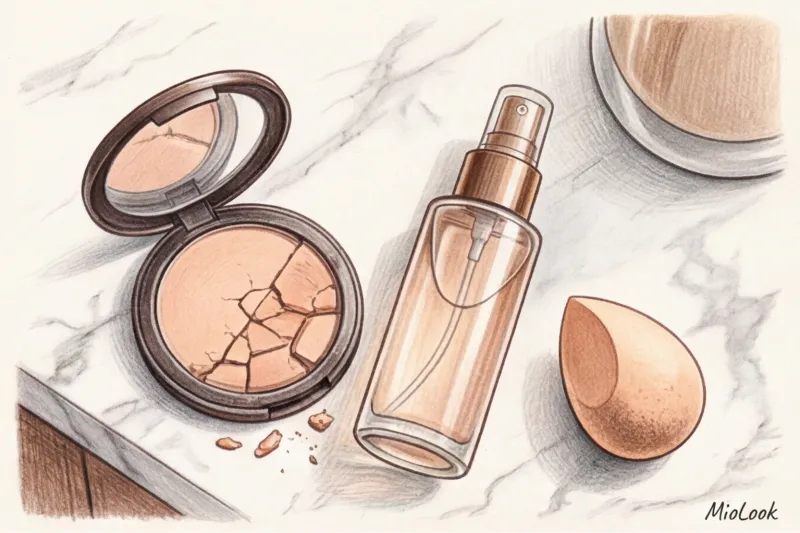
One of my clients, a top manager at an IT company, struggled with "winter flaking" for six months. She'd buy expensive nourishing creams, but still generously powdered her T-zone before going out. I suggested a simple experiment: remove the powder for a week. We replaced it with a liquid glycerin-based moisturizing setting spray. After three days, the flaking disappeared, and her foundation stopped creasing.
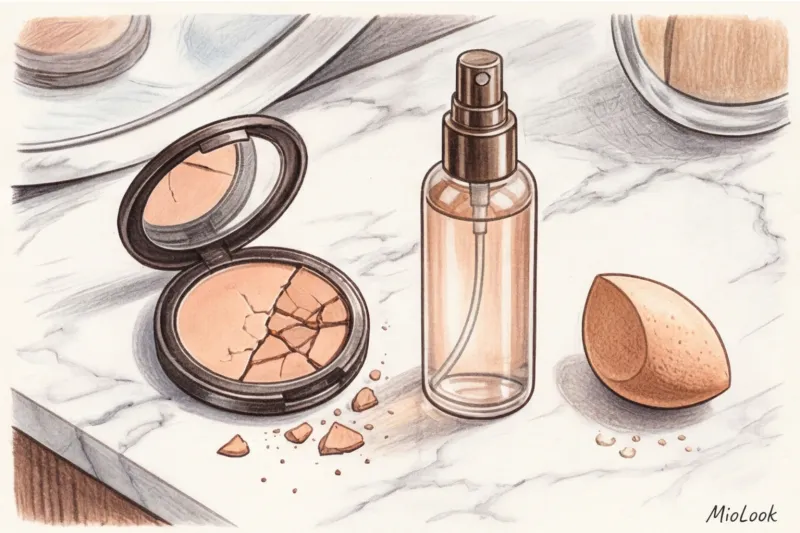
- What can I use instead of powder? Look for setting sprays with moisture-retaining agents such as glycerin, hyaluronic acid, or aloe extract.
- How does this work? The spray creates a thin, elastic polymer film on the face. It fixes the pigment but also traps moisture inside, preventing it from evaporating in the dry air of the radiator.
The smart layering principle: base and foundation to protect skin
The construction of winter makeup is identical to the assembly of a winter outfit (which I often write about in materials about capsule wardrobe ). You need a base layer, an insulating layer, and a protective barrier.
In summer, we love silicone primers—they conceal pores and mattify the skin. In winter, they're inferior to lipid primers. Silicone sits on the skin's surface like dead weight, while primers based on ceramides or light oils (such as squalane) integrate into the skin's hydrolipidic mantle, creating a kind of thermal underwear.
Hybrid Tone: The Concept of Skinimalism in Action
The report of the authoritative analytical agency WGSN (2024) confirms the global trend towards Skinimalism Skinimalism is the fusion of skincare and makeup. And winter is the perfect time to embrace this trend.
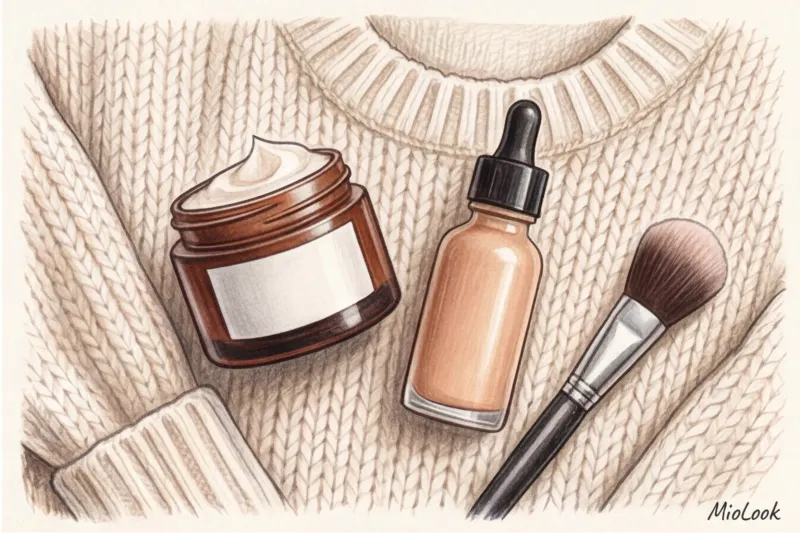
The perfect winter foundation is a hybrid skin tint. Research shows that hybrid foundations with ceramides retain moisture 40% more effectively than traditional mattifying foundations.
Ingredients you should have in your winter foundation:
- Ceramides — restore the protective barrier.
- Squalane - softens and protects from the wind without the greasy pancake effect.
- Niacinamide - soothes redness from frost.
Stylist's advice: Apply these serums with a damp sponge. The water in the sponge will help the product spread more evenly and further seal in moisture.
Frosty Accent: Protecting Lips and Cheeks from Chapping
Dry pressed blush suffers from the same problem as powder in winter—it accentuates dryness. Switching to cream tints solves two problems at once: it creates the most natural, frosty flush (like you just got back from the skating rink) and provides additional protection for the sensitive skin on your cheekbones from chapping thanks to its wax base.
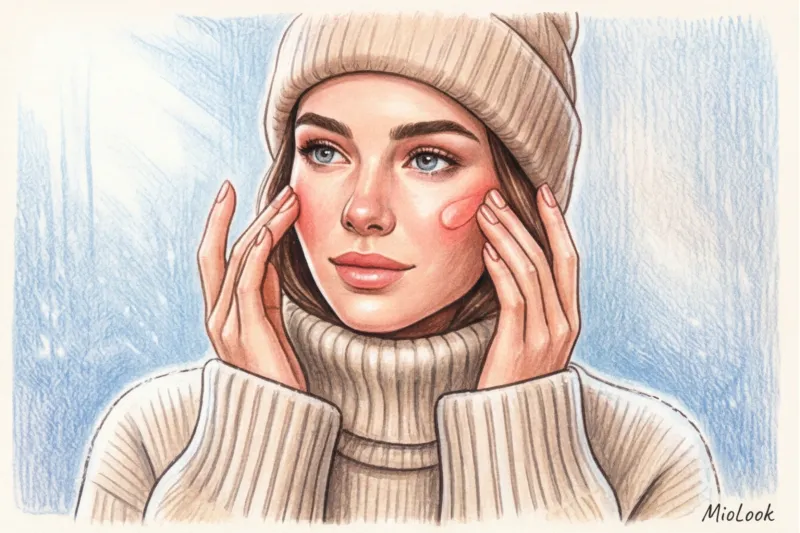
Your lip makeup also needs a makeover. It's best to put away long-lasting matte lipsticks, which can leave your lips feeling like parchment, until spring. Tinted lip balms with lanolin and beeswax are your go-to. They provide a beautiful translucent color and act as a shield against icy winds.
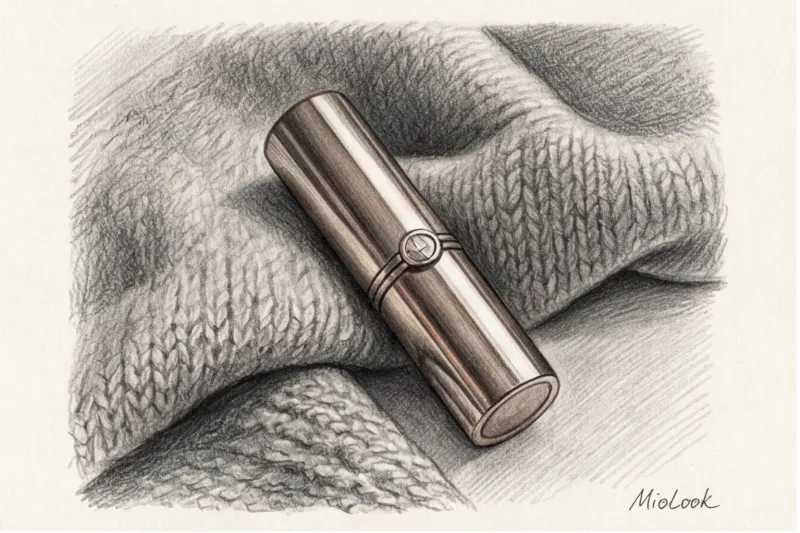
My morning life hack: I use one creamy multi-stick (lip & cheek) in dusty rose for my lips, cheeks, and even eyelids. Blending with warm fingers takes exactly two minutes, and the look is monochrome, fresh, and luxurious. It's the perfect solution for those who value their time in the morning.
Ready to get started?
Try a free plan—no commitments. Create your own beauty capsule with MioLook.
Get access — €0.99 onceOffice Climate Control: How to Refresh Your Makeup Midday
A problem faced by 90% of women working in an office: by 3:00 PM, their complexion is dull, their makeup looks tired, and their skin is begging for mercy from air conditioning. In this article about business makeup I've already mentioned that layering concealer over stale foundation is a bad idea. In winter, this rule is doubly strict.
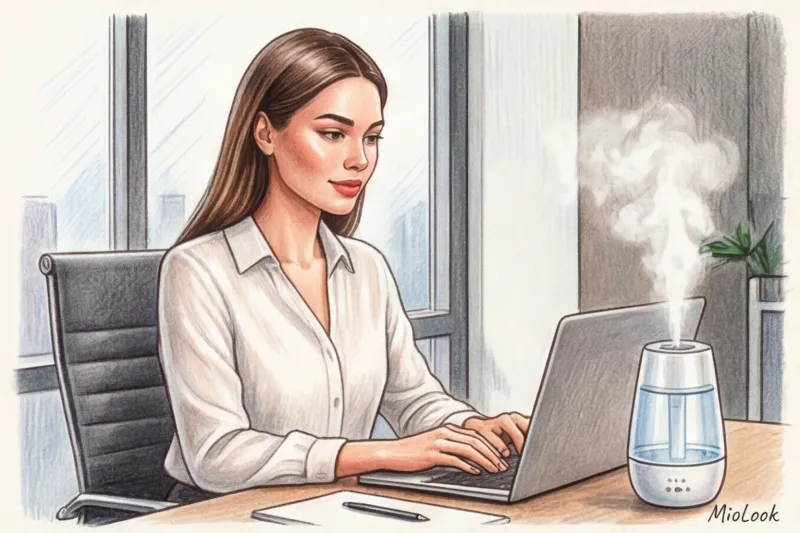
How to properly refresh your makeup without overloading your face:
- Invest in microclimate. A portable USB humidifier on your desk saves your makeup better than any powder. This isn't a joke or a whim—it's a necessity for maintaining moisture levels around your face.
- Use mist. Spray your face with a moisturizing mist from a distance of 30 cm. Let it absorb for a couple of minutes.
- Spot lighting. If your foundation does fade, skip powdering. Take a shimmer-free highlighter stick and lightly pat it onto your cheekbones and the bridge of your nose. Your face will instantly gain a vibrant glow.
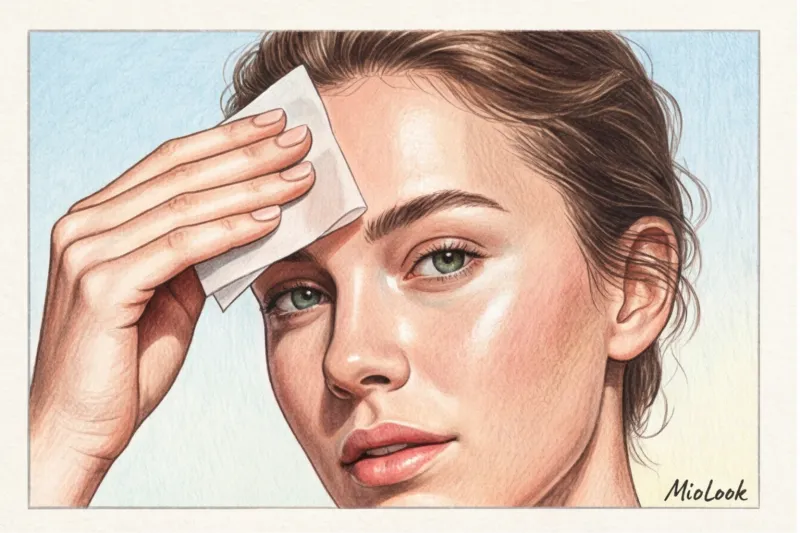
Reservation: This all-over hydration approach is ideal for normal, dry, and combination skin. If you have clinically oily, acne-prone skin, lipid primers may trigger breakouts. In this case, look for the label on the packaging. non-comedogenic (non-comedogenic) and use blotting sheets instead of powder.
Checklist: A Winter Minimalist Makeup Bag Revision
A smart approach to your makeup bag reflects a smart approach to your wardrobe. Just like you can organize your things with the "smart wardrobe" feature in MioLook , it's worth auditing your cosmetic bag before the cold weather sets in.
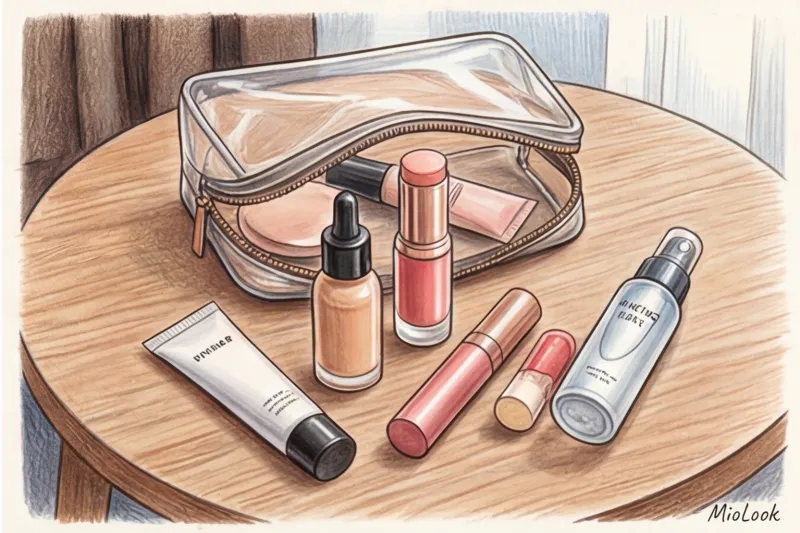
You don't need dozens of jars. For the perfect winter everyday makeup look, the modern woman needs just five high-tech products:
- Lipid primer or thick moisturizer — your “base station” of protection.
- Hybrid foundation serum with ceramides or squalane - evens out skin tone without blocking the skin's ability to breathe.
- Creamy multi-stick (blush) — for the effect of frosty freshness without emphasizing dryness.
- Tinted lip balm — color and protection from weathering in one bottle.
- Moisturizing setting spray — instead of powder, to fix and “seal” moisture.
Until spring, feel free to put away thick mattifying foundations, silicone "pore-filling" bases, opaque matte lipsticks, and, most importantly, dry setting powders.
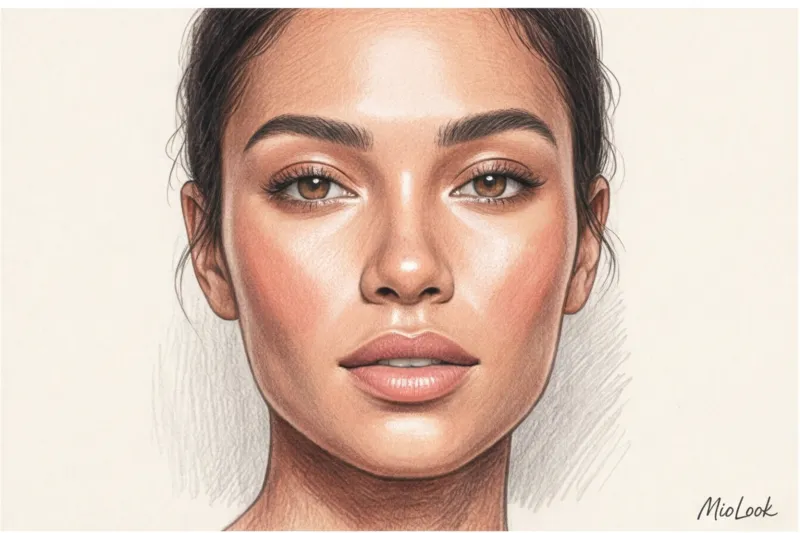
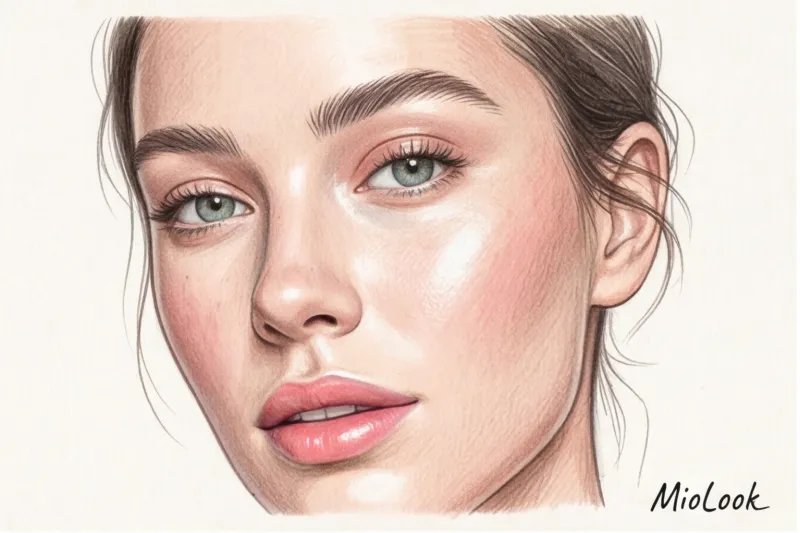
Everyday winter makeup isn't about concealment, but rather the synergy of care and color. Tomorrow morning, as you're getting ready for work, simply put down your powder brush and finish your look with a couple of sprays of hydrating setting spray. Your skin will respond with a perfect glow that will last until evening, despite the frost outside and the radiators in the office.