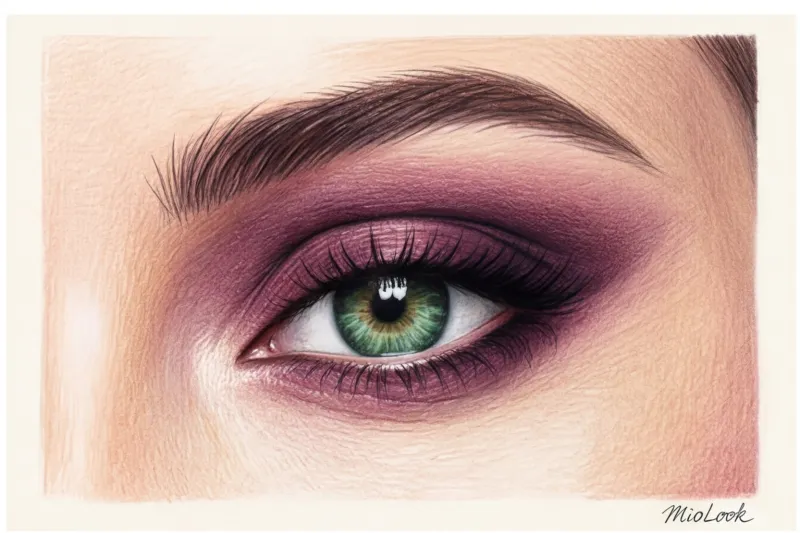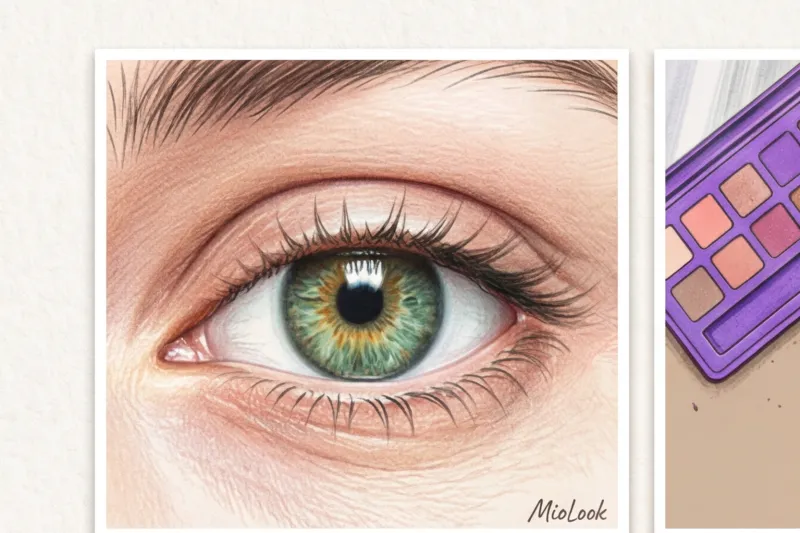
Remember the glossy magazines of the 2000s? The main, and perhaps only, advice for green-eyed girls sounded like a mantra: "Just apply purple eyeshadow!" Forget it. As a certified colorist and image consultant, I can confidently say that what looks stunning in studio photos with ring lights often makes you look tired and dark-eyed in real life. The perfect everyday makeup for green eyes is completely different.
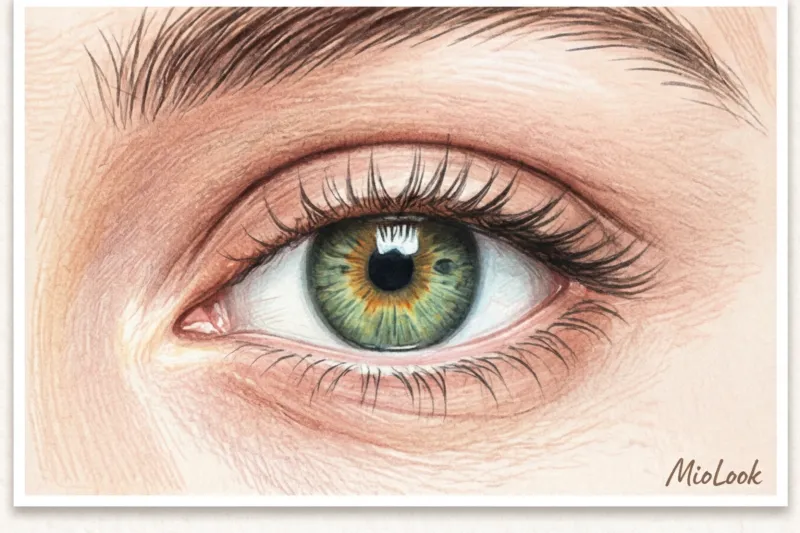
We have already talked in more detail about the basic principles of creating a light daytime look in our The Complete Guide to Everyday Makeup: Step-by-Step Tutorials and Ideas But today I want to delve deeper into coloristics. We won't be painting complex five-shade transitions. Instead, we'll embrace the skin-minimalism trend and learn how to "pull out" the green of the iris through micro-contrasts and skin temperature control.
The Anatomy of Color: Why There Are No "Simply Green" Eyes
Did you know that true, pure green eye color is a biological rarity? Statistically, only about 2% of the world's population possesses it. What we commonly call "green eyes" is actually a complex optical illusion, a play of melanin and light scattering (so-called Rayleigh scattering).
Over 12 years of performing color analysis, I've observed the same pattern hundreds of times. When I apply test fabrics (draperies) of different temperatures to a client's face, her green eyes change hue. With a cool, icy pink, they suddenly turn gray, while with a warm, mustard, they glow emerald. Why does this happen?
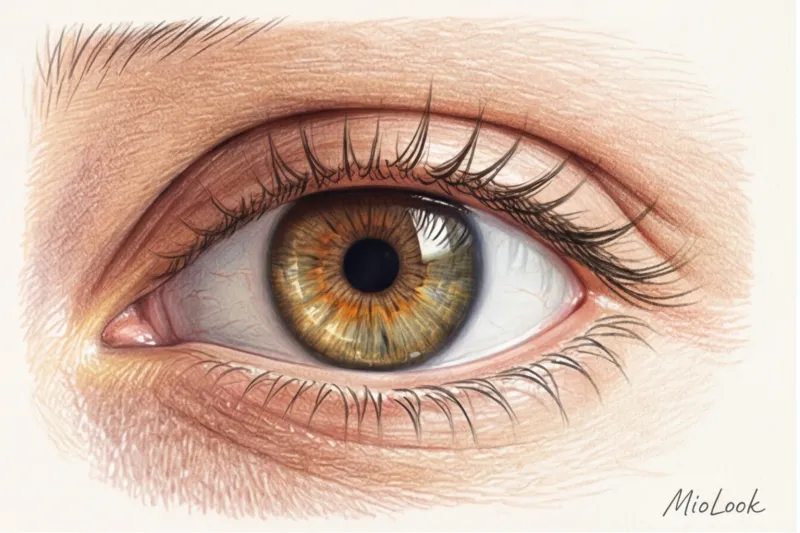
- Heterochromia of the iris: Look closely at your eyes in good daylight. You'll likely see a golden or rusty-copper halo around the pupil.
- Light border: The outer edge of the iris often has a gray-blue or dark-green outline.
That's why old internet advice like "dye your skin purple" doesn't work for 90% of women in real life. It ignores your individual skin tones and undertones.
We study micropigments (gold, walnut, gray)
To figure out which color palette will make your eyes sparkle, try this simple test. Turn on the flashlight on your smartphone (don't shine it directly into your pupils, aim the light slightly to the side) and look in the mirror.
Gray-green eyes They typically lack warm pigment. Their ideal cut is in cool, complex shades: taupe (gray-brown) and dusty rose.
Hazel eyes , on the contrary, open up next to warm terracotta, bronze and peach accents.
The biggest myth of the beauty industry: purple eyeshadow for every day
Let's talk about the elephant in the room: complementary contrast. According to Johannes Itten's classic color theory, colors on opposite sides of the color wheel enhance each other. Opposite green is red and its derivatives, including violet. In theory, it all makes sense.
"Complementary contrast works great on canvas or clothing, but the human face isn't a blank sheet of paper. It has blood vessels, capillaries, and shadows."
Purple eyeshadow is the worst choice for everyday makeup for green eyes if you work in an office or spend the day in natural light. Purple pigments always have a blue base. When applied to the thin skin of your eyelids, it visually blends with your veins. The result? Your eyes look tear-stained or unhealthy.

Modern alternative: Micro-contrast. We'll stick with Itten's rule, but vary the coverage. Instead of applying plum all over the lid, use a burgundy or eggplant mascara. In my experience, simply swapping black mascara for a ripe cherry shade instantly makes green eyes more piercing without a hint of eyeshadow.
Access to MioLook for €0.99 — one-time payment
A smart AI stylist will select the perfect look and makeup for your color type.
Get access — €0.99 onceThe perfect basic palette for everyday green eye makeup
Modern everyday makeup for green eyes is inextricably linked with the global macro trend Skinimalism (skin-minimalism), which the analytical agency WGSN (2024) calls the main vector of the beauty industry in the coming years. We are moving away from dry, chalky textures to creamy, translucent products that blend into the skin.
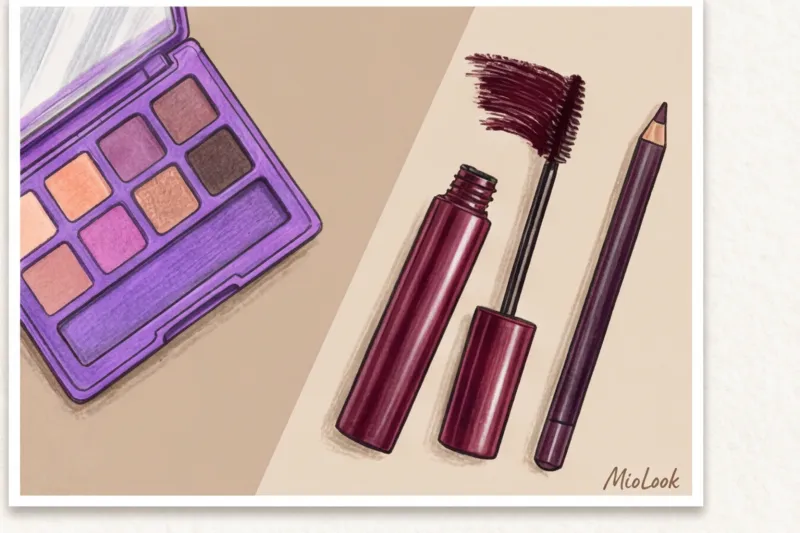
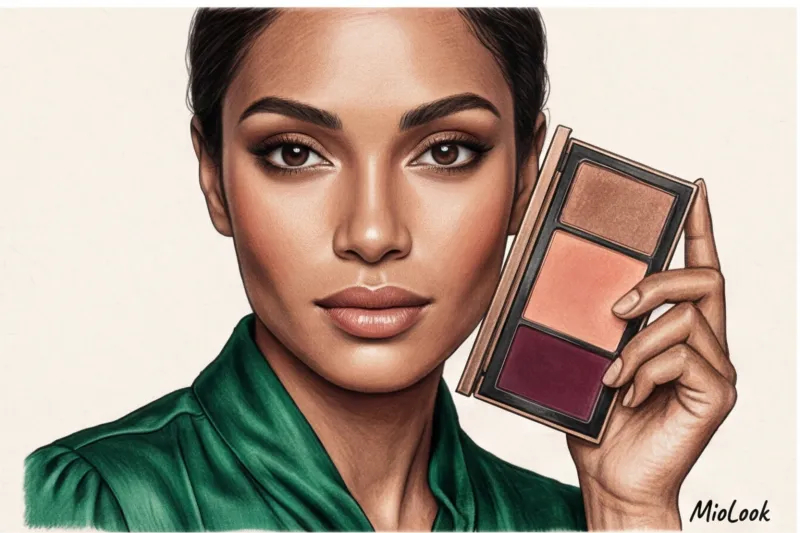
A behind-the-scenes insider secret: makeup artists no longer use classic palettes for daytime nudes. We use cream blush or bronzer and apply it to the eyelids. This creates a monochrome look in just a minute.
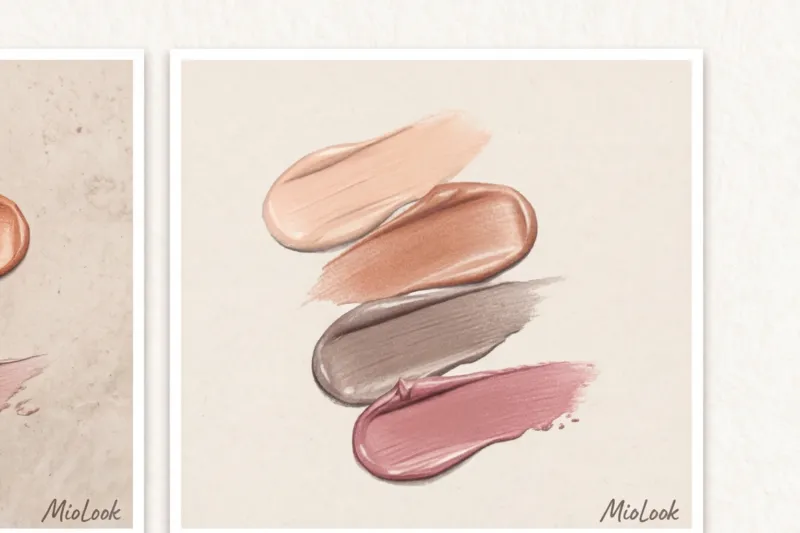
Warm shades: peach, copper and terracotta
If you have a warm skin tone (Spring or Fall colors), peach and copper shades are your best friends. Try swapping your usual black eyeliner for a soft bronze kohl. Black often looks too harsh and detracts from the eye's size, while warm bronze gently brings out the green in your iris thanks to its red undertone.
Cool shades: dusty rose and taupe
For girls with a cool color type (Summer, Winter), warm red eyeshadow can make the face look unhealthy. Your tool is the shade. dusty rose (Dusty Rose) or cool taupe. Apply a dusty rose cream eyeshadow with your fingertip to the lid. This subtle pinkish hue will create the same contrast as Itten, but in a more subtle way.
Skin Minimalism: Why Skin Tone Matters More Than Eyeshadow
Do you know what the most common mistake my clients make is? They buy expensive eyeshadow palettes to highlight their eye color, but they forget about the canvas. About 80% of how others perceive your eye color depends on the skin tone around them.
Green eyes will never shine if they're under a blue-violet shadow from lack of sleep. The contrast between blue and green is considered one of the most challenging in color theory—blue visually "dim[es]" green, making it appear muddy.
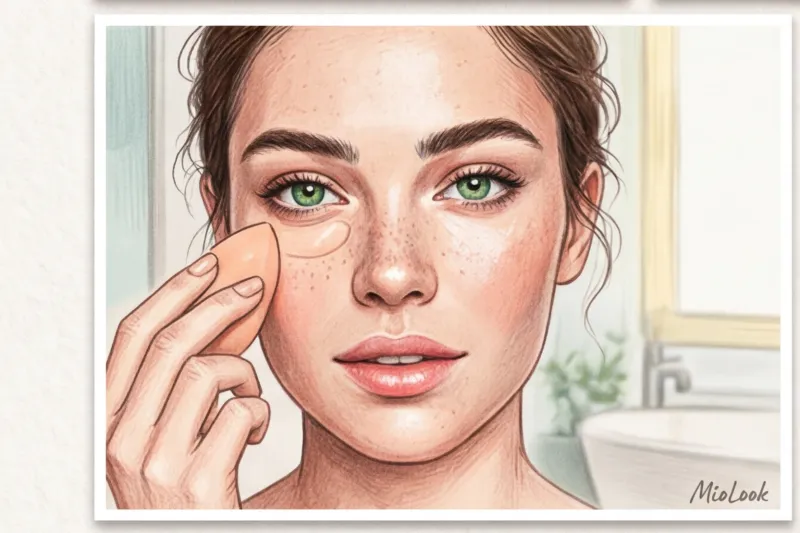
Your main beauty weapon should not be a highlighter or mascara, but a peach or salmon concealer (color corrector).
Why peach? The orange-peach pigment neutralizes dark circles under the eyes (the color wheel in action again!), while its warm undertone creates a contrasting backdrop for the green iris. By eliminating dark circles with the right shade, you automatically brighten your eyes. Sometimes this step is enough to eliminate eyeshadow altogether.
Step-by-step technique: everyday makeup for green eyes in 5 minutes
Let's move from theory to practice. Imagine your morning routine: you have exactly 5 minutes before heading to the office or a Zoom call. Here's the step-by-step algorithm I recommend to my clients for creating an expressive yet appropriate look. (By the way, if you're interested in creating a more formal corporate look, check out our article about stylish makeup for work in the office ).
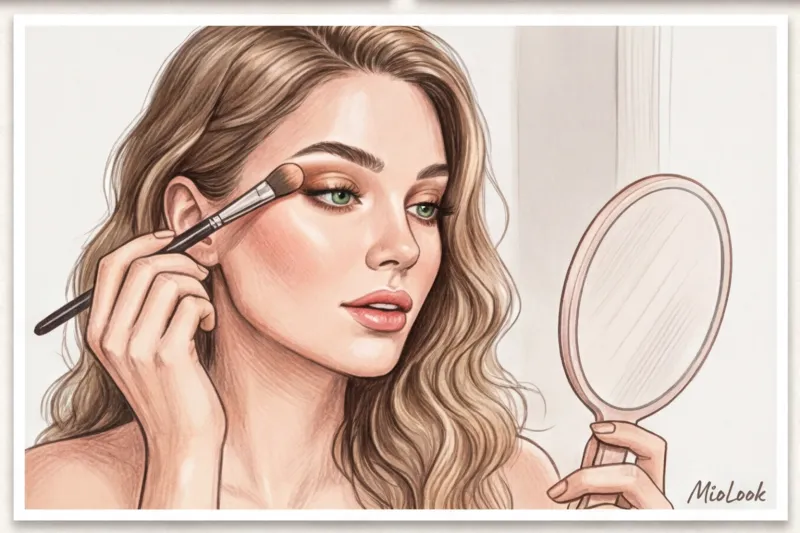
- Step 1: Neutralization. Apply a drop of peach concealer only to the inner corner of the eye and the dark circle area. Tap the product in with a damp sponge or a warm finger. Make sure the skin looks vibrant; avoid creating a thick mask.
- Step 2: Monochrome shadow. Take a creamy bronzer or blush in a warm peachy-pink shade (depending on your temperature). Using a fluffy blending brush, apply a small amount of product into the crease of the upper eyelid in one sweeping motion. This will restore the natural volume of the eye.
- Step 3: Inter-eyelash line without black color. Line the space between the roots of your upper lashes with an olive-brown, plum, or bronze gel pencil. This step visually thickens your lashes three times without creating a noticeable winged look.
- Step 4: The Secret Ingredient. Apply a generous coat of burgundy or maroon mascara to your lashes. It will appear soft black indoors, but in the light, the red micropigments will make your green eyes pop.
Fair Limit: Let me clarify right away: the creamy textures I'm so enthusiastically talking about aren't a one-size-fits-all solution. If you have drooping eyelids or very oily eyelids, cream blush will crease within an hour. In this case, be sure to use a mattifying eyelid primer or follow up with a light layer of powder.
Your perfect look starts here
Join thousands of users who look flawless every day with the MioLook AI assistant.
Get access — €0.99 onceHow Office Lighting Kills Color (and How to Avoid It)
One of my clients once complained, "I look great in front of the mirror at home, but when I come into my open office and look into my smartphone camera, my green eyes turn dull and gray, like asphalt." Sound familiar?
It's all about the physics of light. Most offices are lit by fluorescent lamps with a color temperature of 4000K–5000K (cool white light). This spectrum mercilessly absorbs warm pigments. Your peach concealer loses its saturation, and your skin takes on a greenish-gray undertone that visually blends with your eye color, depriving them of contrast.

Stylist trick for business women: If you work in this type of lighting, you need to artificially add warmth and reflection. Use light-reflecting cream makeup bases (not the kind with chunky glitter!) and add a drop of warm golden or champagne-colored highlighter to the inner corner of your eye. This will create the illusion of vibrant, warm light falling on your face and will protect your eye color from the dead office lighting.
Beauty Shopping Checklist for Green Eyes: What to Invest in
If you're looking to update your makeup bag with the latest color principles, you don't need giant palettes with 100 colors. Everyday makeup calls for smart hybrid products. To help you remember which shades suit you best and create your own virtual makeup capsule, use MioLook app — your personal AI assistant in the world of style and beauty.
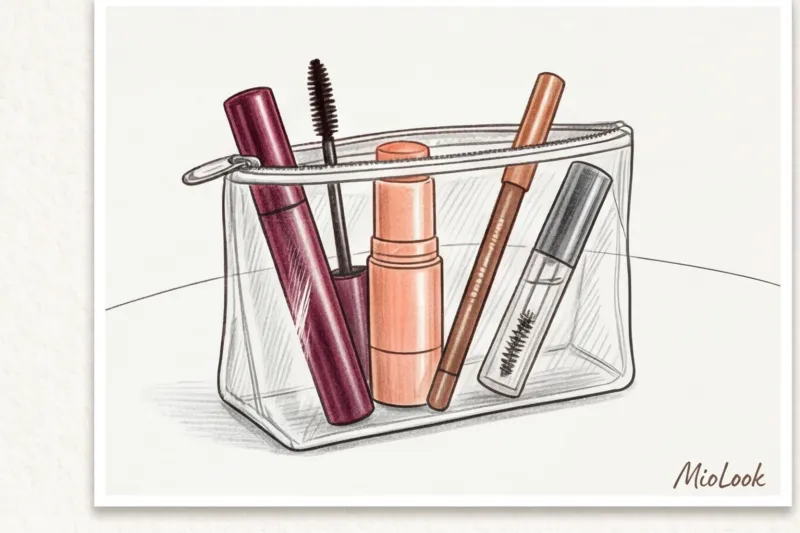
- Burgundy or plum thermal mascara for eyelashes (must have). Thermal mascara (tubing mascara) is easily washed off with warm water and does not leave dark circles under the eyes by the end of the day.
- Long-lasting gel pencil. Choose shades of copper, warm chocolate, or eggplant. The formula should set in 30 seconds.
- Peach concealer (Salmon/Peach color corrector). Look for a lightweight, fluid texture with light-reflecting particles, rather than a solid matte finish.
- Creamy multi-tints. A single product in a warm pink or terracotta shade that can be applied to eyelids, lips, and cheeks. This saves time and ensures a harmonious color palette.
Makeup isn't a strict set of rules from the last century, but a tool for manipulating the focus of attention. By stopping fighting nature with aggressive, contrasting shadows and switching to the subtle use of micropigments, you'll see your green eyes in a completely new light. Remember: sometimes the best frame for a rare diamond is a barely noticeable setting.