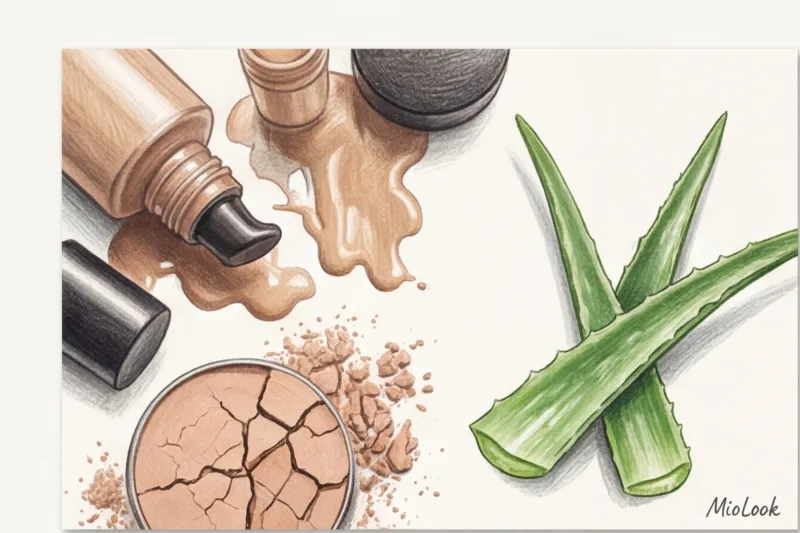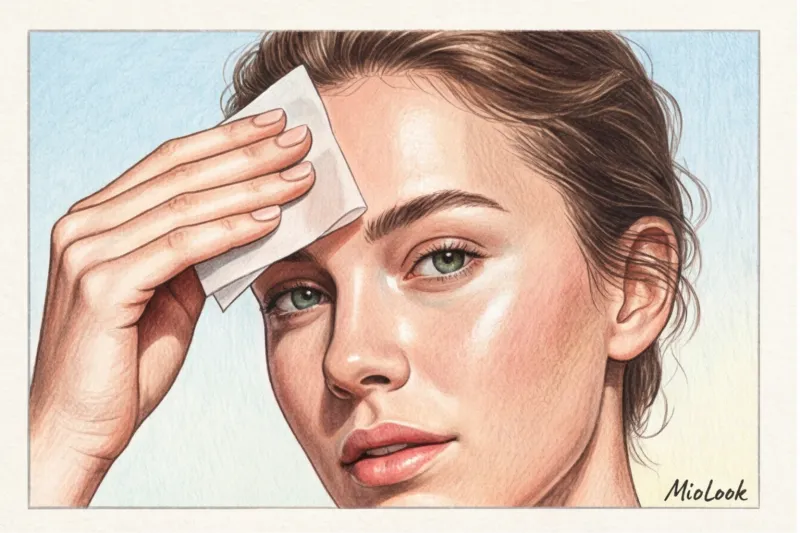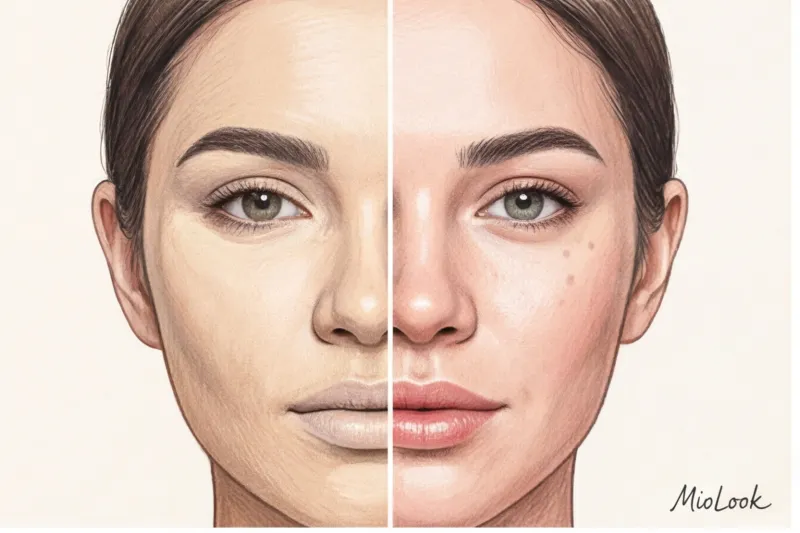
It's a familiar scene: it's 3:00 PM, you happen to glance in the mirror in the office elevator, and your face is shiny as if it's been rubbed with oil. Your first reaction is to reach for your compact powder and liberally dust your T-zone to conceal the ugliness. Stop it. I made this mistake for years and observed it in hundreds of clients until I realized one counterintuitive thing: the more we try to "muffle" shine with thick, matte textures, the faster our makeup turns into a messy, layered cake.
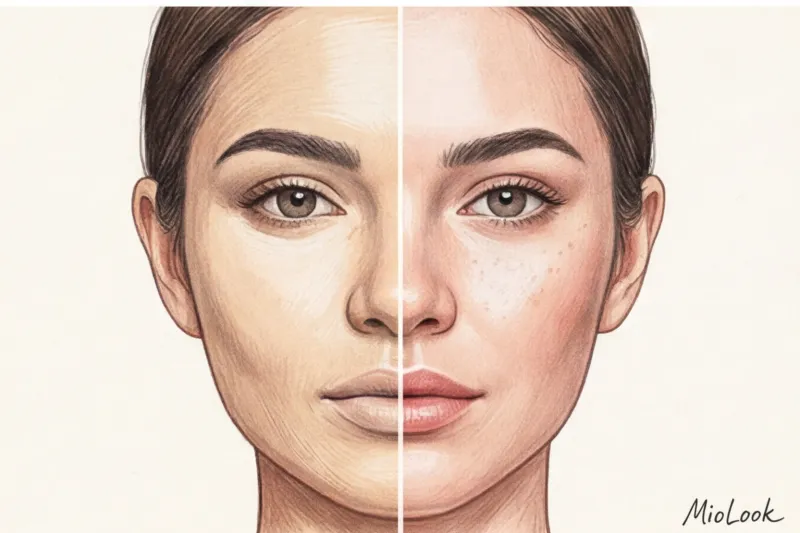
Creating Everyday makeup for oily skin We must think not like plasterers, but like chemists. Our goal is not to block sebum production (this is physiologically impossible), but to make it work for us. We discussed the basic principles of building a cosmetic bag in more detail in our the complete guide to everyday makeup , but today I want to talk about a sore point - 12-hour durability without the mask effect.
Why the old rules of matting no longer work
The Instagram makeup era of 2016, with its infamous "baking" (baking powder under the eyes and on the T-zone), is officially dead. According to a report from the authoritative agency WGSN (2024), the beauty industry has finally embraced the Skinimalism trend—a minimalism that values a vibrant, slightly dewy skin texture.
But what if your skin is naturally dewy, and in excess? Over 12 years of working backstage and with private clients, I've noticed how makeup artists have completely changed their approach to oily skin. We no longer completely mattify models. And there's a harsh chemical reason for this.
When sebum mixes with a thick layer of talc (the base of most budget powders), an oxidation reaction occurs. The talc absorbs the oil, swells, and darkens. This is why by evening your foundation may appear two shades darker and have a reddish tint.
Instead, the modern approach adapts the concept Cloud Skin (Cloudy Skin). This is a soft, defocused matte finish that lets in a natural glow from within but blocks out any obvious shine. It's an optical illusion, not a thick layer of makeup.
Access to MioLook for €0.99 — one-time payment
A smart AI stylist will select the perfect beauty look and wardrobe based on your personality.
Get access — €0.99 oncePreparation is more important than tone: creating the right canvas
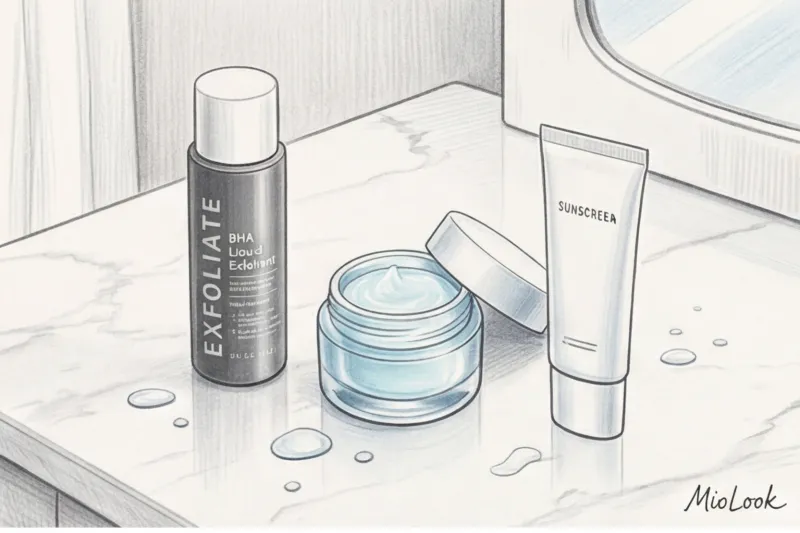
The most destructive habit of those with oily skin is overdrying it before applying makeup. Squeaky-harsh cleansers and alcohol-based toners (Alcohol Denat) create the illusion of cleanliness for exactly 30 minutes. Then, the sebaceous glands receive an SOS signal ("We're too dry!") and begin producing sebum at triple the rate.
Dermatological statistics are relentless: approximately 70% of cases of excess oiliness during the day in adult women are due to a compromised hydrolipid barrier and simple dehydration. How do we solve this?
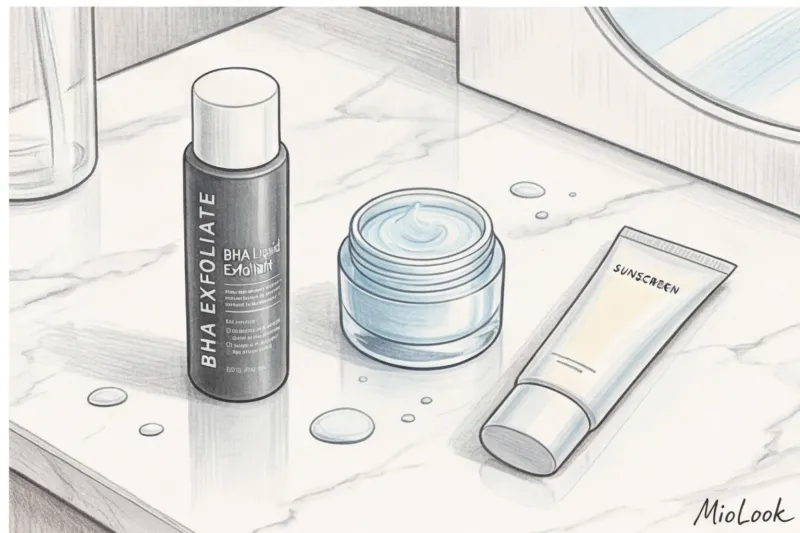
- Sebum regulation before makeup: Replace alcohol-based toner with a serum containing 2% salicylic acid (BHA) or 5-10% niacinamide. These work inside the pores, physically slowing sebum production.
- Proper hydration: Avoid oil-based creams (Shea Butter, Mineral Oil) in favor of water-gel textures with hyaluronic acid or centella asiatica.
Important limitation: Using BHAs under makeup in the morning isn't recommended if you have sensitive skin or rosacea. In this case, limit yourself to niacinamide.
Primers: When are they necessary and when are they harmful?
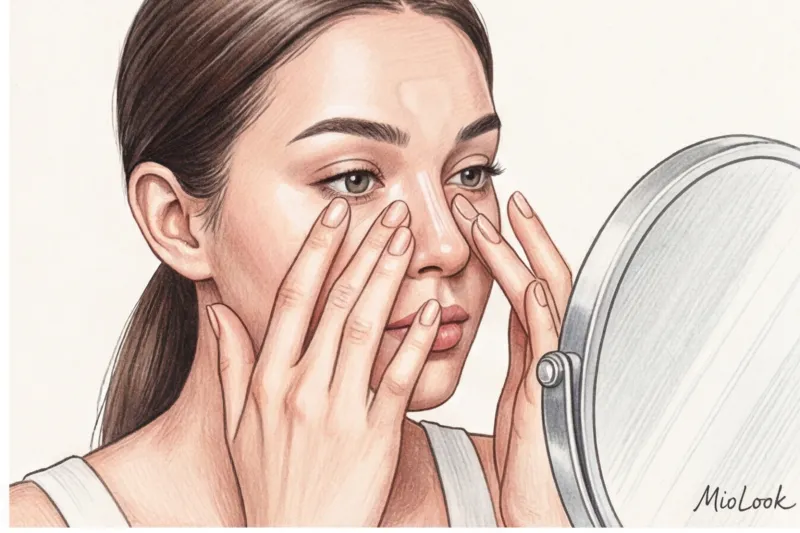
I tested about 15 popular mattifying primers in a 12-hour shoot. Do you know how many of them didn't slide under my foundation? Only three. The problem with most makeup primers is the excess of heavy silicones (Dimethicone), which creates a slippery film. The foundation literally "slides" over it.
In the appendix MioLook My clients often analyze their unsuccessful looks, and we regularly discover that makeup runs precisely because of a conflict of bases: silicone primer plus water-based foundation.
The secret lies in the technique microdosing Don't smear the primer all over your face like you would a moisturizer. Take a drop the size of a grain of rice and gently pat it in. trample down (and don’t rub!) with your fingers strictly in areas with enlarged pores - usually these are the wings of the nose and the center of the forehead.
Ideal everyday makeup for oily skin: choosing a shade
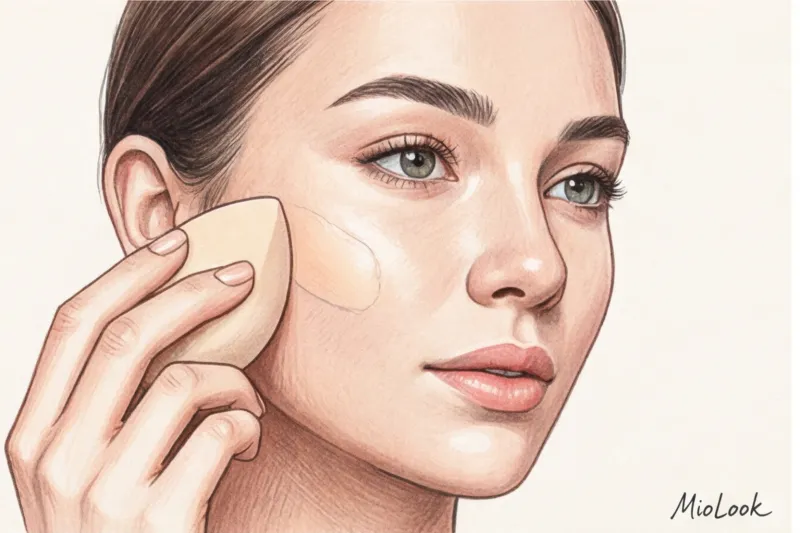
Herein lies the main paradox: the most common mistake for oily skin is using a thick, mattifying foundation (Full Coverage Matte) all over your face. Sure, for the first two hours, you look perfect. But by lunchtime, it mixes with sebum and turns into that same "mush."
I had a client, Anna, an IT manager. She'd been using the heavy-duty Estée Lauder Double Wear for years because she was afraid of looking shiny at meetings. As a result, by the end of the day, her face looked tired and overwhelmed. I switched her to a lightweight hybrid tint (Soft Matte), and it worked wonders—she no longer needed to touch up her makeup every two hours.
Modern tinted fluids (like Fenty Eaze Drop or Erborian CC Water) don't try to cover up the skin. They even out the skin tone, and if sebum does show through, the coverage doesn't crack, but simply takes on a subtle glow. They should be applied exclusively with a damp beauty blender — the sponge absorbs excess product, applying the pigment in the thinnest possible layer.
Your perfect look starts here
Create your own digital makeup bag and receive personalized recommendations from the MioLook AI stylist.
Get access — €0.99 onceSpot Powdering: The Cloud Skin Technique Instead of Baking
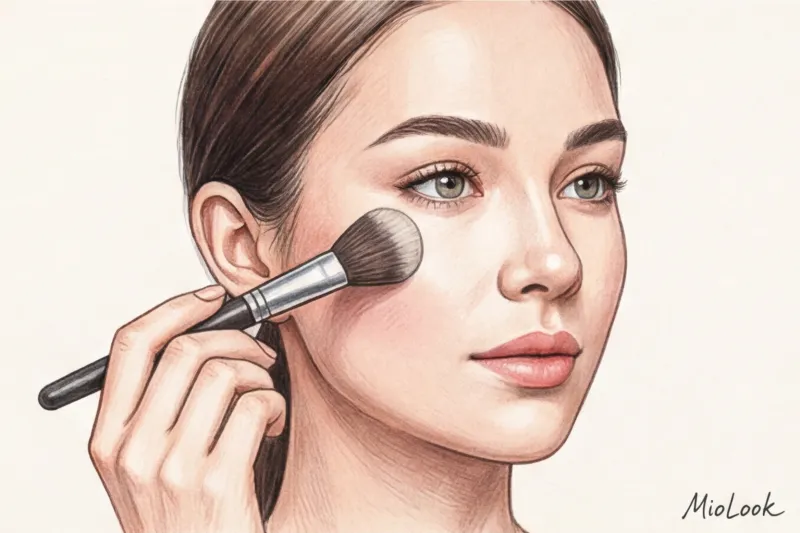
If you want a modern look for everyday makeup for oily skin, ditch those oversized kabuki brushes. They make it impossible to control the powder application area.
For the Cloud Skin effect we don't need a opaque talc powder, but a product based on silicon dioxide microspheres (Silica) Unlike talc, silica doesn't absorb moisture completely, but rather diffuses light, acting like a blur filter on a smartphone. It's transparent and doesn't change the color of your foundation by evening.
How to powder in a new way:
Take a small fluffy brush (a large eyeshadow blending brush works best). Pick up a small amount of translucent powder, tap off any excess, and apply it precisely to the hot spots:
- The wings of the nose and the area around the nostrils
- Center of the forehead (between the eyebrows)
- Dimple on the chin
The cheekbones, the periphery of the face, and the bridge of the nose should be left powder-free. This will create volume and the appearance of healthy, not dry, skin.
Fixation: How to “seal” your makeup until the evening
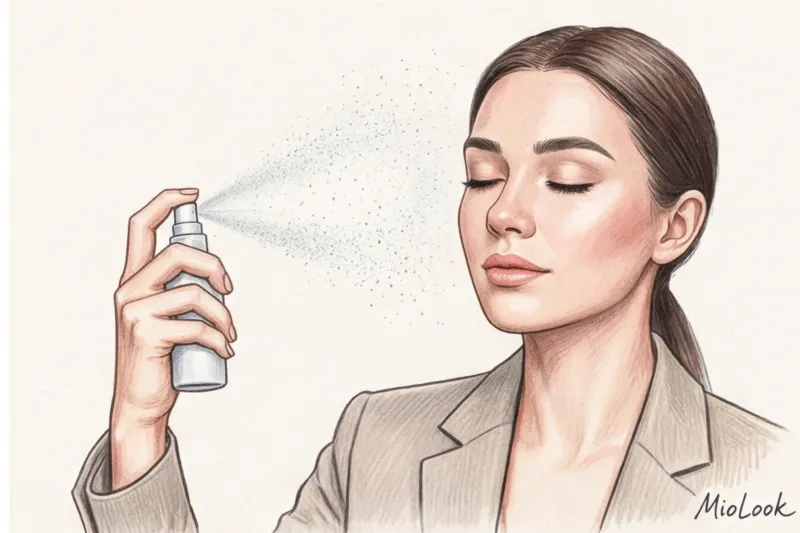
Few people know, but for oily skin, a quality setting spray does three times more work than powder. However, it's important to distinguish between a refreshing mist (fixing spray/thermal water) and a true setting spray.
A real Setting Spray (like Urban Decay All Nighter or Charlotte Tilbury) contains film formers — cosmetic polymers (often referred to as PVP/VA Copolymer). When sprayed, water evaporates, and the polymers create a microscopic, invisible mesh that literally adheres makeup to the face and prevents sebum from dissolving the pigment.
My favorite backstage trick is sandwich technique:
- Step 1: Spray the fixative onto clean skin after skincare, before primer.
- Step 2: Apply foundation and dot with powder.
- Step 3: Apply a generous amount of setting spray to finish off your finished look.
Research shows that layering makes your makeup last 4-6 hours longer than just setting powder. The only caveat: This technique only works with water- or silicone-based foundations. If you have a thin, oil-based foundation, the spray will simply roll off in beads.
SOS Kit: Touch up your makeup in the office without the mask effect

Even with perfect prep, oily skin will still produce a fair amount of sebum by 3:00 PM. That's normal. What's not normal is trying to cover it up with another layer of compact powder.
Powder applied over the sebum and dirt that's accumulated on your face throughout the day hardens. This is a surefire way to clogged pores and breakouts. Every businesswoman I work with keeps a strict makeup correction checklist in her purse:
- Blotting papers: The main rule is we blot Apply to your face using precise, pinpoint movements, and never rub, as this can disturb your foundation. Linen or abaca wipes only absorb oil, leaving your makeup in place.
- Volcanic roller: An excellent modern, reusable alternative to wipes. The natural porous stone absorbs shine in seconds.
- Translucent compact powder: Use only AFTER completely patting your face dry with a tissue, and only if the coverage has worn off. Look for powders without pigment (translucent).
Maintaining beautiful makeup on oily skin isn't about fighting your natural makeup habits, but rather about mastering textures. Skip heavy masks, let your skin breathe with a light tint, harness the power of polymers in sprays, and you'll be amazed at how fresh your face will feel by the end of the day.