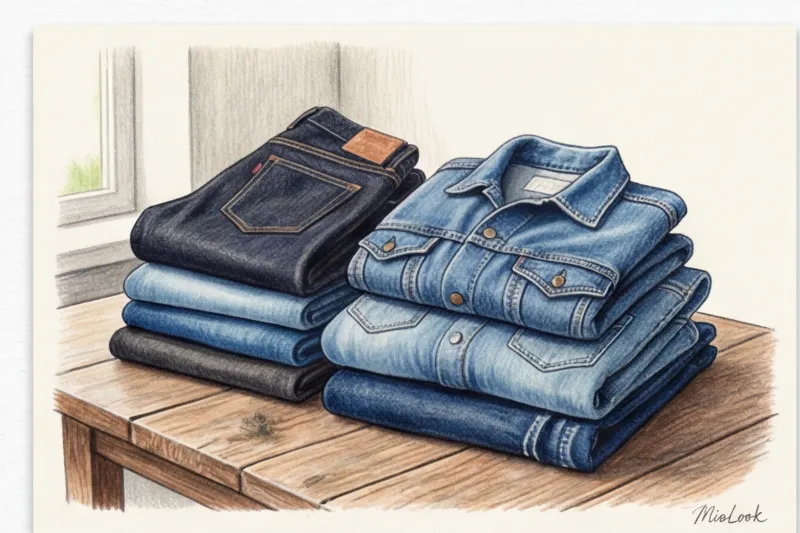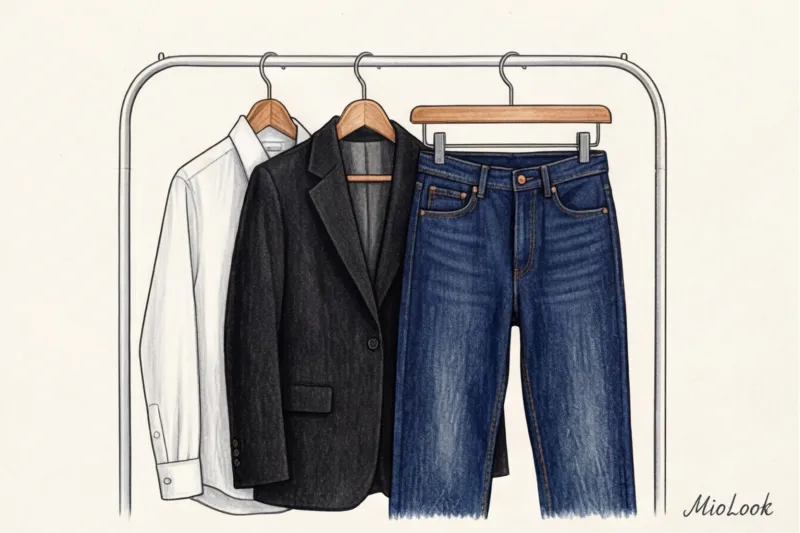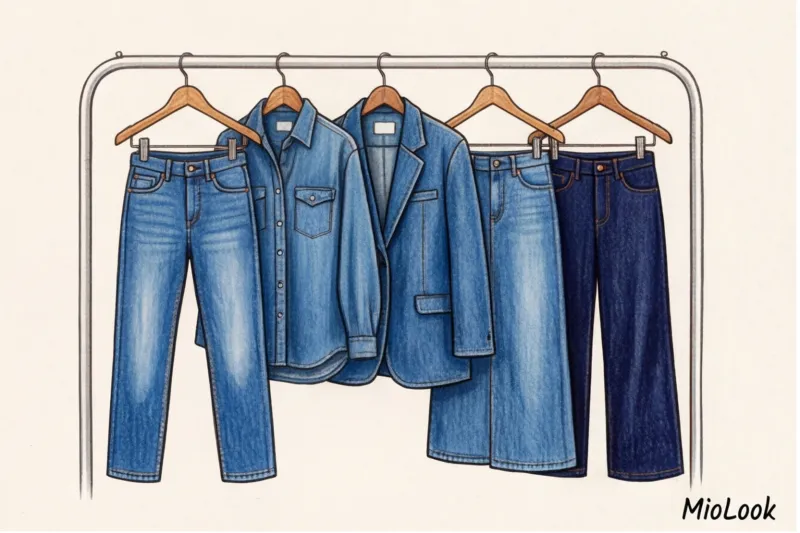
One day, a client, the CFO of a large IT company, came to see me. She had sixteen pairs of skinny jeans in her closet, and with a sigh, she uttered the typical phrase: "Julia, I have absolutely nothing to wear to the office for casual Fridays; everything looks so cheap." We recycled fifteen pairs (keeping one for out-of-town trips) and replaced them with just three structured pieces. The result? Her morning get-ready time dropped from twenty minutes to three, and her colleagues began complimenting her on her "new, expensive style."
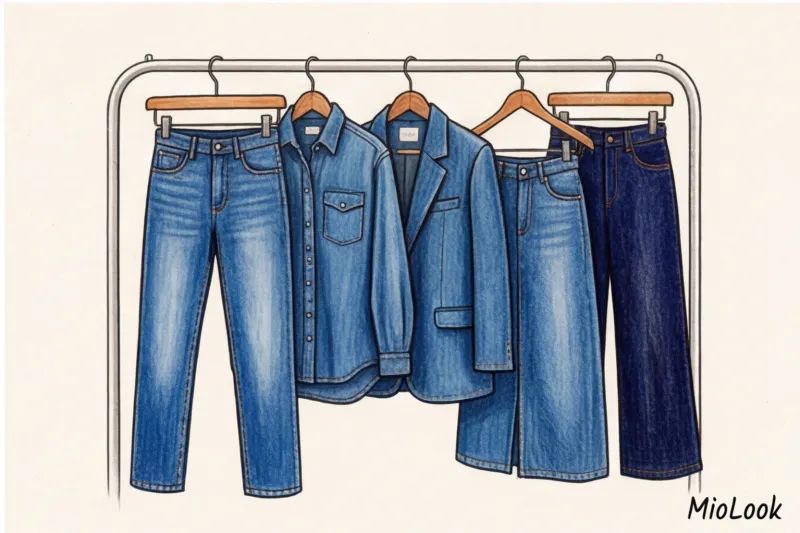
Working with the wardrobes of successful women, I constantly see the same mistake. We're used to treating jeans as consumables, utilitarian "clothes" that can be bought without even looking. But when put together correctly denim capsule for every day — This isn't a stack of blue pants on a shelf. It's an architectural construction kit.
We have already discussed the basic principles in more detail in our The complete guide to a basic denim wardrobe Today, I want to share with you an insider's approach to denim as an investment. We'll explore just five pieces that will create a solid foundation for your style.
The Anatomy of the Perfect Basic: How a Denim Capsule Works for Everyday Wear
Visiting the oldest denim factories in Italy's Veneto region, I learned the most important rule of tailoring: real denim doesn't cling to your flaws; it shapes your silhouette. It's not knitwear, which treacherously highlights every fold. High-quality denim works like a corset.
Since denim made its way from the mines to the Dior runways, it's not the material itself that has changed, but our relationship with it. The difference between a casual "pair of jeans" and a true capsule collection lies in the interaction of the tops and bottoms, as well as the weight of the fabric.
"Fabric weight is the be-all and end-all of fit. If you want a garment to be an investment, look for 12 to 14 ounces (oz) on the tag or in the description."
What are these ounces? They're the weight of one square yard of fabric. Mass-market denim often uses 9-10 oz denim. This fabric is soft, but it doesn't hold its shape. Investment selvedge denim (often Japanese or Italian) weighing 13 oz literally "sculpts" your hips, creating a perfect line.
Access to MioLook for €0.99 — one-time payment
A smart AI stylist will select the perfect look based on your denim capsule.
Get access — €0.99 onceThe Biggest Myth of Styling: Why Elastane Is the Enemy of Investment Denim
"Julia, but stretch jeans fit so well!" I often hear during my first consultation. Yes, they fit perfectly right in the fitting room. But have you ever wondered why, a month later, those same jeans bunch up under your buttocks and stretch out at the knees?
Elastane is a plastic. Adding more than 2% elastane destroys denim's architectural function. The fabric transforms from a corrective tool into a stretched rag. Research by the WGSN trend bureau (2024) confirms that the return to rigid denim is driven not only by aesthetics but also by environmental concerns—100% cotton lasts for years.
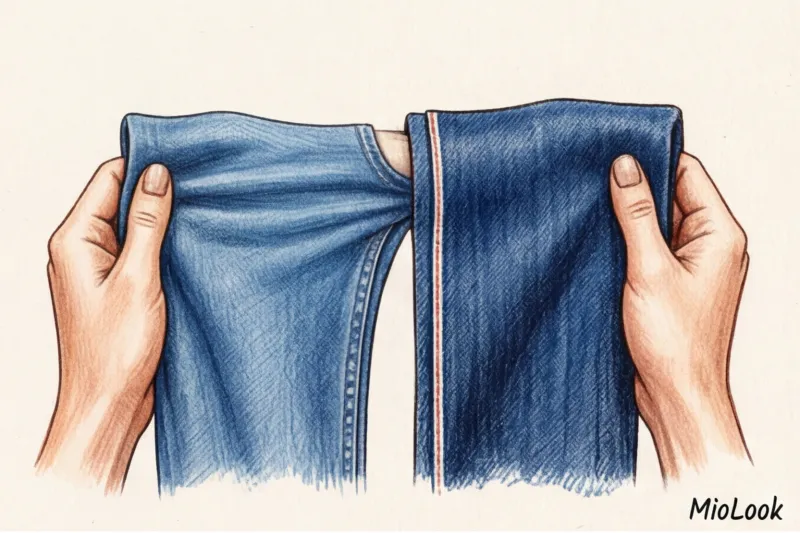
How does 100% cotton work? It may feel a bit stiff for the first two days of wear. But then, adapting to your body heat, it forms a custom fit. You get pants that feel like they're tailored to your measurements.
Let's count cost-per-wear (cost per wear). Premium, rigid jeans for €250 that you'll wear for 5-7 years (about 500 wears) will cost you €0.50 per wear. A stretchy, mass-market pair for €40 that will lose its shape in 6 months (about 40 wears) is €1 per wear. The savings are obvious.
Fair Limit: I recognize that 100% dense cotton isn't suitable for women with severe sensory sensitivity or during periods of significant weight fluctuations (for example, with endometriosis). In such cases, we seek a compromise—a fabric with 1% elastane or switching to lyocell.
Item #1: Straight-leg jeans in the right thickness (Foundation)
If I had to leave in capsule wardrobe Just one bottom—classic straight-fit jeans. No skinnies, which distort the proportions, or ultra-wide trousers, which are difficult to fit into a strict dress code.
The straight cut is a timeless classic and pure geometric design. A straight line from the hip to the ankle balances the width of the pelvis and visually elongates the height. The rise is chosen individually: high for elongating the legs, medium for a short torso that needs more air.
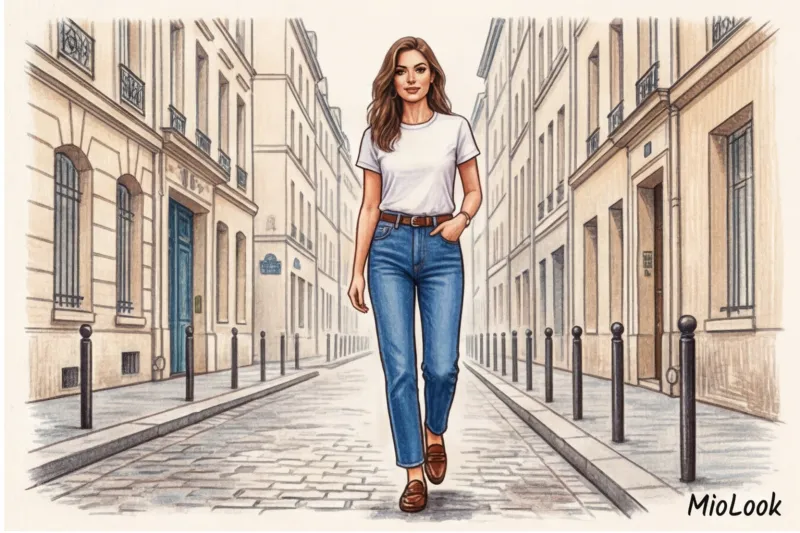
Choose a classic indigo shade without heavy distressing. "Whiskers" (light stripes in the groin area) visually widen the hips, which is completely undesirable. These jeans become the perfect canvas: wear them with a cashmere sweater in the morning, and with a silk blouse and pumps in the evening.
Item #2: Structured Denim Shirt (Link)
A denim shirt is often considered a country style staple, but when worn correctly, it's a powerful layering tool. The biggest mistake is buying thin, form-fitting chambray shirts with mother-of-pearl buttons.
For the investment capsule, we need a heavy denim shirt that holds the collar's shape. It can be worn two ways: as a classic first layer (tucked into trousers) or as a lightweight overshirt over silk slips, T-shirts, and turtlenecks.
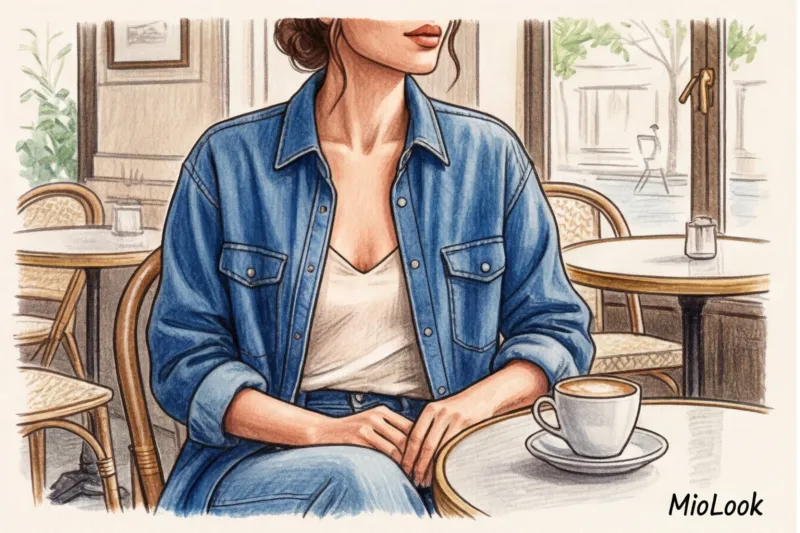
And now for the main secret of the "Canadian tuxedo" (total denim). How to pair a denim shirt and jeans without looking like a rodeo performer? The rule is simple: either the shades should be at least two shades apart (light blue top + dark blue bottoms), or it should be a perfect tone-on-tone match, creating a jumpsuit effect.
Your perfect look starts here
Join thousands of users who look flawless every day with MioLook's smart wardrobe feature.
Get access — €0.99 onceItem #3: Architectural Denim Jacket (Focus Layer)
Please leave behind the snug, skinny cropped denim jackets of the early 2000s. They throw off proportions and make the look irrelevant. Our goal is a structured denim blazer or a menswear-inspired trucker jacket.
Why does it work? The "inverted triangle" principle comes into play here. The sharp, slightly flared shoulder line in thick denim visually narrows the waist and hips by contrast. It's as if you're hiding inside the uniform.
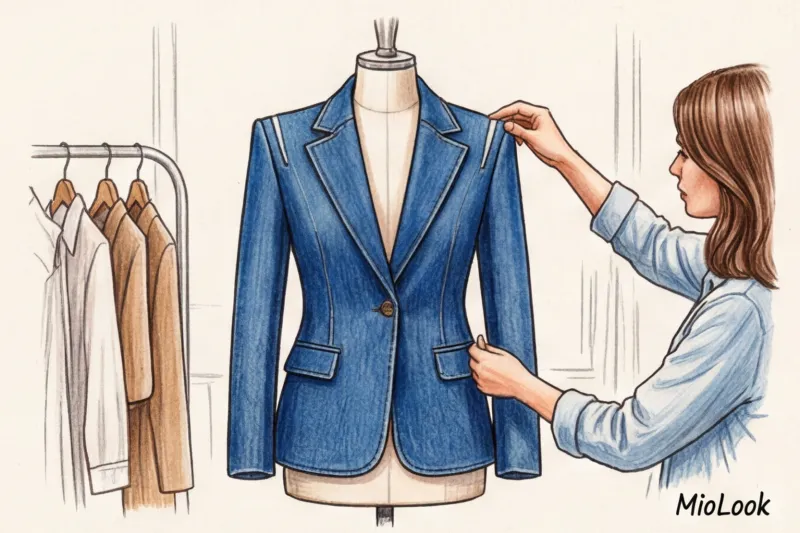
The straight cut denim jacket fits brilliantly into smart-casual wardrobe Throw it over a formal sheath dress or pair it with classic black pleated trousers—it instantly takes the edge off any overly pretentious look, adding a touch of dynamism.
Item #4: Maxi or Midi Skirt with a Slit (An Elegant Alternative)
When you're tired of trousers in the off-season, a denim skirt comes into its own. Not a mini, though, but a sophisticated A-line midi or straight maxi. It's the perfect jeans alternative, maintaining the same level of comfort while upping the elegance factor.
When choosing a skirt, one detail is crucial: a deep slit in the front or back. And it's not about provocation. In a dense fabric (remember those 12-14 oz, right?), a tight skirt simply won't allow you to walk comfortably. A slit solves this problem and creates what's known as a "safe vertical."
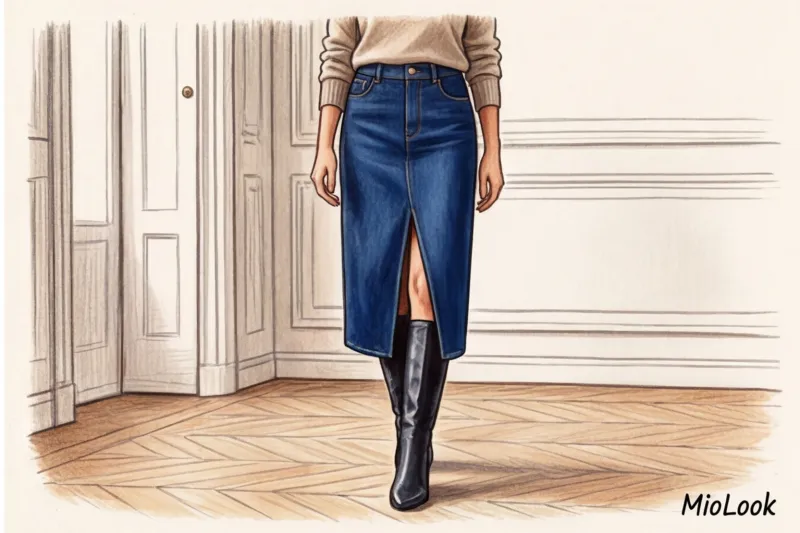
This strip of leather visually elongates the legs and lightens the silhouette as you walk. On Friday, you can wear this skirt to the office with high leather boots that reach under the hem and a voluminous sweater, and in the evening, switch out for an off-the-shoulder top.
Item #5: Dark Palazzo or Flared Pants (State Evening Denim)
Did you know that denim can look more classy than silk? For this, we need raw denim in a deep, almost black color. These wide palazzo pants or elegant flares are a brilliant alternative to classic suit trousers.
To make denim a luxury item, pay attention to the details Avoid contrasting yellow or orange stitching. Threads should match the fabric. No frayed details, rhinestones, or logos.
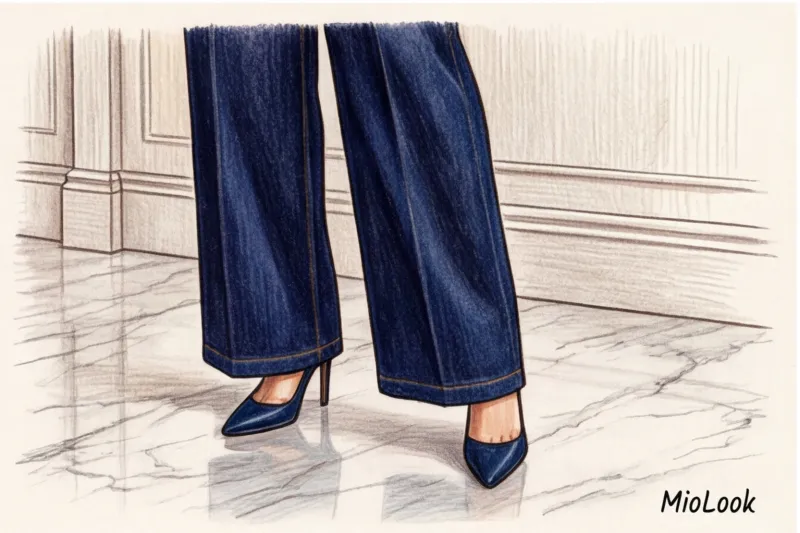
Insider Stylist Trick: When you buy jeans like these (even budget ones, in the €50–€80 range), take them to a tailor. Ask the tailor to cut off the factory-stiff hem and create a blind hem, like on classic trousers. The length should be exactly right for your favorite heel or platform (1 cm from the floor). This €15 procedure will visually increase the price of your jeans to €500.
Checklist: How to Check Your Denim Capsule (Julia's Formula)
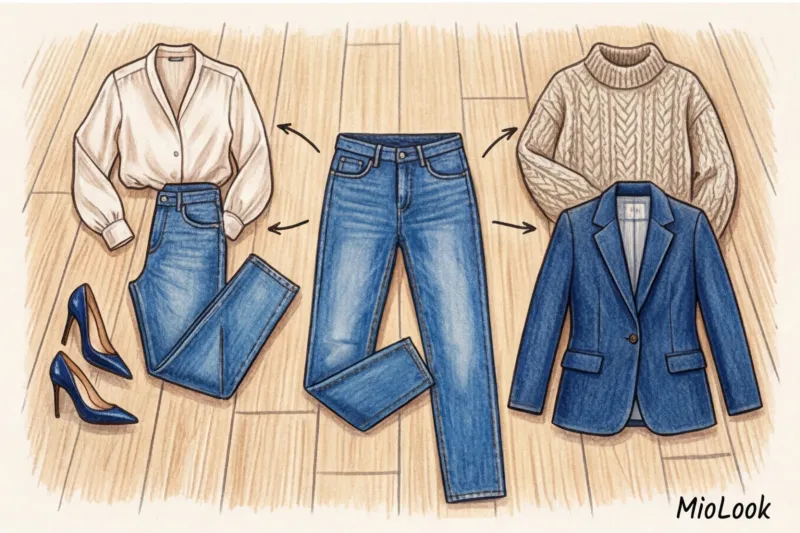
How do you know if your denim capsule is working? Over the years, I've come up with a formula: The 3-up, 1-down rule Each of the five items listed should easily and effortlessly pair with three different basic items from your closet (for example: a white T-shirt, a silk blouse, and a chunky knit sweater).
Check the hardware. Investment denim is distinguished by the quality of its buttons and rivets. Choose matte copper, bronze, or simple silver hardware without excessive shine. Shiny yellow "gold" on jeans often indicates questionable quality.
And finally, care. Something that often shocks my clients is that true 100% denim doesn't need to be washed often. Levi's CEO Charles Berg publicly admitted that he hasn't washed his jeans in the washing machine for years. Washing destroys the cotton fibers and fades the color. If your jeans have lost their freshness, simply place them in a cotton bag in the freezer overnight—the subzero temperatures kill odor-causing bacteria, preserving the fabric's structure.
Ready to get started?
Upload photos of your denim pieces to the MioLook app, and the algorithm will suggest dozens of new combinations you never even thought of.
Get access — €0.99 once