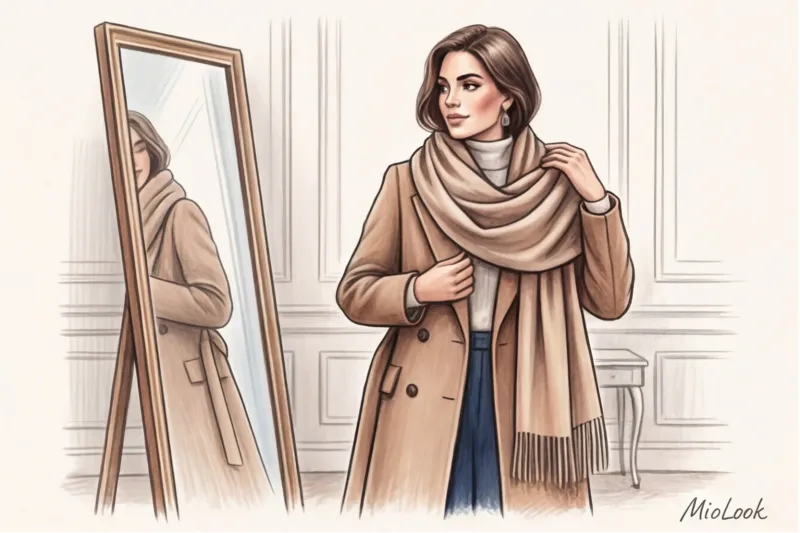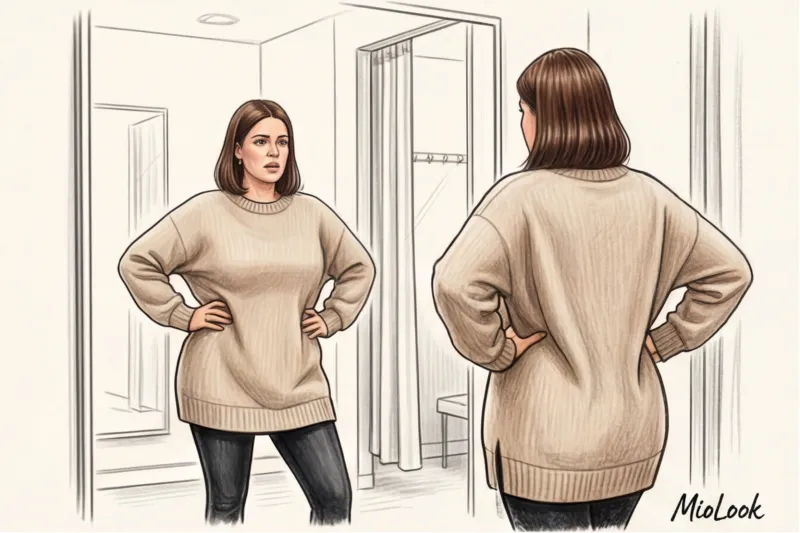
Yesterday, in the fitting room, my client Elena was close to tears. In one hand, she was holding a luxurious silk dress, a size M, that fit perfectly in the shoulders but was treacherously baggy at the hips. In the other, a size L, which was perfectly comfortable on the hips, but the shoulder line drooped somewhere toward the middle of her forearm, making her look like a sad Pierrot. Sound familiar? You're not alone. If you... Tops and bottoms of different sizes, how to choose clothes — it's not just a matter of regular shopping, it's a real strategic puzzle that most women face.
For a long time, glossy magazines have been feeding us advice like "hide your flaws with color" or "just cinch your waist with a belt." As a stylist with 12 years of experience, I officially declare: this approach is outdated, lazy, and completely ineffective. We will no longer try to squeeze a unique figure into an average factory standard. We've written more about how modern algorithms are completely breaking old patterns in our The complete guide to AI-powered clothing apps for body shape Today, we'll explore the concept of a "modular wardrobe"—an architectural approach that will solve the problem of irregular proportions once and for all.
The Illusion of the "Perfect M": Why Different Sizes of Top and Bottom Are Normal
Have you ever noticed that trousers and jackets of the same size often fit you completely differently in popular mass-market fashion? The problem isn't your body type. It's the brands skimping on developing complex patterns.
Manufacturers create patterns based on a fixed "drop"—a rigidly defined difference between the bust, waist, and hip measurements. This artificial mathematical construct only fits 30% of customers. According to the large-scale anthropometric study SizeUSA (2023), over 70% of women have a difference of one or two sizes between their upper and lower body. This means that wearing a medium-sized top and an L-sized bottom (or vice versa) isn't an anomaly to be desperately concealed, but a basic anatomical reality.
So the first thing I ask my clients to do when reviewing their wardrobe is to stop blaming themselves for the back zipper of their standard sheath dress. For decades, the industry has been forcing us to believe in the myth of the perfect, one-size-fits-all, simply because cutting clothes to fit the average size is simply cheaper. It's time to set your own rules.
The biggest styling mistake: why you shouldn't buy dresses at the widest part
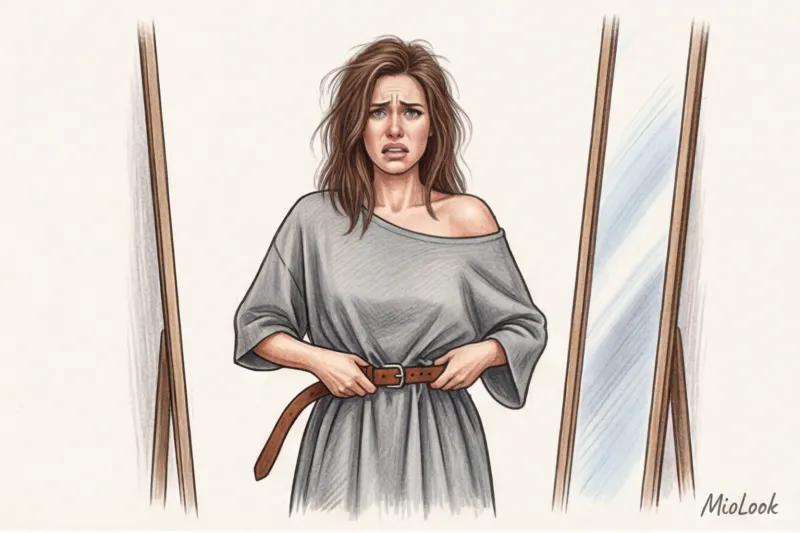
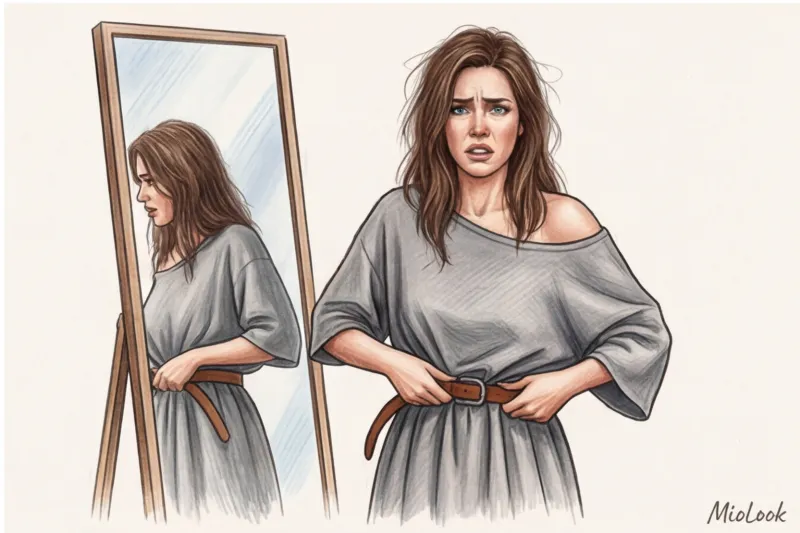
The most harmful and counterintuitive advice I've ever heard from sales associates: "If the bottom is wider than the top, just buy a dress that fits your hips and cinch the excess waist with a belt!" Over the years, I've thrown out dozens of these "constricted" sack dresses from clients' wardrobes.
Let's examine this fashion disaster from a design perspective. When you buy a size up solely for the hips, you automatically end up with an overly wide back, an elongated, slouched shoulder, and a deeply sagging armhole. By cinching all this in with a belt, you fail to accentuate your waist. You create the effect of a shapeless bag tied with string. The fabric hangs over the waist in untidy folds, visually adding 5-7 kg to your figure and instantly cheapening the look.
"A tailor's golden rule is: if a garment doesn't fit at the shoulder, it doesn't fit at all. You can get a skirt adjusted at the hips at a tailor's for €20, but altering the armholes and shoulders will cost you half the price of the garment itself, and the result is rarely perfect."
Access to MioLook for €0.99 — one-time payment
A smart AI stylist will select the perfect look.
Get access — €0.99 onceModular wardrobe: tops and bottoms in different sizes – how to choose clothes without stress
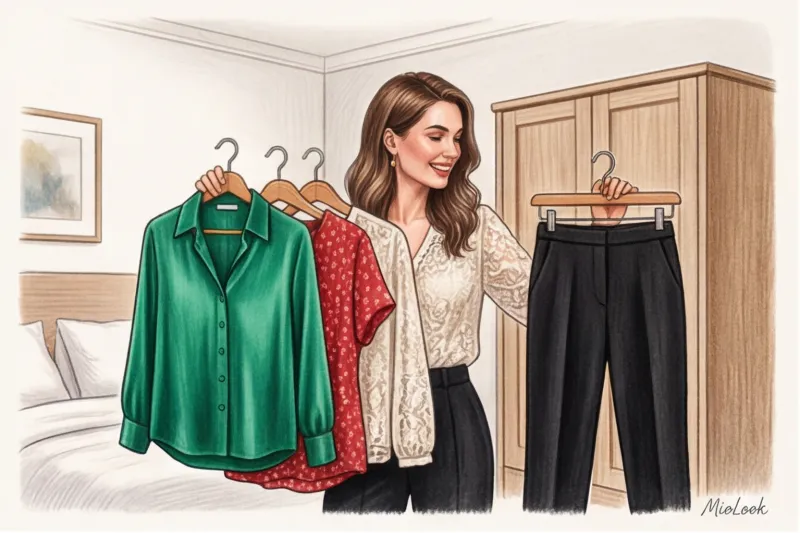
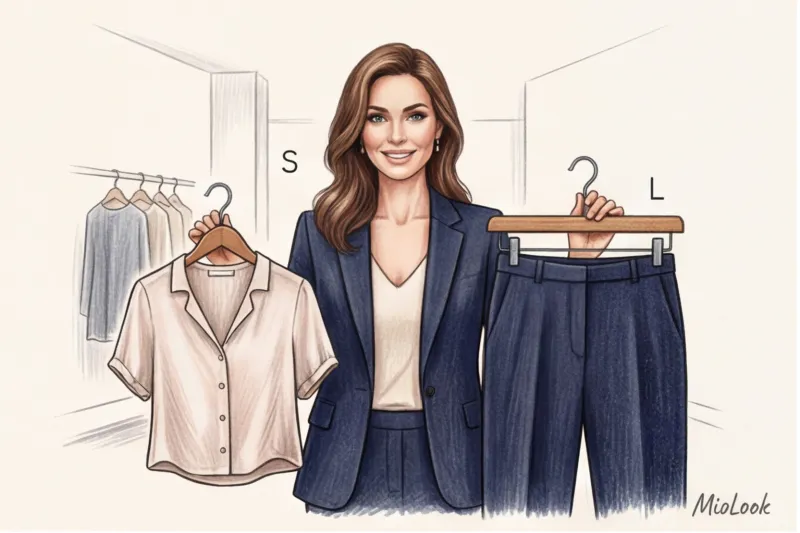
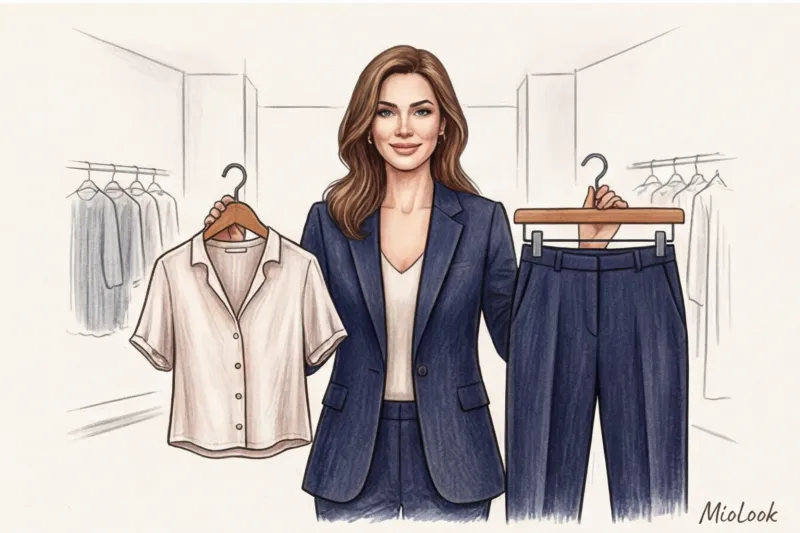
The only effective solution to volume fluctuations is to completely abandon complex one-piece garments in favor of separates. This is the basis of the designer's modular wardrobe concept, where you invest in separate, independent tops and bottoms that are then assembled like a construction set.
Need a size S for your blouse and an L for your trousers? Great! Buy them separately. The goal of modern styling isn't to find a magical dress that will hide everything, but to learn how to combine different sizes in a single look so that the silhouette appears cohesive, monolithic, and harmonious. We shift the focus from the numbers on the tag to creating the right visual balance.
Formula for "Heavy Bottom" (when the hips are larger than the chest)
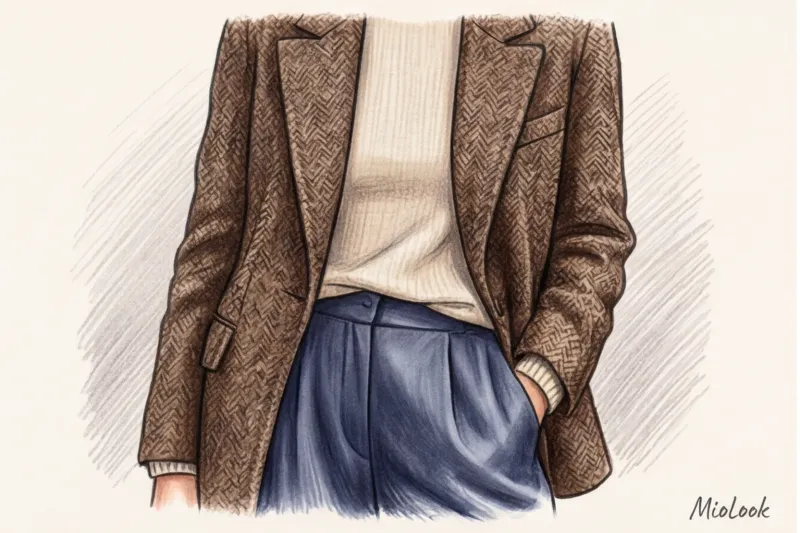
Forget the stereotype of the "black bottom, white top" bank clerk uniform. This contrast mercilessly cuts the figure in half, accentuating the difference in size between a narrow chest and wide hips.
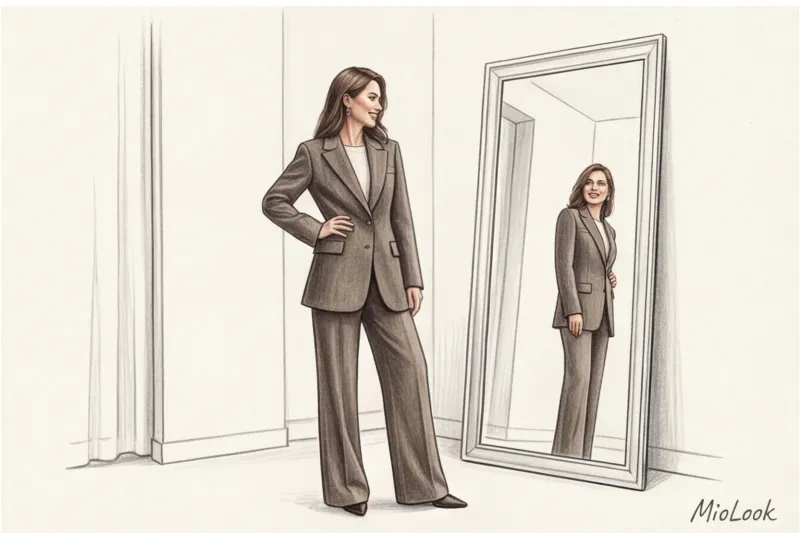
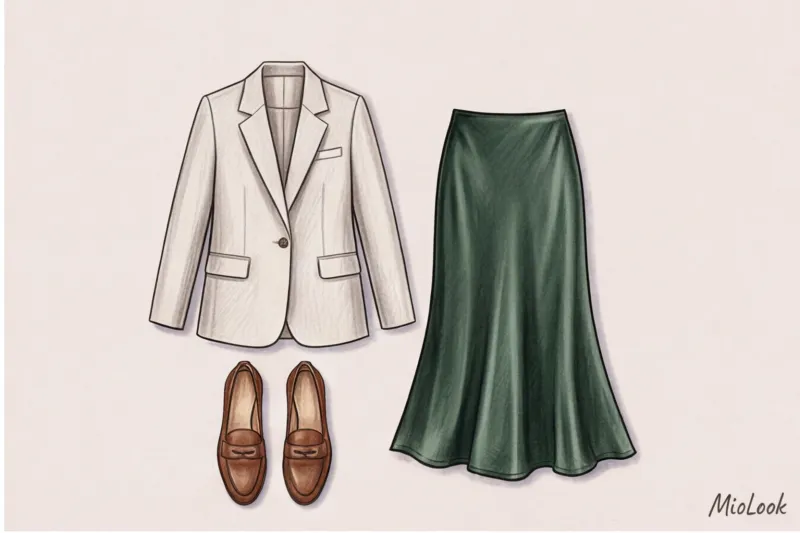
My favorite and proven formula for an A-line silhouette: Structured jacket + bias-cut midi skirt + chunky-soled loafers.
A jacket should definitely have a defined shoulder line (shoulder pads are your best friend this season) to mathematically balance the width of your hips. Choose a boat neckline or statement collars for the top—they visually widen the shoulders. A bias-cut skirt hugs the figure smoothly, flowing along the curves of the body, without creating excess volume, unlike full pleated skirts or rigid A-line skirts.
Fair warning: This formula doesn't always work. If you have a pronounced breeches area, thin satin or silk cut on the bias will treacherously highlight even the slightest imperfections. In this case, avoid shiny textures in favor of dense, heavy viscose, which will fall in straight, confident lines, concealing the relief.
Formula for an "Accent Top" (when the chest and shoulders are larger than the hips)
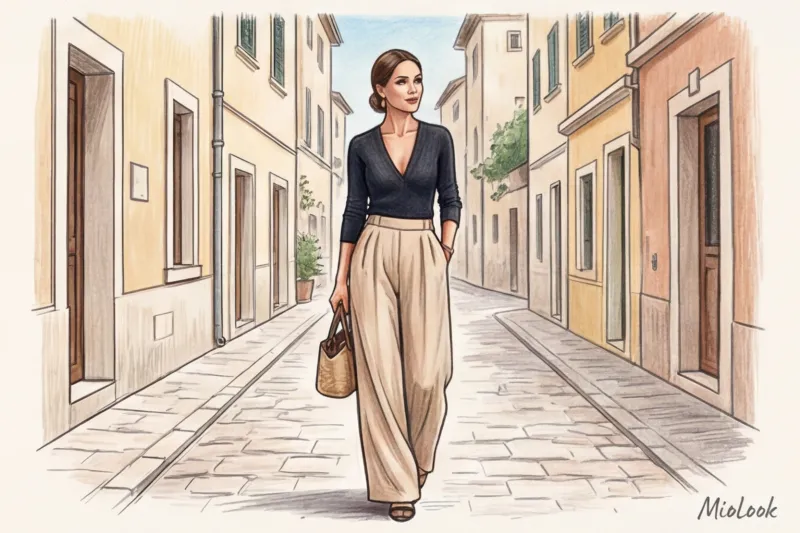
When shoulders and a voluptuous bust noticeably outweigh narrow hips, many women instinctively try to hide their upper body behind shapeless, oversized hoodies or loose-fitting smocks. The result? The figure instantly transforms into a massive, heavy square on thin legs.
The working formula for elegance: Top with a deep V-neck + wide palazzo pants made of thick fabric.
A V-neck brilliantly elongates the neck and breaks up the monolithic, wide plane of the chest, making the upper body appear much more graceful. Wide-legged palazzo pants add much-needed volume to the lower half, creating a perfectly balanced column. Absolutely avoid thin, ribbed knits (skinny) on broad shoulders—they mercilessly distort the proportions, making the top appear even heavier and bulkier.
Fabric Architecture: A Stylist's Secret Tool
The density and texture of a material influence the perception of volume far more than just color. This is professional insight from film sets, rarely reported in the media. As a 2024 report by the WGSN textile division notes, the visual weight of a fabric can adjust a figure up to one and a half sizes without a single dart, simply by refraction of light.
If you want to visually enlarge a smaller part of your body (for example, narrow hips or a small bust), choose bold textures: bouclé, chunky corduroy, tweed, or voluminous cable knits. These materials reflect light unevenly, creating a 3D effect of expanding space.
For the bulk of the body (which we want to slightly "gather" and make more compact), we use exclusively smooth, matte fabrics with a high sheen factor. Heavy silk, dense suiting wool (with a 100-120s twist), and matte crepe are among them. They don't add a single millimeter of extra bulk, yet they fit luxuriously and elegantly, bringing the silhouette together. High-quality trousers made of dense wool in the mid-range segment will cost around €80-120, but it's an investment that pays off from the first fitting. Thin cotton is your worst enemy in this case, as it wrinkles instantly and forms unsightly creases at the widest points, highlighting the tightness.
Smart technology: how MioLook's AI stylist eliminates the hassle of fitting rooms
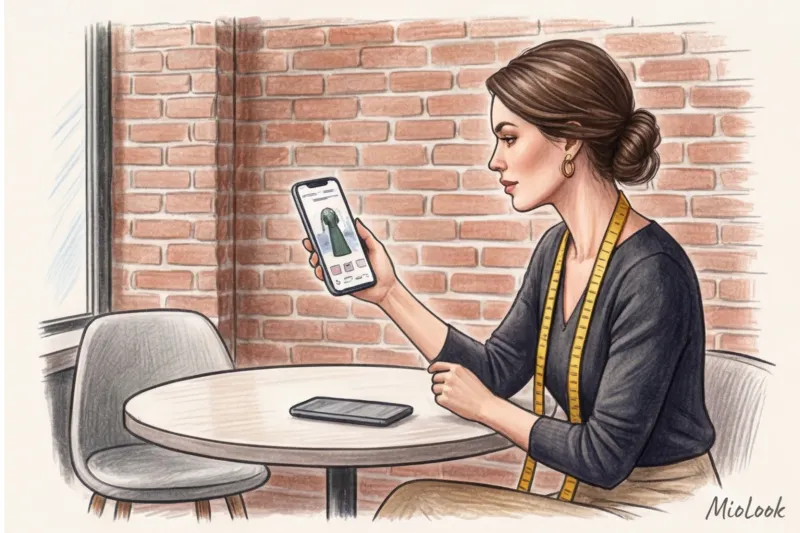
Even armed with all the formulas and knowing your fabrics by heart, shopping can be quite tiring. Fortunately, we live in an era where technology is taking over the tedious work of fitting rooms. Virtual fittings and intelligent algorithms are a complete salvation for those with unusual proportions.
When you use the smart wardrobe feature in MioLook Artificial intelligence analyzes more than just your basic measurements. It compares your unique measurements with real patterns from specific brands. AI understands perfectly that in one brand you need a large bottom and a medium top, and assembles a personalized capsule of perfect separates for you. These pieces are guaranteed to fit together into cohesive, harmonious looks. You no longer have to guess whether that flowy skirt will go with that textured jacket—the algorithm visualizes the perfect fit even before you buy.
Your perfect look starts here
Join thousands of users who look flawless every day with MioLook.
Get access — €0.99 onceChecklist: 5 Shopping Rules for Non-Standard Proportions
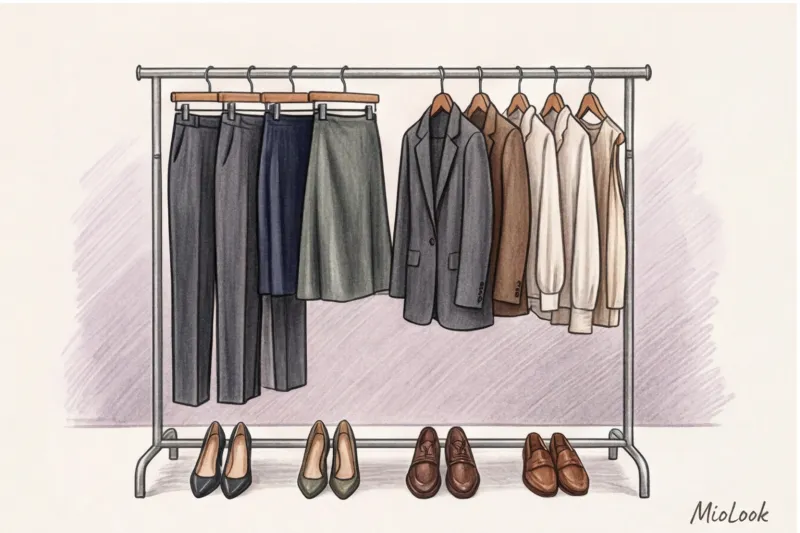
To summarize our architectural fashion strategy, I've compiled five unshakable rules for you. By following them, you'll save hundreds of euros and a ton of stress while shopping:
- 1. Look for brands with a Mix & Match concept. Buy suits only where jackets and trousers are sold separately (for example, at COS, Massimo Dutti, or local premium brands). Don't settle for compromised ready-made two-piece suits that only fit well in one area.
- 2. Make your tailor your best friend. Tailoring is the most cost-effective beauty investment. Taking in trousers at the waist will cost you around €15–€25, but it can make a basic €50 mass-market garment fit like it was custom-made in a luxury Milanese atelier.
- 3. Choose the right dress styles. If you absolutely can't live without a single dress, avoid straight, rigid sheath dresses. Your perfect choice is a wrap dress, where you can adjust the tension yourself, or a style with a cut-off waist and a delicate elastic band at the back that elastically adjusts to changes in size.
- 4. Play with layers. An unbuttoned, heavy shirt or a long vest worn over a basic top creates two strong vertical lines. They do a phenomenal job of softening any sharp transitions between the top and bottom, visually elongating the figure.
- 5. Ignore the letters on the tags. The letters and numbers on the tags are completely meaningless. If you need to buy an XL pair of pants and a S-size blouse for the perfect fit and beautiful drape, do so without hesitation. No one can see the size on your inner tag, but absolutely everyone can see how stunningly, expensively, and confidently the garment fits you.
The architecture of impeccable style doesn't require a standard, millimeter-perfect figure. It simply requires the right tools, an understanding of textures, and the courage to abandon old rules that no longer work. Invest in the right separates, build your own smart modular wardrobe, and you'll forget that size differences were ever a problem.