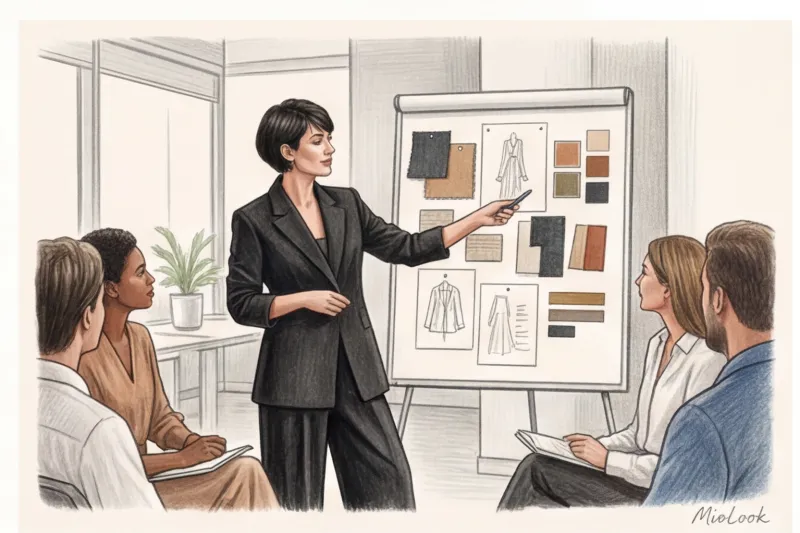
How many times have you heard the stereotypical phrase: "You're a designer, why are you dressed so boring?" There's a persistent myth that the creative class is obliged to convey their originality through outrageousness, loud colors, and crazy prints. In fact, the highest-paid art directors, architects, and top designers wear a strict uniform of black, white, and gray, letting their portfolio do the talking.
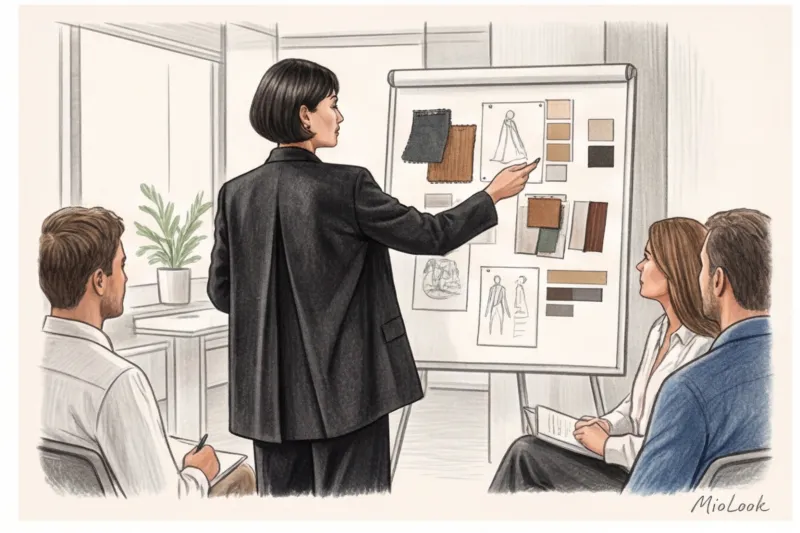
Ideal clothing style for creative professions is built not on color, but on architectural cuts, asymmetry, and the impeccable quality of eco-friendly fabrics. When your image is visually "clean," the client subconsciously perceives you as a reliable partner, not just a dreamy artist. We discussed this perception mechanism in more detail in our complete guide to Psychology: How Clothing Affects First Impressions.
The Creator's Paradox: Why Outrageous Style Kills Trust
Research at Princeton University (Alexander Todorov, 2006) demonstrated that the human brain requires only 100 milliseconds to evaluate a stranger's face and appearance and draw conclusions about their competence. In cognitive psychology, there's a concept called "cognitive ease." If you show up to a meeting with a B2B client in a multi-layered boho outfit, with an abundance of ethnic jewelry and a complex print, you're overloading your interlocutor's visual interface.
The client's brain expends too much energy trying to decipher your image. At this point, a subconscious trigger is triggered: "Too complicated, too unclear, and therefore too risky." They begin to perceive you as a freelance creator who can't be trusted with a corporate budget.
"Creativity in commerce is the ability to solve other people's problems, not create new ones with unpredictability. Your wardrobe should promise stability."
I had a particularly revealing case in my practice. Anna, a talented graphic designer, approached me. She adored the bohemian chic style and complained that she often lost tenders to large companies during the face-to-face negotiations. We completely overhauled her wardrobe, replacing her colorful cardigans with structured minimalism—loose-fitting pantsuits and thick cotton shirts. A month later, Anna won a year-long contract with a major bank. Her portfolio didn't change, but her credibility as an expert did.
Texture over color: how fabrics convey your sophisticated look
If we remove bright colors from the equation, what's left? Texture. It's texture that reveals your eye and aesthetic intelligence. A professional creative's wardrobe is often monochrome, but it's never flat.
The difference between a cheap and an expensive item lies in the physics of the fabric—how it absorbs and reflects light. Cheap polyester shines, creating flat, unnatural highlights. Natural, dense wool, linen, or matte cupro absorb light, creating deep, refined shadows in the folds of the garment.
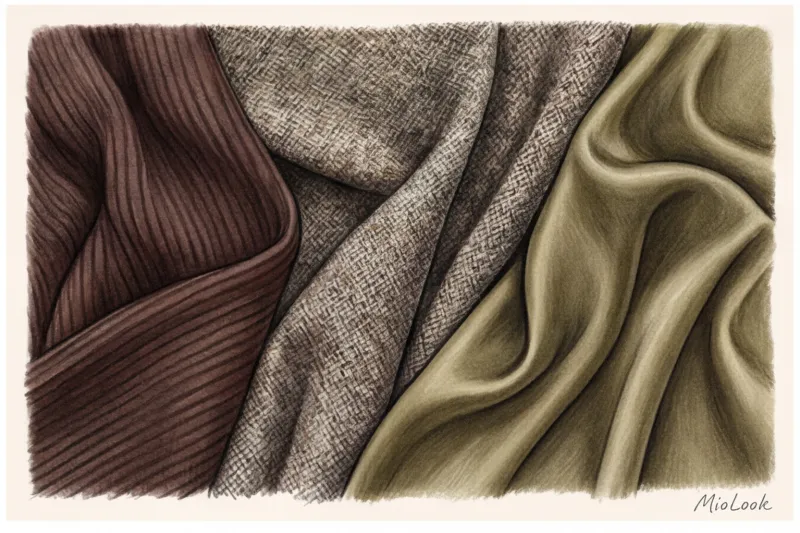
Moreover, your choice of materials today is a marker of your values. According to the Global Fashion Agenda 2023 reports, premium sustainable fabrics (organic linen, Tencel) outperform traditional synthetics in wear resistance by 40%. By choosing such materials, you convey a global vision and responsibility—qualities highly valued in modern business.
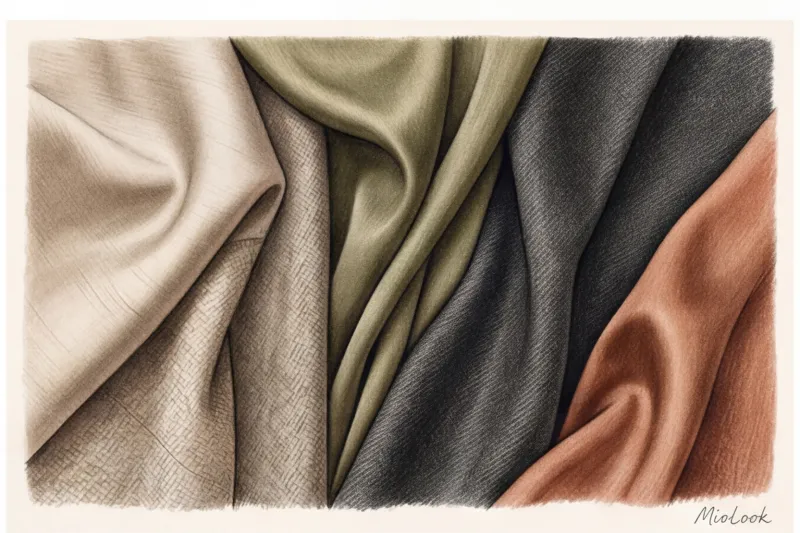
Intelligent fabrics for architectural cutting
To create clean lines, the fabric must hold its shape. Fine knits or soft viscose don't work here—they sag, creating a "wrinkled artist" effect.
I always recommend my clients look for items made from the following materials:
- Gabardine: A dense wool or cotton fabric with a diagonal rib. Ideal for jackets and wide-leg trousers.
- Raw silk: It has a slightly grainy, matte texture. It looks incredibly expensive and doesn't slip.
- Thick cotton: Look for a weight of 180 g/m² or higher. Only this type of cotton will create the sculptural silhouette of an oversized shirt.
Organize your smart wardrobe
Try MioLook for free: A smart AI stylist will create the perfect look based on your clothes and suggest any missing textures.
Get access — €0.99 onceThe formula for the perfect wardrobe: 70% architectural basics and 30% avant-garde
How can I avoid drifting into dull, boring classics? In styling for designers, marketers, and architects, I use the golden ratio: 70/30.
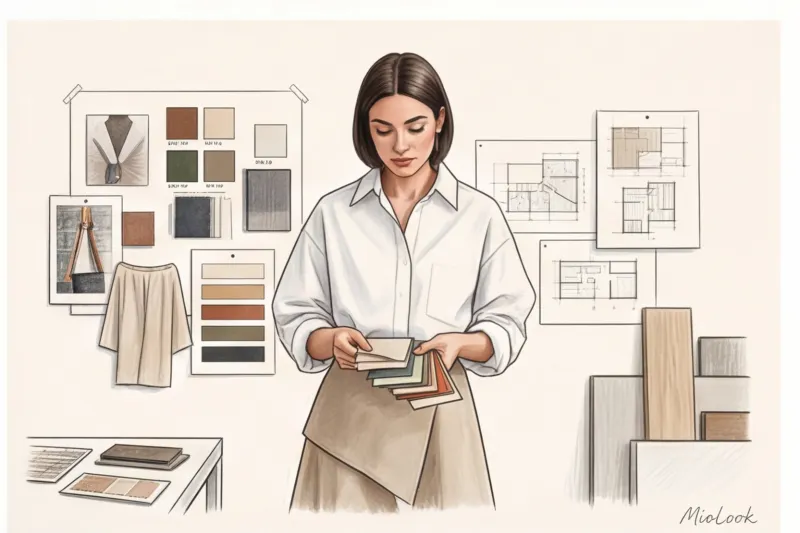
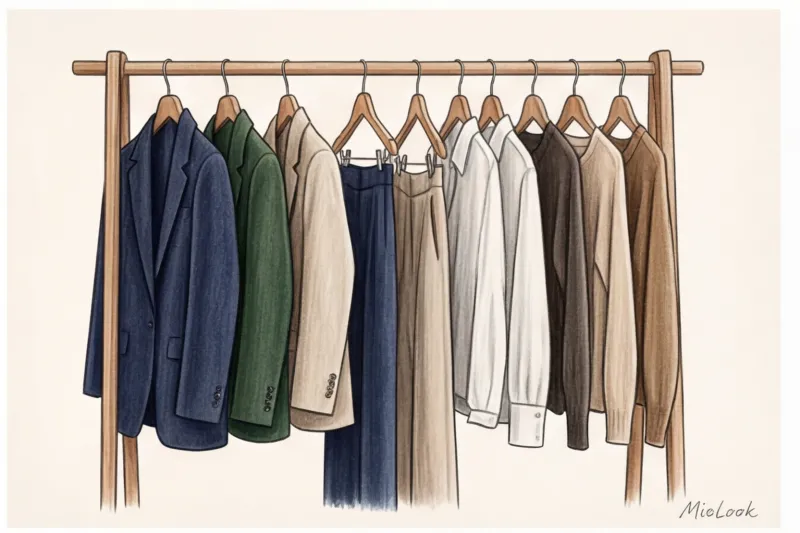
70% is the architectural base. These items feature muted shades but unconventional cuts. For example, instead of a fitted office shirt, you might opt for a voluminous one with dropped shoulders and extended cuffs (in the mass market, such ideal styles are often found at COS or Massimo Dutti in the €60-€100 range).
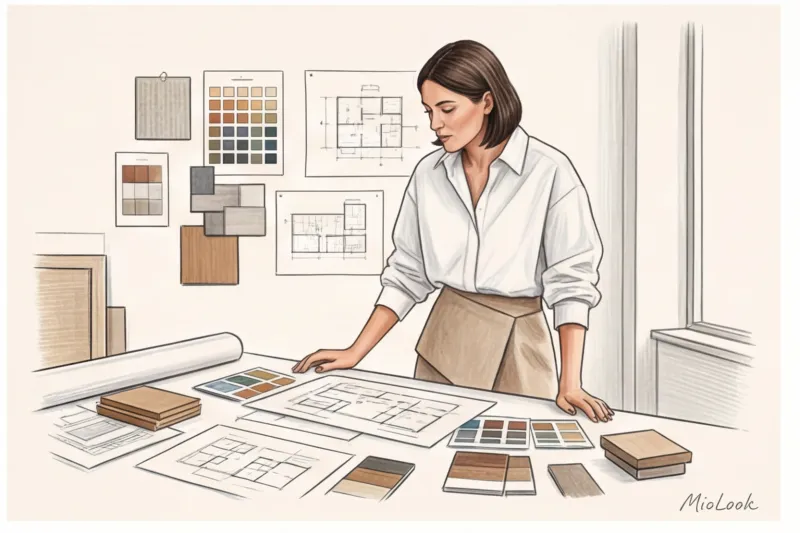
30% is avant-garde and creative. This statement piece shows you think outside the box. A deconstructed jacket with an asymmetrical lapel, a complex origami-style skirt, or trousers with an unusual waistline. A single detail like this against a calm base is a real eye-catcher.
Investing in details: glasses, shoes, and jewelry as key status markers
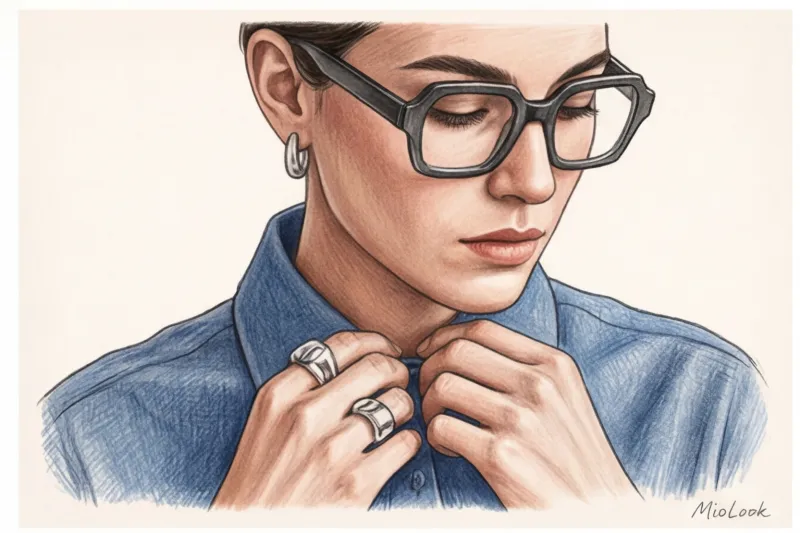
There's an unspoken rule in the creative world: you can show up to a meeting in a basic €20 T-shirt as long as you wear a flawless jacket over it and the perfect pair of glasses. Accessories are your social capital.
Forget classic jewelry flash. Save thin gold chains with pendants for romantic looks. Sculptural jewelry accentuates a creative edge: creased matte metal, chunky cuff bracelets, and geometric silver rings. If you're unsure where to start, check out our guide. large jewelry and what to wear it with.
Shoes should also be conceptual. Stiletto pumps often look outdated and out of place in a creative environment. Replace them with chunky-soled loafers, derby boots, or conceptual sneakers (like the sustainable styles from Veja or the minimalist styles from Maison Margiela). This adds a grounded and confident feel to the look.
Creative for the Corporate Dress Code: How to Dress for a Meeting with a Conservative Client
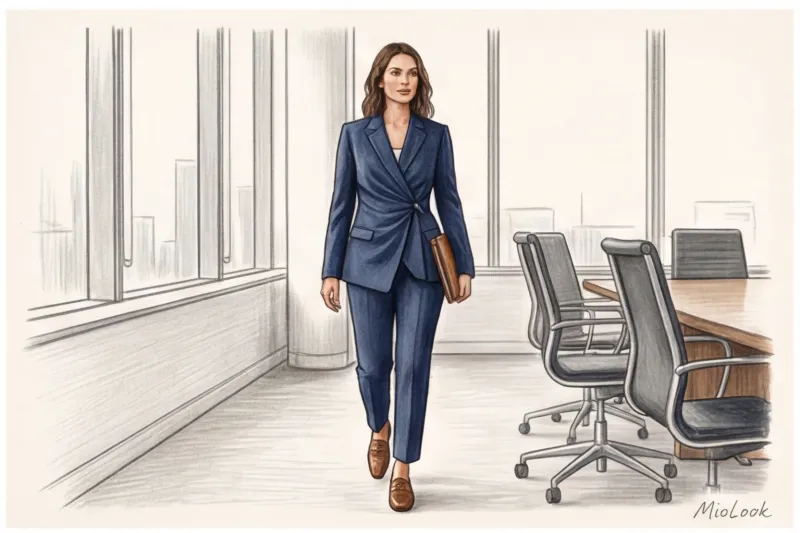
The most common pain point for freelancers and creative agencies is how to dress for serious executives without looking like a clown or a boring clerk. The solution lies in substituting elements.
Instead of a classic, tailored blazer, try a kimono in a heavy suiting fabric or a jacket without lapels. The silhouette remains composed, but it allows for creative freedom. Play with color: embrace the "new black" palette. Deep navy, graphite, dark chocolate, or rich olive are as serious as black, but far more sophisticated and intellectual.
Fair Limit: This advice doesn't always work. If you're pitching a project to the board of directors of an ultra-conservative Swiss bank with a strict business dress code, even a thick kimono might raise questions. In such rare cases, it's better to choose a perfectly tailored suit, emphasizing the luxurious texture of the fabric and the frame of your glasses.
Your perfect look starts here
Join thousands of creative professionals who look flawless every day. Upload your items to MioLook and create capsule collections in one click.
Get access — €0.99 onceChecklist: Audit your creative wardrobe for expertise and sustainability
It's time to move from theory to practice. Open your closet and conduct a thorough inventory. Here are the four steps I make every client take:
- Get rid of logos. A true creator isn't a walking advertisement for other brands. If a fashion house's name is emblazoned on an item in huge letters, take it off. Your clothes should speak about your taste, not your wallet.
- Do a peeling test. Inspect all knitwear. Pilling and frayed elbows instantly cheapen the look, making it look unkempt. Keep only sweaters that hold their thickness.
- Do a blind test. Close your eyes and touch the fabrics in your closet. You should feel density, smoothness, or a pleasant roughness. If the fabric squeaks, statics, or feels slippery or sticky, it's cheap synthetics that have no place in an expert's wardrobe.
- Digitize the result. Collect the remaining items and upload them to the app MioLook AI algorithms will help you see how your architectural essentials pair with avant-garde accent pieces, creating a ready-made capsule wardrobe for the month ahead.
Your appearance is a visual portfolio that the client views even before you open your presentation. Invest in quality fabrics, clean architectural lines, and impeccable accessories, and you'll notice a dramatic shift in the level of trust in your ideas during negotiations.